Author: Acupoint Guide Editorial Team

  • Cough + Fever: 5 Acupressure Points That Help Both

    Cough + Fever: 5 Acupressure Points That Help Both

    One-line Summary: When cough and fever appear together, pressing five acupoints—Hegu (LI4), Quchi (LI11), Dazhui (GV14), Tanzhong (CV17), and Lieque (LU7)—helps strengthen immunity and relieve symptoms.

    Introduction

    When cough and fever appear at the same time, it’s a signal that your body is fighting an infection. These two symptoms are deeply connected, and according to traditional medicine, pressing the correct acupoints is effective for regulating body temperature and calming cough. Before relying on medication, here are five acupoint pressing techniques you can easily try at home.

    Five Best Acupoints for Cough and Fever

    1. Hegu — LI4

    Location: Located in the hollow between the thumb and index finger when your hand is open, at the midpoint of the second metacarpal bone. It’s the center of the bulging muscle area when you bring your thumb and index finger together.

    Effects: As a major acupoint of the Large Intestine meridian, it’s excellent for lowering systemic heat caused by fever. It strengthens immunity, alleviates infection symptoms, and can simultaneously improve headaches and fatigue.

    Pressing Method: Use the thumb of your opposite hand to locate Hegu and press firmly for 3-5 seconds, then release. Repeat 10 times. The right amount of pressure—where you feel slight discomfort—is most effective.

    2. Quchi — LI11

    Location: Located at the outer end of the crease that forms when you fully bend your elbow, on the thumb side. When your arm is bent, it’s at the deepest point of the crease.

    Effects: This acupoint is excellent for clearing heat, quickly relieving high fever. It removes lung heat, helping to ease cough, and also relieves arm fatigue and tension.

    Pressing Method: Locate Quchi with your thumb and rub it in a circular motion 30 times in a clockwise direction. Alternatively, apply gentle pressure with your thumb, press for 5 seconds, release, and repeat.

    3. Dazhui — GV14

    Location: When you bend your head forward, the most prominent bone on the back of your neck is the seventh cervical vertebra. Dazhui is located in the hollow directly below this bone.

    Effects: An important acupoint for regulating systemic heat, it lowers high fever and relieves chills. It’s excellent for calming cough and strengthening immunity, and also relieves stiffness in the neck area.

    Pressing Method: Find the exact location with your fingers and gently press for 3-5 seconds, or better yet, receive meridian massage from someone else. Since it’s difficult to reach the back of your own neck, using your finger knuckles to press is also an effective method.

    4. Tanzhong — CV17

    Location: Located on the breastbone in the center of the chest, at the midpoint of a horizontal line connecting both nipples. It’s between the 4th and 5th ribs (the 4th intercostal space).

    Effects: An acupoint that directly strengthens lung function, it calms cough and improves shortness of breath. It relieves chest tightness and makes breathing deeper and easier. This is the primary acupoint to press when coughing is severe.

    Pressing Method: Locate the Tanzhong area with your middle finger and gently press for 3 seconds, then release. Repeat 20 times. Alternatively, gently rub it in a circular motion with your finger knuckles for 3 minutes for better results. Be careful not to press too hard.

    5. Lieque — LU7

    Location: Located about 1.5 cun (approximately 2cm) above the inner wrist crease, in the hollow above the radial styloid process (the wrist bone on the thumb side). It can be found when your arm is in a natural, relaxed position.

    Effects: An important acupoint of the Lung meridian, it’s specialized in suppressing cough. It lowers lung heat, relieves throat itching, and improves all cold symptoms that appear with fever.

    Pressing Method: Use your opposite thumb to locate Lieque precisely and press firmly for 3-5 seconds, then release. Repeat 10 times. Press slowly and gently to avoid wrist injury, but apply enough pressure to feel slight discomfort for best results.

    5-Minute Self-Care Routine

    Here’s a 5-minute acupoint pressing routine to relieve cough and fever symptoms. It’s best to repeat it 2-3 times a day:

    Step 1 (1 minute): Press Hegu on both hands 10 times each. Repeatedly press firmly with your thumb and release.

    Step 2 (1 minute): Rub Quchi on both arms 20 times each in circular motions. Massage slowly in a clockwise direction.

    Step 3 (1 minute): Press Lieque on both hands 10 times each. Be careful not to strain your wrists when pressing.

    Step 4 (1 minute): Press Dazhui 5 times. If alone, use your finger knuckles; if possible, have someone help you press deeper.

    Step 5 (1 minute): Finally, gently rub Tanzhong 20 times in circular motions. For best results, massage gently and rhythmically.

    By repeating this routine three times daily—morning, afternoon, and evening—cough and fever symptoms can be relieved quickly.
    🤰 Pregnancy Warning: Some acupoints such as Sanyinjiao (SP6), Hegu (LI4), and Taichong (LR3) can trigger uterine contractions in pregnant women. If you are pregnant or may be pregnant, please consult a traditional medicine practitioner or healthcare professional before applying these techniques.
    ⚠️ Medical Disclaimer: This article is written for informational purposes about health and does not replace professional medical diagnosis or treatment. If symptoms persist or worsen, please consult a healthcare professional.
  • Dealing with Cough and Headache? These 5 Points Can Help

    Dealing with Cough and Headache? These 5 Points Can Help

    One-line summary: When cough and headache occur together, pressing five acupoints—Taichong (LR3), Hegu (LI4), Fengchi (GB20), Baihui (GV20), and Dazhui (GV14)—can relieve both symptoms simultaneously.

    Introduction

    When cough and headache occur together, daily life becomes really difficult. These symptoms, which arise from various causes such as colds, stress, and fatigue, are more effectively managed by addressing them simultaneously rather than individually. In traditional medicine, there are acupoints that can help relieve both cough and headache together. You can experience symptom relief simply by stimulating specific acupoints on the hands and feet without additional medication.

    Five Acupoints for Cough and Headache

    1. Taichong (太衝) — LR3

    Location: Between the first and second metatarsals on the dorsum of the foot, in the depression just anterior to the junction of the metatarsals. It can be felt as a hollow when you follow along the space between the toes and move upward on the top of the foot.

    Effects: Taichong is an important acupoint that regulates liver function. It relieves stress and tension that trigger cough, and simultaneously alleviates migraine and vertex headaches through normalization of liver function. It is particularly effective for cough caused by emotional stress.

    Acupressure method: Sit in a comfortable position and place one foot on the opposite knee. Using your thumb, slowly press for about 1-2 minutes to apply acupressure. Perform the same technique on both feet, and it is effective to do this 2-3 times daily.

    2. Hegu (合谷) — LI4

    Location: In the depression between the thumb and index finger, located at the midpoint of the second metacarpal bone of the index finger. It is the slightly raised area just inside the crease between the thumb and index finger.

    Effects: Hegu is an acupoint that governs the large intestine meridian and is closely related to lung and bronchial function. It rapidly alleviates the cough reflex and particularly well addresses pain in the face and head region, effectively calming headaches. It is most effective for coughs from colds and tension-type headaches.

    Acupressure method: Place the thumb of one hand on the Hegu point of the other hand. Direct the thumb inward and press firmly for 3-5 seconds, then release. Repeat this 10 times, and the appropriate pressure intensity is when you feel slight discomfort. Perform on both hands.

    3. Fengchi (風池) — GB20

    Location: Located at the border between the neck and shoulder. It is in the depression below the occipital bone, between the trapezius and sternocleidomastoid muscles. It can be easily found when you slightly bow the neck.

    Effects: As its name, “Pool of Wind,” suggests, Fengchi is closely related to respiratory conditions. It improves bronchial function and rapidly alleviates symptoms of sore throat. As it relates to headaches, it is a key acupoint for treating migraines and headaches caused by neck stiffness, and is particularly effective for occipital pain.

    Acupressure method: Use a mirror to locate Fengchi at the back of the neck. Using the thumbs of both hands, press inward while gently massaging for 1-2 minutes. Small circular rubbing motions are also effective, and it is good to perform this about 3 times daily.

    4. Baihui (百會) — GV20

    Location: Located at the vertex (the topmost point of the head). It is at the intersection where the line connecting the tops of both ears meets the midline (the central line extending from the nose to the occipital region). You can find it at the highest point when you trace along with your fingers.

    Effects: Baihui is an important acupoint on the Governing Vessel that regulates the flow of qi throughout the body. It normalizes overall respiratory energy to relieve deep coughs and is the most important acupoint for calming general headaches including vertex headaches. It also simultaneously relieves headaches and dizziness caused by fatigue.

    Acupressure method: Sit or lie in a comfortable position and place your thumb or middle finger on the vertex of the head. Apply gentle, circular acupressure without pressing too firmly and maintain for 1-2 minutes. Performing this 1-2 times daily, especially before sleep, can provide symptom relief along with deeper sleep.

    5. Dazhui (大椎) — GV14

    Location: Below the most prominent bone at the junction between the neck and back. When you bow the head, it is in the depression below the most prominent spinous process of the seventh cervical vertebra (C7). You can feel it by running your finger down the back of the neck.

    Effects: Dazhui is an important acupoint that strengthens lung function and enhances immunity. It improves chronic cough and respiratory endurance, and effectively alleviates neck stiffness and occipital headaches. It simultaneously promotes the circulation of qi throughout the body and improves overall fatigue.

    Acupressure method: Locate Dazhui by slightly bowing the neck forward. Using your thumb or knuckle, press downward and hold for 3-5 seconds. Continue acupressing for about 1 minute, and applying a warm heating pad is also effective. Perform once each in the morning and evening.

    5-Minute Self-Care Routine

    Here is a self-care routine that can be completed in 5 minutes in the following order. It is effective when performed after waking in the morning or before sleep in the evening. First, sit in a comfortable position and apply acupressure to Taichong on both feet for 1 minute. Second, strongly stimulate Hegu on both hands for 30 seconds each. Third, massage Fengchi at the back of the neck with both hands for 1 minute. Fourth, gently apply circular acupressure to Baihui at the vertex for 1 minute. Fifth, press Dazhui below the neck or apply warm heat with a heating pad for 1 minute. By consistently practicing this routine, you can experience simultaneous relief from cough and headache.

    🤰 Pregnancy Warning: Certain acupoints such as Sanyinjiao (SP6), Hegu (LI4), and Taichong (LR3) may trigger uterine contractions in pregnant women. If you are pregnant or there is a possibility of pregnancy, be sure to consult with a traditional medicine practitioner or healthcare professional before performing these techniques.
    ⚠️ Medical Disclaimer: This article is written for informational health purposes and does not replace professional medical diagnosis or treatment. If symptoms persist or are severe, be sure to consult with a healthcare professional.
  • Kongzui (LU6): Location, Benefits, and How to Press It

    Kongzui (LU6): Location, Benefits, and How to Press It

    One-Line Summary: Kongchoe (LU6) is a key acupoint on the Lung meridian that is effective for relieving respiratory conditions, sore throat, and hemorrhoid symptoms.

    What is Kongchoe?

    Kongchoe (孔最) is an acupoint belonging to the Lung meridian and is an important acupoint for managing respiratory health in traditional medicine. It is particularly known to be effective for improving upper respiratory tract conditions such as cough, asthma, and sore throat, as well as hemorrhoid symptoms. Through regular stimulation, you can strengthen lung function and boost immunity.

    How to Find the Exact Location

    Kongchoe is located on the inner center of the forearm on the ulnar side. It is approximately 7 sun (about 21 cm) away from the inner wrist crease toward the elbow. To find it more precisely, use the wrist crease as a reference point and measure toward the elbow, then locate the depression between the muscle and bone near the ulna (the inner bone of the forearm). When you press this area, you will feel slight resistance along with a gentle soreness.

    Acupressure Technique

    Step 1: Prepare a comfortable position – Place your arm comfortably either fully extended or slightly bent.
    Step 2: Confirm the location – Slowly trace from the wrist crease toward the elbow and precisely locate Kongchoe.
    Step 3: Begin acupressure – Apply vertical pressure using the fingerprint area of your thumb or index finger.
    Step 4: Correct intensity – Slowly increase the pressure to a level where you feel a “good soreness and distension sensation.”
    Step 5: Duration – Maintain the pressure for 1-2 minutes or stimulate with circular rubbing motions at approximately 30-50 times per minute. Repeat 1-2 times daily for best results.

    Key Benefits

    • Cough relief: Strengthen lung function to improve chronic and dry cough
    • Asthma symptom improvement: Fundamental improvement of respiratory conditions and reduced frequency of attacks
    • Sore throat treatment: Rapidly alleviate throat pain and inflammation
    • Hemorrhoid symptom relief: Improve lower region conditions through the connection between the Lung and Large Intestine meridians
    • Strengthen respiratory immunity: Prevent common cold and improve constitution through regular acupressure
    • Improve lung function: Increase depth of breathing and optimize oxygen supply

    When is the Best Time to Apply Acupressure?

    Applying acupressure to Kongchoe in the morning helps maintain respiratory health throughout the day. Particularly when early cold symptoms appear, during dry cough, or when the throat feels scratchy, stimulating this point immediately provides rapid relief. Preventive acupressure during seasonal changes or transitions helps prevent disease, and applying it once more in the evening before bed promotes good sleep and reduces nighttime cough.

    Precautions

    When applying acupressure to Kongchoe, be careful not to press with excessive force. If you experience severe pain or swelling, stop acupressure and seek professional consultation. It is advisable to consult with a medical professional beforehand if you are pregnant, have serious cardiovascular disease, or have skin damage. Avoid exposure to cold wind or vigorous exercise immediately after acupressure, and it is recommended to apply acupressure at least one hour after eating. If you are undergoing treatment for chronic diseases or specific conditions, please consult with a herbalist or doctor before proceeding.

    🤰 Pregnancy Warning: Certain acupoints such as Sanyinjiao (SP6), Hegu (LI4), and Taichong (LR3) may trigger uterine contractions in pregnant women. If you are pregnant or may be pregnant, you must consult with a herbalist or medical professional before proceeding.
    ⚠️ Medical Disclaimer: This article is written for the purpose of providing health information and does not replace professional medical diagnosis or treatment. If symptoms persist or are severe, please consult with a medical professional.
  • 5 Pressure Points for Cough and Facial Pain at the Same Time

    5 Pressure Points for Cough and Facial Pain at the Same Time

    One-Sentence Summary: When coughing and facial pain occur together, stimulating five acupoints—Ligustrum (LI4), Dazhui (GV14), Tanzhong (CV17), Lieque (LU7), and Fenglong (ST40)—can relieve both symptoms simultaneously.

    Introduction

    If you experience persistent coughing along with pain in the face or jaw area, this is a combined condition resulting from reduced lung function and insufficient qi circulation. In traditional Chinese medicine, these symptoms are closely interconnected, and by stimulating specific acupoints, both conditions can be improved together.

    Five Beneficial Acupoints for Cough and Facial Pain

    1. Ligustrum (合谷) — LI4

    Location: The most sensitive point between the fingers. When you bring your thumb and index finger together, there is a depression that marks Ligustrum. More precisely, it is at the midpoint of the second metacarpal bone—directly below the highest point of the finger bones between the thumb and index finger when the hand is open.

    Benefits: Ligustrum belongs to the Large Intestine meridian and is very effective at stopping cough. It is particularly excellent at relieving facial pain, toothache, and headaches. It also enhances immunity and improves overall qi circulation.

    Pressure Technique: Using the thumb of the opposite hand, apply slow pressure toward Ligustrum. Press until you feel slight discomfort, hold for 3–5 seconds, then release. Repeat for 1 minute. Treat both hands.

    2. Dazhui (大椎) — GV14

    Location: Located at the back of the neck. When you bend your head forward, the most protruding bone at the back of the neck (the seventh cervical vertebra) becomes visible. The depression directly below the spinous process of that vertebra is Dazhui.

    Benefits: Dazhui belongs to the Governing Vessel and is an important acupoint that regulates yang qi throughout the body. It stops cough, strengthens lung function, and relieves pain near the neck and shoulders. It is also effective for preventing colds through enhanced immunity.

    Pressure Technique: Since this location is at the back of the neck, direct stimulation is challenging. Apply a heating pad, or gently massage in circular motions with a massage stick. Alternatively, lightly press and release repeatedly with two warm fingers. Perform 2–3 times daily, 3 minutes each time.

    3. Tanzhong (膻中) — CV17

    Location: Located at the center of the chest. It is exactly at the midpoint of the line connecting the two nipples—at the fourth intercostal space (below the fourth rib) on the breastbone. Find it by following down the center of the chest until you locate the depression.

    Benefits: Tanzhong belongs to the Conception Vessel and is the most important acupoint for respiratory health and lung function. It is very effective at relieving chronic cough, eliminates chest tightness, and makes breathing easier. It also calms the mind and body, alleviating facial pain caused by stress.

    Pressure Technique: Since this is at the center of the chest, apply gentle stimulation. Using your middle finger, apply slow pressure to Tanzhong, starting with light force and holding for 5–10 seconds. Repeat for 2–3 minutes. Massage with warm hands before bed for enhanced effectiveness.

    4. Lieque (列缺) — LU7

    Location: Located on the wrist. It is about 1.5 cun (approximately 1.5 cm) above the wrist crease on the palm side. More precisely, it is directly above the radial styloid process (the wrist bone on the thumb side). When you cross your hands in an X shape, the depression where your index finger touches marks this point.

    Benefits: Lieque belongs to the Lung meridian and is a key acupoint for respiratory health. It is very effective for cough, asthma, sore throat, and other upper respiratory conditions, and also improves dry throat symptoms. It can also relieve facial neuralgia and facial pain caused by eye strain.

    Pressure Technique: Apply gentle pressure toward Lieque using your thumb. Press until you feel slight soreness, hold for 3 seconds, then release. Repeat for 1 minute on each hand. Since the wrist is a sensitive area, avoid excessive stimulation.

    5. Fenglong (豐隆) — ST40

    Location: Located on the shin. Moving downward from the lateral side below the knee toward the ankle, Fenglong is 8 cun (approximately 24 cm) above the lateral malleolus (the outer end of the shin). It is about 2 finger-widths to the outer side of the tibia (shinbone).

    Benefits: Fenglong belongs to the Stomach meridian and strengthens the respiratory and immune systems. It is effective at removing cough and phlegm, and is particularly excellent for cough caused by damp phlegm. It also relieves facial swelling and facial neuralgia, improving overall qi flow to reduce pain.

    Pressure Technique: Lie down and bend your knee slightly. Using the thumb of the opposite hand, apply deep, slow pressure toward Fenglong. Hold for 5–10 seconds, then release. Repeat for 1–2 minutes on both legs. Stimulation to the point of mild discomfort is most effective.

    5-Minute Self-Care Routine

    5-Minute Acupressure Routine for Cough and Facial Pain Relief

    Step 1 (1 minute): Stimulate both Ligustrum points (LI4) simultaneously—alternately press and release with your thumbs. Focus on relieving facial neuralgia.

    Step 2 (1 minute): Stimulate both Lieque points (LU7)—press with your thumbs to a point of slight discomfort to calm the respiratory system. This is optimal for suppressing cough.

    Step 3 (1 minute): Massage Tanzhong (CV17)—gently massage the center of the chest in circular motions with your middle finger to ease breathing. Focus on strengthening lung function.

    Step 4 (1 minute): Stimulate both Fenglong points (ST40)—lie down and press deeply with your thumbs to improve qi circulation throughout the body. The goal is to eliminate damp phlegm.

    Step 5 (1 minute): Warm massage of Dazhui (GV14)—gently massage the Dazhui area at the back of the neck with warm fingers to boost immunity.

    Application Tips: Best performed 1–2 times daily, one hour after meals. Avoid excessive stimulation, and stop immediately if discomfort occurs. Treatment with warm hands is more effective.

    🤰 Pregnancy Warning: Some acupoints such as Sanyinjiao (SP6), Ligustrum (LI4), and Taichong (LR3) can trigger uterine contractions in pregnant women. If you are pregnant or may be pregnant, consult with a licensed acupuncturist or healthcare professional before proceeding.
    ⚠️ Medical Disclaimer: This article is provided for informational purposes and does not replace professional medical diagnosis or treatment. If symptoms persist or are severe, consult a healthcare professional.
  • Dealing with Cough and Cold? These 5 Points Can Help

    Dealing with Cough and Cold? These 5 Points Can Help

    One-line summary: When you have both cough and cold, stimulating 5 acupoints that boost immunity and open the airway can help with faster recovery.

    Introduction

    When the seasons change, cough and cold often come together. A sore throat, continuous cough, and your body getting tired—I’m sure everyone has experienced this before. When medications alone don’t seem enough, acupoint pressure therapy mentioned in traditional medicine texts can be surprisingly helpful. In this post, I’ll share 5 acupoints that can relieve both cough and cold symptoms simultaneously, along with the correct pressure techniques.

    5 Acupoints Good for Cough and Cold

    1. Hegu — LI4 (Large Intestine 4)

    Location: In the hollow between the thumb and index finger, located at the midpoint of the second metacarpal bone. When you open your hand and spread your thumb and index finger, it’s at the center of the triangular area that appears.

    Benefits: It’s considered the top acupoint for boosting immunity. It’s excellent at relieving early cold symptoms, regulating fever, and suppressing cough. It also improves immune weakness caused by stress, accelerating cold recovery.

    Pressure Technique: Apply pressure with your opposite thumb, using a moderate pressure that causes slight discomfort, and rub in circular motions for 30 seconds. Repeat 3 times on both hands. It’s most effective to apply pressure with warm hands.

    2. Fengchi — GB20 (Gallbladder 20)

    Location: Below the occipital bone (back of the skull), in the hollow area between the trapezius and sternocleidomastoid muscles where the neck and shoulder connect. It becomes easy to feel when you tilt your head slightly forward.

    Benefits: ‘Wind (風)’ means removing the external wind that causes cold. It quickly relieves chills, headaches, and sore throat from colds. It also improves overall fatigue from viral infections, increasing recovery speed.

    Pressure Technique: Apply pressure simultaneously with both thumbs. Press deeply for about 10 seconds, then slowly release the pressure when letting go. Repeat this 10 times, and perform 3-4 times daily at 5-minute intervals.

    3. Dazhui — GV14 (Governing Vessel 14)

    Location: Directly below the most prominent bone when you bend your head forward (the spinous process of the 7th cervical vertebra), in the depression below it. It’s located at the midline of the spine at the junction between the neck and upper back.

    Benefits: In traditional medicine, the ‘Great Hammer’ is known as the acupoint that governs all yang energy. It strengthens lung function, which is the root cause of cough, and reduces high fever from colds. It directly helps eliminate cold viruses by strengthening the immune system.

    Pressure Technique: Since self-application is difficult, ask a family member, or perform slow circular massage with warm fingers. Applying a heat pack is also effective. Perform 1-2 times daily, 5 minutes each time.

    4. Shanzhong — CV17 (Conception Vessel 17)

    Location: Located at the center of the line connecting both nipples from the center of the sternum (at the 4th intercostal space). You’ll feel a slight depression when you touch it with your finger.

    Benefits: It’s a key acupoint that regulates lung and heart function. It directly relieves cough symptoms, reduces airway inflammation, and facilitates phlegm expulsion. It promotes deep, comfortable breathing and improves shortness of breath.

    Pressure Technique: Press slowly and vertically with your middle finger, hold for 3 seconds, then release. Press deeply but adjust the intensity if there’s pain. Perform 3 times daily, 10 repetitions each time for quick cough relief.

    5. Lieque — LU7 (Lung 7)

    Location: About 1.5 cun (approximately 2cm) above the wrist crease, located on the styloid process of the radius (the thumb-side forearm bone). It’s the hollow area you feel when you slightly bend your wrist.

    Benefits: It’s an important point on the Lung meridian that directly affects cough and throat symptoms. It quickly calms nasal congestion, sneezing, and cough from colds. It also boosts skin immunity to defend against cold virus invasion.

    Pressure Technique: Press with your thumb, maintaining slight discomfort. Repeat 5 times, pressing for 15 seconds and resting for 10 seconds. Perform on both hands, 4-5 times daily for best results.

    5-Minute Self-Care Routine

    When you have cough and cold symptoms, proceed in the following order. Perform once in the morning and once in the evening, for a total of 2 times daily.

    Step 1 (1 minute): Hegu (LI4) pressure – 30 seconds per hand

    Step 2 (1 minute): Lieque (LU7) pressure – 30 seconds per hand

    Step 3 (1 minute): Fengchi (GB20) pressure – 30 seconds per side

    Step 4 (1 minute): Shanzhong (CV17) pressure – continue for 1 minute

    Step 5 (1 minute): Dazhui (GV14) warm massage – 1 minute with warm hands

    By consistently repeating this 5-minute routine, you can feel significant improvement in cough and cold symptoms within 3-5 days. After the acupressure, it’s good to drink warm water or ginger tea to maintain a warm body temperature.

    🤰 Pregnancy Warning: Some acupoints such as Sanyinjiao (SP6), Hegu (LI4), and Taichong (LR3) may trigger uterine contractions in pregnant women. If you are pregnant or may be pregnant, be sure to consult a traditional medicine practitioner or healthcare professional before performing these techniques.
    ⚠️ Medical Disclaimer: This article is written for informational health purposes and does not replace professional medical diagnosis or treatment. If symptoms persist or are severe, be sure to consult a healthcare professional.
  • How to Relieve Arm Pain Naturally with These 5 Pressure Points

    How to Relieve Arm Pain Naturally with These 5 Pressure Points

    One-line summary: Regardless of the cause of arm pain, you can relieve pain and improve blood circulation through effective acupressure on 5 acupoints. Just 5 minutes a day is enough.

    Introduction

    Arm pain caused by computer work, smartphone use, lifting heavy objects, and other modern activities is a common concern for people today. When arm pain persists, not only does it make daily life inconvenient, but it can also create a vicious cycle of stiffness spreading to the shoulders and neck. Before relying on medication, stimulating just 5 small acupoints in your hands can have a great effect on pain relief.

    5 Acupoints Effective for Arm Pain

    1. Quchi — LI11

    Location: When the elbow is bent 90 degrees, it is located at the outer end of the elbow crease (on the thumb side).

    Effects: It is a key acupoint that directly relieves pain in the arm and elbow. It reduces heat, decreases inflammation, and relieves stiffness in the arm muscles. It is particularly effective for elbow pain such as tennis elbow or golfer’s elbow.

    Acupressure Method: Press slowly with your thumb for 3-5 seconds while massaging in circular motions. The appropriate intensity is one where you feel slight discomfort. Repeat 10 times on each arm.

    2. Shousanli — LI10

    Location: It is located on the outer forearm, approximately 2 cun (about 6 cm) below the Quchi acupoint in the direction of the wrist.

    Effects: It relieves forearm pain and promotes blood circulation. It reduces arm fatigue and releases muscle tension. It is particularly effective for heaviness and numbness caused by chronic arm pain.

    Acupressure Method: Overlap your index and middle fingers and gently massage the Shousanli area up and down for 2-3 minutes. It is good to repeat 2-3 times per day.

    3. Binao — LI14

    Location: It is located at the center of the deltoid insertion on the lateral aspect of the arm, approximately 7 cun (about 21 cm) above the Quchi acupoint in the direction of the shoulder. When the arm is lowered, it is at the midpoint of the deltoid.

    Effects: It relieves pain in the area connecting the arm and shoulder. It improves blood circulation and relieves muscle stiffness in the upper arm. It is particularly useful for people who also experience shoulder stiffness due to arm pain.

    Acupressure Method: Press slowly with your thumb for 10-15 seconds, then release. Repeat this 5-10 times. Apply acupressure until you feel a slight cooling sensation.

    4. Jianyu — LI15

    Location: When the shoulder is raised 90 degrees, it is located in the anterior depression of the deltoid (the indented area). It is the indented area that appears on the shoulder when the arm is lifted to the side.

    Effects: It relieves overall pain in the arm and shoulder. It particularly improves shoulder joint movement and significantly reduces the pain felt when lifting the arm. It is effective when arm pain occurs along with early-stage frozen shoulder or shoulder impingement syndrome.

    Acupressure Method: With the arm lifted to the side, locate Jianyu with your index and middle fingers and apply acupressure by pressing for 3-5 seconds, repeating 5 times. Perform this on both shoulders.

    5. Jiquan — HT1

    Location: It is located at the deepest point in the center of the armpit (axilla), where you can feel the pulse of the axillary artery. When the arm is lifted to the side, it is at the center of the armpit.

    Effects: It improves blood circulation throughout the entire arm and supports heart function. It relieves various uncomfortable symptoms such as numbness, heaviness, and coldness in the arm. It has a broad pain-relieving effect on the entire arm.

    Acupressure Method: With the arm lifted, place your thumb on the Jiquan position in the armpit and press slowly for 3-5 seconds. Press gently, not forcefully, and repeat 5 times. Since there is a blood vessel here, avoid overly strong stimulation.

    5-Minute Self-Care Routine

    Step 1 (1 minute): Stimulate Quchi and Shousanli in order, each for 30 seconds using circular massage. Notice the sensation of forearm fatigue being relieved.

    Step 2 (1 minute): Slowly apply acupressure to Binao and Jianyu, each for 30 seconds. Thoroughly release the connection area between the arm and shoulder.

    Step 3 (1 minute): Gently press Jiquan 5 times to complete the overall circulation. Breathe deeply and focus on relaxation.

    Step 4 (2 minutes): Gradually increase flexibility by repeatedly raising and lowering the arm slowly. Then perform stretches by slowly rotating the arm forward and backward.

    If you repeat this routine twice daily, morning and evening, you can experience pain reduction effects within approximately 2-3 weeks.

    🤰 Pregnancy Warning: Some acupoints such as Sanyinjiao (SP6), Hegu (LI4), and Taichong (LR3) may trigger uterine contractions in pregnant women. If you are pregnant or might be pregnant, please consult with a traditional Chinese medicine practitioner or healthcare professional before proceeding.
    ⚠️ Medical Disclaimer: This article is written for informational purposes only and does not replace professional medical diagnosis or treatment. If symptoms persist or are severe, please consult with a healthcare professional.
  • 5 Self-Massage Techniques for Quick Shoulder Pain Relief? Press These 5 Points for Natural Relief

    5 Self-Massage Techniques for Quick Shoulder Pain Relief? Press These 5 Points for Natural Relief

    Summary: Rock-hard stiff shoulders? Release them fast with 5 self-massage techniques. Jianjing (GB21), Fengchi (GB20), Tianzong (SI11), Quchi (LI11), and Hegu (LI4) acupressure is all you need.

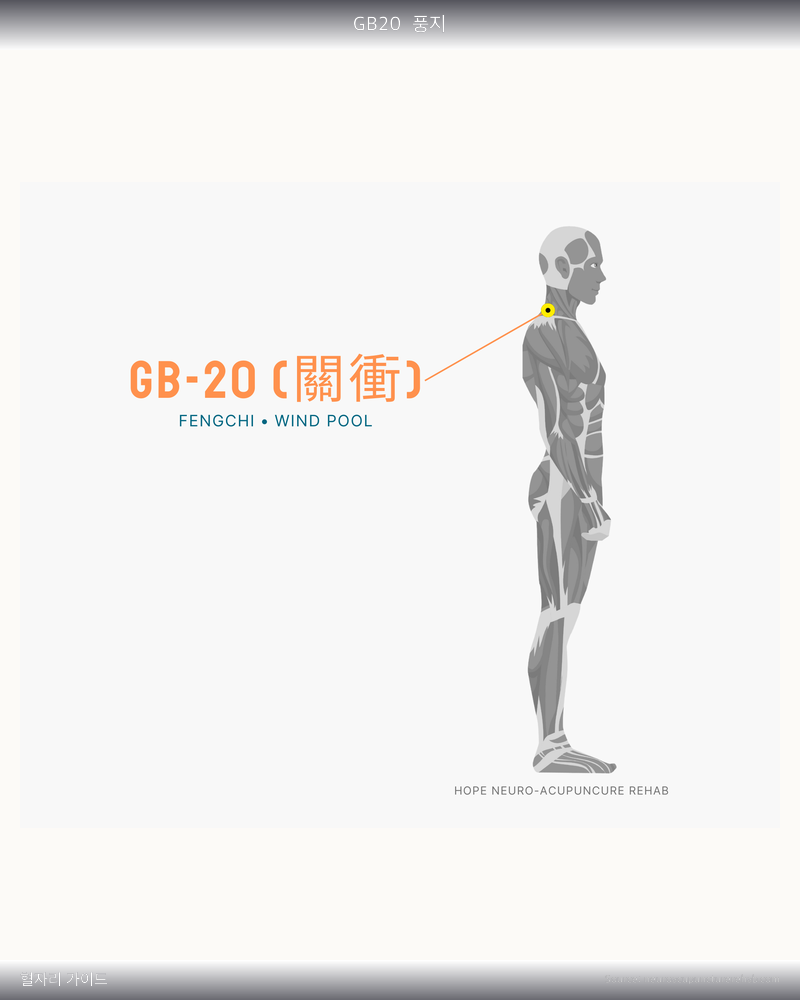
    GB20 혈자리 위치 그림

    When Your Shoulders Feel Like Rocks

    After sitting in front of a computer all day, stiffness creeps up your shoulders. When you turn your neck, it cracks and pops. Raise your arm and you feel that throbbing ache. “I wish someone would just rub my shoulders…” — you’ve thought that, right?

    Rock-hard shoulders happen when blood circulation is poor and muscles knot up. Maintaining the same posture for hours causes the trapezius and levator scapulae to stiffen, triggering pain. It often comes with pounding headaches too.

    Fortunately, there are ways to release them quickly at home by yourself. Pressing 5 key acupressure points around the shoulders loosens knotted muscles and improves circulation. Let me walk you through them one by one.

    1. Jianjing (GB21) — The Direct Hit on Shoulder-Top Knots

    Location

    The midpoint on the line connecting the center of the back of your neck to the tip of your shoulder — the highest point on top of the shoulder. When you press and feel a dull ache, that’s Jianjing.

    Massage Method

    1. Place the middle and index fingers of the opposite hand on Jianjing
    2. Press firmly for 3 seconds, rest 3 seconds — repeat 10 times
    3. Slowly turning your head side to side while pressing doubles the effect

    Effect: A direct hit on shoulder knots. Immediately releases trapezius tension.

    2. Fengchi (GB20) — Refreshing the Neck-Shoulder Connection

    Location

    The hollows on both sides below the base of your skull. Find the border where the head meets the neck, then move about two finger-widths to each side.

    Massage Method

    1. Place both thumbs on Fengchi and wrap the remaining fingers around your head
    2. Press upward firmly for 5 seconds at a time
    3. Roll in circular motions — repeat 10 times

    Effect: Relieves both the stiffness that spreads from the back of the neck to the shoulders and headaches simultaneously.

    3. Tianzong (SI11) — Dissolving the Hard Knots Inside the Shoulder Blade

    Location

    The concave center of the scapula (shoulder blade). Reach the opposite hand over your shoulder and feel for an especially tender spot in the middle of the shoulder blade.

    Massage Method

    1. Press the Tianzong area firmly with the opposite hand’s middle finger
    2. Hold 5 seconds then release — repeat 8 times
    3. Placing a tennis ball between the wall and your back to roll over the spot reaches even deeper

    Effect: The key point for releasing deep knots between the back and shoulders.

    4. Quchi (LI11) — Promoting Circulation from Elbow to Shoulder

    Location

    The outer end of the crease that forms when you bend your elbow to 90 degrees.

    Massage Method

    1. Press Quchi firmly with the opposite thumb for 3 seconds
    2. Rotating your wrist while pressing enhances the relief
    3. Repeat 10 times on each arm

    Effect: Promotes circulation along the meridian connecting the arm to the shoulder, relieving both arm numbness and shoulder stiffness.

    5. Hegu (LI4) — The All-Purpose Point for Remote Shoulder Pain Relief

    Location

    The webbing between the thumb and index finger, at the highest point of the bulging muscle.

    Massage Method

    1. Grip Hegu firmly between the opposite thumb and index finger
    2. Press firmly for 3-5 seconds, rest 3 seconds — repeat 10 times
    3. Slowly rotating the affected shoulder while pressing accelerates pain reduction

    Effect: Hegu is the master key for upper body pain. Used not only for shoulders but also for headaches and toothaches.

    5-Point Comparison Chart

    Acupoint Location Summary Primary Effect Difficulty
    Jianjing GB21 Center of shoulder top Trapezius knot release Easy
    Fengchi GB20 Both sides below skull base Neck-shoulder headache relief Easy
    Tianzong SI11 Center of shoulder blade Deep back-shoulder knots Medium
    Quchi LI11 Outer end of elbow crease Arm-shoulder circulation Easy
    Hegu LI4 Hand webbing Upper body pain master key Easy

    Follow This Order — 5-Minute Routine

    1. Fengchi first — open up neck and head circulation (1 min)
    2. Jianjing alternating sides — release shoulder-top knots (1 min)
    3. Tianzong with a tennis ball — reach deep knots (1 min)
    4. Quchi on both arms — promote arm-to-shoulder circulation (1 min)
    5. Hegu to finish — sweep away remaining pain (1 min)

    Frequently Asked Questions

    How many times a day can I do shoulder self-massage?

    2-3 times a day is ideal. Doing it for 5 minutes each in the morning, at lunch, and before bed significantly reduces tension.

    What should I do if it’s too painful during massage?

    A dull ache with a satisfying release is the right level. If you feel sharp pain, reduce the pressure. Never press hard enough to cause bruising.

    How quickly will I feel results from shoulder massage?

    Light tension can feel better immediately after massage. For chronic stiffness, keep at it consistently for at least 2 weeks.

    Why does Jianjing (GB21) hurt so much when pressed?

    Jianjing sits right on the trapezius, so the more knotted your shoulders are, the more painful it feels. Start gently and gradually increase the intensity.

    Can I apply a hot towel after shoulder self-massage?

    Yes, applying heat after massage enhances the effect. The improved blood circulation helps release knotted muscles even more.

    Pregnancy Warning: Hegu (LI4) mentioned in this article may cause stimulation in pregnant women. If you are pregnant or may be pregnant, please consult a professional before use.
    ⚠️ Medical Disclaimer: This article is for informational purposes only and does not replace professional medical diagnosis or treatment. If symptoms persist or worsen, please consult a healthcare professional.
  • 5 Acupressure Points for Stress on the Spot — Quick Self-Massage Guide

    5 Acupressure Points for Stress on the Spot — Quick Self-Massage Guide

    Summary: When stress hits hard, here are 5 self-acupressure techniques you can do right where you are. If you know your hands, feet, and crown, you can release tension anywhere.

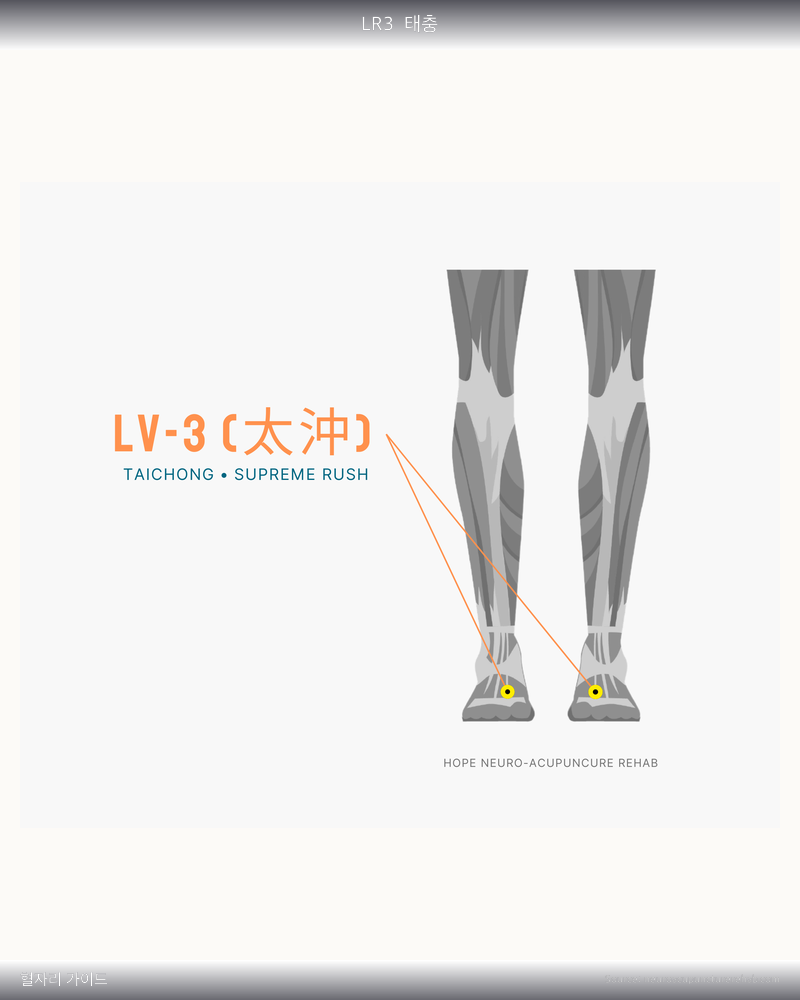
    LR3 혈자리 위치 그림

    Here We Go Again… Chest Tight, Can’t Breathe

    Maybe your boss gave you an earful. Or an exam is right around the corner. Or your child won’t stop crying. The reasons are all different, but the result is the same — your chest feels blocked, your head is throbbing, and your shoulders have locked up stiff. Irritated, on the verge of tears, not wanting to do anything.

    “I’m so frustrated I could scream” — if you find yourself repeating this multiple times a day, your body is already sending SOS signals.

    But the problem is you don’t have time to destress. Exercise? Meditation? A vacation? All great ideas, but you need to know what to do about this suffocating feeling right now.

    Right Where You Are — 30 Seconds Makes a Difference

    Good news. Our bodies have hidden “reset buttons” for instant stress relief. Just press specific points on your hands, wrists, feet, and crown, and blocked energy melts away, leaving you feeling lighter.

    Method 1: Hegu (LI4) — Reset Stress with One Hand

    The fleshy, webbed area between the thumb and index finger. Called the “master key of acupoints” for its versatility.

    • Press firmly with the opposite thumb — hold 3-5 seconds, then release
    • Repeat 10 times and your mind clears while shoulder tension releases
    • You can secretly do it under the desk during a meeting

    Method 2: Shenmen (HT7) — Calm a Racing, Anxious Heart

    The hollow spot on the inner wrist crease, right next to the tendon on the pinky finger side.

    • Gently press in circular motions with your thumb
    • 5 seconds on, 3 seconds rest, 10 times each side
    • Especially effective when your heart is pounding and anxiety hits

    Method 3: Neiguan (PC6) — Settle That Queasy, Tight Stomach

    Three finger-widths above the inner wrist crease toward the elbow, between the two tendons.

    • Press vertically with your thumb
    • 3-5 seconds per press, 10 times, both wrists
    • Immediately responds to stress-related nausea and chest tightness

    Method 4: Taichong (LR3) — Cool Down Simmering Anger

    Follow the space between the big toe and second toe upward to where the bones meet.

    • Press steadily into the hollow between the bones with your thumb
    • Hold 5 seconds, 10 times per foot
    • Great when irritation surges and anger is boiling over
    • Press together with Hegu for the ultimate combo called the “Four Gates”!

    Method 5: Baihui (GV20) — Crown-of-the-Head Refresh

    The center of the crown of your head, where a line connecting the tops of both ears meets a line going straight up from your nose.

    • Tap gently with your middle finger for 30 seconds in a light rhythm
    • Or press steadily with your fingertip and release — 5 times
    • Your head clears and concentration shoots up

    All 5 Methods at a Glance

    Method Location Best For Time
    Hegu (LI4) Hand webbing General tension, headaches 30 sec
    Shenmen (HT7) Inner wrist Anxiety, palpitations 30 sec
    Neiguan (PC6) 3 fingers above wrist Nausea, chest tightness 30 sec
    Taichong (LR3) Top of foot Anger, irritability 30 sec
    Baihui (GV20) Crown of head Foggy mind, focus 30 sec

    Frequently Asked Questions

    How many times a day can I do stress acupressure?

    3-4 times a day is ideal. 5-10 minutes per session is sufficient, and there’s no major limit on frequency as long as you don’t press too hard.

    Is it more effective to press Hegu and Taichong at the same time?

    Yes, this combination is called the ‘Four Gates.’ It unblocks qi and blood circulation throughout the entire body at once, doubling the stress relief effect.

    I get sleepy after acupressure. Is that normal?

    Completely normal! It means tension is releasing and the parasympathetic nervous system is activating. Doing it before bed also helps with deep sleep.

    Is there a difference between pressing the left and right wrist?

    Doing both sides is best. If you can only do one, start with whichever side has more severe symptoms.

    Can children do stress acupressure too?

    Yes, children can do it too. Just use lighter pressure than for adults. If the child says it hurts, reduce the force.

    Pregnancy Warning: Hegu (LI4) mentioned in this article may cause stimulation in pregnant women. If you are pregnant or may be pregnant, please consult a professional before use.
    ⚠️ Medical Disclaimer: This article is for informational purposes only and does not replace professional medical diagnosis or treatment. If symptoms persist or worsen, please consult a healthcare professional.
  • 5 Acupressure Points for Menstrual Cramps Fast — Without Medication — Quick Self-Massage Guide

    5 Acupressure Points for Menstrual Cramps Fast — Without Medication — Quick Self-Massage Guide

    One-line summary: When menstrual cramps hit hard, pressing 5 points — Sanyinjiao, Guanyuan, Hegu, Xuehai, and Taichong — can ease the pain without painkillers.

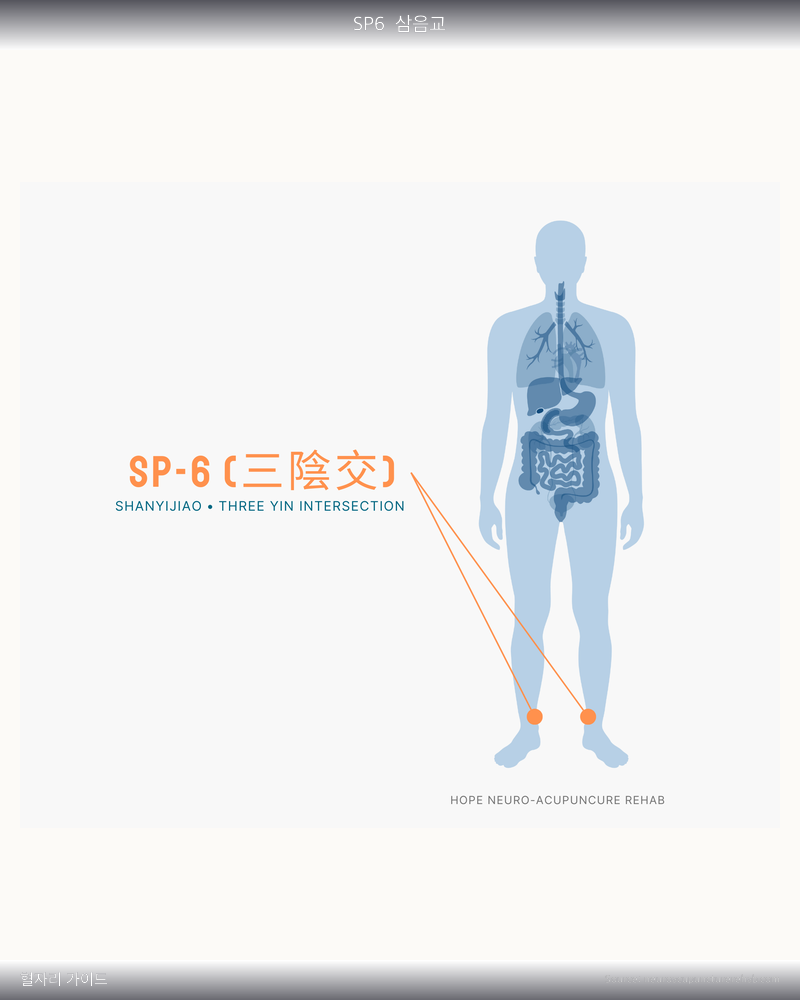
    SP6 혈자리 위치 그림

    We Understand That Pain

    That time of the month again. The cramping, squeezing pain in your lower abdomen makes you dread leaving bed. A heavy weight settles into your lower back, and the stabbing sensation around your uterus persists all day, making it impossible to do anything.

    Taking painkillers worries your stomach, but enduring the pain seems impossible. “Am I the only one hurting this much?” you might think. You’re absolutely not alone. Over 70% of women experience menstrual pain severe enough to interfere with daily life.

    Here’s the good news. Your body has acupoints that help relieve pain. Let us show you how to reduce menstrual cramps with just your fingertips, without relying on medication.

    Why Does Acupressure Help with Menstrual Cramps?

    Menstrual pain worsens when the uterus contracts and blood flow becomes restricted. Acupressure opens blocked qi and blood flow, releasing tension in muscles around the uterus. The following 5 points have been used in traditional medicine for thousands of years to relieve menstrual pain.

    1. Sanyinjiao (SP6) — The Key Point for Women’s Health

    Location

    Four finger-widths above the top of the inner ankle bone (the bony bump on the inside of your ankle). Find the hollow area right behind the shin bone.

    Acupressure Method

    1. Find Sanyinjiao with your thumb and press firmly.
    2. Press for 5 seconds, rest for 3 seconds, repeat 10 times.
    3. If you feel a slight ache that extends to your lower abdomen with a refreshing sensation, you’ve found the right spot.
    4. Do both legs.

    Effect: This is where three meridians (spleen, liver, kidney) meet. It promotes uterine blood circulation and reduces cramping pain.

    2. Guanyuan (CV4) — Warming the Lower Abdomen

    Location

    Four finger-widths below the navel, on the center line.

    Acupressure Method

    1. Stack your fingers over Guanyuan.
    2. Gently massage in clockwise circles for 2-3 minutes.
    3. Placing a warm towel underneath increases the effect.

    Effect: Replenishes vital energy and warms the uterus. The heavy, aching feeling in the lower abdomen subsides.

    3. Hegu (LI4) — The Universal Key for Pain Relief

    Location

    The webbing between thumb and index finger, at the highest point of the raised muscle.

    Acupressure Method

    1. Pinch Hegu with the opposite thumb and index finger.
    2. Press firmly for 3-5 seconds and release, repeat 15 times.
    3. If you feel a poking, stimulating sensation, you’ve found the right spot.

    Effect: The go-to acupoint for reducing pain signals throughout the body. Especially effective for menstrual pain accompanied by headaches.

    4. Xuehai (SP10) — Dissolving Blood Stasis

    Location

    Above the inner knee, three finger-widths up from the inner edge of the kneecap. Located on the inner thigh muscle.

    Acupressure Method

    1. Find Xuehai with your thumb and press deeply.
    2. Press 5 seconds, rest 3 seconds, repeat 10 times on each side.
    3. You should feel an aching sensation spreading along the inner thigh.

    Effect: Its name literally means ‘Sea of Blood.’ It promotes blood circulation, dissolves blood stasis, and relieves menstrual pain.

    5. Taichong (LR3) — For Stress-Related Menstrual Pain

    Location

    Follow the space between your big toe and second toe upward on the top of your foot to where the two bones meet.

    Acupressure Method

    1. Press the hollow between the bones with your thumb.
    2. Press 5 seconds, rest 3 seconds, repeat 10 times on each foot.
    3. A refreshing yet slightly tingling sensation means you’ve got it right.

    Effect: As the source point of the Liver meridian, it unblocks stagnant qi and blood. Particularly effective for menstrual pain worsened by stress or emotional changes.

    5 Acupoints at a Glance

    Acupoint Location Main Effect Difficulty
    Sanyinjiao SP6 4 finger-widths above inner ankle Uterine blood circulation Moderate
    Guanyuan CV4 4 finger-widths below navel Uterine warming, energy replenishment Easy
    Hegu LI4 Hand webbing Full-body pain relief Easy
    Xuehai SP10 3 finger-widths above inner knee Blood stasis relief Moderate
    Taichong LR3 Top of foot between toes Qi stagnation relief Easy

    Effective Combinations

    • Sanyinjiao + Xuehai: Intensively improves lower body blood circulation. Recommended when cramping pain is severe.
    • Guanyuan + Sanyinjiao: Warms the uterus while boosting circulation. Great to do before your period starts.
    • Hegu + Taichong: The ‘Four Gates’ combination that unblocks qi throughout the body. Perfect when headaches accompany cramps.

    Lifestyle Habits to Reduce Menstrual Pain

    • Drink warm water or ginger tea frequently.
    • Placing a heating pad on your belly and lower back helps relax muscle tension.
    • Light stretching or walking also helps improve blood flow.
    • Try reducing caffeine and cold foods starting one week before your period.

    Frequently Asked Questions

    Should I only do acupressure for menstrual pain during my period?

    No! Starting 3-5 days before your period has a preventive effect. Of course, doing it when you’re already in pain also provides relief.

    How hard should I press for it to be effective?

    A level that feels achy yet refreshing is sufficient. Pressing too hard can tense up your muscles, so keep it gentle.

    Can I press Sanyinjiao during pregnancy?

    No. Sanyinjiao can induce uterine contractions, making it a contraindicated acupoint for pregnant women. Absolutely avoid it if you’re pregnant or might be.

    How quickly does acupressure relieve menstrual pain?

    It varies by person, but typically 5-10 minutes of acupressure can noticeably reduce pain. With consistent practice, pain intensity decreases with each menstrual cycle.

    Is there anything good to combine with acupressure?

    Combining with warm compresses doubles the effect. Drinking warm ginger tea or placing a heating pad on your belly while doing acupressure improves blood circulation even more.

    ⚠️ Pregnancy Warning: Among the acupoints in this article, Sanyinjiao (SP6), Hegu (LI4) may be stimulating for pregnant women. If you are pregnant or may be pregnant, please consult a professional before proceeding.
    ⚠️ Medical Disclaimer: This article is for informational purposes only and does not replace professional medical diagnosis or treatment. If symptoms persist or worsen, please consult a healthcare professional.
  • 7 Ways to Fall Asleep Fast When You Can’t Sleep

    7 Ways to Fall Asleep Fast When You Can’t Sleep

    Summary: When you can’t fall asleep, acupressure on these 7 points — Shenmen (HT7), Anmian, Sanyinjiao (SP6), Baihui (GV20), Neiguan (PC6), Yongquan (KI1), and Fengchi (GB20) — can release tension in your brain and body to help you fall asleep naturally.

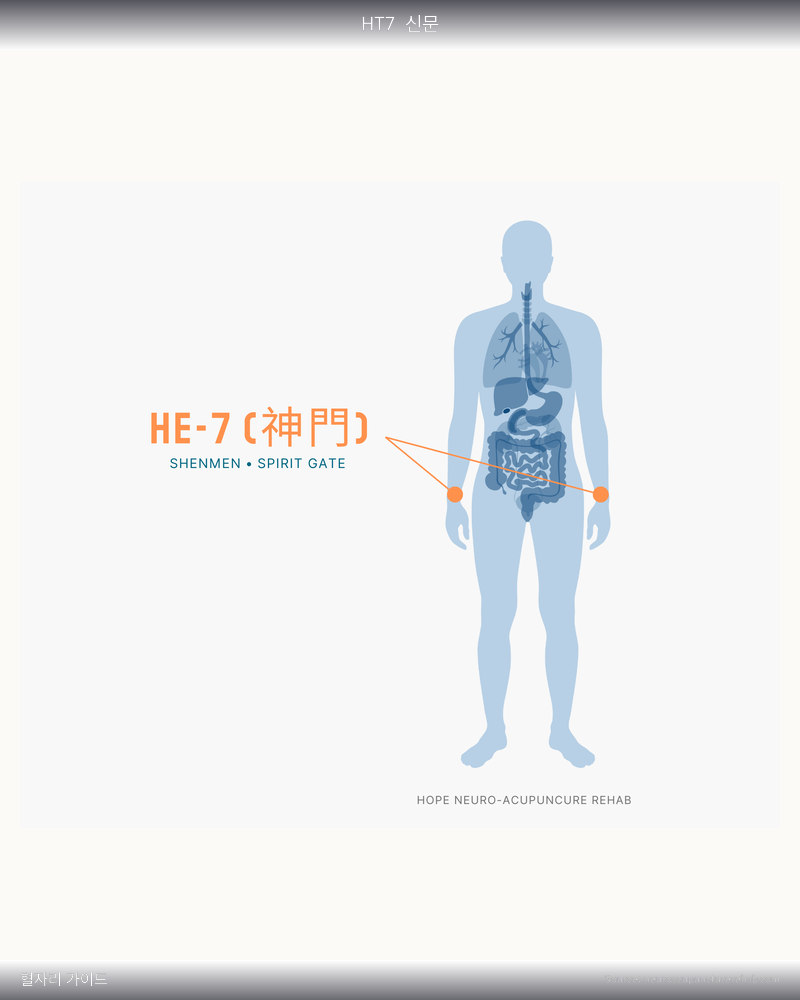
    HT7 혈자리 위치 그림

    Staring at the ceiling again tonight?

    You’ve been lying in bed for an hour. Eyes wide open, mind fully alert, body just heavy and drained. Tossing from one side to another, checking the clock — already 1 AM. “Tomorrow I’ll be a zombie at work again…” you sigh.

    Sleeping pills mean dependence worries, and you’ve counted way past 1,000 sheep. The agony of a sleepless night is something only those who’ve experienced it understand. Being tired but unable to sleep — what a maddening contradiction.

    But did you know our bodies have hidden “sleep switches”? Among acupressure techniques passed down for thousands of years, here are 7 points that have been reported to actually help induce sleep. No pills, no tools — you can start tonight right under your covers.

    1. Shenmen (HT7) — Close the Door of the Mind and Enter Sleep Mode

    Location

    The depression next to the tendon on the pinky side of the inner wrist crease.

    How to press

    1. Gently press Shenmen with the opposite thumb
    2. 5 seconds press, 3 seconds rest — repeat 10-15 times
    3. Do both hands

    Shenmen literally means “Door of the Spirit.” It calms an overly excited mind and soothes the heart, making it the go-to acupoint for insomnia.

    2. Anmian (EX-HN) — Release Forehead Tension

    Location

    The center of the forehead, slightly above and between the eyebrows.

    How to press

    1. Use index and middle fingers to gently rub the center of the forehead in circles
    2. Do this slowly for 30 seconds to 1 minute with eyes closed

    As the forehead muscles that have been tense from staring at screens all day release, your eyes naturally close.

    3. Sanyinjiao (SP6) — The Master Point for Whole-Body Yin Balance

    Location

    Four finger-widths above the inner ankle bone, along the back edge of the shin bone.

    How to press

    1. Press the soft area behind the bone firmly with your thumb
    2. Hold 5 seconds then slowly release — repeat 10 times
    3. Do both legs

    Sanyinjiao is where the Spleen, Liver, and Kidney meridians intersect. It balances the body’s yin and yang to improve sleep quality.

    Note: Pregnant women should avoid stimulating Sanyinjiao.

    4. Baihui (GV20) — Calm the Mind from the Crown

    Location

    Where a line connecting the tops of both ears meets a line running up from the nose to the crown.

    How to press

    1. Gently tap or make soft circles with your middle finger
    2. Do this slowly for 1 minute, synchronized with your breathing

    Baihui means “hundred convergences” — where a hundred meridians meet. It calms excessive brain excitation.

    5. Neiguan (PC6) — Calm a Pounding Heart

    Location

    Three finger-widths above the inner wrist crease, between the two tendons.

    How to press

    1. Press vertically downward with your thumb
    2. Hold 3-5 seconds then release — repeat 10 times on both sides

    Especially great for those whose heart pounds and anxiety rises when lying down. Stabilizes the autonomic nervous system.

    6. Yongquan (KI1) — The Sleep Button on Your Sole

    Location

    At the front third of the sole, the deepest point when you curl your toes.

    How to press

    1. Press firmly — Yongquan can handle strong pressure
    2. 5 seconds press, 3 seconds rest — repeat 15-20 times

    Yongquan means “gushing spring” — where life force emerges. It draws heat and energy from the head downward, creating the “cool head, warm feet” state that’s ideal for deep sleep.

    7. Fengchi (GB20) — Release Stiff Neck and Insomnia Together

    Location

    The depressions below the back of the skull where the two large neck muscles meet the skull bone.

    How to press

    1. Place both thumbs on Fengchi and wrap the rest of your fingers around your head
    2. Press upward while slowly making circles
    3. Hold 30 seconds to 1 minute; tilting your head back slightly increases effectiveness

    A stiff neck from sitting at the computer all day disrupts sleep. Releasing Fengchi refreshes the back of the neck and clears the head, inviting sleep.

    7 Acupoints at a Glance

    Acupoint Location Key Effect Time
    Shenmen (HT7) Inner wrist Mind calming 2 min
    Anmian Forehead center Forehead relaxation 1 min
    Sanyinjiao (SP6) Above inner ankle Yin-Yang balance 2 min
    Baihui (GV20) Crown of head Brain calming 1 min
    Neiguan (PC6) 3 fingers above wrist Heart calming 2 min
    Yongquan (KI1) Front of sole Heat reduction 2 min
    Fengchi (GB20) Below back of skull Neck relaxation 1 min

    Recommended Sleep Routine (10-15 minutes total)

    1. Fengchi (GB20) for 1 minute to release neck tension
    2. Baihui (GV20) for 1 minute of gentle tapping to calm the brain
    3. Shenmen (HT7) + Neiguan (PC6) alternating hands for 2 minutes each
    4. Sanyinjiao (SP6) for 2 minutes on each side
    5. Finally, Yongquan (KI1) for 2 minutes on each foot while focusing on breathing

    Following this order releases tension from top to bottom, naturally inviting sleep.

    Frequently Asked Questions

    How long before bed should I do acupressure?

    Starting 15-20 minutes before lying down is ideal. Doing it slowly in a quiet environment helps the body transition to sleep mode.

    Do I need to do all 7 for it to work?

    No! Pick 2-3 that work best for you. Consistency matters more than doing all of them. Daily practice is key.

    Is breathing important during acupressure?

    Yes, inhaling through the nose for 4 seconds and exhaling through the mouth for 6 seconds while pressing activates the parasympathetic nervous system, greatly enhancing the effect.

    Can I look at my phone while doing acupressure?

    Phone blue light suppresses melatonin production, which is counterproductive. Turn off the lights and focus solely on the acupressure.

    Can pregnant women use these acupressure methods?

    Sanyinjiao (SP6) may cause stimulation in pregnant women and should be avoided. Focus on Shenmen (HT7) or Baihui (GV20) instead.

    ⚠️ Pregnancy Warning: Sanyinjiao (SP6) mentioned in this article may stimulate uterine contractions. Pregnant women or those who may be pregnant should consult a specialist before applying acupressure.
    ⚠️ Medical Disclaimer: This article is for informational purposes only and does not replace professional medical diagnosis or treatment. If symptoms persist or worsen, please consult a healthcare professional.