Author: Acupoint Guide Editorial Team

  • My Neck Is So Stiff I Can’t Turn It

    My Neck Is So Stiff I Can’t Turn It

    Summary: When your neck is so stiff you can’t turn left or right, acupressure and simple stretches can release the tight muscles.
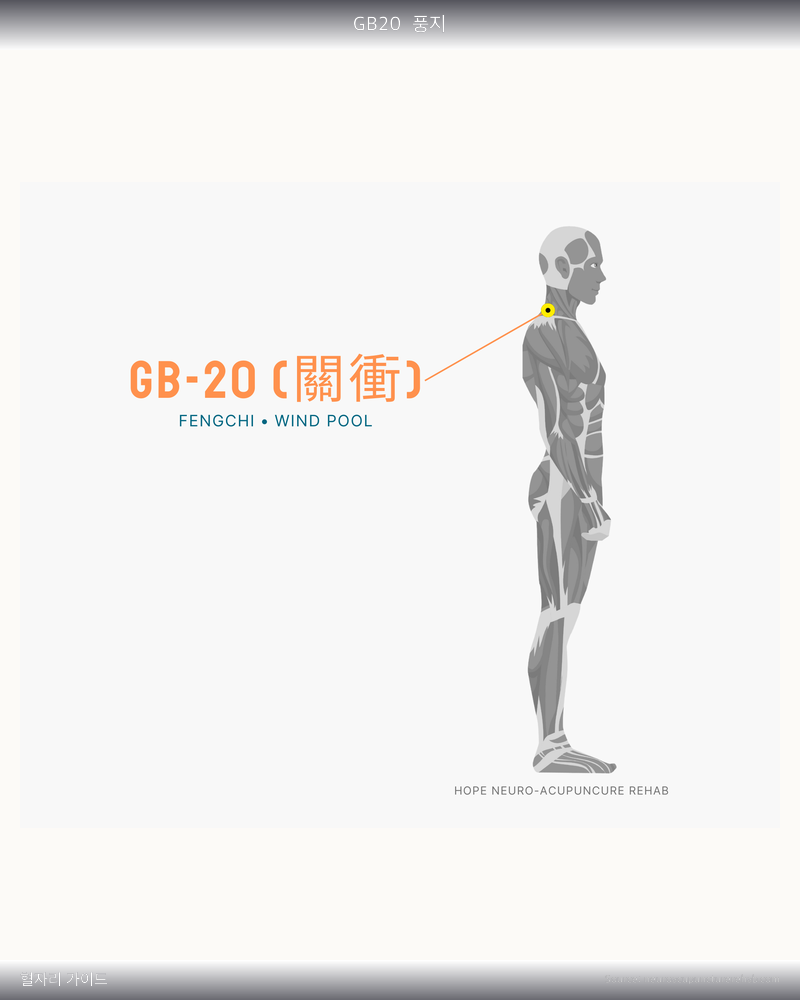
    GB20 혈자리 위치 그림

    “I tried to turn my neck… and it just won’t move”

    Have you ever woken up in the morning and tried to turn your head, only to find it completely locked up? Turn left and the right side of your neck pulls; force it and a sharp, stiff pain shoots up. At its worst, you can’t even look behind you without turning your whole body.

    Why does it get so stiff?

    The neck contains multiple layers of muscles like the splenius and sternocleidomastoid. When you maintain one position for too long, these muscles contract and lock in place. Blood flow decreases, waste products accumulate, and that stiff, achy feeling sets in. When the muscles responsible for side-to-side rotation become tight, you end up in that “can’t turn my neck” state.

    Your smartphone and pillow could be the culprits

    Looking down at your smartphone, a pillow that’s too high or too low, air conditioning blowing directly on your neck — these seemingly small habits make neck muscles stiff. Extended exposure to cold air can cause muscles to contract, leading to the “crick in the neck” feeling that makes your head immovable in the morning.

    Methods You Can Try Right Now

    Step 1: Warm Up First

    Apply a hot towel or heat pack to the stiff area for about 5 minutes. As blood flow revives, the muscles soften. Jumping straight to acupressure on hard muscles can cause overstimulation.

    Step 2: Fengchi (GB20) Acupressure
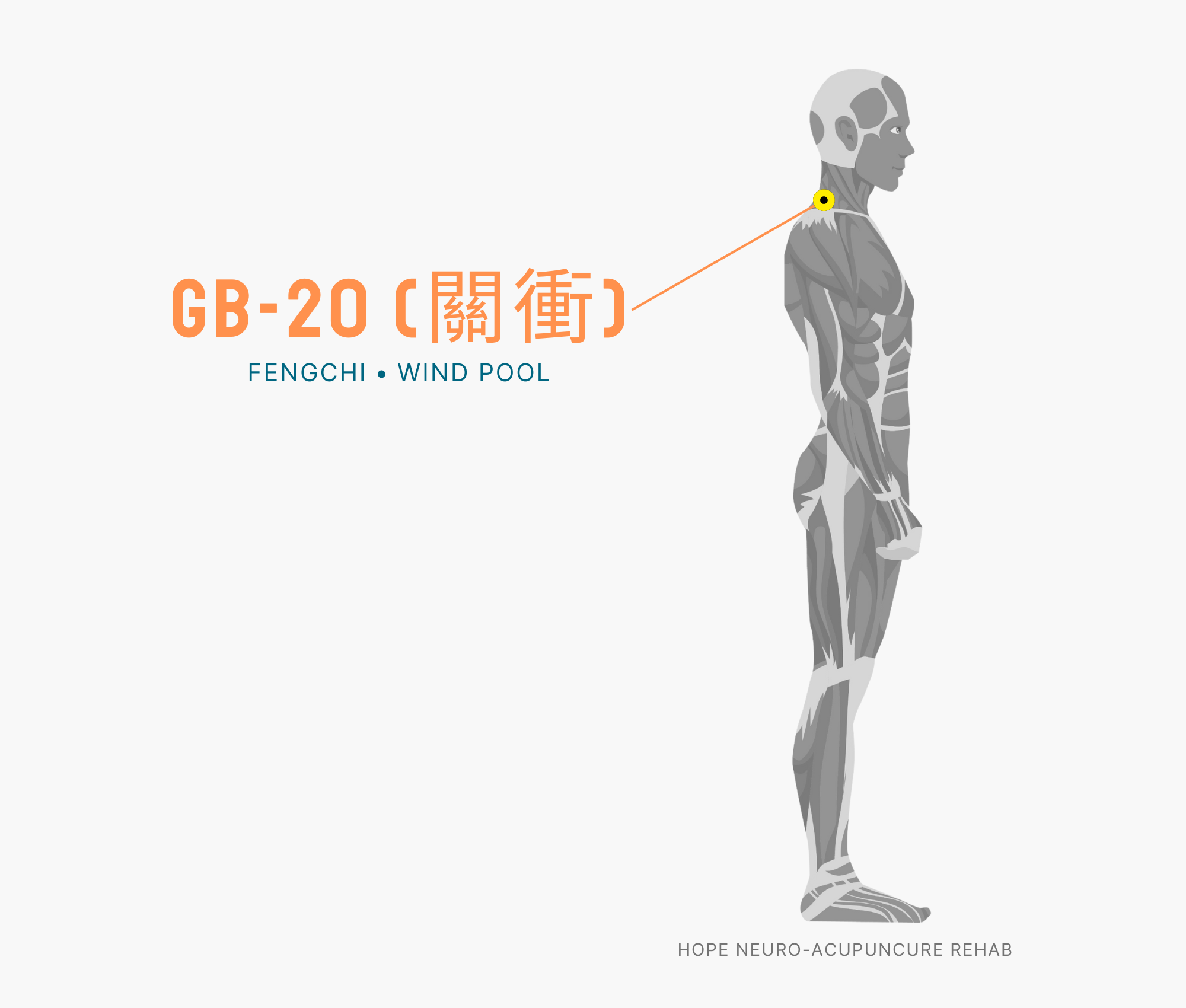
    GB20 acupuncture point

    Press firmly on both depressions below the back of the skull with your thumbs. Push upward toward the skull — 5 seconds press, 3 seconds rest, 8 repetitions. You’ll feel the tension in your entire neck gradually melting away.

    Step 3: Side Neck Muscle Stretch

    With your right hand on the left side of your head, slowly tilt toward the right. When you feel a stiff pulling sensation, hold for 15 seconds. Repeat on the other side. Never force it! Gently, gently.

    Step 4: Slow Rotation Exercise

    Drop your head forward and slowly rotate clockwise. It should take at least 15 seconds for one full rotation. Don’t stop at stiff spots — just move through them more slowly. 3 rotations clockwise, 3 counter-clockwise.

    If Stiffness Keeps Coming Back, Check These

    • Make sure your monitor is at eye level
    • Slowly turn your neck left and right every hour
    • Pillow height — your neck should be in a straight line when lying down
    • Don’t let A/C or fan air blow directly on your neck

    Frequently Asked Questions

    My neck has been stiff for days and won’t loosen up. Should I see a doctor?

    If it persists for more than 3 days, or if accompanied by arm numbness, headache, or dizziness, there may be a disc issue, so see a doctor.

    Is the cracking sound when turning my neck okay?

    Occasional light sounds are usually just gas bubbles in joint fluid popping and are fine. But if it happens every time with accompanying pain, consult a professional.

    Should I use a hot or cold compress?

    For stiff, locked muscles, warm compresses work better. Only use cold compresses for injury-related swelling.

    Does acupressure before bed help with sleep?

    Yes! Fengchi acupressure releases neck tension and improves blood flow, helping with quality sleep. Try it 15 minutes before bedtime.

    Is it okay to crack my neck when it’s stiff?

    Definitely not recommended! Sudden cracking can cause ligament damage or vascular problems. Stick to slow, gentle rotation only.
    ⚠️ Medical Disclaimer: This article is for informational purposes only and does not replace professional medical diagnosis or treatment. If symptoms persist or worsen, please consult a healthcare professional.
  • Overcoming Chronic Neck Pain at Its Roots

    Overcoming Chronic Neck Pain at Its Roots

    Summary: Chronic neck pain that won’t heal for months — learn how to identify the root causes and systematically resolve them.

    GB20 혈자리 위치 그림

    “Neck pain has become my normal”

    Stiff in the morning, tight during the day, aching in the evening. Patches, massages, stretching — they help temporarily but the pain returns. If this has been going on for more than 3 months, it’s “chronic neck pain.” You shouldn’t just tough it out any longer.

    Acute vs Chronic: Why the Approach Must Be Different

    Acute neck pain comes from specific causes (wrong sleeping position, sudden impact) and heals in days. But chronic pain is different. Multiple causes overlap, creating a vicious cycle of “pain, tension, posture distortion, more pain.” Pressing just one point will never solve it.

    3 Hidden Causes of Chronic Neck Pain

    Cause 1 — Fascial Adhesion

    The thin membrane (fascia) wrapping your muscles sticks together from prolonged tension. There’s a constant stiff, achy feeling, and pressing certain spots sends sharp pain radiating to distant areas. This is called Myofascial Pain Syndrome (MPS).

    Cause 2 — Deep Muscle Weakness

    When the deep cervical flexor muscles (located deep in the front of the neck) weaken, surface muscles compensate and overwork. These overworked surface muscles become tight — a primary cause of chronic pain. The worse your text neck, the weaker your deep muscles.

    Cause 3 — Stress and the Autonomic Nervous System

    Chronic stress over-activates the sympathetic nervous system, leading to sustained tension in neck and shoulder muscles. “Pain causes stress, stress causes more pain” — a vicious cycle.

    4-Week Systematic Resolution Program

    Week 1 — Pain Relief and Blood Flow Improvement

    Daily morning and evening Fengchi (GB20) and Tianzhu (BL10) acupressure for 5 minutes + warm compress for 10 minutes. During this period, avoid strong massage or intense exercise. Focus on sending blood flow to the tight fascia.

    Week 2 — Fascial Release

    Place a tennis ball between the wall and the back of your neck, and use your body weight to slowly roll it over sore points. 30 seconds to 1 minute per point. Focus on the Jianjing (GB21) area and between the shoulder blades. The right intensity is when it feels sore yet satisfying.

    Week 3 — Deep Muscle Strengthening

    Start Chin Tuck exercises. Stand with your back against a wall and tuck your chin so the back of your head touches the wall. Hold 10 seconds x 10 reps x 3 sets per day. This exercise strengthens the deep cervical flexor muscles and fundamentally corrects text neck.

    Week 4 — Lifestyle Pattern Integration

    Integrate all the previous routines into your daily schedule to make them habitual. Morning — acupressure + warm compress. Daytime — 1-minute stretch every hour. Evening — tennis ball fascial release + chin tuck exercise.

    Danger Signs That Require a Doctor Visit

    • Persistent weakness or numbness in arms or hands
    • Abnormal balance issues when walking
    • Difficulty controlling bladder or bowel (cervical spinal cord issue)
    • Neck pain that started after trauma (accident, fall)

    Frequently Asked Questions

    Do I absolutely need an MRI for chronic neck pain?

    If there’s no arm numbness or weakness, it’s not always necessary. But if it hasn’t improved for 3+ months, consult a professional for accurate diagnosis.

    Can I do gym workouts during the 4-week program?

    Light cardio and lower body exercises are fine. But avoid exercises that strain the neck like shoulder press and bench press until pain has significantly decreased.

    Are deep muscle exercises difficult?

    Chin tuck exercises can be done easily at home without equipment. Start with 5-second holds and gradually increase.

    Is acupuncture effective for chronic neck pain?

    Multiple studies report that acupuncture is effective for chronic neck pain relief. Combining it with self-acupressure creates a synergistic effect.

    Can stress be a cause of neck pain?

    Yes, it’s one of the major causes. Stress activates the sympathetic nervous system, keeping neck and shoulder muscles in constant tension. Meditation and breathing exercises alongside physical therapy are recommended.

    ⚠️ Medical Disclaimer: This article is for informational purposes only and does not replace professional medical diagnosis or treatment. If symptoms persist or worsen, please consult a healthcare professional.
  • Too Wired to Sleep After Working Late — Relaxation Acupressure Routine

    Too Wired to Sleep After Working Late — Relaxation Acupressure Routine

    Summary: A relaxation acupressure method to calm your wired brain after working late. Use Fengchi (GB20) to release neck tension, Shenmen (HT7) and Neiguan (PC6) to lower arousal, and Sanyinjiao (SP6) and Yongquan (KI1) to enter sleep mode.

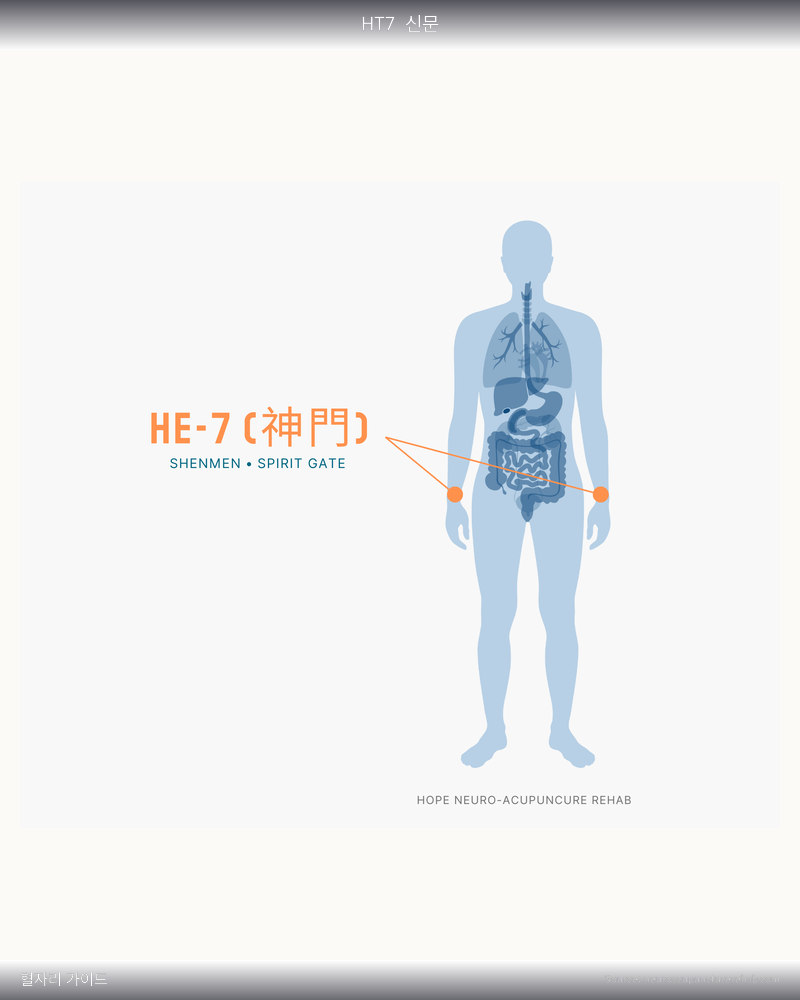
    HT7 혈자리 위치 그림

    Done with overtime! But… my brain won’t turn off

    11 PM, finally home from work. Your body is exhausted but your mind is still wide awake. Report details spinning around, tomorrow morning’s meeting prep, unanswered emails, your boss’s expression… toss and turn until 1 AM.

    Not being able to fall asleep right after overtime is a natural phenomenon. The adrenaline and cortisol released during work are still coursing through your body. Especially after high-pressure tasks (deadlines, presentations, client interactions), your sympathetic nervous system stays activated for quite a while.

    The key is not to try to forcefully switch off this aroused state, but to gradually turn down the volume. That’s exactly what relaxation acupressure does.

    Post-Overtime Relaxation Acupressure Routine (15 minutes)

    Phase 1: Release (0-4 min) — Dissolve physical tension first

    Fengchi (GB20) — Melt the iron weights in your neck and shoulders

    The depressions below the back of the skull where the two large neck muscles meet the skull bone.

    1. Place both thumbs on Fengchi and wrap the other fingers around your head
    2. Press firmly upward while slowly making circles
    3. Press for 2 minutes, then gently knead the entire back of the neck

    As the neck that’s been stiff from staring at a monitor all day releases, you’ll let out an involuntary “ahh.” When the tense trapezius relaxes, your brain feels lighter too.

    Phase 2: Wind Down (4-9 min) — Lower brain arousal

    Shenmen (HT7) — Turn off work mode

    Inner wrist crease, next to the tendon on the pinky side. 5 seconds each, 15 times on both sides.

    Try saying to yourself while pressing: “Work is done. It’s my time now.” Shenmen is the source point of the Heart meridian, excellent at calming excessive mental activity.

    Neiguan (PC6) — Calm heart palpitations and tension

    Three finger-widths above the inner wrist crease, between the two tendons. 5 seconds each, 10 times on both sides.

    The racing heart from caffeine and tension during overtime gradually calms down.

    Phase 3: Sleep Mode (9-15 min) — Enter sleep state

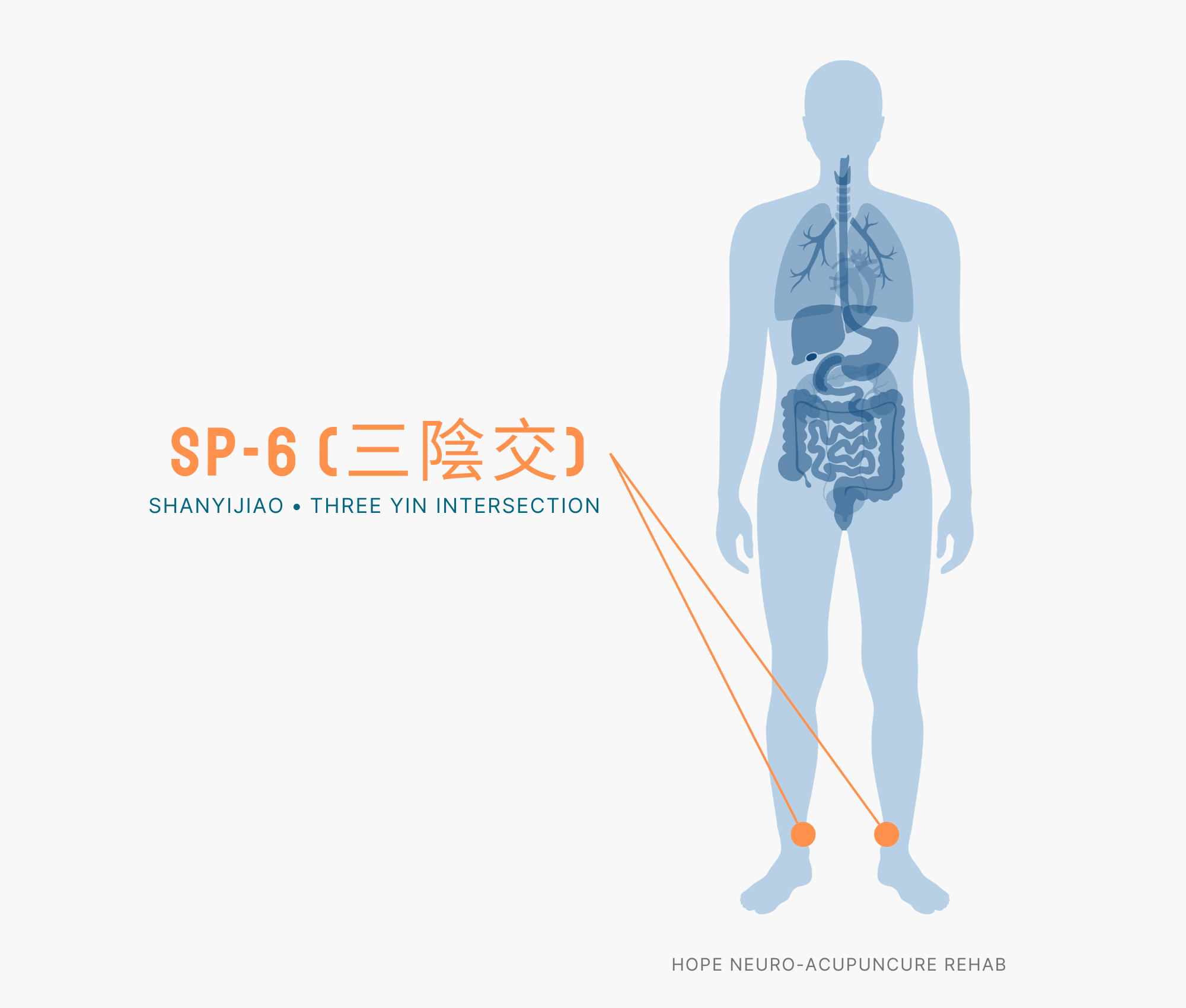
    Sanyinjiao (SP6) — Switch your whole body to sleep mode

    Four finger-widths above the inner ankle bone, behind the shin bone. 5 seconds each, 10 times on both sides.

    Sanyinjiao is where three meridians (Spleen, Liver, Kidney) converge. It replenishes the yin blood depleted by overtime and relaxes the entire body.

    Yongquan (KI1) — Draw heat from the head down to your feet

    Under the covers, firmly press the depression in the front third of each sole 20 times per foot. Your head cools down, eyes get heavy… and you drift off to dreamland.

    Sleep Tips for the Overtime Warrior

    • Cool-down time: After getting home, take at least 30 minutes to do nothing. Trying to sleep immediately backfires.
    • Lukewarm shower: A 5-10 minute shower at 38-40°C (100-104°F). As body temperature rises then drops, sleep is induced.
    • Late-night snacks: Even if hungry, avoid overeating! A banana or a cup of warm milk is just right.
    • Task notes: Write down tomorrow’s to-do list — your brain recognizes “it’s recorded, so I can let go” and relaxes.
    • Fixed wake time: Even if you slept late, keep your wake time consistent. Weekend catch-up sleep should be 30 minutes max.

    Overtime may be unavoidable, but your sleep after overtime is something you can protect. Use this 15-minute relaxation acupressure routine to tell your body and mind, “Good work, now rest.”

    Frequently Asked Questions

    Is it okay to sleep right after getting home from overtime?

    If you try to sleep right after getting home, your brain is still in work mode and won’t shut down. Take at least 30 minutes to 1 hour of cool-down time, and use that time for the acupressure routine.

    I drank an energy drink during overtime. Is that okay?

    Caffeine has a half-life of 5-6 hours, so if you leave work at dawn, it may be tough. Next time, avoid caffeine after evening and substitute with water or herbal tea.

    Does a hot shower after getting home help with sleep?

    Yes! Sleep is induced as body temperature drops after a hot shower. However, water that’s too hot can actually wake you up, so lukewarm water around 38-40°C (100-104°F) is best.

    Won’t frequent overtime permanently mess up my sleep pattern?

    Try to keep your wake-up time as consistent as possible. Even if your bedtime varies, keeping the same wake time helps maintain your body clock.

    How should pregnant women handle Sanyinjiao (SP6) acupressure?

    SP6 acupuncture point

    Pregnant women should avoid Sanyinjiao stimulation and focus on Shenmen (HT7) and Neiguan (PC6) instead. These provide sufficient relaxation effects.

    ⚠️ Pregnancy Warning: Sanyinjiao (SP6) mentioned in this article may stimulate uterine contractions. Pregnant women or those who may be pregnant should consult a specialist before applying acupressure.
    ⚠️ Medical Disclaimer: This article is for informational purposes only and does not replace professional medical diagnosis or treatment. If symptoms persist or worsen, please consult a healthcare professional.
  • Can’t Sleep the Night Before an Exam — 10-Minute Sleep Routine

    Can’t Sleep the Night Before an Exam — 10-Minute Sleep Routine

    Summary: When you can’t sleep before an exam due to nerves, this 10-minute acupressure routine will help you fall asleep fast. Use Neiguan (PC6) to calm heart palpitations, Shenmen (HT7) to ease anxiety, and Yongquan (KI1) to cool your head.

    HT7 혈자리 위치 그림

    The exam is tomorrow… but I can’t sleep

    Heart pounding. Your mind is wide awake, and the moment you lie in bed, suddenly “Did I memorize that? Is this formula right?” — your head fills with noise. After tossing and turning, the clock already reads 2 AM.

    “If I don’t sleep, I’ll bomb the exam tomorrow” — but that thought just chases sleep away even more. Nervousness leads to insomnia leads to more nervousness — a vicious cycle. If you’ve ever been a student, you know that night all too well.

    What you need is to quickly switch off the sympathetic nervous system and turn on the parasympathetic. Try this ultra-simple acupressure routine that’s done in 10 minutes to send your body the signal that “it’s time to sleep.”

    10-Minute Sleep Routine Step by Step

    Step 1 (0-3 min): Neiguan (PC6) — Calm the palpitations

    PC6 acupuncture point

    Three finger-widths above the inner wrist crease, between the two tendons.

    1. Press left Neiguan with right thumb while inhaling through your nose for 4 seconds
    2. Hold your breath for 7 seconds while maintaining pressure
    3. Exhale slowly through your mouth for 8 seconds while releasing your finger
    4. Repeat 5 times, then switch to the other side for 5 more

    The pre-exam pounding heart is caused by sympathetic nervous system over-activation. Neiguan directly calms this excitement.

    Step 2 (3-6 min): Shenmen (HT7) — Organize racing thoughts

    HT7 acupuncture point

    Inner wrist crease, right next to the tendon on the pinky side.

    1. Press gently in circular motions with your thumb
    2. While pressing, silently tell yourself “It’s okay, I’ve prepared enough”
    3. 5 seconds press, 3 seconds rest — 10 times on each side

    When anxious thoughts like “Did I miss something?” keep bubbling up, pressing Shenmen slows down the speed of your thoughts.

    Step 3 (6-8 min): Baihui (GV20) — Brain reset

    Gently tap the center of your crown with your middle finger. 30 seconds tapping, 30 seconds rest — 2 sets. It feels like cooling down a brain that’s been overheated from studying.

    Step 4 (8-10 min): Yongquan (KI1) — Sleep switch ON

    KI1 acupuncture point

    Under the covers, press the soles of each foot firmly with your thumb — 1 minute per foot. Close your eyes and focus only on your breathing… and before you know it, you’re drifting off.

    Tips to Maximize the Routine’s Effectiveness

    • Environment: Darken the room and set the temperature to 64-68°F (18-20°C)
    • Phone: Set only the alarm and put it face down. “Just one more look” is forbidden!
    • Brain dump: Write your worries on paper — your brain relaxes thinking “it’s been recorded, so it’s fine”
    • Body temperature: Soaking your feet in warm water 30 minutes before the routine doubles the Yongquan acupressure effect

    The exam is tomorrow’s task. These 10 minutes right now are entirely for your body. Give yourself this gift.

    Frequently Asked Questions

    Is sleeping even a little better than pulling an all-nighter the night before an exam?

    Yes, even 4 hours of sleep is far better than an all-nighter. Memories are organized and consolidated during sleep. Even 1 hour of sleep can restore cognitive function.

    My pre-exam anxiety is really severe. Is acupressure enough?

    Acupressure is a supplementary tool. If anxiety is severe, try deep breathing and progressive muscle relaxation as well. For chronic exam anxiety, professional counseling can help.

    Neiguan (PC6) is said to help with motion sickness — does it work for sleep too?

    PC6 acupuncture point

    Yes! Neiguan stabilizes the autonomic nervous system, so it’s effective for motion sickness, nausea, anxiety, and insomnia alike.

    I already drank a lot of caffeine. Will acupressure still work?

    Caffeine has a half-life of 5-6 hours, so late-evening coffee is still in your system. Acupressure can help release tension, but next time try reducing afternoon caffeine.

    Can I do this 10-minute routine every day?

    Absolutely! Making it a nightly bedtime routine — not just for exams — will steadily improve your sleep quality.

    ⚠️ Medical Disclaimer: This article is for informational purposes only and does not replace professional medical diagnosis or treatment. If symptoms persist or worsen, please consult a healthcare professional.
  • How to Fall Asleep Without Medication

    How to Fall Asleep Without Medication

    Summary: If you’re looking for ways to fall asleep without sleeping pills, combining acupressure (Shenmen, Baihui, Yongquan), breathing techniques, and sleep hygiene management can help you achieve natural sleep without medication.

    HT7 혈자리 위치 그림

    “Isn’t there something besides sleeping pills?”

    It started casually — just a pill or two when you couldn’t sleep. But now it feels impossible to fall asleep without medication. The pills make you sleep, but you wake up with a foggy head; without them, you’re wide awake all night. You want to break free from this cycle, and we completely understand.

    Others have been toughing it out without pills from the start, but the sleepless nights just keep getting longer until they wonder, “Should I start taking medication?”

    There’s good news: methods for falling asleep without medication definitely exist. However, it’s not about finding one “magic replacement” for sleeping pills — it requires a comprehensive approach combining several strategies.

    5 Ways to Fall Asleep Without Medication

    Method 1: Pre-Bed Acupressure Routine (10 minutes)

    When you do acupressure at the same time and in the same order every day, your brain learns that “this is the sleep preparation signal.” This is called “sleep conditioning.”

    Shenmen (HT7): Inner wrist crease, next to the tendon on the pinky side. 5 seconds each, 15 times on both sides. Instead of forcefully shutting down the brain with medication, it naturally calms it.

    Baihui (GV20): Center of the crown. Tap gently for 1 minute. Cools an overheated brain and shifts it to natural sleep mode.

    Yongquan (KI1): Front third of the sole. Press firmly 20 times on each foot. Draws heat from the head to the feet, creating the “cool head, warm feet” state.

    Method 2: 4-7-8 Breathing Technique

    Developed by Harvard Medical School’s Dr. Andrew Weil.

    1. Inhale through your nose for 4 seconds
    2. Hold your breath for 7 seconds
    3. Exhale through your mouth for 8 seconds with a “whoosh”
    4. Repeat 4 times

    Combining this with acupressure doubles the effect. Yongquan acupressure + 4-7-8 breathing can make your eyes heavy in just 2-3 minutes.

    Method 3: Sleep Restriction Therapy

    The most scientifically validated method for treating insomnia without medication.

    • Stay in bed only as long as you actually sleep (e.g., if you sleep 5 hours, stay in bed only 5.5 hours)
    • Absolutely fix your wake time (including weekends!)
    • Never lie in bed unless you’re sleepy
    • The first 2 weeks are tough, but as sleep pressure builds, your ability to fall asleep recovers

    Method 4: Progressive Muscle Relaxation (PMR)

    Starting from your toes to the top of your head, tense each muscle group for 5 seconds, then relax for 10 seconds. Your brain recognizes the contrast between tension and relaxation, and your whole body relaxes. Doing this before the acupressure routine also enhances its effectiveness.

    Method 5: Sleep Hygiene Checklist

    • Caffeine only before 2 PM
    • Finish drinking alcohol at least 4 hours before bed (alcohol is sleep’s enemy!)
    • Keep the bedroom dark and cool (64-68°F / 18-20°C)
    • Put down the phone 1 hour before bed
    • Use the bed only for sleep-related purposes

    If You Want to Reduce Medication

    Never stop cold turkey on your own. Rebound insomnia can occur. Discuss a plan with your doctor to gradually reduce medication while incorporating acupressure and breathing techniques. Many people have successfully freed themselves from medication this way.

    Falling asleep without medication is possible. However, it’s not like a sleeping pill where “take it and sleep immediately” — you need to build new habits consistently over 2-4 weeks. Start tonight by pressing Shenmen (HT7) just once.

    Frequently Asked Questions

    Can stopping sleeping pills cause rebound insomnia?

    Yes, quitting abruptly can temporarily worsen insomnia (rebound insomnia). You must always taper off gradually under a doctor’s guidance.

    Is melatonin a medication?

    Melatonin is a hormone naturally produced by the body. While it can be taken as a supplement, long-term use may reduce natural production, so use it only short-term.

    Is acupressure as effective as sleeping pills?

    It’s not as immediate as sleeping pills, but with consistent practice and no side effects, sleep quality naturally improves. Research has also reported sleep improvement effects from acupressure.

    How should I start with meditation?

    Start with 5-minute guided meditations on apps (like Calm or Headspace). Focusing on your breathing during acupressure is also a form of meditation.

    Does exercise help with sleep?

    Regular aerobic exercise (walking, swimming, etc.) greatly improves sleep quality. However, avoid intense exercise within 3 hours of bedtime.

    ⚠️ Medical Disclaimer: This article is for informational purposes only and does not replace professional medical diagnosis or treatment. If symptoms persist or worsen, please consult a healthcare professional.
  • Overcoming Chronic Insomnia at Its Roots

    Overcoming Chronic Insomnia at Its Roots

    Summary: Chronic insomnia isn’t just a sleep problem — it’s a whole-body imbalance. Consistent acupressure on Shenmen (HT7), Sanyinjiao (SP6), Baihui (GV20), combined with sleep hygiene changes and cognitive pattern shifts, is the path to lasting improvement.

    HT7 혈자리 위치 그림

    It’s not just a night or two. I haven’t been able to sleep for years

    Night has become something to dread. Other people do “sleeping” so naturally — why is it so hard for me? Tossing and turning for hours before finally falling asleep, only to wake up at dawn wide-eyed. Days like this happen three or four times a week, or almost every night.

    During the day, you’re like a zombie. Can’t concentrate, memory failing, emotional control slipping. “It’ll get better if I just rest a bit” — but it’s been years now. You’re starting to think, “Maybe I’m just the type who can’t sleep.”

    But chronic insomnia is not a personality type. It’s a bad pattern your brain has learned. And patterns can be changed.

    3 Root Causes of Chronic Insomnia

    1. Hyperarousal — A Brain That Won’t Switch Off

    The brains of chronic insomnia sufferers maintain high arousal levels 24/7. The problem isn’t just at bedtime — there’s a subtle tension state throughout the day. This is called the ‘hyperarousal model.’

    2. False Beliefs About Sleep

    “I need 8 hours of sleep,” “If I don’t sleep, tomorrow is completely ruined,” “I’m just an insomniac by nature” — these thoughts actually perpetuate insomnia. Excessive fixation on sleep paradoxically drives it away.

    3. Vicious Cycle of Compensatory Behaviors

    Sleeping in, napping, going to bed early, lying in bed for hours — these attempts to “make up” for lost sleep actually reduce sleep pressure (drowsiness) and create an association between bed and wakefulness.

    A 3-Step Approach to Root-Level Change

    Step 1: Daily Acupressure for Physical Tension Release (Weeks 2-4)

    Press the following acupoints in order every night, 20 minutes before bed.

    Baihui (GV20) — Center of the crown. Gently tap with your middle finger for 1 minute. The first step to cooling an overheated brain.

    Shenmen (HT7) — Inner wrist crease, next to the tendon on the pinky side. 5 seconds each, 15 times on both sides. Calms the heart and soothes anxiety.

    Sanyinjiao (SP6) — Four finger-widths above the inner ankle bone, behind the shin. 5 seconds each, 10 times on both sides. Balances Spleen, Liver, and Kidney to shift the whole body into sleep mode.

    Yongquan (KI1) — Front third of the sole. Press firmly 15-20 times on each foot. Draws heat downward to create a “cool head, warm feet” state.

    Step 2: Sleep Restriction Therapy (Weeks 4-8)

    Paradoxically, spending less time in bed is the key.

    • If you actually sleep 5 hours, stay in bed only 5.5 hours
    • Fix your wake time (including weekends!)
    • Don’t lie in bed unless you’re sleepy
    • When sleep efficiency (actual sleep time / time in bed) exceeds 85%, extend bed time by 30 minutes

    Step 3: Cognitive Restructuring

    Replace “If I can’t sleep, it’ll be a disaster” with “Humans function well enough even after a bad night or two.” The more you let go of your fixation on sleep, paradoxically, the better you sleep.

    Chronic Insomnia Recovery Timeline

    Period Changes Acupressure Focus
    Weeks 1-2 Getting used to the routine; bedtime tension decreases slightly Shenmen + Yongquan focus
    Weeks 3-4 Time to fall asleep starts decreasing Full 4-point routine
    Weeks 5-8 Night awakenings decrease; daytime condition improves Maintain routine + sleep restriction
    Months 2-3 Sleep pattern stabilizes; confidence that “I can sleep” grows Maintenance + as needed

    Chronic insomnia didn’t develop overnight, and it won’t heal overnight either. But if you keep moving in the right direction every day, recovery is absolutely possible. Start tonight with just one press on the Shenmen point.

    Frequently Asked Questions

    How bad does it have to be to qualify as chronic insomnia?

    If sleep problems occur 3 or more times per week for over 3 months, it’s classified as chronic insomnia. Just a few days of poor sleep is acute insomnia.

    Can acupressure alone cure chronic insomnia?

    Acupressure is an effective supplementary tool, but chronic insomnia is best addressed by combining it with Cognitive Behavioral Therapy for Insomnia (CBT-I) or professional consultation.

    I’ve been taking sleeping pills for a long time. Can acupressure help me reduce them?

    Reducing sleeping pills must always be done under a doctor’s guidance. Discuss a plan to gradually decrease medication while incorporating acupressure with your doctor.

    Sanyinjiao (SP6) should be avoided during pregnancy — can other points substitute?

    SP6 acupuncture point

    Yes, pregnant women can safely focus on Shenmen (HT7) and Baihui (GV20) instead of Sanyinjiao. These still effectively support sleep.

    Is there a big difference between professional acupuncture and self-acupressure?

    Acupuncture provides more precise and deeper stimulation, so the effects are stronger. Self-acupressure has the advantage of being done daily and consistently, so combining both is ideal.

    ⚠️ Pregnancy Warning: Sanyinjiao (SP6) mentioned in this article may stimulate uterine contractions. Pregnant women or those who may be pregnant should consult a specialist before applying acupressure.
    ⚠️ Medical Disclaimer: This article is for informational purposes only and does not replace professional medical diagnosis or treatment. If symptoms persist or worsen, please consult a healthcare professional.
  • Sleep-Onset vs Sleep: Which Pressure Point Is Right for You?

    Sleep-Onset vs Sleep: Which Pressure Point Is Right for You?

    Summary: Insomnia is divided into ‘sleep-onset insomnia’ (difficulty falling asleep) and ‘sleep-maintenance insomnia’ (waking during the night), and the effective acupoints and strategies differ for each type.

    HT7 혈자리 위치 그림

    “What type of insomnia do I have?”

    Not all insomnia is the same. Some people lie awake for an hour staring at the ceiling, while others fall asleep fine but wake up every dawn, tossing and turning. The symptoms may look similar, but the causes and solutions are quite different.

    Just like “my stomach hurts” could be indigestion or appendicitis with completely different treatments, knowing your insomnia type lets you address it much more efficiently.

    Today we’ll clearly outline the differences between the two types and share the matching acupressure techniques and lifestyle strategies for each.

    Sleep-Onset Insomnia

    Characteristics

    • Can’t fall asleep for 30+ minutes after lying down
    • Eyes become wide awake when nighttime comes
    • Thoughts chain together endlessly in your mind
    • Common in younger people and those with anxiety tendencies

    Main Causes

    Sympathetic nervous system over-activation, sleep anxiety, blue light exposure, irregular bedtime schedules, caffeine, etc.

    Effective Acupressure for Sleep-Onset Insomnia

    Shenmen (HT7) — Source point of the Heart meridian, calms excessive mental activity. Press both wrists alternately for 5 seconds, 15 times while in bed.

    Neiguan (PC6) — Connecting point of the Pericardium meridian, calms palpitations and anxiety. Especially good for those with anticipatory anxiety: “What if I can’t fall asleep?”

    Baihui (GV20) — Cools an overheated brain. When your mind is too noisy, tapping the crown turns down the volume of thoughts.

    Sleep-Maintenance Insomnia

    Characteristics

    • Falls asleep but wakes up 2+ times during the night
    • After waking, can’t fall back asleep for 20+ minutes
    • Wakes at 4-5 AM and can’t sleep until morning
    • Common in middle-aged/older adults and those with drinking habits

    Main Causes

    Alcohol, sleep apnea, nocturia, stress hormone imbalance, pain, menopause symptoms, etc.

    Effective Acupressure for Sleep-Maintenance Insomnia

    Yongquan (KI1) — Well point of the Kidney meridian, draws rising fire downward and replenishes yin energy. When you wake at dawn, press both soles firmly 15-20 times right under the covers.

    Sanyinjiao (SP6) — Intersection of Spleen, Liver, and Kidney, nourishes yin blood. Especially effective for those waking from menopausal hot flashes. Best pressed before bedtime as prevention.

    Fengchi (GB20) — Releases neck tension to maintain deep sleep. Massage both sides for 1 minute before bed.

    Side-by-Side Comparison

    Category Sleep-Onset Insomnia Sleep-Maintenance Insomnia
    Key Symptom 30+ min to fall asleep Frequent night waking
    Main Cause Sympathetic overactivation Yin blood deficiency, hormonal changes
    Recommended Points Shenmen, Neiguan, Baihui Yongquan, Sanyinjiao, Fengchi
    Acupressure Timing 15 min before sleep Before bed + when waking
    Lifestyle Strategy Fix bedtime, block blue light Limit alcohol, improve bedroom environment

    What If You Have Both Types?

    If you struggle both to fall asleep and stay asleep (mixed type), use the onset-type acupressure (Shenmen + Neiguan + Baihui) before bed and the maintenance-type acupressure (Yongquan + Fengchi) when you wake up at dawn. Flexibly apply both routines as needed.

    The first step to accurately identifying your type is keeping a sleep diary. Just 2 weeks of recording will reveal patterns, and applying the matching acupressure technique will help you feel improvement much faster.

    Frequently Asked Questions

    Can you have both sleep-onset and sleep-maintenance insomnia?

    Yes, ‘mixed insomnia’ where both falling asleep and staying asleep are difficult is quite common. In this case, use the acupressure methods for both types.

    How can I tell which type I have?

    Keep a sleep diary for 2 weeks. If it takes 30+ minutes to fall asleep, it’s onset type. If you wake 2+ times and can’t fall back asleep for 20+ minutes, it’s maintenance type.

    Is sleep-maintenance insomnia just a natural part of aging?

    It’s true that deep sleep decreases with age, making waking easier. But if frequent waking causes significant fatigue, management is needed.

    Are there different lifestyle habits for each type besides acupressure?

    For onset type, delay bedtime and create a sleep ritual. For maintenance type, reduce alcohol and late-night snacking, and improve the bedroom environment (noise, light).

    Should I get a sleep study done?

    If insomnia lasts 3+ months, or if snoring/sleep apnea is suspected, a polysomnography (sleep study) is recommended to accurately assess your sleep architecture.

    ⚠️ Pregnancy Warning: Sanyinjiao (SP6) mentioned in this article may stimulate uterine contractions. Pregnant women or those who may be pregnant should consult a specialist before applying acupressure.
    ⚠️ Medical Disclaimer: This article is for informational purposes only and does not replace professional medical diagnosis or treatment. If symptoms persist or worsen, please consult a healthcare professional.
  • Migraine vs Tension Headache: Different Acupressure Points for Each — A Complete Comparison Guide

    Migraine vs Tension Headache: Different Acupressure Points for Each — A Complete Comparison Guide

    Quick Summary: Migraines and tension headaches have different mechanisms, so the acupressure points you should press are different too. First identify your headache type, then apply the right acupressure technique.
    GB20 혈자리 위치 그림

    “I thought it was just a headache”… but there are different kinds?

    Some days your temples throb painfully and light makes your eyes sting, while other days your whole head feels heavy and tight, as if wrapped in a band. It’s all called “headache,” but the sensations are completely different, right?

    That different feeling exists because they really are different headaches. Migraines and tension headaches differ in cause, mechanism, and how to deal with them.

    The problem is — applying acupressure for the wrong headache type can actually make it worse. Let’s figure out what type of headache you have and learn the perfect acupressure technique for it.

    Migraine vs Tension Headache Comparison

    Category Migraine Tension Headache
    Sensation Throbbing, pulsating Squeezing, heavy pressure
    Location One side (left or right) Both sides, entire head
    Intensity Moderate to severe Mild to moderate
    Accompanying symptoms Nausea, light/sound sensitivity Stiff neck and shoulders
    With activity Worsens with movement Similar with movement
    Duration 4-72 hours 30 min to several days
    Main cause Cerebral vasodilation, serotonin Myofascial tension, stress

    Acupressure Points for Migraines

    Migraines occur when blood vessels dilate and irritate surrounding nerves. That’s why stimulating distal points (far from the head) to redistribute qi and blood flow is an effective strategy.

    1. Hegu (LI4): Hand webbing — press firmly 5 sec x 10 reps. The key point for blocking pain signals to the face and head
    2. Taichong (LR3): Top of foot — 5 sec x 10 reps. Addresses the root cause of migraines by releasing liver qi stagnation
    3. Waiguan (TE5): 3cm above outer wrist — 5 sec x 8 reps. Regulates the Shaoyang meridian that runs to the side of the head

    Caution: During an acute migraine, do not press directly on the painful side of your head! It can worsen the condition by stimulating blood vessels.

    Acupressure Points for Tension Headaches

    Tension headaches are caused by muscle stiffness. Directly releasing the acupoints on the tight muscles (proximal points) is the most effective approach.

    1. Fengchi (GB20): Below the back of the skull — push toward the skull 5 sec x 10 reps. Directly relaxes the suboccipital muscles
    2. Taiyang (EX-HN5): Temples — circular massage 30 sec + press 5 sec x 8 reps
    3. Jianjing (GB21): Top of shoulder — press firmly 5 sec x 8 reps. Blocks trapezius tension from traveling up to cause headaches

    Type-Specific Acupressure Comparison

    Acupoint Migraine Tension Headache
    Hegu LI4 Key point (press firmly) Supplementary
    Fengchi GB20 Supplementary (press gently) Key point (press firmly)
    Taiyang EX-HN5 Avoid (during acute phase) Key point
    Taichong LR3 Key point Supplementary
    Jianjing GB21 Not applicable Key point

    Not Sure About Your Type? Safe Combination for Any Headache

    If you’re not sure what type of headache you have, these 2 points are safe for any headache type.

    • Hegu (LI4): Helps relieve pain for any type of headache
    • Fengchi (GB20): Safe for both migraines and tension headaches when pressed gently

    Frequently Asked Questions

    How do I tell a migraine from a tension headache?

    Migraines cause throbbing pain on one side and sensitivity to light and sound. Tension headaches feel like a band squeezing both sides of your head, and daily activities are still manageable.

    Won’t acupressure make a migraine worse?

    During an acute migraine attack, don’t press directly on the painful side of your head. Instead, use distal points like Hegu and Taichong for better results.

    Can both types occur at the same time?

    Yes, it’s called a ‘mixed headache.’ Tension headaches can intensify and transition into migraines. In this case, try Fengchi + Hegu first.

    Does acupressure work for cluster headaches?

    Cluster headaches are extremely intense and require specialized treatment. Acupressure is only a supplementary measure — you must see a neurologist.

    Is a pre-menstrual headache a migraine?

    Menstrual migraines are actually a common type of migraine. They’re caused by hormonal changes and typically occur 2 days before to 3 days after menstruation. Sanyinjiao (SP6) acupressure may help.

    ⚠️ Pregnancy Warning: Hegu (LI4) mentioned in this article may stimulate uterine contractions. Pregnant women or those who may be pregnant should consult a specialist before applying acupressure.
    ⚠️ Medical Disclaimer: This article is for informational purposes only and does not replace professional medical diagnosis or treatment. If symptoms persist or worsen, please consult a healthcare professional.
  • Sudden Headache at the Office — 1-Minute Relief at Your Desk

    Sudden Headache at the Office — 1-Minute Relief at Your Desk

    Quick Summary: A 1-minute headache relief method you can do right at your office desk! Just remember these two points: Hegu (hand) and Taiyang (temples).
    GB20 혈자리 위치 그림

    3 PM, staring at the monitor with a pounding head

    After lunch, you’re staring at the monitor when your temples start to throb. Your forehead feels tight, your eyes are dry… the meeting is in 30 minutes but there’s no pain reliever in your drawer. If you’re an office worker, you know this feeling all too well.

    According to one survey, 78% of office workers experience headaches during work. Prolonged monitor use, poor posture, fluorescent lighting, and dry indoor air are the culprits.

    The good news is — you can reduce your headache in just 1 minute while sitting at your desk. You only need to press two points.

    Point 1: Hegu (LI4) — Secretly Press Under the Desk

    Location

    The fleshy mound between your thumb and index finger.

    Office-Friendly Method (30 seconds)

    1. Place your left hand under the desk or on your lap
    2. Press firmly on the left Hegu with your right thumb
    3. Press 5 seconds, release 2 seconds — repeat 6 times (about 30 seconds)
    4. Repeat on the other hand for 30 seconds

    Pro tip: You can do this in a natural position as if holding a pen. Nobody will notice, even during meetings!

    Point 2: Taiyang (EX-HN5) — 30-Second Temple Massage

    Location

    The depression about one finger-width outward from the midpoint between the outer corner of your eye and the end of your eyebrow.

    Office-Friendly Method (30 seconds)

    1. Place both index fingers on your temples
    2. Massage gently in circles for 10 seconds
    3. Then press firmly and hold for 5 seconds, release — repeat 4 times
    4. If anyone asks, just say “just rubbing my temples because I’m tired”

    1-Minute Timer Routine

    Time Action Technique
    0-15 sec Left hand Hegu press Firm press 5 sec x 3
    15-30 sec Right hand Hegu press Firm press 5 sec x 3
    30-45 sec Taiyang circular massage Both sides simultaneously
    45-60 sec Taiyang sustained press Firm press 5 sec x 3

    Office Headache Prevention Habits

    • 20-20-20 Rule: Every 20 minutes, look at something 20 feet (6 meters) away for 20 seconds
    • Stay hydrated: Drink a glass of water every 2 hours (aim for 1.5L daily)
    • Monitor height: Adjust so the top of the screen is at eye level
    • Lunchtime walk: Even 10 minutes of walking helps prevent afternoon headaches

    Frequently Asked Questions

    Is there a way to do this secretly during meetings?

    Hegu (hand webbing) can be pressed under the desk. Quietly pressing the opposite Hegu with one hand for just 10 seconds can reduce your headache.

    Isn’t this too noticeable to do at the office?

    Hegu just looks like you’re touching your hand, so it’s completely inconspicuous. Taiyang is at the temples, so you just look tired, not weird.

    Can 1 minute really make a difference?

    It might not completely disappear, but you can feel a 30-50% reduction in pain. If you have more time, try extending it to 3 minutes.

    How many times a day can I do this?

    You can do it whenever you need to. 5-6 times a day is no problem at all. In fact, doing it frequently can help prevent headaches.

    How can I prevent headaches caused by monitors?

    Try the 20-20-20 rule: Every 20 minutes, look at something 20 feet (6 meters) away for 20 seconds. Adding Hegu acupressure makes it even more effective.

    ⚠️ Pregnancy Warning: Hegu (LI4) mentioned in this article may stimulate uterine contractions. Pregnant women or those who may be pregnant should consult a specialist before applying acupressure.
    ⚠️ Medical Disclaimer: This article is for informational purposes only and does not replace professional medical diagnosis or treatment. If symptoms persist or worsen, please consult a healthcare professional.
  • Solving Chronic Headaches at the Root

    Solving Chronic Headaches at the Root

    Quick Summary: For chronic headaches, finding the cause comes first, not painkillers. Try changing the fundamentals with posture correction, stress management, and consistent acupressure.
    GB20 혈자리 위치 그림

    Throbbing Every Day… When Headaches Become Your Daily Life

    Your head already feels heavy when you open your eyes in the morning. By afternoon, your temples are pulsing. Painkillers help briefly, then it starts again… If this has been repeating for months, you must be exhausted.

    “I guess I’m just the headache type” — it’s too early to give up. Over 80% of chronic headaches have causes directly linked to lifestyle habits, and addressing them one by one can definitely make things better.

    Today, we’ll share a step-by-step strategy to reduce chronic headaches at the root, not just a temporary fix.

    The 3 Major Causes of Chronic Headaches

    Cause Mechanism Solution
    Myofascial tension (posture) Forward head posture → trapezius/suboccipital muscle stiffness → tension headache Posture correction + Fengchi/Tianzhu acupressure
    Accumulated stress Sympathetic nervous system overactivation → vasoconstriction → recurring headaches Relaxation techniques + Hegu/Taichong acupressure
    Medication overuse Painkillers 10+ days/month → Medication Overuse Headache (MOH) Gradual reduction + alternative relief methods

    Strategy 1: Build a Daily 5-Minute Acupressure Routine

    For chronic headaches, pressing preventively every day is far more effective than pressing only when it hurts.

    Morning Routine (2 min)

    1. Hegu (LI4): 1 minute each hand — opens up qi and blood circulation for the day
    2. Baihui (GV20): Tap lightly for 30 seconds — start the day with a clear head

    Evening Routine (3 min)

    1. Fengchi (GB20): 1 min 30 sec both sides — release neck tension accumulated during the day
    2. Taichong (LR3): 1 minute both feet — release liver qi stagnation to prevent stress headaches
    3. Taiyang (EX-HN5): 30-second circular massage — relieve eye fatigue and temple tension

    Strategy 2: Forward Head Posture Correction Program

    About 70% of chronic headache patients have neck and shoulder muscle tension as the cause. Without fixing posture, acupressure effects are halved.

    1. Chin Tuck: Pull your chin back to make a double chin → hold 10 seconds × 10 reps, 3 sets per day
    2. Chest opener: Place both arms on a doorframe and push your chest forward → hold 20 seconds × 5 reps
    3. Scapular squeeze: Squeeze your shoulder blades together → hold 5 seconds × 15 reps

    Strategy 3: Keep a Headache Diary

    You need to know the pattern to prevent it. Just 2-4 weeks of tracking reveals when and why headaches occur.

    • Items to record: Date, pain intensity (1-10), location, duration
    • Trigger tracking: Sleep hours, meals, weather, caffeine intake, stressful situations
    • Pattern analysis: “I often get headaches on Monday afternoons” → irregular weekend sleep patterns might be the cause

    Strategy 4: Reduce Painkiller Dependency

    Taking painkillers more than 10 days per month paradoxically causes “Medication Overuse Headache.” Gradual reduction is key.

    1. Try acupressure first, and only take medication if there’s no effect after 30 minutes
    2. Record medication frequency in your headache diary
    3. Reduce frequency by 1 dose per week
    4. Always consult with a neurologist while reducing

    Frequently Asked Questions

    What are the diagnostic criteria for chronic headaches?

    Headaches occurring 15 or more days per month, lasting more than 3 months, are classified as chronic headaches. If you experience headaches 2-3 times per week or more, we recommend consulting a neurologist.

    Can acupressure alone cure chronic headaches?

    Acupressure is a helpful complementary therapy for muscle relaxation and improved blood flow. However, you need to address root causes (posture, stress, sleep) simultaneously for long-term results.

    What exercises are good for chronic headaches?

    Many studies show that aerobic exercise (walking, swimming, cycling) at least 3 times a week for 30+ minutes reduces headache frequency. Neck and shoulder strengthening exercises also help.

    How do I keep a headache diary?

    Record the date, headache intensity (1-10), location, duration, food intake, sleep hours, and stress level. After 2-4 weeks, patterns will emerge.

    Does acupuncture help with chronic headaches?

    Multiple clinical studies report that acupuncture is effective in reducing the frequency of tension headaches and migraines. Acupressure and acupuncture work on the same principle of stimulating meridian points.

    ⚠️ Pregnancy Warning: Hegu (LI4) mentioned in this article may stimulate uterine contractions. Pregnant women or those who may be pregnant should consult a specialist before applying acupressure.
    ⚠️ Medical Disclaimer: This article is for informational purposes only and does not replace professional medical diagnosis or treatment. If symptoms persist or worsen, please consult a healthcare professional.