Author: Acupoint Guide Editorial Team

  • I’m So Stressed I Feel Like I’m Going to Lose It

    I’m So Stressed I Feel Like I’m Going to Lose It

    Summary: When stress has reached its limit — when you’re on the verge of tears, irritated, and everything feels like it’s falling apart. Try these body-based calming techniques you can do right now to settle your mind.
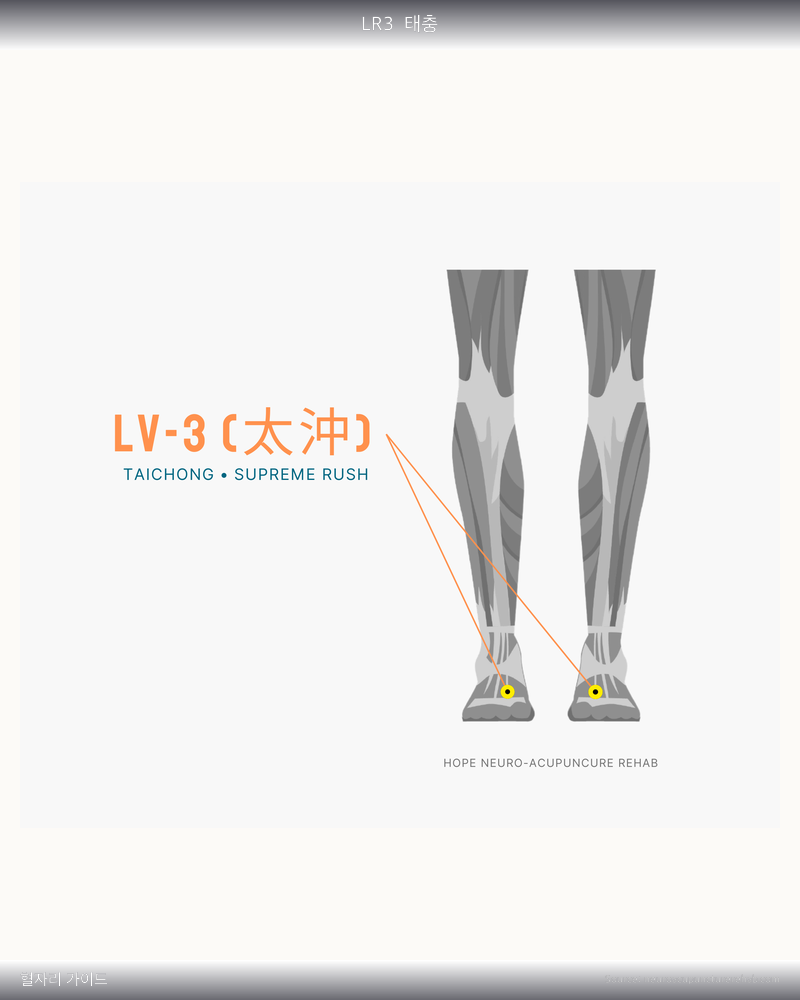
    LR3 혈자리 위치 그림

    “I Seriously Feel Like I’m Going to Lose It” — It’s Not Your Fault

    Your head is throbbing, your chest is constricted, tears are welling up. You don’t want to do anything but the to-do list is a mile long. You’re furious but have nowhere to direct it. And now you’re blaming yourself: “What’s wrong with me?”

    First, know this: You are not weak. When stress exceeds your limit, the brain’s amygdala goes into overdrive, triggering the “fight-or-flight response.” Your body reacts before you can think rationally. This is a normal biological response.

    So right now, don’t try to analyze “why am I like this.” Instead, calm the body first. When the body relaxes, the mind follows.

    Right Now: 4-7-8 Breathing + Shenmen (HT7) Acupressure

    The fastest combination for calming the nervous system.

    1. Press firmly with one hand on the opposite inner wrist (the hollow next to the tendon on the pinky side)
    2. While holding pressure, inhale through your nose for 4 seconds
    3. Hold your breath for 7 seconds
    4. Exhale slowly through your mouth for 8 seconds
    5. Repeat 3 times and your heart rate noticeably slows down

    If You Have 5 Minutes: Hegu (LI4) + Taichong (LR3) Simultaneous Stimulation

    While seated, use one hand to press the opposite hand’s Hegu (between thumb and index finger), and alternately press the same-side foot’s Taichong (where the bones meet between the big and second toe). Stimulating both together creates a rush of circulation that unblocks energy flowing up and down, releasing that suffocating feeling.

    On the Verge of Explosion: Press Neiguan (PC6) While Pushing a Wall

    When your chest feels like it’s about to burst and tears are coming, press Neiguan (3 finger-widths above the inner wrist crease, between the two tendons) with one hand while pushing against a wall hard for 10 seconds. The muscle tension-release response kicks in and the anger gently subsides.

    If You Still Don’t Feel Better

    If stress has been extreme for more than 2 weeks, you can’t sleep, and daily life has become difficult, please seek professional help. Acupressure is a supplementary tool — it cannot replace treatment. Mental health crisis hotlines operate 24 hours.

    What You Can Do Starting Today

    • Right now: Press Shenmen (HT7) while doing 4-7-8 breathing, 3 cycles
    • During lunch: 5 minutes of Hegu + Taichong Four Gates stimulation
    • Before bed: 10 minutes of gentle circular pressure on Neiguan + Shenmen

    Frequently Asked Questions

    My chest is tight from stress — could it be a heart problem?

    Stress-related chest pain is very common. However, if chest pain radiates to your arm, you break into cold sweat, or you have severe difficulty breathing, go to the emergency room immediately.

    I want to cry but the tears won’t come. Is that abnormal?

    When stress is extreme, emotions can become numb. This is not abnormal at all. Once you start releasing the body, emotions gradually return.

    Is there anything besides acupressure that works immediately?

    Splashing cold water on your wrists or face triggers the dive reflex, which immediately lowers your heart rate. Even better when combined with acupressure.

    I can’t eat because of stress. What should I do?

    Neiguan (PC6) acupressure reduces stress-related nausea. If you can’t manage a meal, at least sip some warm water.

    It’s the same stress every day but it keeps getting worse.

    Chronic stress accumulates. Even just 5 minutes a day of self-acupressure to ‘reset’ helps, and work with a professional counselor to address the root cause.

    Pregnancy Warning: Hegu (LI4) mentioned in this article may cause stimulation in pregnant women. If you are pregnant or may be pregnant, please consult a professional before use.
    ⚠️ Medical Disclaimer: This article is for informational purposes only and does not replace professional medical diagnosis or treatment. If symptoms persist or worsen, please consult a healthcare professional.
  • Calm Your Pre-Exam Nerves — 1 Minute Is All You Need

    Calm Your Pre-Exam Nerves — 1 Minute Is All You Need

    Summary: Right before receiving the exam paper, when your heart is racing and your mind goes blank. Use this 1-minute tension-release acupressure technique at your exam desk to get into your best condition.

    LR3 혈자리 위치 그림

    The Moment They Hand Out the Exam… My Mind Goes Blank

    You definitely memorized everything. Content you could recite perfectly yesterday vanishes the instant you sit in the exam chair. Your heart is pounding, your hands are trembling, your pencil-gripping palm is clammy with sweat. The moment you flip over the exam paper, the words look blurry.

    It’s extra frustrating because you studied so hard. “If only I hadn’t been so nervous, I could have done well…” This experience is probably not new to you.

    You can’t eliminate nerves. But you can manage them. Just 1 minute before the exam papers come out — do this.

    1-Minute Exam Tension Release Technique

    0-20 Seconds: Shenmen (HT7) Press (Calm the Racing Heart)

    HT7 acupuncture point

    On the inner wrist crease of your left hand, right next to the tendon on the pinky side.

    • Press firmly with your right thumb for 5 seconds, release — 2 times
    • Same method on the opposite side, 2 times
    • This alone dramatically reduces that pounding heartbeat

    20-40 Seconds: Hegu (LI4) Press (Clear Your Mind)

    LI4 acupuncture point

    The fleshy mound between your thumb and index finger. Pressing with the opposite hand while your hands rest on the desk looks completely natural.

    • Alternate hands, pressing firmly for 5 seconds each, 4 times total
    • The fog clears from your mind and the words on the page come into sharp focus

    40-60 Seconds: 2 Deep Breaths (Final Stabilization)

    Put down your pencil and gently close your eyes.

    • Inhale through your nose for 4 seconds, exhale through your mouth for 6 seconds
    • Just 2 breaths is enough
    • Tell yourself: “I’m ready.”

    What to Do the Night Before the Exam

    • 5 minutes before bed: Press Shenmen (HT7) + Neiguan (PC6) + Baihui (GV20) in sequence for better sleep
    • Taichong (LR3): Soak your feet in warm water, then press Taichong steadily to prevent tension-related insomnia
    • What NOT to do: Cramming until dawn actually raises cortisol levels, making exam-day nerves even worse

    When Nerves Come Back During the Exam

    If you hit a hard question and your mind goes blank again, step away from the difficult problem first. Then:

    1. Put down your pencil
    2. Under the desk, press Hegu on alternating hands — 5 seconds each
    3. One deep breath
    4. When you return to the problem, the clue you couldn’t see before suddenly appears

    Tension Management Tips by Exam Type

    Exam Type Characteristics Recommended Points
    Multiple choice (SAT, standardized) Time pressure Hegu (focus) + Shenmen (calming)
    Essay/written Needs thought organization Baihui (clear mind) + Neiguan (chest relaxation)
    Practical/interview Face-to-face tension Shenmen + Neiguan (calm palpitations)

    Frequently Asked Questions

    Won’t the exam proctor think it’s weird?

    Not at all! Touching your wrist or hand is a completely natural motion. Proctors won’t even notice. Don’t worry.

    Does it work for long exams like the SAT?

    Yes! Do it for 1 minute during each break between sections and you’ll go into the next section refreshed.

    Can I teach this to my elementary school child?

    Absolutely! Tell them it’s ‘magic hand pressing.’ Start with just gently pressing Hegu and Shenmen.

    My test anxiety is so severe I can’t even take exams.

    If test anxiety is seriously interfering with daily life, it could be test anxiety disorder. Acupressure is a supplementary tool — I recommend seeking professional psychological counseling.

    Does caffeine help with exams?

    Small amounts of caffeine can help with focus, but too much worsens heart palpitations and hand trembling. I recommend less than half your usual amount, and supplement focus with acupressure.

    Pregnancy Warning: Hegu (LI4) mentioned in this article may cause stimulation in pregnant women. If you are pregnant or may be pregnant, please consult a professional before use.
    ⚠️ Medical Disclaimer: This article is for informational purposes only and does not replace professional medical diagnosis or treatment. If symptoms persist or worsen, please consult a healthcare professional.
  • Unwind After Work — 5-Minute Relaxation Routine for Work Stress

    Unwind After Work — 5-Minute Relaxation Routine for Work Stress

    Summary: A 5-minute self-acupressure routine for those who can’t stop thinking about work after clocking out. Drain the day’s accumulated stress from your body and switch into true rest mode.

    LR3 혈자리 위치 그림

    Your Body Left Work, But Your Mind Is Still at the Office…

    You come home and collapse onto the sofa, but your mind is still spinning. That one comment from your boss, tomorrow’s meeting prep, the conflict with a coworker… irritating thoughts keep piling up one after another.

    Your shoulders are hard as rocks, your neck is stiff, and your eyes are dry and gritty. You turn on the TV but can’t focus. You lie down but can’t sleep. Then morning comes and it’s back to work again… can you ever escape this cycle?

    You can escape it. All it takes is 5 minutes. With this one routine after work each day, you can switch both your body and mind into “off-duty mode.”

    5-Minute After-Work Relaxation Routine

    Minute 1: Hegu (LI4) — Shake Off the Day’s Tension

    LI4 acupuncture point

    Press the fleshy mound between your thumb and index finger firmly with the opposite thumb.

    • Right hand 30 seconds + left hand 30 seconds
    • Knotted shoulders and headaches start melting away
    • Tell yourself: “I did well today. Good job.”

    Minute 2: Taichong (LR3) — Drain the Simmering Frustration

    Press the point where the bones meet between the big toe and second toe on both feet, using both thumbs simultaneously.

    • Press both feet simultaneously for 1 minute with steady pressure
    • Feel the irritation and frustration you held in all day draining out through your feet

    Minutes 3-4: Shenmen (HT7) + Neiguan (PC6) — Switch to Peace Mode

    PC6 acupuncture point

    Alternate pressing Shenmen (inner wrist crease, pinky side) and Neiguan (3 finger-widths above the wrist) on both wrists.

    • Press each point 5 seconds, rest 3 seconds — 2 minutes total for both sides
    • Your heartbeat slows and a warm, cozy wave of relaxation washes over you

    Minute 5: Baihui (GV20) — The Finishing Refresh

    Tap the very top of your head with your middle finger in a gentle rhythm.

    • Tap lightly and rhythmically for 1 minute
    • The fog in your head clears and you feel that “I’m finally off work” sensation

    Tips to Make the Routine Even More Effective

    • Fix the location: Make it a habit to do it the moment you walk through your front door. This creates a “walk through the door = reset” trigger.
    • Add music: Pairing it with your favorite calm music doubles the effect.
    • After a foot bath: Soaking your feet in warm water for 5 minutes before the routine maximizes the Taichong acupressure effect.

    Frequently Asked Questions

    Do I have to do the routine at the same time every day?

    Doing it at the same time helps build the habit, but it’s not required. Just do it whenever is convenient after work.

    Is it okay to do it longer than 5 minutes?

    Absolutely! If you have time, press each point longer. 10-15 minutes allows for even deeper relaxation.

    Can I do it on the subway commute home?

    Hegu, Shenmen, and Neiguan are hand points so they work on the subway. Taichong and Baihui are easier to do once you’re home.

    Is it okay to fall asleep right after the routine?

    That’s great! This routine promotes deep sleep, so doing it right before bed is perfect.

    Does this routine help on weekends too?

    Yes, it’s great for everyday tension relief, not just work stress. On weekends, take your time and do it at a more leisurely pace.

    Pregnancy Warning: Hegu (LI4) mentioned in this article may cause stimulation in pregnant women. If you are pregnant or may be pregnant, please consult a professional before use.
    ⚠️ Medical Disclaimer: This article is for informational purposes only and does not replace professional medical diagnosis or treatment. If symptoms persist or worsen, please consult a healthcare professional.
  • Can’t Seem to Relax? 3 Body-Based Methods to Release Tension

    Can’t Seem to Relax? 3 Body-Based Methods to Release Tension

    Summary: Trying to release tension with your mind only makes it worse. Here are 3 body-based methods to directly release stress through physical approaches — acupressure, muscle relaxation, and breathing techniques.

    LR3 혈자리 위치 그림

    “Just Relax” Is the Most Annoying Advice

    You downloaded a meditation app. “Release your tension and relax…” the guided voice says, but it only makes you feel more frustrated. Relaxing music? Turn it on and suddenly tomorrow’s to-do list comes flooding in, making you even more anxious.

    “Why can’t I just relax?” you blame yourself. But this isn’t your problem. The method just doesn’t fit you.

    When highly tense people try to “relax by doing nothing,” it actually backfires. This is called ‘relaxation-induced anxiety’ — and it’s a real, studied phenomenon.

    The Solution: Release Through Your Body, Not Your Mind

    When tension has you locked up tight, you can’t release it through “thinking” — you need to reset your nervous system directly through physical stimulation. Here are three methods.

    Method 1: Four Gates Firm Acupressure — Unblock Stuck Energy

    Press Hegu (LI4) and Taichong (LR3) simultaneously, a bit more firmly than usual.

    1. Press right hand Hegu firmly with left thumb while simultaneously pressing right foot Taichong with left heel
    2. Hold 10 seconds, then release suddenly — feel the wave of relaxation that rushes in at that moment
    3. Switch sides and repeat 3 sets each

    The key isn’t “while pressing” but “the moment you release.” The rebound from squeezing and letting go causes muscles to relax even more deeply.

    Method 2: Progressive Muscle Relaxation + Shenmen (HT7) Acupressure

    Systematically tense and release muscles throughout your body, while stimulating the Shenmen point on the wrist.

    1. Clench your fists: Squeeze both fists tight for 5 seconds, then snap them open
    2. Shoulder shrug: Shrug shoulders up to your ears, hold 5 seconds, then drop them
    3. Face scrunch: Scrunch your entire face tight, then release it all at once
    4. Between each movement, press Shenmen (HT7) for 3 seconds to stabilize the heart

    Method 3: Forceful Breathing + Neiguan (PC6) Stimulation

    An “active” breathing technique for those who don’t respond well to quiet breathing.

    1. Press Neiguan (3 finger-widths above the wrist, between the two tendons) with one hand
    2. Exhale sharply and forcefully through the nose 20 times in rapid succession (Kapalabhati breathing)
    3. At the end, inhale deeply and hold for 10 seconds
    4. Exhale slowly and release your hand from Neiguan

    Because you’re actively engaging the breathing muscles, this is perfect for the type who gets more anxious when sitting still.

    Finding the Right Method for You

    Type Recommended Method
    Body stiffens up rigid Method 1 (Four Gates firm acupressure)
    Full-body tension type Method 2 (Progressive muscle relaxation)
    Gets more anxious staying still Method 3 (Forceful breathing)

    Frequently Asked Questions

    Meditation actually makes me more anxious. Is it just me?

    Not at all! ‘Relaxation-induced anxiety’ is an actual researched phenomenon. People with high tension do better with active methods (acupressure, muscle relaxation, forceful breathing).

    What if the Four Gates acupressure is painful?

    A dull ache that feels satisfying is the right level. If it’s sharp pain, reduce the pressure. Start light and gradually increase intensity.

    What if I get dizzy during Kapalabhati breathing?

    Stop immediately and return to normal breathing. Start with just 10 breaths and gradually increase. Avoid this technique if you have high blood pressure.

    Can I do all 3 methods?

    Yes, try them in order and focus on whichever works best for you. All three together take about 10-15 minutes.

    Exercise is also a ‘body-based method.’ Isn’t that better?

    Exercise is excellent too! But the methods here have the advantage of being usable immediately even when you can’t exercise (at the office, at night, when physically exhausted).

    Pregnancy Warning: Hegu (LI4) mentioned in this article may cause stimulation in pregnant women. If you are pregnant or may be pregnant, please consult a professional before use.
    ⚠️ Medical Disclaimer: This article is for informational purposes only and does not replace professional medical diagnosis or treatment. If symptoms persist or worsen, please consult a healthcare professional.
  • Frozen Shoulder vs Muscular Pain: Different Conditions, Different Solutions — A Complete Comparison Guide

    Frozen Shoulder vs Muscular Pain: Different Conditions, Different Solutions — A Complete Comparison Guide

    Summary: Not all shoulder pain is the same. Frozen shoulder is when the joint stiffens, while muscular pain is when muscles knot up. Since the causes are different, the treatments must be completely different too.

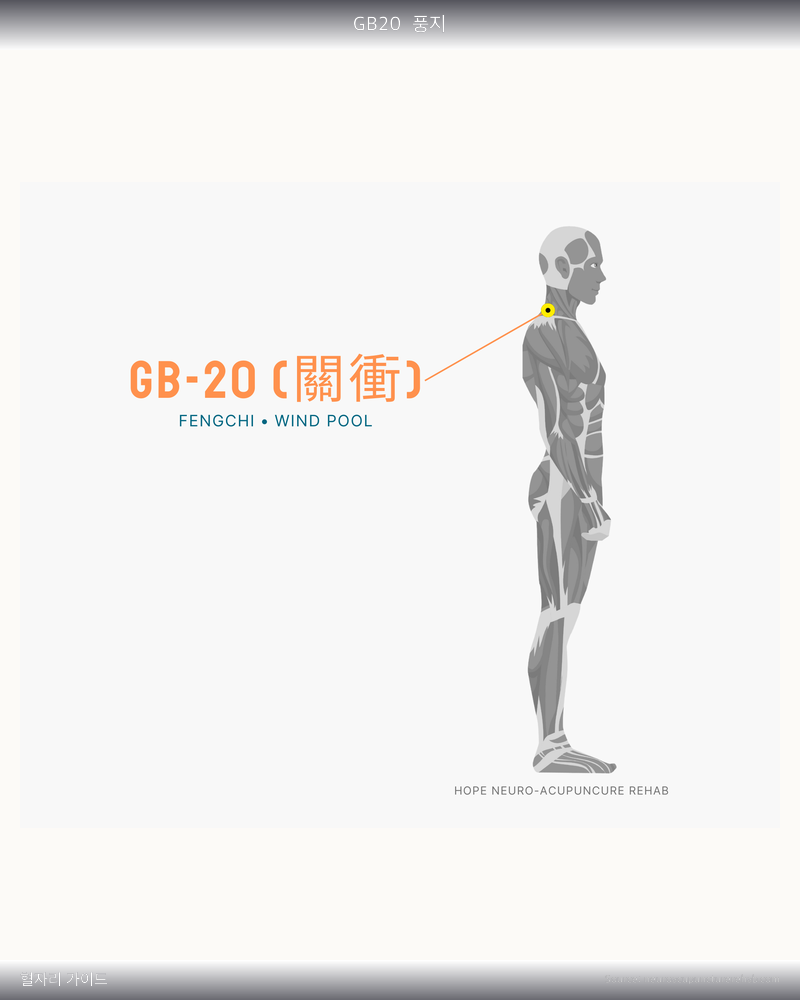
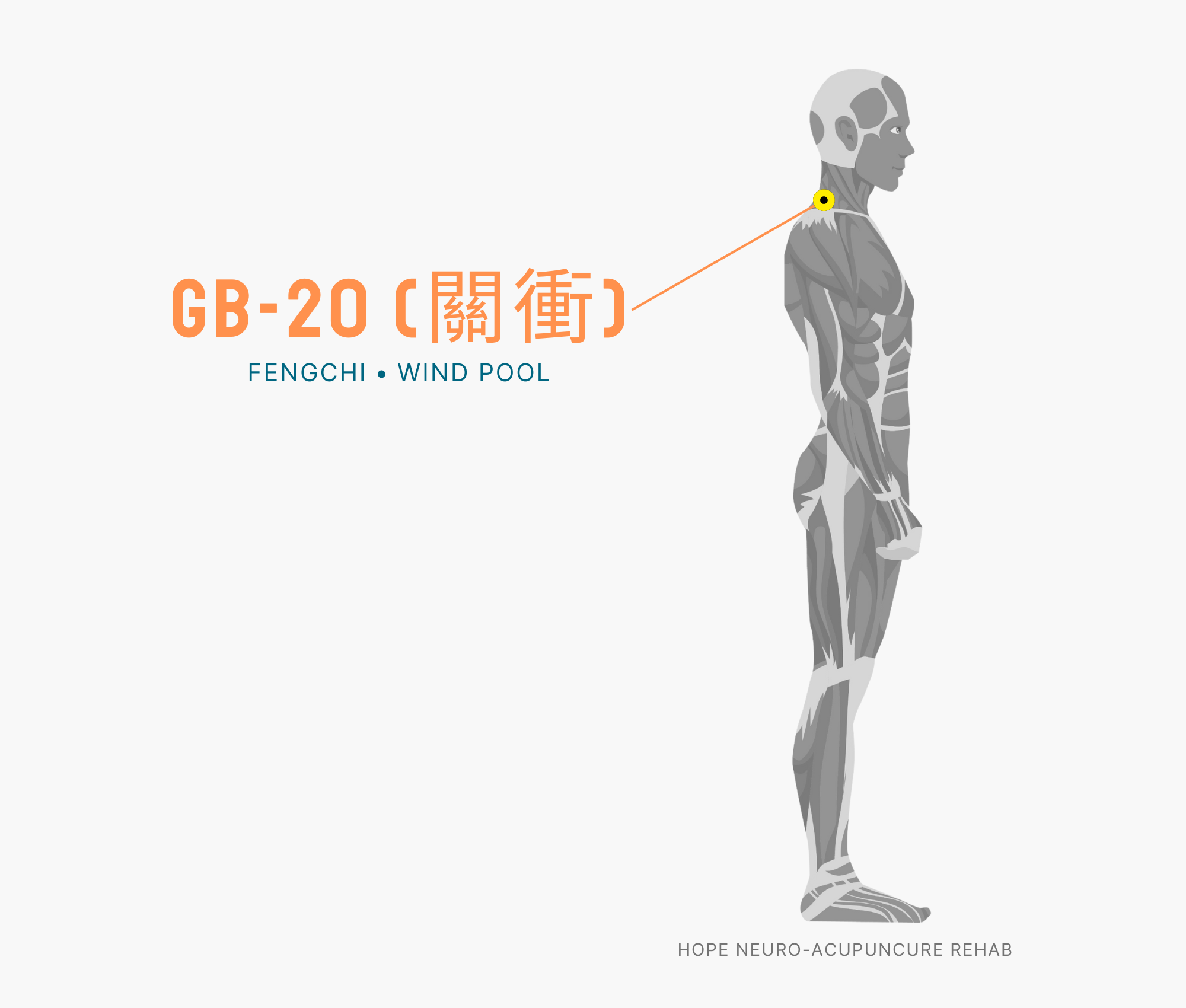
    GB20 혈자리 위치 그림

    “Could This Be Frozen Shoulder?” — You’re Worried, Right?

    When you raise your arm, your shoulder aches and throbs. When you rotate it backward, it catches stiffly. The anxiety creeps in: “Could I have frozen shoulder?” Especially if you’re over 40, this worry grows even bigger.

    But shoulder pain doesn’t automatically mean frozen shoulder. In fact, most shoulder pain comes from muscular tension — muscles that have knotted up. The problem is that the symptoms of both can look similar.

    However, since the causes are completely different, the treatments must be different too. Using the wrong approach can actually make things worse. Let me show you how to distinguish between the two and the appropriate self-care for each.

    Frozen Shoulder vs Muscular Pain — At a Glance

    Category Frozen Shoulder (Adhesive Capsulitis) Muscular Shoulder Pain
    Cause Joint capsule thickens and adheres Muscle stiffness, poor circulation
    Pain Pattern Hurts with movement in any direction Aching/tightness with specific movements
    Movement Limitation Can’t be raised even with someone’s help Can be raised further with someone’s help
    Nighttime Pain Very severe, can prevent sleep Possible but relatively mild
    Age of Onset Mainly occurs in ages 40-60 Can occur at any age
    Course Progresses over months to 2 years Relatively quick improvement when cause is addressed

    Simple Self-Test

    The following tests can help you roughly distinguish between the two. (For an accurate diagnosis, please see a professional.)

    1. Arm raising test: Raise your affected arm forward as high as possible. Then have someone else raise it for you. If it stops at the same angle whether you or someone else lifts it –> likely frozen shoulder. If someone else can lift it higher –> likely muscular pain.
    2. Behind-the-back reach: Reach your affected hand behind your back and try to move it as high as possible. If you can’t even reach your belt line –> suspect frozen shoulder. If you can reach near the shoulder blade but it feels tight –> muscular.

    Self-Care for Muscular Pain

    If your pain is from tight muscles, acupressure and stretching are effective.

    • Jianjing (GB21) acupressure: Press the shoulder top firmly, 3 seconds x 10 times — releases trapezius knots
    • Tianzong (SI11) acupressure: Roll a tennis ball on the center of the shoulder blade — releases deep back-shoulder knots
    • Warm compress: Place a warm towel or heat pack for 15 minutes to improve circulation
    • Stretching: Gently roll your shoulders and do chest-opening stretches daily

    When Frozen Shoulder Is Suspected

    • Aggressive stretching is off limits: Forcing your arm up during early-stage frozen shoulder can worsen inflammation
    • See a professional: You need an accurate diagnosis followed by stage-appropriate rehabilitation
    • Maintain pain-free range of motion: Gentle pendulum exercises (hanging your arm and swinging it back and forth) within the pain-free range can slow joint stiffening
    • Fengchi (GB20) acupressure: Instead of the shoulder joint itself, gently release tension at the neck-shoulder connection

    See a Professional If You Experience These

    • Your arm’s range of motion is progressively decreasing
    • Nighttime pain is preventing sleep
    • Movement becomes suddenly restricted after a shoulder injury
    • 3+ weeks of self-care with no improvement whatsoever

    Frequently Asked Questions

    Does frozen shoulder really only affect people in their 50s?

    No. While most common in ages 40-60, it can occur in your 30s or 70s. The term is misleading — the medical name is ‘adhesive capsulitis.’

    What happens if I get frozen shoulder treatment for muscular pain?

    No major harm, but you may waste time and money. Accurate diagnosis comes first. Ultrasound or MRI can confirm the diagnosis.

    Does frozen shoulder heal on its own?

    Many cases gradually improve over 1-3 years without treatment. However, active rehabilitation therapy can significantly shorten recovery time.

    My shoulder is very tight but I’m not sure if it’s muscular or frozen shoulder.

    The most reliable method is getting examined at an orthopedic clinic. Self-tests are only for reference and cannot replace an accurate diagnosis.

    Can you have frozen shoulder and muscular pain at the same time?

    Yes, absolutely. When you have frozen shoulder, you tend to move your shoulder less, which can also cause surrounding muscles to tighten. In this case, both need to be managed.

    ⚠️ Medical Disclaimer: This article is for informational purposes only and does not replace professional medical diagnosis or treatment. If symptoms persist or worsen, please consult a healthcare professional.
  • Acute Stress or Chronic Stress: Different Types Need Different Solutions? How to Choose the Right Acupressure Point

    Acute Stress or Chronic Stress: Different Types Need Different Solutions? How to Choose the Right Acupressure Point

    Summary: Acute stress and chronic stress require completely different approaches. Acute needs immediate calming; chronic needs long-term routines. Find out which type matches yours and the right solution.

    LR3 혈자리 위치 그림

    “Why Am I So Stressed All the Time?”

    Not all ‘stress’ is the same. Your heart pounding before an exam and feeling crushed with exhaustion for months are completely different states.

    Yet many people try to cope with both using the same methods. Using chronic solutions for acute stress, or acute solutions for chronic stress — and then blaming yourself: “I just can’t manage stress.”

    Frustrating, isn’t it? Maddening, right? That’s why today, I’ll help you identify exactly what type your stress is and give you tailored solutions.

    Acute Stress vs Chronic Stress: What’s the Difference?

    Category Acute Stress Chronic Stress
    Duration Minutes to hours Weeks to months or longer
    Cause Specific event (presentation, exam, argument) Ongoing situation (work, relationships, finances)
    Body Response Racing heart, trembling hands, sweating Chronic fatigue, indigestion, insomnia
    Emotions Tension, anxiety, fear Lethargy, irritability, sudden tears
    Core Approach Immediate calming Long-term routine + address root cause

    Acute Stress Coping: Immediate Calming Is Key

    Before a job interview, right before a presentation, right after a big argument. When your heart is racing and your mind goes blank — these techniques are for that moment.

    Essential Points: Shenmen (HT7) + Neiguan (PC6)

    PC6 acupuncture point
    • Shenmen: Press firmly on the tendon side near the pinky on the inner wrist for 5 seconds — calms racing heartbeat
    • Neiguan: Press firmly 3 finger-widths above the wrist crease for 5 seconds — relieves chest tightness
    • Combined with 4-7-8 breathing, you can feel the effect in 30 seconds

    Additional Point: Hegu (LI4)

    LI4 acupuncture point
    • Press firmly between the thumb and index finger — immediate relief for headaches and full-body tension
    • The fastest-responding point for acute stress

    Chronic Stress Coping: Consistent Routines Are Key

    One press won’t solve it. You need at least 2-4 weeks of consistent practice to release tension embedded in the body.

    Daily Morning Routine (3 min)

    • Baihui (GV20): Tap the crown of your head for 1 minute — clears a foggy mind
    • Hegu (LI4) + Taichong (LR3): Stimulate the “Four Gates” simultaneously for 2 minutes — promotes full-body qi and blood circulation

    Daily Evening Routine (3 min)

    • Shenmen (HT7): Both wrists for 1 minute — releases the day’s accumulated anxiety
    • Neiguan (PC6): Both wrists for 1 minute — relaxes the chest
    • Taichong (LR3): Both feet for 1 minute — promotes liver qi flow, helps process overwhelming emotions

    When Professional Help Is Needed

    • Acute stress response persists more than 1 month after the event (post-traumatic stress)
    • Chronic stress makes daily functions (going to work, eating, sleeping) impossible
    • If you experience self-harm urges or extreme thoughts — seek crisis counseling immediately

    Frequently Asked Questions

    How can I tell if my stress is acute or chronic?

    If you suddenly feel tense due to a specific event, it’s acute. If you’ve been tired and irritable for weeks without a clear cause, it’s likely chronic. If both apply, you have acute stress layered on top of a chronic base.

    Can repeated acute stress become chronic?

    Yes, daily exposure to the same stressful situations causes acute stress to transition into chronic. That’s why it’s important to change the source itself when acute stress keeps repeating.

    Can I use acute coping methods for chronic stress?

    Of course! But that alone isn’t enough. Use acute techniques to relieve immediate tension, and long-term routines to treat the root cause — a ‘two-track’ strategy is needed.

    Is it possible to never feel stressed at all?

    Moderate stress (eustress) actually helps with growth. The problem is ‘excessive’ stress. You can’t eliminate it completely, but you can build the ability to manage it.

    Can children experience chronic stress too?

    Yes, children experience chronic stress from academic pressure, peer relationships, and more. For children, gently stroking Shenmen (HT7) in a soothing massage works well.

    Pregnancy Warning: Hegu (LI4) mentioned in this article may cause stimulation in pregnant women. If you are pregnant or may be pregnant, please consult a professional before use.
    ⚠️ Medical Disclaimer: This article is for informational purposes only and does not replace professional medical diagnosis or treatment. If symptoms persist or worsen, please consult a healthcare professional.
  • Release Shoulder Tension at the Office — 1 Minute in Your Chair

    Release Shoulder Tension at the Office — 1 Minute in Your Chair

    Summary: Loosen tight shoulders in just 1 minute while sitting in your office chair. Use Jianjing (GB21) and Hegu (LI4) acupressure for instant relief from stiff shoulders.

    GB20 혈자리 위치 그림

    My Shoulders Turn to Rocks After Every Meeting

    After staring at the monitor and hammering away at the keyboard, your shoulders have somehow crept up to your ears. Your neck cracks when you turn it, and by afternoon, the stiffness extends all the way down to your upper back.

    You’d love to go get a massage, but there’s no time. And doing obvious stretches in front of coworkers? Embarrassing. “I’ll just tough it out until quitting time…” you think, shrugging your shoulders, but it doesn’t help.

    Don’t worry. You can release tight shoulders in just 1 minute, right in your chair, without anyone noticing. It’s a discreet combination of acupressure + mini stretches.

    The 1-Minute Shoulder Release Routine — Seated in Your Chair

    0-20 Seconds: Jianjing (GB21) Acupressure

    Reach your right hand over to the top of your left shoulder (the midpoint between your neck and shoulder tip). Press the sorest spot firmly with your middle finger — 3 seconds per press, 3 times. Then switch sides. It looks just like you’re rubbing a tired shoulder, so it’s not awkward at all.

    20-40 Seconds: Hegu (LI4) Acupressure

    LI4 acupuncture point

    Under the desk, press the webbing between the thumb and index finger of one hand with the opposite thumb. Press 3 seconds, rest 3 seconds, 3 times per hand. Though Hegu is far from the shoulders, it’s connected through the meridian system and releases shoulder pain remotely.

    40-60 Seconds: Shoulder Shrugs + Chest Opening

    1. Shrug both shoulders up toward your ears as high as possible — hold 3 seconds
    2. Drop them suddenly, releasing all the tension (this is when muscles relax)
    3. Clasp your hands behind your back and gently open your chest — hold 5 seconds
    4. Finish with 2 shrug-and-drops + 1 chest opener

    1 Minute Every 2 Hours — That’s the Secret

    Short, frequent sessions every 2 hours are far more effective than one long massage. Set your phone alarm at 2-hour intervals so you don’t forget.

    • 10 AM: First 1-minute routine after arriving
    • 12 PM: Second routine before lunch
    • 2 PM: Third routine during the afternoon slump
    • 4 PM: Fourth routine before heading home

    Posture Correction for Lasting Results

    No matter how much acupressure you do, poor posture will cause the tension to return quickly. Align your monitor at eye level, and position your keyboard at a height where your elbows form a 90-degree angle. Sitting deep in your chair with your lower back against the backrest significantly reduces shoulder strain.

    Frequently Asked Questions

    I feel self-conscious doing shoulder acupressure at the office.

    Jianjing looks like a natural shoulder-rubbing motion, and Hegu can be done under the desk where no one can see. It’s completely unnoticeable.

    Can a 1-minute routine really make a difference?

    One session won’t fully release the tension. The key is repeating it every 2 hours. Do it 4 times a day for a week and you’ll definitely feel the difference.

    Are there any massage tools I can use at the office?

    Keep an acupressure stick or massage ball in your desk drawer. Placing a tennis ball between the chair back and your back to roll around is also very effective.

    How should I adjust my monitor height to prevent shoulder tension?

    The top of your monitor should be at or slightly below eye level. Laptop users should use a separate stand — it dramatically reduces shoulder strain.

    Only my right shoulder gets tight from using the mouse. Is that normal?

    Totally normal. The shoulder on your mouse side subtly shifts forward and is more prone to tightening. Use a wrist cushion for your mouse, and try alternating with your left hand.

    Pregnancy Warning: Hegu (LI4) mentioned in this article may cause stimulation in pregnant women. If you are pregnant or may be pregnant, please consult a professional before use.
    ⚠️ Medical Disclaimer: This article is for informational purposes only and does not replace professional medical diagnosis or treatment. If symptoms persist or worsen, please consult a healthcare professional.
  • Quick Fix for Shoulder Pain from Carrying a Heavy Bag

    Quick Fix for Shoulder Pain from Carrying a Heavy Bag

    One-line summary: Aching shoulders crushed by a heavy bag — quickly relieve them with Jianjing (GB21) and Hegu (LI4) acupressure, then change your bag-carrying habits to prevent recurrence.

    GB20 혈자리 위치 그림

    After Putting Down My Bag, My Shoulder Feels Like It’s Breaking

    Laptop, books, tumbler, umbrella… there’s so much to put in your bag. After commuting with a heavy bag on one shoulder, your shoulder aches and pulls. Even after setting the bag down, that compressed feeling lingers for a long time.

    If the habit of carrying on one side continues, your shoulders start becoming uneven. The tight side gradually rises, and as your lower back twists, it can lead to full-body misalignment. Your neck stiffens and headaches often follow too.

    Let us show you emergency acupressure for immediate shoulder relief and posture correction tips to prevent shoulder pain going forward.

    Emergency Acupressure for Bag-Related Shoulder Pain

    1. Jianjing (GB21) — Direct Relief for Compressed Shoulders

    Touch the top of the shoulder that carried the bag. At the midpoint between your neck and shoulder tip, you’ll find a hardened, knotted area. That’s Jianjing.

    1. Press Jianjing firmly with the middle and index fingers of the opposite hand
    2. 3 seconds press, 3 seconds rest, repeat 10 times
    3. While pressing, slowly rotate the shoulder that carried the bag
    4. An achy yet refreshing sensation is the right intensity

    2. Hegu (LI4) — Remote Relief for Shoulder Pain

    LI4 acupuncture point

    Press the highest point of the raised muscle in the webbing between thumb and index finger with the opposite thumb. 3-5 seconds press, 3 seconds rest, 8 times each hand. You can do this on the go — start right on the subway or bus.

    3. Fengchi (GB20) — Releasing Stiffness Extending to the Neck

    GB20 acupuncture point

    Press the hollow spots on both sides at the base of your skull with your thumbs, pressing upward for 5 seconds, 8 times. The stiffness in the neck-shoulder connection caused by the heavy bag melts away refreshingly.

    1-Minute Post-Bag Stretch

    1. Shoulder shrug release: Shrug both shoulders up to your ears, then drop them sharply 5 times. The compressed muscles will relax.
    2. Cross-arm stretch: Extend the sore arm across your chest and pull with the opposite hand. Hold 15 seconds x 2 reps.
    3. Neck side tilt: Tilt your head away from the sore side to stretch the side neck muscles. Hold 15 seconds x 2 reps.

    Fixing Your Bag-Carrying Habits

    Single Shoulder Bag — Alternate Sides Daily

    Carry on the left one day, the right the next. Sticking to the same side worsens the imbalance.

    Crossbody Bags Are Better Than Shoulder Bags

    Wearing crossbody distributes weight so the burden isn’t concentrated on one shoulder.

    Backpacks Are Best for Your Shoulders

    Backpacks distribute weight evenly across both shoulders. Use both straps and shorten them so the bag sits high on your back.

    Weight Reduction Checklist

    • Laptop: Switch to a lighter model or leave it behind on unnecessary days
    • Tumbler: Downsize to 500ml or smaller
    • Books: Switch to e-books where possible
    • Umbrella: Use an ultralight folding umbrella (under 200g)

    Bag Weight Guidelines

    To protect your shoulders, keep bag weight within 10% of your body weight. For someone weighing 60 kg, 6 kg is the appropriate maximum. Anything more puts chronic strain on your shoulders.

    Frequently Asked Questions

    My shoulder hurts from my bag. Which side should I carry it on?

    Don’t stick to one side — alternate daily. If possible, a backpack with both straps is best.

    Does a crossbody bag cause less shoulder pain?

    It’s better than a shoulder bag since weight is distributed across to the other side. However, the strap still presses on your shoulder, so it will still hurt if too heavy.

    For bag-related shoulder pain, should I use hot or cold compress?

    For chronic, achy pain from bag pressure, warm compresses are better. A warm towel for 15-20 minutes promotes blood circulation and loosens knotted muscles.

    Is it true that wider bag straps are better?

    Yes, that’s correct. Wider straps distribute pressure so they dig in less. A backpack with wide, padded straps is ideal.

    My shoulders are already uneven. Can it be corrected?

    Yes, it’s possible. Changing your bag-carrying habits and consistently doing shoulder balance exercises will gradually improve it. For severe cases, consider seeing a physical therapist.

    ⚠️ Pregnancy Warning: Among the acupoints in this article, Hegu (LI4) may be stimulating for pregnant women. If you are pregnant or may be pregnant, please consult a professional before proceeding.
    ⚠️ Medical Disclaimer: This article is for informational purposes only and does not replace professional medical diagnosis or treatment. If symptoms persist or worsen, please consult a healthcare professional.
  • Bedtime Self-Massage to Loosen Your Shoulders

    Bedtime Self-Massage to Loosen Your Shoulders

    One-line summary: Spend just 10 minutes before bed loosening stiff shoulders with acupressure and stretching to promote deep sleep. Jianjing (GB21) and Fengchi (GB20) massage are the key.

    GB20 혈자리 위치 그림

    My Shoulder Aches So Much I Can’t Sleep

    The day’s fatigue has settled into your shoulders. Even under the blankets, your shoulder pulls with a dull ache, and lying on your side makes the compressed shoulder throb. No matter how much you toss and turn, you can’t find a comfortable position.

    When shoulder pain keeps you up at night, you’re even more tired the next day, and that fatigue makes your shoulders tighter — a vicious cycle. Pain and sleep deprivation feed on each other endlessly.

    Just 10 minutes before bed to loosen your shoulders can break this vicious cycle. Here are gentle acupressure and relaxation stretches you can do while lying in bed.

    Bedtime Shoulder Massage Routine (10 minutes)

    STEP 1: Fengchi (GB20) Acupressure — Let Go of the Day’s Tension (3 min)

    GB20 acupuncture point

    With your head on the pillow, bring your fingers behind your head to the base of your skull. Find the hollow spots on both sides where the head meets the neck — that’s Fengchi.

    1. Gently press Fengchi with both middle fingers for 5 seconds
    2. Breathe in slowly through your nose while pressing, exhale through your mouth while releasing
    3. Repeat 10 times — you’ll feel the stiffness in the back of your neck melting away

    STEP 2: Jianjing (GB21) Gentle Kneading (3 min)

    While lying down, place your right hand on top of your left shoulder. Find the most knotted area on the shoulder and gently knead.

    1. Start by gently stroking
    2. Gradually increase intensity to firm pressing
    3. An achy yet refreshing intensity is just right
    4. 1 minute 30 seconds per side

    STEP 3: Lying Shoulder Relaxation Stretch (2 min)

    1. Cross stretch: Extend your right arm across your chest and pull with your left hand. Feel the back of the shoulder stretching, hold 15 seconds. Repeat on the other side.
    2. Angel wings: Place both arms at your sides and slowly sweep them along the floor up over your head and back down. 5 reps.

    STEP 4: Breathing Relaxation (2 min)

    1. Place both hands on your belly and close your eyes
    2. Inhale through your nose for 4 seconds while tensing your shoulders — shrug!
    3. Exhale through your mouth for 8 seconds while dropping your shoulders completely
    4. Repeat 5 times — your entire body relaxes and drowsiness creeps in

    Sleeping Position Tips for Better Shoulder Comfort

    • Lying on your back: If your pillow is too high, your shoulders round forward. A height that naturally supports the curve of your neck is ideal.
    • Lying on your side: Sleep with the sore shoulder facing up. Placing a pillow between your knees reduces shoulder strain.
    • Avoid sleeping face down: Your shoulders twist and pain gets worse.

    Frequently Asked Questions

    Does a shoulder massage before bed actually help me sleep?

    Yes, releasing shoulder tension activates the parasympathetic nervous system, naturally promoting sleep. It’s even more effective when combined with breathing exercises.

    I find it hard to control pressure when doing acupressure lying down.

    It’s normal for pressure to feel lighter when lying down. Light, gentle pressure is perfectly adequate. Before sleep, lighter is actually better.

    My shoulder hurts so I can’t lie on my side. What position is best?

    Lie on your side with the painful shoulder facing up, or lie on your back with thin towels under both arms to reduce shoulder pressure.

    How early before bed should I do the massage?

    15-30 minutes before bed is ideal. If you lie down right after the massage, you can maximize the relaxation effect and fall asleep easily.

    My shoulder aches and I keep waking up at night. Should I see a doctor?

    If nighttime pain persists for more than 2 weeks, please see a healthcare professional. Especially if no position feels comfortable, an examination is needed.

    ⚠️ Medical Disclaimer: This article is for informational purposes only and does not replace professional medical diagnosis or treatment. If symptoms persist or worsen, please consult a healthcare professional.
  • My Shoulder Is So Tight I Can’t Raise My Arm

    My Shoulder Is So Tight I Can’t Raise My Arm

    One-line summary: When your shoulder is locked up like a rock and you can’t raise your arm, Jianjing (GB21) and Tianzhong (SI11) acupressure + simple stretching can quickly loosen it up.

    GB20 혈자리 위치 그림

    “It Feels Like My Shoulder Will Break If I Raise My Arm”

    You try to wash your hair but your arm won’t go up. When changing clothes, your shoulder throbs with pain, and reaching behind you pulls tight. In severe cases, even breathing makes your shoulder ache.

    If this continues, getting dressed becomes difficult, and at night your shoulder throbs so much you can’t sleep. You start worrying, “Could this be frozen shoulder?”

    First, don’t panic. Most cases of shoulders so tight you can’t raise your arm are caused by muscle stiffness. Prolonged same posture, stress, and lack of exercise combine to harden the trapezius and rotator cuff muscles. These muscular issues can be significantly improved with proper acupressure and stretching.

    Why Can’t You Raise Your Arm?

    The shoulder has the widest range of motion of any joint in the body. That means the surrounding muscles are complexly interwoven, and tightness in just one can significantly restrict movement.

    • Trapezius stiffness: When this large muscle running from neck to shoulder to back stiffens, it becomes hard to raise your arm
    • Supraspinatus tension: This muscle above the shoulder lifts the arm — when it’s tight, pain is worst between 60-120 degrees
    • Poor blood circulation: When muscles don’t get enough oxygen and nutrients, achiness and pain intensify

    3-Step Self-Care You Can Try Right Now

    Step 1: Jianjing (GB21) Acupressure to Release Trapezius

    Press the center of your shoulder top — the midpoint between neck and shoulder tip — with the opposite hand’s middle finger. 3 seconds press, 3 seconds rest, repeat 10 times. The stiff trapezius gradually loosens.

    Step 2: Tianzhong (SI11) Acupressure to Release Scapular Tightness

    SI11 acupuncture point

    Press the hollow center of the shoulder blade with the opposite hand. If you can’t reach, place a tennis ball between the wall and your back and lean into it. Hold 5 seconds, rest 3 seconds, repeat 8 times.

    Step 3: Arm Raising Stretch

    1. Stand facing a wall and place your fingers of the affected side on the wall
    2. Walk your fingers slowly upward — only as far as pain allows!
    3. Hold at maximum height for 10 seconds, then come down. 5 reps.
    4. With daily practice, the height you can reach will gradually increase

    Also Release the Neck-Shoulder Connection with Fengchi (GB20)

    Pressing firmly on the hollow spots at the base of the skull on both sides releases tension traveling from neck to shoulder. Especially effective for those with their neck jutting forward from computer work.

    See a Doctor If:

    • No improvement after 2+ weeks of self-care
    • Nighttime pain severe enough to prevent sleep
    • Persistent arm weakness or numbness
    • Sudden inability to raise your arm after an injury

    Frequently Asked Questions

    If I can’t raise my arm because my shoulder is tight, is it frozen shoulder?

    Not necessarily. Muscle stiffness alone can make it hard to raise your arm. However, if it doesn’t improve after 3 weeks, see a professional.

    Should I use hot or cold compress for tight shoulders?

    Warm compresses are better for chronic tightness. They promote blood circulation and relax muscles. Use cold compresses only for acute swelling.

    Is it safe to do shoulder acupressure every day?

    Yes, pressing gently 2-3 times a day is safe. The more consistently you do it, the less tightness you’ll have and the wider your range of motion.

    Why does only one shoulder get severely tight?

    Your dominant hand side, bag-carrying side, or mouse-using side tends to get tighter. Postural imbalance is often the cause.

    Should I push through the pain when stretching?

    Absolutely not! An achy feeling is fine, but stop immediately if you feel sharp pain. Only stretch within the pain-free range.

    ⚠️ Medical Disclaimer: This article is for informational purposes only and does not replace professional medical diagnosis or treatment. If symptoms persist or worsen, please consult a healthcare professional.