Author: Acupoint Guide Editorial Team

  • Getting to the Root of Chronic Shoulder Pain

    Getting to the Root of Chronic Shoulder Pain

    Summary: Chronic shoulder pain that has lasted months won’t be solved by simple massage alone. You need to identify the root cause and combine acupressure + strengthening exercises + posture correction for lasting improvement.
    GB20 혈자리 위치 그림

    My Shoulders Ache Every Day — I’m Exhausted

    You wake up with stiff shoulders, and by afternoon they feel like rocks. Massage feels amazing in the moment, but by the next day you’re right back where you started. “Am I going to live with this shoulder pain forever?” — that thought has crossed your mind, hasn’t it?

    When shoulder pain has persisted not just for a week or a month but for several months, it’s not simply a matter of tight muscles. Muscle weakness, postural imbalances, lifestyle habits, and even stress — multiple factors are intertwined.

    Today, I’ll break down the root causes of chronic shoulder pain that won’t go away with a single massage, and show you how to improve it for the long term.

    The 4 Root Causes of Chronic Shoulder Pain

    1. Rounded Shoulders

    Smartphone and computer use causes your shoulders to roll forward. When this posture becomes fixed, chest muscles shorten and back muscles stretch out, placing chronic strain on your shoulders.

    2. Trapezius Overactivation + Deep Muscle Weakness

    The superficial trapezius muscles are excessively tense while the deep stabilizing muscles (rotator cuff) are weak. The surface is knotted but the core has no strength — this imbalance creates pain.

    3. Thoracic Spine (Mid-Back) Mobility Restriction

    When the mid-back stiffens, the shoulders compensate for the lost movement, becoming overloaded. Loosening just the shoulders isn’t enough — you need to restore flexibility in the back as well.

    4. Chronic Stress

    When stressed, you unconsciously shrug your shoulders upward. This tension accumulates daily into chronic knots.

    The 4-Step Root Solution Program

    Step 1: Release Knots with Acupressure (10 min daily)

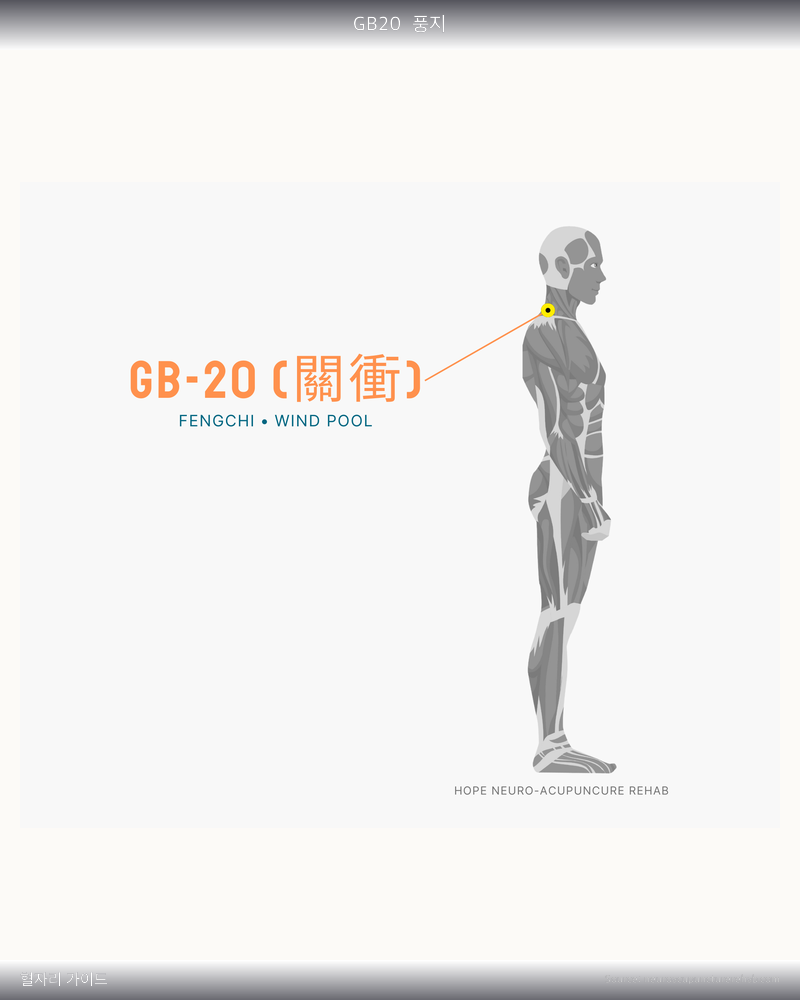
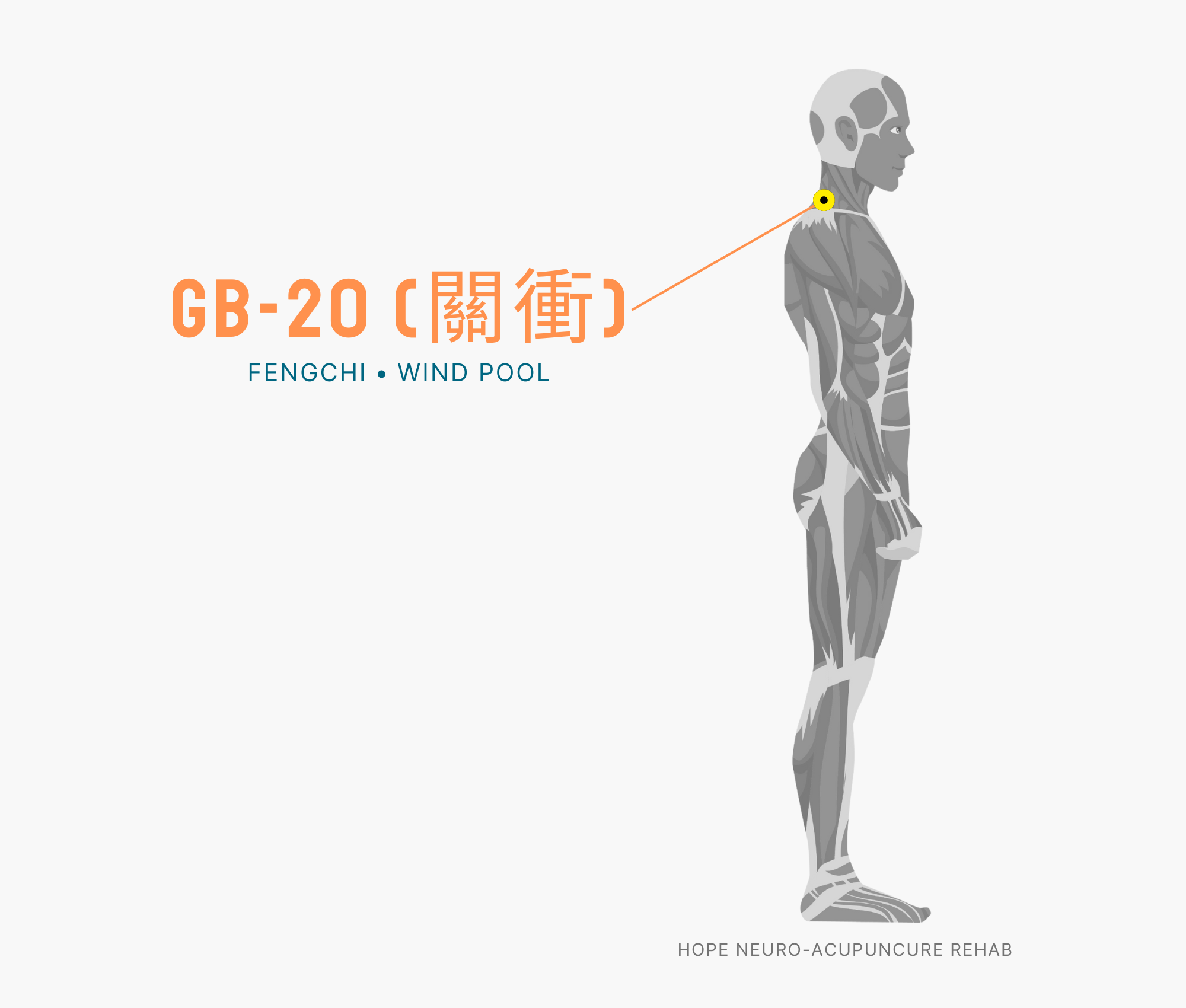
    Press Jianjing (GB21), Fengchi (GB20), and Tianzong (SI11) every morning and evening. This serves as “first aid” for loosening muscles.

    • Jianjing (GB21): Center of the shoulder top — press 3 seconds, 10 times
    • Fengchi (GB20): Both sides below the base of the skull — press 5 seconds, 8 times
    • Tianzong (SI11): Center of the shoulder blade — roll with a tennis ball for 1 minute

    Step 2: Strengthen Weakened Muscles (3-4 times/week)

    Just releasing knots leads to recurrence. You need to build the weakened muscles.

    1. Band pull-aparts: Hold a resistance band at chest height and spread it apart. Feel your shoulder blades squeezing together. 15 reps x 3 sets.
    2. Wall slides: Stand with your back against the wall, raise your arms to 90 degrees, then slide them up and down along the wall. 10 reps x 3 sets.
    3. External rotation: Keep your elbows pinned to your sides and pull the band outward. This strengthens the rotator cuff. 15 reps x 3 sets.

    Step 3: Posture Correction (In Daily Life)

    • Align the top of your monitor with eye level
    • Stand up every hour and open your chest 3 times
    • Hold your smartphone at eye level
    • Adjust your pillow height so your neck maintains its natural curve while sleeping

    Step 4: Stress Management

    Shoulder tension is a barometer for stress. Even just 5 minutes a day of deep breathing while consciously dropping your shoulders makes a difference. The “4-7-8 breathing method” — inhale 4 seconds, hold 7 seconds, exhale 8 seconds — is highly effective.

    Improvement Timeline

    Period Expected Results
    Weeks 1-2 Immediate relief from knots after acupressure
    Weeks 3-4 Reduced afternoon pain frequency, improved shoulder range of motion
    Months 2-3 Significant decrease in chronic knots, less need for massage
    Months 3-6 Posture improvement leads to greatly reduced pain recurrence

    Frequently Asked Questions

    Can chronic shoulder pain be completely cured?

    Yes, most muscular chronic shoulder pain greatly improves with proper exercise and posture correction. However, consistency is key. Invest at least 3 months.

    Massage feels great at the time but the pain comes right back. Why?

    Because you’re only treating symptoms without addressing the causes (weak muscles, poor posture). Massage + strength training + posture correction together prevent recurrence.

    Can shoulder strengthening exercises make it worse?

    You may have slight muscle soreness for the first 1-2 weeks. Start with light intensity and gradually increase. Stop and consult a professional if you feel sharp pain.

    How can I tell if my thoracic spine is stiff?

    Sit in a chair and try rotating just your upper body left and right. If the range is less than 45 degrees or you feel a stiff catch in the middle of your back, your thoracic mobility is restricted.

    My shoulder has been hurting for months. Do I really need to see a doctor?

    If self-care hasn’t helped after 3+ months, nighttime pain is severe, or you’re losing arm strength, definitely get a professional evaluation. MRI or ultrasound may be needed.
    ⚠️ Medical Disclaimer: This article is for informational purposes only and does not replace professional medical diagnosis or treatment. If symptoms persist or worsen, please consult a healthcare professional.
  • My Shoulders Feel Like Rocks After Too Much Computer Work — How to Fix It

    My Shoulders Feel Like Rocks After Too Much Computer Work — How to Fix It

    Summary: Shoulders rock-hard from too much computer work? Loosen them fast with Jianjing (GB21) and Fengchi (GB20) acupressure plus chest-opening stretches.

    GB20 혈자리 위치 그림

    8 Hours in Front of a Monitor — My Shoulders Have Turned to Cement

    Another day spent in front of the computer. By the time you leave work, your shoulders feel like rocks. When you turn your neck, it cracks and pops. When you rotate your arm backward, it pulls and aches. The entire upper back is knotted so tight it’s hard to even breathe.

    Without even realizing it, your shoulders crept up to your ears while clicking the mouse and typing. Your head jutted forward toward the monitor, and your back curved like a shrimp. And this posture stayed locked in for 8 straight hours.

    There are ways to quickly loosen those knotted shoulders at home after work. I’ll show you three approaches: acupressure + stretching + lifestyle habit changes.

    Why Does Computer Work Turn Your Shoulders to Rocks?

    • Forward head posture: The further your head juts forward, the exponentially greater the load on your neck and shoulder muscles. For every 2.5 cm your head moves forward, approximately 4.5 kg of additional burden is added.
    • Rounded shoulders: When you place your hands on the keyboard, your shoulders naturally roll forward. As chest muscles shorten and back muscles stretch out, everything stiffens up.
    • Trapezius overactivation: When using a mouse, you unconsciously elevate your shoulder slightly. After hours of accumulated tension, the trapezius muscles harden like rocks.

    After Work 15-Minute Shoulder Rock-Busting Routine

    Step 1: Fengchi (GB20) Acupressure — Start by Releasing the Neck (3 min)

    GB20 acupuncture point

    Place both thumbs on the hollows on each side below the base of your skull and press firmly upward for 5 seconds at a time. Releasing the suboccipital muscles tightened by forward head posture reduces the stiffness that extends to the shoulders. Repeat 10 times.

    Step 2: Jianjing (GB21) Acupressure — Direct Hit on Shoulder-Top Knots (3 min)

    Find the hardest, most knotted spot at the center of each shoulder top and press firmly with the opposite hand. Press 3 seconds, rest 3 seconds, 10 times per side. Tilting your head slowly to the opposite side while pressing releases the tension even deeper.

    Step 3: Tianzong (SI11) — Release Deep Knots in the Back (3 min)

    SI11 acupuncture point

    Place a tennis ball between the wall and your shoulder blade, then lean your body weight in and slowly roll it around. Pressing on the hard knots in the center of the shoulder blade gives an incredibly satisfying release. 1 minute 30 seconds per side.

    Step 4: Chest-Opening Stretches (3 min)

    1. Doorframe stretch: Place both elbows on each side of a doorframe and push your chest forward. Feel the stretch across the front of your chest — hold 20 seconds x 3 times.
    2. Behind-the-back clasp: Clasp your hands behind your back and lift them upward while opening your chest wide. Hold 15 seconds x 3 times.

    Step 5: Finish with Shoulder Rolls (3 min)

    Roll both shoulders in big circles — 10 rotations forward, 10 backward. When rolling backward, focus on the feeling of your shoulder blades squeezing together. Finish with 5 reps of shrugging your shoulders up high and then dropping them sharply.

    Prevention Tips Starting Tomorrow

    • Align the top of your monitor with eye level — a laptop stand is essential!
    • Sit deep in your chair and lean your lower back against the backrest
    • Work 50 minutes, rest 10 minutes — set a timer!
    • Place a cushion under your mouse arm to reduce shoulder tension

    Frequently Asked Questions

    Why do my shoulders get especially tight from computer work?

    When using a keyboard and mouse, your shoulders naturally roll forward and slightly elevate. These subtle tensions build up over hours and turn your shoulders rock-hard.

    Is a dual monitor setup worse for my shoulders?

    If you spend a lot of time turning your head to one side, that shoulder can get tighter. Place your primary monitor directly in front and the secondary slightly to the side.

    Is there a certain type of chair that prevents shoulder tightness?

    Chairs with adjustable armrest height are great. When your arms rest on the armrests and your shoulders drop naturally, trapezius tension is greatly reduced.

    Does a standing desk help with shoulder problems?

    Yes, posture tends to be more natural when standing, reducing shoulder burden. However, matching monitor height to eye level is still important.

    What can I do at work besides the after-work routine?

    Every 2 hours, shrug your shoulders up and drop them 5 times, and clasp your hands behind your back to stretch for 10 seconds. Do it every bathroom break so you don’t forget.

    ⚠️ Medical Disclaimer: This article is for informational purposes only and does not replace professional medical diagnosis or treatment. If symptoms persist or worsen, please consult a healthcare professional.
  • Office Neck Stretches — Without Anyone Noticing

    Office Neck Stretches — Without Anyone Noticing

    Summary: Discreet neck stretches and acupressure you can do at the office without anyone noticing. Quietly release neck stiffness right at your desk.

    GB20 혈자리 위치 그림

    Your neck is killing you… but stretching would draw stares

    3 PM, your neck has stiffened up completely. You grab your stiff neck and try to turn, but the ache won’t budge. You want to do a big stretch but feel like your coworker will stare… “I just want to loosen my neck.” If you’re an office worker, you’ve felt this frustration at least once.

    Why Does the Neck Hurt So Much at the Office?

    The repetitive motions of looking at a monitor, typing, and moving the mouse in the same position. Add A/C air blowing directly on your neck and the muscles tighten up. The tension from meetings and presentations also locks up your shoulders and neck. By the time you leave work, the back of your neck is throbbing.

    “Nobody Will Notice” Office Neck Care

    No big movements needed. Sitting at your desk, completely inconspicuous.

    Technique 1 — Stealth Chin Tuck

    While pretending to look at your monitor, slightly pull your chin back. Like making a double chin. Hold 5 seconds and release, 10 times. Nobody will notice, but the text neck correction effect is real. Try making it a habit whenever you’re looking at the screen.

    Technique 2 — Houxi (SI3) Press While Holding the Mouse

    SI3 acupuncture point

    With the hand not holding the mouse, press the bulge below the pinky on the mouse hand. Press 3 seconds, release — 5 times. Under the desk, nobody will know. It relieves the pulling sensation in the side of the neck.

    Technique 3 — “On the Phone” Fengchi (GB20) Press

    GB20 acupuncture point

    Cup the back of your head with one hand and place your thumb on Fengchi (the depression below the back of the skull). It looks exactly like holding your head while on a phone call. Press firmly for 5 seconds at a time. The neck stiffness melts away.

    Technique 4 — Clasped Hands Stretch

    Clasp your hands behind your head and let the weight of your arms gently pull your head forward. Hold for 15 seconds when you feel the back of the neck stretching. It looks like a thinking pose, so it’s perfectly natural.

    Technique 5 — Shoulder Shrugs (Jianjing Stimulation)

    Raise both shoulders up to your ears and then drop them. Just 5 repetitions relaxes the Jianjing (GB21) area. It looks like shrugging from the cold, so it doesn’t draw attention.

    Technique 6 — Bathroom Break 1-Minute Routine

    When you head to the bathroom or break room, quickly: side tilts 10 seconds each + chin tucks 5 times + shoulder rolls 5 times. When you’re alone in the hallway, 1 minute is plenty.

    Office Environment Improvement Tips

    • Monitor position: Arm’s length distance, top of screen at eye level
    • A/C airflow: Redirect away from your neck; use a light scarf
    • Timer setting: Set a silent vibration alarm every hour as a stretching reminder
    • Water breaks: Getting up to refill water is itself a posture change!

    Frequently Asked Questions

    My office chair is bad and I think that’s why my neck hurts. What kind of chair is best?

    Look for an ergonomic chair with a headrest, adjustable backrest angle, and adjustable armrest height. Lumbar support is also important.

    Would a travel neck pillow help at the office?

    Neck pillows help during naps. But during work, maintaining proper posture and regular stretching are more important.

    How many times a day should I stretch for it to be effective?

    At least once every hour, minimum 4-5 times per day. Each session is only 1 minute, so it’s just 5 minutes total investment per day.

    I want to recommend this to coworkers. Is doing it together better?

    Doing it together creates mutual reminders and greatly improves compliance. Creating a team culture of ‘1-minute stretching every hour’ is the best.

    Are there stronger stretches I can do during lunch break?

    During lunch, try chin tucks against a wall (10 sec x 10 reps) and doorframe chest stretches (15 sec x 5 reps). 10 minutes makes the afternoon much more comfortable.

    ⚠️ Medical Disclaimer: This article is for informational purposes only and does not replace professional medical diagnosis or treatment. If symptoms persist or worsen, please consult a healthcare professional.
  • Self-Acupressure to Correct Forward Head Posture — 5 Minutes a Day at Home Relief: 5 Pressure Points That Actually Work

    Self-Acupressure to Correct Forward Head Posture — 5 Minutes a Day at Home Relief: 5 Pressure Points That Actually Work

    Summary: Correct your stiff, aching forward head posture with just 5 minutes of daily self-acupressure. Press Fengchi, Tianzhu, Jianjing, Houxi, and Hegu in order.

    GB20 혈자리 위치 그림

    Every Time I Sit at the Monitor, My Neck Juts Forward

    After sitting in front of a computer all day, your neck has crept forward like a turtle. You look in the mirror and are startled — “Was my neck really sticking out that far?” The stiff back of your neck, the pulling ache in your shoulders, and in severe cases, tingling down to your fingertips… Forward head posture isn’t simply ‘bad posture’ — it’s a state where muscles and ligaments are abnormally tense.

    Why Forward Head Posture Is Dangerous

    For every centimeter your head moves forward, the load on your neck increases by about 2-3 kg. Your head normally weighs 4-5 kg, but with forward head posture, it crushes your neck with over 15 kg of force. No wonder your neck aches, shoulders are stiff, and headaches follow.

    Why Stretching Alone Isn’t Enough

    Stretching lengthens muscles, but it can’t release the already knotted, hardened fascia and stagnant blood flow. Acupressure directly works on knotted points to improve blood flow and release muscle tension. You need both stretching + acupressure for real results.

    5-Minute Daily Self-Acupressure Routine for Forward Head Posture

    Step 1 — Fengchi (GB20): Release Back-of-Neck Stiffness

    GB20 acupuncture point

    The hollow spots where your skull meets your neck on both sides. Place both thumbs here and press upward firmly. Hold 5 seconds, rest 3 seconds, repeat 8 times. You’ll feel an “ahh, that’s refreshing” sensation.

    Step 2 — Tianzhu (BL10): Relax Stiff Neck Muscles

    BL10 acupuncture point

    About one finger-width inward from Fengchi, right outside the thick muscle at the back center of your neck. Press with your thumb in slow circular motions for 10 seconds. 5 times each side.

    Step 3 — Jianjing (GB21): Relieve Shoulder Tension

    The midpoint between your neck and the tip of your shoulder — find the knotted spot and that’s it! Press firmly with the middle finger of the opposite hand, hold for 5 seconds, rest 3 seconds, repeat 8 times.

    Step 4 — Houxi (SI3): Ease Side Neck Pulling

    SI3 acupuncture point

    When you lightly clench your fist, it’s the raised bump at the end of the palm crease below your pinky finger. Press firmly with the opposite thumb. 3 seconds press, 2 seconds rest, 10 times each hand. Especially good for pulling sensations on the side of the neck.

    Step 5 — Hegu (LI4): Circulation Finishing Touch

    LI4 acupuncture point

    The webbing between your thumb and index finger. Pinch and press firmly with the opposite thumb and index finger. 5 seconds press, 3 seconds rest, 8 times each hand. This finishing point addresses both headaches and neck pain simultaneously.

    Tips to Boost Acupressure Effectiveness

    • Wrap your neck with a hot towel for 1 minute before acupressure — doubles the effect
    • Press while exhaling, release while inhaling
    • Morning after waking, after lunch, before bed — 3 times a day is ideal
    • 5 minutes at a time is enough. Pressing too long can be counterproductive!

    Frequently Asked Questions

    How quickly will I see results from acupressure for forward head posture?

    Results vary by individual, but with consistent 5-minute daily sessions, you can feel reduced neck stiffness within 1-2 weeks. By 3-4 weeks, posture changes become visible.

    How hard should I press during acupressure?

    A level that feels achy yet refreshing is just right. If you feel sharp or stinging pain, you’re pressing too hard.

    Can acupressure alone correct severe forward head posture?

    Mild forward head posture can improve significantly with acupressure + stretching. However, for severe cases (suspected cervical disc issues), get a professional diagnosis first.

    I get confused between Fengchi and Tianzhu locations. How do I tell them apart?

    Feel the bottom of your skull — there are hollow spots on both sides — that’s Fengchi. Move about 1 cm inward toward the center of the neck from there — that’s Tianzhu. It’s right next to the thick muscle.

    Is this acupressure safe for pregnant women?

    Hegu (LI4) can stimulate uterine contractions, so pregnant women must avoid it. For the other acupoints, it’s safest to consult a professional during pregnancy.

    ⚠️ Pregnancy Warning: Among the acupoints in this article, Hegu (LI4) may be stimulating for pregnant women. If you are pregnant or may be pregnant, please consult a professional before proceeding.
    ⚠️ Medical Disclaimer: This article is for informational purposes only and does not replace professional medical diagnosis or treatment. If symptoms persist or worsen, please consult a healthcare professional.
  • Woke Up with a Stiff Neck (Crick in the Neck First Aid)

    Woke Up with a Stiff Neck (Crick in the Neck First Aid)

    Summary: Woke up with a “crick in the neck” that won’t turn — you can provide first aid with warm compress + acupressure + gentle movement.

    GB20 혈자리 위치 그림

    Open your eyes and “Ouch!” — neck is locked

    You wake up and try to turn your head but it feels completely locked on one side. Try to rotate and a sharp, stiff pain shoots through. Getting dressed is hard, washing your face is difficult, even gripping the steering wheel is a struggle. “What did I do wrong in my sleep?”

    This Is What’s Called a “Crick in the Neck”

    What traditional medicine calls “a crick” is when neck muscles suddenly lock up during sleep due to an awkward position. Medically, it’s called “acute cervical myofascial pain syndrome.” Muscles contract excessively, cutting off blood flow, and pain-causing substances accumulate, making the neck stiff and painful.

    Common Causes of a Crick in the Neck

    • Sleeping with the neck bent due to wrong pillow height
    • Sleeping with the neck exposed to A/C or fan air
    • Falling asleep while muscles are tense from fatigue or stress
    • Habitual stomach or one-sided sleeping

    4 Steps for Crick-in-the-Neck First Aid

    Step 1 — Warm Compress (5 min)

    Place a hot towel or heat pack on the painful area. Never use a cold compress! Already contracted muscles will stiffen even more. Warm heat restores blood flow and releases tension.

    Step 2 — Fengchi (GB20) + Tianzhu (BL10) Acupressure (3 min)

    BL10 acupuncture point

    Press the depressions below the back of the skull (Fengchi) and the inner area (Tianzhu) gently but firmly with your thumbs. During the acute phase, pressing too hard is counterproductive! 3 seconds press, 3 seconds rest — 10 times on each side. The right intensity is when it feels sore yet satisfying.

    Step 3 — Houxi (SI3) Acupressure (2 min)

    SI3 acupuncture point

    Press the bulge on the side of your hand below the pinky finger with the opposite thumb. This acupoint is a special-effect point for releasing neck rigidity. 3 seconds press, 2 seconds rest — 10 times on each hand.

    Step 4 — Extremely Slow Movement (3 min)

    Once the pain eases slightly, very slowly move your head left and right within the pain-free range. Never force it in the direction of pain. Go only as far as comfortable, hold 2 seconds, then return to center. Repeat 10 times.

    Recovery Guidelines

    • Avoid straining activities (heavy lifting, intense exercise) that day
    • Keep your neck warm with a scarf or neck warmer
    • Take a warm bath before bed to relax muscles
    • Check pillow height — your neck should be horizontal when lying on your side

    See a Doctor If…

    If your arm is numb or weak, it hasn’t improved in 3+ days, or you have a fever, it may not be a simple crick. It could be a disc issue or another cause — get a professional diagnosis.

    Frequently Asked Questions

    I get cricks frequently. How can I prevent them?

    Match your pillow height (neck should be in a straight line when lying on your side), stretch your neck before bed, and don’t let A/C air blow directly on your neck.

    Can I use a medicated patch when I have a crick?

    Warm patches are fine. Cold patches may further contract muscles and are best avoided during the acute phase.

    How can I tell a crick from a disc problem?

    A crick usually improves within 2-3 days and pain stays around the neck. Disc problems cause arm numbness, last longer, and pain worsens when coughing.

    Is it okay to get a massage when I have a crick?

    Light massage can help, but vigorous kneading during the acute phase can make it worse. Gentle acupressure is the safest approach.

    Can children get cricks in their neck?

    Yes, children can also get cricks from sleeping in wrong positions. However, if a child complains of neck pain, consult a pediatrician first.

    ⚠️ Medical Disclaimer: This article is for informational purposes only and does not replace professional medical diagnosis or treatment. If symptoms persist or worsen, please consult a healthcare professional.
  • How to Fix Neck Pain from Too Much Smartphone Use

    How to Fix Neck Pain from Too Much Smartphone Use

    Summary: When your neck feels stiff and sore from staring at your smartphone too long, fix ‘text neck’ with posture correction, acupressure, and stretching.

    GB20 혈자리 위치 그림

    Q: My Neck Really Hurts from My Smartphone — What Should I Do?

    How many hours a day do you spend looking at your smartphone? On average, adults spend over 4 hours a day on their phones. With your head tilted down that entire time, it’s no wonder your neck hurts. That pulling sensation in the back of your neck, stiff shoulders, and in severe cases, tingling all the way down to your fingertips — this is ‘Text Neck.’

    How Bad Is Your Smartphone for Your Neck?

    Tilting your head just 15 degrees puts 12 kg of load on your neck, 45 degrees means 22 kg, and 60 degrees a whopping 27 kg. That’s like hanging a sack of rice around your neck! Enduring this load for hours every day is why your neck muscles are screaming.

    Fix Your Smartphone Posture Right Now

    80% of the solution is posture correction. It’s not difficult at all.

    A: How to Correct Your Smartphone Posture

    1. Raise your phone higher: Instead of tilting your head down, bring your phone up to eye level. If your arm gets tired, rest your elbow on a desk or cushion
    2. Lean back: Sit back against a sofa or chair while using your phone. Lying face down while scrolling is the worst position
    3. 20-20-20 rule: Every 20 minutes, look at something 6 meters (20 feet) away for 20 seconds. Both your eyes and neck need rest

    Acupressure & Stretching for Text Neck

    Fengchi (GB20) Acupressure

    Press firmly with your thumbs on the hollow spots on both sides at the base of your skull. Hold for 5 seconds, rest for 3 seconds, repeat 8 times. This provides refreshing relief to the back of your neck stiffened by smartphone use.

    Jianjing (GB21) Acupressure

    Press and hold the knotted area on top of your shoulder with the opposite hand for 5 seconds. Repeat 8 times on each side. Your stiff shoulders will feel much lighter.

    Neck Stretching Routine

    1. Chin tuck: Pull your chin toward your neck to create a double chin. Hold 10 seconds x 5 reps
    2. Side tilts: Use your hand to gently pull your head toward the opposite side. 10 seconds each side
    3. Diagonal stretch: Use your right hand to pull your head diagonally forward and down to the right. 10 seconds each side. This stretches the side and back of the neck simultaneously

    Changing Your Smartphone Habits

    • Check and reduce your screen time using a screen time app
    • Turn off social media notifications — you’ll look at your phone less
    • Put your smartphone down 1 hour before bed
    • Use voice commands and voice messages — less reason to tilt your head down

    Frequently Asked Questions

    If my neck hurts from my smartphone, should I just stop using it?

    Realistically, you can’t stop using it entirely. Instead, change how you hold it, reduce screen time, and stretch regularly throughout the day.

    Does a phone stand help?

    Yes! A stand that brings the screen to eye level greatly reduces the angle you tilt your head. Use one especially when watching videos.

    Can children get text neck too?

    Forward head posture among children and teenagers is increasing rapidly. Since it has a greater impact during growth years, limiting screen time and teaching proper posture is truly important.

    Is using a tablet instead of a phone better for neck pain?

    A larger screen can slightly reduce head tilting, but poor posture causes the same problems. The key is propping it up on a stand at eye level.

    What problems can text neck cause if it gets worse?

    Chronic neck pain, forward head posture, headaches, and shoulder stiffness are just the beginning. In severe cases, it can lead to cervical disc herniation or thoracic outlet syndrome. Managing it early is crucial.

    ⚠️ Medical Disclaimer: This article is for informational purposes only and does not replace professional medical diagnosis or treatment. If symptoms persist or worsen, please consult a healthcare professional.
  • Forward Head Posture vs Stiff Neck: Different Causes, Different Solutions — A Complete Comparison Guide

    Forward Head Posture vs Stiff Neck: Different Causes, Different Solutions — A Complete Comparison Guide

    Summary: Forward head posture and stiff neck both cause neck pain but have different causes and solutions. Identify which one you have and manage it with the right approach.

    GB20 혈자리 위치 그림

    Both Hurt, But… What’s the Difference?

    When someone says “my neck is stiff and sore,” it’s easy to think they’re all the same. But forward head posture and stiff neck have different causes, symptoms, and solutions. Using the wrong approach can actually make things worse. Identifying your condition first is crucial.

    Self-Diagnosis: Which One Are You?

    Forward Head Posture Checklist

    • Your neck feels constantly stiff and heavy
    • When viewed from the side, your ears are in front of your shoulders
    • Symptoms worsen after using a computer or smartphone
    • You feel a broad ache from the back of your neck to your shoulders
    • Headaches frequently accompany it

    Stiff Neck Checklist

    • You suddenly can’t turn your neck in the morning
    • Pain is especially bad in one direction
    • Pressing a specific spot causes sharp pain
    • It gradually improves within 2-3 days
    • You slept in an uncomfortable position or were exposed to cold drafts

    Cause Comparison

    Category Forward Head Posture Stiff Neck
    Cause Prolonged poor posture Sleep position, cold drafts, sudden movement
    Onset Gradual progression Sudden, overnight
    Pain area Broad ache from neck to shoulders Concentrated on one side (sharp)
    Duration Continues unless habits change Usually 2-5 days
    Movement Generally stiff overall Limited in specific direction only

    Different Solutions for Different Conditions

    Forward Head Posture — ‘Correction’ Is Key

    1. Posture correction: Do chin tucks at least 30 times a day
    2. Deep muscle strengthening: Lean against a wall and press the back of your head against it — 10 seconds x 10 reps
    3. Acupressure: Fengchi (GB20) and Tianzhu (BL10) for neck blood flow, Jianjing (GB21) for shoulder relaxation
    4. Environment adjustment: Correct monitor height, chair height, and smartphone viewing posture

    Stiff Neck — ‘Relaxation’ Is Key

    1. Warm compress: Apply a hot towel for 5-10 minutes (no cold compress!)
    2. Gentle acupressure: Lightly press Fengchi (GB20) and Houxi (SI3)
    3. Micro movements: Very slowly turn your head within the pain-free range
    4. Rest: Don’t overdo it and avoid activities that strain the neck

    If You Think You Have Both?

    People with forward head posture are more vulnerable to stiff neck. Regular forward head posture correction also dramatically reduces stiff neck frequency. If you have both, first resolve the acute stiff neck, then begin a forward head posture correction program.

    Frequently Asked Questions

    I have forward head posture and get stiff neck often. Are they related?

    Yes, when your neck muscles are already tense from forward head posture, even minor triggers like sleeping position or cold drafts can easily cause a stiff neck.

    How long does it take to correct forward head posture?

    It varies by individual, but with daily consistent exercise, you can notice visible changes in about 4-8 weeks. However, if you don’t maintain the habits, it can return.

    My stiff neck hasn’t improved after 3 days. Is that okay?

    Simple stiff neck usually improves within 2-5 days. If it persists over a week or is accompanied by arm numbness, see a doctor as it could be a cervical disc issue.

    Do posture corrector bands work?

    They’re fine as a tool to make you aware of your posture. However, without fundamental muscle strengthening, corrector bands alone have limited effectiveness.

    What kind of pillow should I use to prevent both?

    When lying on your side, a height that keeps your neck aligned with your spine is best. Too high worsens forward head posture, too low increases stiff neck risk. Memory foam pillows adapt well.

    ⚠️ Medical Disclaimer: This article is for informational purposes only and does not replace professional medical diagnosis or treatment. If symptoms persist or worsen, please consult a healthcare professional.
  • I Can’t Sleep and Toss and Turn Every Night

    I Can’t Sleep and Toss and Turn Every Night

    Summary: A self-acupressure guide for those who toss and turn every night. Use Shenmen (HT7) and Yongquan (KI1) acupressure to lower brain arousal and induce natural sleep.

    HT7 혈자리 위치 그림

    Right side… left side… on your back… right side again

    Toss and turn. Pull the covers up, kick them off. Adjust the pillow higher, then lower. The clock ticks away but your eyes stay wide open. “What’s wrong with me?” — yet your mind keeps replaying today’s events and tomorrow’s tasks on an endless loop.

    When this pattern repeats every night, it’s truly exhausting. During the day, your head feels heavy, you can’t concentrate, and you can’t function without coffee. Then night comes and the pressure of “I really need to sleep tonight…” makes it even harder — a vicious cycle.

    The truth is, tossing and turning is a signal that your brain hasn’t switched from “daytime mode” to “nighttime mode” yet. Your sympathetic nervous system is still active. There’s a way to hit this transition switch.

    The Real Cause of Tossing and Turning: Brain Hyperarousal

    Being tired but unable to sleep sounds paradoxical, but when stress hormone cortisol is high, your body may be exhausted while your brain simply cannot fall asleep. This is called a “hyperarousal” state.

    Acupressure helps shift this hyperarousal state to parasympathetic dominance. You only need your fingers — no special tools — so you can start right in bed.

    Acupoints to Press Right When You Start Tossing

    Shenmen (HT7) — Stop the racing thoughts

    HT7 acupuncture point

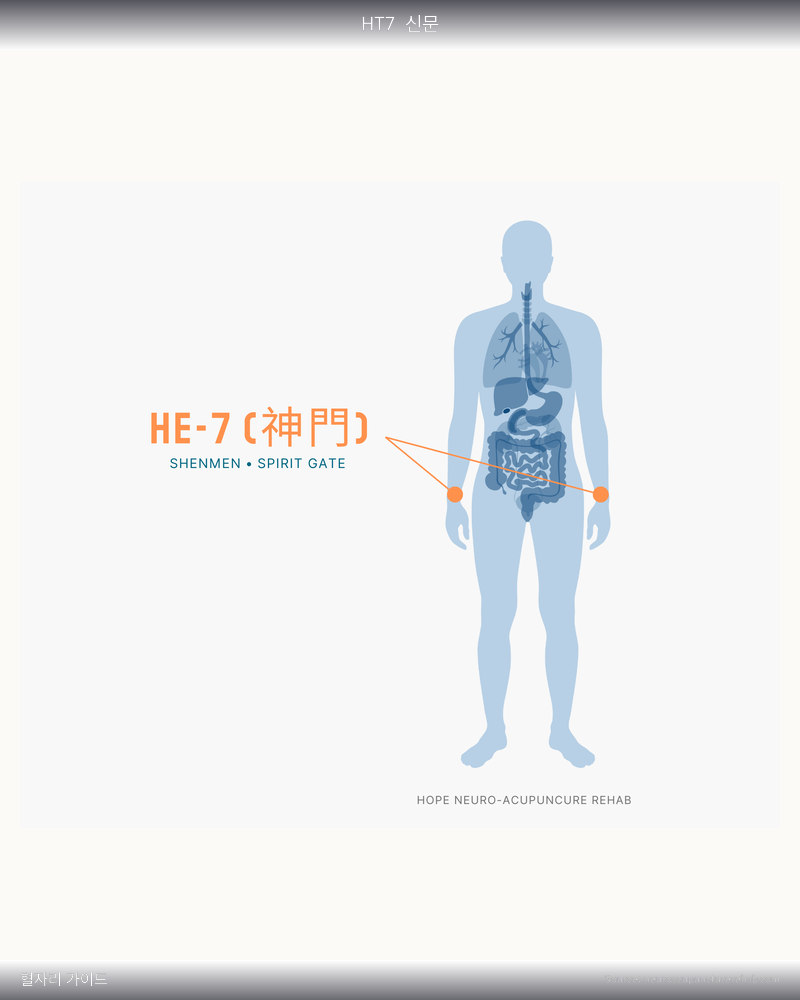
    The depression next to the tendon on the pinky side of the inner wrist crease. Press gently with the opposite thumb for 5 seconds, 15 times per side. Imagine “closing the door of the mind.” You’ll feel the spinning thoughts gradually slow down.

    Yongquan (KI1) — Draw heat from your head to your feet

    KI1 acupuncture point

    The depression at the front third of the sole, where it dips when you curl your toes. Press firmly with your thumb, 15-20 repetitions. Your head cools down and eyes get heavy. Under the covers, press one foot at a time alternately.

    Baihui (GV20) — Tap the crown to switch off the brain

    Gently tap the center of your crown with your fingertip. Just 30 seconds of tapping will make your head feel drowsy and sleepiness will creep in. Especially effective when your mind is too busy to sleep.

    Habits to Reduce Tossing and Turning

    • Room temperature: 64-68°F (18-20°C) is optimal. Too warm makes you toss.
    • Bedtime routine: Lying down at the same time and doing acupressure in the same order every night teaches your brain “ah, it’s time to sleep.”
    • 4-7-8 breathing: Inhale 4 seconds, hold 7 seconds, exhale 8 seconds. Combined with acupressure, the synergy is powerful.
    • Blue light block: Put away your phone and computer at least 1 hour before bed.

    Tonight, when you start tossing and turning, just press the Shenmen point first. Instead of getting anxious thinking “I can’t sleep again,” shift your mindset to “I’m about to press my sleep switch.”

    Frequently Asked Questions

    Is tossing and turning every night considered insomnia?

    If difficulty falling asleep or frequent waking occurs 3+ times per week for over 3 months, it’s classified as chronic insomnia. Occasional tossing is normal.

    Will acupressure help me fall asleep immediately?

    You may not feel immediate effects at first. With 1-2 weeks of consistent practice, you’ll notice the time it takes to fall asleep gradually shortening.

    When tossing, is it better to get up and do something?

    If you can’t sleep for 20+ minutes, get out of bed and do a quiet activity, then return when sleepy. Tossing in bed teaches the brain that ‘bed = wakefulness.’

    Does sleep position affect tossing and turning?

    Yes, if your pillow height is wrong or your mattress is uncomfortable, you’ll unconsciously shift positions. Finding a comfortable position for your neck and back is important.

    What foods should I avoid before bed?

    Avoid caffeine (coffee, green tea, chocolate) after 2 PM, and alcohol disrupts deep sleep. Foods containing tryptophan like bananas, milk, and cherries can help.

    ⚠️ Medical Disclaimer: This article is for informational purposes only and does not replace professional medical diagnosis or treatment. If symptoms persist or worsen, please consult a healthcare professional.
  • Neck Pain After Long Computer Sessions — 1-Minute Stretching Routine

    Neck Pain After Long Computer Sessions — 1-Minute Stretching Routine

    Summary: A stiff neck after computer work — try these stretches and acupressure techniques you can do in just 1 minute for instant relief.

    GB20 혈자리 위치 그림

    After 3 hours staring at the monitor… your neck starts to stiffen

    When you’re deep in work, time flies. But the moment you look up — there it is. An aching, stiff pain in the back of your neck. Your shoulders feel heavy, the back of your neck pulls, and even your eyes feel dry. You think “I should take a break” and try turning your head, only to find it completely locked up.

    Why Does Computer Work Hurt Your Neck?

    When looking at a monitor, your head unconsciously juts forward. Even 1 hour of this posture means your neck muscles are supporting more than 3 times the weight of your head. Lactic acid builds up in the muscles and blood flow worsens, causing that stiff, tingling pain.

    A 1-Minute Routine for Your Break-Free Schedule

    That 1 minute walking to the bathroom, or waiting for your coffee — that’s all you need. You can even do it sitting at your desk.

    10 Seconds — Chin Tuck

    With your head upright, pull your chin straight back toward your neck. It feels like making a double chin. When you feel the back of your neck stretching, hold for 10 seconds. This single move has text neck correction benefits.

    20 Seconds — Side Stretches

    Place your right hand on the left side of your head and slowly tilt to the right. Hold at the stiff, pulling point for 10 seconds. Then the other side for 10 seconds. Exhaling while stretching helps muscles release more easily.

    15 Seconds — Fengchi (GB20) Acupressure

    GB20 acupuncture point

    Press both depressions below the back of the skull with your thumbs while tilting your head slightly back. Press 5 seconds, rest briefly — 3 times. That stiff back of neck will feel noticeably lighter.

    15 Seconds — Shoulder Shrugs (Jianjing Stimulation)

    Raise both shoulders up to your ears, then release and let them drop. Repeat 5 times. The tight muscles around Jianjing (GB21) relax, releasing shoulder tension along with neck stiffness.

    Timer Setup Tips for the 1-Minute Routine

    • Set a 1-hour timer on your computer
    • When the alarm goes off, do this 1-minute routine
    • 4-5 times a day significantly reduces neck stiffness
    • It’s easy to forget at first, so definitely set the alarm!

    Workspace Ergonomics Checklist

    Item Ideal Setup
    Monitor height At eye level or slightly below
    Monitor distance Arm’s length away (50-70cm)
    Chair height Feet comfortably flat on the floor
    Keyboard position At a height where shoulders don’t rise

    Frequently Asked Questions

    They say stretch every hour — does it really work?

    Yes, research shows that short stretches every hour can reduce neck and shoulder pain by over 40%. Just 1 minute is enough.

    My monitor is too low. What can I do?

    Place books or a monitor stand under your monitor to adjust the height. For laptops, using a separate keyboard is recommended.

    I hear cracking sounds when stretching. Is it safe to continue?

    Light sounds are fine. But if accompanied by pain or sharp sounds, stop and consult a professional.

    Will a standing desk reduce neck pain?

    It’s better than sitting all day, but poor posture while standing causes the same problems. Ideally, alternate between sitting and standing every hour.

    What exercises are good for preventing neck pain?

    Swimming (backstroke, freestyle) and Pilates are especially good for strengthening neck muscles. Avoid heavy weightlifting that strains the neck.

    ⚠️ Medical Disclaimer: This article is for informational purposes only and does not replace professional medical diagnosis or treatment. If symptoms persist or worsen, please consult a healthcare professional.
  • Waking Up at 3 AM and Can’t Fall Back Asleep

    Waking Up at 3 AM and Can’t Fall Back Asleep

    Summary: When you wake up at dawn and can’t fall back asleep, pressing Shenmen (HT7) and Yongquan (KI1) under the covers can prevent brain re-arousal and help you slip back into sleep.

    HT7 혈자리 위치 그림

    3 AM again… wide awake

    You see the dark ceiling. Check the clock — sure enough, 3:30 AM. “Not again.” You close your eyes but they stay wide open, and your mind is already churning. Yesterday’s events, tomorrow’s tasks, pointless worries — all rushing in at once.

    After an hour of tossing, sleep finally comes about 30 minutes before your alarm. Then that alarm sound… the day starts already drained.

    Middle-of-the-night waking can actually be more torturous than sleep-onset insomnia (difficulty falling asleep in the first place). Once you’re awake, falling back asleep is genuinely hard. But there’s a simple method you can do right under the covers.

    Why You Wake at Dawn — The Traditional Medicine Perspective

    In traditional medicine, 1-3 AM is the Liver’s time. When stress or anger accumulates and liver qi stagnates, you tend to wake during this period. And 3-5 AM is the Lung’s time — when sadness or depression is present, waking during this window is common.

    From a modern medicine perspective, cortisol (the arousal hormone) begins rising gradually around 4 AM. In people under significant stress, this release is accelerated, causing earlier waking.

    When You Wake at Dawn: Under-the-Covers Acupressure Routine

    Rule 1: Don’t look at the clock

    The moment you check the time, your brain shifts into calculation mode. Turn the clock away or keep your phone out of reach.

    Rule 2: Don’t turn on the lights

    Light stops melatonin production. Do the acupressure in the dark using only your sense of touch.

    Shenmen (HT7) Acupressure — Close the door of the mind again

    HT7 acupuncture point

    In the darkness, find the depression on the inner wrist crease on the pinky side, and slowly press with the opposite thumb. 5 seconds press, 3 seconds rest — 15 times on each side. Slow your breathing and silently repeat “I can fall back asleep.”

    Yongquan (KI1) Acupressure — Cool the awakened head again

    KI1 acupuncture point

    Under the covers, press the depression at the front of each sole firmly with your thumb, 15-20 times. Your head becomes drowsy and sleepiness returns. Warmth spreading through your feet brings sleep along with it.

    Fengchi (GB20) Self-Massage — Release neck tension

    GB20 acupuncture point

    When you wake at dawn, your neck is often unconsciously tense. Interlock your fingers behind your head, cradling it, and use your thumbs to gently massage the Fengchi points in circles for 1 minute.

    Habits to Reduce Dawn Waking

    • Evening meals: Eating too late or overeating disrupts sleep through digestive activity. Eat lightly at least 3 hours before bed.
    • Alcohol: Alcohol makes falling asleep easier but is the main culprit of dawn waking. It disrupts REM sleep.
    • Temperature: When body temperature drops at dawn, a blanket that’s too thin can wake you from the cold.
    • Liver health: From a traditional medicine perspective, drinking lukewarm lemon water in the morning helps resolve liver qi stagnation.

    Waking at dawn is a signal from your body. Use acupressure to help with immediate re-entry into sleep while also examining your fundamental lifestyle habits.

    Frequently Asked Questions

    Why do I always wake up at 3-4 AM?

    In traditional medicine, 1-3 AM is the Liver’s time and 3-5 AM is the Lung’s time. When stress causes liver qi stagnation, you tend to wake during these hours. Early cortisol release is also a factor.

    Is it normal to need the bathroom whenever I wake at dawn?

    Yes, it’s natural. However, drinking too much water before bed can cause nocturia that disrupts sleep, so reduce fluid intake starting 2 hours before bedtime.

    Why shouldn’t I look at the clock when I wake up?

    Looking at the clock triggers calculations like ‘it’s already this late, I can only sleep for X more hours,’ which actually increases arousal. Turn the clock away or cover it.

    Can I do stretching instead of acupressure when waking at night?

    Light stretching is fine, but intense exercise will actually wake you up more. Acupressure you can do under the covers is the most efficient approach.

    Should I see a doctor if I wake every dawn?

    If you wake every dawn for 2+ weeks and can’t fall back asleep, consult a sleep specialist. It’s good to check for sleep apnea or depression as possible causes.

    ⚠️ Medical Disclaimer: This article is for informational purposes only and does not replace professional medical diagnosis or treatment. If symptoms persist or worsen, please consult a healthcare professional.