Category: Acupoint Guide

  • Neiguan (PC6) Acupressure Point — Complete Guide

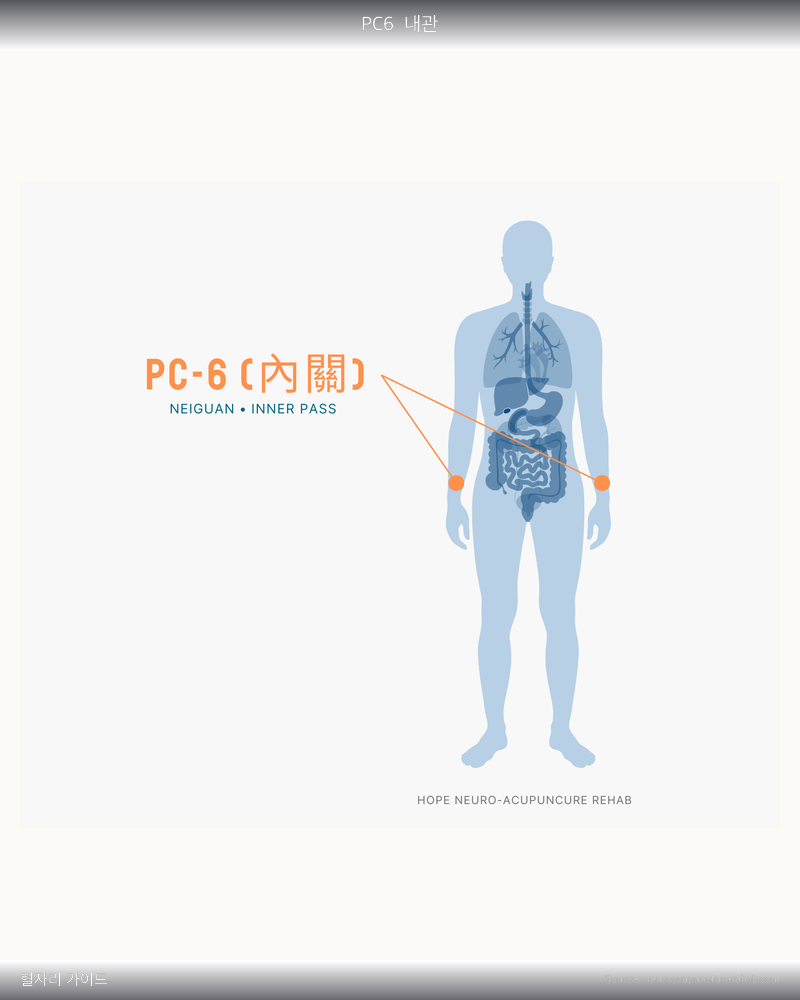
    Neiguan (PC6) Acupressure Point — Complete Guide

    Quick Summary: Complete guide to Neiguan (PC6) acupoint: location, benefits, and acupressure techniques. An effective wrist acupoint for nausea, motion sickness, insomnia, and anxiety. A must-know before flying or driving!
    Quick Summary: Neiguan (PC6) is the ‘anti-nausea’ acupoint on the inner wrist. It’s the best for dealing with nausea, queasiness, and chest tightness. A great acupoint to remember before traveling!

    What Is Neiguan?

    Neiguan means ‘inner gate’!

    It’s an acupoint on the Pericardium meridian that serves as an important link between the chest and stomach. Think of it as a brake that stops queasiness.

    It’s one of the most studied acupoints even in Western research. Anti-nausea wristbands actually work by pressing this exact Neiguan location!

    Beyond nausea, it’s also good for anxiety, palpitations, and insomnia — a truly multi-talented acupoint.

    How to Find Neiguan

    Easy to find on the wrist!

    1. Turn your palm face up and look at your wrist.
    2. Find the wrist crease. Bending your wrist makes the crease more visible.
    3. Place 3 fingers side by side from the crease toward the elbow.
    4. Where your third finger ends, between the two tendons — that’s Neiguan!
    5. Make a fist and you’ll see two tendon lines. It’s right in the center between them.

    Tip: When you press firmly, if you feel a tingling sensation spreading through the inner arm, you’ve found the right spot!

    Key Benefits of Neiguan

    1. Stops nausea — Best for motion sickness, morning sickness, and queasiness
    2. Calms palpitations — Steadies a racing heart
    3. Helps with insomnia — Brings peace of mind for easier sleep
    4. Reduces anxiety — Effective when nervous or restless
    5. Relieves stress — Refreshing when your chest feels tight
    6. Aids digestion — Supports stomach function

    Self-Acupressure Technique for Neiguan

    Preparation

    Sit comfortably with your palm facing up.

    Step 1: Find the Exact Location

    Place the opposite thumb on the Neiguan location.

    Step 2: Press Firmly

    • Press with your thumb for 5 seconds
    • Release for 3 seconds
    • Repeat 10–15 times

    Step 3: Rub Gently

    • Press your thumb and rub up and down
    • Gently for 30 seconds to 1 minute

    Step 4: Do Both Wrists

    Do both wrists. 2–3 times daily is sufficient.

    In a rush: If you feel motion sickness coming on, press even just one wrist right away!

    Acupoints That Pair Well with Neiguan

    Combination Effect Best For
    Neiguan + Zusanli (ST36) Anti-nausea + improved digestion When nauseous and food won’t digest
    Neiguan + Shenmen (HT7) Heart stabilization + anxiety relief When nervous with racing heart
    Neiguan + Hapgok (LI4) Full-body relaxation + pain relief When you have a headache and upset stomach

    Precautions

    • If you have weak wrists, press gently
    • Consult a doctor first if you have carpal tunnel syndrome
    • Don’t press for too long — 2–3 minutes is enough
    • Pressing too hard when it doesn’t seem to work can cause bruising

    Frequently Asked Questions

    Is Neiguan only good for motion sickness?

    Not at all! Besides motion sickness, it’s also great for anxiety, insomnia, and chest tightness. It’s a truly versatile acupoint!

    Do anti-nausea wristbands actually work?

    They work on the principle of pressing Neiguan, so they do help to some degree. However, pressing directly with your thumb is more accurate and effective!

    Is it safe for morning sickness during pregnancy?

    Yes! Neiguan is safe for pregnant women. Try pressing it gently when morning sickness is severe.

    Can I press it before getting on a plane?

    Absolutely! Pressing it starting 30 minutes before boarding has a preventive effect.

    Can children do this too?

    Yes, children can do it too. Just use softer, shorter pressure than for adults — about 30 seconds to 1 minute.
    Medical Disclaimer: This article is for informational purposes only and does not replace professional medical diagnosis or treatment. If symptoms persist or worsen, please consult a healthcare professional.
  • Where Is Lieque (LU7)? Location, Benefits, and Technique

    Where Is Lieque (LU7)? Location, Benefits, and Technique

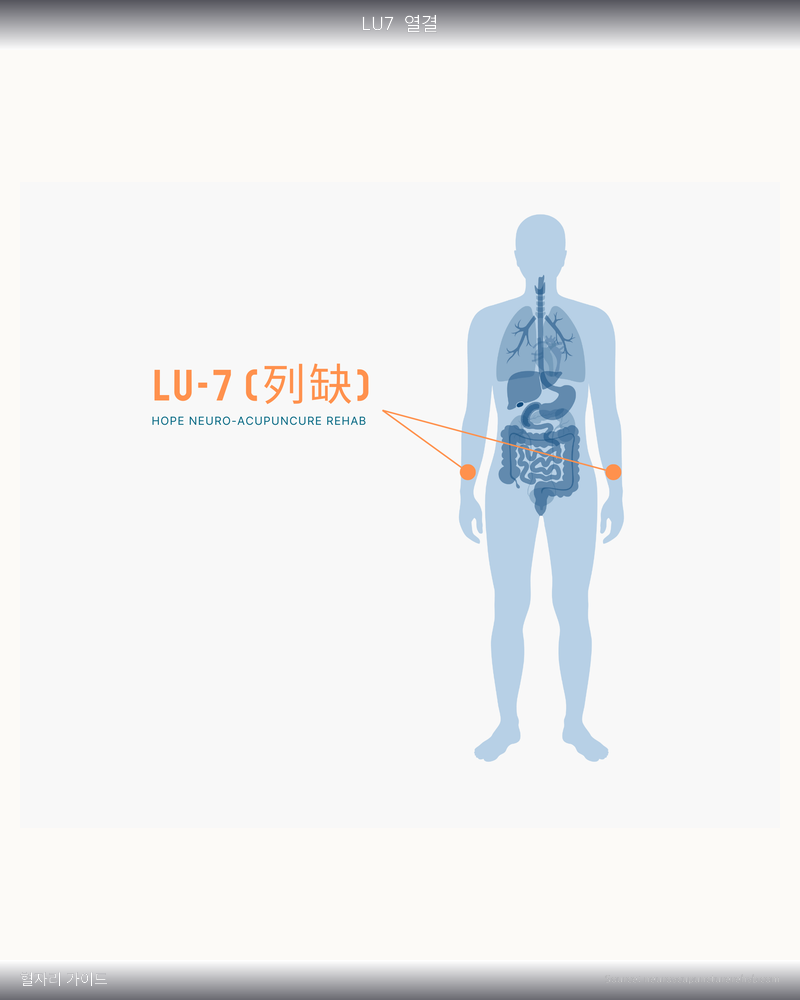
    Quick Summary: Complete guide to Lieque (LU7) acupoint: location, benefits, and acupressure techniques. An effective Lung meridian acupoint for coughs, colds, headaches, sore throat, and asthma.
    Quick Summary: Lieque (LU7) is a ‘respiratory guardian’ acupoint located above the wrist on the thumb side. It’s exceptionally effective for coughs, colds, and sore throats. A must-know acupoint if you catch colds every season!

    What Is Lieque?

    Lieque means ‘a broken sequence’ or ‘a split in the line’!

    It’s an important acupoint on the Lung meridian that serves as the key point for managing the lungs and respiratory system. Think of it as a shield that drives away throat colds.

    In traditional medicine, it’s one of the ‘Four Command Points’ — the 4 most important acupoints in the body — and Lieque is in charge of the head and neck.

    When you have a cold, when your cough won’t stop, when your throat feels scratchy — Lieque will be your lifesaver!

    How to Find Lieque

    There’s a fun method to find it!

    1. Cross the webbing between thumb and index finger of both hands together (like a tiger’s mouth).
    2. Find where one index finger tip touches the opposite wrist.
    3. That’s the approximate location of Lieque!
    4. More precisely: from the wrist crease, go two finger-widths toward the elbow.
    5. It’s just above the bony prominence on the thumb side, in a slight depression.

    Tip: When you extend your thumb, you can see a tendon. The depression between that tendon and the bone is the spot!

    Key Benefits of Lieque

    1. Reduces coughing — Good for both productive and dry coughs
    2. Speeds cold recovery — Relieves early cold symptoms
    3. Relieves headaches — Especially effective for headaches at the back of the head and neck
    4. Soothes sore throat — Effective when your throat feels scratchy or painful
    5. Eases breathing — Helps with asthma and breathing difficulties
    6. Clears nasal congestion — Also good for stuffy nose and runny nose

    Self-Acupressure Technique for Lieque

    Preparation

    Sit comfortably and extend one arm.

    Step 1: Find the Location

    Use the opposite thumb to locate Lieque.

    Step 2: Press Firmly

    • Press with your thumb for 3–5 seconds
    • Release for 2 seconds
    • Repeat 10–15 times

    Step 3: Rub Side to Side

    • Rub side to side at the Lieque location
    • Gently for 30 seconds to 1 minute
    • A slightly warm sensation means you’re doing it right

    Step 4: Do Both Arms

    Do both sides. 3–4 times daily is recommended.

    When you have a cold: Do it more frequently than usual — try every 2 hours!

    Acupoints That Pair Well with Lieque

    Combination Effect Best For
    Lieque + Hapgok (LI4) Activates Lung + Large Intestine meridians When cold causes severe cough + runny nose
    Lieque + Fengchi (GB20) Cold + headache relief simultaneously When a cold causes headache in early stage
    Lieque + Tiantu (CV22) Direct throat + bronchial care When coughing won’t stop

    Precautions

    • The wrist area is delicate, so don’t press too hard
    • Avoid if you have wounds on the arm
    • If coughing persists for more than 2 weeks, be sure to see a doctor
    • During asthma attacks, use medication first rather than acupressure

    Frequently Asked Questions

    Is Lieque also good for cold prevention?

    Yes! Pressing Lieque daily during seasonal transitions helps with immune support.

    Can I press it right when I’m coughing?

    Of course! When you feel a cough coming on, press Lieque firmly. You may feel the coughing subside.

    My child has a cold — can I do this for them?

    Yes, you can. For children, use gentle pressure and keep it to 30 seconds to 1 minute.

    Which is better — Lieque or Hapgok?

    Lieque is better for coughs and sore throat; Hapgok is better for headaches and toothaches. Using both together is ideal!

    Does it work for nasal congestion too?

    Yes! It helps with nasal congestion and runny nose too. Combined with Hapgok, it clears the nasal passages even better.

    Medical Disclaimer: This article is for informational purposes only and does not replace professional medical diagnosis or treatment. If symptoms persist or worsen, please consult a healthcare professional.
  • Taechung (LR3): Location, Benefits, and How to Press It

    Taechung (LR3): Location, Benefits, and How to Press It

    Quick Summary: Complete guide to Taechung (LR3) acupoint: location, benefits, and acupressure techniques. An effective foot acupoint for headaches, stress, anger, dizziness, and high blood pressure.
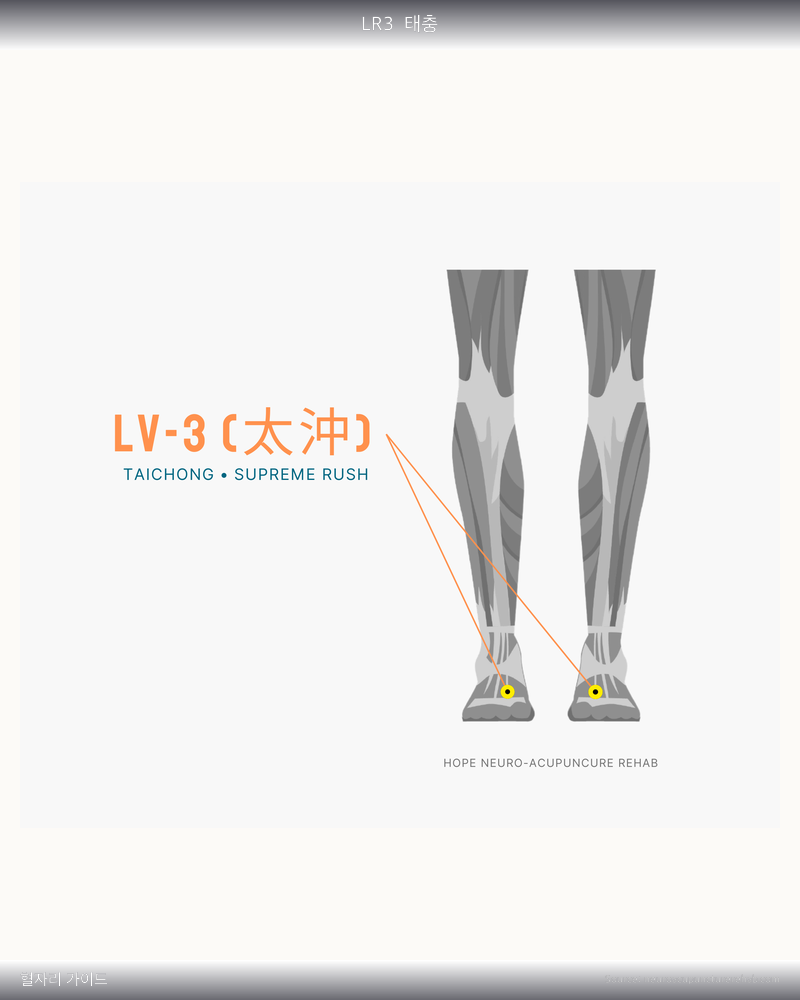
    Quick Summary: Taechung (LR3) is the ‘stress relief’ acupoint on the top of the foot. As a key point on the Liver meridian, it works wonders when you’re angry, have a headache, or are stressed out. It’s an essential acupoint for modern-day stress management!

    What Is Taechung?

    Taechung means ‘the place of great surging’!

    It’s the point on the Liver meridian where energy surges up powerfully. In traditional medicine, the Liver is the organ that manages emotions and stress.

    Simply put, Taechung acts like a fire extinguisher for anger! It draws rising heat and anger back downward.

    When combined with Hapgok (LI4), they form the ‘Four Gates Points’. It’s the ultimate combination for unblocking energy throughout the body!

    How to Find Taechung

    It’s on the top of the foot, so it’s easy to locate!

    1. Look at the top of your foot. You’ll need to take off your socks!
    2. Find the gap between your big toe and second toe.
    3. Slide your finger up along that gap toward the top of the foot.
    4. You’ll reach a point where two bones meet and your finger stops.
    5. That depression is Taechung!

    Tip: It’s right where your finger can’t slide any further up and hits the bone!

    Key Benefits of Taechung

    1. Relieves headaches — Especially effective for side and top-of-head headaches
    2. Reduces stress — Releases accumulated tension and frustration
    3. Calms anger — Helps with anger management
    4. Eases dizziness — Brings rising energy back down
    5. Supports blood pressure management — Helps stabilize elevated blood pressure
    6. Soothes tired eyes — The liver and eyes are connected, so it also relieves eye redness

    Self-Acupressure Technique for Taechung

    Preparation

    Sit comfortably and place one foot on the opposite knee.

    Step 1: Locate the Point

    Use your thumb to precisely locate Taechung.

    Step 2: Press Firmly

    • Press firmly with your thumb for 3–5 seconds
    • Release for 2 seconds
    • Repeat 15–20 times

    Step 3: Stroke Upward

    • Stroke upward from between the toes toward the top of the foot
    • Repeat for 1 minute

    Step 4: Do Both Feet

    Do both feet. 2–3 times daily is recommended.

    When angry: Press Taechung firmly right away while taking 5 deep breaths!

    Acupoints That Pair Well with Taechung

    Combination Effect Best For
    Taechung + Hapgok (LI4) Four Gates Points! Whole-body energy circulation When you feel stagnant and blocked
    Taechung + Fengchi (GB20) Headache + stress relief simultaneously When you have a stress-related headache
    Taechung + Sanyinjiao (SP6) Liver + Spleen function improvement When PMS irritability is severe

    Precautions

    • The top of the foot can be sensitive, so start gently
    • Avoid if you have wounds or inflammation on the foot
    • Those with low blood pressure should not press too hard
    • Wait at least 30 minutes after eating before applying acupressure

    Frequently Asked Questions

    Does pressing Taechung really calm anger?

    Yes! In traditional medicine, the liver manages emotions, and Taechung stabilizes the Liver meridian to help control anger.

    What are the benefits of pressing it together with Hapgok?

    Hapgok (hand) + Taechung (foot) = Four Gates Points! It unblocks energy throughout the entire body, releasing feelings of stagnation.

    Does it mean something is wrong if Taechung is very painful?

    It could be a sign that you have accumulated significant stress. Gently pressing it daily will gradually reduce the tenderness.

    Does it really help with high blood pressure?

    It can help as a complementary approach. However, it does not replace blood pressure medication. Always follow your doctor’s prescriptions!

    Can children have Taechung pressed too?

    Yes, it’s possible! Just use gentle pressure on children and keep sessions short, under 1 minute.

    Medical Disclaimer: This article is for informational purposes only and does not replace professional medical diagnosis or treatment. If symptoms persist or worsen, please consult a healthcare professional.
  • LI4 (Hegu) Complete Guide: Location, Benefits, and Acupressure

    LI4 (Hegu) Complete Guide: Location, Benefits, and Acupressure

    Summary: LI4 (Hegu) is the representative acupoint effective for headaches, toothaches, and stress. Learn the precise location, benefits, and self-acupressure technique.

    LI4 (Hegu, 合谷) is one of the most widely known acupoints in traditional East Asian medicine. As the 4th acupoint of the Large Intestine Meridian, it is used to relieve various symptoms including headaches, toothaches, colds, and stress. It is known as an “all-purpose acupoint” because even beginners can find it easily.

    How to Find LI4 (Hegu)

    Hegu is located in the hollow between the thumb and index finger, at the midpoint of the 2nd metacarpal bone (index finger bone).

    3 Easy Steps to Find It

    1. Open your hand and spread your thumb and index finger apart.
    2. Press the V-shaped area between the thumb and index finger with the opposite thumb.
    3. While pushing toward the index finger bone (2nd metacarpal), the most achy spot is Hegu.

    Tip: When you press your thumb and index finger together, the highest point of the muscle that bulges up is Hegu.

    Main Benefits of LI4 (Hegu)

    In traditional East Asian medicine, Hegu is known as the representative acupoint for “face and mouth” (面口) conditions. It is used for the following symptoms:

    • Headache/migraine: Effective for relieving tension headaches, frontal headaches, and temporal headaches
    • Toothache: Relieves pain in upper and lower teeth and gum swelling
    • Early cold symptoms: Runny nose, nasal congestion, sore throat, mild fever
    • Stress/tension: Autonomic nervous system regulation, psychological calming
    • Facial pain: Assist treatment for trigeminal neuralgia and facial paralysis
    • Constipation: Promotes intestinal motility
    • Eye fatigue: Relieves eye fatigue after prolonged screen use

    Self-Acupressure Technique (5-Minute Routine)

    Basic Acupressure

    1. Position: Sit comfortably and take a few calming breaths.
    2. Thumb pressure: Find Hegu with the opposite thumb and press perpendicularly.
    3. Intensity: Press to the point where you feel a slightly achy yet refreshing sensation (de-qi sensation).
    4. Timing: Press for 3–5 seconds, then rest for 2 seconds. Repeat.
    5. Repetitions: 1–2 minutes per side, apply to both hands.

    Circular Massage Technique

    While pressing Hegu with the thumb, draw small circles clockwise for 30 seconds. This method is particularly effective for headache relief.

    Precautions

    ⚠️ Pregnancy Warning: Pregnant women should avoid pressing this acupoint as it may stimulate uterine contractions.
    • Do not apply continuous stimulation for more than 5 minutes at once.
    • Avoid areas with wounds, inflammation, or infection.
    • After acupressure, drink plenty of water to help flush out waste products.

    Acupoint Information

    Category Details
    Acupoint Code LI4 (Large Intestine 4)
    Chinese Name 合谷 (Hegu)
    Meridian Hand Yangming Large Intestine meridian
    Location Between thumb and index finger, midpoint of 2nd metacarpal
    Difficulty Easy (recommended for beginners)

    Frequently Asked Questions

    Can I press LI4 (Hegu) every day?

    LI4 acupuncture point

    Yes, for healthy adults it is safe to press 2–3 times a day, for 1–2 minutes each time. However, avoid excessive stimulation.

    When is the best time to press LI4 (Hegu)?

    LI4 acupuncture point

    It’s best to apply it right when you feel a headache or stress. For preventive purposes, include it in your morning and evening routine.

    What acupoints work well together with LI4 (Hegu)?

    LI4 acupuncture point

    For headaches, pressing with LR3 (Taichong) is effective (Four Gates combination). For colds, use it together with GB20 (Fengchi).

    ⚠️ Medical Disclaimer: This article is for informational purposes only and does not replace professional medical diagnosis or treatment. If symptoms persist or worsen, please consult a healthcare professional.
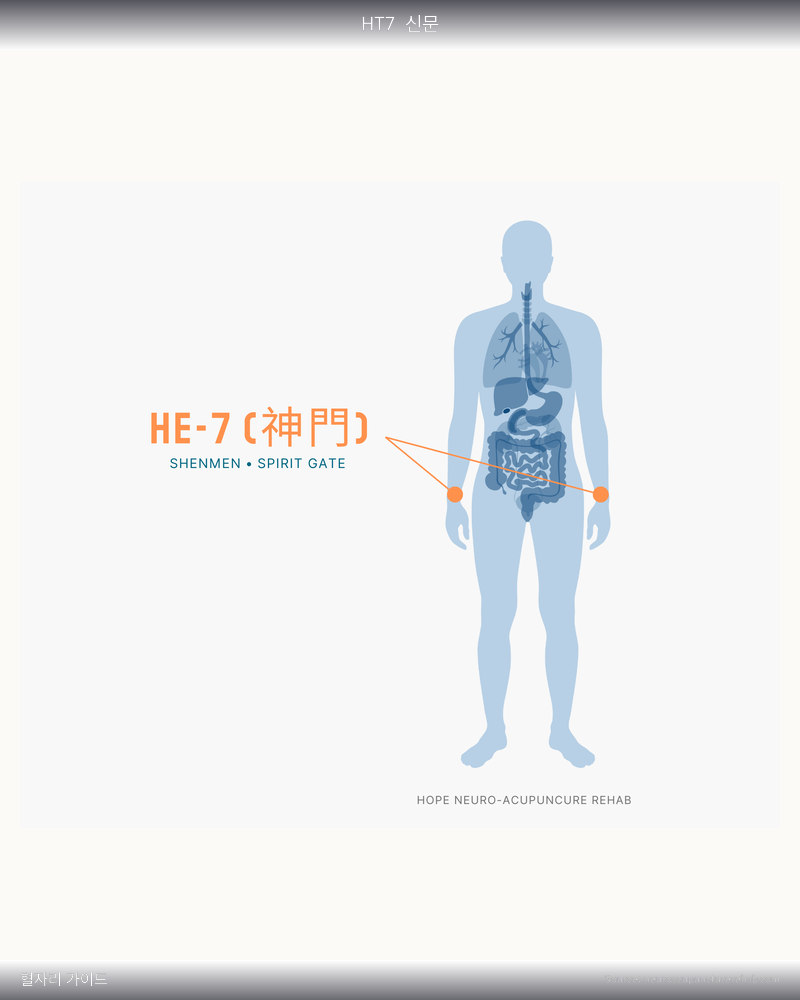
  • HT7 (Shenmen) Location, Benefits, and Acupressure Guide

    HT7 (Shenmen) Location, Benefits, and Acupressure Guide

    Summary: Complete guide to HT7 (Shenmen) acupoint location, benefits, and acupressure technique. Effective for insomnia, anxiety, stress, and heart palpitations — the calming acupoint for your mind.
    One-line summary: HT7 (Shenmen) is the ‘Gateway of the Mind’ acupoint located on the inner wrist. Belonging to the Heart meridian, it is excellent for soothing anxiety, insomnia, and stress. It is the first acupoint to reach for when you cannot fall asleep!

    What is Shenmen?

    Shenmen (神門) literally means ‘the gateway of the spirit (mind)’!

    It is an important point on the Heart meridian that governs the heart and spirit. It acts like a reset button for the mind.

    It is one of the most frequently used acupoints by people in modern times. It can help calm sleepless nights caused by smartphone use, pre-exam jitters, and workplace stress.

    Because it is on the wrist, a major advantage is that you can easily press it anytime, anywhere!

    How to Find HT7

    It is on the wrist, so it is very easy to find!

    1. Turn your palm face up and look at your wrist.
    2. You can see the wrist crease, right? It is on that line.
    3. On the pinky-finger side, find the tendon. When you make a fist, the tendon pops out.
    4. The thumb-side of that tendon is HT7!
    5. When you press it firmly, you will feel a tingling yet refreshing sensation.

    Tip: Look for the slight hollow where the wrist crease meets the tendon!

    Key Benefits of HT7

    1. Improves insomnia — Calms the brain and promotes deep sleep
    2. Reduces anxiety — Eases nervousness and restlessness
    3. Relieves stress — Stabilizes the Heart meridian for overall relaxation
    4. Calms palpitations — Effective when your heart is racing
    5. Lifts low mood — Feels like sunshine breaking through the clouds
    6. Improves concentration — A calm mind leads to better focus

    Self-Acupressure Technique for HT7

    Preparation

    Sit comfortably with one hand facing palm-up.

    Step 1: Locate the Point

    Use the opposite thumb to find HT7.

    Step 2: Press Gently

    • Press gently with your thumb for 3 seconds
    • Release for 2 seconds
    • Repeat 15–20 times

    Step 3: Circular Massage

    • Place your thumb on the point and draw small circles
    • Rotate gently for 1 minute

    Step 4: Both Hands

    Do both wrists. This is especially effective before bed!

    2–3 times per day, especially 30 minutes before sleep, is ideal.

    Acupoints That Work Well Together

    Combination Effect Best for
    HT7 + PC6 (Neiguan) Heart stabilization + anxiety relief When the heart is racing
    HT7 + GV20 (Baihui) Mental calm + sleep improvement When the mind is cluttered and sleep won’t come
    HT7 + SP6 (Sanyinjiao) Mind calming + full-body relaxation When the whole body is tense and fatigued

    Precautions

    • Do not press too hard — the wrist is a sensitive area
    • Avoid if you have pain or an injury in the wrist
    • Start lightly and gradually increase the pressure
    • Drinking a glass of water after acupressure is even better

    Frequently Asked Questions

    Does pressing HT7 make you fall asleep right away?

    HT7 acupuncture point

    Results vary by individual. If you press it consistently for 5–10 minutes before bed, you will gradually feel the effect!

    Can I press it at the office?

    Absolutely! It’s on your wrist, so no one will even notice. Try pressing it lightly before a presentation or whenever you feel tense.

    Do I need to press both sides?

    Yes, it’s best to do both sides. One side still works, but both sides together is even better!

    How long do I need to press to feel the effect?

    1–2 minutes is enough. Pressing consistently is more effective than pressing for a long time all at once.

    What is the difference between HT7 (Shenmen) and PC6 (Neiguan)?

    PC6 acupuncture point

    HT7 specializes in ‘calming the mind,’ while PC6 is better for ‘nausea and chest tightness.’ Both are on the wrist, so using them together is a perfect combination!

    ⚠️ Medical Disclaimer: This article is for informational purposes only and does not replace professional medical diagnosis or treatment. If symptoms persist or worsen, please consult a healthcare professional.
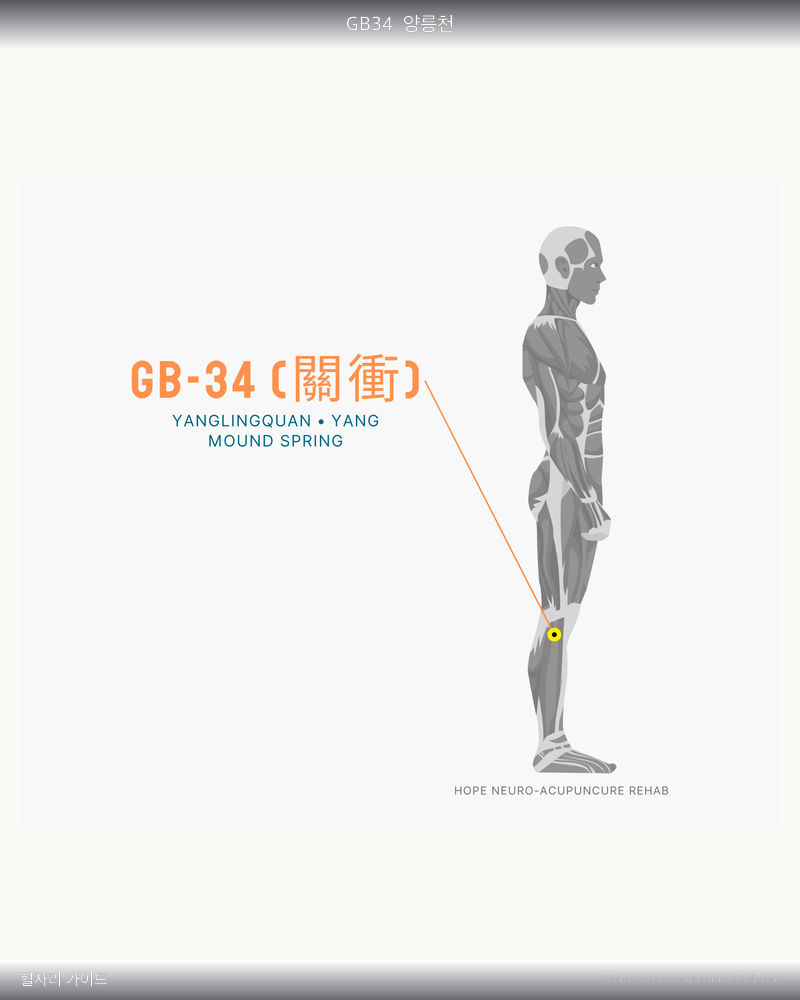
  • Where Is Yanglingquan (GB34)? Location, Benefits, and Technique

    Where Is Yanglingquan (GB34)? Location, Benefits, and Technique

    Quick Summary: Yanglingquan (GB34) acupoint location, benefits, and acupressure guide. Effective for knee pain, leg pain, muscle soreness, and indigestion.
    Quick Summary: Yanglingquan (GB34) is the ‘commander-in-chief of muscles and tendons’ acupoint located on the outer side of the knee. It has remarkable effects on knee pain, leg pain, and muscle tension. An essential point for athletes and anyone with joint discomfort!

    What Is Yanglingquan?

    Yanglingquan means ‘spring at the yang mound’!

    Located below the outer knee bone (fibular head), it belongs to the Gallbladder meridian. In traditional Chinese medicine, it’s called the Influential Point of Sinews (Jin Hui Xue).

    This means it’s the representative acupoint for all the body’s muscles, tendons, and ligaments! Like a commander-in-chief of muscles, it influences the entire musculoskeletal system.

    When your knee hurts, your legs feel stiff, or you have post-workout soreness — Yanglingquan will be your go-to solution.

    How to Find Yanglingquan

    It’s next to the knee, so it’s easy to find!

    1. Sit in a chair and feel the outer side of your knee.
    2. Below and to the outside of the knee, you’ll feel a round bone protruding. This is the ‘fibular head.’
    3. Press just below and slightly in front of that bone.
    4. The hollow depression is Yanglingquan!
    5. If you feel a dull ache or refreshing sensation when pressing with your thumb, you’ve found it.

    Tip: Bend your knee and trace down the outer side of the leg — the first round bone you meet, Yanglingquan is just below it!

    Key Benefits of Yanglingquan

    1. Relieves knee pain — Directly addresses pain around the knee joint
    2. Eases leg pain — Relieves calf and thigh pain
    3. Aids digestion — Supports gallbladder function to help digest greasy foods
    4. Good for shoulder pain — Though distant, the Gallbladder meridian passes through the shoulder
    5. Releases muscle tension — Relaxes muscles and tendons throughout the body
    6. Reduces flank pain — The Gallbladder meridian passes through the flanks

    Self-Acupressure Technique for Yanglingquan

    Preparation

    Sit comfortably in a chair with knees naturally bent.

    Step 1: Locate the Point

    Find the hollow spot below the fibular head with your thumb.

    Step 2: Press Firmly

    • Press with your thumb for 5 seconds
    • Release for 3 seconds
    • Repeat 10-15 times

    Step 3: Circular Motion

    • Make small circles with your thumb
    • Continue gently for 1-2 minutes

    Step 4: Both Legs

    Do both legs. 2-3 times daily is ideal.

    Before and after exercise: Light pressure before exercise, more thorough pressure after exercise helps prevent muscle soreness!

    Great Acupoint Combinations

    Combination Effect Best For
    Yanglingquan + Zusanli (ST36) Inner + outer knee care Overall knee pain
    Yanglingquan + Hegu (LI4) Muscle pain + whole body relaxation Post-workout whole body soreness
    Yanglingquan + Taichong (LR3) Gallbladder + Liver meridian harmony Flank stiffness and irritability

    Precautions

    • If you have severe knee injury or inflammation, consult a doctor first!
    • After joint replacement surgery, confirm with a specialist first
    • Pressing too hard may cause bruising
    • If blood clots in the leg are suspected, do not do acupressure
    • Stop immediately if pain worsens

    Frequently Asked Questions

    Is Yanglingquan really good for knee pain?

    Yes! As the Influential Point of Sinews, it’s especially effective for musculoskeletal pain including the knees.

    Can I press it before exercise?

    Absolutely! Lightly pressing for 1-2 minutes before exercise helps prevent muscle injuries.

    What’s the difference between Zusanli and Yanglingquan?

    Zusanli specializes in digestion and fatigue, while Yanglingquan specializes in muscles and joints. Both are near the knee but have different roles!

    Why press near the knee for shoulder pain?

    The Gallbladder meridian connects from the shoulder to the leg, so pressing Yanglingquan at the knee can affect the shoulder too. Amazing, right?

    Is it okay to do this every day?

    Yes, daily is fine! Especially if you have weak knees or exercise frequently, daily maintenance is recommended.

    Medical Disclaimer: This article is for informational purposes only and does not replace professional medical diagnosis or treatment. If symptoms persist or worsen, please consult a healthcare professional.
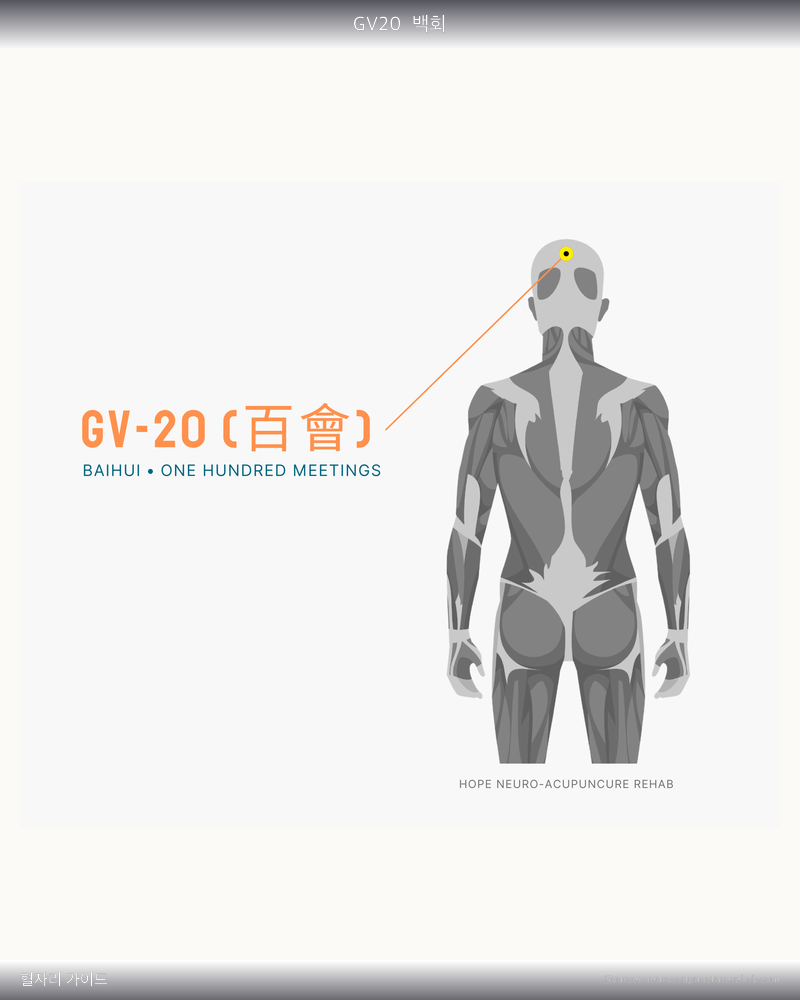
  • Where Is Baihui (GV20)? Location, Benefits, and Technique

    Where Is Baihui (GV20)? Location, Benefits, and Technique

    Quick Summary: Baihui (GV20) acupoint location, benefits, and acupressure guide. Effective for headaches, dizziness, insomnia, low mood, and fatigue.
    Quick Summary: Baihui (GV20) is the ‘energy peak’ acupoint at the top of the head. As the convergence point for the body’s energy, it’s widely effective for headaches, dizziness, insomnia, and low mood. If you want a clear mind, start with Baihui!

    What Is Baihui?

    Baihui means ‘the place where a hundred (bai) energies converge (hui)’!

    Located at the very top of the crown, it’s the highest point where all yang energy in the body converges. It functions like the body’s antenna.

    It’s on the Governing Vessel (Du Mai), which runs up along the spine and over the top of the head. Baihui is at its peak.

    Since ancient times, it has been considered the most important acupoint for clearing the mind and lightening the head.

    How to Find Baihui

    It’s on the crown, so you need a little technique!

    1. Draw an imaginary line connecting the tops of both ears.
    2. Imagine a line going straight up from the tip of your nose to the crown.
    3. The exact intersection of these two lines is Baihui!
    4. Even easier: place your thumbs on the tops of your ears and extend your middle fingers upward — where they meet is the spot.
    5. If you feel a slight depression, you’ve found it!

    Tip: Sliding your fingers through your hair to press the scalp directly makes it more effective!

    Key Benefits of Baihui

    1. Relieves headaches — Especially effective for crown and frontal headaches
    2. Reduces dizziness — Improves blood flow to the brain
    3. Helps with insomnia — Cools an overheated mind to promote sleep
    4. Lifts low mood — Raises energy upward to brighten your spirits
    5. Improves concentration — Helps you focus on studying and work with a clear mind
    6. Relieves fatigue — Promotes whole-body energy circulation

    Self-Acupressure Technique for Baihui

    Preparation

    Sit comfortably and relax your shoulders.

    Step 1: Locate the Point

    Find the Baihui location with your middle finger. There’s a slight depression.

    Step 2: Press Gently

    • Press with middle finger (or index + middle) for 3-5 seconds
    • Release for 2 seconds
    • Repeat 15-20 times

    Step 3: Tapping

    • Lightly tap around Baihui with your fingertips
    • Continue rhythmically for 30 seconds to 1 minute

    Step 4: Finishing

    Place your palm over Baihui and feel the warm energy. 30 seconds is enough.

    2-3 times daily, especially in the morning for a fresh start to the day!

    Great Acupoint Combinations

    Combination Effect Best For
    Baihui + Fengchi (GB20) Crown + back-of-head headache relief When your whole head feels heavy and achy
    Baihui + Shenmen (HT7) Mental calm + sleep improvement Can’t sleep due to racing thoughts
    Baihui + Zusanli (ST36) Upper-lower energy circulation Heavy head and heavy legs

    Precautions

    • Don’t press the crown too hard — the scalp is sensitive
    • Never press on infants whose fontanelle hasn’t closed
    • Avoid if there are wounds on the head
    • If you have severe high blood pressure, use only gentle pressure
    • If headache suddenly worsens, stop acupressure and see a doctor

    Frequently Asked Questions

    Does pressing Baihui really clear the mind?

    Yes! Many people feel their mind becoming clearer as blood flow to the brain improves.

    I can’t find the location because of my hair

    Slide your fingers through your hair to feel the scalp directly. You’ll feel a slight depression!

    Is it okay to do this every day?

    Absolutely! Doing it for 1-2 minutes every morning is also great for headache prevention.

    I feel drowsy after pressing it. Is that normal?

    Yes, that’s normal! It’s a natural response as tension releases. That’s why it’s great for insomnia.

    Can I press my child’s head too?

    Only after the fontanelle has fully closed (after age 2), and use very gentle pressure only!

    Medical Disclaimer: This article is for informational purposes only and does not replace professional medical diagnosis or treatment. If symptoms persist or worsen, please consult a healthcare professional.
  • Fengchi (GB20): Location, Benefits, and How to Press It

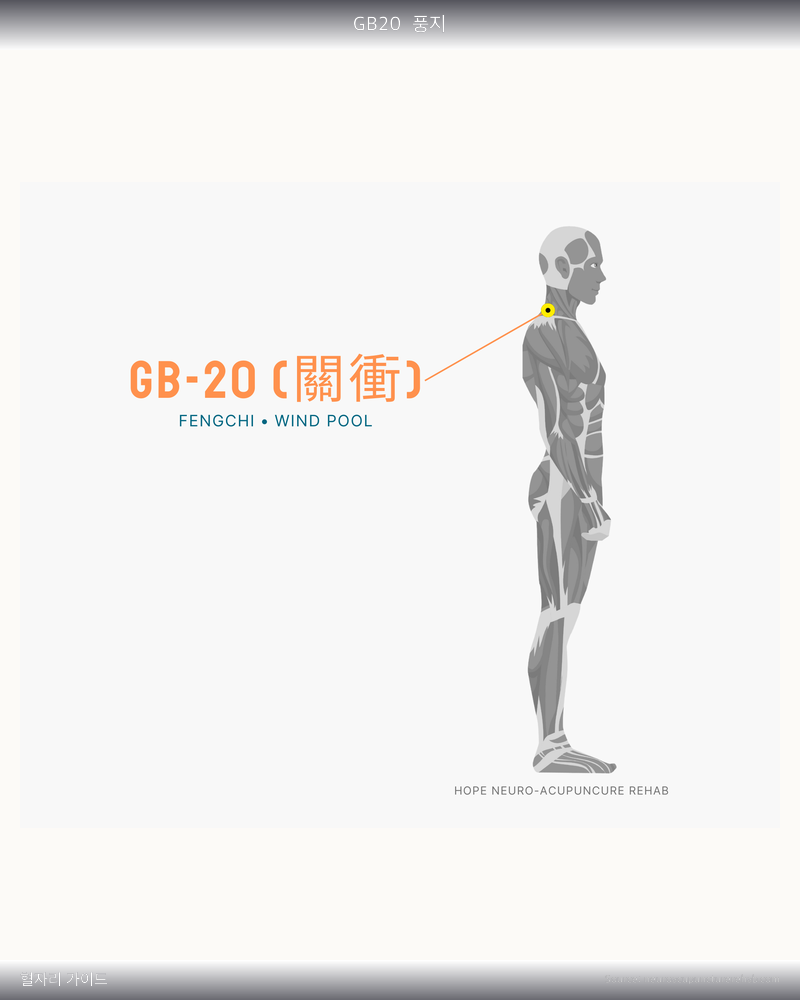
    Fengchi (GB20): Location, Benefits, and How to Press It

    Quick Summary: Fengchi (GB20) acupoint location, benefits, and acupressure guide. Effective for headaches, neck pain, dizziness, colds, and eye fatigue.
    Quick Summary: Fengchi (GB20) is the ‘headache solver’ acupoint located at the back of the neck. It has remarkable effects on headaches, stiff neck, dizziness, and early cold symptoms. An essential point for anyone who spends long hours at the computer!

    What Is Fengchi?

    Fengchi means ‘pool where the wind gathers’!

    In traditional Chinese medicine, colds are attributed to ‘wind (feng).’ Fengchi is like the gateway where wind enters the body. Stimulating this point is said to drive out cold-causing wind.

    In modern terms, Fengchi is where the muscles and nerves at the back of the neck converge. It’s a critically important point directly connected to neck muscle tension, headaches, and dizziness.

    It’s one of the most essential acupoints for modern people who sit in front of computers all day!

    How to Find Fengchi

    It’s at the back of the neck, so using a mirror can help!

    1. Feel the base of your skull. You can feel where the skull bone ends.
    2. Follow that line and move your fingers to each side.
    3. Find the space between the large central neck muscle (trapezius) and the side muscle (sternocleidomastoid).
    4. The hollow depression between these two muscles is Fengchi!
    5. It’s easier to find if you press with your thumbs upward under the skull bone.

    Tip: It’s the hollow spot exactly halfway between the bone behind the ear and the center of the neck!

    Key Benefits of Fengchi

    1. Relieves headaches — Excellent for tension headaches and migraines
    2. Eases neck tension — Loosens stiff neck muscles
    3. Reduces dizziness — Improves blood flow to the brain
    4. Helps with early cold symptoms — Relieves runny nose, congestion, and sore throat
    5. Relieves eye fatigue — Stimulates nerves connected to the eyes
    6. Releases shoulder tension — Relaxes muscles from the neck to the shoulders

    Self-Acupressure Technique for Fengchi

    Preparation

    Sit comfortably and tilt your head slightly forward.

    Step 1: Cradle Your Head

    Interlace your fingers and cradle the back of your head. Your thumbs will naturally rest at the Fengchi location.

    Step 2: Press Upward

    • Press upward under the skull with your thumbs
    • Hold for 5 seconds
    • Release for 3 seconds
    • Repeat 10 times

    Step 3: Circular Motion

    • Make small circles with your thumbs
    • Continue slowly for 1 minute

    Finishing Up

    After acupressure, slowly roll your neck left and right for even better results. Recommended 2-3 times daily!

    Great Acupoint Combinations

    Combination Effect Best For
    Fengchi + Hegu (LI4) Headache relief + cold relief Headache from a cold
    Fengchi + Taiyang (EX-HN5) Headache + eye fatigue relief Eye strain from long computer use
    Fengchi + Baihui (GV20) Back of head + crown pain relief When your entire head feels heavy and achy

    Precautions

    • Don’t press the neck suddenly and hard — gradually increase pressure
    • If you have high blood pressure, use gentle pressure only
    • If you have a cervical disc condition, consult a doctor first
    • Stop immediately if dizziness worsens
    • Avoid if there is inflammation at the back of the neck

    Frequently Asked Questions

    Will pressing Fengchi immediately relieve my headache?

    Light tension headaches improve significantly with 5-10 minutes of acupressure. Severe headaches may need more time.

    It’s hard to press by myself. Any tips?

    Place both thumbs on the back of your neck and wrap your remaining fingers around your head. Leaning back against a chair makes it easier!

    Can I do this every time I use the computer?

    Absolutely! Pressing Fengchi for 1 minute every hour is great for preventing neck pain.

    What’s the difference between Fengchi and Fengfu (GV16)?

    Fengchi has one point on each side (two total), while Fengfu is a single point at the center. Fengchi is safer and more suitable for self-acupressure.

    Is it good for stiff neck in the morning?

    Yes! Pressing Fengchi for 1-2 minutes right after waking up can make your stiff neck feel much more relaxed.

    Medical Disclaimer: This article is for informational purposes only and does not replace professional medical diagnosis or treatment. If symptoms persist or worsen, please consult a healthcare professional.
  • Where Is Zhongwan (CV12)? Location, Benefits, and Technique

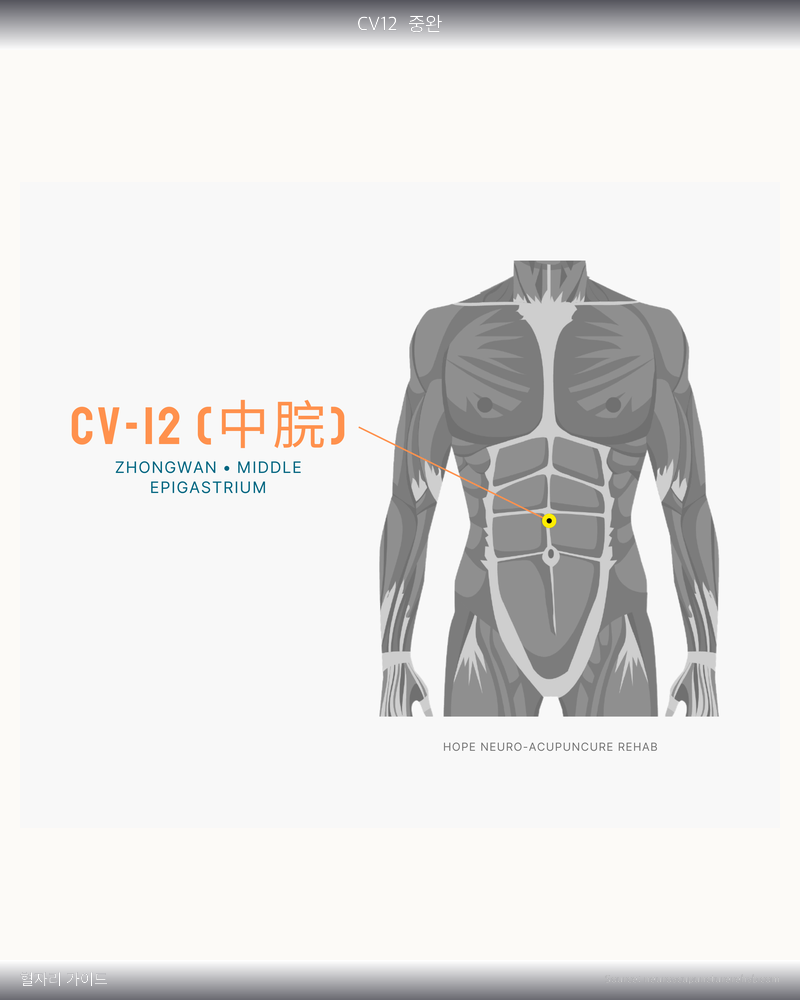
    Where Is Zhongwan (CV12)? Location, Benefits, and Technique

    Quick Summary: Zhongwan (CV12) acupoint location, benefits, and acupressure guide. Effective for indigestion, nausea, bloating, appetite loss, and stomach pain.
    Quick Summary: Zhongwan (CV12) is the ‘center of digestion’ acupoint located between the sternum and navel. Think of it as the control tower of your stomach. It’s the go-to point for indigestion, bloating, and stomach discomfort!

    What Is Zhongwan?

    Zhongwan means ‘the center of the stomach’!

    Located on the Conception Vessel (Ren Mai), this acupoint sits directly above the stomach on the skin. It truly is the control tower of your digestive system.

    In traditional Chinese medicine, it’s called the ‘Front-Mu point of the Stomach.’ A Front-Mu point is the representative point where an organ’s energy gathers. Zhongwan is the star player of your stomach!

    When your stomach feels full after eating, when you feel bloated, or when you’ve lost your appetite — Zhongwan is the answer.

    How to Find Zhongwan

    It’s on the abdomen, so it’s easy to find!

    1. Find your navel. Too easy, right?
    2. Now find the xiphoid process (the bottom tip of your breastbone).
    3. The exact midpoint between your navel and xiphoid process is Zhongwan!
    4. Even easier: about 6 finger-widths above the navel.
    5. It’s on the midline of the abdomen. If you feel a dull ache when you press lightly, you’ve found it!

    Tip: Finding it while lying down makes it easier because your abdominal muscles will be relaxed!

    Key Benefits of Zhongwan

    1. Improves digestion — Stimulates stomach movement so food processes better
    2. Relieves nausea — Calms an upset, queasy stomach
    3. Reduces bloating — Helps when you feel gassy and distended
    4. Restores appetite — Brings back your appetite when you don’t feel like eating
    5. Eases stomach pain — Relieves burning or aching stomach pain
    6. Great for stress-related indigestion — Perfect for those whose stomach acts up when stressed!

    Self-Acupressure Technique for Zhongwan

    Preparation

    Lying down is best. Placing a pillow under your knees helps relax the abdomen even more.

    Step 1: Locate the Point

    Place 2-3 fingers together and gently rest them on the Zhongwan location.

    Step 2: Press Gently

    • Exhale while slowly pressing for 3-5 seconds
    • Inhale while releasing for 3 seconds
    • Repeat 10-15 times

    Step 3: Clockwise Massage

    • Place your palm on Zhongwan and rub in a clockwise direction
    • Continue gently for 2-3 minutes
    • If you feel warmth spreading in your abdomen, you’re doing it right

    Important Note

    Wait at least 1 hour after eating. 2-3 times a day is ideal.

    Great Acupoint Combinations

    Combination Effect Best For
    Zhongwan + Zusanli (ST36) Ultimate digestive combo Severe indigestion
    Zhongwan + Neiguan (PC6) Nausea + digestion improvement Nausea with indigestion
    Zhongwan + Guanyuan (CV4) Upper + lower abdomen care Overall abdominal discomfort

    Precautions

    • Don’t press right after eating — wait at least 1 hour
    • If you have severe abdominal pain or a hard abdomen, see a doctor instead
    • Pregnant women should avoid abdominal acupressure
    • Pressing too hard can actually make your stomach feel worse
    • If you have diarrhea, use only very gentle pressure

    Frequently Asked Questions

    Can I press Zhongwan right after eating?

    No! Wait at least 1 hour. Pressing right after a meal can actually interfere with digestion.

    Does Zhongwan help when I have indigestion?

    Yes! The Zhongwan + Zusanli (ST36) combination is the best for indigestion. Try pressing for 5-10 minutes.

    Can I use this point for baby tummy massage?

    Yes, gently rub above the baby’s navel in a clockwise direction very softly. Controlling the pressure is key!

    Can it help with stress-related stomach issues?

    Absolutely! Zhongwan acupressure is especially effective for stress-related indigestion.

    Do I have to lie down, or can I do it sitting?

    Lying down is best, but sitting works too. The key is to do it when your abdominal muscles are relaxed!

    Medical Disclaimer: This article is for informational purposes only and does not replace professional medical diagnosis or treatment. If symptoms persist or worsen, please consult a healthcare professional.
  • Guanyuan (CV4) Acupressure Point — Complete Guide

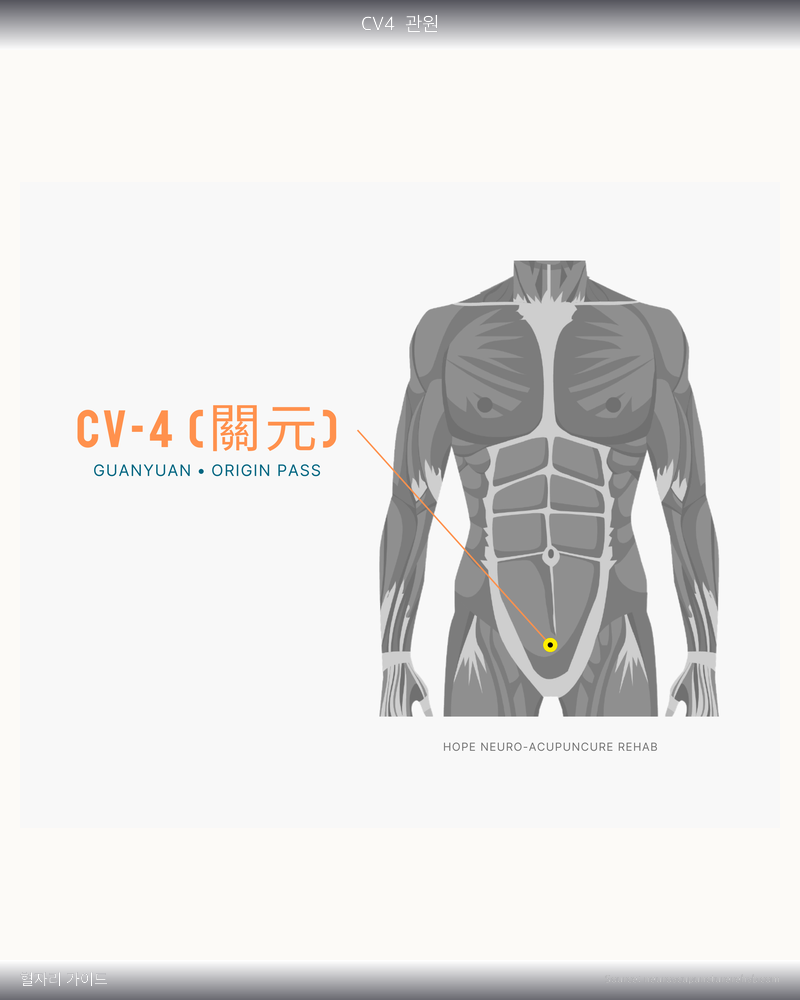
    Guanyuan (CV4) Acupressure Point — Complete Guide

    Quick Summary: Guanyuan (CV4) acupoint location, benefits, and acupressure guide. Effective for fatigue, menstrual pain, cold sensitivity, edema, and lower back pain. The key acupoint for restoring vitality.
    Quick Summary: Guanyuan (CV4) is the ‘vitality recharging’ acupoint located below the navel. It’s the most important energy reservoir in traditional Chinese medicine, effective for fatigue, cold sensitivity, and menstrual pain. When you feel drained, warm up Guanyuan first!

    What Is Guanyuan?

    Guanyuan means ‘the gateway to vital energy (Yuan Qi)’!

    It’s where your body’s fundamental energy, called ‘Yuan Qi,’ is stored. Think of it as the charging port of your body’s battery.

    Located on the Conception Vessel (Ren Mai), it’s near the area known as the Dantian. The ‘place where energy gathers’ mentioned in martial arts and meditation is right around here.

    If you suffer from chronic fatigue, cold sensitivity, or menstrual pain, simply warming the Guanyuan area can make a noticeable difference!

    How to Find Guanyuan

    Just find your navel and you’re almost there!

    1. Find your navel.
    2. Move your fingers downward from the navel.
    3. Place 4 fingers side by side (index to pinky).
    4. Where your pinky finger lands, on the midline of the abdomen, is Guanyuan!
    5. If you divide the distance between the navel and pubic bone into 5 equal parts, it’s at the 3/5 mark from the navel.

    Tip: Lie down, relax your abdomen, and press lightly — if you feel a deep, heavy sensation, you’ve found it!

    Key Benefits of Guanyuan

    1. Relieves fatigue — Recharges your vital energy to combat chronic fatigue
    2. Reduces menstrual pain — Improves blood circulation to the uterus
    3. Improves cold sensitivity — Warms the lower abdomen, which also helps cold hands and feet
    4. Reduces edema — Supports water metabolism to help your body feel lighter
    5. Eases lower back pain — Relaxes muscles around the lower back and pelvis
    6. Supports urinary health — Helps with frequent urination and nighttime urination

    Self-Acupressure Technique for Guanyuan

    Preparation

    Lie down comfortably with knees slightly bent.

    Step 1: Warm Up

    First, rub your hands together to warm them up. Place your warm hands over the Guanyuan area.

    Step 2: Press Gently

    • Use 2-3 fingers together and press slowly for 3-5 seconds
    • Release for 3 seconds
    • Repeat 10-15 times

    Step 3: Warm Massage

    • Place your palm on Guanyuan and rub in a clockwise direction
    • Continue gently for 3-5 minutes
    • If you feel a warm, cozy sensation in your abdomen, you’re doing it right

    Bonus

    Placing a heat pack or warm towel over Guanyuan is also great! 1-2 times a day, especially in the morning and before bed.

    Great Acupoint Combinations

    Combination Effect Best For
    Guanyuan + Sanyinjiao (SP6) Ultimate women’s health combo Severe menstrual pain
    Guanyuan + Zusanli (ST36) Vitality + digestion boost Low energy with poor appetite
    Guanyuan + Zhongwan (CV12) Upper + lower abdomen care Entire abdomen feels cold and uncomfortable

    Precautions

    • Don’t do it right after eating — wait 1 hour
    • Don’t press too hard — be gentle with the abdomen!
    • Avoid during diarrhea or when you have stomach pain
    • Don’t place hot packs directly on skin — put a towel underneath
    Pregnancy Warning: Guanyuan is located close to the uterus. Avoid abdominal acupressure during pregnancy. Light warming is acceptable, but pressing should be avoided.

    Frequently Asked Questions

    Is Guanyuan the same as the Dantian?

    They’re nearly the same location! Dantian refers to a broader area, while Guanyuan is the precise acupoint within that region.

    Does using a heat pack on this area work too?

    Yes, it works great! It’s similar to the principle of moxibustion. Applying warmth for 15-20 minutes is effective for improving cold sensitivity.

    Is Guanyuan beneficial for men too?

    Of course! It’s very effective for men’s chronic fatigue, lower back pain, and urinary issues as well.

    Can pressing Guanyuan help with weight loss?

    It doesn’t directly cause weight loss, but by supporting water metabolism, reducing edema can make your body feel lighter.

    Can I press Guanyuan during menstruation?

    Yes! It helps relieve menstrual pain. Just press gently with warm hands.

    Medical Disclaimer: This article is for informational purposes only and does not replace professional medical diagnosis or treatment. If symptoms persist or worsen, please consult a healthcare professional.