Author: Acupoint Guide Editorial Team

  • تخفيف حكة الجلد: 5 نقاط ضغط تعمل فعلاً

    تخفيف حكة الجلد: 5 نقاط ضغط تعمل فعلاً

    One-line Summary: Skin itching can be naturally relieved by applying acupressure to 5 acupoints—Quchi (LI11), Xuehai (BL55), Sanyinjiao (SP6), Hegu (LI4), and Fengshi (GB31)—for 5 minutes daily, which improves blood circulation and immune function.

    Introduction

    Have you ever stayed up at night due to sudden skin itching or found it difficult to concentrate on daily tasks? Skin itching is not just a simple symptom—it’s a signal from your body. In traditional Chinese medicine, skin itching is diagnosed as “heat from dampness” or “qi and blood deficiency.” When the body’s qi and blood become stagnant or heat accumulates due to stress, dry environments, or poor eating habits, skin itching appears. By consistently stimulating specific acupoints, you can promote blood circulation and strengthen immune function to relieve itching. This article introduces the 5 most effective acupoints for improving skin itching and how to perform self-acupressure.

    5 Acupoints Good for Skin Itching

    1. Quchi (LI11) — The Acupoint That Clears Heat and Boosts Immunity

    LI11 acupuncture point

    Location: Located at the end of the inner crease of the arm when the elbow is bent. Using the thumb of the opposite hand, follow the centerline on the inner side of the arm and find the point where it touches the inner elbow crease.

    Technique: Using your thumb, press slowly and deeply for 3 seconds, then slowly release over 3 seconds. Repeat this 10 times.

    Effects: Quchi is an acupoint on the “Large Intestine Meridian” that clears heat from the body and reduces inflammation. It is particularly effective for improving skin conditions such as skin itching, eczema, and hives, and also helps prevent colds by strengthening immunity.

    2. Xuehai (BL55) — The Acupoint That Promotes Blood Circulation

    BL55 acupuncture point

    Location: Located on the center of the back of the calf, about 3-4 cm below the knee. It is slightly to the inner side of the center of the calf muscle (gastrocnemius).

    Technique: Press vertically using your thumb or a knuckle joint. Apply pressure strong enough to feel slight discomfort for 10 seconds, then release. Repeat 10 times on each leg.

    Effects: As its name suggests, Xuehai is an acupoint related to “blood.” It activates blood circulation to supply nutrients and oxygen to the skin and promotes toxin elimination. It is effective not only for skin itching but also for improving skin tone and recovering from fatigue.

    3. Sanyinjiao (SP6) — Boosts Immunity and Improves Skin Tone
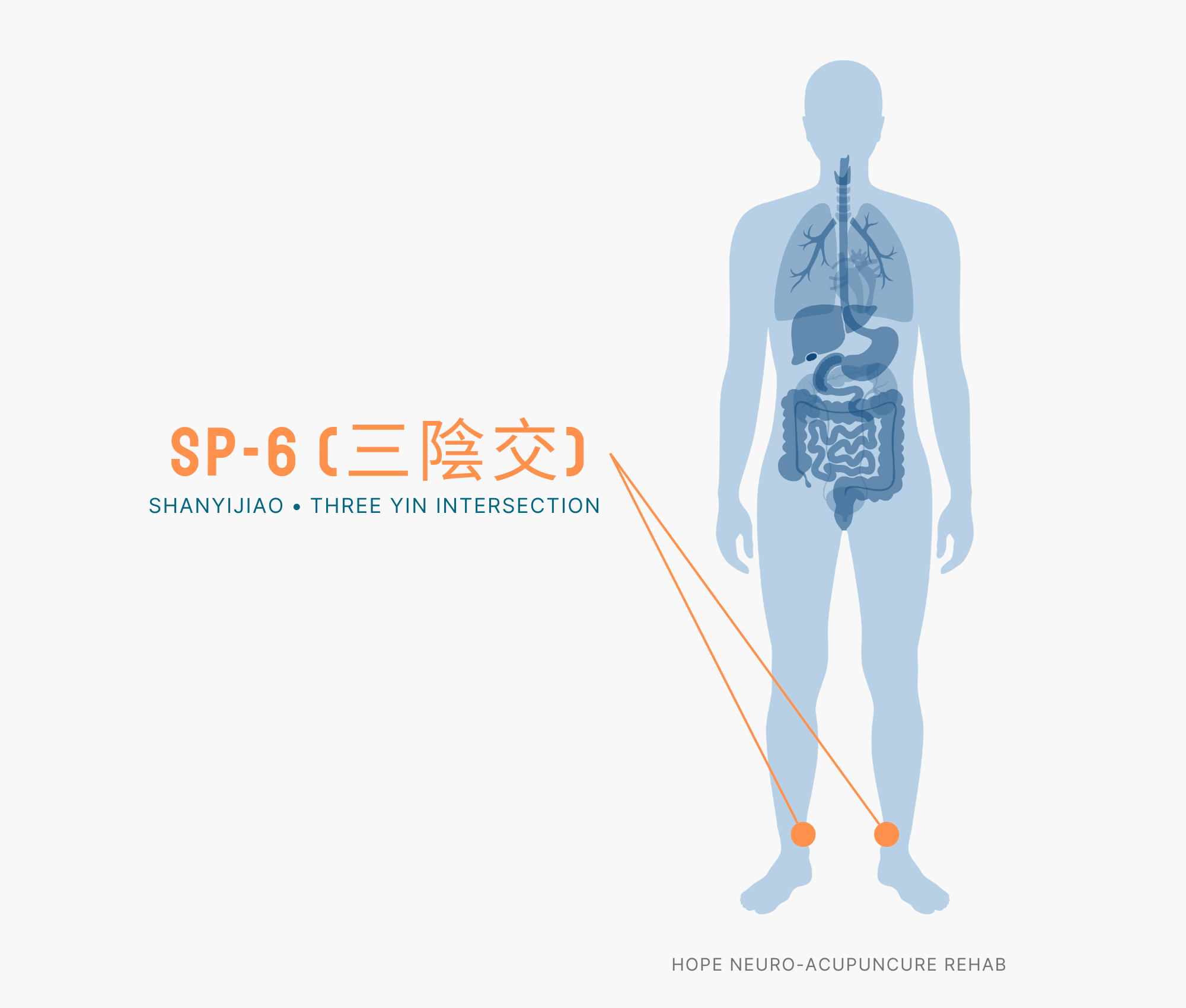
    SP6 acupuncture point

    Location: Located about 4 cm (4 finger widths) above the highest bone on the inner ankle (medial malleolus). Follow the inner edge of the tibia bone upward.

    Technique: Using your thumb, press deeply while breathing slowly, then release. Repeat 15 times on each ankle, twice daily.

    Effects: Sanyinjiao is where three meridians meet—the Spleen Meridian, Liver Meridian, and Kidney Meridian—which is why it is named “three yin.” It strengthens immunity, balances hormones, and improves skin tone and texture. By activating qi and blood circulation throughout the body, it addresses the root cause of skin itching.

    4. Hegu (LI4) — The Versatile Acupoint That Regulates Whole-Body Function

    LI4 acupuncture point

    Location: Located in the deep space between the thumb and index finger, at the point where the finger bones meet. You can find this sensitive area by slowly pressing with the opposite thumb.

    Technique: Using the opposite thumb, press vertically and deeply. You may feel slight discomfort. Press for 5 seconds and release for 3 seconds, repeat 10 times.

    Effects: Hegu is called the “universal acupoint” because it affects the whole body. In addition to skin health, it is effective for stress relief, immune enhancement, and promoting metabolism. It is particularly helpful for relieving stress-related symptoms that occur together with skin itching.

    5. Fengshi (GB31) — The Specialized Acupoint for Relieving Skin Itching and Eczema

    GB31 acupuncture point

    Location: Located on the outer side of the leg, about 10-12 cm above the knee (in the center of the thigh). It is at the point where your fingertips touch when your arms hang naturally at your sides.

    Technique: Overlap the middle and index fingers of both hands and press vertically. Gradually increase the pressure and press for 10 seconds, then release. Repeat 10 times on each leg.

    Effects: Fengshi is a specialized acupoint for “skin itching caused by dampness.” It shows quick results especially for itching caused by eczema, hives, and allergic dermatitis, and improves skin condition while preventing recurrence.

    5-Minute Self-Acupressure Routine

    Recommended Time: It is most effective to perform this routine twice daily—morning and evening—for 5 minutes each.

    Acupressure Order and Time Allocation:

    • [1 minute] Both Quchi (LI11) — 30 seconds × 2 rounds
    • [1 minute] Both Hegu (LI4) — 30 seconds × 2 rounds
    • [1 minute] Both Sanyinjiao (SP6) — 30 seconds × 2 rounds
    • [1 minute] Both Xuehai (BL55) — 30 seconds × 2 rounds
    • [1 minute] Both Fengshi (GB31) — 30 seconds × 2 rounds

    Precautions: After acupressure, drink warm water and avoid exposure to cold air for at least 30 minutes. When starting out, begin with light pressure and observe how your body responds before increasing intensity. If you have wounds on your skin or severe inflammation, consult a healthcare professional before performing acupressure.
    ⚠️ Medical Disclaimer: This article is provided for informational purposes and does not replace professional medical diagnosis or treatment. If skin itching persists or worsens for more than 2 weeks, consult a dermatologist or a traditional Chinese medicine practitioner. If infection symptoms (suppuration, swelling, high fever, etc.) are present, seek immediate medical attention.
    🤰 Pregnancy Caution: Among the acupoints above, Sanyinjiao (SP6) and Hegu (LI4) may trigger uterine contractions in pregnant women. If you are pregnant or possibly pregnant, consult a traditional Chinese medicine practitioner before performing acupressure. Instead, using only Quchi (LI11) and Xuehai (BL55) is safer.
  • تخفيف سيلان الأنف: 5 نقاط ضغط فعالة حقاً

    تخفيف سيلان الأنف: 5 نقاط ضغط فعالة حقاً

    One-Line Summary: Runny nose can be improved within 2-3 days by applying acupressure to 5 points—Yingxiang (LI20), Hegu (LI4), Yintang (GV27), Fengchi (GB20), and Tongzhu (BL7)—three times daily for 5 minutes each. This method is effective for both early-stage cold and allergic rhinitis.

    Introduction

    Runny nose is a common symptom that everyone experiences due to colds, allergies, rhinitis, and other conditions. Continuously flowing nasal discharge makes daily life inconvenient, irritates the skin around the nose turning it red, and disturbs sleep. More people are seeking ways to enhance their body’s natural healing power rather than relying solely on medication.

    Acupoint acupressure in traditional medicine is an effective natural therapy that regulates the body’s qi (energy) flow and enhances immunity. In particular, stimulating specific acupoints located around the nose, face, arms, and back of the neck promotes blood circulation in the nose, alleviates inflammation, and reduces nasal discharge. The advantage is that it can be performed with just one finger in just 5 minutes without worrying about side effects from medication.

    5 Effective Acupoints for Relieving Runny Nose

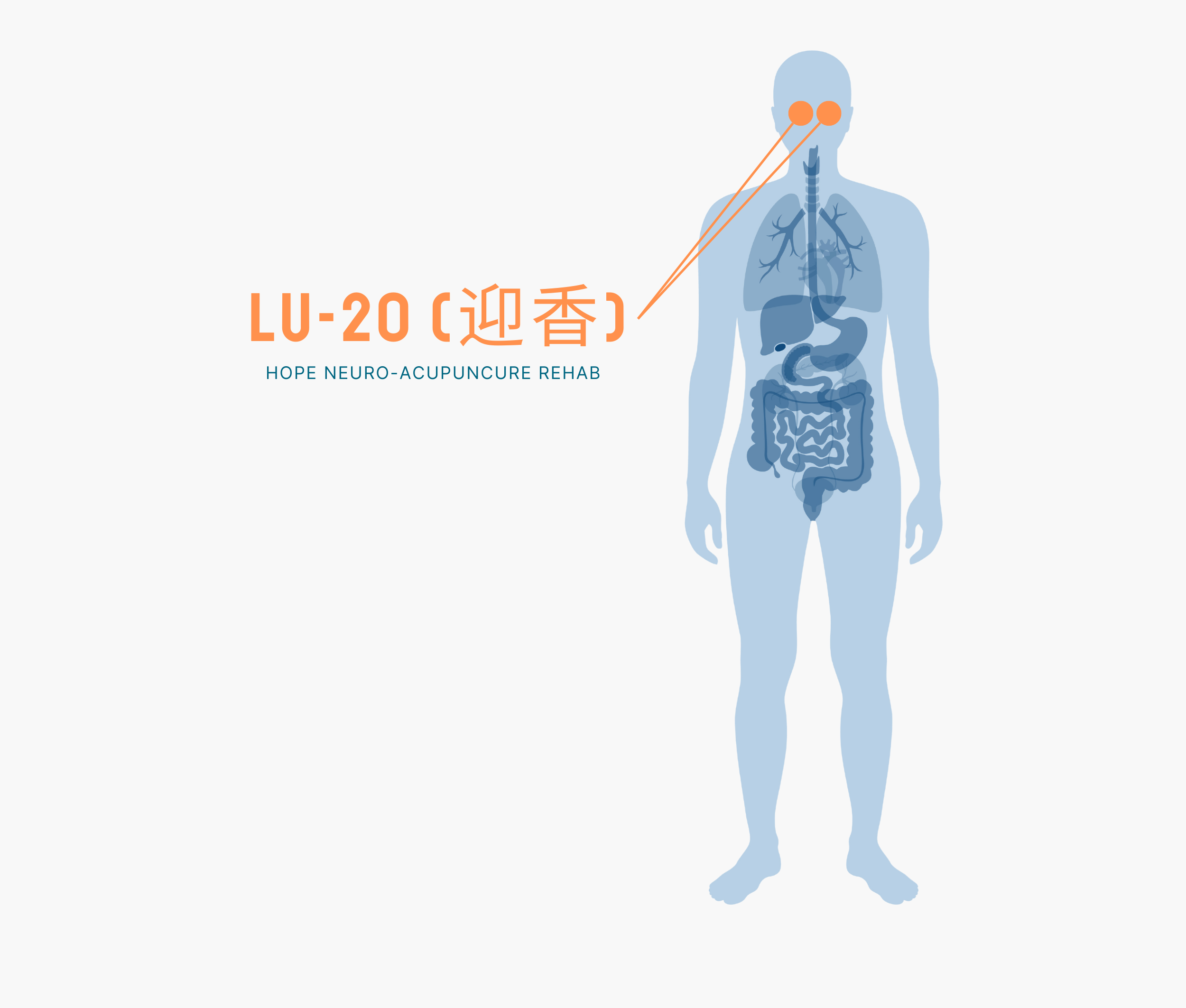
    1. Yingxiang (LI20, Yingxiang) — Premier Acupoint for Runny Nose Symptoms

    LI20 acupuncture point

    Location: On the side of the nostril, at the point where the nasolabial fold meets the base of the nostril

    Acupressure Method: Position the index fingers of both hands on either side of the nose, then slowly stimulate by making small circular motions up and down for 3-5 seconds each, repeating 20-30 times. Each session should last about 1-2 minutes. Apply moderate pressure to avoid pain in the nasal bone.

    Benefits: Yingxiang stimulates the trigeminal nerve responsible for local nasal sensation, directly controlling mucus production. It is highly effective for early-stage cold runny nose, allergic rhinitis, and sinusitis-related nasal discharge. This is the acupoint that provides the fastest results.

    2. Hegu (LI4, Hegu) — Representative Acupoint for Enhancing Immunity

    LI4 acupuncture point

    Location: In the depression between the thumb and index finger, between the first and second metacarpal bones

    Acupressure Method: Place the opposite thumb on Hegu and press firmly at a 45-degree angle toward the bone for about 3-5 seconds. Repeat this 20-30 times, alternating between both hands. A slight soreness or fullness sensation is normal.

    Benefits: Hegu is an acupoint on the Large Intestine meridian that regulates the entire immune system. It can simultaneously alleviate runny nose, general cold symptoms, headaches, fever, and nasal congestion. Regular stimulation also provides cold prevention benefits.

    3. Yintang (GV27 or EX-HN3, Yintang) — Key Acupoint for Nasal and Head Symptoms

    Location: In the center between the two eyebrows, commonly called the glabella

    Acupressure Method: Overlap the thumbs of both hands on Yintang and apply pressure by moving slightly up and down or in circular motions. Each session should last 1-2 minutes, performed 3 times daily. Since this is in the center of the face, avoid pressing too hard.

    Benefits: Yintang is close to the pituitary gland, the immune regulation center of the brain. When stimulated, it rapidly decreases nasal mucus secretion. It also alleviates forehead pain, eye fatigue, and heaviness in the head that accompany runny nose.

    4. Fengchi (GB20, Fengchi) — Cold-Relief Acupoint at the Back of the Neck

    GB20 acupuncture point

    Location: At the back of the neck, in the two depressions below the occipital bone at the boundary between the neck and head

    Acupressure Method: Place both thumbs on either side of the back of the neck, then press firmly upward for 5 seconds each. Repeat 20-30 times for about 1-2 minutes per session. It is helpful to lower your head slightly during the procedure to prevent neck stiffness.

    Benefits: Fengchi is an acupoint on the Gallbladder meridian that blocks external pathogens (Wind Evil) from invading the body. It simultaneously improves early-stage cold sore throat, runny nose, nasal congestion, and laryngitis. It is particularly effective at eliminating the ‘wind’ symptoms of a cold.

    5. Tongzhu (BL7, Tongzhu) — Acupoint Responsible for Nasal Ventilation

    BL7 acupuncture point

    Location: On the outer side of the bridge of the nose, approximately 1 cm above the inner end of the eyebrow, next to the first and second cervical vertebrae

    Acupressure Method: Place the index fingers of both hands above the inner ends of the eyebrows, then press at a 45-degree angle toward the bridge of the nose for 3-5 seconds before releasing. Alternate between both sides, repeating 20-30 times for about 1-2 minutes per session.

    Benefits: Tongzhu is on the Bladder meridian and promotes blood circulation in the nose to regulate nasal discharge. It is particularly effective at alleviating nasal congestion and stuffiness, early-stage sinusitis symptoms, and allergic rhinitis.

    5-Minute Self-Massage Acupressure Routine

    ※ Optimal results are achieved by performing this routine three times daily (morning, lunch, and evening).

    Step Acupoint Time Required
    Step 1 Yingxiang (LI20) 1 minute
    Step 2 Hegu (LI4) – Both Hands 1 minute
    Step 3 Yintang (GV27) 1 minute
    Step 4 Fengchi (GB20) 1 minute
    Step 5 Tongzhu (BL7) 1 minute
    Total Time Required 5 minutes

    Implementation Tips:

    • Sit in a comfortable position and proceed slowly while breathing calmly, as rushing through the procedure reduces its effectiveness.
    • Warming your fingers before acupressure makes it more effective.
    • For severe symptoms, additional stimulation at 2-hour intervals is possible, with one additional treatment before bed particularly recommended.
    • Avoid exposure to cold air for 20-30 minutes after acupressure.
    ⚠️ Medical Disclaimer: This article is written for informational health purposes and does not replace professional medical diagnosis or treatment. If runny nose persists for more than two weeks or is accompanied by severe symptoms such as high fever, yellow nasal discharge, or foul odor, you must consult a medical professional such as an otolaryngologist or traditional medicine practitioner. In particular, acupressure should be avoided if there are wounds around the nose or eyes or if fracture is suspected.
    🤰 Pregnancy Warning: Hegu (LI4) can trigger uterine contractions in pregnant women. If you are pregnant or possibly pregnant, perform only the 4 acupoints excluding Hegu—Yingxiang (LI20), Yintang (GV27), Fengchi (GB20), and Tongzhu (BL7)—or consult a professional before proceeding.
  • أفضل 5 نقاط ضغط لألم الأضلاع (مع المواقع الدقيقة)

    أفضل 5 نقاط ضغط لألم الأضلاع (مع المواقع الدقيقة)

    “`html

    Summary: Rib pain can be effectively relieved through daily acupressure on five acupoints: BL17, LV14, LV13, BL18, and GB34, which help alleviate pain and improve blood circulation.

    Introduction

    Rib pain that throbs on the sides and makes breathing difficult—this condition that can hamper daily activities is experienced by many people. Rib pain typically develops from a combination of factors including intercostal nerve irritation, muscle tension, poor postural habits, and stress. Fortunately, Traditional Chinese Medicine has long provided effective acupoints that can relieve this pain. In particular, five acupoints that can be easily stimulated at home promote blood circulation and help relax muscles, providing immediate relief. Self-care that you can do with your own hands without medication—let’s begin.

    Five Effective Acupoints for Rib Pain

    1. BL17 (Diaphragm Shu)

    BL17 acupuncture point

    Location: Below the 7th thoracic vertebra, approximately 1.5-2cm to the sides of the spine

    How to locate: Feel the lower edge of the rib cage below the epigastrium, then find the area next to the spine at that height.

    Acupressure technique: Use both thumbs to simultaneously stimulate both sides of the spine, pressing and releasing for 3-5 seconds repeatedly, or massage in circular motions. Start with gentle pressure and gradually increase the intensity.

    Benefits: BL17 is known as “the connecting point of the thorax” and is a primary acupoint for relieving chest pain, cough, and digestive discomfort. It effectively improves breathing difficulties and chest tightness caused by rib pain.

    2. LV14 (Cycle Gate)

    Location: Below the 6th rib, at the level of the nipple line (directly below the nipple)

    How to locate: When your arm is at your side, find the space between the ribs at the height of your nipple.

    Acupressure technique: Gently massage in circular motions with four fingers, or repeatedly press with your thumb for 3-5 seconds. Avoid excessive pressure and exhale deeply as you proceed.

    Benefits: As an important acupoint on the Liver meridian, it directly alleviates pain in the sides and around the ribs. It also relieves muscle tension caused by stress, providing comprehensive pain improvement.

    3. LV13 (Bamboo Gate)

    Location: At the end of the 11th rib, on the midaxillary line (the vertical line where the arm meets the body when lowered)

    How to locate: When you raise your arm to the side, find the end of the longest rib—this is LV13.

    Acupressure technique: Slowly press with your thumb or middle finger, holding the pressure for 3-5 seconds before releasing. It’s most effective to press while exhaling.

    Benefits: It strengthens spleen function and relieves the uncomfortable sensation and pain below the sides of the rib cage. It brings immediate relief, especially when lower rib pain is severe.

    4. BL18 (Liver Shu)

    BL18 acupuncture point

    Location: Below the 9th thoracic vertebra, approximately 1.5-2cm to the sides of the spine

    How to locate: Follow the lower edge of the rib cage and feel along the side of the spine to find BL18.

    Acupressure technique: Similar to BL17, simultaneously stimulate both sides of the spine with both thumbs, or perform rolling massage with a massage stick.

    Benefits: It strengthens liver function and relieves muscle tension caused by stress. It’s particularly effective for alleviating pain on the lateral side of the body and rib pain.

    5. GB34 (Yang Mound Spring)

    GB34 acupuncture point

    Location: On the outer side below the knee, in the small depression below the head of the fibula (calf bone)

    How to locate: Slightly bend your leg and feel the outer side below your knee—the soft area below the bone is GB34.

    Acupressure technique: Press with your thumb for 3-5 seconds, or apply deep pressure with a round massage stick. Alternate stimulating both legs.

    Benefits: Known as “the meeting point of the Gallbladder,” it regulates qi flow throughout the body. It’s a remote acupoint that comprehensively improves pain around the sides and ribs, as well as fatigue.

    5-Minute Self-Acupressure Routine

    Setup: Perform this in a comfortable seated or lying position. It helps to apply a thin layer of warm oil to your fingers to reduce friction.

    1. BL17 — 1 minute
      Simultaneously stimulate both sides of the spine with both thumbs. Press for 3-5 seconds × 8 repetitions
    2. LV14 — 1 minute
      Gently massage the side of the chest with your thumb. Repeat in circular motions 10 times
    3. LV13 — 1 minute
      Press deeply, holding for 3-5 seconds × 8 repetitions. Exhale slowly as you proceed
    4. BL18 — 1 minute
      Alternate stimulating both sides of the spine with both thumbs. Total of 10 repetitions
    5. GB34 — 1 minute
      Deeply press alternate calves × 8 repetitions each. Finish with gentle circular massage

    Precautions: If you feel pain, reduce the pressure, and don’t hold your breath. Daily acupressure at the same time produces better results.

    🤰 Pregnancy Warning: Among the acupoints above, LV14 and BL18 may trigger uterine contractions in pregnant women. If you are pregnant or might be pregnant, be sure to consult with a healthcare professional before practicing these techniques.
    ⚠️ Medical Disclaimer: This article is written for informational purposes and does not replace professional medical diagnosis or treatment. If symptoms persist or worsen, especially if thoracic disease is a possibility, please consult with a healthcare professional.

    “`

  • تخفيف ألم العصب الوركي: 5 نقاط ضغط فعالة حقاً

    تخفيف ألم العصب الوركي: 5 نقاط ضغط فعالة حقاً

    “`html

    One-line summary: To relieve leg pain and numbness caused by sciatica, it is effective to apply acupressure to the Weizhong (BL40), Kunlun (BL60), Fengshi (GB31), Chengfu (BL36), and Yanglingquan (GB34) acupoints for 5-10 minutes daily.

    Introduction

    Sciatica — pain that originates in the lower back, travels through the buttocks, and down the back of the leg. This painful condition, which suddenly occurs when sitting for long periods or lifting heavy objects, significantly interferes with daily activities. Often it becomes worse at night or causes numbness in the legs that prevents sleep.

    Traditional Chinese Medicine has designated several acupoints effective for relieving sciatica based on thousands of years of experience and theory. Stimulating these acupoints is known to relax muscle tension around the sciatic nerve, improve blood circulation and qi flow, and reduce pain. While professional treatment is best, in emergency situations or when time is limited, you can self-apply acupressure to these acupoints for rapid pain relief.

    5 Acupoints for Sciatica Relief

    1. Weizhong (委中, BL40) — A Powerful Acupoint Behind the Knee

    BL40 acupuncture point

    Location: In the center crease behind the knee, in the hollow area between the muscles on both sides of the leg. It is easy to locate when the knee is slightly bent.

    Acupressure Technique: Using your thumb, press slowly while maintaining a pressure that is tender but bearable. Press for 5 seconds and rest for 5 seconds, repeating 10 times. Apply to both legs.

    Effects: Weizhong is known as a specific acupoint for sciatica. Stimulating this point improves blood circulation throughout the leg and relieves nerve compression, providing immediate pain relief. It is also effective for fatigue recovery and reducing leg swelling.

    2. Kunlun (崑崙, BL60) — Pain-Relief Acupoint of the Ankle

    BL60 acupuncture point

    Location: On the outer side of the ankle, in the hollow area between the lateral malleolus and the Achilles tendon. You can feel the depression inside the bone when you press with your finger.

    Acupressure Technique: Press gently but firmly with your thumb or middle finger. It is effective to massage each ankle in circular motions for about 3-5 minutes.

    Effects: Kunlun is an acupoint that promotes blood circulation in the ankle and lower leg. It is particularly effective at relieving numbness in the foot and leg caused by sciatica, and also helps improve cold feet.

    3. Fengshi (風市, GB31) — Pain-Relief Acupoint on the Outer Leg

    GB31 acupuncture point

    Location: At the midpoint of the outer thigh, where your middle finger touches when standing with your arms at your sides. It is located at the center of the lateral surface of the femur.

    Acupressure Technique: Overlap your thumbs and press firmly. Repeat pressing for 10 seconds and resting for 5 seconds, applying to each leg for a total of 3-5 minutes. Initial soreness is normal and indicates effectiveness.

    Effects: Fengshi excels at relieving pain, numbness, and muscle cramps on the outer leg. It is especially effective for leg numbness or tightness on the lateral side caused by sciatica, and improves leg fatigue for those standing for long periods.

    4. Chengfu (承扶, BL36) — Specific Acupoint for Buttock Nerve Pain

    BL36 acupuncture point

    Location: Below the buttocks, at the midpoint of the line between the buttocks and leg. It is at the exact center of the crease you feel when sweeping your hand down across the buttocks.

    Acupressure Technique: While seated, press slowly with your thumb. Apply firm pressure but adjust to avoid severe pain. It is beneficial to massage continuously for about 5-10 minutes at a time.

    Effects: Chengfu is the acupoint closest to the origin of the sciatic nerve and directly relieves nerve compression in the buttocks. It relaxes muscle tension, a root cause of sciatica, and quickly soothes nerve irritation.

    5. Yanglingquan (陽陵泉, GB34) — Supportive Acupoint for Nerve Function Recovery

    GB34 acupuncture point

    Location: On the outside of the lower leg, in a hollow area in front of the fibula, about 3-4 cm below the knee.

    Acupressure Technique: Press gently with your thumb while making slow circular motions. Apply to each leg for 3-5 minutes. Start with light pressure and gradually increase intensity.

    Effects: Yanglingquan improves nervous system function and alleviates muscle cramps. It relieves leg weakness and numbness symptoms, and serves as a supporting acupoint that enhances the effects of other acupoint treatments.

    5-Minute Self-Acupressure Routine

    This is a 5-minute routine for quick results when time is limited.

    1. Weizhong (1 minute): Apply firm acupressure alternately to both sides behind the knees. You can expect rapid pain relief.
    2. Chengfu (1 minute): Slowly massage both sides below the buttocks. It works directly on nerve trigger points.
    3. Fengshi (1 minute): Apply focused pressure to both outer thighs. It relieves surface leg pain.
    4. Kunlun (1 minute): Massage both ankles in sequence. It improves circulation in the lower leg.
    5. Yanglingquan (1 minute): Gently apply acupressure to both calves. It normalizes nerve function.

    Tip: If it is difficult to locate the exact acupoints, you can still see results by applying acupressure to the entire 2-3 cm area around the location. Focus on the area where pain is most strongly felt.

    ⚠️ Medical Disclaimer: This article is written for informational purposes and does not replace professional medical diagnosis or treatment. If symptoms persist or are severe, be sure to consult a healthcare professional. If severe pain, discomfort, or worsening of symptoms occurs during acupressure, stop immediately and seek professional care.

    “`

  • 5 نقاط ضغط لتحسين التركيز – دليل التدليك الذاتي السريع

    5 نقاط ضغط لتحسين التركيز – دليل التدليك الذاتي السريع

    One-line summary: Applying acupressure to 5 points—Taiyang, Baihui, Fengchi, Sanyinjiao, and Neiguan—twice daily for 1 minute each improves cerebral blood flow and relieves nervous tension, enhancing concentration.

    Introduction

    Most people have experienced blurred vision and scattered thoughts while studying or working. Modern people often accumulate brain fatigue and experience sharply declining concentration due to stress, sleep deprivation, and prolonged screen exposure.

    In traditional Chinese medicine, this decline in concentration is viewed as “deficiency of Qi (氣)” and “poor cerebral blood circulation.” Fortunately, stimulating acupoints distributed throughout the body can promote blood supply to the brain, relax nervous tension, reduce stress hormones, and naturally restore concentration. An added benefit is that it can be performed anytime with just a finger, without the need for medication.

    Detailed Guide to 5 Acupoints

    1. Taiyang Acupoint (EX-HN5)

    Location: At the midpoint of the line connecting the outer end of the eyebrow and the outer corner of the eye, in the temple area.

    Acupressure Method: Apply gentle, circular pressure with both fingers simultaneously. Rather than pressing hard, maintain pressure at a level where slight discomfort and comfort coexist. Perform for 30 seconds to 1 minute per session.

    Benefits: Taiyang is a remarkable acupoint that immediately relieves head fatigue. It particularly alleviates temporal lobe fatigue and migraines caused by prolonged concentration and increases oxygen supply to the brain, enhancing focus.

    2. Baihui Acupoint (GV20)

    Location: At the highest point of the vertex. It is located where a vertical line connecting both ears intersects with a vertical line drawn from the center between the eyebrows.

    Acupressure Method: Apply pressure with both fingers or thumbs at a level of mild tenderness. Press for 5 seconds, then rest for 5 seconds, repeating this pattern. Practicing for about 1 minute per session provides a feeling of mental refreshment.

    Benefits: Baihui, commonly called “the acupoint that cures a hundred diseases,” stimulates the central nervous system of the brain, clarifying the mind and enhancing memory. People with high blood pressure and dizziness also experience improvement through acupressure.

    3. Fengchi Acupoint (GB20)

    GB20 acupuncture point

    Location: On both sides of the neck, where the base of the skull meets the upper cervical region. Located in the hollow areas beneath the occipital bone.

    Acupressure Method: Apply pressure with both thumbs, positioning them lightly against the back of the neck. Press deeply but within a pain-free range, pressing for 5 seconds and resting for 5 seconds in repetition. Perform for about 1 minute per session.

    Benefits: Fengchi is located near the carotid and vertebral arteries supplying the brain, making it very effective for improving cerebral circulation. It relieves neck stiffness and supplies fresh oxygen to the brain, enhancing concentration and memory.

    4. Sanyinjiao Acupoint (SP6)

    SP6 acupuncture point

    Location: Approximately 4 cm above the inner ankle bone (about 3-4 finger widths), on the inner aspect of the calf.

    Acupressure Method: Using the thumb, gradually increase pressure, pressing for 5 seconds and resting for 5 seconds in repetition. Perform for 1 minute on each leg.

    Benefits: Sanyinjiao is an acupoint that improves blood circulation throughout the body. It increases blood flow to the brain, relieves nervous tension, and simultaneously alleviates stress-induced digestive issues and anxiety.

    5. Neiguan Acupoint (PC6)

    PC6 acupuncture point

    Location: At the center of the inner wrist, approximately 5 cm above the wrist crease toward the elbow.

    Acupressure Method: Apply pressure with the opposite thumb using a rhythm of pressing for 3 seconds and resting for 1 second, continuing for 30 seconds to 1 minute. Perform on both arms, taking care not to press too firmly.

    Benefits: Neiguan is known as an acupoint connecting the heart and brain. It reduces stress hormones (cortisol), stabilizes the nervous system, and effectively alleviates concentration loss caused by anxiety.

    5-Minute Self-Acupressure Routine

    Perform the following steps in order upon waking in the morning or during the afternoon 2-3 PM energy slump.

    • Step 1 (1 minute): Taiyang acupoint: 30 seconds on each side
    • Step 2 (1 minute): Baihui acupoint: 1 minute
    • Step 3 (1 minute): Fengchi acupoint: 30 seconds on each side
    • Step 4 (1.5 minutes): Sanyinjiao acupoint: 45 seconds on each leg
    • Step 5 (0.5 minutes): Neiguan acupoint: 15 seconds on each arm

    This 5-minute routine improves cerebral blood flow and calms the nervous system. Practicing twice daily—morning and evening—allows you to feel improvement in concentration within 1-2 weeks.

    🤰 Pregnant Woman Alert: Among the above acupoints, Sanyinjiao (SP6) can trigger uterine contractions in pregnant women. If you are pregnant or might be pregnant, consult with a professional before performing this acupoint. The other 4 acupoints (Taiyang, Baihui, Fengchi, and Neiguan) can be safely stimulated.
    ⚠️ Medical Disclaimer: This article is written for informational purposes about health and does not substitute for professional medical diagnosis or treatment. If you experience severe or persistent concentration loss, or if other neurological symptoms are present, please consult with a healthcare professional. If you experience severe pain or discomfort during acupressure, stop immediately.
  • تخفيف آلام ما بعد الولادة: 5 نقاط ضغط تعمل فعلاً

    تخفيف آلام ما بعد الولادة: 5 نقاط ضغط تعمل فعلاً

    One-Line Summary: Pressing five key acupoints—Sanyinjiao (SP6), Qihai (CV6), Xuehai (SP10), Zusanli (ST36), and Guanyuan (CV4)—for 5 minutes daily can help speed recovery by promoting postpartum energy restoration, uterine recovery, and improving blood circulation.

    Introduction

    After childbirth, your body and mind experience extreme fatigue. As the uterus shrinks and hormones change rapidly, you may experience full-body exhaustion, lower abdominal discomfort, and decreased blood circulation. Traditional medicine acupoint therapy is an excellent supportive tool for activating your body’s natural healing power. Pressing five key acupoints daily for 5 minutes to support postpartum recovery can help promote uterine contraction, restore vital energy, and improve blood circulation. This guide is written to help new mothers safely begin self-acupressure.

    Five Effective Acupoints for Postpartum Recovery

    1. Sanyinjiao (SP6) — The Golden Acupoint for Postpartum Recovery

    SP6 acupuncture point

    WHO Code: SP6 | Acupoint Name: Sanyinjiao
    Location: Four finger-widths above the inner ankle bone (medial malleolus), on the inside of the calf, behind the tibia
    Application: Using your thumb, press for 3 seconds and release for 3 seconds. Apply gentle to moderate pressure (mildly tender) and repeat 10 times.
    Benefits: Promotes uterine recovery, regulates hormone balance, relieves postpartum cold-damp conditions, and improves blood circulation. Classical Eastern medicine texts recognize this as a key acupoint for postpartum recovery. It is also highly effective for treating irregular menstruation and overcoming fatigue.

    2. Qihai (CV6) — Lower Abdominal Recovery and Uterine Health

    WHO Code: CV6 | Acupoint Name: Qihai
    Location: 1.5 inches (approximately 3.8 cm) below the navel, on the midline of the abdomen
    Application: Stack three fingers and gently massage the point in circular motions. Repeat 10 times in a clockwise direction.
    Benefits: Supports uterine muscle contractions, restores vital energy, alleviates lower abdominal pain, and removes postpartum blood stasis. As an important point on the Conception Vessel meridian, it helps activate metabolism and enhance immune function.

    3. Xuehai (SP10) — Blood Circulation and Skin Recovery

    SP10 acupuncture point

    WHO Code: SP10 | Acupoint Name: Xuehai
    Location: On the medial (inner) aspect of the knee, above the inner knee crease that appears when you bend the knee
    Application: Press firmly with your thumb for 3 seconds and release for 3 seconds. Repeat 15 times, continuing until you feel warmth in the area.
    Benefits: Promotes blood circulation, expels postpartum blood stasis, accelerates skin recovery, and improves anemia. As a major point on the Spleen meridian, it governs overall blood circulation throughout the body and is essential for postpartum physical recovery.

    4. Zusanli (ST36) — Immune Function and Physical Strength Enhancement

    ST36 acupuncture point

    WHO Code: ST36 | Acupoint Name: Zusanli
    Location: 10 cm below the knee, on the outer side of the tibia (shinbone), in the depression formed when your toes are extended
    Application: Press vertically with your thumb for 5 seconds and release for 2 seconds. Repeat 15 times for each leg.
    Benefits: Enhances overall immune function, promotes fatigue recovery, improves digestive function, and restores postpartum physical strength. Known as the “longevity acupoint” in Eastern medicine, it is most effective for replenishing vital qi (protective energy).

    5. Guanyuan (CV4) — Uterine Recovery and Hormone Regulation

    WHO Code: CV4 | Acupoint Name: Guanyuan
    Location: 3 inches (approximately 7.6 cm) below the navel, on the midline of the abdomen
    Application: Stack three fingers and gently massage in circular motions. Slowly repeat 20 times in a clockwise direction.
    Benefits: Promotes uterine recovery, regulates hormone balance, improves postpartum amenorrhea, and activates metabolism. As a gathering point (mu point) of the Conception Vessel, it controls the function of the lower burner and is the central acupoint for postpartum recovery.

    5-Minute Postpartum Recovery Self-Acupressure Routine

    ⏱️ Recommended Timing: 8 AM and 8 PM (twice daily)
    Total Time Required: 5-7 minutes

    1. Qihai + Guanyuan (1 minute)
      In a lying position, gently massage the area below the navel in circular motions. Continue slowly until you feel warmth spreading.
    2. Sanyinjiao (1 minute 30 seconds)
      Start with the left ankle. Place your foot in a comfortable position and apply pressure with your thumb.
    3. Xuehai (1 minute)
      Press firmly on the inner knee. Work on both knees alternately.
    4. Zusanli (1 minute 30 seconds)
      In a position with your legs extended or slightly bent, apply pressure below the knees. Work on both legs.
    5. Closing (1 minute)
      Return to a lying position and gently massage Qihai again in circular motions to conclude.
    ⚠️ Medical Disclaimer: This article is written for informational purposes only and does not replace professional medical diagnosis or treatment. If symptoms persist or are severe, please consult with a healthcare professional. If you experience postpartum bleeding, infection, or severe pain, seek immediate medical attention.
    🤰 Pregnancy Caution: Some of the acupoints introduced in this article—Sanyinjiao (SP6), Qihai (CV6), and Guanyuan (CV4)—may trigger uterine contractions during pregnancy. If you are pregnant or may be pregnant, please consult with a licensed acupuncturist or obstetrician before using these techniques. This guide is designed for postpartum recovery and is not recommended for use during pregnancy.
  • التهاب الأنف؟ اضغط على هذه 5 نقاط للتخفيف الطبيعي

    التهاب الأنف؟ اضغط على هذه 5 نقاط للتخفيف الطبيعي

    “`html

    One-line summary: Rhinitis can be relieved within 1-2 weeks by pressing five acupoints—Yingxiang, Hegu, Taiyang, Yintang, and Tongqian—2-3 times daily to reduce nasal congestion and sneezing.

    Introduction

    Rhinitis that gets worse in spring is truly frustrating—nasal congestion makes concentration difficult, and nighttime snoring can be bothersome. Even with medication, there’s no fundamental solution, and repeated sneezing and nasal discharge make daily life inconvenient. In traditional Chinese medicine, rhinitis is viewed as “lung qi deficiency” and “pathogenic wind invasion.” By stimulating specific acupoints, you can strengthen lung function and improve blood circulation around the nose. Scientific research also shows that acupoint pressure helps regulate immune response and reduce nasal inflammation. Now, manage your rhinitis symptoms directly with just your fingertips, without relying on medication.

    Five Effective Acupoints for Relieving Rhinitis

    1. Yingxiang (LI20) — Instant Relief for Nasal Congestion

    LI20 acupuncture point

    Location: Just outside the nostril, where the wrinkles on the side of the ala of the nose converge

    WHO Code: LI20 (Large Intestine 20)

    Pressure technique: Using your index or middle finger, gently press both sides of the ala of the nose simultaneously, directing the pressure slightly upward. Press for 1-2 minutes per session, maintaining comfortable breathing. Practice this 3 times daily when you feel nasal congestion.

    Benefits: Known as the “nasal acupoint,” Yingxiang most quickly relieves nasal congestion, runny nose, and loss of smell caused by rhinitis. You’ll feel immediate results within 5-10 minutes after pressure, with your nasal passages opening up.

    2. Hegu (LI4) — Boost Immunity & Reduce Inflammation

    LI4 acupuncture point

    Location: Between the thumb and index finger, at the highest point of the muscle on the back of the hand

    WHO Code: LI4 (Large Intestine 4)

    Pressure technique: Press vertically with the opposite thumb or massage in circular motions. Apply continuous pressure for about 1-2 minutes until you feel a slight warmth. Stimulate both hands for equal duration.

    Benefits: Known as a “universal acupoint,” Hegu strengthens lung function and boosts overall immunity. By addressing the root cause of rhinitis—lung qi deficiency—it reduces nasal allergic reactions long-term. It also relieves headaches and facial pain simultaneously.

    3. Taiyang (EX-HN5) — Rhinitis-Related Headaches & Temple Pain

    Location: The temple, approximately 1.5 cm inward from the outer edge of the eye toward the ear

    WHO Code: EX-HN5 (Extra Head 5, Extra point)

    Pressure technique: Using both middle fingers, gently massage both temples simultaneously in circular motions. Repeat 3 times for 30 seconds to 1 minute each. Gentle massage is more effective than firm pressure. Pressing too hard may worsen headaches.

    Benefits: When nasal congestion blocks the nose, pressure builds at the temples causing headaches. Stimulating Taiyang releases this tension. It also improves migraines and eye fatigue while promoting blood circulation to the brain.

    4. Yintang (EX-HN3) — Relieve Nasal Congestion & Stress Together

    Location: The glabella, the indented area in the center of the skin and muscle between the two eyebrows

    WHO Code: EX-HN3 (Extra Head 3, Extra point)

    Pressure technique: Using your thumb or middle finger, slowly press the glabella vertically for about 1-2 minutes. Start with moderate pressure, then gradually deepen it within a comfortable range. It’s important to maintain deep breathing.

    Benefits: Yintang promotes blood circulation to the brain and activates the parasympathetic nervous system. It relieves not only nasal congestion but also stress-related headaches, insomnia, and poor concentration while releasing overall forehead tension.

    5. Tongqian (BL7) — Restore Lung Function & Prevent Recurrence

    BL7 acupuncture point

    Location: On the crown of the head, approximately 1.5 cm in front of Baihui (GV20). You can locate it by following the center line of the head downward from your hair parting.

    WHO Code: BL7 (Bladder 7)

    Pressure technique: Tongqian can be difficult to locate, so first find Baihui (the center of the crown between the two ears), then press the point about 1-1.5 cm in front. Massage in circular motions with your middle finger for about 1 minute or apply gentle pressure.

    Benefits: Tongqian is an important acupoint connected to the Lung meridian that directly strengthens lung function. It’s most effective for improving the lung constitution—the root cause of rhinitis—and consistent stimulation prevents rhinitis recurrence. It also helps improve asthma and cough symptoms.

    5-Minute Self-Acupoint Massage Routine — Practice Once Daily in the Morning

    Recommended time: After waking in the morning or 1 hour before bedtime

    1. Yingxiang (LI20) — 1 minute
      Gently press both sides of the ala of the nose simultaneously until you feel nasal fullness.
    2. Yintang (EX-HN3) — 1 minute
      Slowly press the glabella vertically, then gently lift. Repeat 3 times.
    3. Hegu (LI4) — 1 minute
      Press both Hegu points simultaneously for about 1 minute until warmth is felt.
    4. Taiyang (EX-HN5) — 1 minute
      Gently massage both temples in circular motions. 30 seconds × 2 rounds.
    5. Tongqian (BL7) — 1 minute
      Gently massage the area below the center of the crown in circular motions.

    Important notes: The complete routine takes 5-6 minutes. Drinking warm water after massage enhances results. Practice daily for the first 1-2 weeks, then reduce to 3-4 times per week once symptoms improve.

    ⚠️ Medical Disclaimer: This article is provided for health information purposes and does not replace professional medical diagnosis or treatment. If symptoms persist or are severe, please consult a healthcare professional. Bacterial rhinitis, sinusitis, and allergic rhinitis require comprehensive treatment.
    🤰 Pregnancy Warning: Among the acupoints above, Hegu (LI4) may trigger uterine contractions in pregnant women. If you are pregnant or may be pregnant, avoid stimulating Hegu and practice only Yingxiang, Yintang, Taiyang, and Tongqian. If you have concerns, consult a healthcare professional before practicing.

    “`

  • اضطرابات الدورة الدموية؟ اضغط على هذه 5 نقاط للتخفيف الطبيعي

    اضطرابات الدورة الدموية؟ اضغط على هذه 5 نقاط للتخفيف الطبيعي

    One-line summary: If you apply acupressure to 5 acupoints—LI4, SP6, LR3, BL60, and ST36—for 5 minutes daily, you can promote blood circulation and improve cold hands and feet, fatigue, and numbness.

    Blood Circulation Problems: Can Acupoints Be the Answer?

    Are your hands and feet cold and heavy, or do you struggle with fatigue all day? Poor blood circulation is common in modern life, but if left untreated, it can worsen your health. In Traditional Chinese Medicine, these blood circulation problems are viewed as “insufficient flow of qi and blood,” and stimulating specific acupoints to improve the flow of meridians is considered important. Acupoint acupressure is a natural therapy that activates the body’s own self-healing power without medication, and has the advantage of being easy to perform anytime, anywhere. In this article, I will introduce in detail 5 of the most effective acupoints for improving blood circulation and how to apply acupressure to them.

    5 Effective Acupoints for Improving Blood Circulation

    1. Hegu (LI4) — The Representative Acupoint of the Large Intestine Meridian

    LI4 acupuncture point

    Location: It is located at the highest point on the back of the hand between the thumb and index finger (between the 1st and 2nd metacarpal bones).

    Acupressure Method: Press vertically with the thumb of your opposite hand and hold for 3-5 seconds, then slowly release. Perform 10 times per session, twice daily. Pressure that produces mild discomfort is most effective.

    Benefits: Hegu is known as the “universal acupoint” and promotes qi and blood circulation throughout the body. It improves blood circulation and relieves headaches, shoulder tension, and digestive discomfort. It also helps strengthen immunity.

    Caution: Pregnant women should avoid this acupoint.

    2. Sanyinjiao (SP6) — The Central Point for Blood and Women’s Health

    SP6 acupuncture point

    Location: It is located on the inner side of the shin, approximately 10 cm (three finger widths) above the inner ankle bone.

    Acupressure Method: Press vertically and firmly with your thumb and hold for 5 seconds. Perform 15 times per session on both sides, and it is most effective when done in the evening.

    Benefits: It promotes active blood circulation and improves lower extremity swelling, coldness, and numbness. It is particularly effective at regulating menstrual cycles and relieving menstrual pain, and also helps improve skin health and sleep quality.

    Caution: Pregnant women should avoid this acupoint.

    3. Taichong (LR3) — The Guardian of Liver Function and Circulation

    Location: It is located in the hollow area on the top of the foot between the big toe and second toe, approximately 2 cm above the base of the toes.

    Acupressure Method: Press slowly with your thumb while making circular motions. Apply pressure for 20-30 seconds per session, once or twice daily. Apply pressure in a comfortable position without bending your foot.

    Benefits: It activates liver function and promotes blood detoxification and circulation. It relieves worsening blood circulation due to stress, headaches, and eye fatigue, and is excellent for emotional stability.

    Caution: Pregnant women should avoid this acupoint.

    4. Kunlun (BL60) — The Key to Lower Extremity Blood Circulation

    BL60 acupuncture point

    Location: It is located in the hollow area between the outer ankle bone and the Achilles tendon. It can be seen on the back of the ankle.

    Acupressure Method: Press firmly with your thumb while moving up and down. Apply continuous pressure for approximately 1 minute per session, twice daily. Apply pressure evenly to both ankles.

    Benefits: It directly improves blood circulation in the legs and feet. It rapidly relieves cold feet, calf cramps, leg swelling, and lower extremity numbness. It also helps improve lower back pain.

    5. Zusanli (ST36) — The Tonic for Immunity and Circulation

    ST36 acupuncture point

    Location: It is located on the outer side of the shin, approximately 12 cm (four finger widths) below the knee crease on the outside of the knee.

    Acupressure Method: Press vertically with your thumb at a pressure that produces mild discomfort. Repeat for 30 seconds, 3-5 times per session, once or twice daily.

    Benefits: It replenishes qi (energy) throughout the body and activates blood circulation. It is excellent for fatigue recovery, strengthening immunity, improving digestion, and stabilizing blood pressure, and is the ideal acupoint for fatigue recovery in those whose work involves prolonged standing or sitting.

    5-Minute Self-Acupressure Routine for Improving Blood Circulation

    It is more effective when performed at the same time each day. Evening (7 pm–9 pm) is ideal.

    1. Hegu (LI4) — 1 minute
      Apply pressure alternately to both hands. Repeat 10 times per hand at moderate pressure.
    2. Zusanli (ST36) — 1 minute
      Apply pressure alternately to both legs for 30 seconds each.
    3. Sanyinjiao (SP6) — 1 minute
      Apply pressure alternately to the inner side of both ankles, 15 times each.
    4. Taichong (LR3) — 1 minute
      Apply pressure in circular motions slowly to both feet.
    5. Kunlun (BL60) — 1 minute
      Finish by applying firm pressure to the back of both ankles.

    Tip: If your nails are long, you can use your knuckles or a massage stick instead. After acupressure, drink warm water and get adequate rest.

    ⚠️ Medical Disclaimer: This article is written for informational purposes and does not replace professional medical diagnosis or treatment. If you have underlying conditions that cause poor blood circulation (such as diabetes, vascular disease, or heart disease), please consult a healthcare professional. If symptoms persist or are severe, please seek treatment from a traditional medicine practitioner or physician.
    🤰 Pregnant Women Alert: Among the acupoints listed above, Hegu (LI4), Sanyinjiao (SP6), Taichong (LR3), and Kunlun (BL60) can trigger uterine contractions in pregnant women. If you are pregnant or may be pregnant, please consult a traditional medicine practitioner before proceeding, and use only Zusanli (ST36) or receive professional treatment.
  • الروماتيزم؟ اضغط على هذه 5 نقاط للتخفيف الطبيعي

    الروماتيزم؟ اضغط على هذه 5 نقاط للتخفيف الطبيعي

    One-line Summary: To relieve chronic pain from rheumatoid arthritis, regularly stimulating 5 acupoints including Hegu (LI4), Sanyinjiao (SP6), Kunlun (BL60), Taichong (LR3), and Zusanli (ST36) helps reduce inflammation and improve blood circulation.

    Introduction: Rheumatoid Arthritis and Acupoint Treatment

    Rheumatoid arthritis is a condition in which the joints become chronically inflamed and painful due to immune system dysfunction. It often begins with small joints such as the fingers, wrists, and toes, and can spread throughout the body, causing suffering for many people. While medication is the primary treatment, acupoint pressure therapy from traditional East Asian medicine can help promote blood circulation and reduce inflammatory responses.

    According to the Donguibogam and Huangdi Neijing classical texts, specific acupoints regulate the body’s qi (氣) and blood circulation to alleviate pain. We introduce 5 scientifically validated acupoints to help relieve symptoms of joint pain, swelling, and restricted movement caused by rheumatoid arthritis.

    5 Effective Acupoints for Rheumatoid Relief

    1. Hegu (LI4) — The Powerful Pain-Relief Point in Your Hand

    LI4 acupuncture point

    WHO Code: LI4 (Large Intestine meridian point 4)

    Location: In the webbing between the thumb and index finger, at the point where bones meet near the back of the hand. It’s the spot that feels sore when you press it with the opposite thumb.

    Pressure Technique: Using the opposite thumb, gently press for about 5 seconds, then rest for 3 seconds, and repeat this about 10-15 times per hand. Start with light pressure at first.

    Rheumatoid Symptom Relief Effect: Hegu is connected to the Large Intestine meridian and is called the “master point” for whole-body pain relief. It is particularly effective at relieving pain in the upper body, inflammatory pain in the wrist and finger joints, and helps with immune regulation through stress relief.

    2. Sanyinjiao (SP6) — The Hub for Immune System Strengthening

    SP6 acupuncture point

    WHO Code: SP6 (Spleen meridian point 6)

    Location: On the inner side of the leg above the ankle, about 4 fingers’ width (approximately 10cm) above the top of the ankle bone, at the inner edge of the tibia. Find the hollow depression just behind the bone.

    Pressure Technique: Using your thumb or an acupressure tool, press vertically for 3-5 seconds and release, repeating this 8-10 times. Perform on both legs, and doing this in the evening can even help with sleep.

    Rheumatoid Symptom Relief Effect: As one of the Eight Confluence Points of the Spleen meridian, it governs the immune system. It effectively regulates the overactive immune response that is the root cause of rheumatoid arthritis, relieves joint swelling, and improves inflammatory constitution.

    3. Kunlun (BL60) — The Solution for Lower Body Pain

    BL60 acupuncture point

    WHO Code: BL60 (Bladder meridian point 60)

    Location: On the outer side of the foot, at the midpoint between the outer ankle bone (lateral malleolus) and the heel. You’ll feel soreness when you press with your finger.

    Pressure Technique: Using your thumb or an acupressure tool, press for 5-10 seconds, and repeat this 8-12 times. Perform on both feet, and you can increase the frequency on days when pain is severe.

    Rheumatoid Symptom Relief Effect: The Bladder meridian governs nerves and mental state, and promotes blood circulation throughout the lower body. It is particularly effective at relieving rheumatoid pain in the ankles, knees, and hip joints, eliminating leg swelling, and improving secondary pain caused by neuropathy.

    4. Taichong (LR3) — Liver Function and Stress Relief

    WHO Code: LR3 (Liver meridian point 3)

    Location: On the top of the foot between the big toe and second toe, in the webbing area, slightly higher up. When you press it, you’ll feel some soreness and a sensation that radiates to the epigastrium.

    Pressure Technique: Using your thumb, push upward from below for 3-5 seconds of pressure, then rest, and repeat this 10-15 times. Doing this in the morning leaves you feeling energized throughout the day.

    Rheumatoid Symptom Relief Effect: As the Spring point of the Liver meridian, it relieves qi stagnation caused by stress and anger. By alleviating stress (a major factor in worsening rheumatoid arthritis), stabilizing the immune system, and improving liver detoxification function, it helps reduce symptoms of autoimmune disease.

    5. Zusanli (ST36) — The Whole-Body Immune System Strengthening Point

    ST36 acupuncture point

    WHO Code: ST36 (Stomach meridian point 36)

    Location: Below the knee on the outer side, approximately 4 fingers’ width (about 10cm) below the depression below the kneecap (Dubi), along the outer edge of the tibia. It’s the spot where you feel the most soreness when pressed.

    Pressure Technique: Using your thumb or an acupressure tool, press vertically for 5-7 seconds, rest for 3 seconds, and repeat this 15-20 times. Using moxibustion or rice grain moxibustion is even more effective.

    Rheumatoid Symptom Relief Effect: Known as the body’s “second heart,” Zusanli is the representative acupoint for strengthening whole-body immunity. It enhances organ function, promotes whole-body blood circulation, improves the body’s resistance to autoimmune disease, and is very effective at improving chronic inflammatory constitution.

    5-Minute Self-Massage Routine for Rheumatoid Relief

    Perform the following sequence every morning or evening:

    1. Preparation (30 seconds): Sit in a comfortable position, rub your hands together to warm them up, then take 3 deep breaths
    2. Hegu (LI4) – 1 minute: 30 seconds per hand, 10-15 presses each
    3. Taichong (LR3) – 1 minute: 30 seconds per foot, 10-15 presses each
    4. Zusanli (ST36) – 1 minute 30 seconds: 45 seconds per leg, 15-20 presses each
    5. Kunlun (BL60) – 1 minute: 30 seconds per foot, 8-12 presses each
    6. Sanyinjiao (SP6) – 30 seconds: Add 5-10 presses per hand in spare time
    7. Cool Down (30 seconds): Have a cup of tea and rest

    Tips to Maximize Effectiveness: Avoid exposure to cold wind for 30 minutes after acupressure. Soaking your hands and feet in warm water at the end will further promote blood circulation. Performing this at the same time every day will help your body establish a rhythm and make it even more effective.

    ⚠️ Medical Disclaimer: This article is written for informational purposes and does not replace professional medical diagnosis or treatment. Rheumatoid arthritis is a progressive disease that requires medication (DMARDs, biologics) and management by healthcare professionals. Acupoint pressure therapy should only be used as a supplementary measure to medical treatment. If symptoms persist or worsen, if joints rapidly swell, or if you experience severe pain, be sure to consult a rheumatologist or healthcare professional.
    🤰 Pregnancy Warning: Among the above acupoints, Hegu (LI4), Sanyinjiao (SP6), Taichong (LR3), and Kunlun (BL60) can trigger uterine contractions. If you are pregnant or might be pregnant, be sure to consult with an obstetrician and a traditional medicine practitioner before performing these techniques. Extra caution is needed in early and late pregnancy.
  • أعراض الدورة الشهرية؟ اضغط على هذه 5 نقاط للتخفيف الطبيعي

    أعراض الدورة الشهرية؟ اضغط على هذه 5 نقاط للتخفيف الطبيعي

    “`html

    One-line Summary: Regular acupressure on five acupoints—SP6, LI4, LR3, SP9, and CV4—can alleviate abdominal bloating, fatigue, and mood changes associated with premenstrual syndrome.

    Introduction

    Fatigue, abdominal bloating, and emotional changes that begin 1-2 weeks before menstruation—PMS (premenstrual syndrome) symptoms significantly reduce quality of life for many women. Traditional Chinese Medicine views PMS as an imbalance in qi and blood circulation, and explains that stimulating specific acupoints can normalize uterine function and regulate hormone secretion. If you prefer a natural approach without side effects compared to Western hormone therapy, self-acupressure is an effective method you can practice anytime, anywhere. This article introduces the five most effective acupoints for alleviating PMS symptoms and the correct acupressure techniques.

    Five Acupoints Effective for Alleviating PMS Symptoms

    1. Sanyinjiao (SP6)

    SP6 acupuncture point

    Location: On the inner edge of the tibia, approximately 4 cm (three finger widths) above the medial malleolus (inner ankle bone).

    Effects: The most important acupoint for PMS treatment, it regulates uterine and ovarian function. Effective for normalizing hormone secretion, alleviating menstrual cramps, and improving anxiety and sleep.

    Acupressure Technique: Place your thumbs on the inner side of both ankles and slowly repeat pressing and releasing 5-10 times. A mild tenderness (7/10 intensity) is ideal. Recommended for 2-3 minutes per session, 1-2 times daily.

    2. Hegu (LI4)

    LI4 acupuncture point

    Location: In the webbing between the thumb and index finger (on the back of the hand), approximately 1 cm toward the wrist in the depressed area.

    Effects: An effective acupoint for relieving pain and stress throughout the body. It quickly alleviates headaches, neck stiffness, and menstrual cramps caused by PMS, and calms anxiety from mood changes and stress.

    Acupressure Technique: Press firmly with your opposite thumb, applying pressure in a circular motion while pressing. Hold for 15-20 seconds, then release slowly. 1-2 minutes per hand, can be done 3-4 times daily.

    3. Taichong (LR3)

    Location: In the webbing between the first and second toes, approximately 2-3 cm up from the web toward the top of the foot in the depressed area.

    Effects: It improves the flow of liver qi and is particularly effective for emotion-related and stress-related PMS symptoms. It alleviates pre-menstrual anxiety, depression, and mood swings, and promotes sound sleep.

    Acupressure Technique: Press slowly with your thumb, maintaining a deep yet gentle intensity. 2-3 minutes per foot is effective, with acupressure best performed in the evening (when liver qi is most active).

    4. Xuehai (SP9)

    Location: On the inner side of the knee, approximately 3 cm (two to three finger widths) above the knee crease, in the depressed area of the muscle. It’s easy to locate when sitting with the knee bent.

    Effects: It promotes blood circulation and improves menstrual cramps, irregular menstruation, and abdominal bloating. It alleviates fatigue and dizziness from PMS and helps regulate excessive menstrual bleeding.

    Acupressure Technique: Press slowly with your thumb, angling slightly toward the back of the knee. 2 minutes per knee, recommended 1-2 times daily.

    5. Guanyuan (CV4)

    Location: Approximately 3-4 cm (four finger widths) below the navel, on the midline of the abdomen.

    Effects: It strengthens the lower dantian (lower abdominal energy center) and improves overall uterine and pelvic health. Effective for fundamental improvement of PMS symptoms, regulation of irregular menstruation, and enhancement of overall stamina and immunity.

    Acupressure Technique: Lie down in a comfortable position, overlap three to four fingers, and gently apply acupressure in a circular motion. Stimulate gently for 5-10 minutes; avoid during menstruation and it’s best to start from one week before menstruation or after menstruation ends.

    5-Minute Self-Acupressure Routine

    Recommended Time: 7-9 PM (when liver and kidney qi are most active)

    1. Taichong (1 minute) — Stabilizes emotions, relieves stress
    2. Hegu (1 minute) — Alleviates pain, calms nerves
    3. Sanyinjiao (1.5 minutes) — Regulates uterine function, normalizes hormones
    4. Xuehai (1 minute) — Promotes blood circulation, aids fatigue recovery
    5. Guanyuan (30 seconds) — Strengthens pelvic energy

    Frequency: Once daily from 1-2 weeks before the expected menstrual date until menstruation begins. During menstruation, avoid strong stimulation; apply gently or discontinue.

    🤰 Pregnancy Warning: The above acupoints—Sanyinjiao (SP6), Hegu (LI4), Taichong (LR3), and Xuehai (SP9)—may cause uterine contractions in pregnant women. If you are pregnant or may be pregnant, please consult with an obstetric or medical professional before practicing these acupoints.
    ⚠️ Medical Disclaimer: This article is written for informational purposes and does not replace professional medical diagnosis or treatment. If PMS symptoms persist or are severe, if you are taking medications, or if you have underlying conditions, please consult with a healthcare professional such as a Traditional Chinese Medicine practitioner or gynecologist. Avoid acupressure on areas with skin conditions or wounds.

    “`