Author: Acupoint Guide Editorial Team

  • أين توجد نقطة جونجفو (LU1)؟ الموقع والفوائد والتقنية

    أين توجد نقطة جونجفو (LU1)؟ الموقع والفوائد والتقنية

    ملخص سريع: النقطة الوسطى (LU1) هي أول نقطة في مسار الرئة، وتساعد في تحسين وظائف الرئة وتخفيف أمراض الجهاز التنفسي وألم الصدر.

    ما هي النقطة الوسطى؟

    النقطة الوسطى (LU1) هي نقطة في مسار الرئة الأساسي (تاي يين فيي جينج)، وهي تعتبر نقطة البداية لهذا المسار. كلمة “الوسطى” تعني الموقع المركزي، وهي نقطة مهمة تقوي وظائف الرئة وتحسن صحة الجهاز التنفسي بشكل عام. يتم استخدامها بشكل متكرر في الطب الصيني التقليدي لعلاج أمراض الرئة المرتبطة مثل السعال والربو وألم الصدر.

    كيفية العثور على الموقع الدقيق

    الخطوة 1: ابحث عن أسفل عظم الترقوة.
    الخطوة 2: انزل حوالي 1 كون (حوالي 1.3 سم) تحت عظم الترقوة.
    الخطوة 3: ابحث عن نقطة على بعد حوالي 6 كون (حوالي 18 سم) من خط المنتصف الأمامي في وسط العنق.
    الخطوة 4: النقطة الوسطى هي المنطقة التي تشعر فيها بألم خفيف عند الضغط على الفراغ المقعر بين العضلة الصدرية الكبرى والصغرى.

    طريقة الضغط على النقاط

    الوضعية: استعد بوضعية مريحة سواء بالجلوس أو الوقوف.
    الأصابع: استخدم إصبع الإبهام أو إصبع الوسطى.
    الضغط: اضغط ببطء وبعمق، حتى تشعر بألم خفيف ضمن نطاق خالٍ من الألم الشديد.
    المدة: كرر من 1 إلى 2 دقيقة في كل مرة، 2 إلى 3 مرات يومياً.
    التنفس: يكون التأثير أفضل عندما تضغط على النقطة أثناء التنفس العميق.

    الفوائد الرئيسية

    • تخفيف السعال: يحسن السعال الجاف والسعال المصحوب بالبلغم.
    • تخفيف أعراض الربو: يخفف من ضيق التنفس ونوبات الربو.
    • تخفيف ألم الصدر: يحسن ألم الصدر المرتبط بالرئة والقلب.
    • تخفيف ألم الكتف: يرخي العضلات المشدودة في الكتف والعنق.
    • تحسين التنفس: يقوي وظائف الرئة ويساعد على التنفس العميق والمريح.

    متى يكون من الجيد الضغط على النقاط؟

    الوقت الأمثل: من الجيد القيام به بعد الاستيقاظ في الصباح أو قبل النوم في المساء.
    حسب الحالة: يكون فعالاً الضغط على النقطة مباشرة عند السعال أو ضيق التنفس أو الشعور بألم في الصدر أو عند شد عضلات الكتف.
    الوقاية: يساعد الضغط المسبق على النقطة خلال الفصول التي يضعف فيها الجهاز التنفسي (تغيير الفصول والشتاء) في الوقاية من الأمراض.

    احتياطات مهمة

    حالات محظورة: يجب استشارة متخصص إذا كنت حاملاً أو تعاني من أمراض القلب والرئة الخطيرة.
    تنظيم الشدة: تجنب الضغط المفرط وحافظ على شدة خفيفة حيث تشعر بألم طفيف فقط.
    النظافة الصحية: اغسل يديك جيداً قبل الضغط على النقاط.
    استشارة طبية: اطلب المشورة من طبيب الطب التقليدي أو الطبيب العام إذا استمرت الأعراض.

    🤰 تحذير للحوامل: قد تسبب بعض النقاط مثل سانيينجياو (SP6) وهيجيه (LI4) وتايتشونج (LR3) تقلصات الرحم عند الحوامل. إذا كنت حاملاً أو قد تكونين حاملاً، يجب استشارة طبيب الطب التقليدي أو متخصص طبي قبل المتابعة.
    ⚠️ إخلاء طبي: تم كتابة هذا النص لأغراض توفير المعلومات الصحية ولا يحل محل التشخيص أو العلاج الطبي المهني. يجب استشارة متخصص طبي إذا استمرت الأعراض أو كانت شديدة.
  • روتين الضغط على نقاط الإبر الذاتي للوقاية من نزلات البرد في 5 دقائق

    روتين الضغط على نقاط الإبر الذاتي للوقاية من نزلات البرد في 5 دقائق

    ملخص في جملة واحدة: روتين ضغط ذاتي مدته 5 دقائق لتخفيف نزلات البرد. دليل سهل يُرشدك إلى تحفيز 5 نقاط وخز بالترتيب: هيغو·ليِهْ تشيه·داتشوي·زوسانلي·يينغشيانغ، يستطيع الجميع اتباعه بدون صور.

    🎯 روتين الضغط الذاتي للوقاية من نزلات البرد – 5 دقائق

    🙋 يُنصح بهذا الروتين عند

    • الرغبة في تعزيز المناعة في مواسم تقلب الطقس
    • كثرة المصابين بنزلات البرد من حولك
    • ظهور أعراض البرد الأولى كالسيلان والعطس
    • الشعور بالقشعريرة والبرودة في الجسم
    • الإحساس بضعف المناعة بسبب الإرهاق

    🧘 التحضير قبل البدء

    1. اتخذ وضعية مريحة، سواء جلوسًا على كرسي أو على الأرض.
    2. افرك يديك معًا لتدفئتهما، فاليدان الدافئتان تُحفّزان النقاط بشكل أفضل.
    3. خذ 3 أنفاس عميقة: استنشق من الأنف، وأخرج الهواء ببطء من الفم.

    هل أنت مستعد؟ هيا نبدأ! 💪

    ⏱️ ابدأ روتين الـ 5 دقائق!

    دقيقة واحدة لكل نقطة، والمجموع 5 دقائق فقط. اتبع الخطوات بهدوء!

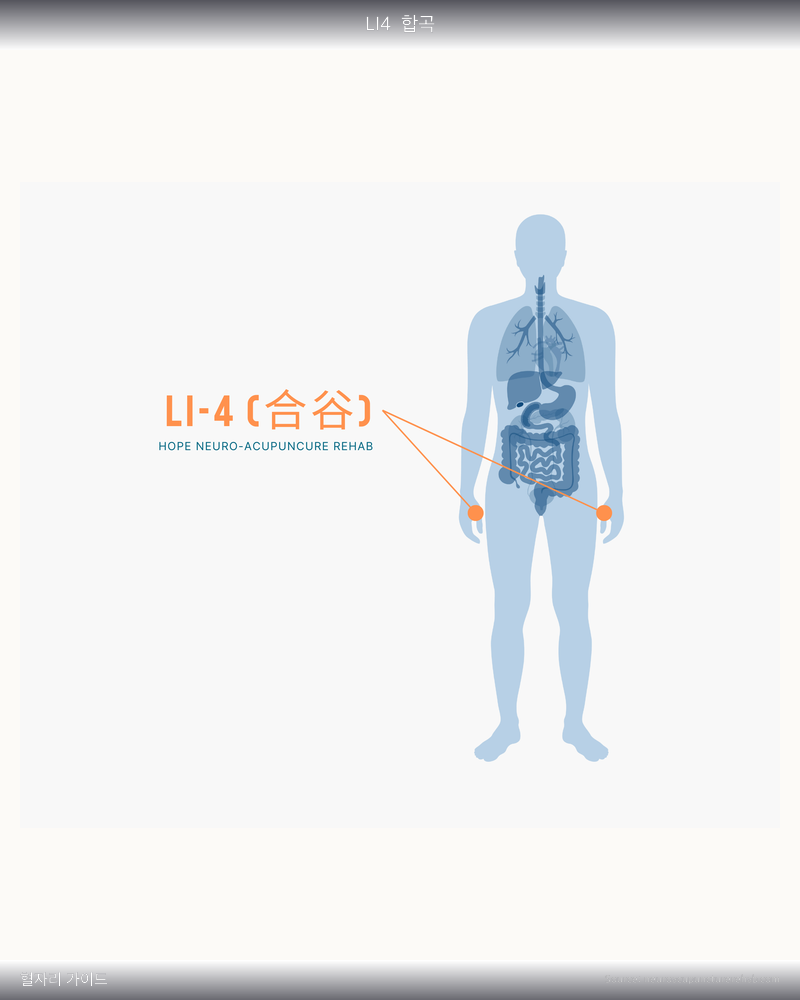
    الخطوة 1 — الضغط على هيغو (LI4) [0:00~1:00]

    LI4 acupuncture point

    📍 الموقع: المنطقة الرابطة بين الإبهام والسبابة (غشاء السباحة)

    👆 الطريقة: اضغط بإبهام اليد الأخرى على تلك المنطقة بقوة. الشعور بوخز خفيف يدل على الموضع الصحيح.

    ⏱️ المدة: اضغط 3~5 ثوانٍ ← استرح 3 ثوانٍ ← كرر 5 مرات (نحو دقيقة)

    ✨ الفائدة: تعزيز المناعة وطرد أعراض البرد.

    الخطوة 2 — الضغط على ليِهْ تشيه (LU7) [1:00~2:00]

    LU7 acupuncture point

    📍 الموقع: فوق النتوء العظمي على الجانب الإبهامي من الرسغ مباشرةً

    👆 الطريقة: اضغط بسبابة اليد الأخرى فوق النتوء العظمي على الجانب الإبهامي من الرسغ مباشرةً.

    ⏱️ المدة: اضغط 3~5 ثوانٍ ← استرح 3 ثوانٍ ← كرر 5 مرات (نحو دقيقة)

    ✨ الفائدة: تقوية طاقة الرئة للتخفيف من احتقان الأنف والسعال.

    الخطوة 3 — الضغط على داتشوي (GV14) [2:00~3:00]

    📍 الموقع: أسفل الفقرة العنقية السابعة (النتوء الأبرز في أسفل الرقبة) مباشرةً

    👆 الطريقة: أمِل رأسك قليلًا للأمام واضغط بإصبعك الوسطى أسفل النتوء العظمي.

    ⏱️ المدة: اضغط 3~5 ثوانٍ ← استرح 3 ثوانٍ ← كرر 5 مرات (نحو دقيقة)

    ✨ الفائدة: رفع الطاقة اليانغية لطرد البرد وتعزيز المناعة.

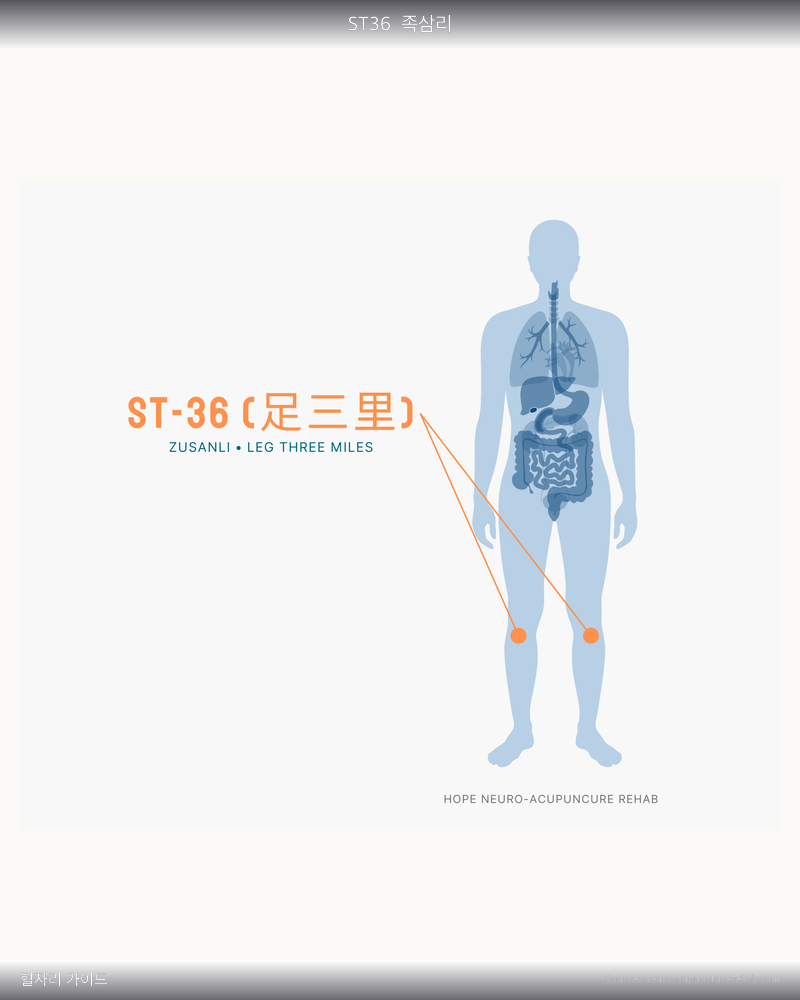
    الخطوة 4 — الضغط على زوسانلي (ST36) [3:00~4:00]

    ST36 acupuncture point

    📍 الموقع: على الجانب الخارجي أسفل الركبة بعرض 4 أصابع

    👆 الطريقة: اضغط بإبهامك على الجانب الخارجي لعظمة الساق. الشعور بثقل خفيف يدل على الموضع الصحيح.

    ⏱️ المدة: اضغط 3~5 ثوانٍ ← استرح 3 ثوانٍ ← كرر 5 مرات (نحو دقيقة)

    ✨ الفائدة: تحسين وظيفة الجهاز الهضمي ورفع مستوى الطاقة العامة والمناعة.

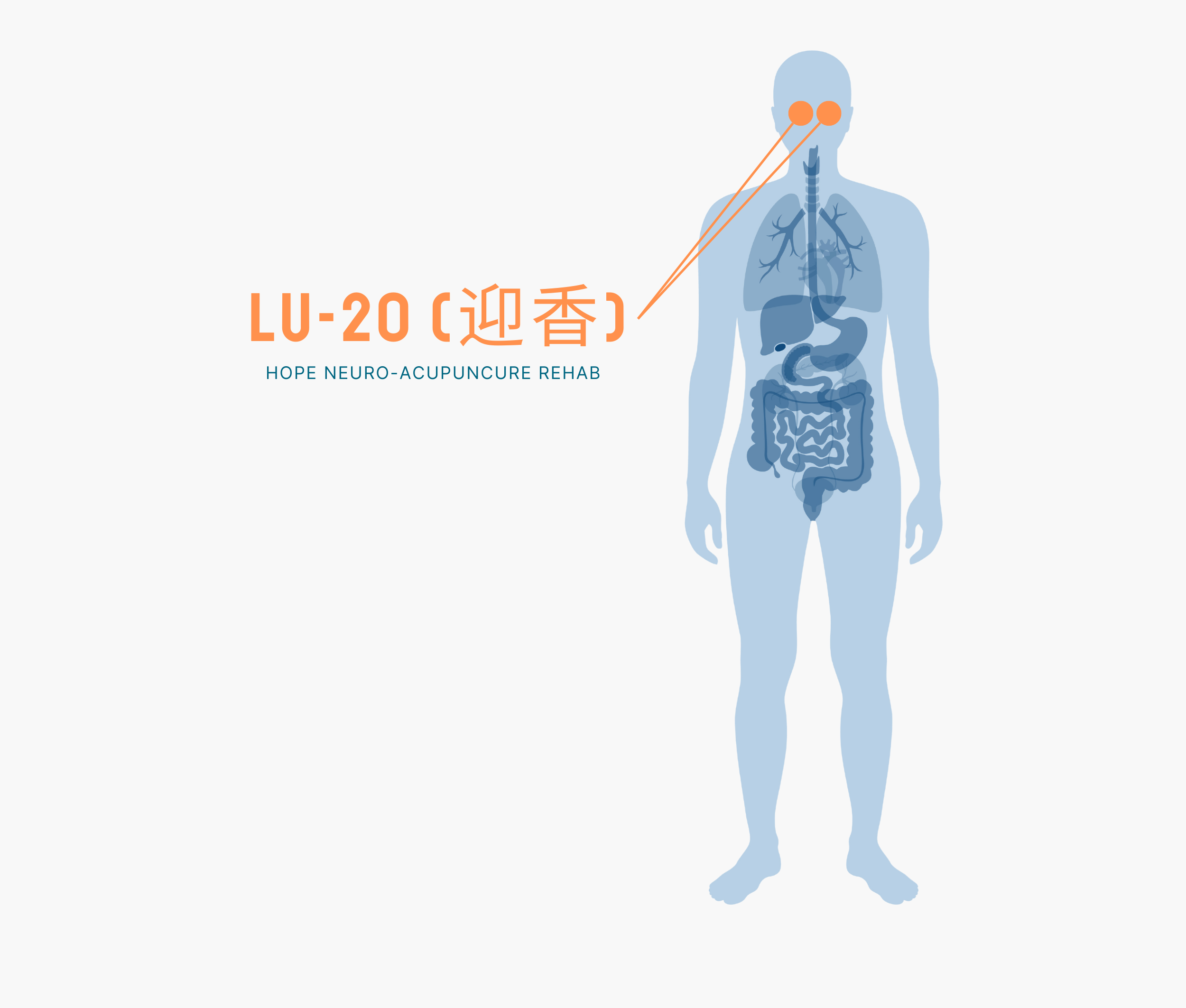
    الخطوة 5 — الضغط على يينغشيانغ (LI20) [4:00~5:00]

    LI20 acupuncture point

    📍 الموقع: على جانبي طيّة الأنف الأنفية (على جانبي جناحي الأنف)

    👆 الطريقة: اضغط بسبابتي كلتا يديك على جانبي جناحي الأنف بحركات دائرية صغيرة.

    ⏱️ المدة: اضغط 3~5 ثوانٍ ← استرح 3 ثوانٍ ← كرر 5 مرات (نحو دقيقة)

    ✨ الفائدة: فتح الأنف المحتقن وإيقاف سيلان المخاط.

    🎉 أحسنت! اكتمل الروتين!

    اختتم بـ 3 أنفاس عميقة. هل تشعر بخفة في جسمك؟

    📋 جدول الروتين في لمحة

    الخطوة النقطة الموقع المدة الفائدة
    1 هيغو (LI4) المنطقة الرابطة بين الإبهام والسبابة 0:00~1:00 تعزيز المناعة وطرد أعراض البرد.
    2 ليِهْ تشيه (LU7) فوق النتوء العظمي على الجانب الإبهامي من الرسغ مباشرةً 1:00~2:00 تقوية طاقة الرئة للتخفيف من احتقان الأنف والسعال.
    3 داتشوي (GV14) أسفل الفقرة العنقية السابعة (النتوء الأبرز في أسفل الرقبة) مباشرةً 2:00~3:00 رفع الطاقة اليانغية لطرد البرد وتعزيز المناعة.
    4 زوسانلي (ST36) على الجانب الخارجي أسفل الركبة بعرض 4 أصابع 3:00~4:00 تحسين وظيفة الجهاز الهضمي ورفع مستوى الطاقة العامة والمناعة.
    5 يينغشيانغ (LI20) على جانبي طيّة الأنف الأنفية (على جانبي جناحي الأنف) 4:00~5:00 فتح الأنف المحتقن وإيقاف سيلان المخاط.

    🍯 نصائح ذهبية

    • في مواسم تقلب الطقس، مارس الروتين مرة كل صباح للوقاية من نزلات البرد.
    • عند ظهور الأعراض الأولى للبرد، يمكنك زيادة التكرار إلى 3 مرات يوميًا.
    • شرب شاي الزنجبيل أو الماء الدافئ بعد الضغط يُعزز التأثير.
    • نقطة يينغشيانغ (LI20، جانب جناح الأنف) يمكن تحفيزها في أي وقت عند احتقان الأنف.

    ❓ أسئلة شائعة

    س. هل يفيد الضغط إذا كنت مصابًا بنزلة البرد بالفعل؟

    ج. نعم، إجراؤه في بداية البرد (اليوم الأول أو الثاني) يساعد على تخفيف الأعراض وتسريع التعافي. غير أنه في حال الحمى الشديدة، يُرجى مراجعة الطبيب أولًا.

    س. هل يمكن تطبيق هذا الروتين على الأطفال؟

    ج. يمكن تطبيقه على الأطفال من سن 6 سنوات فما فوق، لكن بضغط أخف (نحو 50% من قوة الضغط للبالغين) ولمدة 30 ثانية فقط لكل نقطة.

    س. هل يؤثر في الإنفلونزا أيضًا؟

    ج. الضغط وحده غير كافٍ للإنفلونزا؛ يجب مراجعة الطبيب أولًا، ويمكن الاستعانة بالضغط كعلاج مساند فقط.

    س. على أي نقطة أركّز عند شدة سيلان الأنف؟

    ج. ركّز على يينغشيانغ (LI20، جانب جناح الأنف) وهيغو (LI4)، فهما فعّالتان في تخفيف سيلان الأنف واحتقانه.

    س. هل يمكن الجمع بين الضغط وأدوية البرد؟

    ج. نعم، الضغط لا يتفاعل مع الأدوية، لذا هو آمن تمامًا. يمكنك استخدامه جنبًا إلى جنب مع العلاج الدوائي كعلاج تكميلي.

    🤰 تحذير للحوامل: نقطة هيغو (LI4) المدرجة في هذا الروتين قد تُحفّز تقلصات الرحم، لذا لا يُنصح بها للحوامل. إذا كنتِ حاملًا، أجري الروتين مع استبعاد هذه النقطة، أو استشيري طبيبك أو أخصائي الطب الصيني التقليدي قبل البدء.
    ⚠️ إخلاء المسؤولية الطبية: هذا المحتوى مخصص للتثقيف الصحي فقط، ولا يُغني عن التشخيص أو العلاج الطبي المتخصص. إذا استمرت الأعراض أو اشتدت، يُرجى استشارة مختص طبي.
  • روتين الضغط الذاتي لتخفيف القلق في 5 دقائق

    روتين الضغط الذاتي لتخفيف القلق في 5 دقائق

    ملخص في جملة واحدة: روتين ضغط الإبهام الذاتي لمدة 5 دقائق لتخفيف القلق. سنعرض لك طريقة تحفيز 5 نقاط وخز بالترتيب: شينمن، ونيغوان، وبايهوي، وتشيانتشونغ، وينتانغ. دليل ضغط إبهام سهل يمكن لأي شخص اتباعه دون صور.

    🎯 روتين ضغط الإبهام الذاتي لتخفيف القلق في 5 دقائق

    • ⏱️ المدة الزمنية: 5 دقائق
    • 📍 عدد النقاط: 5 نقاط
    • 🔄 الترتيب: شينمن (HT7)نيغوان (PC6)بايهوي (GV20) → تشيانتشونغ (CV17) → ينتانغ (EX-HN3)
    • 💡 الفائدة: تخفيف القلق والتحسين منه

    🙋 يُنصح بهذا الروتين إذا كنت

    • تشعر بالقلق والتوتر دون سبب واضح
    • تشعر بضيق في الصدر وصعوبة في التنفس
    • تريد إزالة التوتر قبل عرض مهم أو امتحان
    • تراودك الأفكار والهموم قبل النوم
    • تشعر بخفقان القلب وتعرّق راحتي اليدين

    🧘 التحضير قبل البدء

    1. اتخذ وضعية مريحة. يمكنك الجلوس على كرسي أو الجلوس على الأرض بارتياح.
    2. افرك كفيك معًا حتى تدفآ. اليدان الدافئتان تُحفّزان نقاط الوخز بشكل أفضل.
    3. خذ 3 أنفاس عميقة، شهيقًا وزفيرًا. استنشق من الأنف، وأخرج الهواء ببطء شديد من الفم.

    هل أنت مستعد؟ فلنبدأ إذن! 💪

    ⏱️ ابدأ روتين الـ5 دقائق!

    دقيقة واحدة لكل نقطة، والأمر كله لا يستغرق سوى 5 دقائق. اتبع الخطوات ببطء!

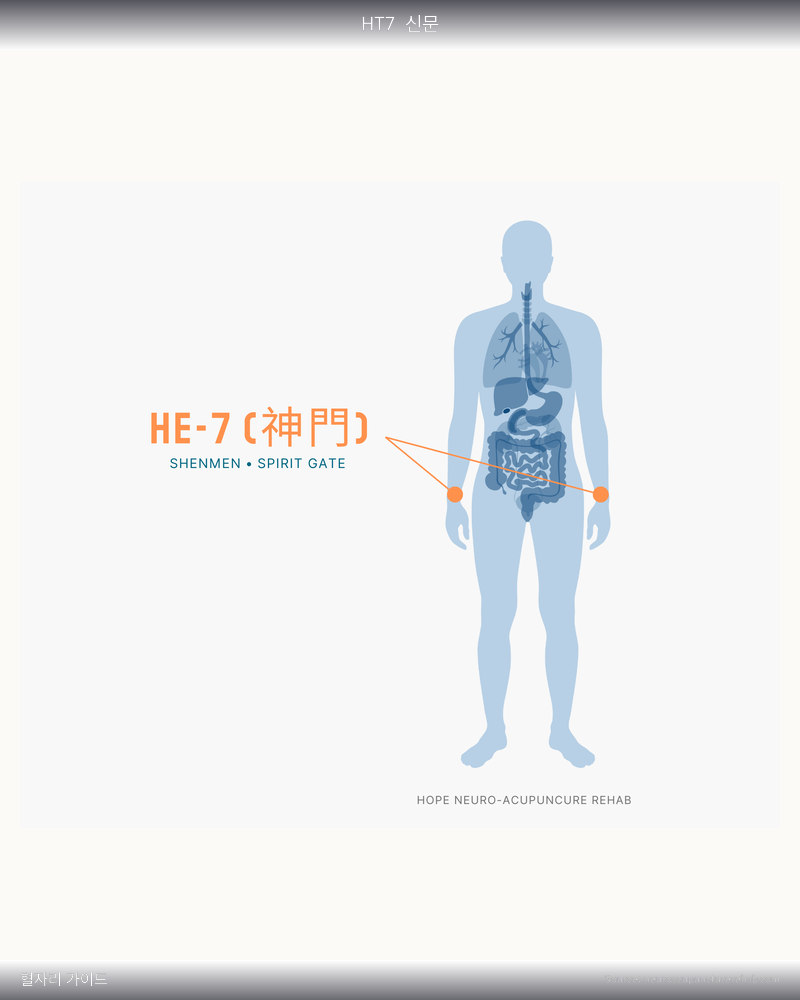
    الخطوة 1 — الضغط على شينمن (HT7) [0:00~1:00]

    HT7 acupuncture point

    📍 الموقع: ثنية الرسغ الداخلية، في التجويف المجاور لوتر جانب الإصبع الصغير

    👆 الطريقة: اضغط بإبهام اليد الأخرى برفق على التجويف فوق ثنية الرسغ.

    ⏱️ المدة: اضغط 3~5 ثوانٍ ← استرح 3 ثوانٍ ← كرر 5 مرات (نحو دقيقة واحدة)

    ✨ الفائدة: تهدئة مشاعر القلق والتوتر.

    الخطوة 2 — الضغط على نيغوان (PC6) [1:00~2:00]

    PC6 acupuncture point

    📍 الموقع: على مسافة عرض 3 أصابع من ثنية الرسغ الداخلية باتجاه الكوع

    👆 الطريقة: اضغط بإبهام اليد الأخرى بقوة على المنطقة بين الوترين في الجانب الداخلي من الرسغ.

    ⏱️ المدة: اضغط 3~5 ثوانٍ ← استرح 3 ثوانٍ ← كرر 5 مرات (نحو دقيقة واحدة)

    ✨ الفائدة: تخفيف ضيق الصدر وتقليل الشعور بالقلق.

    الخطوة 3 — الضغط على بايهوي (GV20) [2:00~3:00]

    📍 الموقع: منتصف قمة الرأس (أعلى الخط الواصل بين الأذنين)

    👆 الطريقة: ضع إصبع الوسط من كلتا اليدين فوق بعضهما واضغط برفق على قمة الرأس. يكون الأمر أفضل إذا أحسست بدفء.

    ⏱️ المدة: اضغط 3~5 ثوانٍ ← استرح 3 ثوانٍ ← كرر 5 مرات (نحو دقيقة واحدة)

    ✨ الفائدة: ترتيب الأفكار المشوّشة وتهدئة العقل.

    الخطوة 4 — الضغط على تشيانتشونغ (CV17) [3:00~4:00]

    📍 الموقع: منتصف الخط الواصل بين الحلمتين (على عظمة القص)

    👆 الطريقة: اضغط برفق بطرف إصبع الوسط على عظمة القص. يكون الأمر أفضل إذا أخذت نفسًا عميقًا أثناء الضغط.

    ⏱️ المدة: اضغط 3~5 ثوانٍ ← استرح 3 ثوانٍ ← كرر 5 مرات (نحو دقيقة واحدة)

    ✨ الفائدة: فتح الصدر المُضيَّق والتنفيس عنه.

    الخطوة 5 — الضغط على ينتانغ (EX-HN3) [4:00~5:00]

    📍 الموقع: منتصف الجبهة بين الحاجبين

    👆 الطريقة: اضغط برفق بطرف إصبع الوسط على منتصف ما بين الحاجبين. يكون الأمر أفضل إذا أغمضت عينيك.

    ⏱️ المدة: اضغط 3~5 ثوانٍ ← استرح 3 ثوانٍ ← كرر 5 مرات (نحو دقيقة واحدة)

    ✨ الفائدة: إيقاف الأفكار المتشعبة وإحلال الهدوء في النفس.

    🎉 أحسنت! لقد أكملت الروتين!

    اختم بـ3 أنفاس عميقة. هل تشعر بخفة في جسدك؟

    📋 جدول الروتين في لمحة

    الخطوة النقطة الموقع المدة الفائدة
    1 شينمن (HT7) ثنية الرسغ الداخلية، في التجويف المجاور لوتر جانب الإصبع الصغير 0:00~1:00 تهدئة مشاعر القلق والتوتر.
    2 نيغوان (PC6) على مسافة عرض 3 أصابع من ثنية الرسغ الداخلية باتجاه الكوع 1:00~2:00 تخفيف ضيق الصدر وتقليل الشعور بالقلق.
    3 بايهوي (GV20) منتصف قمة الرأس (أعلى الخط الواصل بين الأذنين) 2:00~3:00 ترتيب الأفكار المشوّشة وتهدئة العقل.
    4 تشيانتشونغ (CV17) منتصف الخط الواصل بين الحلمتين (على عظمة القص) 3:00~4:00 فتح الصدر المُضيَّق والتنفيس عنه.
    5 ينتانغ (EX-HN3) منتصف الجبهة بين الحاجبين 4:00~5:00 إيقاف الأفكار المتشعبة وإحلال الهدوء في النفس.

    🍯 نصائح ذهبية

    • الأكثر فاعلية أن تبدأ فور الشعور بموجة القلق.
    • أغمض عينيك وتنفس ببطء وعمق أثناء الضغط لمضاعفة التأثير.
    • الاستمرار على ذلك 2~3 مرات يوميًا صباحًا ومساءً يُسهم إسهامًا كبيرًا في إدارة القلق.
    • يمكنك وضع قطرة من زيت اللافندر العطري على يدك قبل الضغط لتعزيز تأثير الاسترخاء النفسي.

    ❓ الأسئلة الشائعة

    س. هل يفيد هذا الروتين في حالات نوبات الهلع؟

    ج. يُفيد في حالات القلق الخفيف، غير أن اضطراب الهلع يستلزم علاجًا متخصصًا. استخدم الضغط على النقاط كوسيلة مساعدة، ولا تنسَ مراجعة طبيب الطب النفسي.

    س. كم مرة يمكن ممارسة ضغط نقاط القلق يوميًا؟

    ج. يعدّ الأمر آمنًا حتى 4~5 مرات في اليوم. مارسه كلما شعرت بالقلق. ويمكن الضغط على شينمن (HT7) ونيغوان (PC6) بصفة متكررة على مدار اليوم.

    س. هل يمكن ممارسة الضغط أثناء تناول أدوية مضادة للقلق؟

    ج. نعم، الضغط على النقاط آمن ولا يتفاعل مع الأدوية. بيد أن أي تعديل في الدواء يجب أن يكون بالتشاور مع طبيبك المعالج.

    س. لماذا يشعر المرء بالراحة عند الضغط على تشيانتشونغ (CV17)؟

    ج. في الطب الصيني التقليدي، تُعدّ نقطة تشيانتشونغ “مجمع الطاقة الحيوية (تشي)”. تحفيز هذه النقطة يُفكك الطاقة المحتبسة فيُريح الصدر ويستقر المزاج.

    س. هل يفيد في تخفيف قلق الامتحان لدى الأطفال؟

    ج. نعم، يمكن تطبيقه من سن السادسة فصاعدًا. الضغط برفق على شينمن (HT7) وينتانغ (EX-HN3) يُساعد في تخفيف التوتر قبيل الامتحانات.

    ⚠️ إخلاء المسؤولية الطبية: كُتبت هذه المقالة لأغراض التثقيف الصحي فحسب، ولا تُغني عن التشخيص الطبي المتخصص أو العلاج. إذا استمرت الأعراض أو اشتدت، يرجى استشارة مختص طبي.
  • روتين الضغط الذاتي لآلام الظهر في 5 دقائق

    روتين الضغط الذاتي لآلام الظهر في 5 دقائق

    ملخص في جملة واحدة: روتين ضغط ذاتي لمدة 5 دقائق لتخفيف آلام الظهر. دليل سهل يشرح كيفية تحفيز 5 نقاط وخز بالترتيب: شين شو · وي تشونغ · مينغ مين · داتشانغ شو · تاي شي. يمكن لأي شخص اتباعه بدون صور.

    🎯 روتين الضغط الذاتي لآلام الظهر – 5 دقائق

    • ⏱️ المدة الزمنية: 5 دقائق
    • 📍 عدد النقاط: 5 نقاط
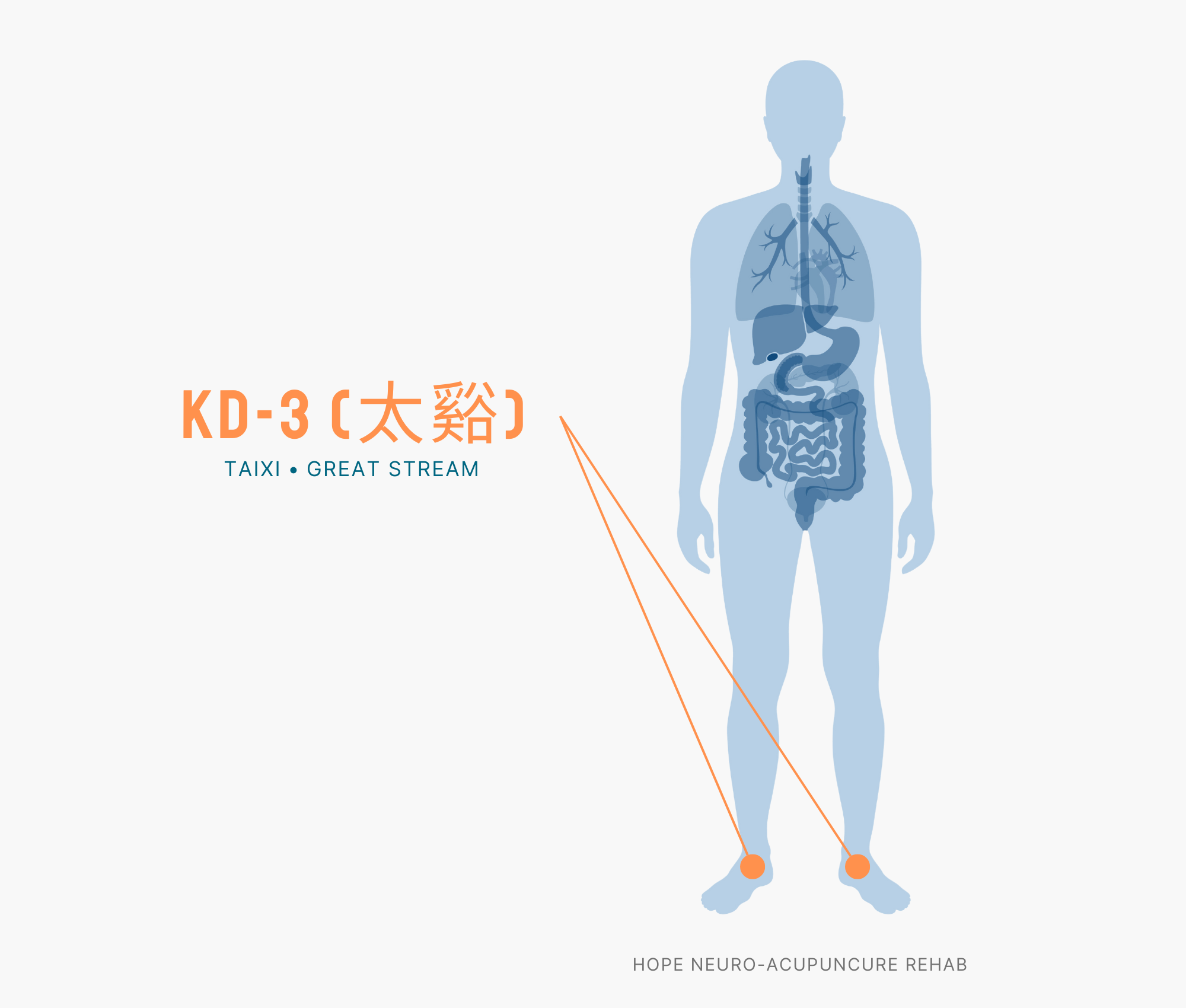
    • 🔄 الترتيب: شين شو (BL23) → وي تشونغ (BL40) → مينغ مين (GV4) → داتشانغ شو (BL25) → تاي شي (KI3)
    • 💡 الفائدة: تخفيف آلام الظهر وتحسينها

    🙋 يُنصح به في هذه الحالات

    • عند تيبّس الظهر بعد الجلوس لفترة طويلة أمام العمل
    • عند الشعور بشد وتصلب في الظهر فور الاستيقاظ صباحاً
    • عند الشعور بآلام الظهر بعد القيادة لفترات طويلة
    • عند الشعور بالتعب في الظهر بعد حمل أثقال
    • عند الإحساس بالبرودة والخدر في منطقة الظهر

    🧘 التحضير قبل البدء

    1. اتخذ وضعية مريحة. يمكنك الجلوس على كرسي أو على الأرض بشكل مريح.
    2. افرك كفيك ببعضهما لتدفئتهما. اليدان الدافئتان تحفّزان النقاط بشكل أفضل.
    3. خذ 3 أنفاس عميقة، شهيقاً من الأنف وزفيراً ببطء من الفم.

    هل أنت مستعد؟ هيا نبدأ! 💪

    ⏱️ ابدأ روتين الـ 5 دقائق!

    دقيقة واحدة لكل نقطة، وستنتهي في 5 دقائق فقط. اتبع الخطوات ببطء!

    الخطوة 1 — الضغط على شين شو (BL23) [0:00~1:00]

    BL23 acupuncture point

    📍 الموقع: بين الفقرتين الثانية والثالثة في منطقة الظهر، على بعد عرض إصبعين من العمود الفقري على كلا الجانبين

    👆 الطريقة: ضع قبضتي يديك على جانبي الظهر وافركهما لأعلى ولأسفل حتى تشعر بالدفء.

    ⏱️ المدة: اضغط بقوة 3~5 ثوانٍ ← استرح 3 ثوانٍ ← كرر 5 مرات (نحو دقيقة)

    ✨ الفائدة: تعزيز طاقة الكلى لمعالجة السبب الجذري لآلام الظهر.

    الخطوة 2 — الضغط على وي تشونغ (BL40) [1:00~2:00]

    BL40 acupuncture point

    📍 الموقع: منتصف الحفرة خلف الركبة تماماً

    👆 الطريقة: اجلس على كرسي واثنِ ركبتيك قليلاً، ثم اضغط بإصبعَي الوسطى على منتصف الحفرة خلف الركبة.

    ⏱️ المدة: اضغط بقوة 3~5 ثوانٍ ← استرح 3 ثوانٍ ← كرر 5 مرات (نحو دقيقة)

    ✨ الفائدة: تخفيف الألم الممتد من الظهر حتى الساق.

    الخطوة 3 — الضغط على مينغ مين (GV4) [2:00~3:00]

    📍 الموقع: على العمود الفقري في الجانب الخلفي عند مستوى السرة

    👆 الطريقة: ضع يديك فوق بعضهما على العمود الفقري من الخلف وقم بالتدليك بحركة دائرية.

    ⏱️ المدة: اضغط بقوة 3~5 ثوانٍ ← استرح 3 ثوانٍ ← كرر 5 مرات (نحو دقيقة)

    ✨ الفائدة: تعزيز الطاقة الإيجابية في الظهر لتدفئة منطقة الظهر الباردة.

    الخطوة 4 — الضغط على داتشانغ شو (BL25) [3:00~4:00]

    BL25 acupuncture point

    📍 الموقع: بين الفقرتين الرابعة والخامسة في الظهر، على بعد عرض إصبعين على كلا الجانبين

    👆 الطريقة: ضع إبهامَي يديك على أعلى الحوض في منطقة الظهر واضغط بقوة.

    ⏱️ المدة: اضغط بقوة 3~5 ثوانٍ ← استرح 3 ثوانٍ ← كرر 5 مرات (نحو دقيقة)

    ✨ الفائدة: تخفيف الألم والشد المباشر في منطقة أسفل الظهر.

    الخطوة 5 — الضغط على تاي شي (KI3) [4:00~5:00]

    KI3 acupuncture point

    📍 الموقع: بين الكعب الداخلي ووتر أكيلس

    👆 الطريقة: استخدم إبهام اليد المقابلة للضغط على المنطقة الغائرة بين الكعب الداخلي ووتر أكيلس.

    ⏱️ المدة: اضغط بقوة 3~5 ثوانٍ ← استرح 3 ثوانٍ ← كرر 5 مرات (نحو دقيقة)

    ✨ الفائدة: تعزيز طاقة الكلى لرفع اللياقة الأساسية للظهر.

    🎉 أحسنت! اكتمل الروتين!

    للإنهاء، خذ 3 أنفاس عميقة. هل تشعر بخفة في جسمك؟

    📋 جدول الروتين في لمحة واحدة

    الخطوة النقطة الموقع الوقت الفائدة
    1 شين شو (BL23) بين الفقرتين الثانية والثالثة في الظهر، على بعد عرض إصبعين من العمود الفقري على كلا الجانبين 0:00~1:00 تعزيز طاقة الكلى لمعالجة السبب الجذري لآلام الظهر.
    2 وي تشونغ (BL40) منتصف الحفرة خلف الركبة تماماً 1:00~2:00 تخفيف الألم الممتد من الظهر حتى الساق.
    3 مينغ مين (GV4) على العمود الفقري في الجانب الخلفي عند مستوى السرة 2:00~3:00 تعزيز الطاقة الإيجابية في الظهر لتدفئة منطقة الظهر الباردة.
    4 داتشانغ شو (BL25) بين الفقرتين الرابعة والخامسة في الظهر، على بعد عرض إصبعين على كلا الجانبين 3:00~4:00 تخفيف الألم والشد المباشر في منطقة أسفل الظهر.
    5 تاي شي (KI3) بين الكعب الداخلي ووتر أكيلس 4:00~5:00 تعزيز طاقة الكلى لرفع اللياقة الأساسية للظهر.

    🍯 نصائح ذهبية

    • يكون التأثير أفضل إذا مارسته فور الاستيقاظ صباحاً أو قبل النوم.
    • تدفئة منطقة الظهر بمنشفة دافئة قبل الضغط يجعله أكثر فعالية.
    • في حالة آلام الظهر الحادة (الالتواء)، لا تُجهد نفسك وزر الطبيب أولاً.
    • دمج تمارين الإطالة الخفيفة للظهر بعد الضغط يعطي تأثيراً تآزرياً.

    ❓ الأسئلة الشائعة

    س. هل يمكن لمرضى الانزلاق الغضروفي ممارسة هذا الروتين؟

    ج. قد يفيد في حالات الانزلاق الغضروفي الخفيفة، لكن إذا كنت تعاني من تنميل في الساقين أو آلام شديدة، يجب عليك زيارة طبيب العظام أو أخصائي الطب الصيني التقليدي أولاً.

    س. هل يمكن إجراء ضغط الظهر بمفردي؟

    ج. نعم! يمكنك الضغط على شين شو وداتشانغ شو بسهولة بمفردك باستخدام قبضة يدك. أما وي تشونغ وتاي شي فيمكن إجراؤهما بشكل مريح في وضعية الجلوس.

    س. هل يمكن استخدام كرة التنس؟

    ج. فكرة رائعة! يمكنك الاستلقاء على الأرض ووضع كرة التنس أسفل ظهرك لتحفيز نقطتي شين شو وداتشانغ شو بفعالية.

    س. كم مرة في اليوم يُنصح بضغط الظهر؟

    ج. في حالة آلام الظهر المزمنة، جرّب ممارسته 2~3 مرات يومياً لمدة أسبوعين على الأقل بانتظام. ستلاحظ تراجعاً تدريجياً في الألم.

    س. هل يمكن ممارسة الرياضة بعد ضغط الظهر؟

    ج. تمارين الإطالة الخفيفة والمشي مناسبة تماماً. أما التمارين عالية الشدة كرفع الأثقال، فيُنصح بالانتظار 30 دقيقة على الأقل لضمان السلامة.

    ⚠️ إخلاء مسؤولية طبية: كُتب هذا المقال لأغراض التثقيف الصحي فقط، ولا يُغني عن التشخيص الطبي المتخصص أو العلاج. إذا استمرت الأعراض أو اشتدت، استشر متخصصاً طبياً.
  • 5 نقاط ضغط لآلام الظهر — دليل التدليك الذاتي السريع

    5 نقاط ضغط لآلام الظهر — دليل التدليك الذاتي السريع

    “`html

    One-line summary: Back pain can be self-managed through regular acupressure on Jianjing, Fengchi, and Tianzhui acupoints, which relieves muscle tension and improves blood circulation.

    Back Pain: Why Does It Occur and How to Address It?

    Back pain has become a chronic condition in modern life. Prolonged sitting at work, smartphone use, and poor posture cause the muscles around the cervical and thoracic vertebrae to become stiff, leading to pain. The entire neck, shoulders, and back feel tense and heavy, which occurs because blood circulation is impaired and muscles lack oxygen.

    In traditional Chinese medicine, such back pain is addressed fundamentally through acupoint stimulation. When specific acupoints are pressed, muscle tension releases, and blood and qi (energy) circulation improves along the meridians, alleviating pain. Without medication, immediate relief can be felt using just your fingers, making this method ideal for modern self-care.

    5 Acupoints for Back Pain Relief — Precise Locations and Acupressure Techniques

    1. Jianjing (肩井, GB21) — Immediate Relaxation of Shoulder and Upper Back Muscles

    WHO Code: GB21 (Gallbladder Meridian 21)
    Location: The midpoint of the line extending from the back of the neck toward the shoulder tip. It is the highest point of the shoulder muscle that becomes most prominent when bending the neck forward.
    Acupressure technique: Press with your thumb for 3 seconds and rest for 2 seconds, repeating for 1 minute. Alternating acupressure on both Jianjing points quickly releases muscle tension throughout the shoulders and back.
    Effect: Most effective for releasing shoulder knots (hardened muscles), and excellent for neck stiffness, migraines, and upper body tension caused by stress. Immediately after acupressure, pain significantly decreases along with a warming sensation.

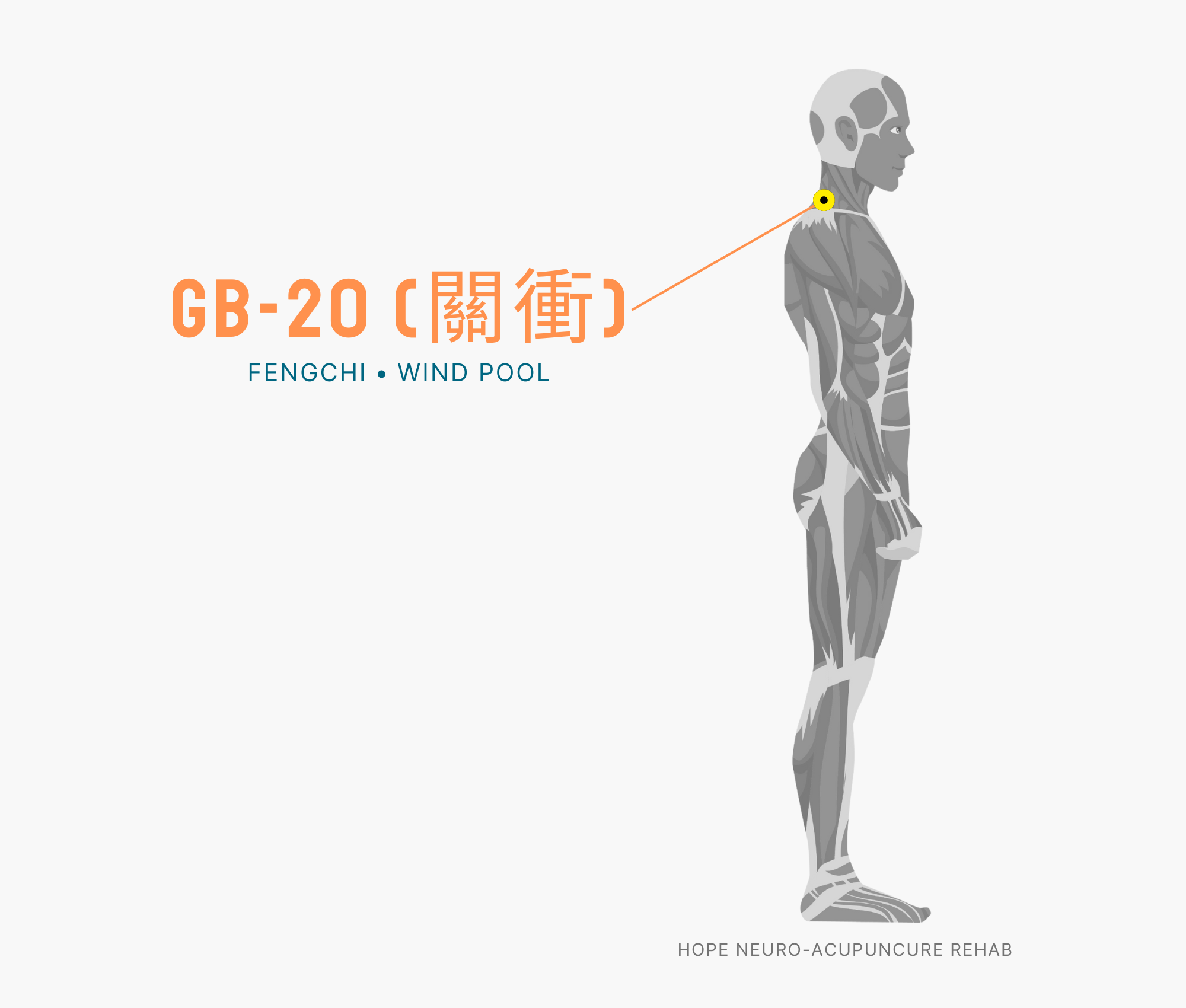
    2. Fengchi (風池, GB20) — Improved Blood Flow to Cervical Vertebrae and Brain

    GB20 acupuncture point

    WHO Code: GB20 (Gallbladder Meridian 20)
    Location: The back of the neck, in the hollow area between the cervical vertebra 7 and shoulder blade. Follow the back of your neck upward with your finger until you find the hollow area just below the hairline.
    Acupressure technique: Gently press simultaneously with both thumbs, using an upward pushing motion for 3 seconds, then rest for 2 seconds, repeating for 1 minute. Continue repeating until the stiffness in the neck releases.
    Effect: Improves blood circulation around the cervical vertebrae, quickly alleviating back of neck pain, cervical headaches, and neck stiffness. As blood flow to the brain increases, feelings of heaviness also ease.

    3. Tianzhui (天柱, BL10) — Lower Cervical and Upper Back Connection Area

    BL10 acupuncture point

    WHO Code: BL10 (Bladder Meridian 10)
    Location: The center of the back of the neck, located at the outer boundary of the sternocleidomastoid muscle (neck side muscle). It is the point directly below where the neck and shoulder meet when bending the neck slightly.
    Acupressure technique: Pinch with thumb and index finger while pressing for 3 seconds, then release for 2 seconds. Alternate sides for 1-2 minutes. A slight level of pain sensation is effective.
    Effect: Relieves tension in the muscle groups connecting the lower cervical vertebrae to the upper back, and is particularly effective when experiencing both neck and back pain. Fatigue is quickly relieved through improved blood circulation.

    4. Quchi (曲池, LI11) — Widespread Upper Body Pain Relief

    LI11 acupuncture point

    WHO Code: LI11 (Large Intestine Meridian 11)
    Location: The outer end of the elbow crease on the front of the elbow. It is the outermost point on the inner side of the elbow when the arm is bent.
    Acupressure technique: Press firmly with your thumb in a vertical direction for 3-5 seconds, then release. Repeat for 1 minute. Alternating between both arms increases the effect throughout the upper body.
    Effect: Since it stimulates nerve areas throughout the upper body along the Large Intestine Meridian, it relieves not only back pain but also arm numbness, elbow pain, and widespread upper body tension. Particularly effective for nerve-related pain.

    5. Feishu (肺兪, BL13) — Deep Relaxation of Central Back Muscle Groups

    BL13 acupuncture point

    WHO Code: BL13 (Bladder Meridian 13)
    Location: The center of the back, approximately 2 cm to the side of the thoracic vertebra 3 spinous process (the protruding part of the vertebra) on the Bladder Meridian. The precise location is approximately one finger width to the side of the vertebrae on both sides.
    Acupressure technique: Place a tennis ball under your back and lean against a wall for deep pressure, or lie flat and press firmly with your thumb in a vertical direction for 3-5 seconds, then release. Repeat for 1 minute.
    Effect: Most effective for releasing deep knots in the central back muscle groups, improving breathing comfort and relieving chest discomfort. Improved respiration deepens overall body relaxation further.

    5-Minute Self-Acupressure Routine — Effective Order and Time Distribution

    Preparation: Sit or lie down comfortably. It’s better to begin after a warm bath when muscles are already relaxed.

    1. Jianjing Acupressure (1 minute)
      Place your thumbs on both Jianjing points and repeat “press for 3 seconds and rest for 2 seconds.” You’ll feel the heaviness in your shoulders ease.
    2. Fengchi Acupressure (1 minute)
      Gently press simultaneously with both thumbs, using an upward pushing motion. You’ll notice the stiffness in the back of the neck ease and your mind becomes clearer.
    3. Tianzhui Acupressure (1 minute)
      Alternate sides, pinching with thumb and index finger, pressing for 3 seconds then releasing for 2 seconds.
    4. Quchi Acupressure (1 minute)
      Alternate between both arms, pressing firmly with your thumb in a vertical direction and then releasing, repeating this motion.
    5. Feishu Acupressure (1 minute)
      Lie flat and repeat vertical thumb pressing on both Feishu points on either side of the center back, or place a tennis ball underneath and lean against a wall to stimulate.

    After completion: Perform gentle neck stretches in 4 directions for 5-10 seconds each right after acupressure, and the effects will be even more pronounced.

    ⚠️ Medical Disclaimer: This article is provided for informational purposes and does not replace professional medical diagnosis or treatment. If back pain persists for more than 3 days, or if symptoms such as arm numbness, leg numbness, abnormal bowel/bladder function, or high fever accompany the pain, please consult a healthcare professional (medical doctor or acupuncturist). You may have serious conditions such as fractures, herniated discs, or spinal compression.

    “`

  • 5 نقاط ضغط لآلام المعصم — دليل التدليك الذاتي السريع

    5 نقاط ضغط لآلام المعصم — دليل التدليك الذاتي السريع

    One-line Summary: Wrist pain can be relieved by regularly stimulating the TE5, PC6, PC7, LI4, and TE5 acupoints to improve qi and blood circulation through the meridians. Self-acupressure is a cost-effective pain management method.

    Introduction

    Mouse clicks, smartphone touches, cooking, laundry—modern people’s wrists move constantly without rest. Symptoms such as “frequent tingling in the wrist,” “pain when bending the wrist,” and “stiffness and soreness in the wrist” are common discomforts among office workers and students.

    The causes of wrist pain are varied. Muscle fatigue from repetitive movements, carpal tunnel syndrome (CTS), sprains, or cervical spine issues can affect the wrist. In traditional Chinese medicine, wrist pain is viewed as an imbalance in meridian function, and improving qi and blood circulation through stimulation of specific acupoints is considered important.

    The five acupoints introduced in this article are particularly known to be effective for relieving wrist pain. Because they can be easily stimulated at the office, at home, or while traveling, they will become an essential self-care tool for office workers.

    5 Acupoints for Relieving Wrist Pain

    1. TE5, Waigguan (外關) — The Primary Acupoint for Wrist Pain

    Location: This acupoint belongs to the Triple Burner meridian. It is located on the back of the wrist, approximately 2-3cm above the wrist crease toward the forearm, in the space between the radius (thumb bone) and ulna (pinky bone). More precisely, when you extend your wrist, it is located approximately 2-3cm above the midpoint between the two bones on the back of your hand.

    Benefits: TE5 is effective for wrist pain, elbow pain, and brachial neuralgia. It is particularly excellent for alleviating pain that occurs when bending or extending the wrist, and in traditional Chinese medicine, it is also used to treat “external pathogenic diseases” (diseases caused by external pathogens).

    Technique: Apply vertical pressure to the TE5 area with the tip of your thumb. Press and release repeatedly for 3-5 seconds at an intensity where you feel soreness that is also refreshing. Perform this on both hands alternately, each for 3 minutes.

    2. PC6, Neiguan (內關) — Wrist Pain and Stress Relief

    Location: This acupoint belongs to the Pericardium meridian and is located on the inner side of the wrist (toward the fingers). From the inner wrist crease, go up toward the forearm approximately 2-3cm, positioning it at the center between the two tendons (palmaris longus and flexor carpi radialis). Simply, it is located one to two finger-widths above the inner wrist crease toward the forearm.

    Benefits: PC6 relieves not only wrist pain but also finger numbness, arm pain, and chest palpitations caused by anxiety and stress. It is a very suitable acupoint for stress-related wrist pain in modern people.

    Technique: Press directly with your thumb or massage by rubbing with the knuckle of your opposite hand’s finger. Use medium intensity, rubbing at a pace of approximately 60-80 strokes per minute. Perform this on both sides for 2 minutes each.

    3. PC7, Daling (大陵) — Wrist Pain and Sleep Improvement

    Location: This acupoint belongs to the Pericardium meridian and is located at the center of the wrist crease on the palm side. When you slightly extend your wrist, you will see two tendons on the inner side of the wrist, and Daling is located directly between them. When you bend your fingers toward the wrist, a crease appears, and Daling is at the center of that crease.

    Benefits: PC7 is effective for wrist pain, arm numbness, and improving insomnia and anxiety. It is particularly useful when wrist pain interferes with sleep, and it also has a calming effect on the mind.

    Technique: Press vertically with your thumb. Press and release repeatedly for 3-5 seconds at an intensity with slight discomfort. Particularly if you stimulate this for 1-2 minutes before bed, it can also help improve sleep.

    4. LI4, Hegu (合谷) — A Master Acupoint for Whole-Body Pain Relief

    Location: This acupoint belongs to the Large Intestine meridian and is located in the bony space between the thumb and index finger (between the 1st and 2nd metacarpal bones). When you open your hand, it is located on the back of the hand between the thumb and index finger, at the point above the muscle (first dorsal interosseous muscle) that rises when you bring your fingers together.

    Benefits: LI4 is called the “master acupoint for whole-body pain relief” and alleviates not only wrist pain but also headaches, neck pain, elbow pain, and various other pain throughout the body. It is also widely used for colds, fever, and stress relief.

    Technique: Press with the thumb of your opposite hand using moderate to strong pressure. Repeat pressing and releasing for 5-10 seconds, doing this 3-5 times. When pressing, you should feel an “achy but refreshing” sensation for the technique to be effective. Perform this on both hands for 2-3 minutes each.

    5. TE5, Waigguan (外關) — Forearm and Lateral Wrist Pain

    Location: This acupoint belongs to the Triple Burner meridian and is located approximately 2-3cm above the wrist crease on the back of the wrist toward the forearm. It is in the same area as TE5 but more precisely positioned closer to the radius (thumb bone). When you slightly extend your wrist, it is located above the space between the two bones on the back of the wrist, going up toward the forearm.

    Benefits: TE5 alleviates lateral forearm pain, lateral wrist pain, and stiffness in the neck. It is particularly effective when experiencing lateral wrist pain from mouse use.

    Technique: Press with your thumb at a right angle. Repeat pressing and releasing for 3-5 seconds using medium pressure. Perform this on both hands for 2-3 minutes each, 2-3 times a day.

    5-Minute Self-Acupressure Routine — A Simple Program You Can Do at the Office

    Preparation (30 seconds): Sit in a comfortable position and rest both hands on the desk. Take 3-4 slow, deep breaths before starting.

    Acupoint 1: TE5 (1 minute): Start with the left hand TE5. Repeat pressing for 30 seconds with your thumb, then perform the same technique on the right hand for 30 seconds.

    Acupoint 2: PC6 (1 minute): Stimulate the left hand PC6 by rubbing for 30 seconds, then perform the same on the right hand for 30 seconds.

    Acupoint 3: PC7 (1 minute): Repeat pressing the left hand PC7 for 30 seconds, then perform the same on the right hand for 30 seconds.

    Acupoint 4: LI4 (1 minute): Repeat pressing the left hand LI4 strongly for 30 seconds, then perform the same on the right hand for 30 seconds.

    Acupoint 5: TE5 (1 minute): Repeat pressing the left hand TE5 for 30 seconds, then perform the same on the right hand for 30 seconds.

    Cool-down (1 minute): Gently shake both hands and slowly rotate your wrists clockwise and counterclockwise. For even better results, immerse your wrists in cold water for 3-5 seconds and then wrap them with a warm towel.

    Recommended Times: Right after waking in the morning, 1 hour after lunch, and after leaving work in the evening—three times a day is ideal. When symptoms are severe, you can do this 4-5 times a day, but avoid excessive stimulation.

    Additional Tips for Wrist Pain Acupoint Acupressure

    Use Heat Therapy: Soaking your wrist in warm water for 1-2 minutes or applying a warm compress before acupressure can improve blood circulation and enhance the acupressure effects.

    Correct Intensity: Acupoint acupressure is most effective at an intensity that is “achy but refreshing.” Avoid excessive stimulation, and stop immediately if pain worsens.

    Maintain Consistency: Acupoint acupressure shows minimal effects from just one or two sessions. You need to perform it consistently for at least 2-3 weeks to feel improvement.

    Combine with Other Treatments: Acupoint acupressure is even more effective when combined with wrist stretching, physical therapy, and lifestyle improvements.

    ⚠️ Medical Disclaimer: This article is written for informational health purposes and does not replace professional medical diagnosis or treatment. If wrist pain persists for more than 2 weeks, or if severe pain, swelling, numbness, or weakness is present, please consult a medical professional (doctor, orthopedic specialist, or acupuncturist). This is especially important if you have or suspect an underlying condition such as carpal tunnel syndrome or rheumatoid arthritis.
    🤰 Pregnancy Warning: Among the acupoints introduced above, LI4 should be avoided during pregnancy as it can trigger uterine contractions. TE5, PC6, PC7, and TE5 are relatively safer; however, if you are pregnant or may be pregnant, please consult with an acupuncturist or medical professional before performing these techniques.
  • تقوية المناعة الضعيفة: 5 نقاط ضغط تعمل بالفعل

    تقوية المناعة الضعيفة: 5 نقاط ضغط تعمل بالفعل

    One-line summary: Stimulating five acupressure points—Zusanli (ST36), Qihai (CV6), Fengchi (GB20), Sanyinjiao (SP6), and Hegu (LI4)—for 3 minutes daily can boost immunity and help prevent colds.

    Introduction

    Catching a cold with every weather change, taking a long time to recover once sick, and experiencing constant fatigue and lack of energy—these are typical symptoms of weakened immunity. Modern people are experiencing declining immunity due to stress, irregular lifestyles, and sleep deprivation.

    In Traditional Chinese Medicine, this weakened immunity is seen as a state of insufficient Qi (vital energy). Fortunately, our body has special acupoints that can boost immunity. When you stimulate these acupoints, you can awaken your body’s natural healing ability and strengthen immunity. Revitalize your immune system through acupressure therapy that requires only your fingers—no medication needed.

    The Five Key Acupoints for Boosting Immunity

    1. Zusanli (ST36) — The Summit of Immunity

    ST36 acupuncture point

    Location: About 10 cm below the kneecap, on the outer side of the tibia. It’s approximately four finger-widths below the depression beneath the knee (Yanglingquan).

    Acupressure Technique: Use your thumb to slowly press in circular motions. Press for 3 seconds while exhaling, then release over 1 second. Stimulate each leg for 3 minutes, twice daily.

    Benefits: Known as the “leg’s tonic,” Zusanli simultaneously enhances digestion, blood circulation, and immunity. It’s most effective for preventing colds, recovering from fatigue, and boosting overall vitality. Ancient physicians believed that stimulating Zusanli alone was enough to maintain health.

    2. Qihai (CV6) — The Center of Yuan Qi Strengthening

    Location: About 1.5 cm (one finger-width) below the navel. It’s precisely the storage site of Qi on the Conception Vessel.

    Acupressure Technique: Use warm fingers to relax your abdomen, then gently press with the pad of your thumb. Make circular motions clockwise for 1 minute, twice daily—morning and evening.

    Benefits: Qihai is where your body’s Yuan Qi (original life energy) gathers. Stimulating it activates energy throughout your body, improves digestion, and promotes rapid recovery from fatigue. It’s the premier acupoint for activating your entire immune system.

    3. Fengchi (GB20) — The Shield Against Colds

    GB20 acupuncture point

    Location: In the hollows at the base of the skull where the large neck muscle (trapezius) meets. It’s about 2 cm to either side, below the most prominent vertebra when bending the neck forward.

    Acupressure Technique: Using both thumbs, gently press and make slow circular motions. Stimulate both sides simultaneously or one side at a time for 1 minute each, twice daily. Be careful not to press too hard, as excessive pressure can cause headaches.

    Benefits: Fengchi means “the gate that blocks external evil wind.” It improves blood circulation around the neck, strengthens the respiratory system, and defends against cold virus invasion. Regular stimulation during seasonal changes provides excellent cold prevention.

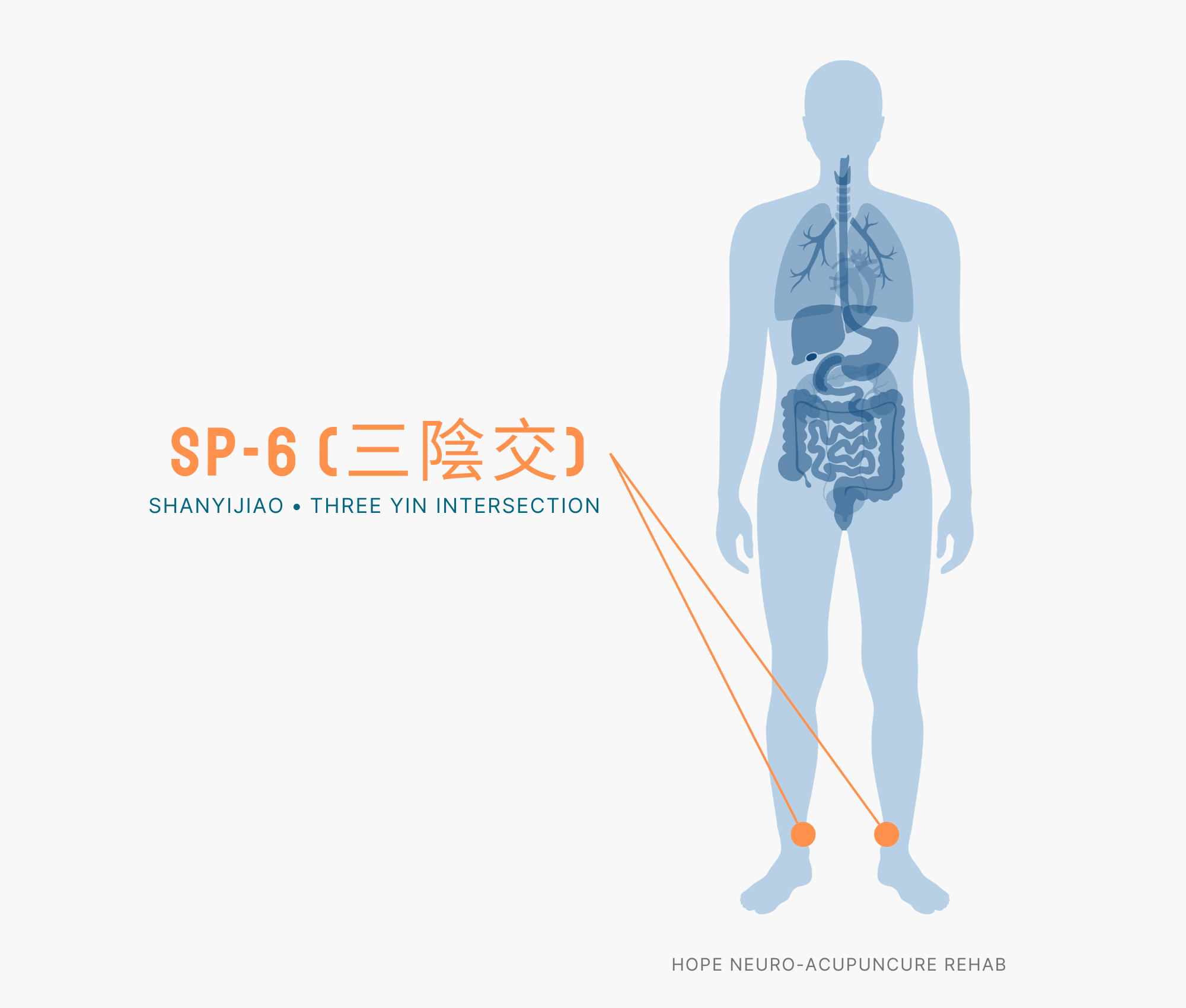
    4. Sanyinjiao (SP6) — The Crossroads of Internal Circulation

    SP6 acupuncture point

    Location: About 10 cm (four finger-widths) above the inner ankle bone, on the inner edge of the tibia. It’s in the depression behind the tibia.

    Acupressure Technique: Press slowly with your thumb, using a rhythm of 3 seconds of pressure followed by 1 second of rest. Stimulate each leg for 3 minutes. The effects are enhanced when stimulated in the evening (5-7 PM).

    Benefits: Sanyinjiao, where the Spleen, Liver, and Kidney meridians converge, regulates blood circulation, metabolism, and hormone balance. It’s highly effective for improving digestive problems, skin issues, and fatigue caused by weakened immunity.

    5. Hegu (LI4) — The Specific Remedy for Pain and Fatigue

    LI4 acupuncture point

    Location: In the webbing between the thumb and index finger on the back of the hand, at the point where the bones meet. It’s the highest point when tracing along the index finger bone toward the thumb.

    Acupressure Technique: Use the opposite thumb to press slowly. You should feel a slight, pleasant soreness (“refreshing soreness”) for the technique to be effective. Stimulate both hands simultaneously for 3 minutes each, 2-3 times daily.

    Benefits: Hegu affects the entire body through the Large Intestine meridian. It’s most effective for strengthening immunity, alleviating cold symptoms, and eliminating headaches and fatigue. It’s easy to stimulate anywhere, making it excellent for stress relief.

    5-Minute Self-Acupressure Routine — Start Every Morning

    This 5-minute routine can be done even during a busy morning. Consistent, regular practice is most important.

    1. Qihai (CV6) – 1 minute : Rub your hands together until warm, then massage your abdomen in clockwise circles. This is the opening stage to awaken your Yuan Qi.
    2. Hegu (LI4) – 1 minute : Stimulate both hands simultaneously. It clears your mind and improves focus.
    3. Zusanli (ST36) – 2 minutes : Sitting or lying down, stimulate each leg for 1 minute. Allocate generous time for this most important acupoint.
    4. Fengchi (GB20) – 0.5 minutes : Gently use both thumbs. Keep stimulation brief to avoid causing headaches.
    5. Sanyinjiao (SP6) – 0.5 minutes : While sitting, quickly stimulate both ankles.

    Best Time: The best time is within 30 minutes of waking up in the morning. For doubled immunity-boosting effects, do the routine again in the evening (5-7 PM).

    Lifestyle Habits to Enhance Acupressure Effectiveness

    • Adequate sleep: 7-8 hours daily. Sleeping before 11 PM helps recover immunity.
    • Warm water: Drinking warm water after stimulation enhances blood circulation.
    • Immunity-boosting foods: Frequently consume foods that enhance immunity, such as mushrooms, red ginseng, Chinese yam, and black beans.
    • Light exercise: Gentle activities like walking, yoga, and stretching enhance immunity.
    • Stress management: Reduce stress through meditation, breathing exercises, and mindfulness.
    ⚠️ Medical Disclaimer: This article is written for informational purposes about health and does not replace professional medical diagnosis or treatment. If symptoms persist or are severe, consult a healthcare professional.
    🤰 Pregnancy Warning: Among the acupoints above, Sanyinjiao (SP6) and Hegu (LI4) may trigger uterine contractions in pregnant women. If you are pregnant or could be pregnant, consult a professional before using these points.
  • أفضل 5 نقاط ضغط للغثيان (مع المواقع الدقيقة)

    أفضل 5 نقاط ضغط للغثيان (مع المواقع الدقيقة)

    One-line summary: Vomiting can be relieved by acupoint pressing of acupoints such as Neiguan, Hegu, and Zusanli to regulate gastrointestinal function and alleviate nausea.

    Introduction

    Sudden vomiting, dizziness, and nausea from digestive discomfort are uncomfortable symptoms that interfere with daily life. Especially when it’s difficult to take medicine or quick relief is needed, wouldn’t it be great to have a method you can do without moving from your seat?

    Traditional Chinese medicine views vomiting as an imbalance in the digestive system and believes that stimulating specific acupoints can calm the gastric nerves and normalize gastric peristalsis. Scientific research has also published results showing that stimulation of specific acupoints (particularly the Neiguan acupoint) alleviates chemotherapy-induced nausea. In this article, we’ll introduce the 5 most effective acupoints for relieving vomiting and self-massage techniques.

    5 Acupoints for Relieving Vomiting

    1. Neiguan (PC6, Neiguan) — The Strongest Barrier Against Nausea

    PC6 acupuncture point

    Location: On the inner wrist, located between the two tendons at the center of the forearm, about two finger-widths above the wrist crease. (About 5cm up from the inner wrist crease in the direction of the elbow)

    Benefits: Neiguan is the most well-researched acupoint for improving nausea and digestive discomfort. It directly regulates gastric nerves to suppress the gag reflex and is also effective for dizziness and nausea. It is widely used to relieve morning sickness during pregnancy.

    Technique: Using your thumb, apply pressure at a level where you feel slight discomfort and press for 3-5 seconds, then slowly release. Repeat this process for 1-2 minutes on each hand, doing both hands. Even when there is no discomfort, you can apply pressure every 5 minutes for prevention.

    2. Hegu (LI4, Hegu) — Normalizing Overall Digestive Function

    LI4 acupuncture point

    Location: Between the thumb and index finger, at the highest point of the hand (bone intersection). It’s the indented area between the thumb and index finger when your hand is open.

    Benefits: An important acupoint of the Large Intestine meridian, it regulates overall digestive function. It improves not only vomiting but also various digestive symptoms such as constipation and diarrhea, and also has pain-relieving effects. It’s a multipurpose acupoint that enhances overall bodily function.

    Technique: Apply pressure using the thumb of the opposite hand. Press for 10-15 seconds at a level where you feel slight discomfort, and repeat with 2-3 second rest periods. It’s effective to practice for 2 minutes on each hand.

    ⚠️ Caution: Pregnant women should consult with a traditional Chinese medicine doctor before practicing this, as there is a risk of uterine contractions.

    3. Zusanli (ST36, Zusanli) — Fundamentally Strengthening Digestive Power

    ST36 acupuncture point

    Location: About 4 cun (approximately 10cm) below the knee, on the outer side of the shinbone. It’s located about 10cm down from the outer indented area of the knee toward the ankle.

    Benefits: The most important acupoint for the gastrointestinal system, it fundamentally strengthens digestive function. It improves chronic vomiting, poor digestion, and fatigue, and regular acupressure increases digestive system resilience. It also has excellent preventative effects for vomiting.

    Technique: Sit comfortably and extend one leg. Apply pressure with your thumb or finger joint for 30 seconds to 1 minute at a level where you feel slight discomfort. Practice on each leg for 2-3 minutes. Heat therapy (moxibustion) is also effective.

    4. Zhongwan (CV12, Zhongwan) — Regulating the Gastric Center

    Location: Above the navel, located about 4 cun (10cm) above the xiphoid process (the border between the chest and abdomen). More precisely, it’s at the midpoint between the navel and the xiphoid process.

    Benefits: A central gastric acupoint on the Conception Vessel meridian, it directly regulates stomach function. It quickly alleviates poor digestion, abdominal bloating, and vomiting, and normalizes gastric acid secretion. It’s particularly effective for vomiting from food poisoning or overeating.

    Technique: Lie down comfortably and relax your abdomen. Gather three fingers and gently massage the Zhongwan area in circular motions. Massage slowly 50-100 times in a clockwise direction, or directly apply pressure with your thumb for 30 seconds to 1 minute.

    5. Taichong (LR3, Taichong) — Relieving Stress-Related Vomiting

    Location: On the top of the foot, in the indented area between the big toe and the second toe. It’s about 2 cun (5cm) up from between the toe bases on the top of the foot.

    Benefits: An important acupoint on the Liver meridian, it effectively alleviates vomiting caused by stress and tension. It improves digestive function along with emotional stability and also helps with nausea from headaches or fatigue. It’s particularly recommended for nervous digestive discomfort.

    Technique: Sit and place one foot on your knee. Using your thumb, press for 10-15 seconds at a level where you feel slight discomfort, and repeat with rest periods. By practicing on each foot for 2-3 minutes, you can feel emotional stability along with vomiting relief effects.

    ⚠️ Caution: Pregnant women should consult with a traditional Chinese medicine doctor before practicing this, as there is a risk of uterine contractions.

    5-Minute Self-Massage Routine

    Emergency vomiting situation — Order to relieve in 5 minutes:

    1. Neiguan (1 minute) — 30 seconds on each hand, highest priority for suppressing nausea
    2. Hegu (1 minute) — 30 seconds on each hand, overall digestive regulation
    3. Zhongwan (1.5 minutes) — Circular massage 50-100 times with three fingers, direct stimulation of the gastric center
    4. Zusanli (1.5 minutes) — 45 seconds on each leg, fundamental strengthening of digestive power

    Daily prevention routine — 5 minutes every morning:

    By proceeding in the order of Neiguan 1 minute → Hegu 1 minute → Zhongwan 1.5 minutes → Zusanli 1.5 minutes, you can prevent vomiting recurrence in advance. It’s especially recommended to practice daily for those with weak digestion or frequent dizziness.

    ⚠️ Medical Disclaimer: This article is written for informational purposes and does not substitute for professional medical diagnosis or treatment. If vomiting persists or is severe, is accompanied by abdominal pain, or includes blood, please consult with a healthcare professional (doctor or traditional Chinese medicine doctor). Especially children, elderly individuals, and those with chronic conditions should practice under professional guidance.
    🤰 Pregnancy Caution: Among the acupoints above, Hegu (LI4) and Taichong (LR3) can cause uterine contractions in pregnant women. If you are pregnant or could be pregnant, avoid these two acupoints and practice only Neiguan, Zusanli, and Zhongwan, or consult with a traditional Chinese medicine doctor before practicing. If the goal is to relieve morning sickness, Neiguan acupressure alone is sufficiently effective.
  • أفضل 5 نقاط ضغط لوجع الأسنان (مع المواقع الدقيقة)

    أفضل 5 نقاط ضغط لوجع الأسنان (مع المواقع الدقيقة)

    One-line summary: Precisely stimulating five acupoints—Hegu (LI4), Jiache (ST6), Xiaguan (ST7), Yingxiang (LI20), and Sanjian (LI3)—can alleviate acute tooth pain within 5-15 minutes.

    Introduction

    Few pains are as unbearable as a sudden toothache. Many people experience pain that strikes in the middle of the night or suffer while waiting for a dental appointment. Modern medicine and traditional Chinese medicine have long recommended acupoint stimulation for relieving facial pain. In particular, acupoints around the face have rich nerve distribution, so acupressure alone can provide quick relief. In this article, we’ll introduce five of the most effective acupoints for toothache relief and the correct acupressure techniques.

    Five Acupoints Effective for Toothache

    1. Hegu (LI4) — The Starting Point for Pain Relief

    LI4 acupuncture point

    Location: This point is located where the thumb and index finger meet, at the highest part of the muscle between the fingers. When your palm faces up, it’s located in the webbing between the thumb and index finger.

    Acupressure Technique: Using the thumb of the opposite hand, press firmly on the Hegu point and hold for 10 seconds, then slowly release. Repeat this 10 times, and perform the same technique on both hands. The pressure intensity should be firm enough to feel slight discomfort.

    Effects: As a primary acupoint on the Large Intestine meridian, it’s excellent for relieving pain throughout the face. It’s especially widely used for alleviating tooth pain, jaw pain, and headaches. It’s effective not only for toothaches but also for migraines and trigeminal neuralgia.

    2. Jiache (ST6) — The Specialty Acupoint for Jaw Pain

    ST6 acupuncture point

    Location: Located about 1cm above the lower jaw edge in the direction of the ear. It’s positioned directly above where the masseter muscle (chewing muscle) protrudes when your mouth is closed.

    Acupressure Technique: Locate the Jiache point with your index or middle finger, then apply pressure at a slight angle toward the ear. Press firmly for 10 seconds, then massage in circular motions about 10 times before slowly releasing. Perform this on both sides of the jaw.

    Effects: As an acupoint on the Stomach meridian, it’s especially effective for jaw joint pain and tooth pain around the lower teeth. Stimulating this point relieves muscle tension around the jaw, quickly alleviating pain.

    3. Xiaguan (ST7) — The Special Remedy for Lower Tooth Pain

    ST7 acupuncture point

    Location: Located in the depression below the cheekbone, approximately 1cm below the ear in the direction of the lower jaw. It’s positioned directly in front of where the joint moves when you slightly open your mouth.

    Acupressure Technique: Locate Xiaguan with your index or middle finger, then apply vertical downward pressure and press for 10 seconds. Perform circular massage motions 10-15 times, then slowly release. Repeat on both sides.

    Effects: As a primary acupoint on the Stomach meridian, it’s especially effective for lower incisor pain and jaw pain. It’s even more effective when stimulated together with Jiache (ST6).

    4. Yingxiang (LI20) — Relief for Pain Around the Nose and Mouth

    LI20 acupuncture point

    Location: Located in the area where the wrinkle beside the nostril deepens, slightly below the outer corners of the nose. It’s at the point where a vertical line drawn upward from the corner of the mouth meets this area.

    Acupressure Technique: Locate Yingxiang simultaneously with both index fingers, then apply pressure at a slight angle toward the nostrils and press for 10 seconds. Perform circular massage motions 10-15 times, then slowly release. Use light pressure since this area is sensitive.

    Effects: As an acupoint on the Large Intestine meridian, it’s effective for relieving tooth pain in the upper incisors and around the nose. It’s particularly beneficial for toothaches caused by maxillary swelling or those associated with sinusitis.

    5. Sanjian (LI3) — The Emergency Acupoint on Your Hand

    LI3 acupuncture point

    Location: Located between the index and middle finger metacarpals on the back of the hand, in the area where hand creases appear. It’s directly below where your index finger touches when you make a fist.

    Acupressure Technique: Locate the Sanjian point with the thumb of the opposite hand and press vertically for 10-15 seconds. Repeat this 5-10 times, then massage by moving your finger up and down. Perform this on both hands.

    Effects: As an acupoint on the Large Intestine meridian, when used together with Hegu (LI4), the pain-relieving effect is doubled. It’s very useful in emergencies since it can be easily stimulated anytime and anywhere.

    5-Minute Self-Acupressure Routine

    When toothache strikes suddenly, follow this routine in order:

    1. Hegu Acupressure (1 minute) — 30 seconds on each hand, medium-to-firm pressure
    2. Jiache Acupressure (1 minute) — 30 seconds on each side of the jaw, being mindful of the jaw joint
    3. Xiaguan Acupressure (1 minute) — 30 seconds on each side, maintaining downward pressure
    4. Yingxiang Acupressure (1 minute) — 30 seconds simultaneously on both sides, light pressure
    5. Sanjian Acupressure (1 minute) — 30 seconds on each hand, final step

    Tip: After performing the routine once, wait about 15 minutes and repeat if necessary. You can repeat up to 3-4 times per day.

    ⚠️ Medical Disclaimer: This article is written for informational health purposes and does not replace professional medical diagnosis or treatment. If symptoms persist or are severe, please consult a healthcare professional.
    🤰 Pregnancy Warning: Among the above acupoints, Hegu (LI4) and Xiaguan (ST7) can trigger uterine contractions in pregnant women. If you are pregnant or possibly pregnant, you must consult a professional before using these techniques. For pregnant women, it’s recommended to use only Yingxiang (LI20) and Jiache (ST6) acupressure.
  • ألم الفك؟ اضغط على هذه النقاط الـ 5 للحصول على راحة طبيعية

    ألم الفك؟ اضغط على هذه النقاط الـ 5 للحصول على راحة طبيعية

    “`html

    One-line summary: By applying acupressure to the Lower Jaw (ST7), Jaw Muscle (ST6), Temple (EX-HN5), Wind Pool (GB20), and Three Intervals (LI3) acupoints 2-3 times daily, you can relieve jaw muscle tension and alleviate temporomandibular joint pain.

    Introduction

    Does your jaw make a clicking sound when you chew, or do you feel pain when opening your mouth? Modern people frequently experience temporomandibular joint pain due to stress, poor posture, and teeth grinding. These symptoms can progress beyond simple discomfort and develop into chronic pain. Acupressure on meridian points in traditional medicine effectively relieves temporomandibular joint pain by relaxing tense muscles around the jaw joint and improving blood circulation. Here are 5 acupoints you can easily stimulate at home without medication.

    5 Acupoints for Temporomandibular Joint Pain Relief

    1. Lower Jaw (ST7, Xiaguan) — Key acupoint above the temporomandibular joint

    ST7 acupuncture point

    Location: The hollow depression below the cheekbone, on the upper part of the jawbone. This is the easiest acupoint to locate when your mouth is closed.
    WHO Code: ST7 (Stomach Meridian of Foot-Yangming)
    Acupressure technique: Repeatedly press slowly upward with your thumb for 3-5 seconds, then release. Be careful not to press too hard, as this can increase pain.
    Effects: Relieves tension around the temporomandibular joint and directly reduces pain with jaw movement. It is also related to facial neuralgia and headaches, making it effective for comprehensive pain relief in the facial area.

    2. Jaw Muscle (ST6, Jiache) — Relaxation point for lower jaw muscles

    ST6 acupuncture point

    Location: The edge of the lower jaw, at the muscle that bulges when clenching the teeth. It is approximately 2cm above the tip of the lower jaw.
    WHO Code: ST6 (Stomach Meridian of Foot-Yangming)
    Acupressure technique: Press simultaneously upward and inward using your index and middle fingers. Massage 3-5 times daily, 30 seconds per session for best results.
    Effects: Directly relieves excessive tension in the masticatory muscles, making it particularly effective for temporomandibular joint pain caused by teeth grinding or jaw clenching.

    3. Temple (EX-HN5, Taiyang) — Universal acupoint at the temple

    Location: Both temples, in the hollow depression approximately 1.5cm laterally from the end of the eyebrow.
    WHO Code: EX-HN5 (Extra-meridian acupoint)
    Acupressure technique: Simultaneously massage both sides with your thumbs in circular motions. Repeat 10 times clockwise and 10 times counterclockwise. Perform this in the morning upon waking and again in the evening for best results.
    Effects: Effective for headache and facial tension relief, while relaxing the temporal muscles connected to the temporomandibular joint. Particularly helpful for temporomandibular joint pain caused by stress.

    4. Wind Pool (GB20, Fengchi) — Connection point between the cervical spine and jaw

    GB20 acupuncture point

    Location: The back of the head, in the bilateral hollow depressions at the base of the neck. These are the two indented areas that become palpable when you bend your head forward.
    WHO Code: GB20 (Gallbladder Meridian of Foot-Shaoyang)
    Acupressure technique: Slowly press downward with your thumbs on both sides for 1-2 minutes. Maintain pressure until you feel the neck muscles relax.
    Effects: Relieves neck and shoulder tension, reducing stress transmitted to the temporomandibular joint. Effective for temporomandibular joint pain caused by cervical spondylosis or forward head posture.

    5. Three Intervals (LI3, Sangjian) — Remote treatment point on the hand

    LI3 acupuncture point

    Location: The webbing between the thumb and index finger on the hand, at the midpoint where the bones meet.
    WHO Code: LI3 (Large Intestine Meridian of Hand-Yangming)
    Acupressure technique: Press or massage in circular motions using the thumb of the opposite hand for 1-2 minutes. Treat both hands.
    Effects: Stimulates the Large Intestine meridian, which regulates digestive and facial-related nerves, alleviating systemic tension associated with temporomandibular joint pain. As a remote treatment point, you can stimulate it anytime, anywhere.

    5-Minute Self-Acupressure Routine

    Perform the following sequence daily, either morning or evening:

    1. Preparation (30 seconds): Sit comfortably and take 3 deep breaths
    2. Wind Pool (GB20) — 1 minute: Slow pressing with thumbs × 3 times
    3. Temple (EX-HN5) — 1 minute: Circular massage with both thumbs × 2 sets
    4. Lower Jaw (ST7) — 1 minute: Press upward with thumb and release × 5 times
    5. Jaw Muscle (ST6) — 1 minute: Massage upward with index and middle fingers × 30 seconds
    6. Three Intervals (LI3) — 1 minute: Press firmly with both thumbs × 30 seconds each
    7. Closing (30 seconds): Gently move your jaw 10 times, then take deep breaths

    ⏰ Total duration: Approximately 5-6 minutes
    💡 Tip: Warm compress therapy or applying a warm towel to the face before acupressure enhances the muscle-relaxing effects.

    🤰 Pregnancy Caution: The acupoints mentioned in this article (Lower Jaw, Jaw Muscle, Temple, Wind Pool) are generally safe; however, if you are pregnant or possibly pregnant, avoid strong stimulation and consult with a traditional medicine practitioner or obstetric specialist before proceeding.
    ⚠️ Medical Disclaimer: This article is provided for informational purposes and does not replace professional medical diagnosis or treatment. If temporomandibular joint pain persists for more than 3 weeks, you have difficulty opening your mouth, or your jaw frequently dislocates, please consult a dentist or orthopedic specialist. In particular, if pain develops after trauma, seek immediate medical attention.

    “`