One-line summary: Precisely stimulating five acupoints—Hegu (LI4), Jiache (ST6), Xiaguan (ST7), Yingxiang (LI20), and Sanjian (LI3)—can alleviate acute tooth pain within 5-15 minutes.
Introduction
Few pains are as unbearable as a sudden toothache. Many people experience pain that strikes in the middle of the night or suffer while waiting for a dental appointment. Modern medicine and traditional Chinese medicine have long recommended acupoint stimulation for relieving facial pain. In particular, acupoints around the face have rich nerve distribution, so acupressure alone can provide quick relief. In this article, we’ll introduce five of the most effective acupoints for toothache relief and the correct acupressure techniques.
Five Acupoints Effective for Toothache
1. Hegu (LI4) — The Starting Point for Pain Relief
Location: This point is located where the thumb and index finger meet, at the highest part of the muscle between the fingers. When your palm faces up, it’s located in the webbing between the thumb and index finger.
Acupressure Technique: Using the thumb of the opposite hand, press firmly on the Hegu point and hold for 10 seconds, then slowly release. Repeat this 10 times, and perform the same technique on both hands. The pressure intensity should be firm enough to feel slight discomfort.
Effects: As a primary acupoint on the Large Intestine meridian, it’s excellent for relieving pain throughout the face. It’s especially widely used for alleviating tooth pain, jaw pain, and headaches. It’s effective not only for toothaches but also for migraines and trigeminal neuralgia.
2. Jiache (ST6) — The Specialty Acupoint for Jaw Pain
Location: Located about 1cm above the lower jaw edge in the direction of the ear. It’s positioned directly above where the masseter muscle (chewing muscle) protrudes when your mouth is closed.
Acupressure Technique: Locate the Jiache point with your index or middle finger, then apply pressure at a slight angle toward the ear. Press firmly for 10 seconds, then massage in circular motions about 10 times before slowly releasing. Perform this on both sides of the jaw.
Effects: As an acupoint on the Stomach meridian, it’s especially effective for jaw joint pain and tooth pain around the lower teeth. Stimulating this point relieves muscle tension around the jaw, quickly alleviating pain.
3. Xiaguan (ST7) — The Special Remedy for Lower Tooth Pain
Location: Located in the depression below the cheekbone, approximately 1cm below the ear in the direction of the lower jaw. It’s positioned directly in front of where the joint moves when you slightly open your mouth.
Acupressure Technique: Locate Xiaguan with your index or middle finger, then apply vertical downward pressure and press for 10 seconds. Perform circular massage motions 10-15 times, then slowly release. Repeat on both sides.
Effects: As a primary acupoint on the Stomach meridian, it’s especially effective for lower incisor pain and jaw pain. It’s even more effective when stimulated together with Jiache (ST6).
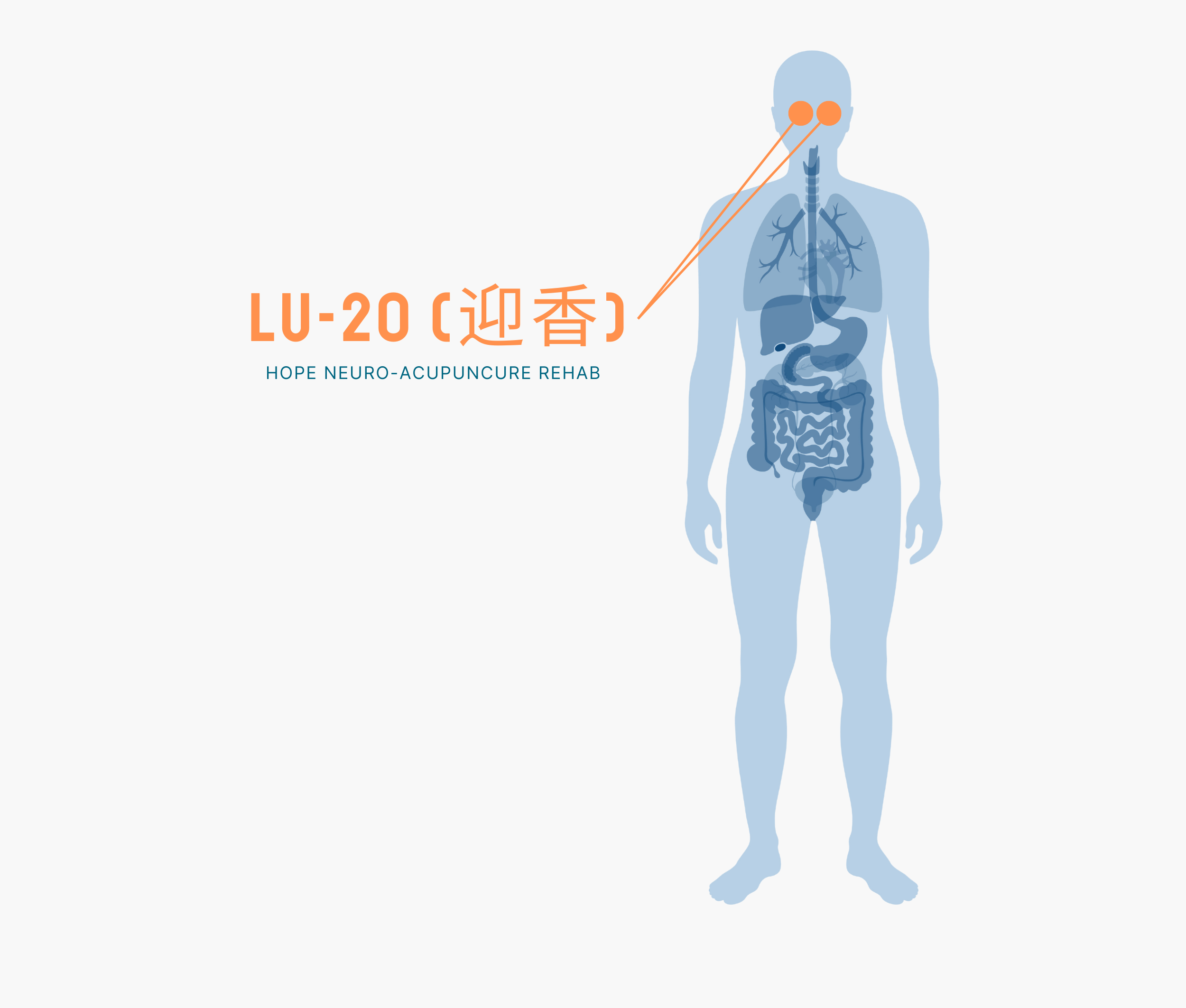
4. Yingxiang (LI20) — Relief for Pain Around the Nose and Mouth
Location: Located in the area where the wrinkle beside the nostril deepens, slightly below the outer corners of the nose. It’s at the point where a vertical line drawn upward from the corner of the mouth meets this area.
Acupressure Technique: Locate Yingxiang simultaneously with both index fingers, then apply pressure at a slight angle toward the nostrils and press for 10 seconds. Perform circular massage motions 10-15 times, then slowly release. Use light pressure since this area is sensitive.
Effects: As an acupoint on the Large Intestine meridian, it’s effective for relieving tooth pain in the upper incisors and around the nose. It’s particularly beneficial for toothaches caused by maxillary swelling or those associated with sinusitis.
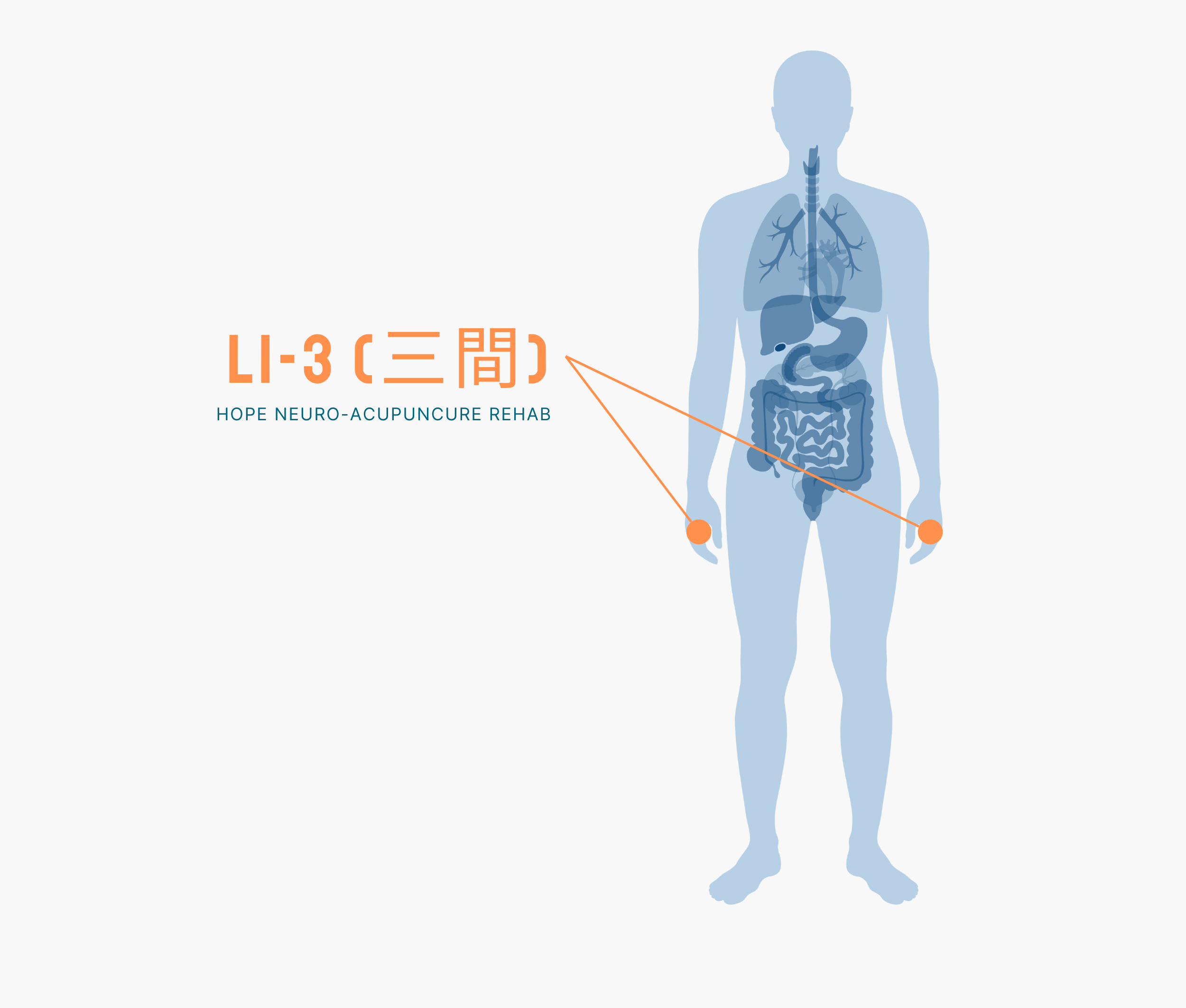
5. Sanjian (LI3) — The Emergency Acupoint on Your Hand
Location: Located between the index and middle finger metacarpals on the back of the hand, in the area where hand creases appear. It’s directly below where your index finger touches when you make a fist.
Acupressure Technique: Locate the Sanjian point with the thumb of the opposite hand and press vertically for 10-15 seconds. Repeat this 5-10 times, then massage by moving your finger up and down. Perform this on both hands.
Effects: As an acupoint on the Large Intestine meridian, when used together with Hegu (LI4), the pain-relieving effect is doubled. It’s very useful in emergencies since it can be easily stimulated anytime and anywhere.
5-Minute Self-Acupressure Routine
When toothache strikes suddenly, follow this routine in order:
Hegu Acupressure (1 minute) — 30 seconds on each hand, medium-to-firm pressure
Jiache Acupressure (1 minute) — 30 seconds on each side of the jaw, being mindful of the jaw joint
Xiaguan Acupressure (1 minute) — 30 seconds on each side, maintaining downward pressure
Yingxiang Acupressure (1 minute) — 30 seconds simultaneously on both sides, light pressure
Sanjian Acupressure (1 minute) — 30 seconds on each hand, final step
Tip: After performing the routine once, wait about 15 minutes and repeat if necessary. You can repeat up to 3-4 times per day.
⚠️ Medical Disclaimer: This article is written for informational health purposes and does not replace professional medical diagnosis or treatment. If symptoms persist or are severe, please consult a healthcare professional.
🤰 Pregnancy Warning: Among the above acupoints, Hegu (LI4) and Xiaguan (ST7) can trigger uterine contractions in pregnant women. If you are pregnant or possibly pregnant, you must consult a professional before using these techniques. For pregnant women, it’s recommended to use only Yingxiang (LI20) and Jiache (ST6) acupressure.
One-line summary: Tinnitus (ringing in the ears) can be alleviated by stimulating 5 acupoints—Tinghui, Yifeng, Fengchi, Baihui, and Kunlun—through regular acupressure, which promotes qi and blood circulation and stabilizes the nerves.
Introduction: Understanding Tinnitus Symptoms and the Principles of Acupoint Treatment
Are you bothered by unwanted sounds constantly ringing in your ears, disrupting your daily life? That’s tinnitus. It’s characterized by hearing ringing, buzzing, or hissing sounds in your ears even when there’s no external sound, and it can be accompanied by stress and anxiety.
While modern medicine often finds it difficult to identify a clear cause of tinnitus, Traditional Chinese Medicine takes a different approach. It views tinnitus as resulting from insufficient qi and blood circulation, nervous sensitivity, and nerve fatigue caused by sleep deprivation, and believes it can be improved through stimulation of specific acupoints. In particular, stimulating the meridians (acupuncture channels) around the ear and those leading to the brain can calm the auditory nerve and improve blood circulation.
The 5 Best Acupoints for Tinnitus Relief
1. Tinghui (聽宮) – SI19 / Tinghui
Location: In front of the ear, at the depression that appears when the mouth is closed (below the front of the earlobe).
How to find it: Place your index fingers in front of your mouth, and when you open your mouth, the depressed point is Tinghui. It returns to prominence when you close your mouth.
Acupressure technique: Using the tip of your thumb, apply gentle circular pressure for 30 seconds. Perform on both sides, 2-3 times per day.
Benefits: Tinghui is a specific acupoint for ear disorders. It’s an essential point that directly alleviates tinnitus, hearing loss, and ear fullness, and is emphasized in classical Chinese acupoint texts.
2. Yifeng (翳風) – TE17 / Yifeng
Location: Below the ear, at the depression behind the earlobe (in the space between the mastoid bone and the jaw).
How to find it: Press the earlobe with your finger and fold it backward; a deep groove will appear behind the ear. That’s where Yifeng is located.
Acupressure technique: Apply gentle pressure with your thumb, using circular motions for 30 seconds, keeping the pressure within a range that doesn’t cause pain.
Benefits: Yifeng is an essential point on the Triple Burner meridian (the channel that goes to the ear and face), relieving ear fatigue and stabilizing the auditory nerve. It’s effective for tinnitus, ear pain, and facial nerve paralysis.
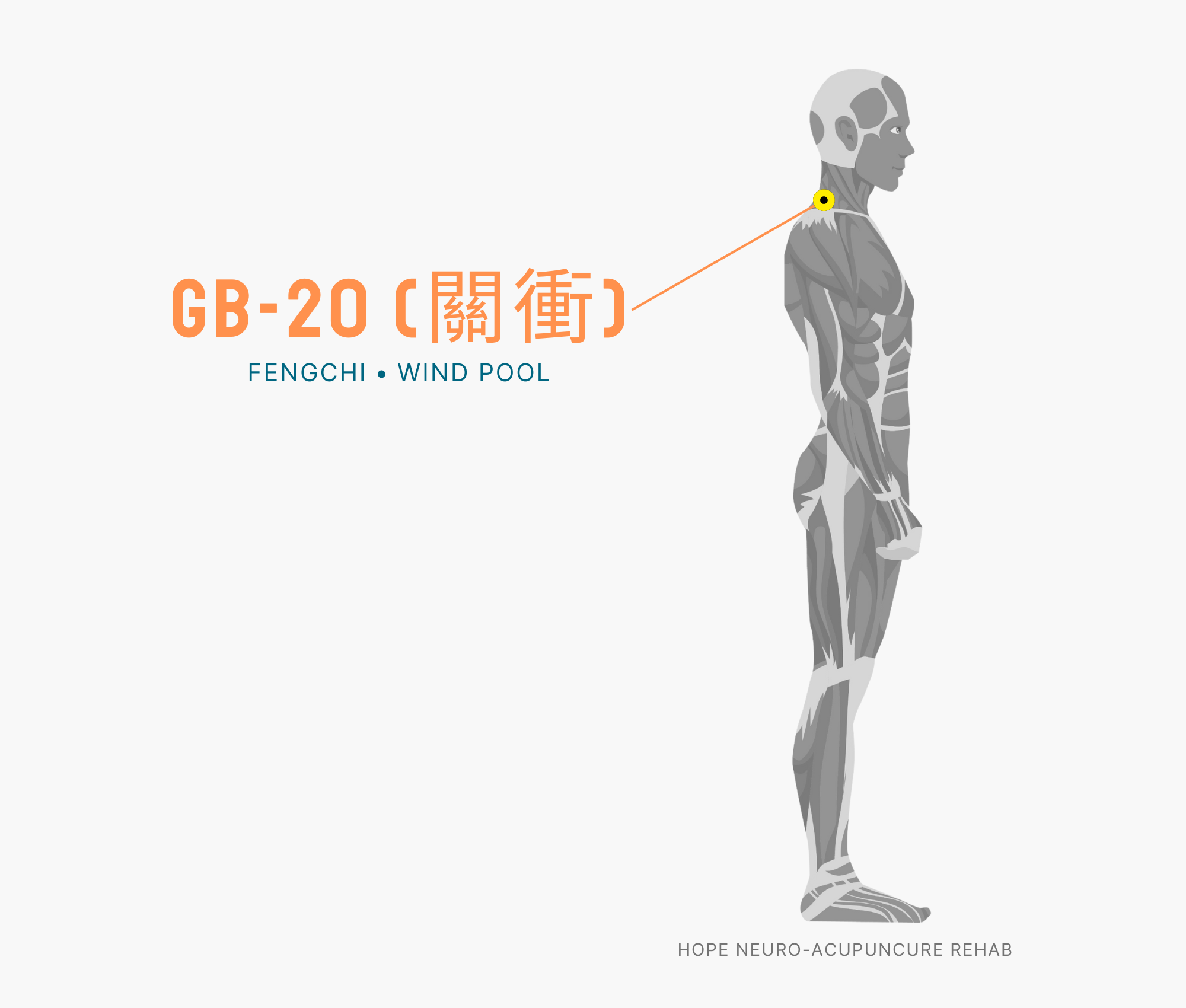
3. Fengchi (風池) – GB20 / Fengchi
Location: At the back of the neck, below the base of the skull (at the depression between the neck muscles on both sides).
How to find it: Tilt your head back to find the groove between two muscles; specifically, it’s at the movable bone beneath the skull.
Acupressure technique: Using both thumbs, apply pressure toward the inside of the neck at a slight upward angle. Apply pressure for 30 seconds at each point, 3 times per day.
Benefits: It promotes blood circulation to the brain and relieves nerve tension. It can simultaneously alleviate headaches, dizziness, and neck stiffness that often accompany tinnitus.
4. Baihui (百會) – GV20 / Baihui
Location: At the top of the head, at the point where the line connecting the highest points of both ears intersects with the midline.
How to find it: Imagine a line connecting the highest points of both ears; where this line intersects the midline of the head is Baihui. When you press it with your finger, it feels slightly depressed.
Acupressure technique: Using your thumb or middle finger, apply gentle pressure vertically, massaging in small circles for 20-30 seconds. Avoid excessive stimulation.
Benefits: It calms brain nerves and clarifies the mind. It improves tinnitus, insomnia, and anxiety together, and is excellent for recovering from mental fatigue.
5. Kunlun (崑崙) – BL60 / Kunlun
Location: On the outer ankle, at the depression behind the outer ankle bone.
How to find it: Kunlun is located in the groove between the outer ankle bone (lateral malleolus) and the Achilles tendon.
Acupressure technique: Using your thumb, repeatedly press vertically toward the ankle and release for 1 minute. Apply enough stimulation to feel mild tenderness. Perform 1-2 times per day.
Benefits: It relieves nerve tension and improves qi and blood circulation throughout the body. In particular, it relieves nerve fatigue in the ear and prevents tinnitus from worsening due to sleep deprivation.
5-Minute Self-Acupressure Routine: Optimal Sequence and Time Distribution
Perform the following sequence every morning after waking up or every evening before sleep:
Tinghui (1 minute) — 30 seconds on each side, gentle circular pressure
Yifeng (1 minute) — 30 seconds on each side, light to moderate pressure
Fengchi (1 minute) — 30 seconds on each side, pressing toward the brain
Baihui (1 minute) — 30 seconds centered on the midline
Kunlun (1 minute) — 30 seconds on each side, stimulate to mild tenderness
Tip: Perform this routine consistently 5-6 days per week, and do it twice daily (morning and evening) on days when symptoms are severe. You should continue for at least 3 months to notice the effects.
⚠️ Medical Disclaimer: This article is provided for informational purposes only and does not replace professional medical diagnosis or treatment. If tinnitus develops suddenly, is severe, is accompanied by hearing loss, or persists, please consult a specialist at an ENT clinic or Traditional Chinese Medicine clinic. A proper diagnosis is especially important to rule out the possibility of tinnitus caused by a brain tumor or vascular disease.
🤰 Pregnancy Warning: Among the acupoints above, Kunlun (BL60) and Fengchi (GB20) may trigger uterine contractions in pregnant women. If you are pregnant or may be pregnant, avoid these two acupoints and perform only Tinghui, Yifeng, and Baihui, or consult a specialist before proceeding.