Author: Acupoint Guide Editorial Team

  • Cómo Aliviar el Dolor de Garganta Naturalmente con Estos 5 Puntos de Presión

    Cómo Aliviar el Dolor de Garganta Naturalmente con Estos 5 Puntos de Presión

    1行要約:咽喉痛は、合谷(LI4)、尺澤(LU5)、風池(GB20)、崑崙(BL60)、天府(LU3)の5つのツボへの指圧で緩和できます。1日2~3回、各1~2分の指圧が効果的です。

    咽喉痛、なぜツボ指圧が役に立つのか?

    喉の痛みの症状は、生活の中で本当に一般的です。風邪、喉の乾燥、過度な音声使用などによる咽喉痛は、薬を飲む前に簡単な刺激で緩和することができます。漢方医学では、咽喉痛を「肺機能の低下」と「気血循環の不足」と考えています。特定のツボを刺激すると、肺機能を強化し、喉周辺の気血循環を促進して、炎症を迅速に緩和することができます。さらに、指さえあれば、いつどこでもできるため、最高のコストパフォーマンスのセルフケア方法です。

    咽喉痛緩和のツボ5つ

    1. 合谷(LI4 – Hegu) — 免疫力と炎症緩和の鍵

    LI4 acupuncture point

    位置:親指と人差し指が出会う地点、筋肉が最も盛り上がっている部分

    指圧法:反対側の親指で痛いが心地よい程度に垂直に押して5秒間保持した後、ゆっくり離します。左右の手を各1~2分ずつ繰り返します。

    効果:大腸経の代表的なツボで、全身の免疫力を高め、炎症を迅速に緩和します。咽喉痛だけでなく、頭痛、一般的な痛み、ストレス解消にも優れています。漢方医学では慢性疾患にも処方される「要穴」です。

    2. 尺澤(LU5 – Chize) — 肺機能強化の専門家

    LU5 acupuncture point

    位置:肘の内側、肘を曲げたときの皺の中央の外側(親指側)

    指圧法:反対側の親指で肘の内側の皺を優しく押します。咳が出たり咽喉痛が激しい場合は、少し強く刺激してもかまいません。

    効果:肺経の重要なツボで、肺機能を直接強化し、咳、咽喉炎、咽喉痛を迅速に緩和します。尺澤を継続的に刺激すると、呼吸器の免疫力も高まり、風邪予防にも役立ちます。

    3. 風池(GB20 – Fengchi) — 首コリと炎症の神経中枢

    GB20 acupuncture point

    位置:首の後ろ、後頭部と首が出会う凹んだ部分(両側に1つずつ)

    指圧法:両手の中指と薬指で首の後ろ両側を同時に押して、円を描くようにやさしくマッサージします。約1分間繰り返します。

    効果:胆経の代表的なツボで、首周辺の筋肉の緊張をほぐし、血液循環を改善します。咽喉痛による首コリ、頭痛、喉頭炎まで効果的に緩和する「多機能」ツボです。

    4. 崑崙(BL60 – Kunlun) — 全身免疫力の補助センター

    BL60 acupuncture point

    位置:足首の外側、足首の骨と踵の間の凹んだ部分

    指圧法:親指で足首の外側を垂直に押して5秒間保持し、ゆっくり離します。左右の足を各1~2分ずつ行います。

    効果:膀胱経の重要なツボで、全身の免疫力を高め、痛みの緩和に優れています。特に咽喉痛と一緒に全身疲労がある場合に効果的で、定期的な刺激は風邪の再発防止にも役立ちます。

    5. 天府(LU3 – Tianfu) — 気道炎症鎮静の最強者

    LU3 acupuncture point

    位置:腕の内側、脇の下から肘の方へ下りた腕の内側中央の皺(やや上部)

    指圧法:反対側の親指で腕の内側を優しく押して5秒間保持します。咳や痰がある場合は、少し強く刺激してもいいです。

    効果:肺経上のツボで、直接的に咽喉の炎症を鎮静させ、咳と咽喉痛を緩和します。尺澤と一緒に刺激するとシナジー効果が優れており、特に喉風邪の初期症状に最も速い効果が期待できます。

    5分のセルフ指圧ルーティン

    順序と時間配分(合計5分):

    1. 合谷(LI4) — 1分(両側各30秒)
    2. 尺澤(LU5) — 1分(両側各30秒)
    3. 天府(LU3) — 1分(両側各30秒)
    4. 風池(GB20) — 1分(両側各30秒)
    5. 崑崙(BL60) — 1分(両側各30秒)

    実施時間:朝の目覚め後、夜寝る前は1日2回推奨。急性咽喉痛の場合は昼食時に追加実施可能

    ヒント:温かい水を飲んだ後に実施すると、血液循環が良くなり、効果が高まります。指圧後は最低30分間、冷たい風に晒されないように注意してください。

    ⚠️医療免責事項:この記事は健康情報提供目的で作成されており、専門的な医療診断や治療に代わるものではありません。咽喉痛が3週間以上続いたり、高熱、激しい痛み、嚥下困難などの深刻な症状を伴う場合は、必ず医療専門家(耳鼻咽喉科、漢方医)に相談してください。免疫疾患、癌治療中の患者は指圧前に専門家との相談が必須です。
    🤰妊婦注意:上記のツボの一部(特に合谷LI4、崑崙BL60)は子宮収縮を引き起こす可能性があります。妊娠中またはその可能性がある場合は、必ず漢方医または産婦人科専門家に相談後に実施してください。安全なツボのみを選択して指圧することが重要です。
  • 5 Puntos de Acupresión para la Sinusitis — Guía Rápida de Automasa

    5 Puntos de Acupresión para la Sinusitis — Guía Rápida de Automasa

    One-line summary: Nasal congestion and facial pain from sinusitis can be relieved within 3-7 days by applying acupressure to Yingxiang (LI20), Hegu (LI4), Yintang (GV29), Taiyang (EX-HN5), and Fengchi (GB20) 2-3 times daily.

    Why Sinusitis Worsens and the Benefits of Acupoint Pressure Therapy

    Sinusitis is not a simple cold. As inflammation in the paranasal sinuses becomes chronic, pus accumulates, causing nasal congestion, yellow nasal discharge, facial pain, headaches, and other symptoms that interfere with daily life. It is a common condition affecting more than 50% of modern people due to stress, environmental pollution, allergies, and other factors. In traditional Chinese medicine, sinusitis is viewed as a decline in the body’s defensive functions. Stimulating acupoints around the nose and throughout the body promotes the circulation of qi and blood while enhancing immunity. In particular, acupressure, which has fewer side effects than needling, can be performed at home anytime and can significantly speed up recovery when combined with medication.

    Five Effective Acupoints for Sinusitis Relief

    1. Yingxiang (Welcoming Fragrance) — LI20 (Large Intestine Meridian 20)

    LI20 acupuncture point

    Location: It is located below the point where the nostrils are most prominent and above the nasolabial fold (the crease between the mouth corner and the nose). When you touch the side of your nose with your finger, you’ll feel a slight depression.

    Acupressure Method: Using the index fingers of both hands, simultaneously press and release the Yingxiang points on both sides vertically. Apply pressure with enough intensity to feel refreshing without pain, pressing 30 times, then repeating another 30 times, which takes about 1 minute. For better results, repeat 3 times daily.

    Effects: This point directly relieves nasal congestion and nasal pain—the most direct symptoms of sinusitis. It promotes the drainage of blocked secretions from the paranasal sinuses and improves blood circulation to the nasal mucosa, reducing inflammation. This acupoint shows the fastest results when there is abundant yellow nasal discharge or severe nasal congestion.

    2. Hegu (Union Valley) — LI4 (Large Intestine Meridian 4)

    LI4 acupuncture point

    Location: It is located in the crease where the thumb and index finger meet, in the depression on the back of the hand. It is positioned slightly toward the thumb, just below the index finger bone. It is at the midpoint of the ‘V’ shape formed when the hand is open and spread.

    Acupressure Method: Slowly press the Hegu point using the thumbprint area of the opposite hand. Press for about 3-5 seconds, release for 3 seconds, and repeat. Perform 20-30 presses on each hand. Alternating pressure on both hands takes about 1 minute.

    Effects: It activates the body’s immune function and significantly enhances resistance. It is very effective at relieving headaches and facial pain caused by sinusitis and is widely used for cold prevention and recovery promotion. It is a “universal acupoint” that helps eliminate inflammation in facial areas, including the nasal mucosa.

    3. Yintang (Seal Hall) — GV29/DU23 (Governing Vessel 29/Conception Vessel 23)

    Location: It is located at the center between the eyebrows, in the glabella region. The exact location is the depression felt when the nose is wrinkled upward. Pressing it with a finger will cause a mild soreness.

    Acupressure Method: Using the index or middle finger of both hands, slowly press vertically and release repeatedly. The appropriate intensity is mild soreness, and perform 20-30 presses each time. Avoid excessively strong stimulation.

    Effects: It is particularly effective at relieving pain between the eyebrows and headaches caused by sinusitis. It improves blood circulation to the brain and relieves nervous tension. It is excellent not only for nasal conditions but also for improving migraines, eye fatigue, insomnia from stress, and reduced concentration.

    4. Taiyang (Great Sun) — EX-HN5 (Extra Point on Head and Neck)

    Location: It is located in the depression between the outer corner of the eye and the ear, at the temple. It can be easily found with the fingers of both hands, and pressing it will cause slight soreness.

    Acupressure Method: Gently massage the Taiyang point using the middle fingers of both hands in circular motions. Slowly repeat 10 times clockwise, then 10 times counterclockwise. Gentle and sustained circular massage is more effective than strong stimulation. Each session takes about 1 minute.

    Effects: It effectively relieves facial swelling and temple pain caused by sinusitis. It promotes qi and blood circulation in the head and face, reducing chronic inflammation around the nose and eyes. It is particularly useful for sinusitis patients who also experience migraines or stress-related headaches.

    5. Fengchi (Wind Pool) — GB20 (Gallbladder Meridian 20)

    GB20 acupuncture point

    Location: It is located at the base of the skull, where the hairline meets the neck. It is positioned on both sides of the center of the back of the neck, below and behind both ears, with a clear depression.

    Acupressure Method: Slowly press the Fengchi point with the thumbs of both hands, directing the pressure inward toward the body. Hold the pressure for about 3-5 seconds, release, and repeat. Perform 20-30 presses per session. Press precisely at the boundary between the neck and head, but be careful not to press too hard.

    Effects: It eliminates pathogenic wind (the cause of infectious diseases) and strengthens the body’s immune function. It is excellent at preventing the worsening of sinusitis from colds or allergic rhinitis and relieves tension in the neck and shoulders, improving overall blood circulation. It relieves headaches, neck stiffness, and shoulder tension simultaneously.

    5-Minute Self-Acupressure Routine — Recommended 3 Times Daily (Morning, Noon, Evening)

    Follow the order below for optimal results. Total time required is 5 minutes.

    1. Yingxiang (LI20) — 1 minute
      Press both Yingxiang points simultaneously with both index fingers 30 times. (30 seconds) → Repeat 30 more times. (30 seconds) → Gently massage in circular motions with both index fingers. (remaining time)
    2. Hegu (LI4) — 1 minute
      Press the left Hegu point with your right thumb 30 times. (30 seconds) → Perform the same on the opposite side (right hand). (30 seconds)
    3. Yintang (GV29) — 1 minute
      Slowly press and release the Yintang point with both index fingers, repeating 20 times. (30 seconds) → Repeat 10 more times. (30 seconds)
    4. Taiyang (EX-HN5) — 1 minute
      Massage the Taiyang point with both middle fingers in clockwise circular motions for 30 seconds. → Then massage in counterclockwise motions for 30 seconds.
    5. Fengchi (GB20) — 1 minute
      Press and release each Fengchi point with both thumbs, 30 times each. (Total 60 presses, takes about 1 minute)

    💡 Acupressure Tips: Drinking warm water or warm tea after acupressure enhances its effects. Avoid air conditioning drafts or sudden temperature changes immediately after acupressure. Performing acupressure 1 hour before bedtime helps ease symptoms during sleep. Reduce the intensity of pressure when under stress or overworked.

    ⚠️ Medical Disclaimer: This article is provided for informational purposes and does not replace professional medical diagnosis or treatment. If sinusitis symptoms persist for more than 2 weeks or are severe, if accompanied by fever, or if there is eye pain or vision changes, you must consult a medical professional (an ENT specialist or traditional Chinese medicine practitioner). Acupoint pressure is only a complementary therapy to medical treatment.
    🤰 Pregnancy Warning: The Hegu (LI4) acupoint among those listed above may trigger uterine contractions in pregnant women. If you are pregnant or might be pregnant, consult a professional before applying acupressure to Hegu. Yingxiang, Yintang, Taiyang, and Fengchi are relatively safe, but if you have any concerns, please consult a traditional Chinese medicine practitioner or physician beforehand.
  • Cómo Aliviar la Apnea del Sueño Naturalmente con Estos 5 Puntos de Presión

    Cómo Aliviar la Apnea del Sueño Naturalmente con Estos 5 Puntos de Presión

    一行要約:睡眠時無呼吸は夜間の呼吸停止により睡眠の質低下と日中の眠気をもたらす疾患であり、経穴指圧により呼吸機能の改善と睡眠の質を高めることができます。

    はじめに

    夜中に何度も呼吸が止まったり再び始まったりする症状でお悩みですか?睡眠時無呼吸は単なるいびきではありません。睡眠中に気道が部分的または完全に塞がり、呼吸が反復的に中断される疾患で、脳の酸素不足、睡眠の分断、慢性疲労につながることがあります。持続的陽圧呼吸療法や手術以外に、中医学の経穴指圧は呼吸機能の改善、首の筋肉のリラックス、心身の安定を通じて症状緩和に役立つことができます。この記事では、睡眠時無呼吸緩和に効果的な5つの経穴の正確な位置とセルフ指圧法を紹介します。

    5つの経穴それぞれ

    1️⃣安眠(安眠、EX-HN22)— 睡眠の特効穴

    位置:耳の後ろ、乳様突起(耳の後ろの骨)の下の凹んだ部分から約1.5cm下。両耳の後ろ対称に2つの経穴があります。

    指圧法:親指または中指で3~5秒間ゆっくり押して離すを繰り返します。1日2回、就寝の30分前が効果的です。

    効果:睡眠誘導神経伝達物質の分泌を促進し、脳の過度な活動を落ち着かせて深い睡眠を誘導します。睡眠時無呼吸による自覚症状と日中の眠気改善に優れています。

    2️⃣風池(風池、GB20)— 首の緊張緩和の妙薬

    GB20 acupuncture point

    位置:首の後ろ、首と肩が出会う部位。脊椎から約2cm外側、耳下の凹んだ部分の下あたりに位置します。

    指圧法:両手の親指で左右同時に押しながら、円を描くようにマッサージします。1分程度持続し、1日2回行います。

    効果:首周辺の筋肉と咽喉部の緊張を緩和し、気道狭窄を軽減します。頸椎周辺の血液循環を改善して呼吸機能を強化し、いびきおよび無呼吸の頻度を減少させます。

    3️⃣神門(神門、HT7)— 心身安定の鍵

    HT7 acupuncture point

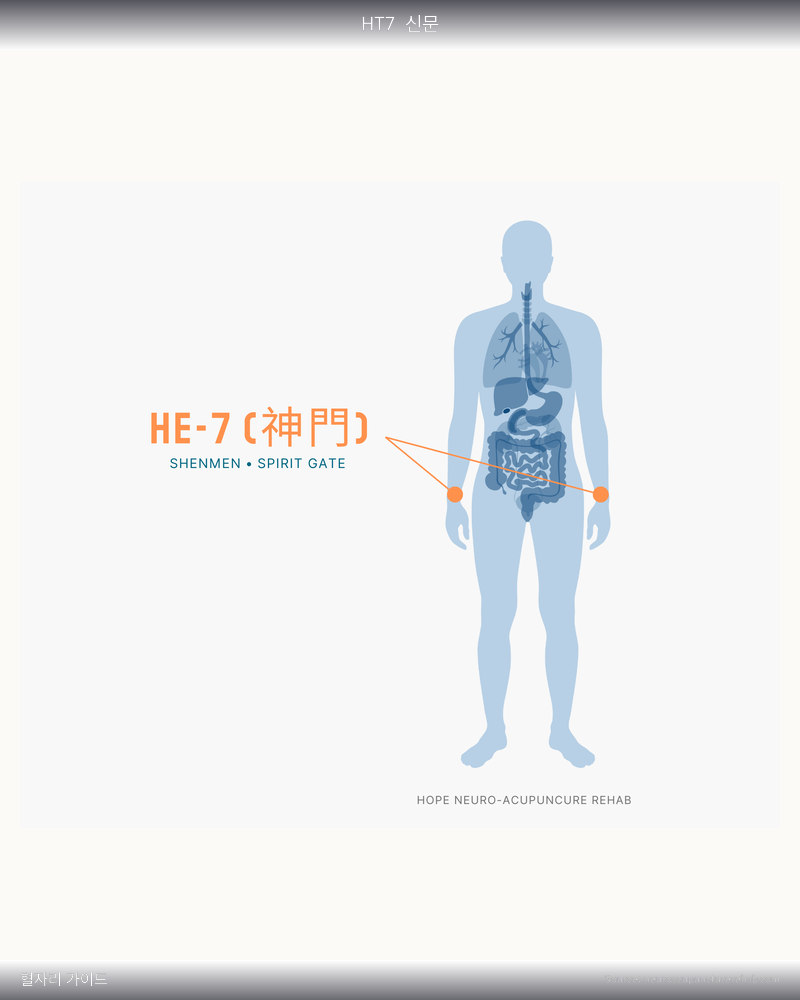
    位置:手首の内側、手首のしわ線の上で小指側に約0.5cm離れた場所。手首の内側の屈曲部の終端です。

    指圧法:反対の手の親指で3~5秒間ゆっくり押します。両手とも行い、1日1~2回実施します。

    効果:心臓と神経系を落ち着かせ、睡眠時無呼吸による不安感と夜間覚醒を減らします。睡眠の質を改善し、レム睡眠(深い睡眠)の割合を増加させます。

    4️⃣天突(天突、CV22)— 呼吸器の直接強化

    位置:首の前、鎖骨上の凹み(首の中央の上部)。両側の鎖骨が出会う凹んだ部分から約0.5cm上です。

    指圧法:薬指または中指で垂直にゆっくり1~2秒押して離すを繰り返します。強く押すと不快なので、優しく行い、1日1回程度が推奨されます。

    効果:呼吸器と気管支を直接刺激して気道抵抗を減少させます。睡眠時無呼吸の根本原因である上気道狭窄を軽減し、呼吸の深さと安定性を向上させます。

    5️⃣足三里(足三里、ST36)— 全身免疫力向上

    ST36 acupuncture point

    位置:膝の下、ふくらはぎの外側。膝の下の凹んだ部分から指4本分の幅(約10cm)下。脛骨の外側中央です。

    指圧法:親指で3~5秒間押しながら、円を描くようにマッサージします。両脚とも行い、1日1回5分程度持続します。

    効果:免疫機能を活性化させ、睡眠時無呼吸による全身のストレスを緩和します。消化機能の改善、気力の回復、夜間覚醒の減少を助け、全体的な睡眠の質を向上させます。

    5分間のセルフ指圧ルーチン

    推奨時間:就寝の30分前または朝目覚めた時

    進行順序:

    1. 神門(HT7)— 1分:両手各30秒ずつ。まず心身を落ち着かせます。
    2. 安眠(EX-HN22)— 1分:両側各30秒ずつ。睡眠神経を活性化させます。
    3. 風池(GB20)— 1.5分:両側同時に1分、左右各追加30秒。首の緊張を緩和します。
    4. 天突(CV22)— 0.5分:優しく30秒指圧。呼吸機能を直接強化します。
    5. 足三里(ST36)— 1分:両脚各30秒ずつ。全身の免疫力で仕上げ刺激します。

    ヒント:指圧中に鈍い痛みを感じたら正常であり、これは経穴が刺激されている信号です。毎日1~2回繰り返して続けると、2~3週間以内に症状改善を経験できます。

    ⚠️医療免責事項:この記事は健康情報提供の目的で作成されており、専門的な医療診断や治療に代わるものではありません。睡眠時無呼吸は深刻な合併症(高血圧、脳心血管疾患など)をもたらす可能性があるため、症状が続く場合や重い場合は、必ず睡眠医学専門医または耳鼻咽喉科医療専門家に相談してください。
  • Alivio del Envejecimiento de la Piel: 5 Puntos de Presión que Realmente Funcionan

    Alivio del Envejecimiento de la Piel: 5 Puntos de Presión que Realmente Funcionan

    One-Sentence Summary: If you’re concerned about declining skin elasticity and increased wrinkles, try stimulating these 5 acupoints daily to improve blood circulation: LI4, SP6, ST36, LR3, and LI20.

    Introduction

    Don’t you sometimes sigh while looking at your face in the mirror, thinking “It wasn’t like this yesterday”? Skin aging is a natural process everyone wants to avoid, but it progresses faster than expected due to hormonal changes, stress, sleep deprivation, and environmental pollution. Wrinkles, sagging skin, and dull complexion can shake your confidence beyond being merely cosmetic concerns.

    In traditional Chinese medicine, the root causes of skin aging are seen as “Qi and blood deficiency” and “reduced blood circulation.” When blood flow to the face decreases, skin cells don’t receive adequate oxygen and nutrients, causing loss of elasticity, and impaired waste elimination accelerates aging. Fortunately, by consistently stimulating specific acupoints, you can dilate capillaries, improve facial blood flow, enhance your body’s natural healing capacity, and promote skin regeneration. You can see significant results from just a 5-minute self-massage routine, and the best part is you can do it anytime, anywhere, without any extra cost or special tools.

    5 Acupoints Effective for Skin Aging

    1. LI4 — The Starting Point for Immunity Enhancement and Skin Regeneration

    LI4 acupuncture point

    Location: The center of the webbing between your thumb and index finger (thumb-index webspace) where the bones meet
    WHO Code: LI4
    Technique: Use the thumb of the opposite hand to apply pressure the size of a coin in circular motions for 1 minute. Start with light pressure and gradually increase the intensity. Work on both hands, and pressing for 5 minutes before bed is also beneficial.
    Effects: Connected to the Large Intestine meridian, LI4 is known as the “universal acupoint” and excels at boosting immunity, reducing inflammation, and improving facial complexion. It accelerates metabolism, speeds up skin cell regeneration, and helps detoxify the body by improving constipation. With regular stimulation, you can achieve even skin tone and restore natural luster.

    2. SP6 — Hormone Balance and Skin Hydration

    SP6 acupuncture point

    Location: On the inner side of the leg, about 3 finger widths (approximately 10cm) above the inner ankle bone (medial malleolus)
    WHO Code: SP6
    Technique: Slowly press with your thumb while breathing deeply to promote blood circulation. Work on each leg for 1-2 minutes once a day. Stimulating this point in the evening also helps induce better sleep.
    Effects: SP6 is where the Liver, Spleen, and Kidney meridians meet, playing a crucial role in hormone regulation. For women, it normalizes estrogen secretion, alleviates dry skin, and increases skin’s moisture retention. Improved blood circulation reduces facial puffiness and restores skin elasticity.

    3. ST36 — Whole-Body Immunity Boost and Skin Vitality

    ST36 acupuncture point

    Location: On the outer side below the knee, about 3 finger widths (approximately 10cm) below the depression below the kneecap
    WHO Code: ST36
    Technique: Slowly press vertically with your thumb until you feel a slight warming sensation. Work on each leg for 1-2 minutes, 1-2 times daily. The effect is even greater when combined with moxibustion (heat therapy).
    Effects: Called the “leg’s tonic herb,” ST36 strengthens Qi and blood throughout the body. It improves digestion and nutrient absorption, and activates immune cells to effectively improve inflammatory skin conditions like acne and dermatitis. It promotes metabolism to help eliminate skin waste and slows the skin aging process with consistent stimulation.

    4. LR3 — Stress Relief and Skin Elasticity Recovery

    Location: On the top of the foot, in the valley between the first and second toe bones, about 2cm above the ankle
    WHO Code: LR3
    Technique: Slowly press with your thumb for about 1 minute. Avoid painful pressure; maintain a “firm yet comfortable” intensity. Work on both feet, and it’s best to stimulate this point daily, especially in the evening on stressful days.
    Effects: LR3 opens the Liver’s Qi and blood flow, making it an excellent point for stress relief. It improves dull and lifeless complexion caused by chronic stress and promotes detoxification by activating liver function. It relieves blood vessel constriction to increase facial blood flow, and with consistent stimulation, restores skin elasticity and radiance.

    5. LI20 — Maximized Skin Benefits Through Direct Facial Stimulation

    LI20 acupuncture point

    Location: Above the nasolabial fold (smile lines) beside the nose, about 1cm below the nostril
    WHO Code: LI20
    Technique: Gently massage in circular motions with your index or middle finger. Since facial blood vessels are delicate, avoid strong pressure and use light touch for about 1 minute. Apply a thin layer of essence after skincare and then stimulate this point to improve product absorption.
    Effects: LI20, the endpoint of the Large Intestine meridian, is the key point for improving facial complexion. It dilates capillaries around the nose and cheeks to directly improve facial blood flow and promotes even skin tone. It’s particularly effective for reducing nasolabial folds and brings vibrant, youthful expression back to facial skin with consistent stimulation.

    5-Minute Self-Massage Routine

    Morning Routine (Before work, about 5 minutes):

    1. LI4 (Both hands) — 1 minute: Extend your hands with the webspace facing upward, slowly massage in circles with the opposite thumb
    2. LI20 (Both sides) — 1 minute: Gently massage beside the nose in circles with your index finger to awaken facial complexion
    3. ST36 (Both legs) — 1.5 minutes: Sit in a chair, extend your legs, and slowly press vertically with your thumb
    4. LR3 (Both feet) — 1.5 minutes: Extend your feet and press firmly with your thumb

    Evening Routine (Before bed, about 5 minutes):

    1. SP6 (Both legs) — 1 minute: Lie in bed, bend your legs comfortably, and slowly press vertically with your thumb
    2. LR3 (Both feet) — 1 minute: Extend your feet and stimulate while stretching toward your legs
    3. LI4 (Both hands) — 1 minute: Bring your hands together at your chest and massage in circles with the opposite thumb
    4. ST36 (Both legs) — 1 minute: Extend your legs while lying down and slowly press to promote better sleep

    Key Tips: Combining deep belly breathing with acupressure increases relaxation response and doubles the effectiveness. Repeating the routine at the same time daily synchronizes with your body’s natural rhythm and hormone cycle for faster results.

    ⚠️ Medical Disclaimer: This article is provided for informational purposes only and does not replace professional medical diagnosis or treatment. If symptoms persist or are severe, consult a healthcare professional.
    🤰 Pregnancy Warning: Among the acupoints mentioned above, LI4, SP6, and LR3 may trigger uterine contractions in pregnant women. If you are pregnant or may be pregnant, consult a healthcare professional before practicing these techniques.
  • Cómo Aliviar la Rigidez de Hombros Naturalmente con Estos 5 Puntos de Presión

    Cómo Aliviar la Rigidez de Hombros Naturalmente con Estos 5 Puntos de Presión

    One-line summary: Shoulder stiffness can be quickly relieved through acupressure on 5 key acupoints: Jianjing (SI12), Quchi (LI11), Hegu (LI4), Fengchi (GB20), and Jianliao (TE14).

    Introduction

    Shoulder stiffness that comes from sitting and working for long periods is truly bothersome and inconvenient. Caused by various factors such as muscle tension, poor posture, and stress, shoulder stiffness greatly reduces your quality of daily life. In traditional medicine, shoulder stiffness is diagnosed as poor blood circulation and qi stagnation. By stimulating specific acupoints, you can relax tense muscles and promote blood circulation. In this article, I’ll explain in detail the 5 most effective acupoints for relieving shoulder stiffness and self-acupressure methods.

    The 5 Acupoints Explained

    1. Jianjing (肩井) — SI12
    Location: The highest point where the shoulder muscle rises (midpoint between the 7th cervical vertebra and the shoulder tip)
    How to find it: When you bend your neck forward, take the protruding bone below your neck as a reference point and move about 2-3cm toward the shoulder.
    Acupressure method: Tap and press with your thumb or rub in circular motions. Repeat pressing for 3-5 seconds and resting for 1 second.
    Benefits: The ‘representative acupoint’ for shoulder stiffness that immediately relaxes tense muscles around the scapula. Particularly effective for stubborn shoulder stiffness.

    2. Quchi (曲池) — LI11
    Location: The outer end of the elbow crease when your elbow is bent
    How to find it: Bend your arm so the inside of your elbow is visible, then locate the outer end of the elbow crease.
    Acupressure method: Press with your thumb, gently pushing your finger toward the elbow as you apply acupressure.
    Benefits: Promotes blood circulation in the upper arm and relieves tension extending to the shoulder. Excellent for shoulder stiffness caused by prolonged keyboard use.

    3. Hegu (合谷) — LI4
    Location: The webbing between the thumb and index finger, moving toward the thumb along the index finger bone
    How to find it: Spread your thumb and index finger apart and find the highest point between the two fingers.
    Acupressure method: Tap and press with the opposite thumb or rub in circular motions. Continue for 30 seconds to 1 minute.
    Benefits: A ‘universal’ acupoint that relieves pain and tension throughout the body. Improves blood circulation in the entire upper body from head to arms.

    4. Fengchi (風池) — GB20
    Location: The back of the neck, about 2-3cm below the hollow area beneath the ear
    How to find it: From the center of the back of your neck (cervical vertebra 1), move about 2-3cm to each side. Pressing with your finger creates a hollow sensation.
    Acupressure method: Press simultaneously with both thumbs, applying acupressure with a slight upward lift toward the head.
    Benefits: An acupoint that connects the neck and shoulder, particularly effective at relieving shoulder stiffness caused by neck tension. Also effective for headache relief.

    5. Jianliao (肩髎) — TE14
    Location: The back of the shoulder, the hollow area above the shoulder blade (scapula)
    How to find it: About 2-3cm back from the shoulder tip. This is the hollow area that appears when you raise your arm.
    Acupressure method: Tap and press with four fingers or apply acupressure by making circular motions with your finger joints.
    Benefits: Acts directly on the deep muscles around the shoulder blade and relieves severe shoulder stiffness. Particularly effective for shoulder tension after exercise.

    5-Minute Self-Acupressure Routine

    5-Minute Acupressure Program (Recommended morning/evening)

    Step 1 (1 minute): Jianjing (SI12) 30 seconds on each side
    → Release the most important acupoint first.

    Step 2 (1 minute): Fengchi (GB20) 30 seconds on each side
    → Simultaneously relieves tension in the neck and shoulders.

    Step 3 (1 minute): Jianliao (TE14) 30 seconds on each side
    → Releases tension in the deep muscle layers.

    Step 4 (1 minute): Quchi (LI11) 30 seconds on each side
    → Improves qi flow connecting the arm and shoulder.

    Step 5 (1 minute): Hegu (LI4) 30 seconds on each side
    → Finally circulates qi and blood throughout the body.

    Acupressure tips: It’s more effective to warm your hands with warm water before starting. Don’t press so hard that it causes pain—aim for an intensity that creates a ‘sore yet pleasant’ sensation.

    ⚠️ Medical Disclaimer: This article is written for informational health purposes and does not replace professional medical diagnosis or treatment. If symptoms persist or are severe, please consult with a healthcare professional.
    🤰 Pregnancy Warning: Of the above acupoints, Hegu (LI4) may trigger uterine contractions in pregnant women. If you are pregnant or may be pregnant, please consult with a professional before proceeding. Jianjing, Quchi, Fengchi, and Jianliao are safe for pregnant women to use.
  • Alivio de la Comezón de la Piel: 5 Puntos de Presión que Realmente Funcionan

    Alivio de la Comezón de la Piel: 5 Puntos de Presión que Realmente Funcionan

    1行要約: 皮膚の痒みは、曲池、血海、三陰交、合谷、風市の5つのツボを毎日5分ずつ指圧すると、血液循環と免疫力が改善され、自然に緩和される可能性があります。

    導入

    突然始まった皮膚の痒みで夜通し眠れなくなったり、日常に集中するのが難しくなった経験はありませんか?皮膚の痒みは単なる症状ではなく、身体が送る信号です。漢方医学では、皮膚の痒みを「湿熱によるもの」または「気血不足」と診断します。ストレス、乾燥した環境、不健康な食習慣により、身体の気血が滞ったり熱が蓄積すると、皮膚の痒みが生じます。特定のツボを継続的に刺激すると、血液循環を促進し、免疫機能を強化して痒みを緩和することができます。この記事では、皮膚の痒み改善に最も効果的な5つのツボとセルフ指圧法を紹介します。

    皮膚の痒みに効果的な5つのツボ

    1. 曲池(LI11) ー 熱を下げ、免疫力を高めるツボ

    LI11 acupuncture point

    位置: 肘を曲げたときの腕の内側のしわの端に位置しています。反対側の手の親指で腕の内側の中央線に沿って下がっていき、肘の内側のしわに接する地点です。

    指圧法: 親指を使用して、ゆっくり3秒間深く押してから、3秒かけてゆっくり離します。これを10回繰り返します。

    効果: 曲池は「大腸経」上のツボとして、身体の熱を下げて炎症を緩和します。特に皮膚の痒み、湿疹、蕁麻疹などの皮膚疾患の改善に優れた効果があり、免疫力強化により風邪予防にも役立ちます。

    2. 血海(BL55) ー 血液循環を促進するツボ

    BL55 acupuncture point

    位置: 脚の小腿後側の中央、膝の下約3~4cm下に位置しています。小腿後側の筋肉(腓腹筋)の正中央からやや内側です。

    指圧法: 親指または指の関節を使用して垂直に押します。痛みを感じるくらいの強度で10秒間押してから離します。両脚各10回ずつ繰り返します。

    効果: 血海は名前からも分かるように「血液」に関連するツボです。血液循環を活発にして皮膚に栄養と酸素を供給し、毒素排出を促進します。皮膚の痒みだけでなく、肌色の改善と疲労回復にも効果的です。

    3. 三陰交(SP6) ー 免疫力強化および肌色改善

    SP6 acupuncture point

    位置: 足首の内側の最も高い骨(内側果)の上約4cm(指4本分)離れた地点です。脛骨の内側の端に沿って上がります。

    指圧法: 親指を使用してゆっくり息をしながら深く押してから離します。両足首各15回ずつ1日2回繰り返します。

    効果: 三陰交は脾経、肝経、腎経三つの経絡が出会う場所で、「三陰」という名前が付けられました。免疫力を強化してホルモンバランスを調節し、肌色と肌質を改善します。全身の気血循環を活発にして皮膚の痒みの根本原因を解決します。

    4. 合谷(LI4) ー 全身機能を調節する万能ツボ

    LI4 acupuncture point

    位置: 親指と人差し指の間の深い部分、指の骨が出会う地点です。反対側の親指でゆっくり押しながら敏感な部位を見つけます。

    指圧法: 反対側の手の親指を使用して垂直に深く押します。若干の痛みを感じることがあり、5秒押して3秒離すを10回繰り返します。

    効果: 合谷は「万能ツボ」と呼ばれるほど全身に影響を与えます。皮膚健康の他にもストレス解消、免疫力強化、新陳代謝促進に効果的です。皮膚の痒みと同時に現れるストレス性症状の緩和に特に役立ちます。

    5. 風市(GB31) ー 皮膚の痒みと湿疹緩和専門ツボ

    GB31 acupuncture point

    位置: 脚の側面、膝の上約10~12cm上(大腿の中央)に位置しています。両腕を自然に下ろしたときに指の先端が触れる地点にあります。

    指圧法: 両手の中指と人差し指を重ねて垂直に押します。強度を徐々に高めながら10秒間押してから離します。両脚各10回ずつ繰り返します。

    効果: 風市は「湿熱による皮膚の痒み」を専門的に対処するツボです。特に湿疹、蕁麻疹、アレルギー性皮膚炎による痒みに迅速な効果を示し、肌状態を改善して再発を防ぎます。

    5分セルフ指圧ルーティン

    推奨時間: 朝と夜、1日2回5分ずつ進めるのが効果的です。

    指圧順序および時間配分:

    • [1分] 両側曲池(LI11) ー 30秒 × 2回
    • [1分] 両側合谷(LI4) ー 30秒 × 2回
    • [1分] 両側三陰交(SP6) ー 30秒 × 2回
    • [1分] 両側血海(BL55) ー 30秒 × 2回
    • [1分] 両側風市(GB31) ー 30秒 × 2回

    注意事項: 指圧後は温かい水を飲み、最低30分間冷たい風に晒されないように注意してください。最初に始める時は弱い圧力で身体の反応を観察してから強度を高めるのが良いです。皮膚に傷がある場合や炎症が激しい場合、指圧前に医療専門家に相談してください。

    ⚠️ 医学免責事項: この記事は健康情報提供目的で作成され、専門的な医療診断や治療に代わるものではありません。皮膚の痒みが2週間以上続いたり悪化する場合、必ず皮膚科医または漢方医に相談してください。特に感染症状(化膿、腫脹、高熱など)が伴う場合は、直ちに医療機関を訪問してください。
    🤰 妊婦への注意: 上記のツボの中で三陰交(SP6)と合谷(LI4)は妊婦に子宮収縮を引き起こす可能性があります。妊娠中または妊娠の可能性がある方は、必ず漢方医に相談した後に実行してください。代わりに曲池(LI11)と血海(BL55)のみを使用するのがより安全です。
  • Alivio de la Nariz Congestionada: 5 Puntos de Presión que Realmente Funcionan

    Alivio de la Nariz Congestionada: 5 Puntos de Presión que Realmente Funcionan

    一行要約:鼻汁は迎香(LI20)・合谷(LI4)・印堂(GV27)・風池(GB20)・通天(BL7)の5箇所を1日3回5分ずつ指圧すると2~3日以内に改善され、風邪の初期とアレルギー性鼻汁の両方に効果的です。

    導入部

    鼻汁は風邪、アレルギー、鼻炎などが原因で、誰もが経験する一般的な症状です。絶えず流れ落ちる鼻汁は日常生活を不便にし、鼻の周りの皮膚を刺激して赤くしてしまい、睡眠を妨げます。薬だけに頼るのではなく、身体の自然治癒力を高める方法を探す人々が増加しています。

    漢医学で言うツボ指圧は、身体のエネルギー(氣)の流れを調節し、免疫力を強化する効果的な自然療法です。特に鼻と顔の周辺、腕、首の後ろに位置する特定のツボを刺激すると、鼻の血液循環を促進し、炎症を緩和し、鼻汁の分泌を減少させることができます。医薬品の副作用の心配なく、指一本で5分で実践できるという利点があります。

    鼻汁緩和に効果的なツボ5箇所

    1. 迎香(LI20、Yingxiang)——鼻汁症状の最高特効穴

    LI20 acupuncture point

    位置:鼻翼の横、八の字のしわと鼻前庭(鼻孔の下)が出会う点

    指圧法:両手の人差し指を鼻の両側に位置させた後、上下に小さな円を描くように3~5秒ずつ20~30回ゆっくり刺激します。1回に1~2分程度進めますが、強く押しすぎると鼻の骨が痛くなる可能性があるため、中程度の圧力を保ってください。

    効果:迎香は鼻の局所感覚を担当する三叉神経を刺激して、鼻汁の生成を直接調節します。風邪初期の鼻汁、アレルギー性鼻炎、蓄膿症による鼻汁のすべてに非常に効果的であり、最も速い効果が期待できるツボです。

    2. 合谷(LI4、Hegu)——免疫力強化の代表的なツボ

    LI4 acupuncture point

    位置:親指と人差し指の間のくぼんだ部分(第1、2中手骨の間)

    指圧法:反対側の親指を合谷に置き、骨の方向に向かって45度の角度で約3~5秒間強く押します。これを繰り返して20~30回刺激し、両手を交互に進めます。少し酸脹感(さんちょうかん)が感じられるのが正常です。

    効果:合谷は大腸経に属するツボで、免疫システム全体を調節します。鼻汁だけでなく、風邪症状全般、頭痛、熱感、鼻づまりを同時に緩和することができ、継続的な刺激は風邪の予防効果も提供します。

    3. 印堂(GV27またはEX-HN3、Yintang)——鼻と頭部症状の核となるツボ

    位置:眉間の中央、眉間と呼ばれる場所

    指圧法:両手の親指を印堂に重ねて置き、上下に小さな範囲で動かしたり、円を描くように指圧します。1回に1~2分、1日3回進めますが、顔の中央なので強く押してはいけません。

    効果:印堂は脳の免疫調節中枢である脳下垂体に近接しており、刺激時に鼻の粘液分泌を迅速に減少させます。鼻汁に伴う額の痛み、目の疲れ、頭重感(頭が重い感じ)も一緒に緩和されます。

    4. 風池(GB20、Fengchi)——首の後ろの風邪特効穴

    GB20 acupuncture point

    位置:首の後ろ、後頭骨の下のくぼんだ2つのポイント(首と頭の境界線)

    指圧法:両手の親指を首の後ろの両側に位置させた後、上向きに5秒ずつ強く押します。20~30回繰り返しますが、1回に1~2分程度進めます。首が硬くならないように、施術中に頭を少し下げるとよいでしょう。

    効果:風池は胆経に属するツボで、外部の病原因(風邪)が体内に侵入することを防ぎます。風邪初期の咽頭痛、鼻汁、鼻づまり、咽頭炎を一緒に改善し、特に風邪の「風(風)」症状を除去するのに最も効果的です。

    5. 通天(BL7、Tongzhu)——鼻の通風を担当するツボ

    BL7 acupuncture point

    位置:鼻背の外側、眉の内側の端から約1cm上方(第1、2脊椎骨の隣)

    指圧法:両手の人差し指を眉の内側の端の上に置いた後、鼻背の方向に45度の角度で3~5秒押してから離します。両側を交互に20~30回繰り返し、1回に1~2分進めます。

    効果:通天は膀胱経に属し、鼻の血液循環を促進して、鼻汁の分泌を調節します。鼻づまりによる不快感、蓄膿症初期の症状、アレルギー性鼻炎を特に効果的に緩和します。

    5分のセルフ指圧ルーチン

    ※ 1日3回(朝、昼、夜)実施すれば最高の効果が得られます。

    順番 ツボ 所要時間
    ステップ1 迎香(LI20) 1分
    ステップ2 合谷(LI4)- 両手 1分
    ステップ3 印堂(GV27) 1分
    ステップ4 風池(GB20) 1分
    ステップ5 通天(BL7) 1分
    総所要時間 5分

    実施のヒント:

    • 楽な姿勢で座って進めますが、急いで進めると効果が落ちるので、ゆっくり呼吸しながら進めてください。
    • 指圧前に指を温めておくとより効果的です。
    • 症状が重い場合は2時間間隔での追加刺激も可能であり、特に寝る前に1回の追加施術をお勧めします。
    • 指圧後20~30分間、冷たい風に露出しないように注意してください。
    ⚠️ 医療免責事項:この記事は健康情報の提供を目的として作成されており、専門的な医学的診断や治療に代わるものではありません。鼻汁が2週間以上続いたり、高熱・黄色い鼻汁・悪臭などの重症が伴ったりする場合は、必ず耳鼻咽喉科や漢方医院などの医療専門家に相談してください。特に鼻や目の周辺に傷がある場合や骨折が疑われる場合は、指圧を避けるべきです。
    🤰 妊婦注意:合谷(LI4)は妊婦に子宮収縮を引き起こす可能性があります。妊娠中または妊娠の可能性がある方は、合谷を除いた迎香(LI20)、印堂(GV27)、風池(GB20)、通天(BL7)の4箇所のみを実行するか、必ず専門家に相談した後に実行してください。
  • Alivio del Dolor Ciático: 5 Puntos de Presión que Realmente Funcionan

    Alivio del Dolor Ciático: 5 Puntos de Presión que Realmente Funcionan

    一行要約: 坐骨神経痛による脚の痛みとしびれ症状を緩和するには、委中、崑崙、風市、承扶、陽陵泉のツボを毎日5~10分指圧することが効果的です。

    はじめに

    腰から始まる痛みが臀部を通って脚の後ろ側に下りてくる坐骨神経痛。長時間座って仕事をしたり、重いものを持ち上げたりするときに突然発生するこの苦しい症状は、日常活動を大きく妨げます。特に夜間にひどくなったり、脚がしびれて眠れない場合も多くあります。

    中医学では、数千年の経験と理論に基づいて、坐骨神経痛の緩和に効果的な複数のツボを指定しました。これらのツボを刺激すると、坐骨神経周辺の筋肉の緊張がほぐれ、血液と気の流れが改善され、痛みが軽減すると言われています。専門家の治療を受けるのが最も良いですが、緊急時や忙しい時は自分でツボを指圧して、速い痛みの緩和が期待できます。

    坐骨神経痛を緩和する5つのツボ

    1. 委中(委中、BL40)— 膝の裏の特効穴

    BL40 acupuncture point

    位置: 膝の裏側中央のしわの中、両脚の筋肉の間のくぼみの部分です。膝を少し曲げた状態で見つけやすいです。

    指圧方法: 親指でゆっくり押して、痛いですが耐えられる程度の圧力を保ちます。1回に5秒間押して5秒休むことを10回繰り返してください。両脚の両方に行います。

    効果: 委中は坐骨神経痛の特効穴として知られています。ここを刺激すると、脚全体の血液循環が改善され、神経の圧迫が緩和されて、即座の痛みの軽減を感じることができます。また、疲労回復と脚の浮腫除去にも効果的です。

    2. 崑崙(崑崙、BL60)— 足首の痛み緩和穴

    BL60 acupuncture point

    位置: 足首の外側、くるぶし(外側くるぶし)とアキレス腱の間のくぼみの部分です。指で押すと、骨の内側の陥没した部位を感じることができます。

    指圧方法: 親指または中指で優しいですが確実に押します。各足首ごとに3~5分程度、ゆっくり円を描くようにマッサージするのが効果的です。

    効果: 崑崙は足首と脚の下部の血液循環を促進するツボです。坐骨神経痛による足と脚のしびれ症状を特に効果的に緩和し、足冷え症の改善にも役立ちます。

    3. 風市(風市、GB31)— 脚の外側の痛み除去穴

    GB31 acupuncture point

    位置: 太もも外側の中点として、両腕を下ろした状態で立っているときに中指が触れる部分です。大腿骨外側面の中央に位置します。

    指圧方法: 両手の親指を重ねて強く押します。10秒押して5秒休むことを繰り返して、片脚あたり合計3~5分行います。初期段階ではかなりの痛みがあるかもしれませんが、これは効果の信号です。

    効果: 風市は脚の外側の痛み、しびれ、筋肉けいれんの緩和に優れています。坐骨神経痛により脚の側面がしびれたり引き出される症状がある場合、特に効果的であり、長時間立っている人の脚の疲労も改善します。

    4. 承扶(承扶、BL36)— 臀部神経痛の特効穴

    BL36 acupuncture point

    位置: 臀部の下側、臀部と脚の境界線の中央部分です。臀部をぬぐうようにして手を下ろしたときに感じるしわの正確な中点です。

    指圧方法: 座った姿勢で親指でゆっくり押します。強い圧力をかけ、痛みが激しくない程度に調整してください。1回に5~10分程度継続的にマッサージすると良いです。

    効果: 承扶は坐骨神経の起始点に最も近いツボとして、臀部の神経圧迫を直接的に緩和します。坐骨神経痛の根本原因である筋肉の硬直をほぐし、神経の刺激を素早く鎮めます。

    5. 陽陵泉(陽陵泉、GB34)— 神経機能回復の補助穴

    GB34 acupuncture point

    位置: ふくらはぎの外側、膝の下約3~4cm地点の腓骨前側のくぼみの部分です。

    指圧方法: 親指で優しく押しながらゆっくり円を描きます。両脚をそれぞれ3~5分ずつ行ってください。最初は弱い圧力で始めて、徐々に強度を高めていくのが良いです。

    効果: 陽陵泉は神経系機能を改善し、筋肉けいれんを緩和する効果があります。脚の筋力低下としびれ症状を改善し、他のツボ治療の効果を増大させる補助的な役割を果たします。

    5分間のセルフ指圧ルーチン

    時間がないときに素早く効果を見るための5分間のルーチンです。

    1. 委中(1分): 両膝の裏を交互に強い圧力で指圧します。速い痛み緩和効果が期待できます。
    2. 承扶(1分): 両方の臀部の下をゆっくりマッサージします。神経刺激点に直接作用します。
    3. 風市(1分): 両脚の外側を集中的に押します。脚の表面の痛みを緩和します。
    4. 崑崙(1分): 両足首を順番にマッサージします。脚の下部の循環を改善します。
    5. 陽陵泉(1分): 両ふくらはぎを優しく指圧します。神経機能を正常化します。

    ヒント: 各ツボを正確に見つけるのが難しい場合、該当部位周辺2~3cm範囲全体を指圧しても効果が見られます。痛みが最も強く感じられる部位を集中的に指圧してください。

    ⚠️ 医療免責事項: この記事は健康情報の提供を目的として作成されており、専門的な医療診断または治療に代わるものではありません。症状が続いている場合または深刻な場合、必ず医療専門家に相談してください。ツボ指圧中に激しい痛み、不快感、または症状の悪化が発生した場合、すぐに中止して専門家の診察を受けてください。
  • Los 5 Mejores Puntos de Acupresión para el Dolor de Costillas (Con Ubicaciones Exactas)

    Los 5 Mejores Puntos de Acupresión para el Dolor de Costillas (Con Ubicaciones Exactas)

    “`html

    Summary: Rib pain can be effectively relieved through daily acupressure on five acupoints: BL17, LV14, LV13, BL18, and GB34, which help alleviate pain and improve blood circulation.

    Introduction

    Rib pain that throbs on the sides and makes breathing difficult—this condition that can hamper daily activities is experienced by many people. Rib pain typically develops from a combination of factors including intercostal nerve irritation, muscle tension, poor postural habits, and stress. Fortunately, Traditional Chinese Medicine has long provided effective acupoints that can relieve this pain. In particular, five acupoints that can be easily stimulated at home promote blood circulation and help relax muscles, providing immediate relief. Self-care that you can do with your own hands without medication—let’s begin.

    Five Effective Acupoints for Rib Pain

    1. BL17 (Diaphragm Shu)

    BL17 acupuncture point

    Location: Below the 7th thoracic vertebra, approximately 1.5-2cm to the sides of the spine

    How to locate: Feel the lower edge of the rib cage below the epigastrium, then find the area next to the spine at that height.

    Acupressure technique: Use both thumbs to simultaneously stimulate both sides of the spine, pressing and releasing for 3-5 seconds repeatedly, or massage in circular motions. Start with gentle pressure and gradually increase the intensity.

    Benefits: BL17 is known as “the connecting point of the thorax” and is a primary acupoint for relieving chest pain, cough, and digestive discomfort. It effectively improves breathing difficulties and chest tightness caused by rib pain.

    2. LV14 (Cycle Gate)

    Location: Below the 6th rib, at the level of the nipple line (directly below the nipple)

    How to locate: When your arm is at your side, find the space between the ribs at the height of your nipple.

    Acupressure technique: Gently massage in circular motions with four fingers, or repeatedly press with your thumb for 3-5 seconds. Avoid excessive pressure and exhale deeply as you proceed.

    Benefits: As an important acupoint on the Liver meridian, it directly alleviates pain in the sides and around the ribs. It also relieves muscle tension caused by stress, providing comprehensive pain improvement.

    3. LV13 (Bamboo Gate)

    Location: At the end of the 11th rib, on the midaxillary line (the vertical line where the arm meets the body when lowered)

    How to locate: When you raise your arm to the side, find the end of the longest rib—this is LV13.

    Acupressure technique: Slowly press with your thumb or middle finger, holding the pressure for 3-5 seconds before releasing. It’s most effective to press while exhaling.

    Benefits: It strengthens spleen function and relieves the uncomfortable sensation and pain below the sides of the rib cage. It brings immediate relief, especially when lower rib pain is severe.

    4. BL18 (Liver Shu)

    BL18 acupuncture point

    Location: Below the 9th thoracic vertebra, approximately 1.5-2cm to the sides of the spine

    How to locate: Follow the lower edge of the rib cage and feel along the side of the spine to find BL18.

    Acupressure technique: Similar to BL17, simultaneously stimulate both sides of the spine with both thumbs, or perform rolling massage with a massage stick.

    Benefits: It strengthens liver function and relieves muscle tension caused by stress. It’s particularly effective for alleviating pain on the lateral side of the body and rib pain.

    5. GB34 (Yang Mound Spring)

    GB34 acupuncture point

    Location: On the outer side below the knee, in the small depression below the head of the fibula (calf bone)

    How to locate: Slightly bend your leg and feel the outer side below your knee—the soft area below the bone is GB34.

    Acupressure technique: Press with your thumb for 3-5 seconds, or apply deep pressure with a round massage stick. Alternate stimulating both legs.

    Benefits: Known as “the meeting point of the Gallbladder,” it regulates qi flow throughout the body. It’s a remote acupoint that comprehensively improves pain around the sides and ribs, as well as fatigue.

    5-Minute Self-Acupressure Routine

    Setup: Perform this in a comfortable seated or lying position. It helps to apply a thin layer of warm oil to your fingers to reduce friction.

    1. BL17 — 1 minute
      Simultaneously stimulate both sides of the spine with both thumbs. Press for 3-5 seconds × 8 repetitions
    2. LV14 — 1 minute
      Gently massage the side of the chest with your thumb. Repeat in circular motions 10 times
    3. LV13 — 1 minute
      Press deeply, holding for 3-5 seconds × 8 repetitions. Exhale slowly as you proceed
    4. BL18 — 1 minute
      Alternate stimulating both sides of the spine with both thumbs. Total of 10 repetitions
    5. GB34 — 1 minute
      Deeply press alternate calves × 8 repetitions each. Finish with gentle circular massage

    Precautions: If you feel pain, reduce the pressure, and don’t hold your breath. Daily acupressure at the same time produces better results.

    🤰 Pregnancy Warning: Among the acupoints above, LV14 and BL18 may trigger uterine contractions in pregnant women. If you are pregnant or might be pregnant, be sure to consult with a healthcare professional before practicing these techniques.
    ⚠️ Medical Disclaimer: This article is written for informational purposes and does not replace professional medical diagnosis or treatment. If symptoms persist or worsen, especially if thoracic disease is a possibility, please consult with a healthcare professional.

    “`

  • Alivio de la Recuperación Posparto: 5 Puntos de Presión Que Realmente Funcionan

    Alivio de la Recuperación Posparto: 5 Puntos de Presión Que Realmente Funcionan

    One-Line Summary: Pressing five key acupoints—Sanyinjiao (SP6), Qihai (CV6), Xuehai (SP10), Zusanli (ST36), and Guanyuan (CV4)—for 5 minutes daily can help speed recovery by promoting postpartum energy restoration, uterine recovery, and improving blood circulation.

    Introduction

    After childbirth, your body and mind experience extreme fatigue. As the uterus shrinks and hormones change rapidly, you may experience full-body exhaustion, lower abdominal discomfort, and decreased blood circulation. Traditional medicine acupoint therapy is an excellent supportive tool for activating your body’s natural healing power. Pressing five key acupoints daily for 5 minutes to support postpartum recovery can help promote uterine contraction, restore vital energy, and improve blood circulation. This guide is written to help new mothers safely begin self-acupressure.

    Five Effective Acupoints for Postpartum Recovery

    1. Sanyinjiao (SP6) — The Golden Acupoint for Postpartum Recovery

    SP6 acupuncture point

    WHO Code: SP6 | Acupoint Name: Sanyinjiao
    Location: Four finger-widths above the inner ankle bone (medial malleolus), on the inside of the calf, behind the tibia
    Application: Using your thumb, press for 3 seconds and release for 3 seconds. Apply gentle to moderate pressure (mildly tender) and repeat 10 times.
    Benefits: Promotes uterine recovery, regulates hormone balance, relieves postpartum cold-damp conditions, and improves blood circulation. Classical Eastern medicine texts recognize this as a key acupoint for postpartum recovery. It is also highly effective for treating irregular menstruation and overcoming fatigue.

    2. Qihai (CV6) — Lower Abdominal Recovery and Uterine Health

    WHO Code: CV6 | Acupoint Name: Qihai
    Location: 1.5 inches (approximately 3.8 cm) below the navel, on the midline of the abdomen
    Application: Stack three fingers and gently massage the point in circular motions. Repeat 10 times in a clockwise direction.
    Benefits: Supports uterine muscle contractions, restores vital energy, alleviates lower abdominal pain, and removes postpartum blood stasis. As an important point on the Conception Vessel meridian, it helps activate metabolism and enhance immune function.

    3. Xuehai (SP10) — Blood Circulation and Skin Recovery

    SP10 acupuncture point

    WHO Code: SP10 | Acupoint Name: Xuehai
    Location: On the medial (inner) aspect of the knee, above the inner knee crease that appears when you bend the knee
    Application: Press firmly with your thumb for 3 seconds and release for 3 seconds. Repeat 15 times, continuing until you feel warmth in the area.
    Benefits: Promotes blood circulation, expels postpartum blood stasis, accelerates skin recovery, and improves anemia. As a major point on the Spleen meridian, it governs overall blood circulation throughout the body and is essential for postpartum physical recovery.

    4. Zusanli (ST36) — Immune Function and Physical Strength Enhancement

    ST36 acupuncture point

    WHO Code: ST36 | Acupoint Name: Zusanli
    Location: 10 cm below the knee, on the outer side of the tibia (shinbone), in the depression formed when your toes are extended
    Application: Press vertically with your thumb for 5 seconds and release for 2 seconds. Repeat 15 times for each leg.
    Benefits: Enhances overall immune function, promotes fatigue recovery, improves digestive function, and restores postpartum physical strength. Known as the “longevity acupoint” in Eastern medicine, it is most effective for replenishing vital qi (protective energy).

    5. Guanyuan (CV4) — Uterine Recovery and Hormone Regulation

    WHO Code: CV4 | Acupoint Name: Guanyuan
    Location: 3 inches (approximately 7.6 cm) below the navel, on the midline of the abdomen
    Application: Stack three fingers and gently massage in circular motions. Slowly repeat 20 times in a clockwise direction.
    Benefits: Promotes uterine recovery, regulates hormone balance, improves postpartum amenorrhea, and activates metabolism. As a gathering point (mu point) of the Conception Vessel, it controls the function of the lower burner and is the central acupoint for postpartum recovery.

    5-Minute Postpartum Recovery Self-Acupressure Routine

    ⏱️ Recommended Timing: 8 AM and 8 PM (twice daily)
    Total Time Required: 5-7 minutes

    1. Qihai + Guanyuan (1 minute)
      In a lying position, gently massage the area below the navel in circular motions. Continue slowly until you feel warmth spreading.
    2. Sanyinjiao (1 minute 30 seconds)
      Start with the left ankle. Place your foot in a comfortable position and apply pressure with your thumb.
    3. Xuehai (1 minute)
      Press firmly on the inner knee. Work on both knees alternately.
    4. Zusanli (1 minute 30 seconds)
      In a position with your legs extended or slightly bent, apply pressure below the knees. Work on both legs.
    5. Closing (1 minute)
      Return to a lying position and gently massage Qihai again in circular motions to conclude.
    ⚠️ Medical Disclaimer: This article is written for informational purposes only and does not replace professional medical diagnosis or treatment. If symptoms persist or are severe, please consult with a healthcare professional. If you experience postpartum bleeding, infection, or severe pain, seek immediate medical attention.
    🤰 Pregnancy Caution: Some of the acupoints introduced in this article—Sanyinjiao (SP6), Qihai (CV6), and Guanyuan (CV4)—may trigger uterine contractions during pregnancy. If you are pregnant or may be pregnant, please consult with a licensed acupuncturist or obstetrician before using these techniques. This guide is designed for postpartum recovery and is not recommended for use during pregnancy.