한 줄 요약: 구내염 증상 완화에 효과적인 합곡, 내관, 삼음교, 태충, 노궁 5개 혈자리의 정확한 위치와 지압법을 배워 셀프 관리하세요.
도입부
입 안이 헐어 밥을 먹을 때마다 따갑고, 양치질할 때마다 통증이 느껴지는 구내염. 작은 상처지만 일상을 불편하게 만듭니다. 구내염은 바이러스 감염, 세균 번식, 영양 부족, 피로와 스트레스로 인한 면역력 저하 등 다양한 원인으로 발생합니다.
한의학에서는 구내염을 ‘입안의 열(胃熱)과 기혈 부족’으로 봅니다. 혈자리 지압은 면역 기능을 높이고, 염증을 가라앉히며, 손상된 점막의 재생력을 촉진하는 데 효과적입니다. 특히 신체의 전체적인 기 흐름을 원활히 하여 자연 치유력을 극대화합니다. 약물 치료보다 부작용이 적으면서도 근본적인 체질 개선에 도움이 됩니다.
혈자리 5곳 각각
1. 합곡 (LI4) — 면역 강화와 염증 완화의 핵심 혈자리
위치: 엄지손가락과 집게손가락 사이 근육이 가장 볼록한 부위. 손등을 위로 향했을 때 엄지손가락 쪽 패임 부분입니다.
지압법: 반대쪽 엄지손가락으로 합곡 위치를 3~5초간 강하게 누르고, 2~3초 쉬는 동작을 10회 반복합니다. 혹은 원형으로 문지르듯 마사지해도 좋습니다.
효과: 대장경의 대표 혈자리로 면역력을 크게 높입니다. 입 안 염증 완화는 물론, 감기 예방, 두통, 스트레스 완화에도 탁월합니다. 구내염 초기부터 중기까지 가장 먼저 자극해야 할 혈자리입니다.
2. 내관 (PC6) — 스트레스와 소화 불균형 개선
위치: 팔 안쪽 중앙, 손목 주름에서 팔꿈치 방향으로 손가락 3개 너비 정도 위. 두 힘줄 사이 움푹한 부분입니다.
지압법: 반대쪽 엄지손가락으로 내관 위치를 약간 아플 정도로 3~5초씩 누르고, 10회 반복합니다. 양팔 모두 자극하는 것이 좋습니다.
효과: 심포경 대표 혈자리로 스트레스로 인한 구내염에 특히 효과적입니다. 소화기 기능을 정상화하고, 입 안 열을 내리며, 불면증과 불안감을 가라앉힙니다. 스트레스성 구내염 환자가 우선적으로 눌러야 할 혈자리입니다.
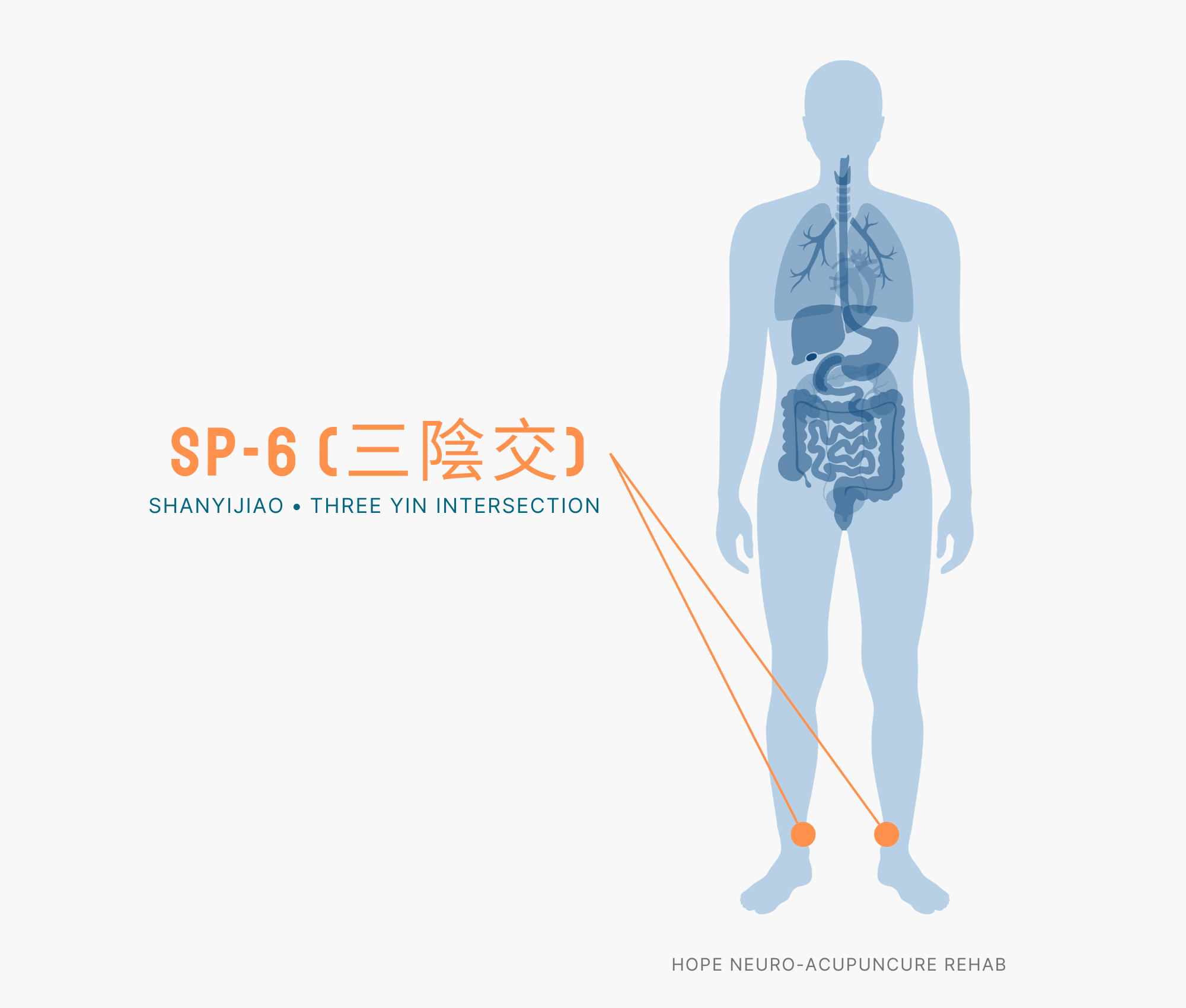
3. 삼음교 (SP6) — 면역력과 혈액순환 개선
위치: 다리 안쪽, 복숭아뼈 위에서 손가락 4개 너비 정도 위. 정강이뼈(경골) 뒤쪽의 움푹한 부분입니다.
지압법: 엄지손가락으로 삼음교를 3~5초간 누르되, 약간 통증을 느낄 정도의 강도로 자극합니다. 양쪽 다리 모두 10회씩 반복합니다.
효과: 비·간·신 세 경락의 교점으로 전신 면역력을 높이는 가장 중요한 혈자리 중 하나입니다. 혈액순환을 촉진하여 구내염으로 손상된 점막의 빠른 재생을 돕습니다. 호르몬 불균형으로 인한 구내염에도 효과적입니다.
4. 태충 (LR3) — 스트레스성 열 제거와 간 기능 개선
위치: 발등 위쪽, 엄지발가락과 둘째발가락 뼈 사이 움푹한 부분. 발가락을 펼쳤을 때 가장 오목한 곳입니다.
지압법: 엄지손가락으로 태충을 3~5초간 천천히 누르고, 동시에 깊게 숨을 쉽니다. 양쪽 발 모두 10회 반복합니다.
효과: 간경의 출발점으로 스트레스와 화(熱)로 인한 구내염에 매우 효과적입니다. 신체의 열을 내려주고 간 기능을 개선하여 독소 제거를 촉진합니다. 입 안이 쓰리거나 입냄새가 나는 경우 반드시 자극해야 합니다.
5. 노궁 (PC8) — 입 안 열 제거와 심신 안정
위치: 손바닥 중앙, 손가락을 쥐었을 때 중지와 약지가 닿는 부분의 손바닥 안쪽입니다.
지압법: 반대쪽 엄지손가락으로 노궁을 천천히 원형으로 문지르듯 마사지합니다. 한 쪽 손당 1~2분씩, 양손 모두 자극합니다.
효과: 심포경 혈자리로 입 안의 과도한 열을 빠르게 식혀줍니다. 심신을 안정시키고 입 안 통증을 즉각적으로 완화합니다. 구내염이 심해 입을 다물기 힘들 때 응급 처치용으로도 좋습니다.
5분 셀프 지압 루틴
시간 배분: 총 5분 내 효율적으로 진행하는 순서입니다.
준비 (30초) — 손과 발을 따뜻한 물에 담가 혈자리 주변 근육을 이완시킵니다.
합곡 지압 (1분) — 양손 합곡을 각 30초씩 강하게 누르고 문지르기.
내관 지압 (1분) — 양팔 내관을 각 30초씩 차근차근 누르기.
삼음교 지압 (1분) — 양쪽 다리 삼음교를 각 30초씩 지압.
태충 + 노궁 지압 (1분 30초) — 양쪽 발 태충 1분, 양손 노궁 30초.
마무리 (30초) — 깊게 숨을 3회 쉬며 몸 전체를 이완시킵니다.
주의: 식후 30분 이후에 시행하는 것이 좋습니다. 아침저녁 하루 2회 반복하면 3~5일 내 구내염 증상이 눈에 띄게 완화됩니다.
🤰 임산부 주의: 위의 혈자리 중 합곡(LI4), 삼음교(SP6), 태충(LR3)은 자궁 수축을 유발할 수 있습니다. 임신 중이거나 임신 가능성이 있는 분은 반드시 한의사와 상담한 후 시행하세요. 임산부는 내관(PC6)과 노궁(PC8)만 안전하게 자극할 수 있습니다.
⚠️ 의료 면책조항: 이 글은 건강 정보 제공 목적으로 작성되었으며, 전문적인 의료 진단이나 치료를 대체하지 않습니다. 구내염 증상이 2주 이상 지속되거나, 고통이 심하거나, 음식 섭취가 어려운 경우 반드시 의료 전문가(의사, 치과의사, 한의사)와 상담하세요. 특정 질환이 있거나 약물을 복용 중인 경우도 전문가와의 상담을 권장합니다.
One-Sentence Summary: Lethargy is a state of Qi deficiency (氣虛) in traditional Chinese medicine, and regular acupressure on five acupoints—Zusanli, Hegu, Sanyinjiao, Taichong, and Zhongwan—can restore vitality and improve fatigue.
Why Does Lethargy Occur?
Even after sleeping enough, waking up in the morning feels difficult, and a heavy, dragging feeling persists throughout the day—this is lethargy. While simple fatigue recovers with rest, lethargy is a state where the body’s entire energy system has weakened.
In traditional Chinese medicine, this is viewed as a “deficiency of Qi (氣),” or a state of Qi deficiency (氣虛). Modern people often experience lethargy as Qi is continuously depleted due to excessive stress, irregular lifestyles, overwork, and chronic digestive dysfunction. To restore the body’s vitality and activate metabolism, it’s necessary to improve Qi and blood circulation through acupoint stimulation.
Five Acupoints to Improve Lethargy
① Zusanli (足三里, ST36) — Key Acupoint for Restoring Vitality
Location: On the outer side below the knee, approximately 3cm outward from the center of the front of the shinbone, around 10cm above the ankle
How to Find It: From the depression below the knee (popliteal fossa), move downward in the direction of the foot by the width of four fingers, then locate it approximately 1cm outward from the shinbone.
Acupressure Method: Apply pressure slowly with your thumb, making circular motions for 1 minute. Adjust the pressure intensity until you feel a “subtle ache combined with a sore, relieving sensation.”
Benefits: Zusanli is known as “the tonic for the legs” and restores overall body vitality while strengthening immunity. By improving digestive function and promoting nutrient absorption, it addresses the root cause of lethargy. Stimulating it in the morning helps maintain an energetic mood throughout the day.
② Hegu (合谷, LI4) — Solving Stress and Fatigue Simultaneously
Location: Between the thumb and index finger, at the highest point where the metacarpal bones meet on the back of the hand
How to Find It: When the thumb and index finger are spread apart, locate it just below the highest point, slightly toward the wrist side.
Acupressure Method: Apply vertical pressure with your opposite thumb and slowly rotate in circular motions. Maintain for 30 seconds to 1 minute, with a slight achy sensation being appropriate.
Benefits: Hegu relieves nervous tension and activates brain function. It simultaneously improves stress-related lethargy, concentration problems, and headaches, while promoting blood circulation to the face for improved complexion. Since it’s located on the hand, you can stimulate it anytime, anywhere.
③ Sanyinjiao (三陰交, SP6) — Improving Fatigue and Hormonal Imbalances in Women
Location: Four finger-widths (approximately 10cm) above the inner ankle bone, on the inner edge of the shinbone
How to Find It: Using the most prominent bone on the inner side of the ankle as a reference point, locate it 3-4 finger-widths toward the toes, between the shinbone and the muscle behind it.
Acupressure Method: Apply vertical pressure with your thumb tip and slowly make circular motions for 1 minute. If there is pain, reduce the pressure intensity and repeat.
Benefits: Sanyinjiao harmonizes the Yin (陰) energy of the liver, spleen, and kidneys. It particularly improves lethargy caused by hormonal imbalances in women, pre-menstrual fatigue, and lack of sleep. It promotes digestive function and enhances the body’s energy production.
④ Taichong (太衝, LR3) — Restoring Liver Function and Improving Emotional Lethargy
Location: On the top of the foot, between the big toe and second toe, approximately 3cm above where the bones meet
How to Find It: Spread the toes apart and follow the crease line between the big toe and second toe as you move toward the top of the foot; locate it in the area of the shallow groove you feel.
Acupressure Method: Apply pressure slowly with your thumb and massage in circular motions for 1 minute. It’s effective when you feel a slight ache followed by a warming sensation.
Benefits: Taichong is called “the gate of the liver” and activates liver function to improve detoxification and metabolism. It simultaneously alleviates emotional stress-related lethargy, depression, and irritability, while promoting sound sleep to accelerate vitality recovery.
⑤ Zhongwan (中脘, CV12) — The Center of Digestion and Vitality Recovery
Location: The center of the abdomen, exactly midway between the navel and the bottom of the breastbone
How to Find It: Starting from the navel, count upward six finger-widths (approximately 15cm) along the center line of the abdomen.
Acupressure Method: For Zhongwan, warm stimulation is more effective than direct pressing. Gently massage in circular motions with your fingertips for 1-2 minutes, or apply a warm compress for 5-10 minutes.
Benefits: Zhongwan is the center of digestive function and fundamentally improves body energy production by promoting nutrient absorption. It simultaneously improves lethargy caused by poor digestion, abdominal bloating, and loss of appetite, while normalizing stomach function to enable overall vitality recovery.
5-Minute Self-Acupressure Routine — Practice Morning and Evening
① Preparation (1 minute) Sit in a comfortable position and take 3 deep breaths. Rub your hands together to warm them up and prepare for improved blood circulation.
Efficient Tips: – Morning: Perform immediately upon waking to start your day with energy – Evening: Practice 30 minutes before bed to promote sound sleep and nighttime vitality recovery – If especially fatigued during the week, stimulate Hegu for 5 minutes at lunch – Drink warm water after acupressure to enhance the effects
⚠️ Medical Disclaimer: This article is provided for informational purposes only and does not replace professional medical diagnosis or treatment. If lethargy persists or is severe, especially if there is a possibility of underlying conditions such as thyroid disease, anemia, or depression, be sure to consult with a healthcare professional (traditional Chinese medicine practitioner or physician).
🤰 Pregnancy Warning: Among the above acupoints, Hegu (LI4), Sanyinjiao (SP6), and Taichong (LR3) may trigger uterine contractions in pregnant women. If you are pregnant or may be pregnant, practice only Zusanli and Zhongwan (excluding Taichong), or be sure to consult with a specialist (traditional Chinese medicine practitioner) before practicing any of these acupoints.
One-line summary: Loss of appetite is a symptom caused by weakened stomach and spleen function. Regularly stimulating acupoints such as Zusanli (ST36), Zhongwan (CV12), Neiguan (PC6), Sanyinjiao (SP6), and Kunlun (BL60) can help restore digestive function and recover your appetite.
Introduction
If you find yourself unable to eat even when delicious food is right in front of you, it may be due to loss of appetite caused by mental stress, fatigue, or weakened digestive function. When appetite loss persists, it leads to insufficient nutrient intake, creating a vicious cycle of general fatigue, lowered immunity, and reduced concentration. In traditional Chinese medicine, this is viewed as “weakened stomach and spleen function.” When the energy of the stomach and spleen (digestive system) becomes weak, the body lacks the strength to digest food properly, which naturally suppresses appetite. Fortunately, by stimulating specific acupoints, you can activate digestive function and restore your energy. This article introduces the 5 most effective acupoints for relieving appetite loss and practical acupressure techniques to use them.
5 Acupoints for Relieving Appetite Loss
1. Zusanli (ST36, 足三里)
Location: On the outer side of the lower leg, approximately one finger width outward from the anterior edge of the tibia (shin bone). It is located about 4 finger widths (approximately 10cm) below the depression just below the kneecap, moving toward the calf.
Acupressure technique: Apply pressure with the bone part of your thumb or an acupressure tool, pressing straight down. Stimulate with enough pressure to feel mild discomfort, pressing for 1 minute then releasing, repeating this cycle. It is most effective to stimulate this point 2 times daily (morning and evening) for 3-5 minutes each time.
Benefits: Zusanli is so renowned for enhancing digestive function that it’s called “the acupoint of digestion.” It normalizes stomach function, promotes nutrient absorption in the small intestine, and is highly effective for restoring appetite and improving overall energy. It also helps strengthen immunity and promotes recovery from fatigue.
2. Zhongwan (CV12, 中脘)
Location: On the center line of the abdomen, at the exact midpoint between the belly button and the epigastrium (lower end of the sternum). It is typically located about 8-10cm above the belly button.
Acupressure technique: Lie down in a comfortable position, then press vertically with 3-4 overlapping fingers. You can also massage gently in a circular motion clockwise for about 5 minutes with a warm hand for even better results. It is most effective to stimulate this point about 30 minutes after dinner each evening.
Benefits: Zhongwan is the primary acupoint of the stomach, directly influencing stomach function regulation and digestive promotion. It excels at improving appetite loss, abdominal bloating, and indigestion, while normalizing gastric acid secretion.
3. Neiguan (PC6, 內關)
Location: On the inner side of the wrist, between the central tendons, approximately 2-3cm (about 2 finger widths) above the wrist crease in the direction of the arm. Both arms can be stimulated.
Acupressure technique: Press slowly with your thumb in a vertical direction, holding for 3-5 seconds, then slowly release. Repeat this cycle. Stimulate each arm for 1-2 minutes, twice daily. If you feel any discomfort while applying pressure, reduce the intensity.
Benefits: Neiguan is an acupoint that calms the gastric nerves, rapidly relieving not only appetite loss but also nausea, retching, and digestive anxiety. It is particularly effective for appetite loss caused by mental stress.
4. Sanyinjiao (SP6, 三陰交)
Location: On the inner side of the lower leg, approximately 4cm (about 3 finger widths) above the inner ankle bone (medial malleolus), on the inner side of the tibia. You can find the exact location by moving upward along the bone from the inner ankle toward the calf.
Acupressure technique: Repeatedly press and release the hollow area inside the bone with your thumb in a vertical direction. The intensity should be slightly tender to touch, and stimulate each leg for 1-2 minutes, twice daily.
Benefits: Sanyinjiao is an acupoint that gathers the energy of the spleen, liver, and kidneys. By strengthening spleen function in particular, it enhances digestive absorption capacity and removes fatigue, helping restore appetite. By improving hormone balance, it is also effective for appetite loss caused by irregular menstruation and menopausal symptoms.
5. Kunlun (BL60, 崑崙)
Location: On the outer side of the foot, in the hollow area between the outer ankle bone (lateral malleolus) and the Achilles tendon. You can find it by following the boundary between the bone and tendon on the outer ankle.
Acupressure technique: Press vertically on the hollow area using your thumb or an acupressure tool. With mild pressure that causes a slight soreness, press for 3-5 seconds then release, repeating this cycle. Stimulate each foot for 1 minute, twice daily.
Benefits: Kunlun is called “the acupoint for replenishing whole-body energy.” It elevates the body’s overall energy and eliminates fatigue, quickly improving energy depletion caused by appetite loss. It also helps relieve stress and stabilize the nervous system.
5-Minute Self-Acupressure Routine
Here is a 5-minute acupressure routine that fits into a busy daily schedule:
Step 1 (1 minute): Stimulate Zusanli on both legs for 30 seconds each. In a sitting or lying position, firmly press the point on the outer side of the tibia below the knee.
Step 2 (1 minute): Massage Zhongwan for 1 minute in a clockwise circular motion. Gentle stimulation with a warm hand is even more effective.
Step 3 (1 minute): Stimulate Neiguan on both arms for 30 seconds each. Find the point 2-3cm above the wrist crease on the inner wrist and press with your thumb.
Step 4 (1 minute): Stimulate Sanyinjiao on both legs for 30 seconds each. Find the point above the inner ankle and repeatedly press and release with your thumb.
Step 5 (1 minute): Stimulate Kunlun on both feet for 30 seconds each. Firmly press the hollow area on the outer ankle, and your routine is complete.
Practice tips: The most effective times are right after waking in the morning or at 10 PM in the evening (1 hour before sleep). Drinking a cup of warm water after acupressure further activates the circulation of body energy. You should consistently practice for the first 2-3 weeks to feel the effects.
⚠️ Medical Disclaimer: This article is provided for informational purposes only and does not replace professional medical diagnosis or treatment. If appetite loss persists for more than 2 weeks or is accompanied by other symptoms such as weight loss, abdominal pain, or vomiting, please consult a healthcare professional. If you have been diagnosed with a specific condition (gastritis, gastric ulcer, gastric cancer, etc.), follow your doctor’s instructions.
🤰 Pregnancy Warning: Among the acupoints listed above, Sanyinjiao (SP6) and Kunlun (BL60) may trigger uterine contractions in pregnant women. If you are pregnant or might be pregnant, avoid these two acupoints and stimulate only Zusanli, Zhongwan, and Neiguan, or be sure to consult with a professional (acupuncturist, obstetrician-gynecologist) before proceeding.
One-Line Summary: To relieve dizziness and lethargy caused by low blood pressure, consistently apply pressure to five acupoints: Zusanli, Guanyuan, Qihai, Sanyinjiao, and Taichong. These are WHO-recognized meridian points that replenish qi and blood and promote circulation.
The Relationship Between Low Blood Pressure and Acupressure
Dizziness, fatigue, and lethargy caused by low blood pressure are common symptoms among modern people. Especially if you find it difficult to get out of bed in the morning or experience reduced focus in the afternoon, low blood pressure may be worth considering. In Traditional Chinese Medicine, low blood pressure is understood as “deficiency of qi and blood” or “deficiency of original qi.” By stimulating specific acupoints, we can promote the body’s generation of qi and blood and improve blood circulation.
While medication is important, acupressure is a highly effective self-care method for managing your body in daily life. The following five acupoints are meridian points recognized by the WHO (World Health Organization) and are widely used to relieve low blood pressure symptoms.
Five Effective Acupoints for Low Blood Pressure Relief
1. Zusanli (ST36)
Location: Below the knee on the outer side, approximately 1 cun (about 10 cm below the knee) from the outer edge of the tibia
WHO Code: ST36
Effects: Zusanli is known as the “acupoint for preventing all diseases.” It excels at boosting immunity, promoting recovery from fatigue, and replenishing qi and blood. It is highly effective at raising blood pressure in hypotensive patients and increasing overall body energy. Additionally, it improves digestive function, enhancing nutrient absorption and increasing blood volume.
Technique: Press vertically with your thumb for 3-5 minutes. Gradually apply pressure until you feel slight tenderness. Perform once or twice daily for best results.
2. Guanyuan (CV4)
Location: On the midline of the abdomen, approximately 3 cun (about 8 cm) below the navel
WHO Code: CV4
Effects: Guanyuan serves as a reservoir of original qi in the body. It directly replenishes “original qi deficiency,” the root cause of low blood pressure, and is effective for raising blood pressure, promoting fatigue recovery, and strengthening immunity. It is excellent for improving chronic low blood pressure symptoms.
Technique: Lie down and use 2-3 fingers together to gently massage in clockwise circles 3 cun below the navel for 3-5 minutes. Performing this before bed also helps improve sleep quality.
3. Qihai (CV6)
Location: On the midline of the abdomen, approximately 1.5 cun (about 4 cm) below the navel
WHO Code: CV6
Effects: Qihai means “sea of qi” and is the acupoint that gathers and replenishes qi throughout the body. It improves lethargy and fatigue caused by low blood pressure, promotes digestive function, and enhances overall physical strength.
Technique: Gently stimulate the area below the navel in clockwise circles, pressing less deeply than with Guanyuan. Using 2 fingers, press for 5-10 seconds and repeat for 5 minutes.
4. Sanyinjiao (SP6)
Location: 3 cun (about 8 cm) above the inner ankle, approximately 1 cun from the inner edge of the tibia
WHO Code: SP6
Effects: Sanyinjiao is where the meridians of the liver, kidneys, and spleen converge. It promotes blood generation, improves circulation, and is effective not only for low blood pressure but also for hormone balance and sleep improvement.
Technique: Sit with one leg placed over the opposite knee. Press the hollow area above the inner ankle with your thumb for 3-5 minutes. Perform on both legs.
5. Taichong (LR3)
Location: On top of the foot, in the hollow space between the first and second toes
WHO Code: LR3
Effects: Taichong is the main point of the liver meridian. It promotes the liver’s blood storage function and improves systemic circulation. It alleviates dizziness and headaches caused by low blood pressure and is also effective for stress relief.
Technique: Place your right foot on your left knee and press the hollow space between the first and second toes with your thumb for 3-5 minutes. Start gently and gradually increase pressure.
Five-Minute Self-Acupressure Routine for Low Blood Pressure Improvement
Follow the steps below; the entire routine takes approximately 5 minutes. Perform daily in the morning or when low blood pressure symptoms are acute.
Zusanli (ST36) Pressure – 1 minute 30 seconds on each leg. Sit comfortably with legs extended and apply pressure.
Qihai (CV6) + Guanyuan (CV4) Massage – 1 minute Slowly draw circles in a clockwise direction below the navel to stimulate the area.
Sanyinjiao (SP6) Pressure – 1.5 minutes 45 seconds on each leg. Perform while seated.
Taichong (LR3) Pressure – 1 minute 30 seconds on each foot. Rest your feet comfortably while performing.
Closing Deep Breathing – 30 seconds Inhale slowly over 4 seconds and exhale over 6 seconds. Repeat 5 times to stabilize blood pressure.
Additional Tip: Drinking a cup of warm water after acupressure further promotes blood circulation. It is especially effective when performed after waking in the morning or around 2-3 PM when fatigue is highest.
⚠️ Medical Disclaimer: This article is provided for informational purposes and does not replace professional medical diagnosis or treatment. If symptoms persist or are severe, please consult a healthcare professional. Especially if you have underlying conditions such as heart disease or endocrine disorders, obtain your doctor’s approval before performing acupressure.
🤰 Pregnancy Warning: Among the acupoints listed above, Sanyinjiao (SP6) and Taichong (LR3) can trigger uterine contractions. If you are pregnant or may be pregnant, consult a Traditional Chinese Medicine practitioner or healthcare professional before performing these techniques. For pregnant women, only stimulation of Zusanli and Qihai is safe.
One-Line Summary: Acupressure on five acupoints—Baihui (GV20), Sanyinjiao (SP6), Shenmen (HT8), Taichong (LR3), and Neiguan (PC6)—can improve cerebral blood circulation and alleviate memory decline symptoms.
Introduction
Increasingly forgetting names, memories of yesterday becoming hazy, frequently forgetting important appointments. While these may seem natural and common as we age, if they persist, it warrants attention.
In traditional Eastern medicine, memory decline is viewed as a signal of ‘kidney and brain function decline.’ Fortunately, stimulating specific acupoints can improve blood circulation to the brain, activate the nervous system, and achieve a clearer mental state. Before heading to the pharmacy, try this nature-friendly method you can do with your fingertips.
Five Acupoints Each Explained
1️⃣ Baihui (GV20) — The Master Key to Activating Brain Centers
Location: The precise midpoint between the line connecting both ears (center) and the apex of the head. It’s located at the center of the crown.
Acupressure Method: Using the fingerprint area of your thumb, slowly press in circular motions. The appropriate stimulation should be enough to move the scalp slightly. Hold for about 30 seconds to 1 minute per session.
Benefits: Also called Baihui (頂會), this acupoint directly stimulates cerebral blood flow to clear the mind and restore memory. It also has immediate effects on dizziness, fatigue, and reduced concentration.
2️⃣ Sanyinjiao (SP6) — The ‘Brain Hormone’ Balancer
Location: Four finger-widths (approximately 10 cm) above the inner ankle, in the muscle area behind the shinbone.
Acupressure Method: Repeatedly press and release slowly with your thumb. Apply for 1 minute per leg, and stimulating both sides yields better results. A slight pain sensation is appropriate.
Benefits: Strengthens spleen function to improve memory processing abilities. It normalizes pituitary hormone secretion, making it excellent for nervous system recovery. It also aids brain rest by improving sleep quality.
3️⃣ Shenmen (HT8) — Heart-Mind Stability and Memory Recovery
Location: On the palm side of the fifth finger (pinky finger), at the center between the fingertip and the pinky finger crease.
Acupressure Method: Press in circular motions with the opposite thumb for 30 seconds to 1 minute. Alternate stimulating both hands. A light massage sensation is sufficient.
Benefits: This acupoint regulates both heart function and mental stability simultaneously. It’s especially effective for memory decline caused by anxiety or stress, and rapidly restores concentration and memory recall abilities.
Location: On the top of the foot between the big toe and second toe, slightly above where the bones meet.
Acupressure Method: Repeatedly press firmly and release with your thumb. Apply 3-5 seconds at a time, stimulating each foot for 1 minute. A slight ache is normal.
Benefits: Improves blood circulation by facilitating liver function. It relieves the nervous system tension caused by excessive stress, quickly resolving stress-related forgetfulness and inattention.
5️⃣ Neiguan (PC6) — Nervous System Stabilization Center
Location: On the inner side of the wrist, two finger-widths (approximately 5 cm) above the center of the wrist. The precise location is in the depression between the two tendons.
Acupressure Method: Press slowly with your thumb, being careful not to touch the bone. Apply for 1 minute per wrist, stimulating both sides. Press deeply but not excessively.
Benefits: Effectively improves memory decline that appears alongside anxiety, palpitations, and chest tightness. It normalizes oversensitive nervous system states to restore the brain’s information processing ability.
5-Minute Self-Acupressure Routine
Preparation: Sit in a comfortable position, breathe deeply, and calm your mind gently.
Order and Time Distribution:
Baihui (GV20) — 1 minute (stimulate the center of the crown in circular motions)
Additional Tips: The most effective times are right after waking in the morning and 30 minutes before bedtime. You can experience substantial improvement when you consistently practice for more than a week.
⚠️ Medical Disclaimer: This article is written for informational purposes only and does not replace professional medical diagnosis or treatment. If symptoms persist or are severe, please consult a healthcare professional.
🤰 Pregnancy Warning: Some of the above acupoints may induce uterine contractions in pregnant women. If you are pregnant or may be pregnant, please consult a professional before practicing.
One-line summary: Menopausal symptoms such as facial flushing, sleep disturbances, and emotional instability can be alleviated through acupressure at five acupoints: Sanyinjiao (SP6), Taichong (LR3), Kunlun (BL60), Hegu (LI4), and Guanyuan (CV4), helping to ease hormonal imbalance.
What is Menopause and Why Acupoint Acupressure Helps
Menopause is a period of dramatic hormonal changes that typically occurs in the late 40s to early 50s. Due to declining estrogen levels, various physical and emotional symptoms appear, including facial flushing, night sweats, sleep disturbances, emotional instability, fatigue, and joint pain. These symptoms can significantly diminish quality of life.
In traditional Chinese medicine, menopause is viewed as a “decline in kidney function,” and by stimulating specific acupoints, the body’s yin-yang balance can be restored and the body’s adaptive capacity to hormonal changes can be enhanced. Acupoint acupressure is a self-care method that provides sufficient effects with fewer side effects than acupuncture.
Five Effective Acupoints for Relieving Menopausal Symptoms
1. Sanyinjiao (SP6) — The Key Acupoint for Women’s Health
Location: On the inner side of the leg, approximately three finger-widths (about 7-8cm) above the inner ankle bone (medial malleolus). It can be found by tracing upward along the inner edge of the tibia bone.
Acupressure technique: Using your thumb, press vertically with steady pressure for approximately 3-5 minutes. Begin with light pressure initially and gradually increase the intensity.
Effects: Sanyinjiao is the meeting point of three meridians—the liver, spleen, and kidney—and helps regulate female hormonal imbalance, improve uterine function, and normalize menstrual cycles. It is particularly effective in alleviating menopausal facial flushing, night sweats, and emotional instability.
2. Taichong (LR3) — Stress Relief and Emotional Stability
Location: On the top of the foot between the first and second metatarsal bones, approximately 3-4cm from the ankle toward the toes. A slight depression can be felt when pressing with the fingers.
Acupressure technique: Using your thumb, slowly press and release repeatedly for approximately 3-5 minutes. Perform on both feet.
Effects: An acupoint related to liver function and emotional stability that alleviates menopausal anxiety, irritability, and mood swings. It is also effective in relieving muscle tension and headaches caused by stress.
3. Kunlun (BL60) — Full-Body Fatigue Recovery and Energy Restoration
Location: On the outer side of the ankle, in the depression between the lateral malleolus (outer ankle bone) and the Achilles tendon.
Acupressure technique: Press firmly with your thumb or overlap your middle fingers on both hands and apply acupressure for approximately 3-5 minutes. Perform on both feet.
Effects: An important acupoint on the bladder meridian that promotes the circulation of qi (vital energy) throughout the body and relieves fatigue. It is effective in alleviating full-body fatigue, lack of energy, and heaviness in the legs caused by menopause.
4. Hegu (LI4) — Relief from Headaches and Facial Flushing
Location: Between the thumb and index finger on the hand, at the highest point of the muscle mass (the end of a V-shape) that appears when the fingers are spread apart.
Acupressure technique: Using the opposite thumb, press firmly for approximately 3-5 minutes. Perform on both hands, starting with light pressure and gradually increasing intensity.
Effects: An important acupoint on the large intestine meridian that improves blood circulation to the upper body and reduces heat sensation. It is particularly effective in alleviating menopausal facial flushing, headaches, and neck stiffness.
5. Guanyuan (CV4) — Vital Energy Restoration and Immune Enhancement
Location: Approximately 3-4cm below the navel (about three finger-widths) on the body’s centerline. It is easier to locate when lying down.
Acupressure technique: While lying down, overlap 3-4 fingers and gently massage in circular motions clockwise for approximately 5 minutes. Alternatively, press firmly with your thumb for approximately 3 minutes.
Effects: Known as the lower dantian, the center of the body’s vital energy, it replenishes the body’s primordial qi and enhances immune function. It improves overall energy depletion, decreased metabolism, and weakened immunity caused by menopause.
5-Minute Self-Acupressure Routine — Perform Daily Morning and Evening
Consistency is most important for seeing results. Perform the routine below once each morning and evening daily.
Taichong (top of foot) — 1 minute 30 seconds on each foot. First relax tense nerves and emotions.
Hegu (back of hand) — 1 minute 30 seconds on each hand. Reduces heat sensation in the upper body and alleviates headaches.
Sanyinjiao (tibia) — 2 minutes 1 minute on each leg. The most important acupoint for regulating hormonal imbalance.
Kunlun (ankle) — 30 seconds 15 seconds on each foot. Replenishes full-body energy.
Guanyuan (below navel) — 30 seconds Finally, replenish vital energy at the body’s center to complete the routine.
Additional tips: Before acupressure, soak your feet in warm water or apply a warm compress to increase blood circulation and enhance effectiveness. Avoid practicing on an empty stomach; perform at least 30 minutes after eating.
🤰 Pregnancy Caution: Among the acupoints above, Sanyinjiao (SP6), Taichong (LR3), Kunlun (BL60), and Hegu (LI4) may trigger uterine contractions in pregnant women. If you are pregnant or may be pregnant, be sure to consult with a professional before practicing.
⚠️ Medical Disclaimer: This article is provided for informational purposes only and does not replace professional medical diagnosis or treatment. If menopausal symptoms persist or are severe, or if new symptoms appear, be sure to consult with a healthcare professional (gynecologist, acupuncturist, etc.). If you have skin conditions or are taking specific medications, consult with a professional before practicing acupressure.
One-Sentence Summary: Leg swelling is fluid retention caused by weakened spleen and kidney function. Pressing 5 acupoints—Sanyinjiao, Yinlingquan, Zusanli, Kunlun, and Taichong—for 10 minutes daily can promote blood circulation and relieve swelling.
Introduction
Does your legs swell up in the evening, with deep sock marks left behind? Leg swelling that appears when you sit or stand for long periods is more than just fatigue. In Oriental medicine, the spleen (脾) is responsible for transporting fluids and nutrients throughout the body. When this function weakens, fluids and waste accumulate in the legs, causing swelling. The good news is that stimulating specific acupoints can significantly reduce swelling. This article introduces the 5 most effective acupoints for relieving leg swelling and easy acupressure techniques you can do at home.
5 Key Acupoints for Relieving Leg Swelling
1. Sanyinjiao (SP6, 三陰交)
Location: 4cm above the inner ankle bone (medial malleolus), on the inner side of the calf. Find it by placing 4 fingers vertically on the ankle and moving upward.
WHO Code: SP6 (Spleen 6)
Acupressure Technique: Press with your thumb for 3 seconds, release for 3 seconds. Apply to each leg for 1 minute each, 2 times daily. You may feel slight soreness at first, which is normal.
Effect: Sanyinjiao means “where three yin meridians meet” (spleen, kidney, and liver) and directly stimulates spleen function. It improves fluid metabolism and promotes blood circulation, making it exceptionally effective for relieving swelling.
2. Yinlingquan (SP9, 陰陵泉)
Location: Below the inner knee, in the indentation at the inner edge of the tibia. It’s easiest to find when your knee is bent.
WHO Code: SP9 (Spleen 9)
Acupressure Technique: Press steadily with your thumb or middle finger. Apply to each leg for 1 minute each, 2 times daily. You’ll know you’ve found it when you feel slight resistance while pressing.
Effect: Strengthens the spleen’s fluid-transporting function and improves lymph circulation. People with sedentary jobs particularly benefit from this point.
3. Zusanli (ST36, 足三里)
Location: Below the outer knee, slightly outward from the outer edge of the tibia. It’s located about 3 finger widths down from the knee toward the ankle.
WHO Code: ST36 (Stomach 36)
Acupressure Technique: Press with your thumb in an upward pushing motion. Apply to each leg for 1-2 minutes each, 2 times daily.
Effect: Known as “the samli of the legs,” it promotes qi and blood circulation throughout the entire leg and boosts immune function. It relieves not only swelling but also leg fatigue.
4. Kunlun (BL60, 崑崙)
Location: In the indentation between the outer ankle bone (lateral malleolus) and the Achilles tendon.
WHO Code: BL60 (Bladder 60)
Acupressure Technique: Press firmly with your thumb for 3-5 seconds at a time. Apply to each leg for 1 minute each, 2 times daily.
Effect: An important point on the bladder meridian that promotes qi and blood circulation in the lower body. It strengthens kidney function, improves fluid elimination, and rapidly relieves swelling.
5. Taichong (LR3, 太衝)
Location: On the dorsum of the foot, in the indentation between the big toe and second toe. Find it by following the space between the bones upward.
WHO Code: LR3 (Liver 3)
Acupressure Technique: Press slowly with your thumb and release. Apply to each foot for 1 minute each, 2 times daily.
Effect: Improves liver qi circulation to activate overall metabolic function throughout the body. It prevents swelling from worsening due to stress and promotes metabolism.
5-Minute Self-Acupressure Routine
Best Time: 9-10 PM (1 hour before bed)
Sanyinjiao (1 minute): 30 seconds each leg, with firm pressure
Yinlingquan (1 minute): 30 seconds each leg, maintaining steady pressure
Zusanli (1 minute): 30 seconds each leg, with an upward pushing motion
Kunlun (1 minute): 30 seconds each leg, with deep pressure
Taichong (1 minute): 30 seconds each foot, with gentle but firm stimulation
Tip: Press each acupoint until you feel a slight warmth. Be careful not to press too hard, as this may cause bruising.
🤰 Pregnancy Warning: Among the acupoints listed above, Sanyinjiao (SP6), Taichong (LR3), and Kunlun (BL60) may trigger uterine contractions in pregnant women. If you are pregnant or may be pregnant, consult with an Oriental medicine practitioner before performing these techniques. They can recommend safe alternative acupoints.
⚠️ Medical Disclaimer: This article is provided for informational health purposes and does not replace professional medical diagnosis or treatment. If leg swelling persists or is severe, especially if only one leg is swollen or if pain accompanies the swelling, please consult a healthcare professional.
One-line summary: To alleviate jet lag symptoms, apply acupressure to five points—Yintang, Sanyinjiao, Shenmen, Taichong, and Fengchi—2-3 times daily for 3 seconds each to speed up sleep rhythm adjustment and fatigue recovery.
Introduction
Have you ever experienced not being able to sleep at night and unconsciously feeling drowsy during the day after taking a long-distance flight? This is precisely jet lag symptoms. Caused by the body’s circadian rhythm not matching local time, this condition leads beyond simple fatigue to indigestion, headaches, and reduced concentration.
Traditional Chinese Medicine views that by stimulating acupuncture points that regulate the body’s circadian rhythm, we can accelerate adaptation to external environmental changes. In particular, by accurately applying acupressure to acupoints that govern sleep-wake cycles and regulate the nervous and hormonal systems, we can help the body adapt in a short time without medication. This article introduces the five most effective acupoints for jet lag relief, the scientific basis behind them, and a simple 5-minute self-acupressure routine you can practice daily.
Five Effective Acupoints for Jet Lag
1. Yintang (EX-HN1) — Eye Fatigue and Alertness Control
Location: An acupoint located at the inner corner of the eye. You can apply pressure simultaneously on both eyes’ inner corners.
Effects: Quickly relieves eye fatigue and discomfort caused by jet lag, and stimulates the brain’s alertness state to reduce daytime drowsiness. Especially when applied at 6-8 AM local time, it effectively awakens the body.
Acupressure Technique: Using the index fingers of both hands, tap the inner corner of the eyes simultaneously and apply pressure for 3-5 seconds. It’s most effective to stimulate 2-3 times daily with concentrated pressure in the morning hours.
2. Sanyinjiao (SP6) — Sleep Rhythm Regulation and Nerve Calming
Location (WHO Code: SP6): Located about three finger widths (approximately 4cm) above the inner ankle bone (medial malleolus). You can find it by following the inner edge of the shinbone with your thumb.
Effects: One of the most important acupoints in Traditional Chinese Medicine, it works broadly on hormone secretion and nervous system regulation. It alleviates insomnia and nervousness caused by jet lag and is excellent for inducing sleep adjusted to local time. Stimulating at 8-10 PM promotes deep sleep.
Acupressure Technique: Using your thumb or finger joint, slowly press and release repeatedly for 5-10 seconds. Apply about 10 times per session, in the evening (especially 1 hour before bed) on both legs.
3. Shenmen (HT8) — Emotional Stability and Anxiety Relief
Location (WHO Code: HT8): Located at the end of the pinky and ring finger space when the fingers are spread open. It’s positioned where this line meets the inner wrist line.
Effects: An acupoint on the heart meridian that calms unstable emotional states and stress from time zone changes. Effectively relieves anxiety, restlessness, and middle-of-the-night awakening that occur during jet lag. Greatest effect when applied at 9-11 PM (before midnight when the heart meridian is most active).
Acupressure Technique: Press the side of the pinky finger of both hands with your thumbs for 3-5 seconds. It’s beneficial to stimulate whenever you wake up, before bed, or when feeling anxious. About 5-10 times daily is sufficient.
4. Taichong (LR3) — Liver Function and Circadian Rhythm Recovery
Location (WHO Code: LR3): The depression between the big toe and second toe on the top of the foot. It’s located about one finger width (approximately 1.5cm) above the base of the toes toward the ankle.
Effects: An important acupoint in Traditional Chinese Medicine that regulates liver function, which controls the body’s metabolism and time zone adaptation. Comprehensively alleviates delayed fatigue recovery, indigestion, and unstable circadian rhythm regulation caused by jet lag. Stimulating once in the morning and once in the evening is effective for 24-hour body rhythm recovery.
Acupressure Technique: Sitting with one knee bent, slowly apply acupressure with the opposite thumb for 5-10 seconds. Perform 3-5 times on both feet, twice daily (morning/evening).
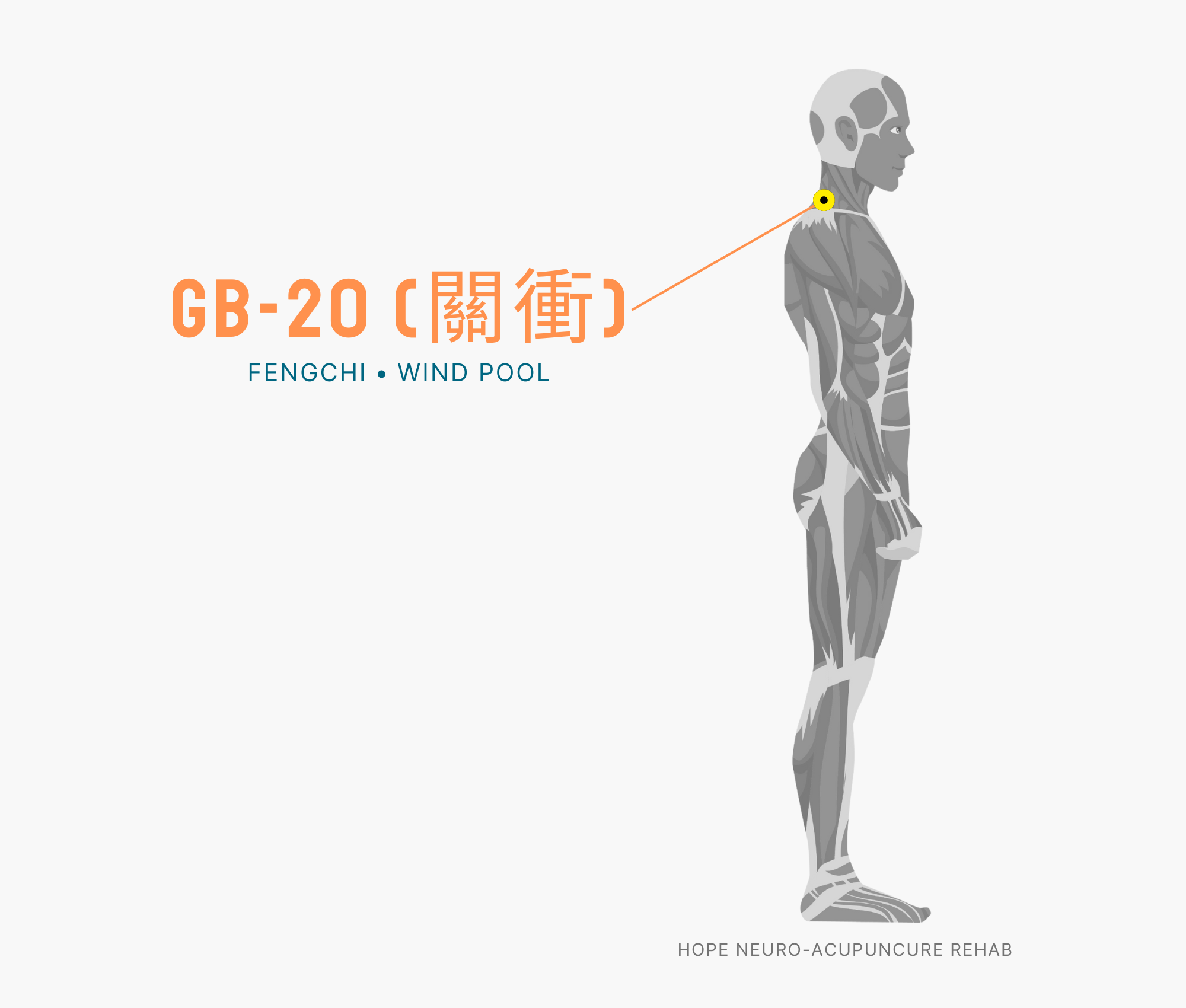
5. Fengchi (GB20) — Headache Relief and Neck Muscle Relaxation
Location (WHO Code: GB20): Located on both sides of the back of the neck, where the head meets the neck. It’s in the depression about two finger widths lateral to the center line at the back of the neck, below where the ear is.
Effects: Quickly alleviates tension headaches, neck stiffness, and migraines caused by jet lag. It improves blood flow to the brain and relieves nerve tension, improving overall fatigue and reduced concentration. Stimulating once in the morning and once in the afternoon maintains a refreshed state throughout the day.
Acupressure Technique: Apply pressure with both thumbs simultaneously for 5-10 seconds. Start gently and gradually increase pressure, maintaining intensity just before the point of pain. It’s also good to stimulate whenever your neck feels stiff.
5-Minute Self-Acupressure Routine
Recommended Schedule for the First 3 Days of Jet Lag:
6-8 AM (1 minute) – Yintang: Both sides 30 seconds (15 seconds × 2 times) – Fengchi: Both sides 30 seconds (15 seconds × 2 times) → Goal: Awaken the body
6-8 PM (1 minute) – Taichong: Both feet 30 seconds – Shenmen: Both hands 30 seconds → Goal: Evening body relaxation
30 minutes before bed (2 minutes) – Sanyinjiao: Both legs 30 seconds (15 seconds × 2 times) – Shenmen: Both hands 30 seconds (15 seconds × 2 times) – Fengchi: Both sides 30 seconds → Goal: Induce deep sleep
Tips: For the first 3 days, follow the above routine strictly. From day 4 onward, you can selectively stimulate only areas where symptoms remain. Avoid excessive acupressure (more than 5 times daily on the same area).
⚠️ Medical Disclaimer: This article is written for informational purposes and does not replace professional medical diagnosis or treatment. If symptoms persist or are severe, please consult with a healthcare professional.
🤰 Pregnancy Warning: Among the above acupoints, Sanyinjiao (SP6) and Taichong (LR3) can trigger uterine contractions in pregnant women. If you are pregnant or possibly pregnant, please consult with a specialist before practice. Instead, use only Yintang, Shenmen, and Fengchi.
Knee pain when going down stairs, stiffness when getting up after sitting for a long time—knee pain significantly impacts your quality of life. Regardless of age, knee pain caused by occupational stress, lack of exercise, excess weight, and other factors requires fundamental improvement in blood circulation rather than simply enduring it or relying only on medications.
Traditional Korean medicine teaches that stimulating specific acupoints distributed around the knee and leg can provide benefits such as pain relief, muscle relaxation, and improved blood circulation. Today, I’ll introduce 5 evidence-based acupoints and self-acupressure techniques you can do anywhere, anytime.
5 Acupoints Each
1. Xiyan (EX-LE4) — Essential acupoint for knee pain
Location: On the front of the knee, in the depressions below the patella (kneecap) on both sides. With the knee extended, there is one on the inner and one on the outer side directly below the patella.
Acupressure technique: Using your thumb, slowly press for 3-5 seconds and release. Repeat 10-15 times. Avoid pressing too hard, as it can irritate the joint; a slight aching sensation is appropriate.
Benefits: Xiyan is the most direct acupoint for knee pain relief, promoting blood circulation around the knee and easing muscle tension. It’s especially effective for pain in the front of the knee.
2. Yanglingquan (GB34) — Link between the calf and knee
Location: On the outer side of the calf, approximately 10cm below the knee. Find the depression below the head of the fibula (shinbone).
Acupressure technique: Using your thumb or index finger, press for 5 seconds and release. Repeat 15-20 times. It’s important to maintain comfortable pressure without pain.
Benefits: An important acupoint of the Gallbladder meridian, it improves blood circulation throughout the knee and entire leg while easing muscle stiffness. It’s especially effective for pain on the side of the knee or leg numbness.
3. Sanyinjiao (SP6) — Acupoint for women’s health
Location: On the inner side of the ankle, on the inner aspect of the shinbone, approximately 10cm (the width of four fingers) above the inner ankle bone (medial malleolus).
Acupressure technique: Using your thumb, press slowly. Start with gentle pressure and gradually increase the intensity. Press for 5 seconds and release. Repeat 10-15 times.
Benefits: Beyond improving blood circulation around the knee, it promotes overall metabolism and strengthens immunity. It’s especially effective for relieving inner knee pain and leg swelling.
4. Fengshi (GB31) — Powerful pain relief acupoint on the side of the leg
Location: On the outer side of the thigh, approximately 10-15cm above the knee. It’s similar to where your fingers naturally touch when you let your arms hang at your sides.
Acupressure technique: Press simultaneously with both thumbs, or use your index finger to press for 5 seconds and release. Repeat 15 times. Circular massage motions are also effective.
Benefits: An important acupoint of the Gallbladder meridian, it relieves pain on the outside of the knee and stiffness throughout the leg. It quickly alleviates leg fatigue from prolonged standing or exercise.
5. Kunlun (BL60) — Powerful acupoint governing the entire lower body
Location: On the outer side of the ankle, in the depression behind the lateral ankle bone (lateral malleolus). Find the area directly behind the most prominent ankle bone.
Acupressure technique: Using your thumb, press slowly; a slight aching sensation is appropriate. Press for 5 seconds and release. Repeat 10-15 times, and perform this 2-3 times daily.
Benefits: An important acupoint of the Bladder meridian, it can alleviate not only knee pain but also lower back and ankle pain. It’s one of the most powerful acupoints for promoting qi and blood circulation throughout the entire lower body.
5-Minute Self-Acupressure Routine
By repeating the routine below at the same time each day, you can notice improvement in knee pain within 1-2 weeks. The best time is 6-7 PM in the evening (when blood circulation is most active).
Total time required: 5 minutes
Step 1 – Xiyan (1 minute): Sit in a comfortable position and stimulate the Xiyan points on both knees simultaneously. 30 seconds each, 1 minute total.
Step 2 – Yanglingquan (1 minute): Starting with the left leg, stimulate Yanglingquan for 30 seconds each. Both legs, 1 minute total.
Step 3 – Sanyinjiao (1 minute): With your ankle in a relaxed position, locate Sanyinjiao along the inner shinbone and press for 30 seconds on each side.
Step 4 – Fengshi + Kunlun (2 minutes): Finally, press Fengshi (outer thigh) for 1 minute and Kunlun (behind the ankle) for 1 minute.
Tip: It’s more effective to drink warm water during acupressure or perform it before bedtime. If your nails are long, use your finger joints to apply pressure.
⚠️ Medical Disclaimer: This article is written for informational purposes and does not replace professional medical diagnosis or treatment. If knee pain persists for more than 2 weeks or is severe, if there has been an injury, or if it’s accompanied by swelling and heat, please consult an orthopedic surgeon or traditional medicine practitioner.
🤰 Pregnancy Warning: Among the above acupoints, Sanyinjiao (SP6) can induce uterine contractions in pregnant women. If you are pregnant or may be pregnant, avoid stimulating Sanyinjiao. Instead, perform only the other 4 acupoints or consult with a healthcare professional before proceeding.
One-line summary: Irregular menstruation can be managed and the menstrual cycle normalized by consistently pressing five acupoints—Sanyinjiao (SP6), Xuehai (SP10), Hegu (LI4), Qihai (CV6), and Taichong (LR3)—to balance hormones.
Introduction
When your menstrual cycle is irregular, it can shake up your daily life. Periods that come too early or too late, or that are heavier or lighter than normal, go beyond mere inconvenience and can cause stress and anxiety. In traditional Chinese medicine, irregular menstruation is diagnosed as a disruption in qi circulation, blood deficiency, or uterine cold conditions, and acupoint stimulation is considered effective for improving these issues. Acupoint massage is a method that can be done simply at home without medication, offering a natural way to manage irregular periods.
Five Acupoints
1. Sanyinjiao (SP6, Sanyinjiao)
Location and WHO Code: SP6 is located on the inner side of the tibia (shinbone), about four finger-widths (approximately 10cm) above the inner ankle bone (medial malleolus). Massage Technique: Press vertically with your thumb for about 3-5 seconds, then release. Stimulate each leg for 1 minute, for a total of 2 minutes. Benefits: Sanyinjiao is the most important acupoint for treating irregular menstruation. It regulates uterine and ovarian function, promotes hormone secretion, and alleviates menstrual pain and premenstrual syndrome. Stimulating it 1-2 weeks before your period is effective for normalizing the menstrual cycle.
2. Xuehai (SP10, Xuehai)
Location and WHO Code: SP10 is located on the inner side of the knee, above the medial side of the kneecap. It is in a slight depression about one finger-width above the kneecap when the knee is bent. Massage Technique: Place your thumbs on both knees and gently massage in circular motions for 1 minute on each side. Benefits: Xuehai means “sea of blood” and promotes the discharge of menstrual blood while improving blood circulation. It is particularly effective when menstrual flow is light or the blood color is dark, and for irregular periods due to blood deficiency.
3. Hegu (LI4, Hegu)
Location and WHO Code: LI4 is located at the highest point of the webbing between the thumb and index finger. It is the point where pressing with the opposite thumb produces a sensation of slight discomfort. Massage Technique: Press firmly with your thumb to the point of slight discomfort, then release. Stimulate each hand for 1 minute, for a total of 2 minutes. Benefits: Hegu promotes qi circulation throughout the body and has excellent pain-relieving properties. It reduces menstrual pain, improves irregular periods caused by stress, and balances the autonomic nervous system.
4. Qihai (CV6, Qihai)
Location and WHO Code: CV6 is located on the midline, about 1.5 finger-widths (approximately 1.5cm) below the navel. It is slightly above the midpoint between the navel and the pubic bone. Massage Technique: Gently massage in circular motions with warm fingertips for 2-3 minutes. Avoid strong pressure and focus on conveying warmth. Benefits: Qihai is the lower dantian (lower energy center) and replenishes uterine energy while strengthening reproductive function. It is helpful for light menstrual flow or late periods, supporting overall stamina recovery and hormonal balance.
5. Taichong (LR3, Taichong)
Location and WHO Code: LR3 is located on the top of the foot at the boundary point of the webbing between the big toe and the second toe. It is in the muscle depression area of the dorsum of the foot. Massage Technique: Press with your thumb to the point of slight discomfort, then release. Stimulate each foot for 1 minute, for a total of 2 minutes. Benefits: Taichong improves liver qi circulation, reducing stress and emotional anxiety. Since traditional Chinese medicine considers stress a primary cause of irregular menstruation, regulating emotions through this point helps improve hormonal imbalance and promote regular menstruation.
5-Minute Self-Massage Routine
Time Allocation and Order: • Preparation (30 seconds): Wash your hands and feet with warm water and sit in a comfortable position. • Qihai (1 minute): Gently massage in circular motions on your abdomen. • Hegu (1 minute): Press firmly on each hand for 30 seconds. • Taichong (1 minute): Press each foot for 30 seconds. • Sanyinjiao (1 minute): Press the inner tibia of each leg. • Xuehai (1 minute): Gently massage both knees in circular motions.
Recommended Timing: Begin 5-7 days before your period starts and practice daily in the morning or evening. Avoid strong pressure during menstruation, and take a break for one week after your period ends. Enhanced Heat Effect: Applying a warm pack (heat pack, warm belt) to your abdomen and lower back for 5-10 minutes after stimulating each acupoint enhances the effects.
⚠️ Medical Disclaimer: This article is provided for informational purposes only and does not replace professional medical diagnosis or treatment. Irregular menstruation has various causes (hormonal imbalance, thyroid disease, uterine conditions, polycystic ovary syndrome, etc.), and medical evaluation is essential in severe cases. If symptoms persist, are severe, or do not improve after 3 months, please consult a gynecologist or a traditional Chinese medicine specialist.
🤰 Pregnancy Warning: Among the acupoints listed above, Sanyinjiao (SP6), Hegu (LI4), and Taichong (LR3) may induce uterine contractions in pregnant women, creating a risk of miscarriage. If you are pregnant or possibly pregnant, please consult with a professional before practicing these techniques. The safe acupoints are Qihai (CV6) and Xuehai (SP10); however, it is still recommended to receive professional guidance during pregnancy.