Author: Acupoint Guide Editorial Team

  • 5 نقاط ضغط لانتفاخ البطن — دليل التدليك الذاتي السريع

    5 نقاط ضغط لانتفاخ البطن — دليل التدليك الذاتي السريع

    One-line summary: Abdominal bloating can be effectively relieved by accurately stimulating five acupoints: CV12, CV6, ST36, SP6, and LR3. With just 5 minutes of daily self-acupressure, digestive function improves and gas release becomes easier.

    Abdominal bloating: Why does it happen, and how can acupoints help?

    After eating a meal, your belly feels uncomfortably bloated and tight in your clothes, and digestion seems sluggish. This is abdominal bloating. Western medicine diagnoses it as indigestion, gas retention, or decreased intestinal motility, but in traditional Eastern medicine, it’s viewed as “disrupted qi circulation.” In other words, the qi (vital life energy) in your stomach, small intestine, and large intestine cannot flow smoothly, causing delays in food digestion and elimination.

    Acupressure works by stimulating specific meridian points to normalize qi flow through the meridians, promote peristalsis in the digestive organs, and activate the enteric nervous system (the second brain). This allows you to naturally relieve abdominal bloating without medication. It’s especially effective for bloating caused by eating after meals, stress, and irregular eating habits.

    Five effective acupoints for abdominal bloating

    1. CV12 (Zhongwan) — The center of the stomach, the hub of digestion

    Location: Located four finger-widths (approximately 10cm) above the navel, at the midpoint between the lower end of the sternum and the navel. You can think of it as being directly below the epigastrium.

    Acupressure technique: Apply slow, steady pressure using your thumb or middle finger while the abdomen is relaxed. Press for 5 seconds while exhaling, then slowly release while inhaling. Repeat for 1-2 minutes.

    Effects: Normalizes stomach function, promotes food digestion, and directly alleviates bloating caused by excess stomach acid or indigestion. It also relieves epigastric discomfort, loss of appetite, and belching. This acupoint is recorded in the Donguibogam (Principles and Practice of Eastern Medicine) as a “special acupoint for chronic indigestion.”

    2. CV6 (Qihai) — The sea of vital energy

    Location: Located one-and-a-half finger-widths (approximately 1.5cm) below the navel, in the small depression directly below the navel.

    Acupressure technique: Gently massage in circular motions clockwise using your middle or index finger, or apply slow pressure for 3-5 seconds. Practice 1-2 times daily, 1-2 minutes each time. Avoid pressing too hard, as excessive pressure can increase abdominal discomfort.

    Effects: Activates the qi energy of the entire digestive system and promotes intestinal movement to facilitate gas expulsion. It’s particularly effective for those with naturally weak digestive function, and consistent acupressure improves immunity as well. Especially beneficial for bloating accompanied by chronic fatigue and abdominal coldness.

    3. ST36 (Zusanli) — A tonic for immunity and digestion

    ST36 acupuncture point

    Location: Located four finger-widths (approximately 10cm) below the outer side of the knee, in the center of the outer calf. You can find it by moving downward from the depression below the knee.

    Acupressure technique: Apply slow, steady pressure using your thumb or finger knuckles, aiming for a slight, pleasant tenderness. Press for 5 seconds, rest for 5 seconds, and repeat 5-10 times. Alternatively, gently massage the area for 1-2 minutes.

    Effects: Strengthens the function of the entire digestive system and promotes enteric nerve activity to normalize peristalsis. It also activates the immune system to reduce digestive inflammation, improving not only abdominal bloating but also chronic diarrhea and constipation. You can stimulate this acupoint anytime during the day.

    4. SP6 (Sanyinjiao) — The intersection of digestion, reproduction, and urinary function
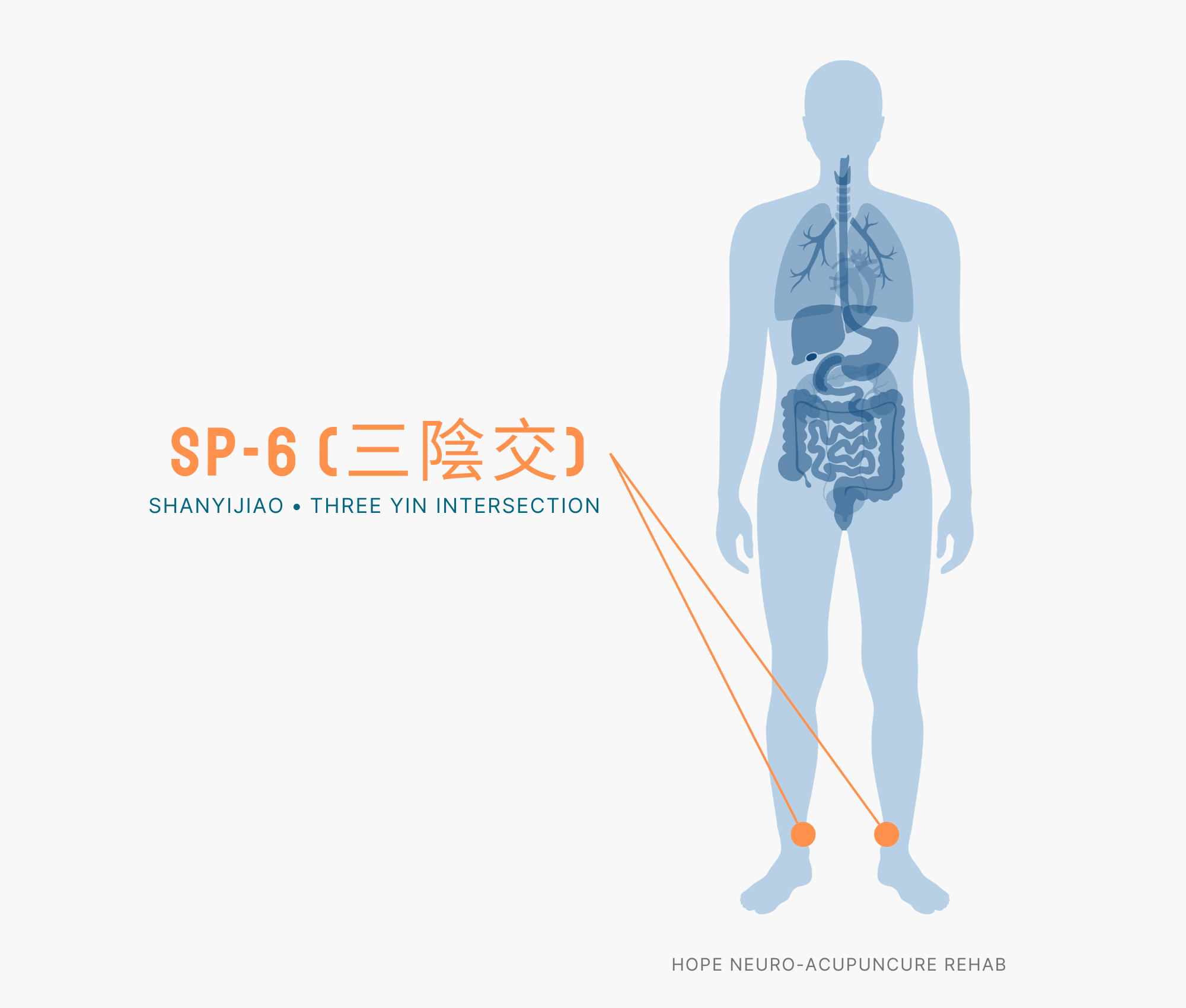
    SP6 acupuncture point

    Location: Located four finger-widths (approximately 10cm) above the inner ankle bone, in the center of the inner calf. Find it by following the inner edge of the tibia upward.

    Acupressure technique: Slowly press and release with your thumb for 3-5 seconds at a time, or gently massage in circular motions for 1-2 minutes. If you feel a warm sensation or lightness after acupressure, you’re stimulating the point correctly.

    Effects: This acupoint comprehensively regulates the digestive, urinary, and reproductive systems. Besides relieving abdominal bloating, it also improves uterine contractions, irregular menstruation, and coldness in the pelvic area. It’s particularly effective for bloating caused by hormonal changes in women, such as premenstrual syndrome.

    5. LR3 (Taichong) — The connection between stress and digestion

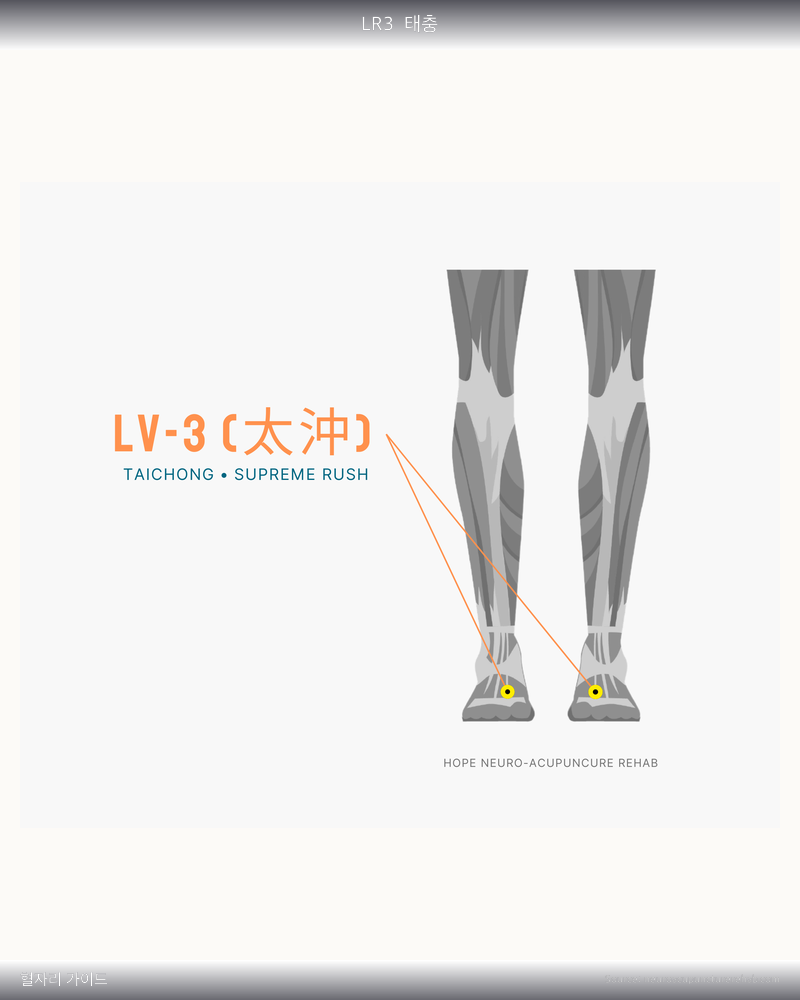
    Location: Located between the first and second toes on the top of the foot, approximately one-and-a-half finger-widths above the foot’s surface. You’ll feel a slight depression and tenderness when you touch it.

    Acupressure technique: Slowly press and release with your thumb for 3-5 seconds at a time, or massage in circular motions using your finger knuckles. Apply enough pressure to feel a slight ache, but avoid excessive force. 1-2 minutes is sufficient.

    Effects: Promotes qi circulation in the liver and improves intestinal movement impaired by stress. It’s especially effective for abdominal bloating caused by emotional stress and work fatigue, while simultaneously relieving headaches, eye strain, and menstrual cramps. It normalizes nerve regulation of digestive organs and restores balance to the gut-brain axis.

    5-minute self-acupressure routine — Actual sequence and time distribution

    Preparation (1 minute): Sit or lie down in a comfortable position and allow your abdomen to fully relax. Take 3 deep breaths, inhaling and exhaling slowly to prepare your body and mind.

    Acupressure sequence:

    • Step 1 (1 minute): CV12 (Zhongwan) — Place your middle fingers, one on top of the other, on CV12 and press for 5 seconds while exhaling, then release for 5 seconds while inhaling. Repeat this cycle.
    • Step 2 (1 minute): CV6 (Qihai) — Gently massage CV6 below the navel in clockwise circular motions, or press and release repeatedly for 5 seconds at a time.
    • Step 3 (1 minute): ST36 (Zusanli) on both sides — Stimulate the left leg’s ST36 for 30 seconds, then the right leg for 30 seconds. With your knee bent, apply slow pressure using your thumb.
    • Step 4 (1 minute): SP6 (Sanyinjiao) and LR3 (Taichong) on both sides — Alternately stimulate the left SP6 for 30 seconds and the right SP6 for 30 seconds. (LR3 can be included or excluded depending on your situation.)

    Closing (1 minute): Place your hands on your abdomen and slowly massage in clockwise circular motions to activate blood circulation and digestive function. Drink warm water to enhance the effects.

    Frequency: Practice 1-2 times daily, preferably at least 1 hour after eating or before bed. With consistent daily practice, you should notice easier gas expulsion within 1-2 weeks, and significant improvement in chronic bloating after 4 or more weeks of continued practice.
    ⚠️ Medical disclaimer: This article is provided for informational purposes and does not replace professional medical diagnosis or treatment. If you experience severe abdominal bloating, pain, vomiting, constipation or diarrhea, or symptoms lasting more than 2 weeks, please consult a healthcare professional (acupuncturist, gastroenterologist, or doctor). If you have a specific condition such as irritable bowel syndrome, inflammatory bowel disease, or bowel obstruction, please obtain a diagnosis before performing acupressure.
    🤰 Pregnancy warning: Among the acupoints mentioned above, SP6 (Sanyinjiao) and LR3 (Taichong) can trigger uterine contractions and should not be used during pregnancy. CV12 (Zhongwan), CV6 (Qihai), and ST36 (Zusanli) are relatively safe; however, if you are pregnant or may be pregnant, please consult a healthcare professional before practicing acupressure. During pregnancy, it is best to minimize abdominal stimulation.
  • 5 نقاط ضغط لآلام الثدي — دليل التدليك الذاتي السريع

    5 نقاط ضغط لآلام الثدي — دليل التدليك الذاتي السريع

    One-line Summary: Breast pain is effectively relieved by stimulating chest acupoints such as Danzhong, Zhuozhong, Yuruan, and improving liver function through Taichong. Start with 5 minutes of self-massage daily.

    Introduction

    Breast pain is a common symptom experienced by one in three women. It occurs when hormonal changes related to the menstrual cycle, stress, uncomfortable clothing, and poor posture combine. Recurring pain significantly diminishes quality of life.

    In traditional Chinese medicine, breast pain is called “breast qi stagnation,” occurring when qi becomes obstructed in the meridians passing through the chest or when liver function declines. Fortunately, stimulating key acupoints in the chest area can improve qi flow and relieve pain. Self-massage acupressure, which can be done anytime and anywhere without medication, has become the preferred choice for many people.

    5 Acupoints for Relieving Breast Pain

    1. Danzhong (REN17) — The “Master Acupoint” for Regulating Emotion and Qi

    Location: The midpoint between the two nipples, equidistant from both sides of the center of the chest. It can be found by descending along the center of the chest from below the collarbone.

    Massage Technique: Overlap the thumbs of both hands and gently press perpendicular to Danzhong, repeating the pressing and releasing motion. Press for about 3-5 seconds each time before slowly releasing. Be careful not to stimulate to the point of causing pain.

    Effects: Danzhong, known as the “heavenly balance,” is an acupoint that regulates emotion and qi. It can simultaneously address stress and qi stagnation that cause breast pain. It also has excellent effects on relieving anxiety and promoting mental and physical calm.

    2. Zhuozhong (ST16) — Direct Treatment Point for Breast Pain

    Location: The upper part of each breast, at the intersection of the collarbone and the first intercostal space (between the first ribs). There is one on each side.

    Massage Technique: Use the middle and ring fingers of both hands together to gently massage Zhuozhong with slow, circular motions. Stimulate each acupoint for about 2-3 minutes. Strong pressure can cause discomfort, so maintaining appropriate pressure intensity is important.

    Effects: This acupoint directly promotes qi and blood circulation in the breast area, showing the most immediate effect on relieving breast pain and hardness. As blood circulation improves, pain and discomfort decrease rapidly.

    3. Yuruan (ST18) — Acupoint for Relieving Lower Breast Pain

    Location: Directly below the breast, in the fifth intercostal space (between the fifth and sixth ribs). It is located below the lower boundary line of the breast.

    Massage Technique: Place the thumbs of both sides on Yuruan simultaneously and press slowly. It is recommended to use breathing-guided massage: increase pressure while inhaling and release while exhaling. Repeat 10 times, holding for 3-5 seconds each time.

    Effects: This acupoint effectively relieves breast pain, especially pain in the lower breast or extending to the sides. It is particularly helpful when intercostal neuralgia is involved.

    4. Qimen (GB22) — Specialized Acupoint for Stress-Related Breast Pain

    Location: Below the armpit, directly below the center of the axilla when the arm is raised, between the third rib. There is one on each side under the arms.

    Massage Technique: Lower your arm to your chest and use the middle finger of the opposite hand to locate Qimen and massage with circular motions. To stimulate both sides simultaneously, you can use both middle fingers. Massage each acupoint for 3-5 minutes.

    Effects: As a major acupoint of the gallbladder meridian, it is excellent for relieving breast pain caused by stress and tension. It is particularly effective for pain caused by nervous tension and pre-menstrual breast pain.

    5. Taichong (LR3) — Improving Liver Function to Address Root Causes

    Location: On the top of the foot, slightly above where the bones of the big toe and second toe meet. It can be found by following the raised area of the foot upward.

    Massage Technique: Sit and place one foot on your lap, then slowly press and massage Taichong with your thumb. Repeat by pressing for 5 seconds and resting for 5 seconds while breathing, massaging each foot for 2-3 minutes. Apply to both feet.

    Effects: A key acupoint for regulating liver function, it addresses the root causes of breast pain from hormonal imbalance and stress. It is also often accompanied by improvement in irregular menstruation, emotional fluctuations, and chronic fatigue.

    5-Minute Self-Massage Routine

    Here is a 5-minute routine that can be practiced even during a busy day. Perform once or twice daily, in the morning or evening.

    1. Preparation (30 seconds): Sit or lie comfortably and take 3-4 deep breaths to relax your body and mind.
    2. Danzhong Massage (1 minute): Overlap the thumbs of both hands and press Danzhong 30 times with gentle, rhythmic pressure.
    3. Zhuozhong & Yuruan Massage (2 minutes): Massage both sides of Zhuozhong with circular motions for 1 minute each. (Total: 1 minute) Then massage Yuruan on both sides for 30 seconds each. (Total: 1 minute)
    4. Qimen Massage (1 minute): Simultaneously massage both sides of Qimen with circular motions for 1 minute.
    5. Taichong Massage (30 seconds): As a finish, stimulate Taichong on both feet for 15 seconds each with quick, firm pressure.
    6. Cool Down (30 seconds): Take 3-4 deep breaths to allow energy to spread throughout your body.

    💡 Tip: Consistency is key. You can feel results if you continue for more than 3 weeks. Rather than doing this only when you have pain, practice regularly as a preventive measure.

    ⚠️ Medical Disclaimer: This article is written for informational health purposes and does not replace professional medical diagnosis or treatment. If symptoms persist or are severe, be sure to consult with a healthcare professional.
    🤰 Pregnancy Warning: Among the acupoints above, Taichong (LR3) may cause uterine contractions in pregnant women. If you are pregnant or may be pregnant, be sure to consult with a professional before practicing. The other acupoints—Danzhong, Zhuozhong, Yuruan, and Qimen—are generally safe, but it is recommended to consult with your doctor before trying any new procedures during pregnancy.
  • تخفيف التهاب الجلد التأتبي: 5 نقاط ضغط تعمل حقاً

    تخفيف التهاب الجلد التأتبي: 5 نقاط ضغط تعمل حقاً

    One-line summary: Atopic dermatitis is a skin condition caused by poor qi-blood circulation and weakened immunity. Stimulating 5 key acupoints—Sanyinjiao, Quchi, Xuehai, Hegu, and Feishu—can help relieve itching and improve skin condition.

    Introduction

    Have you ever experienced scratching so much at night that it bleeds, or insomnia due to unbearable itching? Atopic dermatitis is not just a skin condition but a systemic symptom caused by immune system imbalance. In traditional Chinese medicine, atopy is viewed as ‘Spleen Qi Deficiency with Excess Dampness (Pi Xu Shi Sheng)’—a condition where the spleen weakens and moisture accumulates in the body. Acupoint pressure therapy effectively promotes qi-blood circulation, restores immune function, and naturally alleviates atopic symptoms. In particular, self-massage is a great supplementary method to medical treatment since it can be done anytime and anywhere.

    5 Effective Acupoints for Atopy Relief

    1. Sanyinjiao (SP6) — The Center for Hormonal Balance

    SP6 acupuncture point

    Location: Four finger-widths above the highest point on the inner ankle, toward the shin

    WHO Code: SP6

    Benefits: Sanyinjiao is where the Spleen, Liver, and Kidney meridians converge. It excels at balancing female hormones, enhancing immunity, and improving digestion. It strengthens spleen function—the root cause of atopy—and eliminates dampness. It also prevents atopy flare-ups by relieving stress.

    Massage technique: Press with your thumb for 3 seconds, then release for 2 seconds, and repeat. Perform for 3 minutes at a time, twice daily (morning and evening). Start gently and gradually increase pressure.

    2. Quchi (LI11) — The Premier Point for Inflammation and Itching Relief

    LI11 acupuncture point

    Location: The outer end of the elbow crease when the elbow is bent at 90 degrees (thumb side)

    WHO Code: LI11

    Benefits: This point clears heat from the Large Intestine meridian, directly alleviating skin inflammation and suppressing itching. It calms overactive immune responses and reduces irritation by lowering skin temperature.

    Massage technique: Slowly press with your opposite thumb while making small circles. Massage for about 1 minute in the morning and 1 minute in the evening. It’s more effective if done after soaking your arm in warm water in a bathtub.

    3. Xuehai (SP10) — The Fundamental Point for Skin Improvement

    SP10 acupuncture point

    Location: Two to three finger-widths above the inner side of the knee, on the inner thigh

    WHO Code: SP10

    Benefits: Known as ‘The Blood Point,’ Xuehai purifies the blood and nourishes the skin. It restores skin dryness and depletion caused by atopy and repairs the skin barrier damaged by prolonged irritation.

    Massage technique: Sit down, bend your knee slightly for comfort, and repeatedly press with your thumb for 3 seconds each time. Perform for 3 minutes once daily.

    4. Hegu (LI4) — The Versatile Point for Immunity Enhancement

    LI4 acupuncture point

    Location: The hollow between the thumb and index finger (where a crease forms when the fingers are together)

    WHO Code: LI4

    Benefits: One of the most widely used acupoints in traditional medicine, it’s effective at enhancing immunity, relieving stress, and suppressing inflammation. It alleviates excessive stress—a major atopy aggravator—and promotes qi-blood circulation throughout the body.

    Massage technique: Slowly press with your opposite thumb while making circles. Alternate between both hands, pressing for 1 minute each, twice daily. It’s best to do this when you wake up and before bed.

    5. Feishu (BL13) — Improving Lung Function and Skin Respiration

    BL13 acupuncture point

    Location: Between the shoulder blades on the back of the body, two finger-widths lateral to the spine at the level of the 3rd thoracic vertebra

    WHO Code: BL13

    Benefits: This point strengthens lung function and improves skin nourishment. The respiratory system and skin are closely related; enhancing lung function improves skin metabolism and oxygen supply, helping relieve atopic symptoms.

    Massage technique: Since it may be difficult to do alone, seek help from someone else or stimulate by placing a tennis ball against your back and rolling it slowly. Alternatively, receiving regular moxibustion therapy from a professional is also beneficial.

    5-Minute Self-Massage Routine

    Preparation: Sit comfortably and expose your hands and legs. Apply a small amount of lotion or essential oil to reduce friction.

    1. Sanyinjiao (SP6) – 1 minute (30 seconds on each side or 1 minute on one side)
    2. Xuehai (SP10) – 1 minute (30 seconds on each side)
    3. Quchi (LI11) – 1 minute (30 seconds on each side)
    4. Hegu (LI4) – 1 minute (30 seconds on each side)
    5. Feishu (BL13) – 1 minute (use a tennis ball for 1 minute if doing it alone is difficult)

    Frequency: Perform daily, or twice daily (morning and evening) during atopy flare-ups. Practice on an empty stomach or at least 2 hours after meals.

    🤰 Pregnancy Warning: Sanyinjiao (SP6) and Hegu (LI4) can trigger uterine contractions in pregnant women. If you are pregnant or might be pregnant, consult a professional before practicing. Feishu (BL13) also requires careful stimulation, so confirm with a healthcare provider before performing.
    ⚠️ Medical Disclaimer: This article is provided for informational purposes and does not substitute for professional medical diagnosis or treatment. If symptoms persist or are severe, consult a healthcare professional (dermatologist or acupuncturist). Since individual differences are significant, please consider your constitution and health status before practicing.
  • تخفيف الربو: 5 نقاط ضغط تعمل حقاً

    تخفيف الربو: 5 نقاط ضغط تعمل حقاً

    One-line summary: Asthma is a condition related to deficient lung qi (vital energy), and stimulating acupoints such as Tiantu (CV22), Feishu (BL13), and Fengmen (BL12) can help improve breathing and alleviate symptoms.

    Where Asthma Meets Acupoint Therapy

    Asthma symptoms—breathlessness at night and wheezing with even slight movement—significantly reduce quality of life. Traditional medicine views this as a deficiency of lung qi (vital energy). Modern stress, exposure to cold air, and overwork weaken lung function, leading to recurring breathing difficulties.

    Fortunately, our body has special points that directly regulate lung function—acupoints. By stimulating these acupoints, circulation of qi and blood improves and lung resilience increases, reducing the frequency and severity of asthma attacks. The greatest appeal of acupoint pressing is that you can protect your own health with just your fingers, without relying solely on medication.

    5 Effective Acupoints for Asthma Relief

    1️⃣ Tiantu (天突, CV22) — Specific Point for Asthma

    Location: Located in the hollow area above the collarbone on the front of the neck. It’s directly above the point where the two clavicles meet when the neck is tilted back in an inverted V-shape.

    WHO Code: CV22 (22nd point on the Conception Vessel)

    Effects: Tiantu is known as the most effective acupoint for asthma, cough, and sore throat. As a point directly connected to the lungs, stimulating it dilates the airways and makes breathing much easier. In particular, pressing this point at the early stage of an asthma attack can quickly relieve symptoms.

    Pressing method: Overlap your two index fingers and press vertically on the Tiantu point. Apply pressure in a 1-second-on, 1-second-off rhythm for about 1 minute. Avoid pressing too hard; maintain a refreshing level of stimulation.

    2️⃣ Feishu (肺俞, BL13) — Key to Strengthening Lung Function

    BL13 acupuncture point

    Location: Located on the back, approximately 1.5 cm to the side of the third thoracic vertebra. It’s at the level of the upper border of the scapula when the arms are brought across the chest.

    WHO Code: BL13 (13th point on the Bladder Meridian)

    Effects: Feishu directly replenishes lung qi. It’s effective not just for asthma but for all respiratory conditions like pneumonia and bronchitis. With sustained stimulation, lung resilience increases and it has disease prevention benefits.

    Pressing method: Since it’s difficult to reach alone, it’s recommended to ask someone else for help or to lie on a tennis ball placed on your back and use your body weight for stimulation. Apply gentle pressure for 3-5 minutes.

    3️⃣ Fengmen (風門, BL12) — Respiratory Protective Shield

    BL12 acupuncture point

    Location: Located on the back, approximately 1.5 cm to the side of the second thoracic vertebra. It’s at the level of the upper border of the shoulders.

    WHO Code: BL12 (12th point on the Bladder Meridian)

    Effects: In traditional medicine, “wind” refers to the cause of disease. Fengmen blocks external pathogenic influences (cold air, cold viruses, etc.) from entering the body. Since asthma symptoms worsen when patients catch a cold, it’s important to stimulate this acupoint to protect the respiratory system.

    Pressing method: Like Feishu, this point is located on both sides of the back. If possible, seek help from someone else, or use the tennis ball method described above if pressing alone.

    4️⃣ Dingchuan (定喘, EX-HN16) — Emergency Point for Asthma Attacks

    Location: Located on the back of the neck, approximately 1 cm to the outside of the thick neck muscle (sternocleidomastoid muscle). It’s right next to the muscle that protrudes when the neck is tilted to the side.

    WHO Code: EX-HN16 (Extra-point at the head-neck region)

    Effects: The name “Dingchuan” itself means “stopping asthma.” This is an emergency point for rapid response when asthma attacks occur suddenly. It acts very quickly to improve oxygen supply and relieve airway spasms.

    Pressing method: Simultaneously press both Dingchuan points on the sides of the neck with your thumbs. Press slowly, but in an acute attack situation, slightly stronger stimulation is acceptable. Continue for 2-3 minutes until breathing returns to normal.

    5️⃣ Zusanli (足三里, ST36) — Boosting Immunity and Physical Strength

    ST36 acupuncture point

    Location: Located below the knee, approximately 1 cm to the outside of the tibia (shinbone). It’s about 10 cm below the hollow point beneath the kneecap.

    WHO Code: ST36 (36th point on the Stomach Meridian)

    Effects: Zusanli is called the “universal healing point” because it enhances immunity and physical strength throughout the body. Since asthma often stems from weak lungs and overall low immunity, consistently stimulating Zusanli improves your constitution to resist disease.

    Pressing method: Press Zusanli on both legs using your thumb or knuckle. Repeat circular, gentle pressing motions for 1-2 minutes. This point benefits from stronger stimulation, so apply pressure at a level that produces noticeable sensation but remains tolerable.

    Maximize Results! 5-Minute Self-Massage Routine

    Stimulating all acupoints together is more effective. Follow the sequence below and perform once in the morning and once in the evening:

    1. Tiantu (CV22) — 1 minute: Press Tiantu on the front of the neck with both index fingers. Press deeply and slowly.
    2. Dingchuan (EX-HN16) — 1 minute: Press Dingchuan on the sides of the neck with both thumbs.
    3. Zusanli (ST36) — 1.5 minutes: Alternate pressing both legs. You can do this sitting or lying down.
    4. Feishu (BL13) + Fengmen (BL12) — 1.5 minutes: Stimulate the back using a tennis ball or roller. You can do this leaning against a wall or lying on a bed.
    5. Closing breathing — 0.5 minute: Perform 10 slow, deep breaths to oxygenate your body.

    ⏰ Tip: Doing this before bed is effective for preventing nighttime attacks, and doing it in the morning helps you start the day with energy.

    ⚠️ Medical Disclaimer: This article is written for informational purposes and does not replace professional medical diagnosis or treatment. Asthma is a serious respiratory condition; if you experience acute attacks or symptom worsening, be sure to consult a healthcare professional or visit an emergency room. Acupoint pressing is recommended as a complementary aid to medical treatment, not as a replacement.
  • كيفية تخفيف التهاب المفاصل طبيعياً مع هذه 5 نقاط ضغط

    كيفية تخفيف التهاب المفاصل طبيعياً مع هذه 5 نقاط ضغط

    One-line Summary: Pressing five acupoints daily for 5 minutes—Pool at the Bend (LI11), Union Valley (LI4), Committee Middle (BL40), Three Yin Crossing (SP6), and Yin Spring at the Mound (SP9)—can help relieve arthritis pain and stiffness.

    The Relationship Between Arthritis and Acupoint Pressure

    Arthritis is a persistent problem affecting many middle-aged and older people. Pain and stiffness in various joints—knees, wrists, ankles, shoulders—greatly limit daily activities. In traditional Chinese medicine, arthritis is viewed as resulting from “insufficient qi and blood circulation” and “blocked meridians.” By stimulating specific acupoints, you can unblock the meridians and allow qi and blood to flow smoothly, reducing inflammation and pain. In particular, self-acupressure has the advantage of being performed at home anytime without visiting a hospital.

    Five Effective Acupoints for Arthritis Relief

    1. Pool at the Bend (LI11) — The All-Purpose Elbow Acupoint

    LI11 acupuncture point

    WHO Code: LI11 (Large Intestine Meridian 11) | Location: At the outer end of the elbow crease when the arm is bent

    Pool at the Bend excels at relieving overall pain and stiffness in the arm. It is particularly effective for arm, elbow, and shoulder pain caused by arthritis. For acupressure, press with your thumb for 3–5 seconds, release, and repeat; or apply circular pressure in a clockwise direction 20–30 times. The ideal intensity is “tender but pleasantly sore” (a comfortable pressure sensation). With consistent stimulation, you’ll gradually notice relief in arm stiffness and an increased range of motion.

    2. Union Valley (LI4) — The Acupoint for Full-Body Pain Relief

    LI4 acupuncture point

    WHO Code: LI4 (Large Intestine Meridian 4) | Location: In the hollow between the thumb and index finger

    This acupoint is so famous that there’s a traditional medicine saying: “If you know only Union Valley, you need not fear a hundred ailments.” Union Valley is excellent at promoting qi and blood circulation throughout the body and reducing pain. It helps not just with arthritis in the fingers and wrists, but with inflammatory pain throughout the body. Press firmly with the thumb of the opposite hand, alternating between both hands for even greater effect. It is recommended to stimulate each hand for 2–3 minutes, three times daily.

    🤰 Pregnancy Warning: Union Valley (LI4) can trigger uterine contractions in pregnant women, so it should be avoided during pregnancy.

    3. Committee Middle (BL40) — The Remedy for Leg Arthritis

    BL40 acupuncture point

    WHO Code: BL40 (Bladder Meridian 40) | Location: At the center of the crease behind the knee

    If you have knee arthritis, this is the first acupoint you should stimulate. Committee Middle improves blood circulation throughout the leg and quickly relieves knee inflammation and pain. It’s also effective when your legs feel stiff from prolonged sitting. Press both knees’ Committee Middle points with both thumbs continuously for 3–5 minutes. If you follow up by slowly bending and straightening your knees 5–10 times, the effect will be even greater. If you have knee discomfort due to arthritis, acupressure daily is recommended.

    4. Three Yin Crossing (SP6) — The Intersection Point of Full-Body Qi and Blood Circulation

    SP6 acupuncture point

    WHO Code: SP6 (Spleen Meridian 6) | Location: Four finger widths above the inner ankle bone (on the inner side of the shin bone)

    Three Yin Crossing is where the Liver, Spleen, and Kidney meridians meet, making it an important point for promoting qi and blood circulation throughout the body. It is particularly effective for relieving arthritis pain in the legs and ankles while also strengthening overall body immunity. Press firmly with your thumb and apply circular pressure for 30 seconds to 1 minute. Stimulate both legs alternately, two times daily, for best results. Consistent stimulation contributes to reducing inflammatory responses throughout the body.

    🤰 Pregnancy Warning: Three Yin Crossing (SP6) can trigger uterine contractions and should be avoided during pregnancy.

    5. Yin Spring at the Mound (SP9) — The Specialized Acupoint for Knee Joints

    WHO Code: SP9 (Spleen Meridian 9) | Location: In the hollow on the inner side of the shin bone below the knee

    This acupoint shows excellent results for knee arthritis, particularly for inner knee pain. As the convergence point of the Spleen meridian, Yin Spring at the Mound excels at removing moisture and inflammation around the joint. If you experience swelling and stiffness due to knee arthritis, this acupoint can help. Using your thumb, press until you feel tenderness, hold for 5–10 seconds, then slowly release; repeat 10 times. Stimulate this point twice daily for 5 minutes each time, and you should notice changes within 1–2 weeks.

    5-Minute Self-Acupressure Routine

    For the best results, perform acupressure in the following order at the same time each day.

    1. Warm-up (30 seconds): Sit in a comfortable position and take 3 deep breaths.
    2. Union Valley (LI4) Stimulation (1 minute): Alternate between both hands, pressing Union Valley for 1 minute total.
    3. Pool at the Bend (LI11) Stimulation (1 minute): Press Pool at the Bend on each arm for 30 seconds in turn. (Total: 1 minute)
    4. Committee Middle (BL40) Stimulation (1 minute): Stimulate Committee Middle on both knees for 30 seconds each. (Total: 1 minute)
    5. Yin Spring at the Mound (SP9) Stimulation (45 seconds): Stimulate Yin Spring at the Mound below both knees for 20 seconds each.
    6. Three Yin Crossing (SP6) Stimulation (45 seconds): Stimulate Three Yin Crossing on the inner sides of both ankles for 20 seconds each.
    7. Cool-down (15 seconds): Take 2 slow, deep breaths and finish.

    Tip: The best results come from performing this routine twice daily—after waking in the morning and before bed at night. Drinking warm water right after acupressure further promotes qi and blood circulation.

    ⚠️ Medical Disclaimer: This article is provided for informational purposes and does not substitute for professional medical diagnosis or treatment. If arthritis symptoms persist or worsen, or if symptoms aggravate after self-acupressure, please consult with a healthcare professional (doctor or acupuncturist).
  • حموضة المعدة؟ اضغط على هذه 5 نقاط للتخفيف الطبيعي

    حموضة المعدة؟ اضغط على هذه 5 نقاط للتخفيف الطبيعي

    ملخص بسطة: يمكن تخفيف أعراض ارتجاع المريء من خلال الضغط الذاتي على 5 نقاط ضغط (CV12 و ST36 و PC6 و SP6 و LR3)، وتحسين وظائف الجهاز الهضمي من خلال الممارسة المنتظمة.

    المقدمة

    هل سبق لك أن عانيت من حموضة ترتفع في الليل أو شعور بحرقة في منطقة الصدر؟ ارتجاع المريء هو مشكلة هضمية شائعة لدى الإنسان الحديث، ويتزايد بسبب الإجهاد والعادات الغذائية غير المنتظمة وتناول الأطعمة المثيرة للتهيج. بينما العلاج الدوائي مهم، فإن الضغط على نقاط الضغط في الطب الصيني التقليدي يعزز القدرة الطبيعية للجسم على الشفاء ويساعد في تخفيف أعراض ارتجاع المريء بشكل جذري. على وجه الخصوص، يفضل كثير من الناس الضغط الذاتي لأنه يمكن تطبيقه في أي وقت وفي أي مكان بدون تكلفة. يشرح هذا المقال بالتفصيل 5 نقاط ضغط الأكثر فعالية لتخفيف ارتجاع المريء وتقنية الضغط الصحيحة.

    5 نقاط ضغط فعالة لارتجاع المريء

    1. المعدة الوسطى (中脘) — CV12

    الموقع: نقطة تقع حوالي 4 مسافات (4 عروض أصابع، حوالي 12 سم) مباشرة فوق السرة. إنها في منتصف الطريق بين نهاية عظمة الصدر والسرة.

    الفوائد: نقطة CV12 هي مركز وظائف الجهاز الهضمي، حيث تعيد تطبيع إفراز حمض المعدة وتعزز حركات المعدة الزاحفة. تخفف على الفور من ارتجاع المريء والهضم السيء والانتفاخ، وتحسن صحة المعدة على المدى الطويل من خلال الضغط المستمر.

    تقنية الضغط: في وضعية مريحة جالساً أو مستلقياً، ضع طرف الإبهام رأسياً على موقع CV12. اضغط ببطء لمدة 5 ثوانٍ ثم حرر لمدة 5 ثوانٍ، وكرر حوالي 10-15 مرة في المرة الواحدة. ابدأ بضغط خفيف وزد الضغط تدريجياً.

    2. الرجل الثالث (足三里) — ST36

    ST36 acupuncture point

    الموقع: نقطة تقع حوالي 4 مسافات (حوالي 12 سم) أسفل الجزء الخارجي من الركبة. عندما تنزل من المنطقة المحفورة أسفل الركبة باتجاه القدم، ستجد حيث تبدأ العضلة بجانب عظم الساق.

    الفوائد: تعرف نقطة ST36 باسم “نقطة المناعة”، وتحسن وظائف الجهاز الهضمي وتعزز المناعة العامة. تستعيد وظائف الجهاز الهضمي الضعيفة من ارتجاع المريء وتزيد طاقة الجسم لحل السبب الجذري لأعراض الهضم.

    تقنية الضغط: في وضعية جلوس مريحة مع تمديد الساق، ضع ضغطاً بطيئاً على ST36 بالإبهام. اضغط لمدة 3-5 ثوانٍ ثم حرر، وكرر 15-20 مرة، وطبق على كلا الرجلين للمدة نفسها.

    3. البوابة الداخلية (內關) — PC6

    PC6 acupuncture point

    الموقع: على الجزء الداخلي من المعصم، حوالي 3 مسافات (حوالي 6-7 سم) من الأصابع باتجاه الكوع. إنها بين الوترين اللذين يظهران عند ثني المعصم (في الجزء الأجوف بين الأوتار).

    الفوائد: تخفف نقطة PC6 من الغثيان والقيء بسرعة وتهدئ الجهاز العصبي لتحسين أعراض المعدة المرتبطة بالإجهاد. تعالج الانزعاج من ارتجاع المريء وتوازن الجهاز العصبي اللاإرادي لتطبيع وظائف الجهاز الهضمي.

    تقنية الضغط: مد ذراعاً واحدة وابحث عن موقع PC6 باستخدام الإبهام من اليد الأخرى، ثم اضغط ببطء حتى تشعر بألم طفيف. كرر الضغط لمدة 3-5 ثوانٍ 10-15 مرة، وطبق على كلا الذراعين. يكون التحفيز المتكرر قبل الذهاب للعمل أو عند الشعور بالإجهاد فعالاً.

    4. تقاطع الأين الثلاث (三陰交) — SP6

    SP6 acupuncture point

    الموقع: نقطة تقع حوالي 4 مسافات (حوالي 12 سم) فوق الكعب الداخلي على الجزء الداخلي من الكاحل. إنها النقطة التي تواجهها عندما تصعد على طول الحافة الداخلية لعظم الساق.

    الفوائد: نقطة SP6 هي نقطة ضغط مهمة تنظم الطحال والجهاز الهضمي، وتقوي وظائف المعدة وتحسن امتصاص الجهاز الهضمي. تظهر تأثيراً ممتازاً في تخفيف ارتجاع المريء والهضم السيء المزمن والانزعاج البطني.

    تقنية الضغط: في وضعية الجلوس، اثنِ إحدى الرجلين ثم ضعها فوق الركبة الأخرى، وابحث عن SP6 باستخدام الإبهام. كرر الضغط ببطء لمدة 5 ثوانٍ 15-20 مرة، وطبق على كلا الرجلين بنفس الشدة.

    5. النقطة الكبرى (太衝) — LR3

    الموقع: بين الإصبع الأول والثاني على ظهر القدم، فوق المفصل في قاعدة الأصابع. إنها على بعد طول إصبع تقريباً فوق النقطة التي تلتقي فيها العظام.

    الفوائد: نقطة LR3 تنظم الكبد وتحل مشكلة ارتجاع المريء الناجم عن الإجهاد بشكل جذري. تهدئ أعراض الهضم المفاقمة بسبب عدم استقرار الأعصاب وتحسن تدفق الطاقة في الجسم لتطبيع وظائف المعدة.

    تقنية الضغط: اجلس براحة وضع إحدى الساقين فوق الركبة الأخرى، وابحث عن LR3 باستخدام الإبهام. كرر الضغط ببطء وعمق لمدة 3-5 ثوانٍ 10-15 مرة، وطبق على كلا القدمين بنفس الشدة.

    روتين الضغط الذاتي لمدة 5 دقائق

    سأقدم لك روتين ضغط بسيط لمدة 5 دقائق لتخفيف ارتجاع المريء يمكنك تطبيقه بسهولة حتى في يومك المزدحم.

    الوقت الإجمالي: حوالي 5 دقائق

    • المرحلة 1 (دقيقة واحدة): الضغط على CV12 — اضغط ببطء باستخدام الإبهام 10-15 مرة في وضعية مريحة
    • المرحلة 2 (دقيقة واحدة): الضغط على PC6 (كلا الذراعين) — اضغط 10-15 مرة لمدة 30 ثانية لكل ذراع
    • المرحلة 3 (1.5 دقيقة): الضغط على ST36 (كلا الرجلين) — اضغط 15-20 مرة لمدة 45 ثانية لكل رجل
    • المرحلة 4 (دقيقة واحدة): الضغط على LR3 (كلا القدمين) — اضغط 10-15 مرة لمدة 30 ثانية لكل قدم
    • المرحلة 5 (0.5 دقيقة): الضغط على SP6 (كلا الرجلين) — اضغط 5-10 مرات لمدة 15 ثانية لكل رجل

    الوقت الموصى به: مارس هذا الروتين 1-2 مرة يومياً، في الصباح على معدة فارغة، وقبل النوم، أو عند ظهور أعراض ارتجاع المريء. ستشعر بتأثير واضح إذا استمررت بشكل منتظم لمدة 2-4 أسابيع على الأقل.

    🤰 تحذير للحوامل: قد تسبب نقاط الضغط أعلاه، بما في ذلك SP6 و LR3 و LI4، تقلصات الرحم عند الحوامل. إذا كنتِ حاملاً أو قد تكونين حاملاً، يجب عليكِ استشارة طبيب الطب الصيني التقليدي أو متخصص طبي قبل المتابعة.
    ⚠️ إخلاء المسؤولية الطبي: كُتب هذا المقال لأغراض توفير معلومات صحية ولا يحل محل التشخيص الطبي المهني أو العلاج. إذا استمرت الأعراض أو كانت شديدة، أو إذا كنت تشك في وجود مرض في الجهاز الهضمي، يجب عليك استشارة متخصص طبي. قد لا يكون تحفيز نقاط الضغط مناسباً لحالتك الصحية الفردية، لذا يُنصح بطلب إرشادات من متخصص طبي.
  • أفضل 5 نقاط ضغط للحبوب (مع المواقع الدقيقة)

    أفضل 5 نقاط ضغط للحبوب (مع المواقع الدقيقة)

    ملخص واحد: حب الشباب ناتج بشكل أساسي عن الحرارة الزائدة في الجسم وعدم التوازن الهرموني. من خلال الضغط على نقاط الضغط الخمس (LI4، SP6، LR3، LI11، ST36) لمدة دقيقتين يومياً، يمكن توقع تحسن البشرة وتعزيز المناعة.

    المقدمة

    هل تقلقك حبوب الشباب التي تظهر باستمرار على وجهك؟ حب الشباب ليس مشكلة سطحية في الجلد فحسب، بل هو إشارة على عدم توازن في الجسم. في الطب الصيني التقليدي، يُنظر إلى حب الشباب على أنه نتيجة للحرارة الزائدة في الجسم، وعدم التوازن الهرموني، وضعف وظائف الهضم، وضعف الدورة الدموية والطاقة بسبب الإجهاد.

    خاصة عندما تظهر حبوب الشباب بشكل متكرر على الذقن والجبين والصدغ، فإنها ليست التهاباً بسيطاً فقط، بل ترتبط ارتباطاً وثيقاً بالهرمونات ووظائف الكبد. نقاط الضغط الخمس المقدمة هنا هي نقاط استخدمها الطب الشرقي منذ آلاف السنين لتحسين البشرة وتعزيز وظائف الأعضاء الداخلية. بدون الحاجة إلى المضادات الحيوية أو المواد الكيميائية القوية، يمكن لمدة 5 دقائق يومياً من الضغط الذاتي أن تساعد على طرد السموم من الجسم وموازنة الهرمونات.

    نقاط الضغط الخمس لتحسين حب الشباب

    1. LI4 — قناة الأمعاء الغليظة

    LI4 acupuncture point

    الموقع: النقطة حيث يلتقي الإبهام والسبابة (النقطة التي تظهر عادة في البحث عبر الإنترنت) قليلاً نحو الداخل

    طريقة الضغط: استخدم إبهام اليد الأخرى واضغط ببطء بدرجة “مؤلمة لكن مريحة” مع التدليك بحركة دائرية. حوالي دقيقة واحدة

    الفوائد: تقلل الحرارة من الأمعاء الغليظة وتعزز طرد السموم. لأن البشرة والأمعاء الغليظة متصلتان من خلال خطوط الطاقة، فإن تحفيز LI4 يهدئ التهاب الجلد بسرعة ويعزز المناعة. لا يحسن فقط حب الشباب بل أيضاً يخفف الإمساك وضعف الهضم الذي يسبب تدهور البشرة.

    2. SP6 — قناة الطحال

    SP6 acupuncture point

    الموقع: النقطة على الجانب الداخلي من الكاحل، على بعد عرض أربعة أصابع فوق عظم الكاحل (الجزء الداخلي من عظم الساق)

    طريقة الضغط: اضغط ببطء باستخدام الإبهام، مع الضغط لمدة 5 ثوان والراحة لمدة 5 ثوان بالتكرار. من 1 إلى 2 دقيقة على كل جانب

    الفوائد: نقطة ضغط مهمة تنظم الهرمونات الأنثوية ووظائف الجهاز التناسلي. تمنع تفاقم حب الشباب الناجم عن عدم انتظام الدورة الشهرية أو عدم التوازن الهرموني. تعزز وظائف الطحال والكلى لتحسين الهضم والإخراج، وتطبيع استقلاب السوائل في الجسم.

    3. LR3 — قناة الكبد

    الموقع: النقطة المجوفة بين الإصبع الكبير والإصبع الثاني على ظهر القدم

    طريقة الضغط: اضغط ببطء باستخدام الإبهام، مع سحب خفيف نحو الأصابع. دقيقة واحدة على كل جانب

    الفوائد: الكبد هو العضو المركزي لأيض الهرمونات والتحكم في المشاعر. تحفز LR3 دوران الطاقة في الكبد وتحسن عدم التوازن الهرموني الناجم عن الإجهاد. كما تحسن لون الوجه وتضيف إشراقاً للبشرة، وتحل مشكلة الإرهاق الناجم عن حب الشباب المزمن.

    4. LI11 — قناة الأمعاء الغليظة

    LI11 acupuncture point

    الموقع: طرف الطية التي تتكون عند ثني الكوع (الجزء الخارجي من الذراع)

    طريقة الضغط: اضغط عمودياً باستخدام إبهام اليد الأخرى بدرجة “مؤلمة لكن مريحة”. دقيقة واحدة على كل جانب

    الفوائد: نقطة ضغط تخفض الحرارة من الأمعاء الغليظة مباشرة. تهدئ بسرعة حب الشباب الالتهابي الناجم عن الحرارة الزائدة في الجسم. فعالة بشكل خاص لحب الشباب المصاب بالعدوى أو حب الشباب القيحي، وتحسن طبيعة البشرة الملتهبة من خلال التحفيز المستمر.

    5. ST36 — قناة المعدة

    ST36 acupuncture point

    الموقع: النقطة تحت الجزء المجوف على الجانب الخارجي من الركبة، على بعد عرض أربعة أصابع لأسفل (الجزء الأمامي من عظم الساق)

    طريقة الضغط: اضغط ببطء باستخدام الإبهام، مع الضغط لمدة 3 ثوان والراحة لمدة 3 ثوان بالتكرار. من 1 إلى 2 دقيقة على كل جانب

    الفوائد: “نقطة الضغط الشاملة” التي تعزز المناعة وتحفز وظائف الهضم. تحسن الهضم السيء ونقص امتصاص المغذيات، وهما من أسباب حب الشباب، وترفع القدرة البدنية العامة ومقاومة الجسم. كما تفتح لون البشرة وتحسن أيضاً حب الشباب الرطب والأكزيما.

    روتين الضغط الذاتي لمدة 5 دقائق

    الوقت الأمثل: اختر إما الصباح (بعد الاستيقاظ) أو المساء (قبل النوم)

    الترتيب وتوزيع الوقت:

    1. LI4 — دقيقة واحدة على كل جانب (إجمالي دقيقتان)
    2. LI11 — دقيقة واحدة على كل جانب (إجمالي دقيقتان)
    3. SP6 — دقيقة واحدة على كل جانب (إجمالي دقيقة واحدة)
    4. LR3 — دقيقة واحدة على كل جانب (إجمالي دقيقة واحدة)
    5. ST36 — من 1 إلى 2 دقيقة على كل جانب (إجمالي 1-2 دقيقة)

    نصائح إضافية: شرب كوب من الماء الدافئ بعد الضغط ينشط دوران الطاقة في الجسم. القيام بذلك في نفس الوقت كل يوم يجعل الجسم يتذكر الإيقاع، مما يعزز الفعالية.

    ⚠️ تحذير طبي: تم كتابة هذا المقال لأغراض تقديم معلومات صحية، وليس بديلاً عن التشخيص أو العلاج الطبي المهني. إذا استمرت الأعراض أو كانت شديدة، يرجى استشارة متخصص طبي.
    🤰 تحذير للحوامل: من بين نقاط الضغط أعلاه، قد تسبب نقاط LI4 و SP6 و LR3 انقباضات الرحم عند النساء الحوامل. إذا كنتِ حاملاً أو قد تكونين حاملاً، يرجى استشارة متخصص قبل تطبيق هذه النقاط.
  • أفضل 5 نقاط ضغط لآلام الكاحل (مع المواقع الدقيقة)

    أفضل 5 نقاط ضغط لآلام الكاحل (مع المواقع الدقيقة)

    ملخص بسطر واحد: يساعد الضغط على خمسة نقاط أساسية (كونلون وسانيينجياو وتايتشونج وتايجي وفنغلونج) في تخفيف آلام الكاحل من خلال تحسين الدورة الدموية وتخفيف التوتر العضلي، مما يسرع التعافي.

    آلام الكاحل، لماذا تحدث وكيف تساعد نقاط الضغط؟

    آلام الكاحل في الحياة اليومية أكثر شيوعاً مما تبدو. عندما تقفين واقفة لفترة طويلة أو ترتدين أحذية بكعب عالٍ، أو عند التعثر أثناء الأنشطة الرياضية، يأتي الألم فجأة. الطب الحديث يشخصها كإصابة عضلية أو التهاب، لكن الطب التقليدي يقدم منظوراً مختلفاً.

    يرى الطب التقليدي أنه عندما تنسد القنوات حول الكاحل أو تنخفض دوران الطاقة والدم، يظهر الألم والتيبس. خاصة أن الكاحل يمر عليه عدة قنوات طاقة مهمة، لذلك التحفيز الصحيح لنقاط الضغط فعال جداً. يمكن للضغط على هذه النقاط، دون الحاجة للأدوية، أن يحسن الدورة الدموية الموضعية على الفور ويخفف التوتر على نهايات الأعصاب، مما يسرع تخفيف الألم والتعافي.

    خمس نقاط ضغط فعّالة لآلام الكاحل

    1. كونلون (BL60, 崑崙) — النقطة المميزة على الجانب الخارجي للكاحل

    BL60 acupuncture point

    الموضع: على جانب الكاحل الخارجي، في المنطقة المنخفضة بين عظم الكاحل وعرقوب الساق. عند إمالة الكاحل قليلاً للداخل، من السهل العثور عليها بإصبعك.

    طريقة الضغط: اضغطي ببطء برسم دوائر بإبهامك لمدة 5-10 ثوان، ثم أرخي، كرري هذا حوالي 10-15 مرة. يجب أن تشعري بإحساس ضغط طفيف آلم. احذري من الضغط بقوة شديدة لتجنب إتلاف الأنسجة.

    الفوائد: كونلون هي نقطة “الشفاء الخاص” لالتهاب وألم الكاحل. فعالة جداً لآلام الكاحل الخارجية، والآثار المتبقية من إصابات الكاحل، وحتى تقلصات الساق. كما أنها تعزز دوران الطاقة والدم في الساقين بأكملها، مما يساعد على التعافي من إرهاق الساقين. باعتبارها نقطة رئيسية على قناة المثانة، فهي مرتبطة بالعمود الفقري وتساهم في تخفيف التوتر الكامل للجسم.

    2. سانيينجياو (SP6, 三陰交) — مركز تحسين الدورة الدموية للأطراف السفلية

    SP6 acupuncture point

    الموضع: على الجانب الداخلي للكاحل، أعلى عظم الكاحل الداخلي بمقدار أربعة أصابع (حوالي 10 سم)، مباشرة خلف عظم الساق من الداخل. عند الصعود على طول عظم الساق، ستجدين النقطة ذات الإحساس بالضغط الآلم.

    طريقة الضغط: اضغطي ببطء بإبهامك كما لو كنتِ تدفعين للأعلى. اضغطي لمدة 5-10 ثوان، وكرري حوالي 15-20 مرة. إذا كانت عضلات الساق متشنجة، تكون النتيجة أكثر فعالية. يجب على الحوامل توخي الحذر.

    الفوائد: فعالة جداً لآلام الجانب الداخلي للكاحل وآلام الركبة والتورم العام للساقين وإرهاق الساقين. وهي نقطة التقاطع بين ثلاث قنوات مهمة (الكبد والكلى والطحال)، لذا هي محور مركزي لتحسين دوران الطاقة والدم في الأطراف السفلية. تعزز بشكل كبير الشفاء بعد إصابات الكاحل، وتحسن أيضاً تنظيم درجة حرارة الجسم وتوازن الهرمونات، وهي نقطة ضغط متعددة الأغراض.

    3. تايتشونج (LR3, 太衝) — نقطة تخفيف الألم الرئيسية

    الموضع: على ظهر القدم، بين عظام الإصبع الأول والثاني، في المنطقة المنخفضة حوالي 3-4 سم فوق الكعب باتجاه الأصابع. عند الضغط عليها بإصبعك، ستشعرين بإحساس واضح من الضغط الآلم.

    طريقة الضغط: اضغطي ببطء من الأسفل نحو الأعلى كما لو كنتِ تدفعين. اضغطي لمدة 5 ثوان ثم أرخي، وكرري حوالي 15-20 مرة. حتى لو كان الألم في قدم واحدة فقط، فإن تحفيز القدمين معاً يكون أكثر فعالية.

    الفوائد: وهي نقطة رئيسية على قناة الكبد، وتُعتبر “نقطة تخفيف الألم الرئيسية”. تخفف ليس فقط آلام الكاحل، بل أيضاً الآلام المرتبطة بالتوتر والصداع وآلام الدورة الشهرية. تحسن بسرعة الدورة الدموية في القدم لتقليل التورم وتهدئة آلام الأعصاب بطريقة رائعة. يجب على الحوامل توخي الحذر.

    4. تايجي (KI3, 太溪) — مصدر قدرة الجسم على الشفاء

    KI3 acupuncture point

    الموضع: على الجانب الداخلي للكاحل، في المنطقة المنخفضة بين عظم الكاحل وعرقوب الساق. تقع على الجانب المعاكس لكونلون (من جهة الداخل).

    طريقة الضغط: اضغطي ببطء برسم دوائر بإبهامك. اضغطي لمدة 5-10 ثوان ثم أرخي، وكرري حوالي 10-15 مرة. هذه النقطة هي مكان تجمع الطاقة الحيوية للجسم، لذا لا تحتاجين للضغط بقوة كبيرة لتحصلي على النتائج.

    الفوائد: وهي نقطة رئيسية على قناة الكلى، مصدر قدرة الجسم على الشفاء والمناعة. تساعد على تخفيف آلام الجانب الداخلي للكاحل وبرودة القدمين والإرهاق. فعالة جداً عندما تريدين الشفاء الأساسي بعد إصابة الكاحل، وتحفيز هذه النقطة بانتظام يمكن أن يمنع تكرار الإصابة. كما تحسن أيضاً الأرق والألم الناجم عن التوتر والإجهاد.

    5. فنغلونج (ST36, 足三里) — الدواء الشامل لإرهاق الجسم كله

    ST36 acupuncture point

    الموضع: أسفل الركبة بمقدار أربعة أصابع، على الجانب الخارجي للساق. ابدئي من المنطقة المنخفضة أسفل الركبة وانزلي للأسفل. الموضع الدقيق هو بين عضلة الساق الخارجية والعظم من الخارج.

    طريقة الضغط: اضغطي بإبهامك أو بمفصل إصبعك بشكل عمودي. اضغطي لمدة 5-10 ثوان ثم أرخي، وكرري حوالي 15-20 مرة. إذا أردتِ أقوى تأثير، يمكنكِ الضغط بقوة أكثر قليلاً.

    الفوائد: تعني “الميل الثالث للساق”، وهي نقطة ضغط شاملة تتولى الهضم والمناعة والتعافي من الإرهاق. فعالة جداً عندما يؤدي ألم الكاحل إلى قلة الحركة وتراكم الإرهاق في جميع أنحاء الجسم. تخفف التوتر في عضلات الساق وتحسن الدورة الدموية في الأطراف السفلية، مما يسرع شفاء الكاحل. فعالة بشكل خاص لآلام الكاحل المرتبطة بانخفاض القوة البدنية والإرهاق المزمن.

    روتين ضغط ذاتي لمدة 5 دقائق — توزيع فعال للوقت

    مرحلة التحضير (دقيقة واحدة): اجلسي في وضعية مريحة ولفي المنطقة حول الكاحل بمنشفة دافئة لمدة 5 ثوان. هذا يوسع الأوعية الدموية ويفتح القنوات.

    المرحلة 1 – تحفيز كونلون (BL60) (دقيقة واحدة): اضغطي على نقطة كونلون على الجانب الخارجي للكاحل برسم دوائر بإبهامك، واضغطي ثم أرخي 15 مرة. حتى لو كان الألم في قدم واحدة فقط، حفزي كلا القدمين.

    المرحلة 2 – تحفيز سانيينجياو (SP6) (دقيقة واحدة): اضغطي ببطء على موضع أربعة أصابع أعلى الكاحل من الداخل كما لو كنتِ تدفعين للأعلى. بدلي بين الساق اليمنى واليسرى وكرري حوالي 20 مرة.

    المرحلة 3 – تحفيز تايتشونج (LR3) وتايجي (KI3) (دقيقة ونصف): حفزي نقاط تايتشونج على ظهر القدم وتايجي على الجانب الداخلي للكاحل بالتناوب. اضغطي على كل نقطة لمدة 10 ثوان، وكرري 10-15 مرة، وقومي بذلك على كلا القدمين.

    المرحلة 4 – إنهاء مع فنغلونج (ST36) (0.5 دقيقة): اضغطي على نقطة فنغلونج أسفل الركبة بشكل عمودي واضغطي ثم أرخي 10 مرات. هذا يحسن الدورة الدموية للجسم كله ويعزز فعالية الضغط.

    💡 نصيحة: قومي بهذا مرتين يومياً (صباحاً ومساءً) لمدة 5 دقائق فقط، وستشعرين بتحسن الألم بعد أسبوع. في الأيام التي يكون فيها الألم شديداً، يمكنكِ أيضاً تطبيق تحفيز بسيط أثناء فترة الغداء.

    ⚠️ إخلاء المسؤولية الطبية: تم كتابة هذا المقال لأغراض توفير المعلومات الصحية فقط، وليس بديلاً عن التشخيص أو العلاج الطبي المتخصص. إذا استمر ألم الكاحل أو كان شديداً، خاصة إذا كان هناك تورم أو كدمات أو قيود في الحركة شديدة، يجب عليك بالتأكيد استشارة متخصص في جراحة العظام أو طبيب الطب التقليدي للحصول على تشخيص متخصص.
    🤰 تحذير للحوامل: نقاط سانيينجياو (SP6) وتايتشونج (LR3) من بين النقاط المذكورة أعلاه قد تسبب انقباضات الرحم للحوامل. إذا كنتِ حاملاً أو هناك احتمال أن تكوني حاملاً، يجب عليك بالتأكيد استشارة مقدم الرعاية الصحية قبل تطبيق هذا. للحوامل، يُنصح بالتركيز على تحفيز كونلون (BL60) وتايجي (KI3) وفنغلونج (ST36).
  • كيفية تهدئة أعصاب العرض التقديمي — تقنية 30 ثانية

    كيفية تهدئة أعصاب العرض التقديمي — تقنية 30 ثانية

    الملخص: عند الشعور بارتعاش اليدين وتسارع ضربات القلب قبل العرض التقديمي أو المقابلة أو الاجتماع المهم مباشرة. سأخبرك بسر تقنية الضغط على المعصم التي تهدئ التوتر في 30 ثانية فقط.

    LR3 혈자리 위치 그림

    القلب ينبض بقوة… واليدان ترتعش

    قبل 5 دقائق من العرض التقديمي. القلب ينبض بقوة ضاق ضاق، وراحتا اليدين مبللة بالعرق، والصوت يبدو وكأنه سيهتز. مهما تحضرت كثيراً، عندما يأتي هذا الوقت، يصبح عقلك فارغاً.

    قول “لا تكن متوتراً” لنفسك لا فائدة منه، أنت تعرف ذلك. التوتر لا يتحكم به العقل. الجسم هو الذي يتفاعل أولاً.

    لذا فإن الحل يكمن أيضاً في الجسم. إنها طريقة بسيطة تستغرق 30 ثانية فقط ولا أحد سيلاحظ أنك تفعلها.

    طريقة تخفيف التوتر في 30 ثانية: الضغط المزدوج على شنمن (HT7) + نيجوان (PC6)

    تقع هاتان النقطتان بالقرب من المعصم، لذا يمكنك تنشيطهما بشكل طبيعي أثناء انتظارك للعرض التقديمي.

    الخطوة 1. البحث عن شنمن (HT7) (10 ثواني)

    HT7 acupuncture point

    إنها النقطة المنخفضة بجانب الوتر من جهة الإصبع الصغير، حيث توجد تجاعيد الجزء الداخلي من المعصم. عندما تضع إبهم اليد الأخرى عليها، ستشعر بالنبض.

    • اضغط بإبهمك بقوة لمدة 5 ثواني
    • ستشعر بأن سرعة ضربات القلب تنخفض تدريجياً

    الخطوة 2. البحث عن نيجوان (PC6) (10 ثواني)

    PC6 acupuncture point

    على نفس الذراع، اذهب إلى أعلى من تجاعيد المعصم باتجاه الكوع بمسافة تساوي عرض ثلاثة أصابع. اضغط على المساحة بين الوتريْن.

    • اضغط بإبهمك بإيقاع منتظم لمدة 5 ثواني
    • الغثيان وضيق الصدر سيزولان في نفس الوقت

    الخطوة 3. أخذ نفس عميق واحد (10 ثواني)

    بعد تنشيط كلا المعصمين، خذ نفساً عميقاً من الأنف وأخرجه ببطء من الفم. هذا التنفس الواحد يحول جهازك العصبي من الجهاز العصبي الودي إلى جهازك العصبي اللاودي.

    ملخص روتين ما قبل العرض التقديمي مباشرة

    التوقيت ما يجب فعله الوقت
    قبل 10 دقائق اضغط على هيجو (LI4) على كلا اليدين 10 مرات في الحمام دقيقتان
    قبل 5 دقائق الضغط على شنمن + نيجوان لمدة 30 ثانية 30 ثانية
    مباشرة قبل تنفس 4-7-8 مرة واحدة 20 ثانية

    إذا كنت تقدم عروضاً تقديمية بشكل متكرر

    حاول تطوير عادة الضغط على شنمن (HT7) 10 مرات كل صباح. سيؤدي هذا إلى خفض مستوى القلق الأساسي لديك، وسينخفض التوتر بشكل كبير في يوم العرض التقديمي. يمكنك أن تشعر بالفرق في غضون أسبوعين فقط.

    الأسئلة الشائعة

    هل يمكنني الضغط على هذه النقاط أثناء العرض التقديمي؟

    نعم! عندما تكون إحدى يديك حرة، حاول الضغط برفق على شنمن (HT7) على معصم يدك الأخرى. قم بذلك على الجانب الآخر من اليد التي تمسك بها المؤشر أو التحكم عن بُعد ليبدو طبيعياً.

    كيف أمنع صوتي من الارتعاش؟

    عند تنشيط نيجوان (PC6)، يتم استرخاء الحجاب الحاجز، وبالتالي يقل ارتعاش الصوت أيضاً. شرب رشفة من الماء الدافئ قبل العرض التقديمي يساعد أيضاً.

    أشعر بأن يدي تتعرق كثيراً.

    عند الضغط على هيجو (LI4)، يتم تهدئة الجهاز العصبي الودي وتقل إفرازات العرق في اليدين. جرب الضغط 10 مرات على كل يد قبل 10 دقائق من العرض التقديمي.

    هل يمكنني استخدام هذه الطريقة أثناء المقابلة الشخصية؟

    بالتأكيد. يمكنك القيام بها مسبقاً في غرفة الانتظار، وأثناء المقابلة، يمكنك الضغط برفق على المعصم بينما تضع يديك على ركبتيك دون أن يلاحظ أحد.

    ماذا أفعل إذا كنت متوتراً لعدة أيام قبل ذلك؟

    إذا ضغطت على شنمن + نيجوان + بايهوي (GV20) على كل منهما لمدة 5 دقائق قبل النوم لعدة أيام قبل العرض التقديمي، يمكنك تقليل التوتر المتراكم.

    🤰 تحذير للحوامل: قد تكون نقطة هيجو (LI4) المذكورة في هذه المقالة محفزة للحوامل. إذا كنتِ حاملاً أو قد تكونين حاملاً، يجب عليك استشارة متخصص قبل تطبيق هذه الطرق.
    ⚠️ إخلاء المسؤولية الطبية: تم كتابة هذه المقالة لأغراض تعليمية صحية فقط ولا تحل محل التشخيص أو العلاج الطبي المتخصص. إذا استمرت الأعراض أو كانت شديدة، فيجب عليك استشارة متخصص طبي.
  • الوصول إلى جذر الإجهاد المزمن

    الوصول إلى جذر الإجهاد المزمن

    الملخص: الإجهاد المزمن لا يزول بمجرد الراحة ليوم أو يومين. نقدم برنامج ضغط ذاتي لمدة 4 أسابيع لتخفيف التوتر العميق المتراكم في جسدك تدريجياً.

    LR3 혈자리 위치 그림

    التعب الذي لا يشعر معه بالراحة حتى مع الراحة

    تستريح في نهاية الأسبوع بشكل مريح، لكن صباح يوم الاثنين تشعر بأنك منهك تماماً. حتى وإن نمت كثيراً، لا تشعر بالانتعاش، وأياً كان الطعام الذي تتناوله، يسبب ثقلاً. التهيج أمر أساسي، والدموع تندفع من أتفه الأسباب.

    هذا ليس مجرد إرهاق عادي. هذا إجهاد مزمن. عندما يتراكم التوتر لمدة شهور أو سنوات بدلاً من ضغوطات عابرة، يصبح جسدك محصوراً في “وضع التأهب”. عندما يرتفع الكورتيزول بشكل مزمن، ينتج عنه ضعف المناعة واضطرابات الجهاز الهضمي واضطرابات النوم والألم المزمن واحداً تلو الآخر.

    هل يمكن حل هذا بكلمة “تشجيع”؟ بالتأكيد لا. يجب عليك تخفيف التوتر المتراكم في جسدك بشكل منهجي.

    آثار الإجهاد المزمن على الجسم

    • الكتفان والرقبة: متيبسة مثل الحجر وصلبة جداً
    • الفك: تعضه بلاوعي بقوة (صرير الأسنان وألم مفصل الفك)
    • الجهاز الهضمي: المعدة تشعر بثقل، وتتناوب بين الإمساك والإسهال
    • النوم: صعوبة في الخلود للنوم، والاستيقاظ المفاجئ أثناء النوم
    • الحالة العاطفية: تشعر بالخمول، والتهيج ينفجر من أتفه الأسباب

    برنامج تخفيف الإجهاد المزمن لمدة 4 أسابيع

    الأسبوع الأول: الاسترخاء الأساسي — الروح (HT7) + الداخل (PC6)

    PC6 acupuncture point

    أولاً، يجب تهدئة الجهاز العصبي المفرط النشاط.

    • اضغط على نقطة الروح والداخل بالتبادل صباحاً ومساءً لمدة 5 دقائق يومياً
    • اضغط على كل نقطة لمدة 5 ثوان، ثم استرخ لمدة 3 ثوان، 10 مرات على كل جانب
    • الهدف: تبدأ جودة النوم تتحسن تدريجياً

    الأسبوع الثاني: تفعيل الدوران — الاتصال (LI4) + الاندفاع الأكبر (LR3)

    يجب فتح دوران الطاقة والدم المسدود.

    • أضف تحفيز البوابات الأربع (الاتصال + الاندفاع الأكبر) معاً إلى روتين الأسبوع الأول
    • مارسه لمدة 5 دقائق إضافية في وقت الغداء
    • الهدف: يقل تشنج الكتف، ويبدأ الجهاز الهضمي بالتحسن

    الأسبوع الثالث: الاستقرار العقلي — الريح المائة (GV20) + أربعة أعمدة الروح

    يوضح طاقة الرأس الكدرة.

    • أضف طرقات الريح المائة + تدليك نقاط أربعة أعمدة الروح حول تاج الرأس إلى روتين الأسبوع الثاني
    • اطرق تاج الرأس بلطف لمدة دقيقة واحدة صباحاً طق، طق، طق
    • الهدف: يصبح الرأس صافياً وتزداد القدرة على التركيز

    الأسبوع الرابع: ترسيخ الروتين المتكامل

    دمج النقاط التي تعلمتها في الأسابيع الثلاثة في روتين واحد.

    • صباحاً 5 دقائق: الريح المائة → الاتصال → الاندفاع الأكبر
    • مساءً 5 دقائق: الروح → الداخل → الريح المائة
    • الهدف: ينخفض مستوى الإجهاد العام بشكل ملحوظ

    الأشياء التي يجب تغييرها بشكل أساسي

    الضغط وحده له حدوده. إليك الأشياء الجيدة التي تفعلها معاً:

    • بيئة النوم: أطفئ هاتفك الذكي 30 دقيقة قبل النوم، حافظ على درجة حرارة الغرفة بين 18-20 درجة مئوية
    • التمارين الرياضية: 30 دقيقة أو أكثر من التمارين الهوائية ثلاث مرات أسبوعياً (المشي جيد أيضاً)
    • الارتباط الاجتماعي: تحدث مع شخص موثوق به مرة واحدة على الأقل أسبوعياً
    • الاستشارة المتخصصة: إذا استمر الإجهاد المزمن لمدة 3 أشهر أو أكثر، نوصي بشدة بالاستشارة النفسية

    الأسئلة الشائعة

    هل الإجهاد المزمن والاحتراق الوظيفي نفس الشيء؟

    متشابهة لكن مختلفة. الاحتراق الوظيفي هو الإجهاد المزمن في أقسى حالاته، وتتميز بللامبالاة والسخرية. إذا وصلت إلى مرحلة الاحتراق الوظيفي، فأنت بحاجة ماسة إلى استشارة متخصصة.

    هل يكفي القيام ببرنامج 4 أسابيع مرة واحدة؟

    بعد مرور 4 أسابيع، من الأفضل الاستمرار في 5 دقائق صباحاً ومساءً يومياً. عندما يصبح عادة، قد تشعر بعدم الارتياح في الأيام التي لا تفعل فيها الضغط.

    اكتسبت وزناً بسبب الإجهاد المزمن، هل يساعد الضغط؟

    عندما يكون هرمون الإجهاد (الكورتيزول) مرتفعاً، تزداد دهون البطن. تقليل الإجهاد من خلال الضغط يساعد بشكل غير مباشر في إدارة الوزن أيضاً.

    الضغط مؤلم جداً عند تطبيقه، هل هذا طبيعي؟

    يجب أن تشعر بحساسية خفيفة فقط. إذا شعرت بألم حاد، قلل قوتك. في حالة الإجهاد المزمن، يكون الجسم أكثر حساسية، لذا من المهم أن تبدأ برفق.

    أتناول أدوية، هل يمكن أن أضغط معاً؟

    الضغط ليس له تفاعل تقريباً مع الأدوية. لكن إذا كنت تتناول أدوية متعلقة بالصحة النفسية، يرجى إخبار طبيبك مسبقاً.

    🤰 تحذير للحوامل: من بين نقاط الضغط المذكورة في هذا المقال، الاتصال (LI4) قد تحفز الحوامل. إذا كنتِ حاملاً أو قد تكونين حاملاً، يرجى استشارة متخصص قبل المتابعة.
    ⚠️ إخلاء المسؤولية الطبية: تم كتابة هذا المقال لأغراض توفير المعلومات الصحية فقط ولا يحل محل التشخيص أو العلاج الطبي المتخصص. إذا استمرت الأعراض أو كانت حادة، يرجى استشارة متخصص طبي على الفور.