Author: Acupoint Guide Editorial Team

  • 5 Puntos de Acupresión para Mejorar la Concentración — Guía Rápida de Automásaje

    5 Puntos de Acupresión para Mejorar la Concentración — Guía Rápida de Automásaje

    One-line summary: Applying acupressure to 5 points—Taiyang, Baihui, Fengchi, Sanyinjiao, and Neiguan—twice daily for 1 minute each improves cerebral blood flow and relieves nervous tension, enhancing concentration.

    Introduction

    Most people have experienced blurred vision and scattered thoughts while studying or working. Modern people often accumulate brain fatigue and experience sharply declining concentration due to stress, sleep deprivation, and prolonged screen exposure.

    In traditional Chinese medicine, this decline in concentration is viewed as “deficiency of Qi (氣)” and “poor cerebral blood circulation.” Fortunately, stimulating acupoints distributed throughout the body can promote blood supply to the brain, relax nervous tension, reduce stress hormones, and naturally restore concentration. An added benefit is that it can be performed anytime with just a finger, without the need for medication.

    Detailed Guide to 5 Acupoints

    1. Taiyang Acupoint (EX-HN5)

    Location: At the midpoint of the line connecting the outer end of the eyebrow and the outer corner of the eye, in the temple area.

    Acupressure Method: Apply gentle, circular pressure with both fingers simultaneously. Rather than pressing hard, maintain pressure at a level where slight discomfort and comfort coexist. Perform for 30 seconds to 1 minute per session.

    Benefits: Taiyang is a remarkable acupoint that immediately relieves head fatigue. It particularly alleviates temporal lobe fatigue and migraines caused by prolonged concentration and increases oxygen supply to the brain, enhancing focus.

    2. Baihui Acupoint (GV20)

    Location: At the highest point of the vertex. It is located where a vertical line connecting both ears intersects with a vertical line drawn from the center between the eyebrows.

    Acupressure Method: Apply pressure with both fingers or thumbs at a level of mild tenderness. Press for 5 seconds, then rest for 5 seconds, repeating this pattern. Practicing for about 1 minute per session provides a feeling of mental refreshment.

    Benefits: Baihui, commonly called “the acupoint that cures a hundred diseases,” stimulates the central nervous system of the brain, clarifying the mind and enhancing memory. People with high blood pressure and dizziness also experience improvement through acupressure.

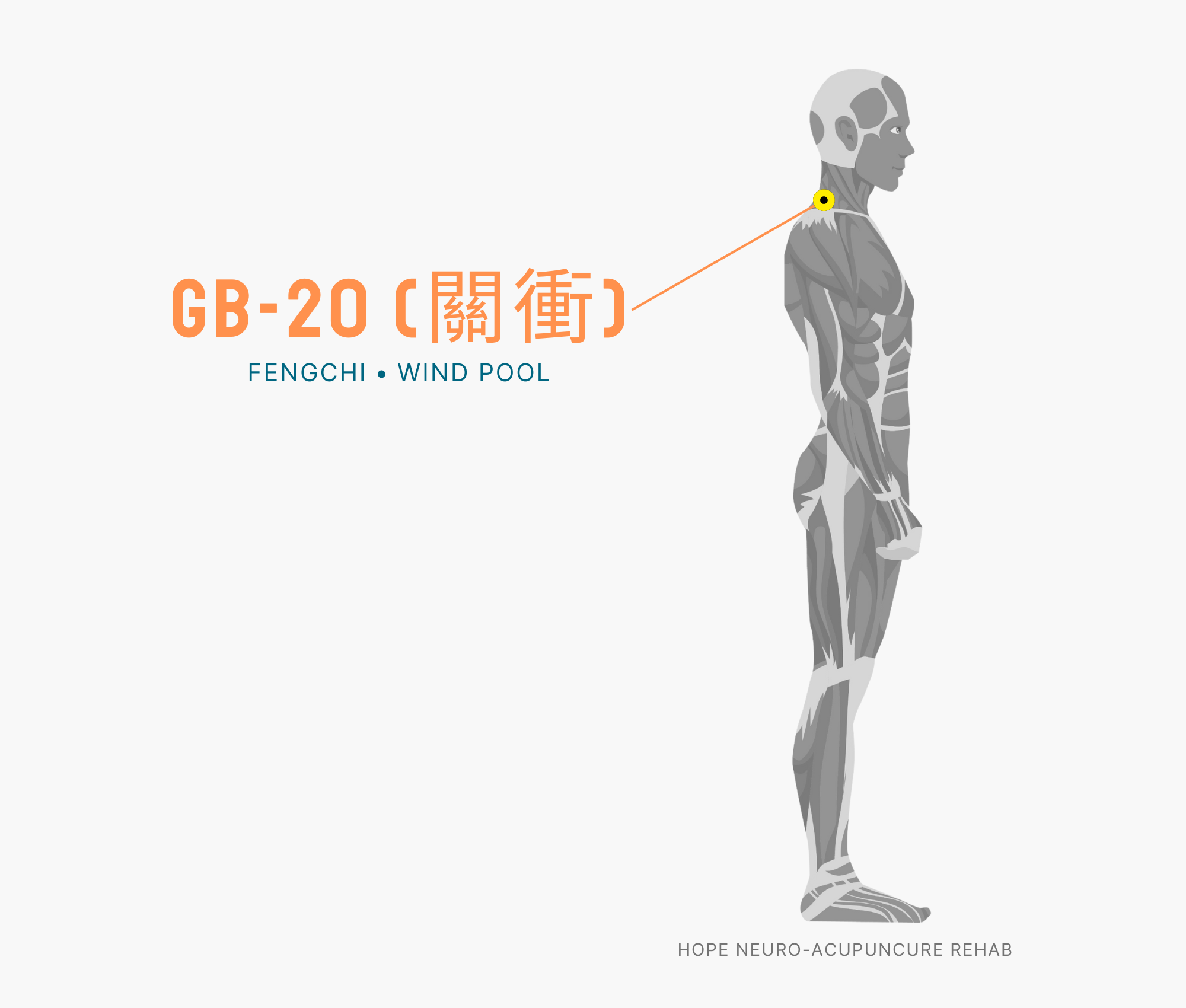
    3. Fengchi Acupoint (GB20)

    GB20 acupuncture point

    Location: On both sides of the neck, where the base of the skull meets the upper cervical region. Located in the hollow areas beneath the occipital bone.

    Acupressure Method: Apply pressure with both thumbs, positioning them lightly against the back of the neck. Press deeply but within a pain-free range, pressing for 5 seconds and resting for 5 seconds in repetition. Perform for about 1 minute per session.

    Benefits: Fengchi is located near the carotid and vertebral arteries supplying the brain, making it very effective for improving cerebral circulation. It relieves neck stiffness and supplies fresh oxygen to the brain, enhancing concentration and memory.

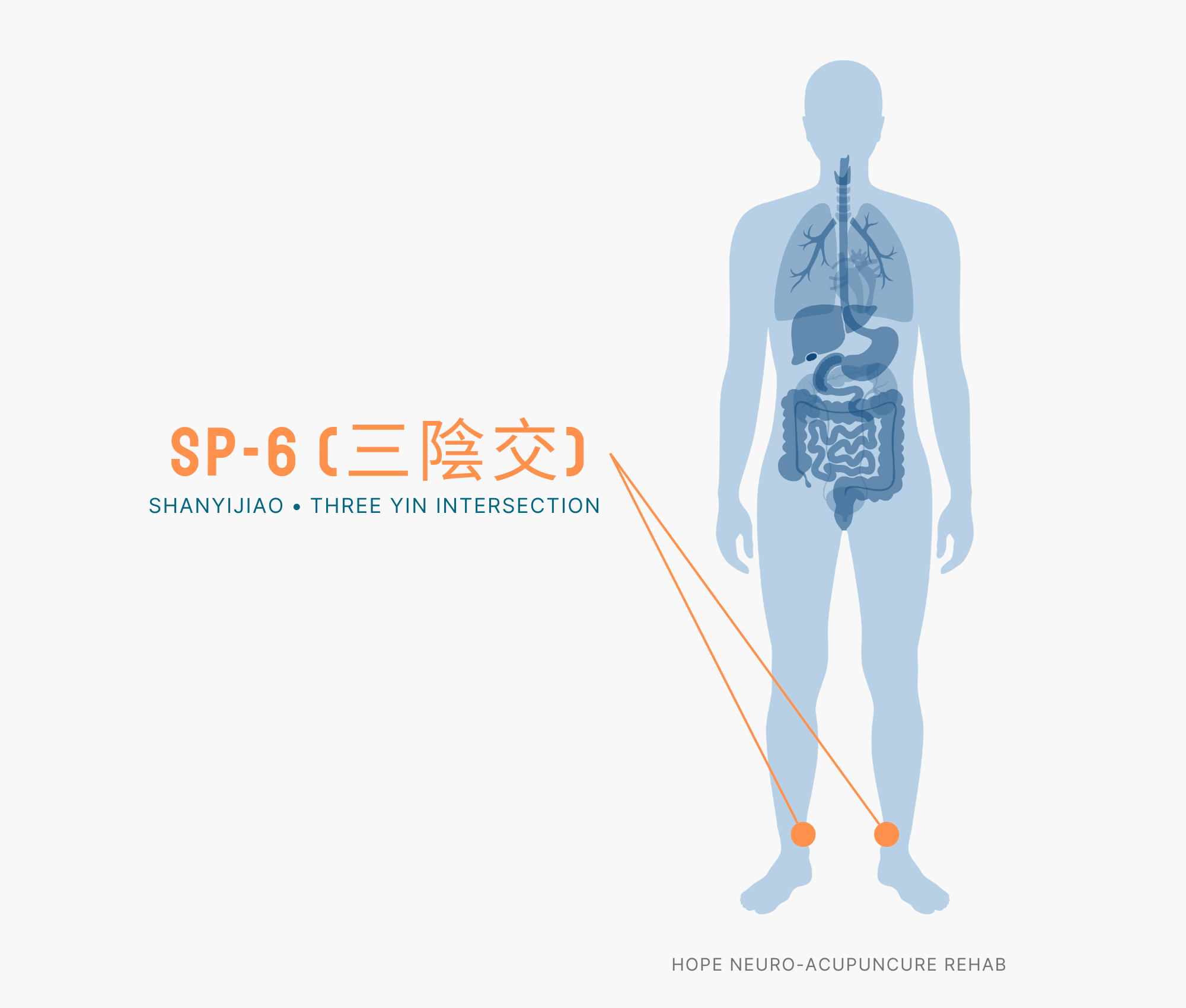
    4. Sanyinjiao Acupoint (SP6)

    SP6 acupuncture point

    Location: Approximately 4 cm above the inner ankle bone (about 3-4 finger widths), on the inner aspect of the calf.

    Acupressure Method: Using the thumb, gradually increase pressure, pressing for 5 seconds and resting for 5 seconds in repetition. Perform for 1 minute on each leg.

    Benefits: Sanyinjiao is an acupoint that improves blood circulation throughout the body. It increases blood flow to the brain, relieves nervous tension, and simultaneously alleviates stress-induced digestive issues and anxiety.

    5. Neiguan Acupoint (PC6)

    PC6 acupuncture point

    Location: At the center of the inner wrist, approximately 5 cm above the wrist crease toward the elbow.

    Acupressure Method: Apply pressure with the opposite thumb using a rhythm of pressing for 3 seconds and resting for 1 second, continuing for 30 seconds to 1 minute. Perform on both arms, taking care not to press too firmly.

    Benefits: Neiguan is known as an acupoint connecting the heart and brain. It reduces stress hormones (cortisol), stabilizes the nervous system, and effectively alleviates concentration loss caused by anxiety.

    5-Minute Self-Acupressure Routine

    Perform the following steps in order upon waking in the morning or during the afternoon 2-3 PM energy slump.

    • Step 1 (1 minute): Taiyang acupoint: 30 seconds on each side
    • Step 2 (1 minute): Baihui acupoint: 1 minute
    • Step 3 (1 minute): Fengchi acupoint: 30 seconds on each side
    • Step 4 (1.5 minutes): Sanyinjiao acupoint: 45 seconds on each leg
    • Step 5 (0.5 minutes): Neiguan acupoint: 15 seconds on each arm

    This 5-minute routine improves cerebral blood flow and calms the nervous system. Practicing twice daily—morning and evening—allows you to feel improvement in concentration within 1-2 weeks.

    🤰 Pregnant Woman Alert: Among the above acupoints, Sanyinjiao (SP6) can trigger uterine contractions in pregnant women. If you are pregnant or might be pregnant, consult with a professional before performing this acupoint. The other 4 acupoints (Taiyang, Baihui, Fengchi, and Neiguan) can be safely stimulated.
    ⚠️ Medical Disclaimer: This article is written for informational purposes about health and does not substitute for professional medical diagnosis or treatment. If you experience severe or persistent concentration loss, or if other neurological symptoms are present, please consult with a healthcare professional. If you experience severe pain or discomfort during acupressure, stop immediately.
  • ¿Rinitis? Presiona Estos 5 Puntos para un Alivio Natural

    ¿Rinitis? Presiona Estos 5 Puntos para un Alivio Natural

    “`html

    One-line summary: Rhinitis can be relieved within 1-2 weeks by pressing five acupoints—Yingxiang, Hegu, Taiyang, Yintang, and Tongqian—2-3 times daily to reduce nasal congestion and sneezing.

    Introduction

    Rhinitis that gets worse in spring is truly frustrating—nasal congestion makes concentration difficult, and nighttime snoring can be bothersome. Even with medication, there’s no fundamental solution, and repeated sneezing and nasal discharge make daily life inconvenient. In traditional Chinese medicine, rhinitis is viewed as “lung qi deficiency” and “pathogenic wind invasion.” By stimulating specific acupoints, you can strengthen lung function and improve blood circulation around the nose. Scientific research also shows that acupoint pressure helps regulate immune response and reduce nasal inflammation. Now, manage your rhinitis symptoms directly with just your fingertips, without relying on medication.

    Five Effective Acupoints for Relieving Rhinitis

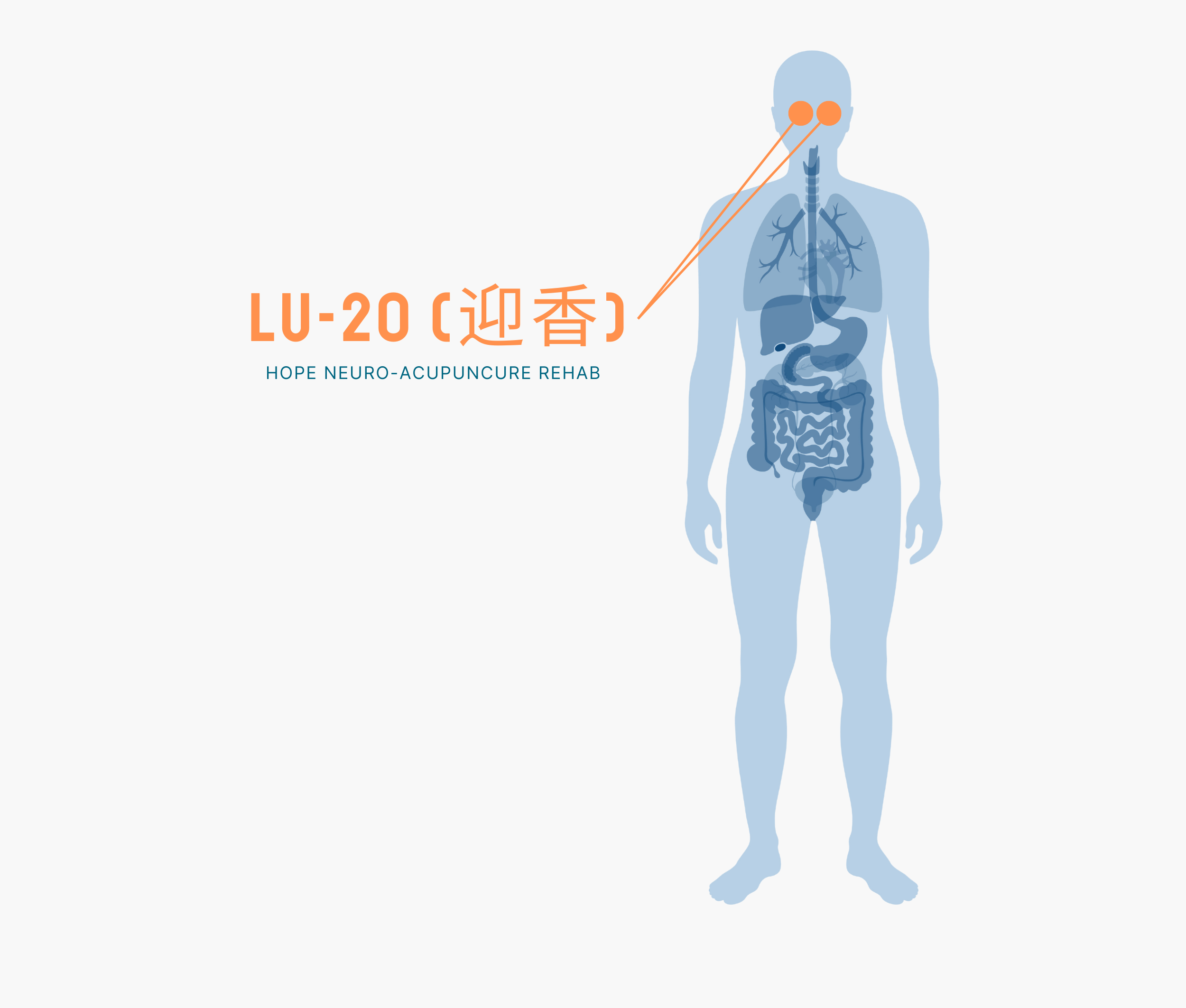
    1. Yingxiang (LI20) — Instant Relief for Nasal Congestion

    LI20 acupuncture point

    Location: Just outside the nostril, where the wrinkles on the side of the ala of the nose converge

    WHO Code: LI20 (Large Intestine 20)

    Pressure technique: Using your index or middle finger, gently press both sides of the ala of the nose simultaneously, directing the pressure slightly upward. Press for 1-2 minutes per session, maintaining comfortable breathing. Practice this 3 times daily when you feel nasal congestion.

    Benefits: Known as the “nasal acupoint,” Yingxiang most quickly relieves nasal congestion, runny nose, and loss of smell caused by rhinitis. You’ll feel immediate results within 5-10 minutes after pressure, with your nasal passages opening up.

    2. Hegu (LI4) — Boost Immunity & Reduce Inflammation

    LI4 acupuncture point

    Location: Between the thumb and index finger, at the highest point of the muscle on the back of the hand

    WHO Code: LI4 (Large Intestine 4)

    Pressure technique: Press vertically with the opposite thumb or massage in circular motions. Apply continuous pressure for about 1-2 minutes until you feel a slight warmth. Stimulate both hands for equal duration.

    Benefits: Known as a “universal acupoint,” Hegu strengthens lung function and boosts overall immunity. By addressing the root cause of rhinitis—lung qi deficiency—it reduces nasal allergic reactions long-term. It also relieves headaches and facial pain simultaneously.

    3. Taiyang (EX-HN5) — Rhinitis-Related Headaches & Temple Pain

    Location: The temple, approximately 1.5 cm inward from the outer edge of the eye toward the ear

    WHO Code: EX-HN5 (Extra Head 5, Extra point)

    Pressure technique: Using both middle fingers, gently massage both temples simultaneously in circular motions. Repeat 3 times for 30 seconds to 1 minute each. Gentle massage is more effective than firm pressure. Pressing too hard may worsen headaches.

    Benefits: When nasal congestion blocks the nose, pressure builds at the temples causing headaches. Stimulating Taiyang releases this tension. It also improves migraines and eye fatigue while promoting blood circulation to the brain.

    4. Yintang (EX-HN3) — Relieve Nasal Congestion & Stress Together

    Location: The glabella, the indented area in the center of the skin and muscle between the two eyebrows

    WHO Code: EX-HN3 (Extra Head 3, Extra point)

    Pressure technique: Using your thumb or middle finger, slowly press the glabella vertically for about 1-2 minutes. Start with moderate pressure, then gradually deepen it within a comfortable range. It’s important to maintain deep breathing.

    Benefits: Yintang promotes blood circulation to the brain and activates the parasympathetic nervous system. It relieves not only nasal congestion but also stress-related headaches, insomnia, and poor concentration while releasing overall forehead tension.

    5. Tongqian (BL7) — Restore Lung Function & Prevent Recurrence

    BL7 acupuncture point

    Location: On the crown of the head, approximately 1.5 cm in front of Baihui (GV20). You can locate it by following the center line of the head downward from your hair parting.

    WHO Code: BL7 (Bladder 7)

    Pressure technique: Tongqian can be difficult to locate, so first find Baihui (the center of the crown between the two ears), then press the point about 1-1.5 cm in front. Massage in circular motions with your middle finger for about 1 minute or apply gentle pressure.

    Benefits: Tongqian is an important acupoint connected to the Lung meridian that directly strengthens lung function. It’s most effective for improving the lung constitution—the root cause of rhinitis—and consistent stimulation prevents rhinitis recurrence. It also helps improve asthma and cough symptoms.

    5-Minute Self-Acupoint Massage Routine — Practice Once Daily in the Morning

    Recommended time: After waking in the morning or 1 hour before bedtime

    1. Yingxiang (LI20) — 1 minute
      Gently press both sides of the ala of the nose simultaneously until you feel nasal fullness.
    2. Yintang (EX-HN3) — 1 minute
      Slowly press the glabella vertically, then gently lift. Repeat 3 times.
    3. Hegu (LI4) — 1 minute
      Press both Hegu points simultaneously for about 1 minute until warmth is felt.
    4. Taiyang (EX-HN5) — 1 minute
      Gently massage both temples in circular motions. 30 seconds × 2 rounds.
    5. Tongqian (BL7) — 1 minute
      Gently massage the area below the center of the crown in circular motions.

    Important notes: The complete routine takes 5-6 minutes. Drinking warm water after massage enhances results. Practice daily for the first 1-2 weeks, then reduce to 3-4 times per week once symptoms improve.

    ⚠️ Medical Disclaimer: This article is provided for health information purposes and does not replace professional medical diagnosis or treatment. If symptoms persist or are severe, please consult a healthcare professional. Bacterial rhinitis, sinusitis, and allergic rhinitis require comprehensive treatment.
    🤰 Pregnancy Warning: Among the acupoints above, Hegu (LI4) may trigger uterine contractions in pregnant women. If you are pregnant or may be pregnant, avoid stimulating Hegu and practice only Yingxiang, Yintang, Taiyang, and Tongqian. If you have concerns, consult a healthcare professional before practicing.

    “`

  • ¿Trastornos de la Circulación Sanguínea? Presiona Estos 5 Puntos para Alivio Natural

    ¿Trastornos de la Circulación Sanguínea? Presiona Estos 5 Puntos para Alivio Natural

    One-line summary: If you apply acupressure to 5 acupoints—LI4, SP6, LR3, BL60, and ST36—for 5 minutes daily, you can promote blood circulation and improve cold hands and feet, fatigue, and numbness.

    Blood Circulation Problems: Can Acupoints Be the Answer?

    Are your hands and feet cold and heavy, or do you struggle with fatigue all day? Poor blood circulation is common in modern life, but if left untreated, it can worsen your health. In Traditional Chinese Medicine, these blood circulation problems are viewed as “insufficient flow of qi and blood,” and stimulating specific acupoints to improve the flow of meridians is considered important. Acupoint acupressure is a natural therapy that activates the body’s own self-healing power without medication, and has the advantage of being easy to perform anytime, anywhere. In this article, I will introduce in detail 5 of the most effective acupoints for improving blood circulation and how to apply acupressure to them.

    5 Effective Acupoints for Improving Blood Circulation

    1. Hegu (LI4) — The Representative Acupoint of the Large Intestine Meridian

    LI4 acupuncture point

    Location: It is located at the highest point on the back of the hand between the thumb and index finger (between the 1st and 2nd metacarpal bones).

    Acupressure Method: Press vertically with the thumb of your opposite hand and hold for 3-5 seconds, then slowly release. Perform 10 times per session, twice daily. Pressure that produces mild discomfort is most effective.

    Benefits: Hegu is known as the “universal acupoint” and promotes qi and blood circulation throughout the body. It improves blood circulation and relieves headaches, shoulder tension, and digestive discomfort. It also helps strengthen immunity.

    Caution: Pregnant women should avoid this acupoint.

    2. Sanyinjiao (SP6) — The Central Point for Blood and Women’s Health

    SP6 acupuncture point

    Location: It is located on the inner side of the shin, approximately 10 cm (three finger widths) above the inner ankle bone.

    Acupressure Method: Press vertically and firmly with your thumb and hold for 5 seconds. Perform 15 times per session on both sides, and it is most effective when done in the evening.

    Benefits: It promotes active blood circulation and improves lower extremity swelling, coldness, and numbness. It is particularly effective at regulating menstrual cycles and relieving menstrual pain, and also helps improve skin health and sleep quality.

    Caution: Pregnant women should avoid this acupoint.

    3. Taichong (LR3) — The Guardian of Liver Function and Circulation

    Location: It is located in the hollow area on the top of the foot between the big toe and second toe, approximately 2 cm above the base of the toes.

    Acupressure Method: Press slowly with your thumb while making circular motions. Apply pressure for 20-30 seconds per session, once or twice daily. Apply pressure in a comfortable position without bending your foot.

    Benefits: It activates liver function and promotes blood detoxification and circulation. It relieves worsening blood circulation due to stress, headaches, and eye fatigue, and is excellent for emotional stability.

    Caution: Pregnant women should avoid this acupoint.

    4. Kunlun (BL60) — The Key to Lower Extremity Blood Circulation

    BL60 acupuncture point

    Location: It is located in the hollow area between the outer ankle bone and the Achilles tendon. It can be seen on the back of the ankle.

    Acupressure Method: Press firmly with your thumb while moving up and down. Apply continuous pressure for approximately 1 minute per session, twice daily. Apply pressure evenly to both ankles.

    Benefits: It directly improves blood circulation in the legs and feet. It rapidly relieves cold feet, calf cramps, leg swelling, and lower extremity numbness. It also helps improve lower back pain.

    5. Zusanli (ST36) — The Tonic for Immunity and Circulation

    ST36 acupuncture point

    Location: It is located on the outer side of the shin, approximately 12 cm (four finger widths) below the knee crease on the outside of the knee.

    Acupressure Method: Press vertically with your thumb at a pressure that produces mild discomfort. Repeat for 30 seconds, 3-5 times per session, once or twice daily.

    Benefits: It replenishes qi (energy) throughout the body and activates blood circulation. It is excellent for fatigue recovery, strengthening immunity, improving digestion, and stabilizing blood pressure, and is the ideal acupoint for fatigue recovery in those whose work involves prolonged standing or sitting.

    5-Minute Self-Acupressure Routine for Improving Blood Circulation

    It is more effective when performed at the same time each day. Evening (7 pm–9 pm) is ideal.

    1. Hegu (LI4) — 1 minute
      Apply pressure alternately to both hands. Repeat 10 times per hand at moderate pressure.
    2. Zusanli (ST36) — 1 minute
      Apply pressure alternately to both legs for 30 seconds each.
    3. Sanyinjiao (SP6) — 1 minute
      Apply pressure alternately to the inner side of both ankles, 15 times each.
    4. Taichong (LR3) — 1 minute
      Apply pressure in circular motions slowly to both feet.
    5. Kunlun (BL60) — 1 minute
      Finish by applying firm pressure to the back of both ankles.

    Tip: If your nails are long, you can use your knuckles or a massage stick instead. After acupressure, drink warm water and get adequate rest.

    ⚠️ Medical Disclaimer: This article is written for informational purposes and does not replace professional medical diagnosis or treatment. If you have underlying conditions that cause poor blood circulation (such as diabetes, vascular disease, or heart disease), please consult a healthcare professional. If symptoms persist or are severe, please seek treatment from a traditional medicine practitioner or physician.
    🤰 Pregnant Women Alert: Among the acupoints listed above, Hegu (LI4), Sanyinjiao (SP6), Taichong (LR3), and Kunlun (BL60) can trigger uterine contractions in pregnant women. If you are pregnant or may be pregnant, please consult a traditional medicine practitioner before proceeding, and use only Zusanli (ST36) or receive professional treatment.
  • ¿Reumatismo? Presiona Estos 5 Puntos para un Alivio Natural

    ¿Reumatismo? Presiona Estos 5 Puntos para un Alivio Natural

    One-line Summary: To relieve chronic pain from rheumatoid arthritis, regularly stimulating 5 acupoints including Hegu (LI4), Sanyinjiao (SP6), Kunlun (BL60), Taichong (LR3), and Zusanli (ST36) helps reduce inflammation and improve blood circulation.

    Introduction: Rheumatoid Arthritis and Acupoint Treatment

    Rheumatoid arthritis is a condition in which the joints become chronically inflamed and painful due to immune system dysfunction. It often begins with small joints such as the fingers, wrists, and toes, and can spread throughout the body, causing suffering for many people. While medication is the primary treatment, acupoint pressure therapy from traditional East Asian medicine can help promote blood circulation and reduce inflammatory responses.

    According to the Donguibogam and Huangdi Neijing classical texts, specific acupoints regulate the body’s qi (氣) and blood circulation to alleviate pain. We introduce 5 scientifically validated acupoints to help relieve symptoms of joint pain, swelling, and restricted movement caused by rheumatoid arthritis.

    5 Effective Acupoints for Rheumatoid Relief

    1. Hegu (LI4) — The Powerful Pain-Relief Point in Your Hand

    LI4 acupuncture point

    WHO Code: LI4 (Large Intestine meridian point 4)

    Location: In the webbing between the thumb and index finger, at the point where bones meet near the back of the hand. It’s the spot that feels sore when you press it with the opposite thumb.

    Pressure Technique: Using the opposite thumb, gently press for about 5 seconds, then rest for 3 seconds, and repeat this about 10-15 times per hand. Start with light pressure at first.

    Rheumatoid Symptom Relief Effect: Hegu is connected to the Large Intestine meridian and is called the “master point” for whole-body pain relief. It is particularly effective at relieving pain in the upper body, inflammatory pain in the wrist and finger joints, and helps with immune regulation through stress relief.

    2. Sanyinjiao (SP6) — The Hub for Immune System Strengthening

    SP6 acupuncture point

    WHO Code: SP6 (Spleen meridian point 6)

    Location: On the inner side of the leg above the ankle, about 4 fingers’ width (approximately 10cm) above the top of the ankle bone, at the inner edge of the tibia. Find the hollow depression just behind the bone.

    Pressure Technique: Using your thumb or an acupressure tool, press vertically for 3-5 seconds and release, repeating this 8-10 times. Perform on both legs, and doing this in the evening can even help with sleep.

    Rheumatoid Symptom Relief Effect: As one of the Eight Confluence Points of the Spleen meridian, it governs the immune system. It effectively regulates the overactive immune response that is the root cause of rheumatoid arthritis, relieves joint swelling, and improves inflammatory constitution.

    3. Kunlun (BL60) — The Solution for Lower Body Pain

    BL60 acupuncture point

    WHO Code: BL60 (Bladder meridian point 60)

    Location: On the outer side of the foot, at the midpoint between the outer ankle bone (lateral malleolus) and the heel. You’ll feel soreness when you press with your finger.

    Pressure Technique: Using your thumb or an acupressure tool, press for 5-10 seconds, and repeat this 8-12 times. Perform on both feet, and you can increase the frequency on days when pain is severe.

    Rheumatoid Symptom Relief Effect: The Bladder meridian governs nerves and mental state, and promotes blood circulation throughout the lower body. It is particularly effective at relieving rheumatoid pain in the ankles, knees, and hip joints, eliminating leg swelling, and improving secondary pain caused by neuropathy.

    4. Taichong (LR3) — Liver Function and Stress Relief

    WHO Code: LR3 (Liver meridian point 3)

    Location: On the top of the foot between the big toe and second toe, in the webbing area, slightly higher up. When you press it, you’ll feel some soreness and a sensation that radiates to the epigastrium.

    Pressure Technique: Using your thumb, push upward from below for 3-5 seconds of pressure, then rest, and repeat this 10-15 times. Doing this in the morning leaves you feeling energized throughout the day.

    Rheumatoid Symptom Relief Effect: As the Spring point of the Liver meridian, it relieves qi stagnation caused by stress and anger. By alleviating stress (a major factor in worsening rheumatoid arthritis), stabilizing the immune system, and improving liver detoxification function, it helps reduce symptoms of autoimmune disease.

    5. Zusanli (ST36) — The Whole-Body Immune System Strengthening Point

    ST36 acupuncture point

    WHO Code: ST36 (Stomach meridian point 36)

    Location: Below the knee on the outer side, approximately 4 fingers’ width (about 10cm) below the depression below the kneecap (Dubi), along the outer edge of the tibia. It’s the spot where you feel the most soreness when pressed.

    Pressure Technique: Using your thumb or an acupressure tool, press vertically for 5-7 seconds, rest for 3 seconds, and repeat this 15-20 times. Using moxibustion or rice grain moxibustion is even more effective.

    Rheumatoid Symptom Relief Effect: Known as the body’s “second heart,” Zusanli is the representative acupoint for strengthening whole-body immunity. It enhances organ function, promotes whole-body blood circulation, improves the body’s resistance to autoimmune disease, and is very effective at improving chronic inflammatory constitution.

    5-Minute Self-Massage Routine for Rheumatoid Relief

    Perform the following sequence every morning or evening:

    1. Preparation (30 seconds): Sit in a comfortable position, rub your hands together to warm them up, then take 3 deep breaths
    2. Hegu (LI4) – 1 minute: 30 seconds per hand, 10-15 presses each
    3. Taichong (LR3) – 1 minute: 30 seconds per foot, 10-15 presses each
    4. Zusanli (ST36) – 1 minute 30 seconds: 45 seconds per leg, 15-20 presses each
    5. Kunlun (BL60) – 1 minute: 30 seconds per foot, 8-12 presses each
    6. Sanyinjiao (SP6) – 30 seconds: Add 5-10 presses per hand in spare time
    7. Cool Down (30 seconds): Have a cup of tea and rest

    Tips to Maximize Effectiveness: Avoid exposure to cold wind for 30 minutes after acupressure. Soaking your hands and feet in warm water at the end will further promote blood circulation. Performing this at the same time every day will help your body establish a rhythm and make it even more effective.

    ⚠️ Medical Disclaimer: This article is written for informational purposes and does not replace professional medical diagnosis or treatment. Rheumatoid arthritis is a progressive disease that requires medication (DMARDs, biologics) and management by healthcare professionals. Acupoint pressure therapy should only be used as a supplementary measure to medical treatment. If symptoms persist or worsen, if joints rapidly swell, or if you experience severe pain, be sure to consult a rheumatologist or healthcare professional.
    🤰 Pregnancy Warning: Among the above acupoints, Hegu (LI4), Sanyinjiao (SP6), Taichong (LR3), and Kunlun (BL60) can trigger uterine contractions. If you are pregnant or might be pregnant, be sure to consult with an obstetrician and a traditional medicine practitioner before performing these techniques. Extra caution is needed in early and late pregnancy.
  • ¿Síntomas del Síndrome Premenstrual? Presiona Estos 5 Puntos para Alivio Natural

    ¿Síntomas del Síndrome Premenstrual? Presiona Estos 5 Puntos para Alivio Natural

    “`html

    One-line Summary: Regular acupressure on five acupoints—SP6, LI4, LR3, SP9, and CV4—can alleviate abdominal bloating, fatigue, and mood changes associated with premenstrual syndrome.

    Introduction

    Fatigue, abdominal bloating, and emotional changes that begin 1-2 weeks before menstruation—PMS (premenstrual syndrome) symptoms significantly reduce quality of life for many women. Traditional Chinese Medicine views PMS as an imbalance in qi and blood circulation, and explains that stimulating specific acupoints can normalize uterine function and regulate hormone secretion. If you prefer a natural approach without side effects compared to Western hormone therapy, self-acupressure is an effective method you can practice anytime, anywhere. This article introduces the five most effective acupoints for alleviating PMS symptoms and the correct acupressure techniques.

    Five Acupoints Effective for Alleviating PMS Symptoms

    1. Sanyinjiao (SP6)

    SP6 acupuncture point

    Location: On the inner edge of the tibia, approximately 4 cm (three finger widths) above the medial malleolus (inner ankle bone).

    Effects: The most important acupoint for PMS treatment, it regulates uterine and ovarian function. Effective for normalizing hormone secretion, alleviating menstrual cramps, and improving anxiety and sleep.

    Acupressure Technique: Place your thumbs on the inner side of both ankles and slowly repeat pressing and releasing 5-10 times. A mild tenderness (7/10 intensity) is ideal. Recommended for 2-3 minutes per session, 1-2 times daily.

    2. Hegu (LI4)

    LI4 acupuncture point

    Location: In the webbing between the thumb and index finger (on the back of the hand), approximately 1 cm toward the wrist in the depressed area.

    Effects: An effective acupoint for relieving pain and stress throughout the body. It quickly alleviates headaches, neck stiffness, and menstrual cramps caused by PMS, and calms anxiety from mood changes and stress.

    Acupressure Technique: Press firmly with your opposite thumb, applying pressure in a circular motion while pressing. Hold for 15-20 seconds, then release slowly. 1-2 minutes per hand, can be done 3-4 times daily.

    3. Taichong (LR3)

    Location: In the webbing between the first and second toes, approximately 2-3 cm up from the web toward the top of the foot in the depressed area.

    Effects: It improves the flow of liver qi and is particularly effective for emotion-related and stress-related PMS symptoms. It alleviates pre-menstrual anxiety, depression, and mood swings, and promotes sound sleep.

    Acupressure Technique: Press slowly with your thumb, maintaining a deep yet gentle intensity. 2-3 minutes per foot is effective, with acupressure best performed in the evening (when liver qi is most active).

    4. Xuehai (SP9)

    Location: On the inner side of the knee, approximately 3 cm (two to three finger widths) above the knee crease, in the depressed area of the muscle. It’s easy to locate when sitting with the knee bent.

    Effects: It promotes blood circulation and improves menstrual cramps, irregular menstruation, and abdominal bloating. It alleviates fatigue and dizziness from PMS and helps regulate excessive menstrual bleeding.

    Acupressure Technique: Press slowly with your thumb, angling slightly toward the back of the knee. 2 minutes per knee, recommended 1-2 times daily.

    5. Guanyuan (CV4)

    Location: Approximately 3-4 cm (four finger widths) below the navel, on the midline of the abdomen.

    Effects: It strengthens the lower dantian (lower abdominal energy center) and improves overall uterine and pelvic health. Effective for fundamental improvement of PMS symptoms, regulation of irregular menstruation, and enhancement of overall stamina and immunity.

    Acupressure Technique: Lie down in a comfortable position, overlap three to four fingers, and gently apply acupressure in a circular motion. Stimulate gently for 5-10 minutes; avoid during menstruation and it’s best to start from one week before menstruation or after menstruation ends.

    5-Minute Self-Acupressure Routine

    Recommended Time: 7-9 PM (when liver and kidney qi are most active)

    1. Taichong (1 minute) — Stabilizes emotions, relieves stress
    2. Hegu (1 minute) — Alleviates pain, calms nerves
    3. Sanyinjiao (1.5 minutes) — Regulates uterine function, normalizes hormones
    4. Xuehai (1 minute) — Promotes blood circulation, aids fatigue recovery
    5. Guanyuan (30 seconds) — Strengthens pelvic energy

    Frequency: Once daily from 1-2 weeks before the expected menstrual date until menstruation begins. During menstruation, avoid strong stimulation; apply gently or discontinue.

    🤰 Pregnancy Warning: The above acupoints—Sanyinjiao (SP6), Hegu (LI4), Taichong (LR3), and Xuehai (SP9)—may cause uterine contractions in pregnant women. If you are pregnant or may be pregnant, please consult with an obstetric or medical professional before practicing these acupoints.
    ⚠️ Medical Disclaimer: This article is written for informational purposes and does not replace professional medical diagnosis or treatment. If PMS symptoms persist or are severe, if you are taking medications, or if you have underlying conditions, please consult with a healthcare professional such as a Traditional Chinese Medicine practitioner or gynecologist. Avoid acupressure on areas with skin conditions or wounds.

    “`

  • Cómo Aliviar el Dolor Pélvico Naturalmente con Estos 5 Puntos de Presión

    Cómo Aliviar el Dolor Pélvico Naturalmente con Estos 5 Puntos de Presión

    One-line summary: Pelvic pain can be improved through consistent acupressure on five points: Sanyinjiao, Taichong, Qihai, Kunlun, and Zhongji, which enhances qi and blood circulation in the lower abdomen and relieves tension around the uterus and bladder.

    Introduction

    Pelvic pain is a symptom frequently reported by modern women. It’s caused by prolonged sitting, hormonal changes before and after menstruation, and pelvic floor muscle tension from stress. Traditional Korean medicine interprets this as ‘insufficient qi and blood circulation’ and ‘phlegm and fluid stagnation’.

    Acupressure on acupoints stimulates meridians (channels) around the pelvis to promote blood and lymph circulation and relieve muscle tension around the uterus, ovaries, bladder, and genitals. Acupoints distributed along the central lower abdomen and inner legs have traditionally been used for gynecological conditions and lower abdominal pain relief. Since it can be performed at home with just your fingers without medication, it’s effective for busy modern people.

    5 Acupoints for Pelvic Pain Relief

    1. Sanyinjiao (三陰交, SP6/SPL6)

    SP6 acupuncture point

    Location: On the inner leg, approximately 4 finger widths (10cm) above the inner ankle bone. It’s located in the depression on the back of the tibia.

    Acupressure Method: Use your thumb to gently press upward, holding for 3-5 seconds, and repeat 10 times. Gradually increase the pressure until you feel a soreness.

    Benefits: Sanyinjiao is known as the ‘gynecology superpoint’ and normalizes qi and blood around the uterus, regulates menstrual cycles, and relieves pelvic floor muscle tension. It has traditionally been used for pelvic pain, menstrual cramps, and infertility improvement.

    WHO Code: SP6 (Spleen meridian point 6)

    2. Taichong (太衝, LR3/LIV3)

    Location: On the top of the foot, in the depression between the big toe and second toe (between the metatarsal bones). It’s located where the toe bones end.

    Acupressure Method: Press firmly with the tip of your thumb pointing upward, holding for 5-7 seconds, and release. Repeat 8-10 times. You’ll feel tension from stress release.

    Benefits: As a source point of the Liver meridian, it regulates qi and blood flow in the pelvic area and relieves muscle stiffness in the uterus and pelvis from stress. It’s effective for menstrual cramps, ovulation pain, and pelvic colic, and also promotes emotional stability.

    WHO Code: LR3 (Liver meridian point 3)

    3. Qihai (氣海, CV6/REN6)

    Location: On the center line, approximately 1.5 finger widths (about 4cm) below the navel. It’s located just below the skin.

    Acupressure Method: Overlap your index and middle fingers and press vertically and slowly, using gentle pressure to massage in circular motions without pressing too deeply. Continue for 30 seconds to 1 minute.

    Benefits: As a key point on the Conception vessel, it supplements original qi in the lower heater (lower abdomen) and strengthens the function of the uterus and pelvic organs. It’s effective for pelvic pain, irregular menstruation, uterine disease prevention, and improving lower abdominal coldness.

    WHO Code: CV6 (Conception vessel point 6, Qihai point)

    4. Kunlun (崑崙, BL60/BL60)

    BL60 acupuncture point

    Location: On the outer ankle, in the depression between the outer ankle bone and heel. It’s located in the hollow on the outer side of the ankle.

    Acupressure Method: Use your thumb to press firmly upward (toward the toes) for 3-5 seconds, and repeat 10-12 times. Aim for a cooling sensation that extends to the calf.

    Benefits: As an important point on the Bladder meridian, it improves qi and blood circulation of the spine and pelvis and relieves lower back pain and pelvic pain. It’s particularly effective for pelvic pain from pelvic floor muscle stiffness and sciatica.

    WHO Code: BL60 (Bladder meridian point 60)

    5. Zhongji (中極, CV3/REN3)

    Location: On the center line, approximately 4 finger widths (about 10cm) below the navel. It’s located just above the upper border of the pubic bone.

    Acupressure Method: Gently press vertically with your middle finger while maintaining appropriate pressure to avoid irritating the bladder. Repeat circular massage for 30-50 seconds, 3 times.

    Benefits: As a mu point of the Conception vessel, it regulates the function of the bladder, uterus, and small intestine, and releases lower abdominal stiffness. It’s effective for pelvic pain, difficult urination, uterine disease, and improving reproductive discomfort.

    WHO Code: CV3 (Conception vessel point 3, Zhongji point)

    5-Minute Self-Acupressure Routine

    Preparation: Sit or lie in a comfortable position, and the effect will be better if you start with warm hands.

    Order Acupoint Time Method
    1 Qihai (CV6) 1 minute Massage gently in circular motions
    2 Zhongji (CV3) 1 minute Vertical pressing and circular massage
    3 Sanyinjiao (SP6) 1 minute Press 10 times with thumb
    4 Taichong (LR3) 1 minute Press 8-10 times with thumb
    5 Kunlun (BL60) 1 minute Press 10-12 times with thumb

    Tips: It’s most effective to perform it twice daily: in the morning after waking and in the evening before bed. If pain is severe, you can perform it up to 3 times a day, and it can be done during menstruation (but avoid excessive stimulation).

    🤰 Pregnancy Warning: Among the acupoints above, Sanyinjiao (SP6), Taichong (LR3), and Kunlun (BL60) may induce uterine contractions in pregnant women. If you are pregnant or potentially pregnant, gently perform only Qihai (CV6) and Zhongji (CV3), and be sure to consult with a professional before practicing.
    ⚠️ Medical Disclaimer: This article is written for informational purposes and does not replace professional medical diagnosis or treatment. If symptoms persist or are severe, especially if pelvic pain is due to trauma or gynecological disease is suspected, be sure to consult a healthcare professional (doctor or traditional Korean medicine practitioner). If symptoms worsen after acupressure, stop immediately and seek professional evaluation.
  • ¿Alivio de Flema? Presiona Estos 5 Puntos para Alivio Natural

    ¿Alivio de Flema? Presiona Estos 5 Puntos para Alivio Natural

    One-line summary: To clear phlegm, daily apply pressure to Lieque (LU7) and Shaoshang (LU11) to support lung function, and to Shanzhong (CV17), Zusanli (ST36), and Fengfu (GV16) which regulate the respiratory center.

    Introduction

    Many of us have experienced the discomfort of phlegm getting stuck in the throat and the inconvenience of frequent coughing. Especially after a cold, phlegm can linger for weeks, becoming stressful. In traditional medicine, phlegm is called “Tan (痰)” and is believed to result from reduced lung function and humid conditions. Fortunately, acupressure on specific points is very effective at activating lung function and clearing the airway. The five acupressure points introduced in this article are the most widely recognized in both traditional medicine and modern acupuncture. You can apply pressure with just your hands and fingers anytime, anywhere, making it easy to practice at work or home without medication.

    Five Acupressure Points Explained

    1. Lieque (LU7) — Master Point of the Lung Meridian

    LU7 acupuncture point

    WHO Code: LU7 | Chinese Name: 列缺
    Location: On the inner forearm, along the line between the thumb and index finger above the wrist crease. It is located above the area where the thumb’s pulse is felt.
    Application Method: Using your opposite thumb, press slowly for about 10 seconds with moderate pressure that produces slight discomfort, and repeat 3-5 times.
    Effects: As the primary point of the lung meridian, it is most effective for directly treating phlegm and cough. It also excels at relieving nasal congestion, asthma, and cold symptoms.

    2. Shaoshang (LU11) — Emergency Point for Reducing Lung Heat

    WHO Code: LU11 | Chinese Name: 少商
    Location: About 3mm from the outer corner of the thumb’s fingernail (toward the pinky finger side).
    Application Method: Lightly stimulate by pressing with the opposite hand’s fingernail, or massage in circular motions with your fingertip. Stimulate 2-3 times daily, for about 30 seconds each time.
    Effects: Reduces fever in the lungs and alleviates airway inflammation. Especially effective when phlegm is yellowish or pus-like, and quickly relieves acute cough and sore throat.

    3. Shanzhong (CV17) — Center of Respiration and Qi

    WHO Code: CV17 | Chinese Name: 膈俞
    Location: At the center of the chest, on the midline of the sternum on the line connecting both nipples. Specifically, it is in the depression between the ribs as they descend from the neck.
    Application Method: Using your finger joints, slowly massage in circular motions for 3-5 minutes. Maintain gentle pressure, not too deep.
    Effects: A central point that regulates qi and blood of the lungs and heart. It quickly alleviates the sense of oppression caused by phlegm and difficulty breathing deeply, while normalizing respiratory function.

    4. Zusanli (ST36) — Strengthen Both Immunity and Lung Function

    ST36 acupuncture point

    WHO Code: ST36 | Chinese Name: 足三里
    Location: On the outer side of the leg, four finger-widths below the depression below the knee. You can easily find it by following the outer edge of the tibia downward.
    Application Method: Press firmly with your thumb for 10-15 seconds, then rest for 10 seconds and repeat. Practice 1-2 times daily, applying pressure to one leg for about 5 minutes.
    Effects: The most famous acupressure point for activating the immune system. It improves the compromised immunity that underlies phlegm and promotes cold prevention and recovery. It also improves digestive function.

    5. Fengfu (GV16) — Point That Aids Qi and Blood Circulation in the Neck and Head

    WHO Code: GV16 | Chinese Name: 風府
    Location: At the center of the back of the neck, in the depression below the cervical vertebra at the back of the head. You can find it by following the line behind the ear down the neck.
    Application Method: Using the tips of both hands’ fingers, lightly massage in circular motions for 3-5 minutes. Proceed slowly until the neck muscles relax.
    Effects: Relieves neck stiffness and improves qi and blood circulation around the airway. Quickly alleviates the sensation of oppression caused by phlegm and treats sore throat and pharyngitis.

    5-Minute Self-Acupressure Routine

    Just 5 minutes of investment during a busy morning or evening is enough. Follow this sequence:

    1. Lieque (LU7) — 1 minute
      Apply pressure to both wrists with your thumb, 30 seconds each. This is the first step in opening the door to lung function.
    2. Shaoshang (LU11) — 30 seconds
      Gently stimulate both thumbs at the edge of the fingernail. This quickly reduces the heat of phlegm.
    3. Shanzhong (CV17) — 1 minute
      Massage the center of your chest in circular motions using your finger joints. Do this while being conscious of deep breathing.
    4. Zusanli (ST36) — 1 minute 30 seconds
      Apply pressure below both knees, 45 seconds each. You can do this comfortably while sitting.
    5. Fengfu (GV16) — 1 minute
      Gently massage the back of your neck to finish. At this point, you should feel your breathing has become much easier.

    Tip: If you apply pressure at the same time each day in the same sequence, your body will recognize the pattern and respond more quickly. Evening before bedtime is ideal.

    ⚠️ Medical Disclaimer: This article is written for the purpose of providing health information and does not substitute for professional medical diagnosis or treatment. If symptoms persist or are severe, please consult a healthcare professional.
  • Los 5 Mejores Puntos de Acupresión para el Trastorno de Pánico (Con Ubicaciones Exactas)

    Los 5 Mejores Puntos de Acupresión para el Trastorno de Pánico (Con Ubicaciones Exactas)

    “`html

    1行まとめ: 内関・神門・太衝・合谷・大椎の5つのツボを刺激することで、動悸、不安感、息切れなどのパニック障害の症状を素早く緩和することができます。

    パニック障害とツボ指圧の効果

    突然の動悸、息が詰まるような息苦しさ、死ぬような恐怖感—パニック障害を経験される方の苦痛は現実です。現代医学的治療も重要ですが、数千年にわたって実証されている中医学の経穴刺激は、これらの症状の急性悪化時に素早い鎮静効果をもたらすことができます。特に内関・神門などの経穴は心身を落ち着かせ、神経系の過度な反応を調整するのに非常に効果的です。ストレスと不安が蓄積する前に事前に指圧で管理することで、パニック発作の頻度と強度を大幅に減らすことができます。

    パニック障害の緩和に効果的なツボ5つ

    1. 内関(ないかん)— PC6 (Pericardium 6)

    PC6 acupuncture point

    位置: 腕の内側、手首のしわから腕方向へ約2cm上にある2本の腱の間の凹んだ部分です。

    指圧法: 親指でゆっくり圧力をかけ、5秒間押して5秒間離します。軽い痛みを感じる程度(圧痛点)が適切です。1分間繰り返します。

    効果: 内関は心臓と精神を落ち着かせる最も重要なツボです。不安感、動悸、吐き気、不眠症を素早く緩和します。パニック障害の発作中または予想される時に最初に指圧すべきツボです。

    2. 神門(しんもん)— HT7 (Heart 7)

    HT7 acupuncture point

    位置: 手首の内側のしわの小指側の端の地点に位置します。手首を曲げた時の凹んだ部分です。

    指圧法: 親指でやさしく円形にマッサージするように2~3分間刺激します。強く押しすぎないようにし、心地よさを感じる程度が良いです。

    効果: 神門は心の門という意味で、精神不安、不眠症、健忘症、心悸亢進を鎮めます。夜間に指圧すると熟睡に役立ち、緊張状況の前に事前に刺激すると心理的安定感を高めます。

    3. 太衝(たいしょう)— LR3 (Liver 3)

    位置: 足の甲の第1と第2中足骨の間の凹んだ部分、足首から足指方向へ約2cm上がった地点です。

    指圧法: 親指でゆっくり5~10秒間強く押して離します。軽い痛みを感じるのが正常です。両足それぞれ1分ずつ実行します。

    効果: 肝の機能を正常化し、ストレスによる緊張を解きます。パニック障害で現れる喉の異物感、胸部の息苦しさ、過敏性を改善します。感情的安定と怒りの制御にも優れています。

    4. 合谷(ごうこく)— LI4 (Large Intestine 4)

    LI4 acupuncture point

    位置: 親指と人差し指が出会う地点の指骨の内側、凹んだ場所です。

    指圧法: 反対側の親指で強く押さえ、痛みを軽く感じる程度の圧力(7-8/10)を維持して1~2分押します。両手とも実行します。

    効果: 全身の緊張を緩和し、ストレス性疼痛(首、肩、頭)を軽減します。免疫力を高め、神経系の過剰反応を鎮めます。パニック障害による全身の硬直感と筋肉痛を素早く緩和します。(妊婦は専門家相談が必須)

    5. 大椎(だいつい)— GV14 (Governing Vessel 14)

    位置: 首を前に曲げた時の第7頸椎の下で最も突き出た脊椎の真下の凹んだ部分です。

    指圧法: 座って反対側の手を首の後ろに回し、親指または人差し指と中指の2本の指でゆっくり2~3分押します。他人の手を借りるとより効果的です。

    効果: 神経系全体の安定を図り、免疫力を強化します。ストレスで低下した身体抵抗力を高め、慢性疲労と神経過敏を改善します。パニック障害の根本的原因である神経過敏性を低下させるのに効果的です。

    5分のセルフ指圧ルーティン

    毎日朝または夜、またはパニック症状を感じた時に以下の順序で行ってください:

    1. 内関(PC6)— 1分: 両腕それぞれ30秒ずつ。深く呼吸しながらゆっくり圧迫します。
    2. 神門(HT7)— 1分: 両手それぞれ30秒ずつ。心地よい強度で円形マッサージします。
    3. 太衝(LR3)— 1分: 両足それぞれ30秒ずつ。強い圧力で押します。
    4. 合谷(LI4)— 1分: 両手それぞれ30秒ずつ。最も強い圧力で刺激します。
    5. 大椎(GV14)— 1分: 首の後ろでゆっくり円形にマッサージします。

    ヒント: 深呼吸を並行すると副交感神経の活性化で弛緩効果が倍増します。指圧後10~15分程度安静にするのが良いです。

    ⚠️ 医療免責事項: 本記事は健康情報提供目的で作成されており、専門的な医療診断または治療の代替とはなりません。パニック障害は医学的診断と適切な治療が必須ですので、症状が続く場合または重い場合は必ず精神神経科または医療専門家に相談してください。ツボ指圧は医療治療の補助手段としてのみご活用ください。
    🤰 妊婦注意: 上記のツボの中で合谷(LI4)、太衝(LR3)、および一部の出血リスクのある経穴は妊婦に子宮収縮を引き起こす可能性があります。妊娠中または妊娠の可能性がある方は必ず中医師または産婦人科専門家に相談した後に実行してください。

    “`

  • Alivio del Dolor de Pies: 5 Puntos de Presión Que Realmente Funcionan

    Alivio del Dolor de Pies: 5 Puntos de Presión Que Realmente Funcionan

    Summary: Foot pain and heel discomfort (plantar fasciitis) can be effectively managed through acupressure on 5 key acupoints including Kunlun, Yongquan, and Zusanli, with improved blood circulation and pain relief achievable through consistent daily routines of 5 minutes, performed twice a day.

    Foot Pain: Why Does It Occur and Why Is Acupoint Acupressure Helpful?

    That sharp, shooting pain in the bottom of your foot when taking your first steps in the morning—for those whose jobs involve standing all day, it becomes chronic discomfort. This condition is called plantar fasciitis, which occurs when inflammation develops in the plantar fascia that supports the arch of the foot. In traditional medicine, foot pain is viewed as “insufficient flow of qi and blood.” The foot is often called a microcosm of the body, with many acupoints concentrated in it. When you stimulate specific acupoints, you promote blood circulation and facilitate the smooth flow of qi, enabling pain relief and enhanced natural healing power.

    5 Key Acupoints for Relieving Foot Pain

    1. Kunlun (BL60) — An Excellent Remedy for Foot Pain

    BL60 acupuncture point

    Location: On the outer side of the foot, in the hollow between the heel bone and Achilles tendon, directly behind the most prominent bone (lateral malleolus) when you rotate your ankle.

    Acupressure Method: Use your thumb to rub up and down or apply circular stimulation for about 30 seconds. The pressure should feel slightly tender while providing relief. Apply to both feet for 3-5 minutes each.

    Benefits: Effective not only for plantar fasciitis but also for foot pain, ankle pain, and lower back pain. It promotes blood circulation and reduces swelling and fatigue in the feet.

    2. Yongquan (KI1) — Direct Treatment Point for Foot Pain

    KI1 acupuncture point

    Location: At the center of the sole, at the point where a small depression forms when you curl your toes. Located at approximately one-third of the way down the sole of the foot.

    Acupressure Method: Use your thumb to press downward from top to bottom while simultaneously applying circular stimulation. Consistent, steady pressure is more important than intense pressure. Apply to each foot for 3-5 minutes.

    Benefits: Improves blood circulation throughout the sole and promotes direct nutrient supply to the plantar fascia. Provides the most direct effect for foot fatigue recovery and pain relief.

    3. Zusanli (ST36) — Whole-Body Immunity and Blood Circulation

    ST36 acupuncture point

    Location: Located just below the knee, four finger-widths below the outer hollow area. More precisely, it’s three finger-widths below the acupoint at the outer side of the knee.

    Acupressure Method: Use your thumb or the tip of a pen to apply and release pressure vertically in a repetitive motion. Apply pressure at a level that creates slight tenderness, treating each leg for 3-5 minutes.

    Benefits: Strengthens overall immunity and improves blood circulation, not just relieving local foot pain. Also effective for fatigue recovery and inflammation relief.

    4. Taichong (LR3) — Stress Relief and Stagnant Blood Resolution

    Location: Between the first and second metatarsal bones on the top of the foot, about two thumb-widths above the base of the toes toward the middle of the foot.

    Acupressure Method: Use your thumb to slowly press downward and apply stimulation for 30 seconds to 1 minute. Rather than hard pressing, slow, deep pressure is more effective. Apply to each foot for 3-5 minutes.

    Benefits: Promotes blood circulation in the feet and facilitates smooth qi flow. Indirectly relieves foot pain by easing muscle tension caused by stress.

    5. Sanyinjiao (SP6) — Blood Circulation and Fatigue Recovery

    SP6 acupuncture point

    Location: Located four finger-widths (approximately 10cm) above the inner ankle bone (medial malleolus), on the inner side of the tibia.

    Acupressure Method: Use your thumb to apply and release pressure from top to bottom in a repetitive motion. Apply pressure that feels slightly tender yet comfortable to each leg for 3-5 minutes.

    Benefits: Improves overall lower body blood circulation to relieve foot swelling and fatigue. Effective for inflammation relief and enhanced natural healing power.

    5-Minute Daily Self-Acupressure Routine for Foot Pain Relief

    Order of Execution and Time Allocation:

    1. Kunlun (BL60) — 1 minute (30 seconds per foot)
    2. Taichong (LR3) — 1 minute (30 seconds per foot)
    3. Sanyinjiao (SP6) — 1 minute (30 seconds per foot)
    4. Zusanli (ST36) — 1 minute (30 seconds per leg)
    5. Yongquan (KI1) — 1 minute (30 seconds per foot)

    Tip: Most effective when performed twice daily: in the morning when you wake up and before bed in the evening. Blood circulation improves even more when you warm your feet with a heating pad before acupressure. Perform daily for the first 1-2 weeks, then adjust to 3-4 times per week as symptoms improve.

    ⚠️ Medical Disclaimer: This article is provided for informational purposes only and does not replace professional medical diagnosis or treatment. If symptoms persist or are severe, please consult a healthcare professional.
    🤰 Pregnancy Precaution: Among the acupoints listed above, Taichong (LR3) and Sanyinjiao (SP6) may trigger uterine contractions in pregnant women. If you are pregnant or may be pregnant, use only Kunlun, Yongquan, and Zusanli, and be sure to consult with a healthcare professional before proceeding.
  • ¿Obesidad? Presiona Estos 5 Puntos para Alivio Natural

    ¿Obesidad? Presiona Estos 5 Puntos para Alivio Natural

    “`html

    一行での要約: 足三里、豊隆、合谷、三陰交、水分の5つのツボを毎日5分間指圧すると、新陳代謝と消化機能が改善され、肥満管理に役立ちます。

    導入部

    体重管理は現代人の最も一般的な悩みの一つです。様々なダイエットを試してみたが効果が限定的だった場合は、中医学のツボ指圧を試してみてください。東洋医学では、肥満を「痰湿(湿気と痰が蓄積した状態)」による新陳代謝の低下と見なします。特定のツボを刺激すると、消化機能を活性化させ、体のエネルギー循環を改善し、自然に食欲をコントロールすることができます。この記事で紹介する5つのツボは、鍼灸院でも肥満治療に最も頻繁に使用される部位です。複雑な機器なしに、指だけでいつでもどこでも実践できますので、今日から始めてみてください。

    肥満改善に効果的な5つのツボ

    1. 足三里(ST36、足三里)

    ST36 acupuncture point

    位置: 膝の下の外側、脛骨の横のくぼみから指4本分下がった場所です。膝を曲げたときの膝の横のくぼみ(足三里穴)から足首方向に約10cm下に位置します。

    指圧方法: 親指でゆっくり押しながら3~5秒間圧力を保ちます。息を吐きながら徐々に力を抜く方法を3~5回繰り返してください。強く押しすぎず、重い感じがする程度の圧力が適切です。

    効果: 足三里は「長寿の穴」と呼ばれるほど全身の健康を増進します。特に消化機能を強化し、新陳代謝を促進し、免疫力を高めます。定期的な指圧は基礎代謝量を増やし、体重減少を助けます。

    2. 豊隆(ST40、豊隆)

    ST40 acupuncture point

    位置: 足首の外側の最も高い骨(外側くるぶし)から膝方向に半分のポイント、脛骨の外側です。ふくらはぎの外側の中央から脛骨に沿って探すことができます。

    指圧方法: 親指または中指で垂直に押し、5秒間圧力を保ってからゆっくり離します。これを5~10回繰り返してください。一方の手で指圧が難しい場合は、両手の親指を重ねて押すとより効果的です。

    効果: 豊隆は「肥満のツボ」とも呼ばれます。痰湿を取り除き、脾臓と胃の機能を正常化して、消化不良と腹部膨満感を改善します。さらに新陳代謝を促進して体脂肪低下に直接的に役立ちます。

    3. 合谷(LI4、合谷)

    LI4 acupuncture point

    位置: 親指と人差し指の間の水かき部分(手の甲側)で、骨が出会う最も高いポイントです。手の甲を上に向け、親指と人差し指を広げたときに見つけやすいです。

    指圧方法: 反対側の手の親指でゆっくり押しますが、約1cm深く入るような感覚で指圧します。3~5秒間押してからゆっくり離します。左右両方とも5~10回繰り返してください。

    効果: 合谷は全身のエネルギー循環を促進する強力なツボです。新陳代謝を加速させ、ストレスによる過食を減らし、消化機能を改善します。また便秘改善にも効果的です。(⚠️ 妊婦は避けてください)

    4. 三陰交(SP6、三陰交)

    SP6 acupuncture point

    位置: 足首の内側の最も高い骨(内側くるぶし)から足の指方向に指4本分(約10cm)上がったポイントです。脛骨の内側の縁に沿って探すことができます。

    指圧方法: 親指で優しく押しますが、少し入る感覚で圧力を保ちます。息を吐きながら3~5秒押して、息を吸いながらゆっくり離します。左右各5~10回繰り返してください。

    効果: 三陰交は脾臓、肝臓、腎臓の機能を調整する重要なツボです。消化機能を強化し、ホルモンバランスを整えることで浮腫を改善し、新陳代謝を促進します。特に腹が出た形の肥満に効果的です。(⚠️ 妊婦は避けてください)

    5. 水分(CV9、水分)

    位置: へそより上の正中線(体の中央線)の上にあり、へそから指2本分(約1.5~2cm)上のポイントです。横になってへそより上を触って探すと簡単に見つけられます。

    指圧方法: 体をリラックスさせた状態で横になって指圧するのが最も良いです。親指または中指で軽く押してからゆっくり押す動作を繰り返します。強く押さず、温かさが伝わる程度の圧力で3~5分間指圧してください。

    効果: 水分は腹部の水代謝を担当するツボで、腹部膨満感と浮腫改善に優れています。また消化器機能を強化し新陳代謝を促進して腹部肥満改善に直接的な効果をもたらします。

    5分間セルフ指圧ルーチン

    毎日実践するのに良い順序と時間配分:

    1. 合谷(LI4) – 両側各30秒(合計1分)

      → 朝起きたときに血流を目覚めさせる効果

    2. 足三里(ST36) – 両側各40秒(合計1分20秒)

      → 消化促進のため食前または食後30分後

    3. 豊隆(ST40) – 両側各40秒(合計1分20秒)

      → 肥満改善の要、充分な時間を割く

    4. 三陰交(SP6) – 両側各30秒(合計1分)

      → 夜間のホルモン安定化

    5. 水分(CV9) – 1分

      → 寝る前に横になってゆっくり仕上げ

    ヒント: 時間がなければ、食後30分後に足三里と豊隆だけを指圧しても効果的です。毎日同じ時間に指圧することが習慣化に役立ちます。指が疲れたら指圧棒やマッサージ機器を使ってもいいです。

    ⚠️ 医療免責事項: この記事は健康情報提供の目的で作成されており、専門的な医療診断または治療の代替にはなりません。ツボ指圧は補助療法であり、体重減少のためには必ずバランスの取れた食事と定期的な運動を組み合わせてください。症状が続く場合や重い場合、または他の疾患がある場合は、必ず医療専門家(医師、鍼灸医)に相談してください。
    🤰 妊婦注意: 上記のツボのうち合谷(LI4)、三陰交(SP6)は妊婦に子宮収縮を引き起こす可能性があります。妊娠中であるか妊娠の可能性がある方は、必ず専門家(鍼灸医、産婦人科医)に相談してから実施してください。安全のため足三里、豊隆、水分だけを指圧することをお勧めします。

    “`