One-line summary: Nasal congestion can be relieved by pressing five acupoints—Yingxiang, Yintang, Tongtian, Fengchi, and Hegu—2-3 times daily, which improves nasal blood circulation and opens your breathing passages quickly.
Introduction
Experiencing nasal congestion from seasonal changes or a cold is really inconvenient. When your nose is blocked, your sleep is disrupted, your concentration drops, and your quality of life deteriorates rapidly. Especially if you don’t want to rely on medications, or if you’re suffering from long-term nasal congestion due to allergic rhinitis, you’re probably looking for a natural solution.
In traditional Chinese medicine, nasal congestion is viewed as poor qi and blood circulation around the nasal cavity. By stimulating specific acupoints distributed around the nose, face, and neck, we can promote blood circulation and ease inflammatory responses, naturally improving nasal breathing. The five acupoints introduced in this article are clinically proven to relieve nasal congestion, and since they can be easily stimulated with your fingers, self-acupressure is possible anytime, anywhere.
Five Acupoints to Relieve Nasal Congestion
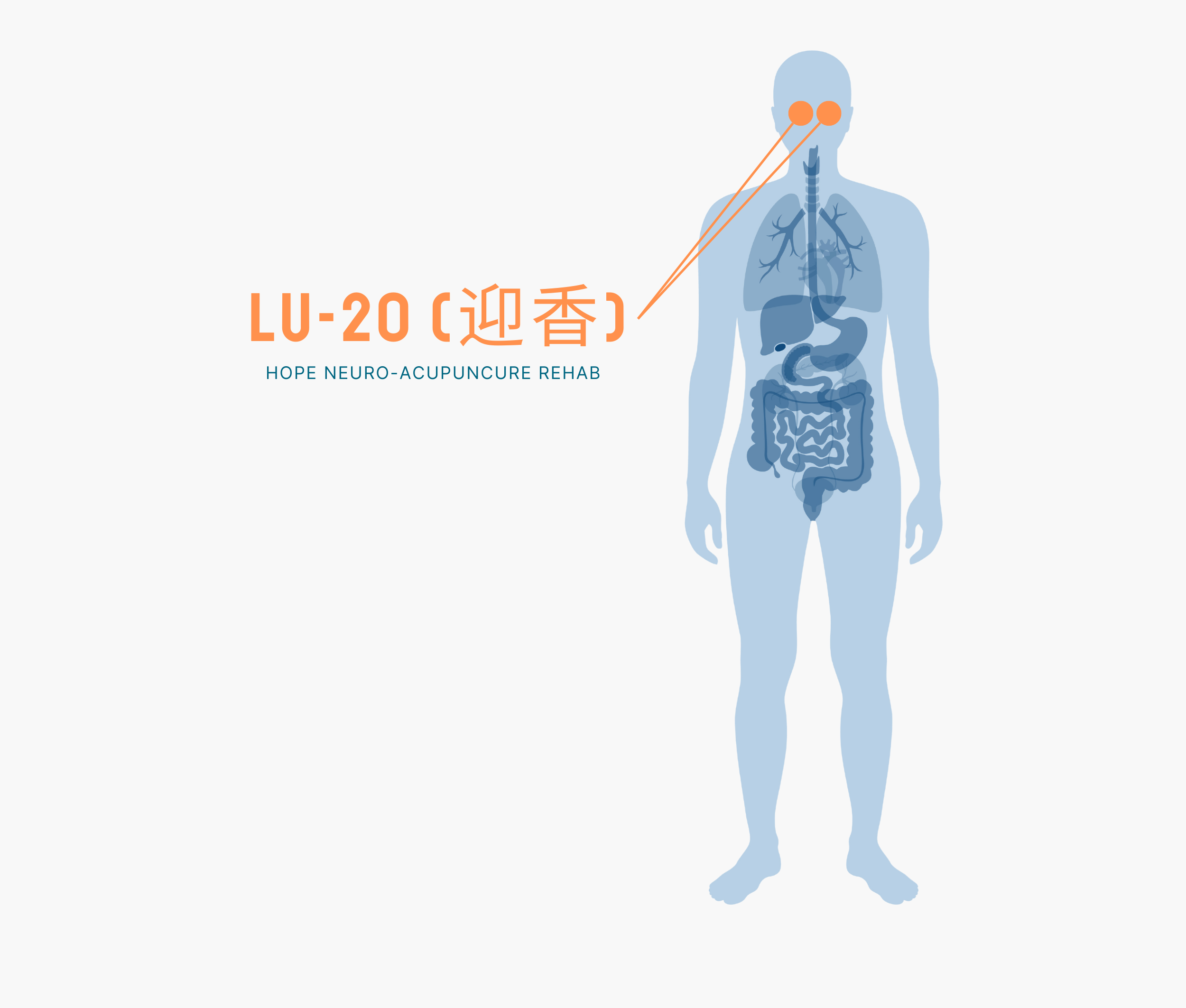
1. Yingxiang (LI20) — The Representative Acupoint for Nasal Congestion
Location: Outside the nostril, at the point where the nasolabial fold ends (2 total, one on each side)
Acupressure method: Use the tip of your index or middle finger to press vertically upward on the side of the nostril for about 10 seconds, then release. Repeat this 5 times. When nasal congestion is severe, you can also gently massage in circular motions.
Benefits: Yingxiang means “facial impression area” and is the acupoint closest to the nose. In traditional Chinese medicine, it belongs to the Large Intestine Meridian (Hand-Yangming Large Intestine Channel). It reduces congestion of the nasal mucosa and widens the nasal passage. You can expect immediate effects on runny nose and nasal congestion in the early stages of a cold, making it the most efficient acupoint.
2. Yintang (EX-HN3) — The Mysterious Acupoint Between the Eyebrows
Location: The center between the two eyebrows, i.e., between the brows (1 total)
Acupressure method: Bring your index and middle fingers together and slowly press the area between the eyebrows vertically, maintaining gentle pressure for about 30 seconds, then slowly release. Repeat this 3-4 times.
Benefits: Yintang is a special acupoint where the Governing Vessel and several facial meridians meet. It greatly improves blood circulation around the nose and eyes, relieving not only nasal congestion but also headaches and fatigue. By increasing blood flow to the brain, it’s also effective for restoring concentration.
3. Tongtian (BL7) — The Acupoint That Opens the Passage of the Forehead
Location: About 1.5 cm above the area between the eyebrows, in the center of the forehead (1 total) or 1.5 cm to the left and right of the area between the eyebrows (some interpretations include 2 points)
Acupressure method: Slowly press with the tip of your thumb while maintaining pressure for 30 seconds, then slowly release. Repeat this 3-4 times. A slight sensation of tenderness is appropriate.
Benefits: Tongtian, belonging to the Bladder Meridian (Foot-Taiyang Bladder Channel), fulfills its role like the character “open”—unblocking what is obstructed. It’s particularly effective for nasal congestion caused by allergic rhinitis, and it restores nasal sensation through stimulation of the olfactory nerve.
4. Fengchi (GB20) — The Hidden Powerful Acupoint at the Back of the Neck
Location: In the hollow between two prominent muscles below the base of the skull at the back of the neck (2 total, one on each side)
Acupressure method: Simultaneously press with both thumbs for 5 seconds and rest for 2 seconds. Repeat this 5 times. You can also massage slowly in circular motions to relax the neck muscles.
Benefits: Fengchi means “where wind gathers,” and in traditional Chinese medicine, it’s the best acupoint for expelling pathogenic wind. It relieves tension in the neck muscles to improve blood flow to the nasal cavity, and it’s excellent for preventing early symptoms of colds.
5. Hegu (LI4) — The All-Purpose Acupoint That Circulates Qi and Blood Throughout the Body
Location: In the hollow between the thumb and index finger (2 total, one on each side)
Acupressure method: Slowly press with the opposite thumb to the point of mild discomfort, holding for 30 seconds, then release. Repeat this 3 times on both hands. Start gently at first and gradually increase the pressure.
Benefits: Hegu is called the “universal acupoint” and is the representative acupoint of the Large Intestine Meridian (Hand-Yangming Large Intestine Channel). It improves blood circulation around the face and nose, and through enhanced immunity, it’s effective for both cold prevention and nasal congestion relief. Because it helps qi and blood circulation throughout the body, it increases our body’s natural healing power overall.
5-Minute Self-Acupressure Routine — Effective Order and Time Distribution
Preparation (30 seconds): Sit or lie in a comfortable position. Rub your hands together to warm them and promote blood circulation.
Step 1: Yingxiang (60 seconds) Apply acupressure to both sides of the nostrils a total of 20 times. (10 times on each side, 3 seconds each time)
Step 2: Yintang (45 seconds) Apply acupressure to the area between the eyebrows 3-4 times repeatedly. (Hold for 30 seconds each time)
Step 3: Tongtian (45 seconds) Apply acupressure to the center of the forehead 3-4 times repeatedly. (Hold for 30 seconds each time)
Step 4: Fengchi (60 seconds) Apply acupressure to the back of the neck with both thumbs 5 times repeatedly. (5 seconds of pressure + 2 seconds of rest each time)
Step 5: Hegu (60 seconds) Apply acupressure to Hegu on both hands, 3 times each. (Hold for 30 seconds each time)
Finishing (30 seconds): Take a deep breath in through your nose to normalize your breathing. Drink a sip of warm water to replenish fluids.
💡 Tip: When nasal congestion is severe, repeat the above routine 2-3 times a day. It’s most effective when performed right after waking in the morning, during lunch time, and before bedtime. If practiced regularly, it not only improves symptoms but also helps prevent recurrent nasal congestion.
⚠️ Medical Disclaimer: This article is written for informational purposes and does not replace professional medical diagnosis or treatment. If symptoms persist or are severe, please consult a healthcare professional.
🤰 Pregnancy Warning: Among the acupoints above, Hegu (LI4) can trigger uterine contractions in pregnant women. If you are pregnant or might be pregnant, apply acupressure only to Yingxiang, Yintang, Tongtian, and Fengchi, or be sure to consult with a traditional Chinese medicine practitioner before proceeding.
One-Line Summary: You can safely relieve pregnancy nausea through acupressure on 5 acupoints including Pericardium 6 (PC6), Stomach 36 (ST36), and Spleen 4 (SP4). Stimulate each point 3-5 times daily for 1-2 minutes each, and you may experience relief within 3-7 days.
Introduction
Morning sickness in early pregnancy is a common symptom experienced by over 70% of pregnant women. It can make daily life difficult with nausea, retching, and food aversions. For expectant mothers who need to be cautious about medications, acupressure on traditional medicine acupoints can be an excellent alternative. Stimulation of specific acupoints helps balance the nervous and digestive systems, naturally easing nausea. This article explores 5 safe acupoints for pregnant women and provides detailed acupressure techniques.
5 Acupoints — Location and Technique
1. Pericardium 6 (內關, PC6)
Location: On the inner forearm, approximately 5cm (two finger-widths) above the wrist crease. It sits in the center between two tendons.
Benefits: Relieves nausea, reduces anxiety, improves digestive function. Known as the safest and most effective acupoint for pregnant women. Provides immediate relief when nausea symptoms occur.
Technique: Use your thumb to locate the acupoint precisely, then slowly increase pressure until you feel a pulling sensation and stimulate with circular massage motions for 1 minute. Apply to both arms for 1-2 minutes each.
2. Stomach 36 (足三里, ST36)
Location: Below the outer depression of the knee cap, approximately 10cm (four finger-widths) down, at the center of the outer border of the tibia.
Benefits: Enhances digestive function, boosts immunity, aids fatigue recovery. A powerful health-promoting acupoint documented in classical texts as preventing illness with regular stimulation. Safe for pregnant women to press.
Technique: Use your thumb or middle finger to slowly press and release repeatedly with gentle pressure. Stimulate for 1-2 minutes per session, about twice daily for relief from nausea and fatigue.
3. Spleen 4 (公孫, SP4)
Location: On the inner edge of the foot, approximately 1cm below the base of the big toe in a small depression.
Benefits: Improves digestion, relieves abdominal discomfort, promotes metabolism. An important point on the spleen meridian that specifically addresses digestive problems caused by morning sickness.
Technique: Gently press with the tip of your thumb, maintain pressure for 3-5 seconds, then slowly release. Repeat 20-30 times on both feet. The technique is even more effective after soaking your feet in warm water.
4. Large Intestine 11 (曲池, LI11)
Location: At the outer end of the elbow crease when the arm is bent. It’s the depression that appears when you press with your finger.
Benefits: Strengthens immunity, reduces heat, promotes digestion. Effective in relieving fatigue and general weakness caused by pregnancy nausea.
Technique: Locate the acupoint with your thumb and massage in circular motions with comfortable, painless pressure. Apply to each arm for 1-2 minutes, working both arms. You can stimulate this point throughout the day when you’re awake.
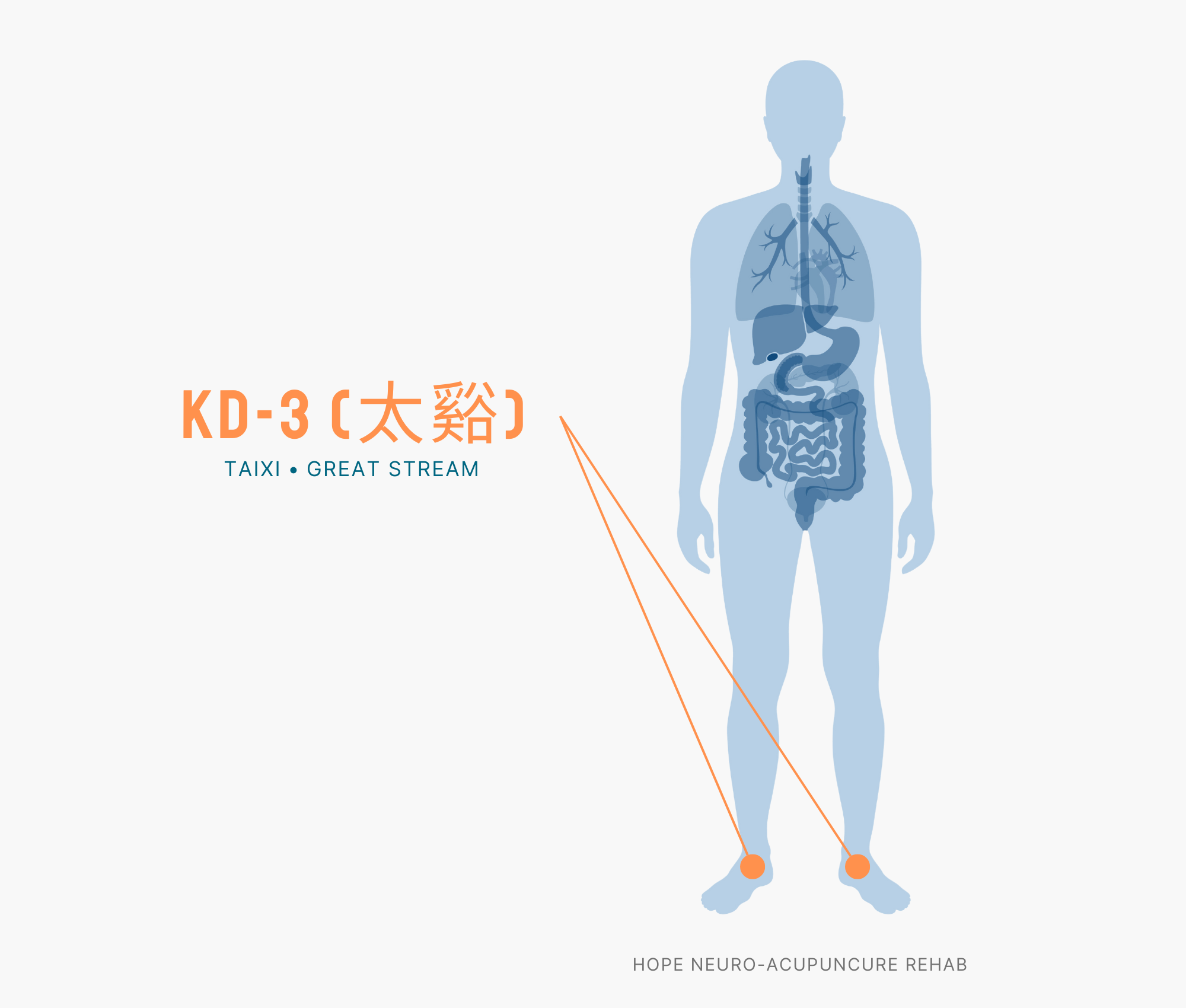
5. Kidney 3 (太溪, KI3)
Location: On the inner ankle, in the depression between the heel and the inner ankle bone.
Benefits: Replenishes vital body energy, reduces anxiety, improves sleep. Stabilizes the kidney meridian to fundamentally ease anxiety and nausea caused by morning sickness.
Technique: Simultaneously press and release with your thumbs on both ankles using slow, gentle motions for 1-2 minutes. Stimulating this point in the evening can provide additional sleep improvement benefits.
5-Minute Self-Acupressure Routine
Recommended timing: Before meals in the morning, afternoon, and evening (additional sessions possible when symptoms are severe)
Pericardium 6 (1 minute) — 30 seconds on each arm. Prioritize this when experiencing nausea
Large Intestine 11 (1 minute) — 30 seconds on each arm. Relieves overall fatigue
Stomach 36 (1 minute) — 30 seconds on each leg. Enhances digestive function
Spleen 4 (1 minute) — 30 seconds on each foot. Resolves abdominal discomfort
Kidney 3 (1 minute) — 30 seconds on each ankle. Finalization and stabilization
Tip: Drinking warm water slowly after acupressure enhances the effects. If your fingers become fatigued, you can use an acupressure tool instead.
⚠️ Medical Disclaimer: This article is provided for informational purposes and does not replace professional medical diagnosis or treatment. If symptoms persist or worsen, consult a healthcare professional. All pregnancy-related treatments should be discussed with your obstetrician before proceeding.
🤰 Precaution for Pregnant Women: While the acupoints introduced in this article (Pericardium 6, Stomach 36, Spleen 4, Large Intestine 11, and Kidney 3) are relatively safe, pregnant women should avoid acupoints that may trigger uterine contractions, such as Large Intestine 4 (LI4), Spleen 6 (SP6), Liver 3 (LR3), and Bladder 60 (BL60). Before beginning acupressure for nausea symptoms, obtain approval from your practitioner or obstetrician.
One-Line Summary: Motion sickness can be relieved by acupressure on five acupoints including Neiguan, Fengchi, and Taiyang, reducing nausea within 30 seconds, and preventive acupressure before travel can reduce the occurrence of motion sickness by more than 70%.
Introduction
When you get in a car, dizziness hits you; 30 minutes after boarding a plane, nausea overwhelms you—motion sickness. Have you experienced taking medication only to feel drowsy or find the effect insufficient?
Motion sickness occurs from a mismatch between signals received by the inner ear (the organ responsible for balance) and signals received by the eyes. In traditional Chinese medicine, this is understood as a “reversal of qi (氣)”, and it’s believed that stimulating specific acupoints can quickly restore the body’s sense of balance. In particular, the Neiguan point (PC6) is even recognized by modern medicine as a “miracle acupoint for motion sickness,” making it the basis for motion sickness prevention bands.
Five Effective Acupoints for Motion Sickness
1. Neiguan (PC6, Neiguan) — “The Miracle Acupoint for Motion Sickness”
Location: On the inner side of the wrist (forearm) in the middle, about 5-6 cm above the wrist crease toward the elbow. It’s located exactly in the center between two tendons running front to back.
Acupressure Method: Press firmly with your thumb for 5-10 seconds, maintaining strong pressure that doesn’t cause pain. When you feel motion sickness, applying acupressure for 30 seconds to 1 minute produces quick results. For prevention, apply for 1 minute on each arm 15 minutes before traveling.
Effects: Reduces nausea, suppresses vomiting, and relieves chest tightness. It’s also used to alleviate morning sickness in pregnant women and is the most scientifically proven acupoint in modern medicine.
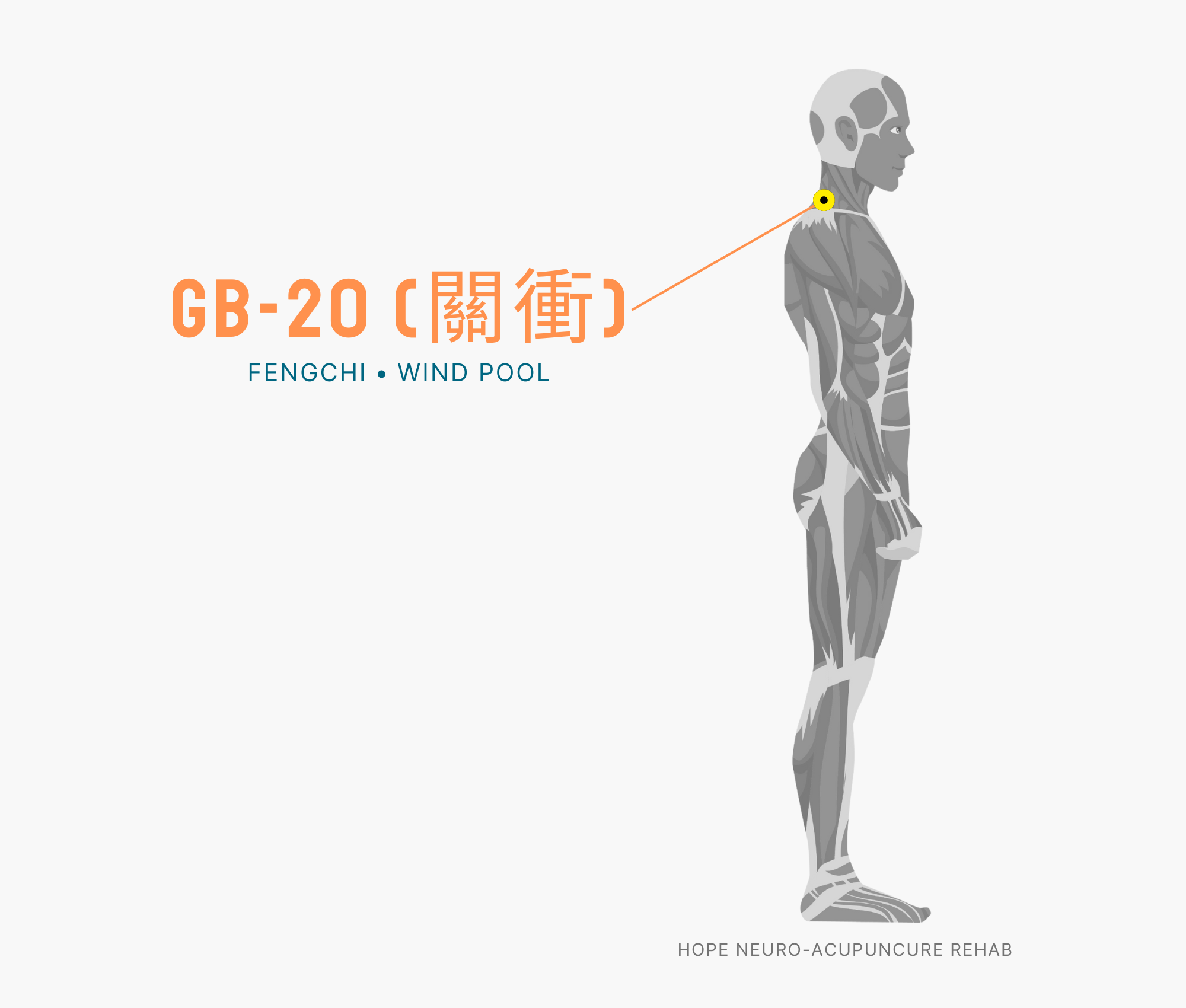
2. Fengchi (GB20, Fengchi) — “The Excellent Remedy for Dizziness”
Location: At the junction between the neck and head, on both sides of the back of the neck. Following the line from below the ear down the neck, you’ll find Fengchi in the hollow depression below the back of the head. There’s one on each side.
Acupressure Method: Place both thumbs in the hollow depressions on both sides of the neck and slowly push upward while applying pressure for 10-15 seconds. Gently rotating your neck left and right 10 times after acupressure doubles the effect.
Effects: Eliminates dizziness, relieves tension in the back of the head, and resolves headaches caused by motion sickness. It’s called “Fengchi” because it addresses diseases caused by “wind” (風).
3. Taiyang (EX-HN5, Taiyang) — “Cool Your Head”
Location: At the temple area. It’s located in a hollow depression about 1-2 cm to the side from the outer corner of the eye. There’s one on each side.
Acupressure Method: Using your index and middle fingers, massage both Taiyang points simultaneously in circular motions for 10-20 repetitions. During a flight, even gentle pressure alone produces an effect.
Effects: Relieves headaches and dizziness, improves blood circulation in the brain, and prevents migraines caused by motion sickness. You’ll feel a cooling sensation immediately after acupressure.
4. Kunlun (BL60, Kunlun) — “The Balance Sensor of the Ankle”
Location: On the outer side of both ankles, in the hollow depression between the ankle bone and the Achilles tendon. It’s easy to find by sitting down and crossing your legs.
Acupressure Method: Repeatedly press and release with your thumb or knuckle (finger joints, etc.) for 5-10 seconds, 5-10 times. For motion sickness prevention, apply for 1 minute on each foot.
Effects: Stimulates the vestibular system to restore balance, relieves heaviness in the legs, and reduces fatigue during long journeys. It’s excellent for stabilizing the nervous system.
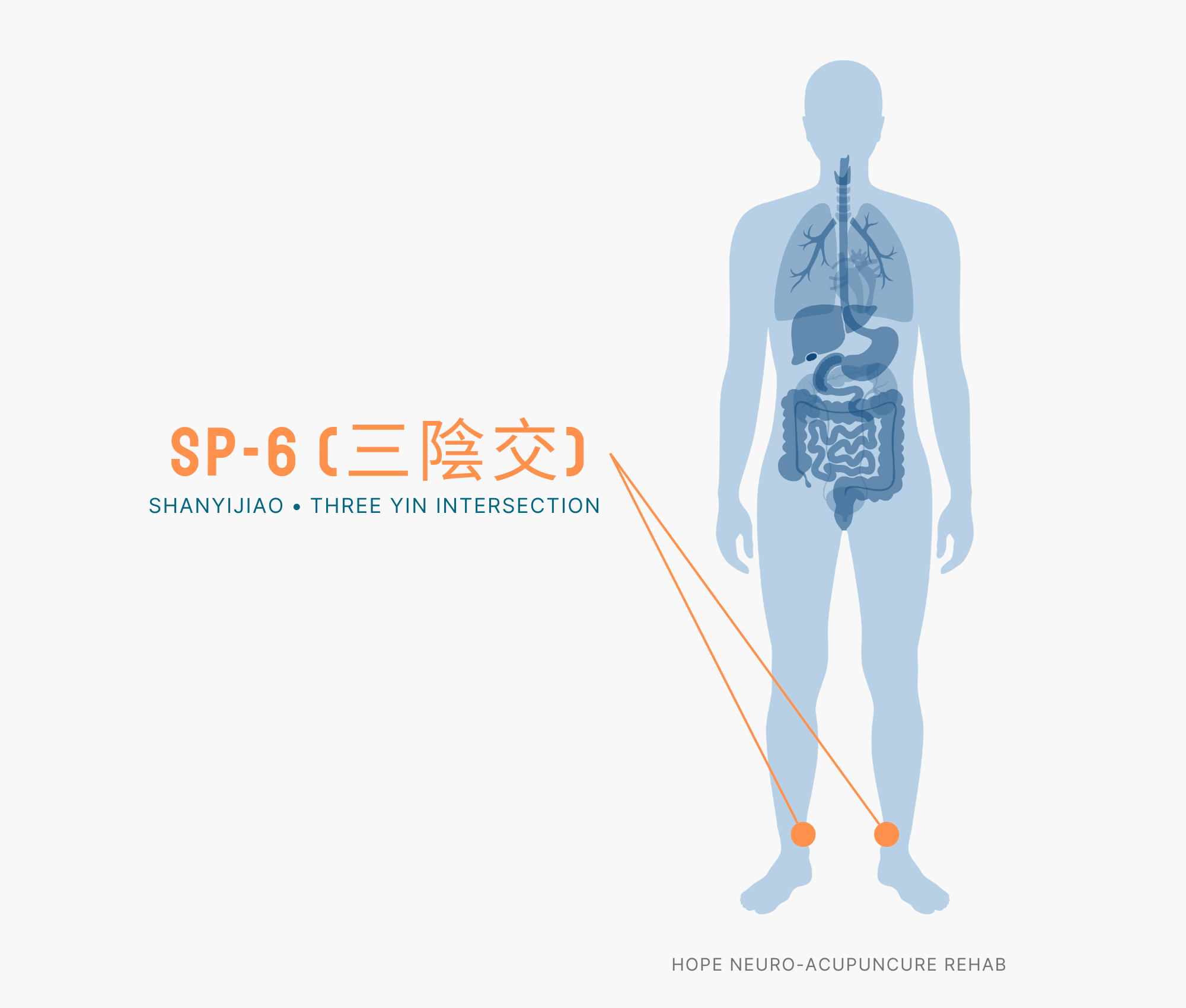
5. Sanyinjiao (SP6, Sanyinjiao) — “The Meeting Point of Three Meridians”
Location: Above the inner ankle, about 10 cm (the width of four fingers) up from the ankle bone along the shinbone. It’s on the inner side of the shinbone.
Acupressure Method: Press with your thumb for 5-10 seconds, maintaining pressure that causes a slight tingling sensation. For prevention, apply for 1 minute on each foot.
Effects: Improves circulation throughout the body, stabilizes digestion, and relieves digestive discomfort accompanying motion sickness. It’s also excellent for recovering from fatigue.
🤰 Pregnancy Warning: Sanyinjiao (SP6) and Kunlun (BL60) may cause uterine contractions in pregnant women. If you are pregnant or may be pregnant, be sure to consult with a professional before applying acupressure. Neiguan, Fengchi, and Taiyang are relatively safe.
Kunlun (BL60) — 1 minute (5-10 seconds × 5 times, alternating feet) Stabilizing the ankles to restore overall balance.
Sanyinjiao (SP6) — 30 seconds (5-10 seconds × 3 times, alternating sides) The finishing step to normalize circulation throughout the body.
Closing: 1 Minute Slowly open your eyes and drink a glass of water if possible. Minimize movement for 5-10 minutes after acupressure.
Motion Sickness Prevention Acupressure (15 Minutes Before Boarding)
When there are no symptoms, perform the above routine at 50% intensity in shortened form:
Neiguan (PC6) — 1 minute on each arm
Fengchi (GB20) — 30 seconds on each side
Kunlun (BL60) — 1 minute on each foot
Total time required: 5-7 minutes. Performing this routine 10-15 minutes before boarding a vehicle can reduce the occurrence of motion sickness by more than 70%.
Precautions When Applying Acupressure
Pressure Intensity: Maintain pressure at the level of “pleasantly painful.” Too light and there’s no effect; too strong and you may bruise.
Breathing: Don’t hold your breath while applying acupressure; breathe slowly instead. Holding your breath can actually worsen nausea.
Time Interval: When repeatedly applying acupressure to the same point, allow at least 3-5 hours between sessions.
Skin Condition: Avoid areas with cuts, inflammation, or swelling.
⚠️ Medical Disclaimer: This article is provided for informational purposes and does not replace professional medical diagnosis or treatment. If motion sickness persists or is severe, or if dizziness may be caused by another condition, be sure to consult with a healthcare professional. Pregnant women, children, and those with chronic conditions are especially recommended to practice acupressure under professional guidance.
One-line Summary: Learn the exact locations and acupressure techniques of five key acupoints—Hegu (LI4), Neiguan (PC6), Sanyinjiao (SP6), Taichong (LR3), and Laogong (PC8)—that effectively relieve canker sore symptoms and manage them yourself.
Introduction
Canker sores in your mouth that sting every time you eat and cause pain when brushing your teeth. Though they’re small wounds, they make daily life uncomfortable. Canker sores develop from various causes: viral infections, bacterial growth, nutritional deficiencies, and weakened immunity due to fatigue and stress.
Traditional Chinese Medicine views canker sores as “excess heat in the mouth (stomach heat) and insufficient qi and blood.” Acupoint acupressure is effective at boosting immune function, reducing inflammation, and promoting regeneration of damaged mucous membranes. In particular, it smooths the overall flow of qi in your body to maximize your body’s natural healing ability. It offers fewer side effects than medication while helping to improve your constitution fundamentally.
Five Acupoints, One by One
1. Hegu (LI4) — The Key Acupoint for Immunity Boost and Inflammation Relief
Location: The most prominent area of muscle between the thumb and index finger. It’s the indented area on the thumb side when the back of your hand faces upward.
Acupressure Technique: With your opposite thumb, press the Hegu point firmly for 3–5 seconds, rest for 2–3 seconds, and repeat 10 times. Alternatively, you can massage it in circular motions.
Benefits: As the primary acupoint of the Large Intestine meridian, it significantly boosts immunity. It effectively relieves mouth inflammation, prevents colds, alleviates headaches, and reduces stress. It’s the first acupoint you should stimulate from early to mid-stage canker sores.
2. Neiguan (PC6) — Relieving Stress and Digestive Imbalance
Location: In the center of the inner forearm, about three finger-widths above the wrist crease toward the elbow. It’s the indented area between two tendons.
Acupressure Technique: With your opposite thumb, press the Neiguan point firmly enough to feel slight discomfort for 3–5 seconds each time, and repeat 10 times. Stimulate both arms.
Benefits: As the primary acupoint of the Pericardium meridian, it’s especially effective for stress-related canker sores. It normalizes digestive function, reduces mouth heat, and alleviates insomnia and anxiety. Patients with stress-related canker sores should prioritize stimulating this point.
3. Sanyinjiao (SP6) — Enhancing Immunity and Blood Circulation
Location: On the inner side of the leg, about four finger-widths above the ankle bone. It’s the indented area behind the shin bone (tibia).
Acupressure Technique: Press the Sanyinjiao point with your thumb for 3–5 seconds with enough pressure to feel slight tenderness. Repeat 10 times on both legs.
Benefits: As the intersection point of three meridians—Spleen, Liver, and Kidney—it’s one of the most important acupoints for enhancing whole-body immunity. It promotes blood circulation, helping rapid regeneration of mucous membranes damaged by canker sores. It’s also effective for canker sores caused by hormonal imbalance.
4. Taichong (LR3) — Clearing Stress-Related Heat and Improving Liver Function
Location: On top of the foot, in the indented area between the bones of the big toe and second toe. It’s the most depressed area when your toes are spread.
Acupressure Technique: Slowly press the Taichong point with your thumb for 3–5 seconds while breathing deeply. Repeat 10 times on both feet.
Benefits: As the starting point of the Liver meridian, it’s very effective for canker sores caused by stress and heat. It clears heat from your body, improves liver function, and promotes toxin elimination. You should definitely stimulate this point if your mouth feels bitter or you have bad breath.
5. Laogong (PC8) — Clearing Mouth Heat and Calming Mind and Body
Location: In the center of your palm, at the point where your middle finger and ring finger touch when you make a fist.
Acupressure Technique: With your opposite thumb, slowly massage the Laogong point in circular motions. Massage each hand for 1–2 minutes, stimulating both hands.
Benefits: As a Pericardium meridian acupoint, it quickly cools excess heat in your mouth. It calms your mind and body while immediately relieving mouth pain. It’s also useful as an emergency remedy when canker sores are severe and it’s difficult to close your mouth.
5-Minute Self-Acupressure Routine
Time Allocation: Here’s the efficient sequence to complete in 5 minutes.
Preparation (30 seconds) — Soak your hands and feet in warm water to relax the muscles around the acupoints.
Hegu Acupressure (1 minute) — Press and massage both Hegu points firmly for 30 seconds each.
Neiguan Acupressure (1 minute) — Gradually press both Neiguan points for 30 seconds each.
Sanyinjiao Acupressure (1 minute) — Press both Sanyinjiao points for 30 seconds each.
Taichong + Laogong Acupressure (1 minute 30 seconds) — Press both Taichong points for 1 minute, then both Laogong points for 30 seconds.
Cool Down (30 seconds) — Take three deep breaths and relax your entire body.
Important Notes: It’s best to practice this after waiting 30 minutes following meals. Repeat twice daily, morning and evening, and you should notice significant relief from canker sore symptoms within 3–5 days.
🤰 Pregnancy Warning: Among the acupoints above, Hegu (LI4), Sanyinjiao (SP6), and Taichong (LR3) may trigger uterine contractions. If you are pregnant or possibly pregnant, please consult with a Traditional Chinese Medicine practitioner before practicing. Pregnant women can safely stimulate only Neiguan (PC6) and Laogong (PC8).
⚠️ Medical Disclaimer: This article is provided for informational purposes and does not replace professional medical diagnosis or treatment. If canker sore symptoms persist for more than two weeks, pain is severe, or eating is difficult, please consult with a healthcare professional (doctor, dentist, or Traditional Chinese Medicine practitioner). Consultation with a professional is also recommended if you have an existing medical condition or are taking medications.