One-line summary: Shoulder stiffness can be quickly relieved through acupressure on 5 key acupoints: Jianjing (SI12), Quchi (LI11), Hegu (LI4), Fengchi (GB20), and Jianliao (TE14).
Introduction
Shoulder stiffness that comes from sitting and working for long periods is truly bothersome and inconvenient. Caused by various factors such as muscle tension, poor posture, and stress, shoulder stiffness greatly reduces your quality of daily life. In traditional medicine, shoulder stiffness is diagnosed as poor blood circulation and qi stagnation. By stimulating specific acupoints, you can relax tense muscles and promote blood circulation. In this article, I’ll explain in detail the 5 most effective acupoints for relieving shoulder stiffness and self-acupressure methods.
The 5 Acupoints Explained
1. Jianjing (肩井) — SI12 Location: The highest point where the shoulder muscle rises (midpoint between the 7th cervical vertebra and the shoulder tip) How to find it: When you bend your neck forward, take the protruding bone below your neck as a reference point and move about 2-3cm toward the shoulder. Acupressure method: Tap and press with your thumb or rub in circular motions. Repeat pressing for 3-5 seconds and resting for 1 second. Benefits: The ‘representative acupoint’ for shoulder stiffness that immediately relaxes tense muscles around the scapula. Particularly effective for stubborn shoulder stiffness.
2. Quchi (曲池) — LI11 Location: The outer end of the elbow crease when your elbow is bent How to find it: Bend your arm so the inside of your elbow is visible, then locate the outer end of the elbow crease. Acupressure method: Press with your thumb, gently pushing your finger toward the elbow as you apply acupressure. Benefits: Promotes blood circulation in the upper arm and relieves tension extending to the shoulder. Excellent for shoulder stiffness caused by prolonged keyboard use.
3. Hegu (合谷) — LI4 Location: The webbing between the thumb and index finger, moving toward the thumb along the index finger bone How to find it: Spread your thumb and index finger apart and find the highest point between the two fingers. Acupressure method: Tap and press with the opposite thumb or rub in circular motions. Continue for 30 seconds to 1 minute. Benefits: A ‘universal’ acupoint that relieves pain and tension throughout the body. Improves blood circulation in the entire upper body from head to arms.
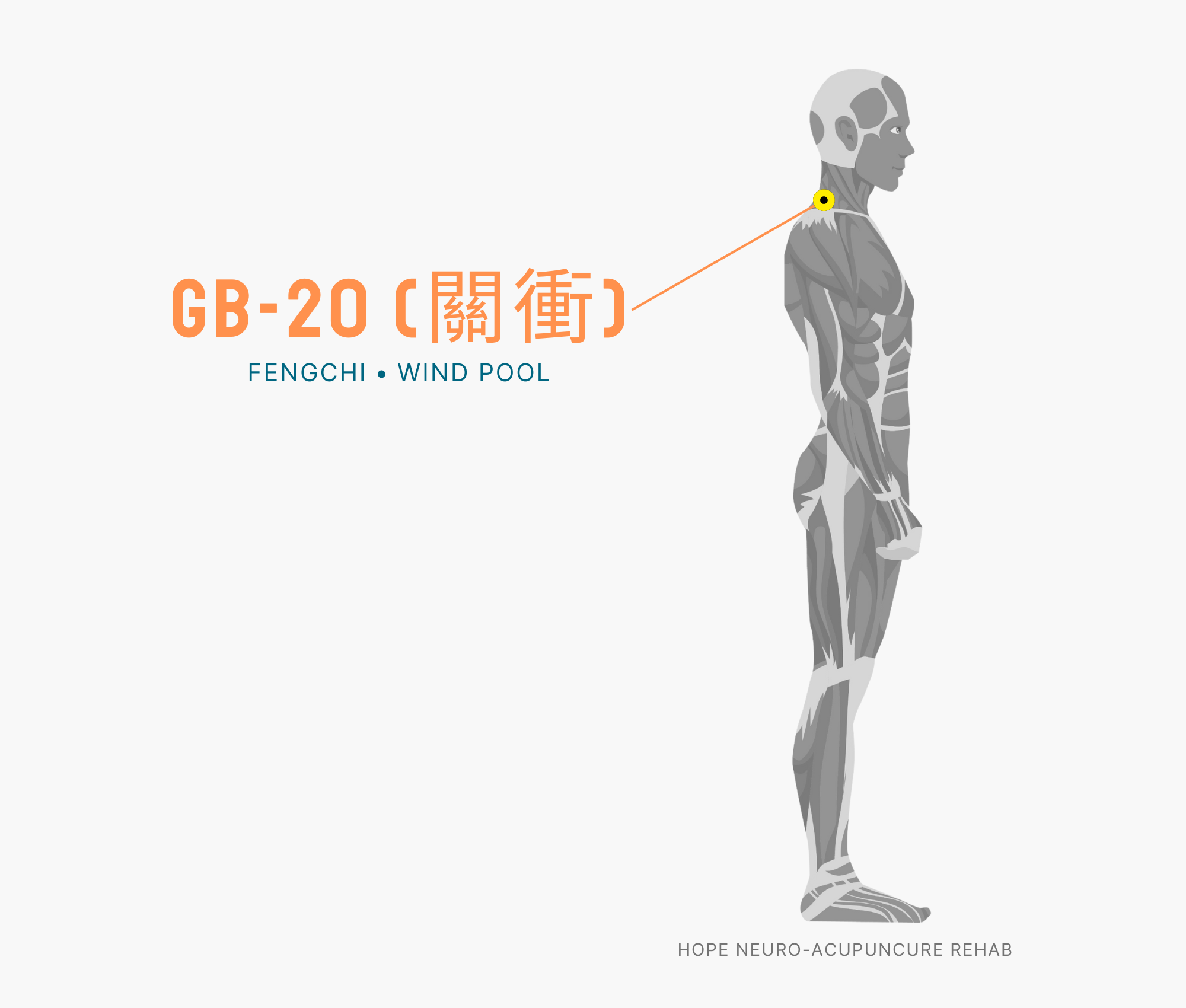
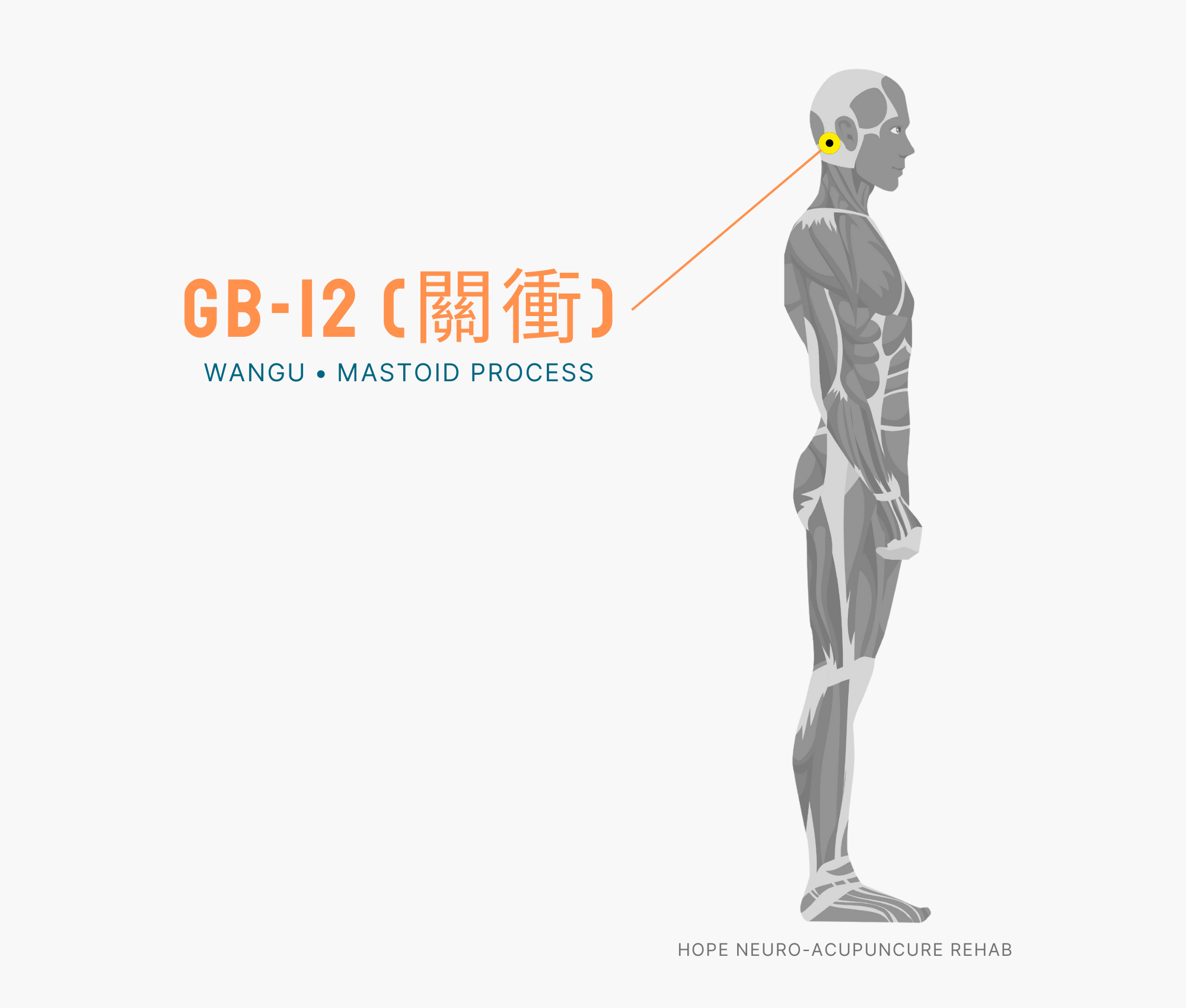
4. Fengchi (風池) — GB20 Location: The back of the neck, about 2-3cm below the hollow area beneath the ear How to find it: From the center of the back of your neck (cervical vertebra 1), move about 2-3cm to each side. Pressing with your finger creates a hollow sensation. Acupressure method: Press simultaneously with both thumbs, applying acupressure with a slight upward lift toward the head. Benefits: An acupoint that connects the neck and shoulder, particularly effective at relieving shoulder stiffness caused by neck tension. Also effective for headache relief.
5. Jianliao (肩髎) — TE14 Location: The back of the shoulder, the hollow area above the shoulder blade (scapula) How to find it: About 2-3cm back from the shoulder tip. This is the hollow area that appears when you raise your arm. Acupressure method: Tap and press with four fingers or apply acupressure by making circular motions with your finger joints. Benefits: Acts directly on the deep muscles around the shoulder blade and relieves severe shoulder stiffness. Particularly effective for shoulder tension after exercise.
5-Minute Self-Acupressure Routine
5-Minute Acupressure Program (Recommended morning/evening)
Step 1 (1 minute): Jianjing (SI12) 30 seconds on each side → Release the most important acupoint first.
Step 2 (1 minute): Fengchi (GB20) 30 seconds on each side → Simultaneously relieves tension in the neck and shoulders.
Step 3 (1 minute): Jianliao (TE14) 30 seconds on each side → Releases tension in the deep muscle layers.
Step 4 (1 minute): Quchi (LI11) 30 seconds on each side → Improves qi flow connecting the arm and shoulder.
Step 5 (1 minute): Hegu (LI4) 30 seconds on each side → Finally circulates qi and blood throughout the body.
Acupressure tips: It’s more effective to warm your hands with warm water before starting. Don’t press so hard that it causes pain—aim for an intensity that creates a ‘sore yet pleasant’ sensation.
⚠️ Medical Disclaimer: This article is written for informational health purposes and does not replace professional medical diagnosis or treatment. If symptoms persist or are severe, please consult with a healthcare professional.
🤰 Pregnancy Warning: Of the above acupoints, Hegu (LI4) may trigger uterine contractions in pregnant women. If you are pregnant or may be pregnant, please consult with a professional before proceeding. Jianjing, Quchi, Fengchi, and Jianliao are safe for pregnant women to use.
One-line summary: Nasal congestion and facial pain from sinusitis can be relieved within 3-7 days by applying acupressure to Yingxiang (LI20), Hegu (LI4), Yintang (GV29), Taiyang (EX-HN5), and Fengchi (GB20) 2-3 times daily.
Why Sinusitis Worsens and the Benefits of Acupoint Pressure Therapy
Sinusitis is not a simple cold. As inflammation in the paranasal sinuses becomes chronic, pus accumulates, causing nasal congestion, yellow nasal discharge, facial pain, headaches, and other symptoms that interfere with daily life. It is a common condition affecting more than 50% of modern people due to stress, environmental pollution, allergies, and other factors. In traditional Chinese medicine, sinusitis is viewed as a decline in the body’s defensive functions. Stimulating acupoints around the nose and throughout the body promotes the circulation of qi and blood while enhancing immunity. In particular, acupressure, which has fewer side effects than needling, can be performed at home anytime and can significantly speed up recovery when combined with medication.
Five Effective Acupoints for Sinusitis Relief
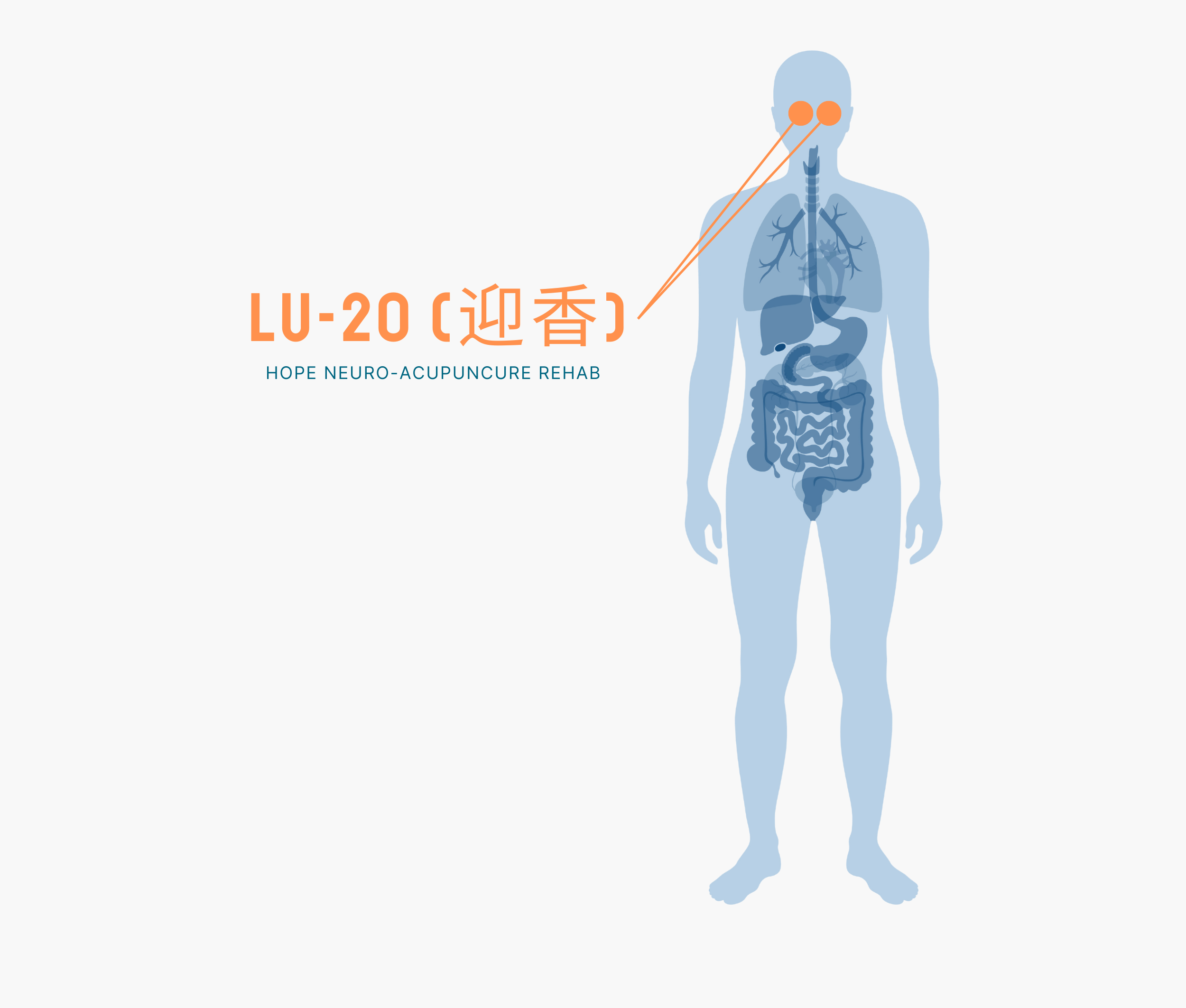
1. Yingxiang (Welcoming Fragrance) — LI20 (Large Intestine Meridian 20)
Location: It is located below the point where the nostrils are most prominent and above the nasolabial fold (the crease between the mouth corner and the nose). When you touch the side of your nose with your finger, you’ll feel a slight depression.
Acupressure Method: Using the index fingers of both hands, simultaneously press and release the Yingxiang points on both sides vertically. Apply pressure with enough intensity to feel refreshing without pain, pressing 30 times, then repeating another 30 times, which takes about 1 minute. For better results, repeat 3 times daily.
Effects: This point directly relieves nasal congestion and nasal pain—the most direct symptoms of sinusitis. It promotes the drainage of blocked secretions from the paranasal sinuses and improves blood circulation to the nasal mucosa, reducing inflammation. This acupoint shows the fastest results when there is abundant yellow nasal discharge or severe nasal congestion.
2. Hegu (Union Valley) — LI4 (Large Intestine Meridian 4)
Location: It is located in the crease where the thumb and index finger meet, in the depression on the back of the hand. It is positioned slightly toward the thumb, just below the index finger bone. It is at the midpoint of the ‘V’ shape formed when the hand is open and spread.
Acupressure Method: Slowly press the Hegu point using the thumbprint area of the opposite hand. Press for about 3-5 seconds, release for 3 seconds, and repeat. Perform 20-30 presses on each hand. Alternating pressure on both hands takes about 1 minute.
Effects: It activates the body’s immune function and significantly enhances resistance. It is very effective at relieving headaches and facial pain caused by sinusitis and is widely used for cold prevention and recovery promotion. It is a “universal acupoint” that helps eliminate inflammation in facial areas, including the nasal mucosa.
Location: It is located at the center between the eyebrows, in the glabella region. The exact location is the depression felt when the nose is wrinkled upward. Pressing it with a finger will cause a mild soreness.
Acupressure Method: Using the index or middle finger of both hands, slowly press vertically and release repeatedly. The appropriate intensity is mild soreness, and perform 20-30 presses each time. Avoid excessively strong stimulation.
Effects: It is particularly effective at relieving pain between the eyebrows and headaches caused by sinusitis. It improves blood circulation to the brain and relieves nervous tension. It is excellent not only for nasal conditions but also for improving migraines, eye fatigue, insomnia from stress, and reduced concentration.
4. Taiyang (Great Sun) — EX-HN5 (Extra Point on Head and Neck)
Location: It is located in the depression between the outer corner of the eye and the ear, at the temple. It can be easily found with the fingers of both hands, and pressing it will cause slight soreness.
Acupressure Method: Gently massage the Taiyang point using the middle fingers of both hands in circular motions. Slowly repeat 10 times clockwise, then 10 times counterclockwise. Gentle and sustained circular massage is more effective than strong stimulation. Each session takes about 1 minute.
Effects: It effectively relieves facial swelling and temple pain caused by sinusitis. It promotes qi and blood circulation in the head and face, reducing chronic inflammation around the nose and eyes. It is particularly useful for sinusitis patients who also experience migraines or stress-related headaches.
5. Fengchi (Wind Pool) — GB20 (Gallbladder Meridian 20)
Location: It is located at the base of the skull, where the hairline meets the neck. It is positioned on both sides of the center of the back of the neck, below and behind both ears, with a clear depression.
Acupressure Method: Slowly press the Fengchi point with the thumbs of both hands, directing the pressure inward toward the body. Hold the pressure for about 3-5 seconds, release, and repeat. Perform 20-30 presses per session. Press precisely at the boundary between the neck and head, but be careful not to press too hard.
Effects: It eliminates pathogenic wind (the cause of infectious diseases) and strengthens the body’s immune function. It is excellent at preventing the worsening of sinusitis from colds or allergic rhinitis and relieves tension in the neck and shoulders, improving overall blood circulation. It relieves headaches, neck stiffness, and shoulder tension simultaneously.
Follow the order below for optimal results. Total time required is 5 minutes.
Yingxiang (LI20) — 1 minute Press both Yingxiang points simultaneously with both index fingers 30 times. (30 seconds) → Repeat 30 more times. (30 seconds) → Gently massage in circular motions with both index fingers. (remaining time)
Hegu (LI4) — 1 minute Press the left Hegu point with your right thumb 30 times. (30 seconds) → Perform the same on the opposite side (right hand). (30 seconds)
Yintang (GV29) — 1 minute Slowly press and release the Yintang point with both index fingers, repeating 20 times. (30 seconds) → Repeat 10 more times. (30 seconds)
Taiyang (EX-HN5) — 1 minute Massage the Taiyang point with both middle fingers in clockwise circular motions for 30 seconds. → Then massage in counterclockwise motions for 30 seconds.
Fengchi (GB20) — 1 minute Press and release each Fengchi point with both thumbs, 30 times each. (Total 60 presses, takes about 1 minute)
💡 Acupressure Tips: Drinking warm water or warm tea after acupressure enhances its effects. Avoid air conditioning drafts or sudden temperature changes immediately after acupressure. Performing acupressure 1 hour before bedtime helps ease symptoms during sleep. Reduce the intensity of pressure when under stress or overworked.
⚠️ Medical Disclaimer: This article is provided for informational purposes and does not replace professional medical diagnosis or treatment. If sinusitis symptoms persist for more than 2 weeks or are severe, if accompanied by fever, or if there is eye pain or vision changes, you must consult a medical professional (an ENT specialist or traditional Chinese medicine practitioner). Acupoint pressure is only a complementary therapy to medical treatment.
🤰 Pregnancy Warning: The Hegu (LI4) acupoint among those listed above may trigger uterine contractions in pregnant women. If you are pregnant or might be pregnant, consult a professional before applying acupressure to Hegu. Yingxiang, Yintang, Taiyang, and Fengchi are relatively safe, but if you have any concerns, please consult a traditional Chinese medicine practitioner or physician beforehand.
One-Sentence Summary: If you’re concerned about declining skin elasticity and increased wrinkles, try stimulating these 5 acupoints daily to improve blood circulation: LI4, SP6, ST36, LR3, and LI20.
Introduction
Don’t you sometimes sigh while looking at your face in the mirror, thinking “It wasn’t like this yesterday”? Skin aging is a natural process everyone wants to avoid, but it progresses faster than expected due to hormonal changes, stress, sleep deprivation, and environmental pollution. Wrinkles, sagging skin, and dull complexion can shake your confidence beyond being merely cosmetic concerns.
In traditional Chinese medicine, the root causes of skin aging are seen as “Qi and blood deficiency” and “reduced blood circulation.” When blood flow to the face decreases, skin cells don’t receive adequate oxygen and nutrients, causing loss of elasticity, and impaired waste elimination accelerates aging. Fortunately, by consistently stimulating specific acupoints, you can dilate capillaries, improve facial blood flow, enhance your body’s natural healing capacity, and promote skin regeneration. You can see significant results from just a 5-minute self-massage routine, and the best part is you can do it anytime, anywhere, without any extra cost or special tools.
5 Acupoints Effective for Skin Aging
1. LI4 — The Starting Point for Immunity Enhancement and Skin Regeneration
Location: The center of the webbing between your thumb and index finger (thumb-index webspace) where the bones meet WHO Code: LI4 Technique: Use the thumb of the opposite hand to apply pressure the size of a coin in circular motions for 1 minute. Start with light pressure and gradually increase the intensity. Work on both hands, and pressing for 5 minutes before bed is also beneficial. Effects: Connected to the Large Intestine meridian, LI4 is known as the “universal acupoint” and excels at boosting immunity, reducing inflammation, and improving facial complexion. It accelerates metabolism, speeds up skin cell regeneration, and helps detoxify the body by improving constipation. With regular stimulation, you can achieve even skin tone and restore natural luster.
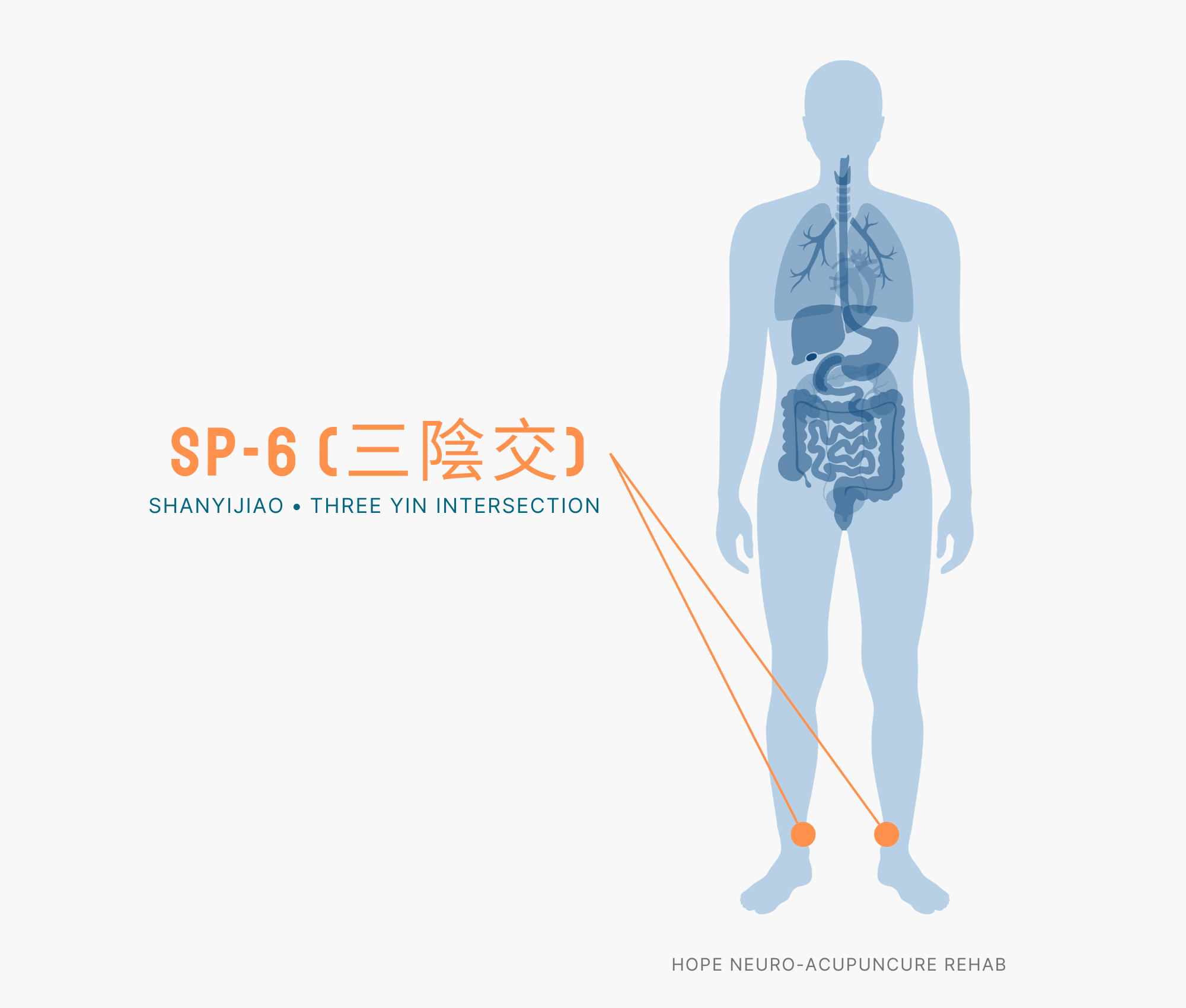
2. SP6 — Hormone Balance and Skin Hydration
Location: On the inner side of the leg, about 3 finger widths (approximately 10cm) above the inner ankle bone (medial malleolus) WHO Code: SP6 Technique: Slowly press with your thumb while breathing deeply to promote blood circulation. Work on each leg for 1-2 minutes once a day. Stimulating this point in the evening also helps induce better sleep. Effects: SP6 is where the Liver, Spleen, and Kidney meridians meet, playing a crucial role in hormone regulation. For women, it normalizes estrogen secretion, alleviates dry skin, and increases skin’s moisture retention. Improved blood circulation reduces facial puffiness and restores skin elasticity.
3. ST36 — Whole-Body Immunity Boost and Skin Vitality
Location: On the outer side below the knee, about 3 finger widths (approximately 10cm) below the depression below the kneecap WHO Code: ST36 Technique: Slowly press vertically with your thumb until you feel a slight warming sensation. Work on each leg for 1-2 minutes, 1-2 times daily. The effect is even greater when combined with moxibustion (heat therapy). Effects: Called the “leg’s tonic herb,” ST36 strengthens Qi and blood throughout the body. It improves digestion and nutrient absorption, and activates immune cells to effectively improve inflammatory skin conditions like acne and dermatitis. It promotes metabolism to help eliminate skin waste and slows the skin aging process with consistent stimulation.
4. LR3 — Stress Relief and Skin Elasticity Recovery
Location: On the top of the foot, in the valley between the first and second toe bones, about 2cm above the ankle WHO Code: LR3 Technique: Slowly press with your thumb for about 1 minute. Avoid painful pressure; maintain a “firm yet comfortable” intensity. Work on both feet, and it’s best to stimulate this point daily, especially in the evening on stressful days. Effects: LR3 opens the Liver’s Qi and blood flow, making it an excellent point for stress relief. It improves dull and lifeless complexion caused by chronic stress and promotes detoxification by activating liver function. It relieves blood vessel constriction to increase facial blood flow, and with consistent stimulation, restores skin elasticity and radiance.
5. LI20 — Maximized Skin Benefits Through Direct Facial Stimulation
Location: Above the nasolabial fold (smile lines) beside the nose, about 1cm below the nostril WHO Code: LI20 Technique: Gently massage in circular motions with your index or middle finger. Since facial blood vessels are delicate, avoid strong pressure and use light touch for about 1 minute. Apply a thin layer of essence after skincare and then stimulate this point to improve product absorption. Effects: LI20, the endpoint of the Large Intestine meridian, is the key point for improving facial complexion. It dilates capillaries around the nose and cheeks to directly improve facial blood flow and promotes even skin tone. It’s particularly effective for reducing nasolabial folds and brings vibrant, youthful expression back to facial skin with consistent stimulation.
5-Minute Self-Massage Routine
Morning Routine (Before work, about 5 minutes):
LI4 (Both hands) — 1 minute: Extend your hands with the webspace facing upward, slowly massage in circles with the opposite thumb
LI20 (Both sides) — 1 minute: Gently massage beside the nose in circles with your index finger to awaken facial complexion
ST36 (Both legs) — 1.5 minutes: Sit in a chair, extend your legs, and slowly press vertically with your thumb
LR3 (Both feet) — 1.5 minutes: Extend your feet and press firmly with your thumb
Evening Routine (Before bed, about 5 minutes):
SP6 (Both legs) — 1 minute: Lie in bed, bend your legs comfortably, and slowly press vertically with your thumb
LR3 (Both feet) — 1 minute: Extend your feet and stimulate while stretching toward your legs
LI4 (Both hands) — 1 minute: Bring your hands together at your chest and massage in circles with the opposite thumb
ST36 (Both legs) — 1 minute: Extend your legs while lying down and slowly press to promote better sleep
Key Tips: Combining deep belly breathing with acupressure increases relaxation response and doubles the effectiveness. Repeating the routine at the same time daily synchronizes with your body’s natural rhythm and hormone cycle for faster results.
⚠️ Medical Disclaimer: This article is provided for informational purposes only and does not replace professional medical diagnosis or treatment. If symptoms persist or are severe, consult a healthcare professional.
🤰 Pregnancy Warning: Among the acupoints mentioned above, LI4, SP6, and LR3 may trigger uterine contractions in pregnant women. If you are pregnant or may be pregnant, consult a healthcare professional before practicing these techniques.