Summary: Acute stress and chronic stress require completely different approaches. Acute needs immediate calming; chronic needs long-term routines. Find out which type matches yours and the right solution.
“Why Am I So Stressed All the Time?”
Not all ‘stress’ is the same. Your heart pounding before an exam and feeling crushed with exhaustion for months are completely different states.
Yet many people try to cope with both using the same methods. Using chronic solutions for acute stress, or acute solutions for chronic stress — and then blaming yourself: “I just can’t manage stress.”
Frustrating, isn’t it? Maddening, right? That’s why today, I’ll help you identify exactly what type your stress is and give you tailored solutions.
Acute Stress vs Chronic Stress: What’s the Difference?
| Category | Acute Stress | Chronic Stress |
|---|---|---|
| Duration | Minutes to hours | Weeks to months or longer |
| Cause | Specific event (presentation, exam, argument) | Ongoing situation (work, relationships, finances) |
| Body Response | Racing heart, trembling hands, sweating | Chronic fatigue, indigestion, insomnia |
| Emotions | Tension, anxiety, fear | Lethargy, irritability, sudden tears |
| Core Approach | Immediate calming | Long-term routine + address root cause |
Acute Stress Coping: Immediate Calming Is Key
Before a job interview, right before a presentation, right after a big argument. When your heart is racing and your mind goes blank — these techniques are for that moment.
Essential Points: Shenmen (HT7) + Neiguan (PC6)

- Shenmen: Press firmly on the tendon side near the pinky on the inner wrist for 5 seconds — calms racing heartbeat
- Neiguan: Press firmly 3 finger-widths above the wrist crease for 5 seconds — relieves chest tightness
- Combined with 4-7-8 breathing, you can feel the effect in 30 seconds
Additional Point: Hegu (LI4)

- Press firmly between the thumb and index finger — immediate relief for headaches and full-body tension
- The fastest-responding point for acute stress
Chronic Stress Coping: Consistent Routines Are Key
One press won’t solve it. You need at least 2-4 weeks of consistent practice to release tension embedded in the body.
Daily Morning Routine (3 min)
- Baihui (GV20): Tap the crown of your head for 1 minute — clears a foggy mind
- Hegu (LI4) + Taichong (LR3): Stimulate the “Four Gates” simultaneously for 2 minutes — promotes full-body qi and blood circulation
Daily Evening Routine (3 min)
- Shenmen (HT7): Both wrists for 1 minute — releases the day’s accumulated anxiety
- Neiguan (PC6): Both wrists for 1 minute — relaxes the chest
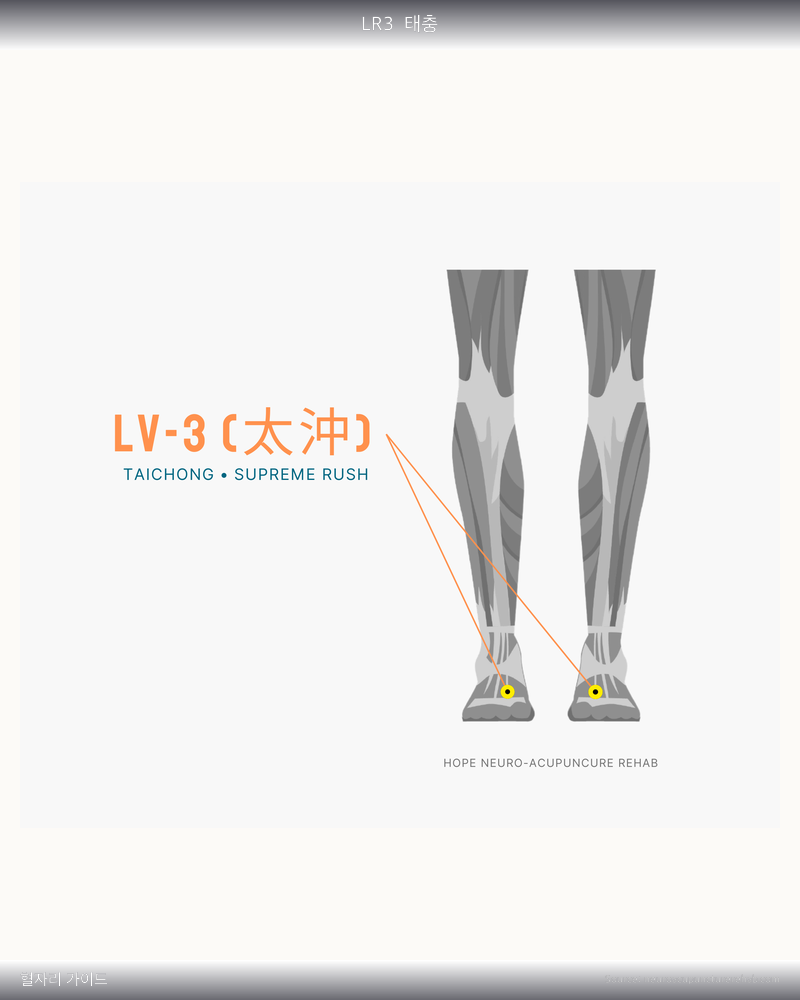
- Taichong (LR3): Both feet for 1 minute — promotes liver qi flow, helps process overwhelming emotions
When Professional Help Is Needed
- Acute stress response persists more than 1 month after the event (post-traumatic stress)
- Chronic stress makes daily functions (going to work, eating, sleeping) impossible
- If you experience self-harm urges or extreme thoughts — seek crisis counseling immediately
Frequently Asked Questions
How can I tell if my stress is acute or chronic?
If you suddenly feel tense due to a specific event, it’s acute. If you’ve been tired and irritable for weeks without a clear cause, it’s likely chronic. If both apply, you have acute stress layered on top of a chronic base.
Can repeated acute stress become chronic?
Yes, daily exposure to the same stressful situations causes acute stress to transition into chronic. That’s why it’s important to change the source itself when acute stress keeps repeating.
Can I use acute coping methods for chronic stress?
Of course! But that alone isn’t enough. Use acute techniques to relieve immediate tension, and long-term routines to treat the root cause — a ‘two-track’ strategy is needed.
Is it possible to never feel stressed at all?
Moderate stress (eustress) actually helps with growth. The problem is ‘excessive’ stress. You can’t eliminate it completely, but you can build the ability to manage it.
Can children experience chronic stress too?
Yes, children experience chronic stress from academic pressure, peer relationships, and more. For children, gently stroking Shenmen (HT7) in a soothing massage works well.
Leave a Reply