“`html
Introduction
Fatigue, abdominal bloating, and emotional changes that begin 1-2 weeks before menstruation—PMS (premenstrual syndrome) symptoms significantly reduce quality of life for many women. Traditional Chinese Medicine views PMS as an imbalance in qi and blood circulation, and explains that stimulating specific acupoints can normalize uterine function and regulate hormone secretion. If you prefer a natural approach without side effects compared to Western hormone therapy, self-acupressure is an effective method you can practice anytime, anywhere. This article introduces the five most effective acupoints for alleviating PMS symptoms and the correct acupressure techniques.
Five Acupoints Effective for Alleviating PMS Symptoms
1. Sanyinjiao (SP6)
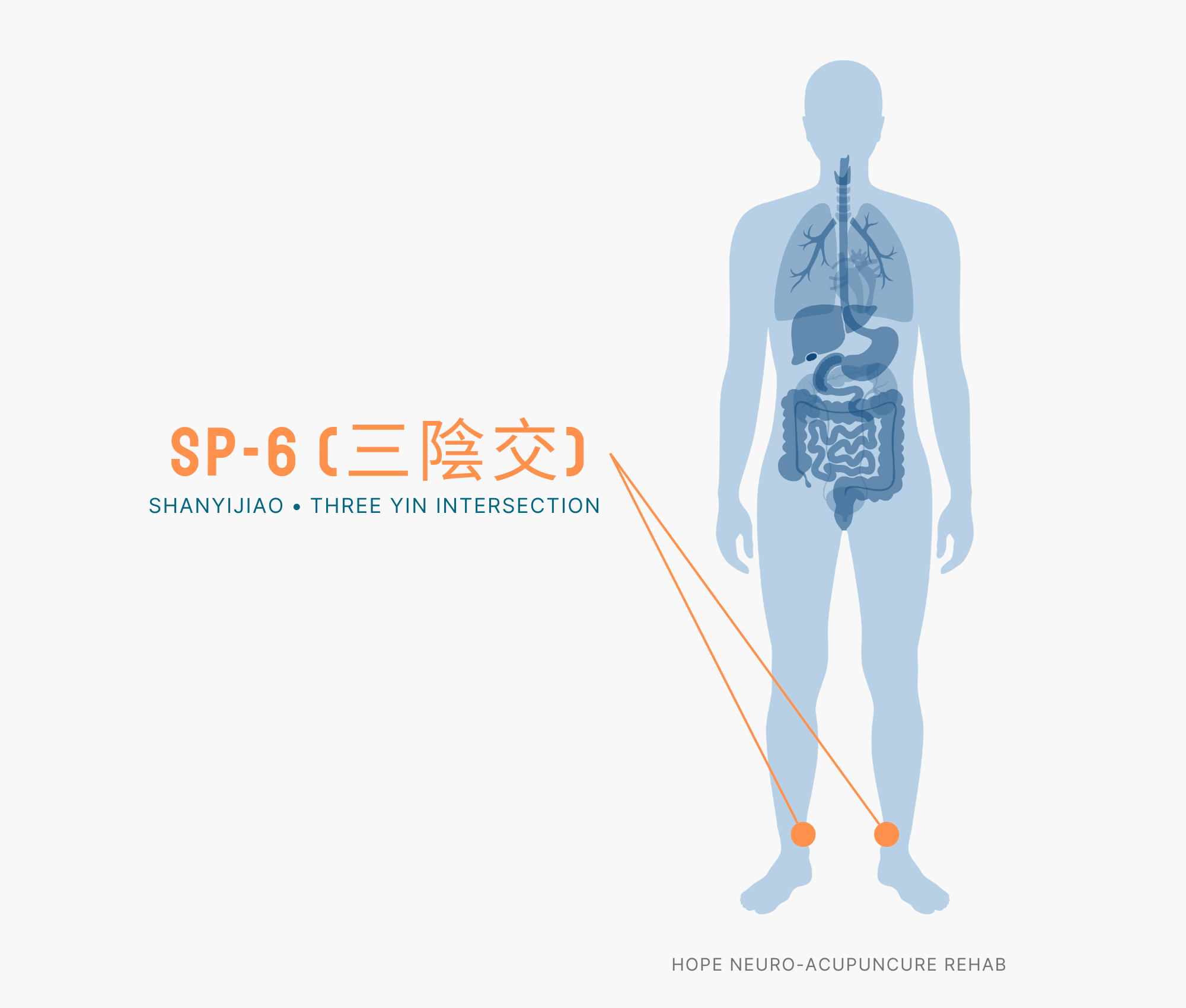
Location: On the inner edge of the tibia, approximately 4 cm (three finger widths) above the medial malleolus (inner ankle bone).
Effects: The most important acupoint for PMS treatment, it regulates uterine and ovarian function. Effective for normalizing hormone secretion, alleviating menstrual cramps, and improving anxiety and sleep.
Acupressure Technique: Place your thumbs on the inner side of both ankles and slowly repeat pressing and releasing 5-10 times. A mild tenderness (7/10 intensity) is ideal. Recommended for 2-3 minutes per session, 1-2 times daily.
2. Hegu (LI4)

Location: In the webbing between the thumb and index finger (on the back of the hand), approximately 1 cm toward the wrist in the depressed area.
Effects: An effective acupoint for relieving pain and stress throughout the body. It quickly alleviates headaches, neck stiffness, and menstrual cramps caused by PMS, and calms anxiety from mood changes and stress.
Acupressure Technique: Press firmly with your opposite thumb, applying pressure in a circular motion while pressing. Hold for 15-20 seconds, then release slowly. 1-2 minutes per hand, can be done 3-4 times daily.
3. Taichong (LR3)
Location: In the webbing between the first and second toes, approximately 2-3 cm up from the web toward the top of the foot in the depressed area.
Effects: It improves the flow of liver qi and is particularly effective for emotion-related and stress-related PMS symptoms. It alleviates pre-menstrual anxiety, depression, and mood swings, and promotes sound sleep.
Acupressure Technique: Press slowly with your thumb, maintaining a deep yet gentle intensity. 2-3 minutes per foot is effective, with acupressure best performed in the evening (when liver qi is most active).
4. Xuehai (SP9)
Location: On the inner side of the knee, approximately 3 cm (two to three finger widths) above the knee crease, in the depressed area of the muscle. It’s easy to locate when sitting with the knee bent.
Effects: It promotes blood circulation and improves menstrual cramps, irregular menstruation, and abdominal bloating. It alleviates fatigue and dizziness from PMS and helps regulate excessive menstrual bleeding.
Acupressure Technique: Press slowly with your thumb, angling slightly toward the back of the knee. 2 minutes per knee, recommended 1-2 times daily.
5. Guanyuan (CV4)
Location: Approximately 3-4 cm (four finger widths) below the navel, on the midline of the abdomen.
Effects: It strengthens the lower dantian (lower abdominal energy center) and improves overall uterine and pelvic health. Effective for fundamental improvement of PMS symptoms, regulation of irregular menstruation, and enhancement of overall stamina and immunity.
Acupressure Technique: Lie down in a comfortable position, overlap three to four fingers, and gently apply acupressure in a circular motion. Stimulate gently for 5-10 minutes; avoid during menstruation and it’s best to start from one week before menstruation or after menstruation ends.
5-Minute Self-Acupressure Routine
Recommended Time: 7-9 PM (when liver and kidney qi are most active)
- Taichong (1 minute) — Stabilizes emotions, relieves stress
- Hegu (1 minute) — Alleviates pain, calms nerves
- Sanyinjiao (1.5 minutes) — Regulates uterine function, normalizes hormones
- Xuehai (1 minute) — Promotes blood circulation, aids fatigue recovery
- Guanyuan (30 seconds) — Strengthens pelvic energy
Frequency: Once daily from 1-2 weeks before the expected menstrual date until menstruation begins. During menstruation, avoid strong stimulation; apply gently or discontinue.
“`
Leave a Reply