
Introduction
When your gums are swollen or painful, eating becomes difficult and your daily focus suffers. When brushing your teeth, pain prevents you from cleaning properly, and in severe cases, you may lose sleep. While dental treatment is important, many people look for ways to relieve symptoms in the meantime.
In traditional Chinese medicine, gum pain is understood as heat in the Stomach meridian and insufficient qi and blood circulation in the Large Intestine meridian. By stimulating acupoints distributed along these meridians, you can reduce local inflammation and enhance the body’s natural healing ability. Here are 5 acupoints you can practice at home using just your fingers, without any special tools.
5 Effective Acupoints for Gum Pain
1. Hegu (LI4) — A Natural Remedy for Pain

Location: In the center of the hollow area where the thumb and index finger meet on the back of your hand, approximately at the middle of the bone below the index finger.
Acupressure Method: Press with the thumb of the opposite hand for 5-10 seconds, then release. Gradually increase pressure to a level that doesn’t cause pain. Circular rubbing motions are also effective.
Effects: As a primary acupoint on the Large Intestine meridian, it relieves pain throughout the face and head. Beyond gum pain, it’s widely used for headaches, facial pain, and tooth pain. According to meridian theory, it promotes the circulation of qi in the facial region, reducing inflammation.
2. Yingxiang (LI20) — Local Inflammation Relief
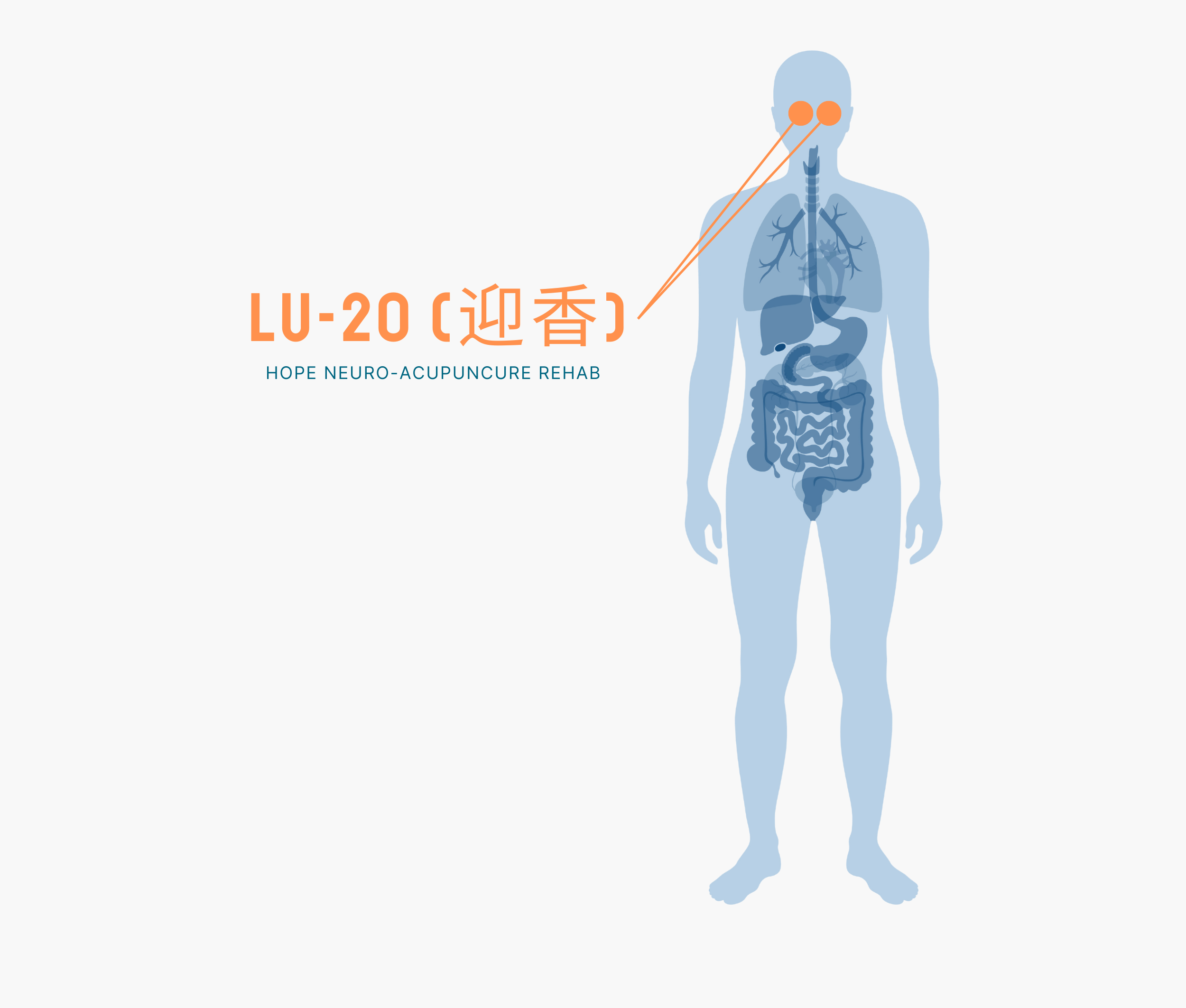
Location: On the outer side of the nostrils, at the end of the crease beside the nose, on both sides where a vertical line from the center of the upper lip intersects.
Acupressure Method: Stimulate by tapping upward with your index or middle finger. You can also place one finger on the point and vibrate it up and down.
Effects: As a point where meridians converge around the nose and mouth, it promotes local blood circulation. It’s particularly effective for reducing gum swelling and facial swelling, and also improves rhinitis symptoms.
3. Xiaguan (ST7) — Relief from Jaw-Related Pain

Location: Below the cheekbone, in the hollow area just above the jaw joint. It’s easier to locate when your mouth is open.
Acupressure Method: Using your middle and index fingers together, stimulate by gently pushing upward. Massage gently in circular motions for 1-2 minutes.
Effects: As a primary acupoint on the Stomach meridian, it stimulates the muscles and blood vessels around the jaw joint. It can simultaneously relieve pain from masticatory muscle tension, jaw clicking, and gum pain.
4. Jiache (ST6) — Relaxation of the Masticatory Muscles

Location: About two finger widths above the lower jaw edge, directly over the muscle that moves when chewing (the masseter muscle).
Acupressure Method: With your mouth slightly open, massage in circular motions using your index and middle fingers, pressing inward. Start gently and gradually increase pressure.
Effects: It releases tension in the masticatory muscles and improves local blood circulation. Beyond pain from gum disease, it relieves gum pain caused by teeth grinding and jaw muscle fatigue.
5. Neiting (ST44) — Clearing Stomach Heat

Location: On the top of the foot, in the webbing between the second and third toes. The hollow area becomes visible when you spread the toes.
Acupressure Method: Press vertically with your thumb, applying light pressure for the first 5 seconds, then medium pressure for the next 10 seconds. Repeat 2-3 times a day.
Effects: It alleviates inflammatory gum diseases viewed as “Stomach heat” in traditional medicine. It’s effective for improving mouth ulcers, gum swelling, and bad breath caused by digestive heat rising to the mouth.
5-Minute Self-Acupressure Routine
Recommended Order and Time Allocation:
- Hegu — 1 minute (30 seconds each hand)
- Yingxiang — 1 minute (30 seconds on each side)
- Xiaguan — 1 minute (30 seconds on each side)
- Jiache — 1 minute (30 seconds on each side)
- Neiting — 1 minute (30 seconds on each foot)
Implementation Tips:
- Practice twice a day: after brushing in the morning and after brushing in the evening.
- The appropriate sensation is a sore and heavy feeling (de qi sensation) at each acupoint.
- If you’re short on time, focusing on Hegu and Neiting alone is also effective.
- It’s more effective to use warm fingers, so in winter, rub your hands together to warm them before starting.
Leave a Reply