“`html
Introduction
Does your jaw make a clicking sound when you chew, or do you feel pain when opening your mouth? Modern people frequently experience temporomandibular joint pain due to stress, poor posture, and teeth grinding. These symptoms can progress beyond simple discomfort and develop into chronic pain. Acupressure on meridian points in traditional medicine effectively relieves temporomandibular joint pain by relaxing tense muscles around the jaw joint and improving blood circulation. Here are 5 acupoints you can easily stimulate at home without medication.
5 Acupoints for Temporomandibular Joint Pain Relief
1. Lower Jaw (ST7, Xiaguan) — Key acupoint above the temporomandibular joint

Location: The hollow depression below the cheekbone, on the upper part of the jawbone. This is the easiest acupoint to locate when your mouth is closed.
WHO Code: ST7 (Stomach Meridian of Foot-Yangming)
Acupressure technique: Repeatedly press slowly upward with your thumb for 3-5 seconds, then release. Be careful not to press too hard, as this can increase pain.
Effects: Relieves tension around the temporomandibular joint and directly reduces pain with jaw movement. It is also related to facial neuralgia and headaches, making it effective for comprehensive pain relief in the facial area.
2. Jaw Muscle (ST6, Jiache) — Relaxation point for lower jaw muscles

Location: The edge of the lower jaw, at the muscle that bulges when clenching the teeth. It is approximately 2cm above the tip of the lower jaw.
WHO Code: ST6 (Stomach Meridian of Foot-Yangming)
Acupressure technique: Press simultaneously upward and inward using your index and middle fingers. Massage 3-5 times daily, 30 seconds per session for best results.
Effects: Directly relieves excessive tension in the masticatory muscles, making it particularly effective for temporomandibular joint pain caused by teeth grinding or jaw clenching.
3. Temple (EX-HN5, Taiyang) — Universal acupoint at the temple
Location: Both temples, in the hollow depression approximately 1.5cm laterally from the end of the eyebrow.
WHO Code: EX-HN5 (Extra-meridian acupoint)
Acupressure technique: Simultaneously massage both sides with your thumbs in circular motions. Repeat 10 times clockwise and 10 times counterclockwise. Perform this in the morning upon waking and again in the evening for best results.
Effects: Effective for headache and facial tension relief, while relaxing the temporal muscles connected to the temporomandibular joint. Particularly helpful for temporomandibular joint pain caused by stress.
4. Wind Pool (GB20, Fengchi) — Connection point between the cervical spine and jaw
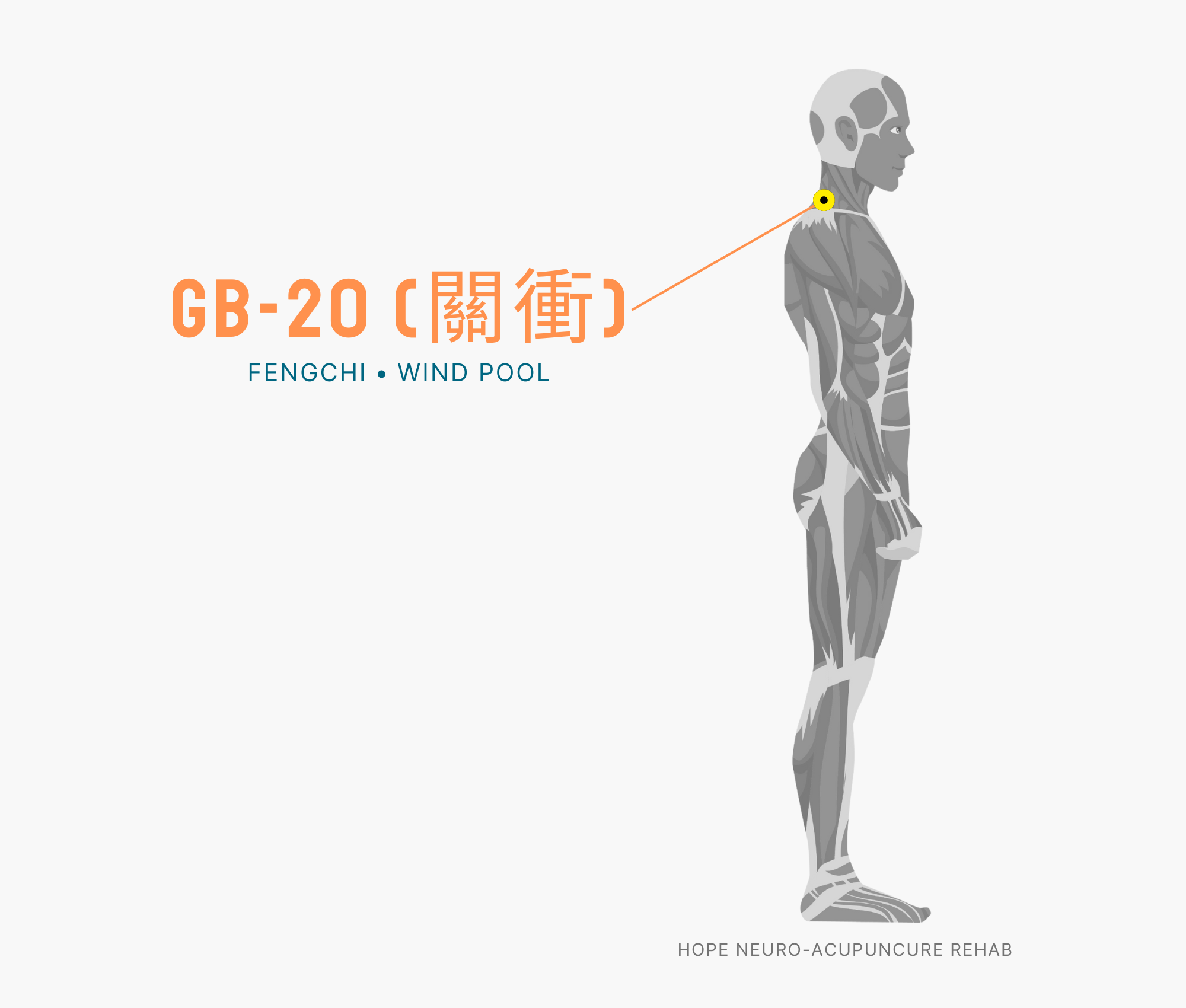
Location: The back of the head, in the bilateral hollow depressions at the base of the neck. These are the two indented areas that become palpable when you bend your head forward.
WHO Code: GB20 (Gallbladder Meridian of Foot-Shaoyang)
Acupressure technique: Slowly press downward with your thumbs on both sides for 1-2 minutes. Maintain pressure until you feel the neck muscles relax.
Effects: Relieves neck and shoulder tension, reducing stress transmitted to the temporomandibular joint. Effective for temporomandibular joint pain caused by cervical spondylosis or forward head posture.
5. Three Intervals (LI3, Sangjian) — Remote treatment point on the hand
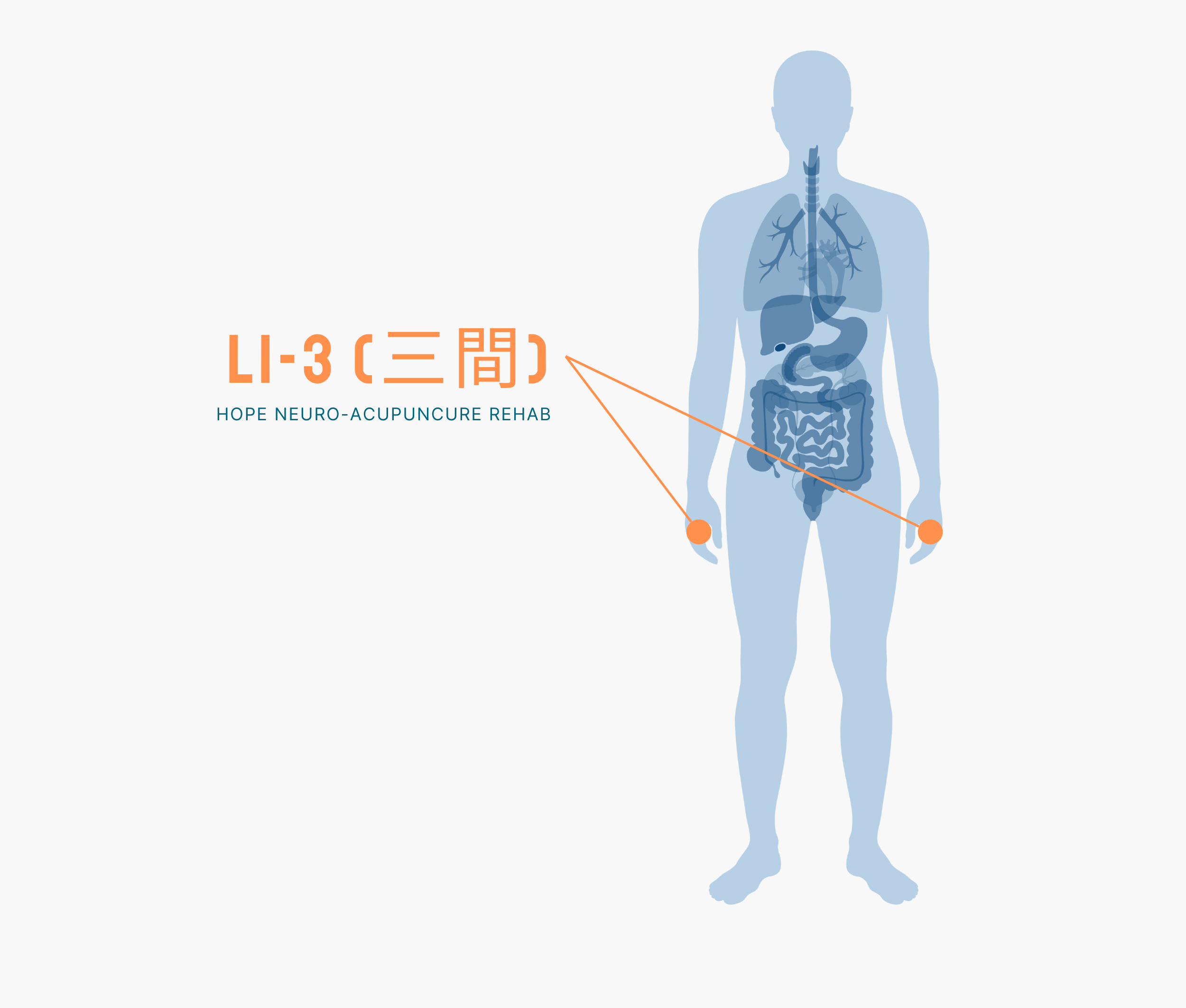
Location: The webbing between the thumb and index finger on the hand, at the midpoint where the bones meet.
WHO Code: LI3 (Large Intestine Meridian of Hand-Yangming)
Acupressure technique: Press or massage in circular motions using the thumb of the opposite hand for 1-2 minutes. Treat both hands.
Effects: Stimulates the Large Intestine meridian, which regulates digestive and facial-related nerves, alleviating systemic tension associated with temporomandibular joint pain. As a remote treatment point, you can stimulate it anytime, anywhere.
5-Minute Self-Acupressure Routine
Perform the following sequence daily, either morning or evening:
- Preparation (30 seconds): Sit comfortably and take 3 deep breaths
- Wind Pool (GB20) — 1 minute: Slow pressing with thumbs × 3 times
- Temple (EX-HN5) — 1 minute: Circular massage with both thumbs × 2 sets
- Lower Jaw (ST7) — 1 minute: Press upward with thumb and release × 5 times
- Jaw Muscle (ST6) — 1 minute: Massage upward with index and middle fingers × 30 seconds
- Three Intervals (LI3) — 1 minute: Press firmly with both thumbs × 30 seconds each
- Closing (30 seconds): Gently move your jaw 10 times, then take deep breaths
⏰ Total duration: Approximately 5-6 minutes
💡 Tip: Warm compress therapy or applying a warm towel to the face before acupressure enhances the muscle-relaxing effects.
“`
Leave a Reply