Introduction
Pelvic pain is a symptom frequently reported by modern women. It’s caused by prolonged sitting, hormonal changes before and after menstruation, and pelvic floor muscle tension from stress. Traditional Korean medicine interprets this as ‘insufficient qi and blood circulation’ and ‘phlegm and fluid stagnation’.
Acupressure on acupoints stimulates meridians (channels) around the pelvis to promote blood and lymph circulation and relieve muscle tension around the uterus, ovaries, bladder, and genitals. Acupoints distributed along the central lower abdomen and inner legs have traditionally been used for gynecological conditions and lower abdominal pain relief. Since it can be performed at home with just your fingers without medication, it’s effective for busy modern people.
5 Acupoints for Pelvic Pain Relief
1. Sanyinjiao (三陰交, SP6/SPL6)
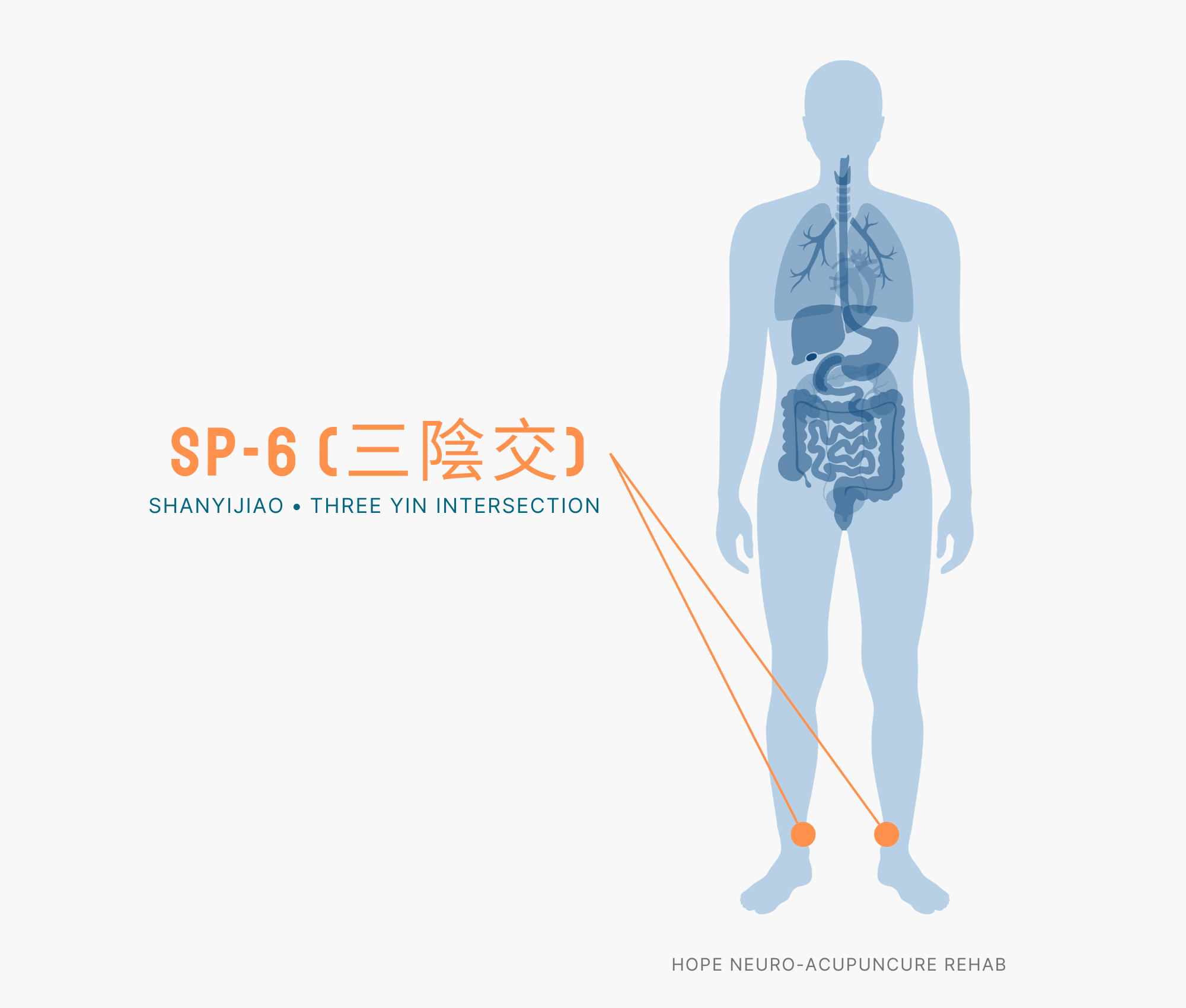
Location: On the inner leg, approximately 4 finger widths (10cm) above the inner ankle bone. It’s located in the depression on the back of the tibia.
Acupressure Method: Use your thumb to gently press upward, holding for 3-5 seconds, and repeat 10 times. Gradually increase the pressure until you feel a soreness.
Benefits: Sanyinjiao is known as the ‘gynecology superpoint’ and normalizes qi and blood around the uterus, regulates menstrual cycles, and relieves pelvic floor muscle tension. It has traditionally been used for pelvic pain, menstrual cramps, and infertility improvement.
WHO Code: SP6 (Spleen meridian point 6)
2. Taichong (太衝, LR3/LIV3)
Location: On the top of the foot, in the depression between the big toe and second toe (between the metatarsal bones). It’s located where the toe bones end.
Acupressure Method: Press firmly with the tip of your thumb pointing upward, holding for 5-7 seconds, and release. Repeat 8-10 times. You’ll feel tension from stress release.
Benefits: As a source point of the Liver meridian, it regulates qi and blood flow in the pelvic area and relieves muscle stiffness in the uterus and pelvis from stress. It’s effective for menstrual cramps, ovulation pain, and pelvic colic, and also promotes emotional stability.
WHO Code: LR3 (Liver meridian point 3)
3. Qihai (氣海, CV6/REN6)
Location: On the center line, approximately 1.5 finger widths (about 4cm) below the navel. It’s located just below the skin.
Acupressure Method: Overlap your index and middle fingers and press vertically and slowly, using gentle pressure to massage in circular motions without pressing too deeply. Continue for 30 seconds to 1 minute.
Benefits: As a key point on the Conception vessel, it supplements original qi in the lower heater (lower abdomen) and strengthens the function of the uterus and pelvic organs. It’s effective for pelvic pain, irregular menstruation, uterine disease prevention, and improving lower abdominal coldness.
WHO Code: CV6 (Conception vessel point 6, Qihai point)
4. Kunlun (崑崙, BL60/BL60)

Location: On the outer ankle, in the depression between the outer ankle bone and heel. It’s located in the hollow on the outer side of the ankle.
Acupressure Method: Use your thumb to press firmly upward (toward the toes) for 3-5 seconds, and repeat 10-12 times. Aim for a cooling sensation that extends to the calf.
Benefits: As an important point on the Bladder meridian, it improves qi and blood circulation of the spine and pelvis and relieves lower back pain and pelvic pain. It’s particularly effective for pelvic pain from pelvic floor muscle stiffness and sciatica.
WHO Code: BL60 (Bladder meridian point 60)
5. Zhongji (中極, CV3/REN3)
Location: On the center line, approximately 4 finger widths (about 10cm) below the navel. It’s located just above the upper border of the pubic bone.
Acupressure Method: Gently press vertically with your middle finger while maintaining appropriate pressure to avoid irritating the bladder. Repeat circular massage for 30-50 seconds, 3 times.
Benefits: As a mu point of the Conception vessel, it regulates the function of the bladder, uterus, and small intestine, and releases lower abdominal stiffness. It’s effective for pelvic pain, difficult urination, uterine disease, and improving reproductive discomfort.
WHO Code: CV3 (Conception vessel point 3, Zhongji point)
5-Minute Self-Acupressure Routine
Preparation: Sit or lie in a comfortable position, and the effect will be better if you start with warm hands.
| Order | Acupoint | Time | Method |
|---|---|---|---|
| 1 | Qihai (CV6) | 1 minute | Massage gently in circular motions |
| 2 | Zhongji (CV3) | 1 minute | Vertical pressing and circular massage |
| 3 | Sanyinjiao (SP6) | 1 minute | Press 10 times with thumb |
| 4 | Taichong (LR3) | 1 minute | Press 8-10 times with thumb |
| 5 | Kunlun (BL60) | 1 minute | Press 10-12 times with thumb |
Tips: It’s most effective to perform it twice daily: in the morning after waking and in the evening before bed. If pain is severe, you can perform it up to 3 times a day, and it can be done during menstruation (but avoid excessive stimulation).
Leave a Reply