
Why Does Acupressure Help with Migraines?
Migraines are a condition caused by cerebral vasodilation and neurotransmitter imbalances. In traditional Chinese medicine, migraines are classified as “hemiplegic wind,” with poor blood circulation around the neck and head as the primary cause. Acupoint pressure promotes blood circulation and relaxes tense muscles, relieving nerve compression and increasing oxygen supply to the brain. In particular, acupoints around the neck and temples directly affect blood vessels and nerves along the migraine pathway, providing rapid pain relief. Based on clinical experience, acupressure applied in the early stages of migraines can reduce the need for medication.
5 Acupoints for Migraine Relief
1. Taiyang (EX-HN5) — The Temple’s Key Point
Location: Located at the midpoint between the outer corner of the eye and the ear, in a small depression. It’s at the center of the temple when viewing the face from the side.
Pressure Technique: Simultaneously stimulate both sides with your thumbs, making slow circular motions for 3–5 minutes. Start with light pressure and gradually increase intensity. You can apply pressure immediately when a migraine begins.
Benefits: Taiyang is the most direct acupoint for migraine relief. It improves blood circulation around the temples, eases cerebral vascular tension, and calms overactive brain nerves. It’s particularly effective for migraines caused by eye strain.
2. Hegu (LI4) — The Universal Acupoint

Location: Located on the back of the hand at the point where the thumb and index finger meet. It’s in the small depression between the prominent muscles when your fingers are together.
Pressure Technique: Use your opposite thumb to press slowly and vertically, releasing and pressing again for 1–2 minutes. Alternate between both hands. You should feel moderate discomfort.
Benefits: Hegu is the most versatile acupoint among all meridian points. It relieves whole-body pain, calms the nerves, and especially improves blood circulation to the head. It’s effective not only for migraines but also for toothaches and facial pain.
3. Baihui (GV20) — The Crown’s Center
Location: Located at the crown of the head, where the line connecting both ear tips meets the midline rising from the space between the eyebrows. It’s the point where you feel a slight depression when gently tapping with your finger.
Pressure Technique: Rather than direct pressure on the crown, gently press with your fingers while making circular motions, or move your fingers up and down like combing hair for 2–3 minutes. Avoid excessive pressure.
Benefits: Baihui is the center of cerebral blood circulation. It clears mental fog caused by migraines and improves concentration loss due to headaches. It’s particularly effective for migraines caused by prolonged reading or computer work.
4. Fengchi (GB20) — Relief for Tension at the Brain’s Base
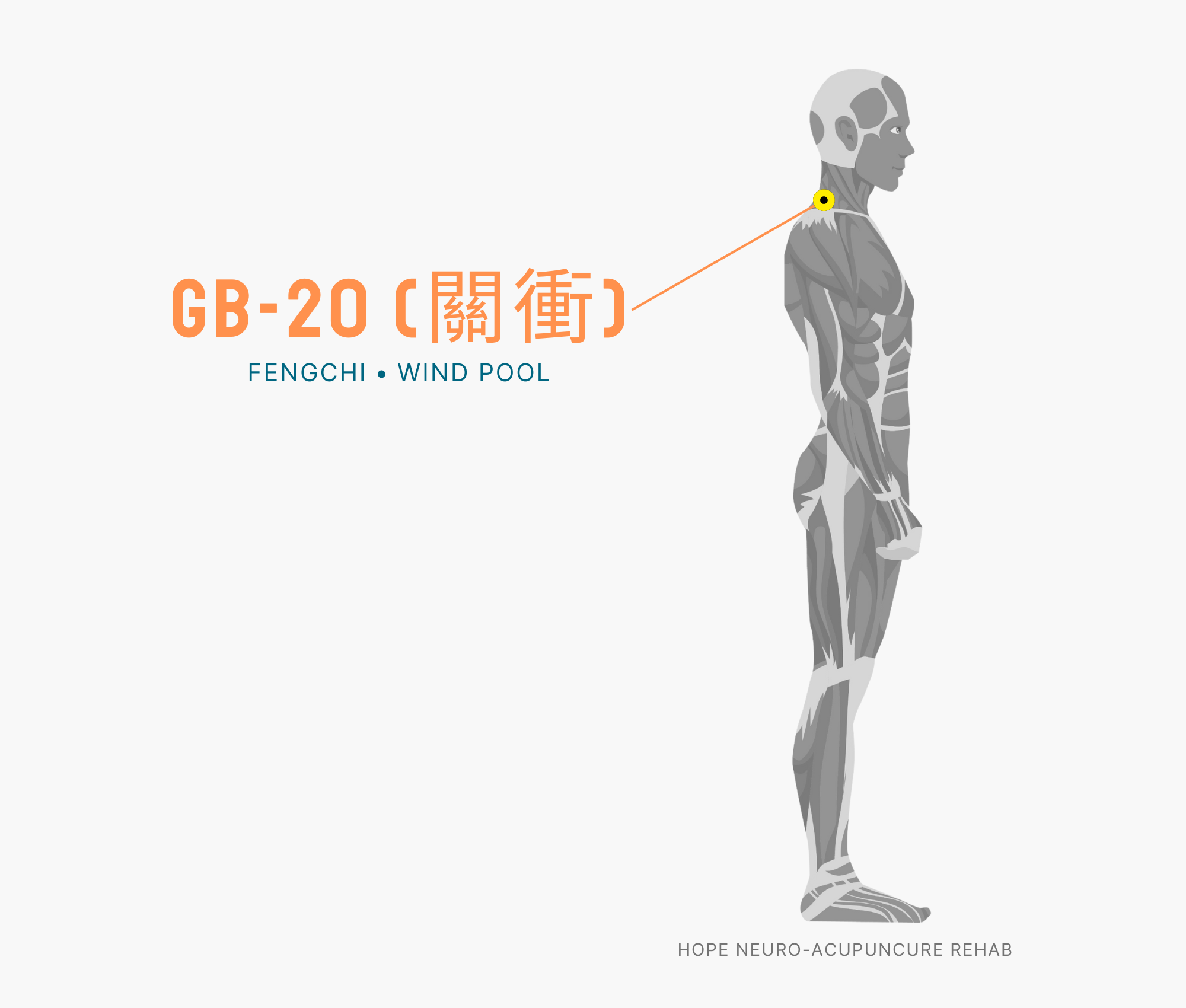
Location: Located at the back of the neck, where the vertebrae and skull meet, with one point on each side. It’s in the small depression at the base of the skull when you follow the line below the ear down the back of the neck.
Pressure Technique: Use both thumbs to press simultaneously upward and slowly, releasing and pressing again for 2–3 minutes. Since the neck muscles are tense, increase pressure gradually.
Benefits: Fengchi is an important acupoint connecting the neck and head, most effective for migraines caused by cervical spine tension. It relieves stiffness in the neck muscles, normalizes blood supply to the brain, and alleviates stress-related migraines.
5. Sanyinjiao (SP6) — An Essential Point for Women’s Migraines
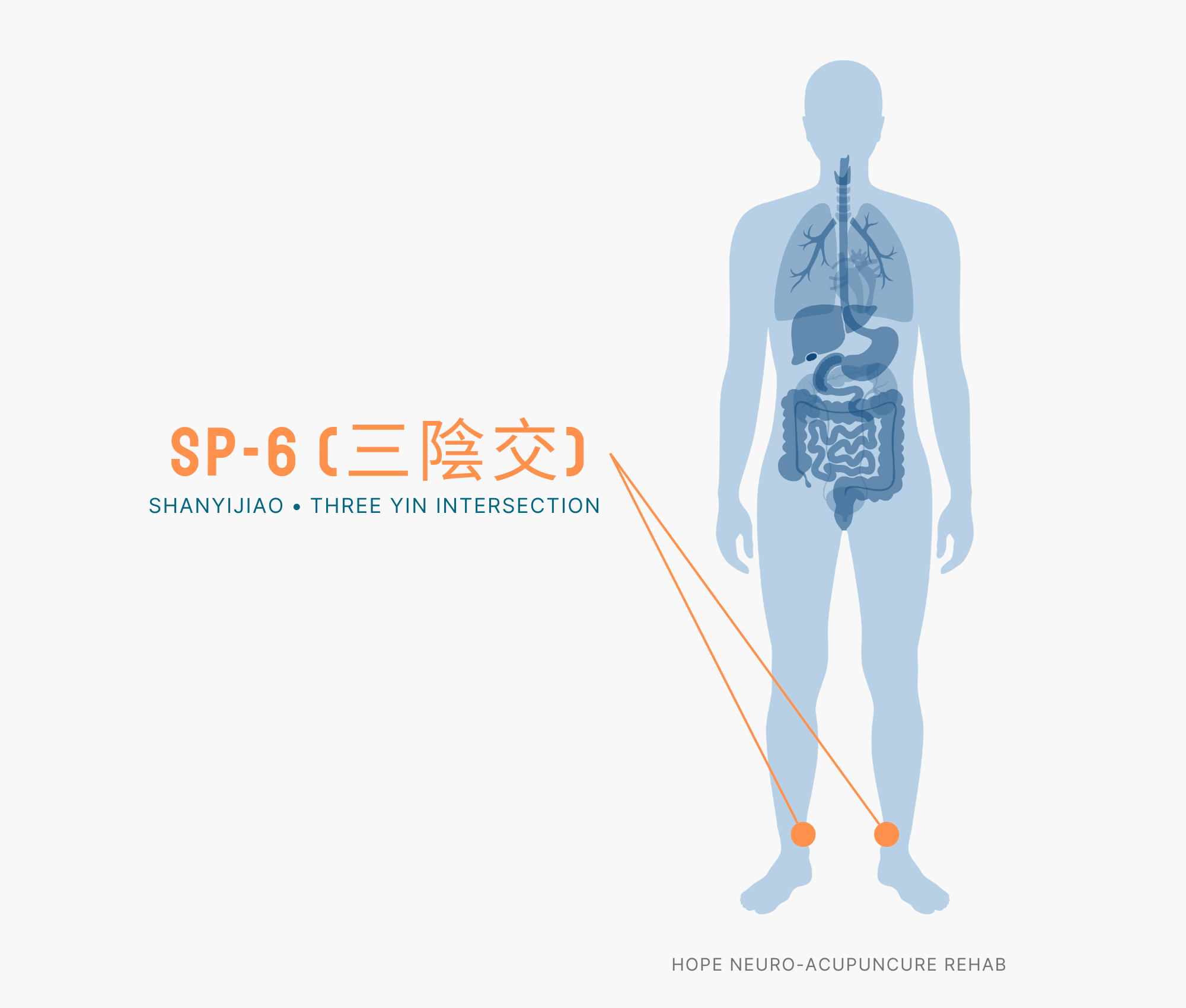
Location: Located above the inner ankle, about three finger widths above the inner ankle bone. You can find it by tracing along the inner edge of the shinbone.
Pressure Technique: While seated, use your thumb to press slowly, releasing and pressing again for 1–2 minutes. Alternate between both feet, maintaining steady breathing. A low, dull sensation similar to menstrual cramps is normal.
Benefits: Sanyinjiao regulates whole-body hormone balance. It particularly alleviates menstrual migraines (migraines related to the menstrual cycle) and is also effective for preventing migraines caused by stress and fatigue.
5-Minute Self-Acupressure Routine — Effective Order and Time Distribution
Preparation: Sit in a comfortable position and take several deep breaths to relax before starting.
- Taiyang (1 minute) — Stimulate both sides simultaneously with circular motions. If your migraine is severe, start here.
- Hegu (1 minute) — Alternate between both hands, pressing and releasing with moderate pressure.
- Fengchi (1 minute) — Press both sides of the back of the neck upward simultaneously. Work deeply and slowly.
- Baihui (1 minute) — Gently press the crown or move your fingers like combing hair.
- Sanyinjiao (1 minute) — Alternate between both feet, pressing slowly with your breathing.
Tip: When a migraine is severe, focus on Taiyang and Hegu first, spending 3 minutes on each. For preventive purposes, perform the 5-minute routine daily right after waking or before bedtime to reduce migraine frequency to 1–2 times per month.
Leave a Reply