Introduction
Have you ever experienced not being able to sleep at night and unconsciously feeling drowsy during the day after taking a long-distance flight? This is precisely jet lag symptoms. Caused by the body’s circadian rhythm not matching local time, this condition leads beyond simple fatigue to indigestion, headaches, and reduced concentration.
Traditional Chinese Medicine views that by stimulating acupuncture points that regulate the body’s circadian rhythm, we can accelerate adaptation to external environmental changes. In particular, by accurately applying acupressure to acupoints that govern sleep-wake cycles and regulate the nervous and hormonal systems, we can help the body adapt in a short time without medication. This article introduces the five most effective acupoints for jet lag relief, the scientific basis behind them, and a simple 5-minute self-acupressure routine you can practice daily.
Five Effective Acupoints for Jet Lag
1. Yintang (EX-HN1) — Eye Fatigue and Alertness Control
Location: An acupoint located at the inner corner of the eye. You can apply pressure simultaneously on both eyes’ inner corners.
Effects: Quickly relieves eye fatigue and discomfort caused by jet lag, and stimulates the brain’s alertness state to reduce daytime drowsiness. Especially when applied at 6-8 AM local time, it effectively awakens the body.
Acupressure Technique: Using the index fingers of both hands, tap the inner corner of the eyes simultaneously and apply pressure for 3-5 seconds. It’s most effective to stimulate 2-3 times daily with concentrated pressure in the morning hours.
2. Sanyinjiao (SP6) — Sleep Rhythm Regulation and Nerve Calming
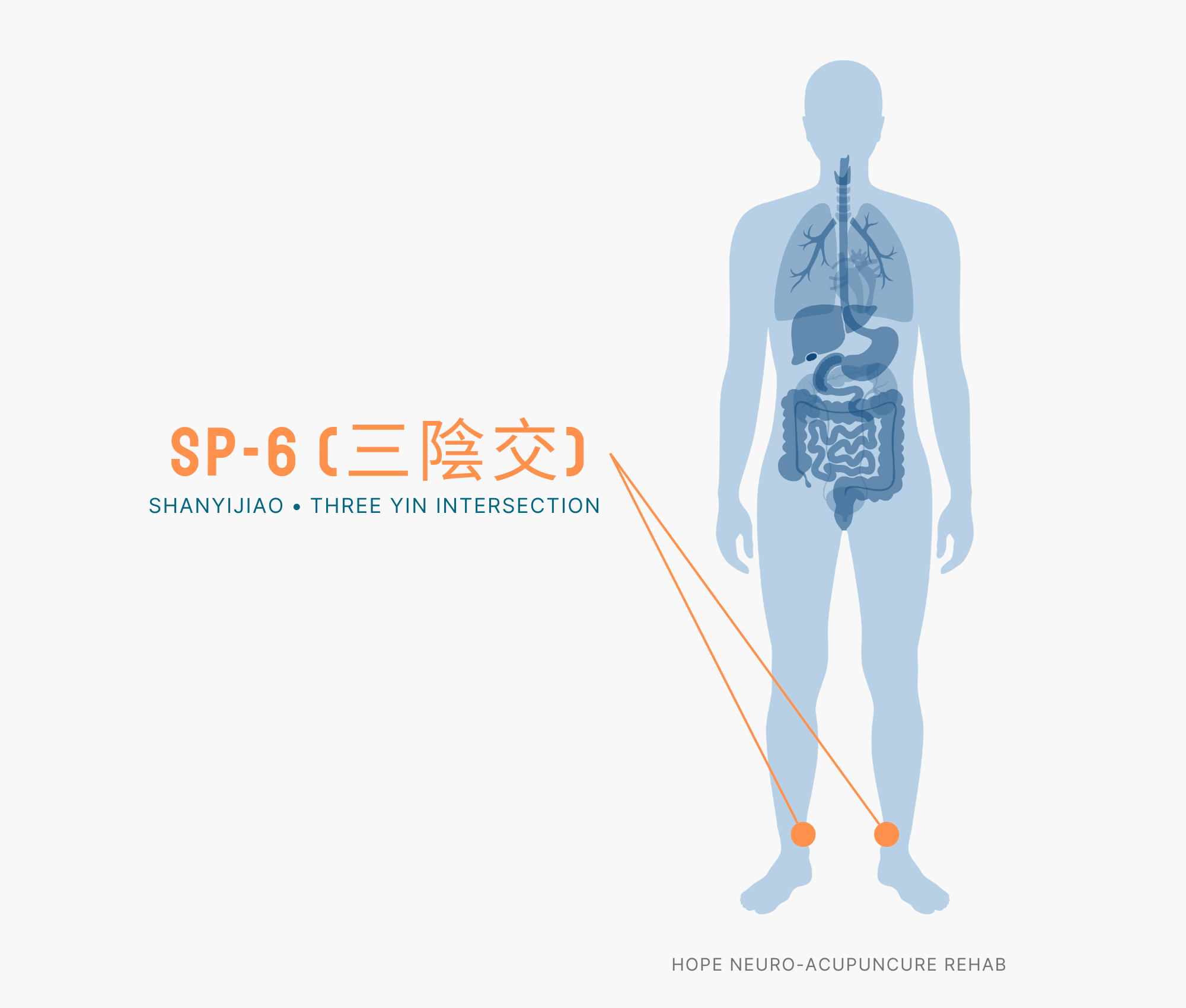
Location (WHO Code: SP6): Located about three finger widths (approximately 4cm) above the inner ankle bone (medial malleolus). You can find it by following the inner edge of the shinbone with your thumb.
Effects: One of the most important acupoints in Traditional Chinese Medicine, it works broadly on hormone secretion and nervous system regulation. It alleviates insomnia and nervousness caused by jet lag and is excellent for inducing sleep adjusted to local time. Stimulating at 8-10 PM promotes deep sleep.
Acupressure Technique: Using your thumb or finger joint, slowly press and release repeatedly for 5-10 seconds. Apply about 10 times per session, in the evening (especially 1 hour before bed) on both legs.
3. Shenmen (HT8) — Emotional Stability and Anxiety Relief

Location (WHO Code: HT8): Located at the end of the pinky and ring finger space when the fingers are spread open. It’s positioned where this line meets the inner wrist line.
Effects: An acupoint on the heart meridian that calms unstable emotional states and stress from time zone changes. Effectively relieves anxiety, restlessness, and middle-of-the-night awakening that occur during jet lag. Greatest effect when applied at 9-11 PM (before midnight when the heart meridian is most active).
Acupressure Technique: Press the side of the pinky finger of both hands with your thumbs for 3-5 seconds. It’s beneficial to stimulate whenever you wake up, before bed, or when feeling anxious. About 5-10 times daily is sufficient.
4. Taichong (LR3) — Liver Function and Circadian Rhythm Recovery
Location (WHO Code: LR3): The depression between the big toe and second toe on the top of the foot. It’s located about one finger width (approximately 1.5cm) above the base of the toes toward the ankle.
Effects: An important acupoint in Traditional Chinese Medicine that regulates liver function, which controls the body’s metabolism and time zone adaptation. Comprehensively alleviates delayed fatigue recovery, indigestion, and unstable circadian rhythm regulation caused by jet lag. Stimulating once in the morning and once in the evening is effective for 24-hour body rhythm recovery.
Acupressure Technique: Sitting with one knee bent, slowly apply acupressure with the opposite thumb for 5-10 seconds. Perform 3-5 times on both feet, twice daily (morning/evening).
5. Fengchi (GB20) — Headache Relief and Neck Muscle Relaxation
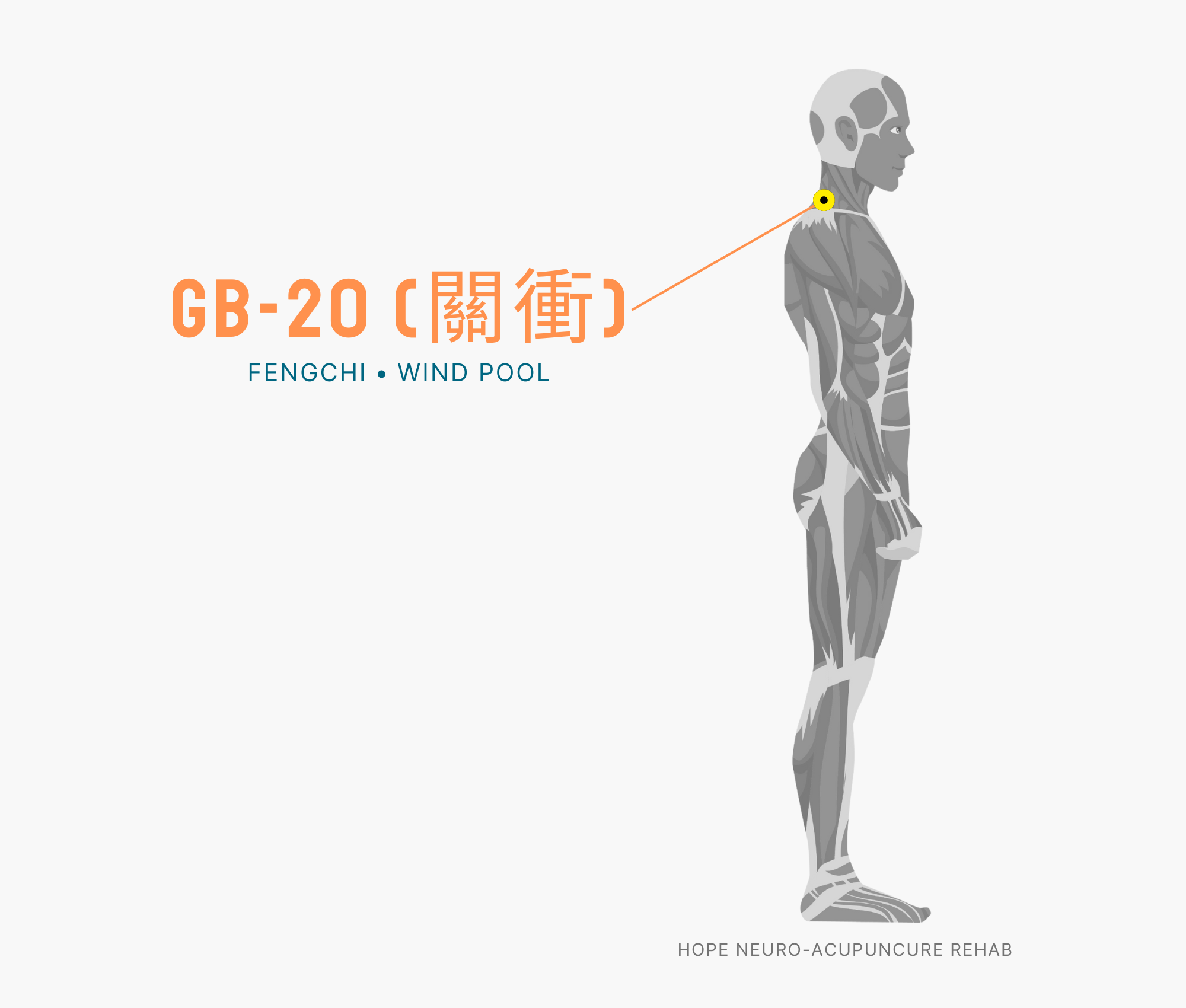
Location (WHO Code: GB20): Located on both sides of the back of the neck, where the head meets the neck. It’s in the depression about two finger widths lateral to the center line at the back of the neck, below where the ear is.
Effects: Quickly alleviates tension headaches, neck stiffness, and migraines caused by jet lag. It improves blood flow to the brain and relieves nerve tension, improving overall fatigue and reduced concentration. Stimulating once in the morning and once in the afternoon maintains a refreshed state throughout the day.
Acupressure Technique: Apply pressure with both thumbs simultaneously for 5-10 seconds. Start gently and gradually increase pressure, maintaining intensity just before the point of pain. It’s also good to stimulate whenever your neck feels stiff.
5-Minute Self-Acupressure Routine
Recommended Schedule for the First 3 Days of Jet Lag:
- 6-8 AM (1 minute)
– Yintang: Both sides 30 seconds (15 seconds × 2 times)
– Fengchi: Both sides 30 seconds (15 seconds × 2 times)
→ Goal: Awaken the body - 12-2 PM (1 minute)
– Taichong: Both feet 30 seconds (15 seconds × 2 times)
– Fengchi: Both sides 30 seconds (15 seconds × 2 times)
→ Goal: Prevent afternoon drowsiness - 6-8 PM (1 minute)
– Taichong: Both feet 30 seconds
– Shenmen: Both hands 30 seconds
→ Goal: Evening body relaxation - 30 minutes before bed (2 minutes)
– Sanyinjiao: Both legs 30 seconds (15 seconds × 2 times)
– Shenmen: Both hands 30 seconds (15 seconds × 2 times)
– Fengchi: Both sides 30 seconds
→ Goal: Induce deep sleep
Tips: For the first 3 days, follow the above routine strictly. From day 4 onward, you can selectively stimulate only areas where symptoms remain. Avoid excessive acupressure (more than 5 times daily on the same area).
Leave a Reply