Introduction
Sudden abdominal cramps, unpredictable cycles of diarrhea and constipation, stress from having an always sensitive bowel… Irritable bowel syndrome (IBS) is a common digestive disorder experienced by 70-80% of modern people. It appears frequently in stressed office workers and students in particular, and because it’s difficult to identify a clear cause, it can be especially frustrating.
Traditional Korean medicine understands these intestinal dysfunction issues from the perspective of ‘spleen and stomach deficiency’ or ‘liver-spleen disharmony,’ and believes that by stimulating acupoints on the abdomen and limbs, we can regulate digestive function and stabilize the nervous system. Five acupoints that can be stimulated with your fingers without any special tools are a natural way to reduce the discomfort caused by irritable bowel syndrome. In this article, we introduce effective acupressure techniques along with WHO-standard acupoints in detail.
Each of the Five Acupoints
1. ST36 (Zusanli) — A Premier Point for Enhancing Immunity

WHO Code: ST36 (Stomach Meridian Point 36)
Location: On the outer side below the knee, approximately 3cm outward from the anterior border of the shinbone. It is located four finger-widths below the depression under the knee. There is one point on each leg.
Acupressure technique: Press slowly with your thumb, maintaining a pressure level where you can feel slight tenderness. Apply circular pressure for 30 seconds to 1 minute, then repeat on the other leg in the same way.
Benefits: ST36 is so renowned as a ‘miracle cure for all ailments’ that it strengthens digestive function and enhances immunity. In particular, it promotes intestinal motility, making it possible to improve both constipation and diarrhea simultaneously, and it alleviates digestive distress caused by stress.
2. SP6 (Sanyinjiao) — The Intersection Point for Digestive and Hormonal Balance
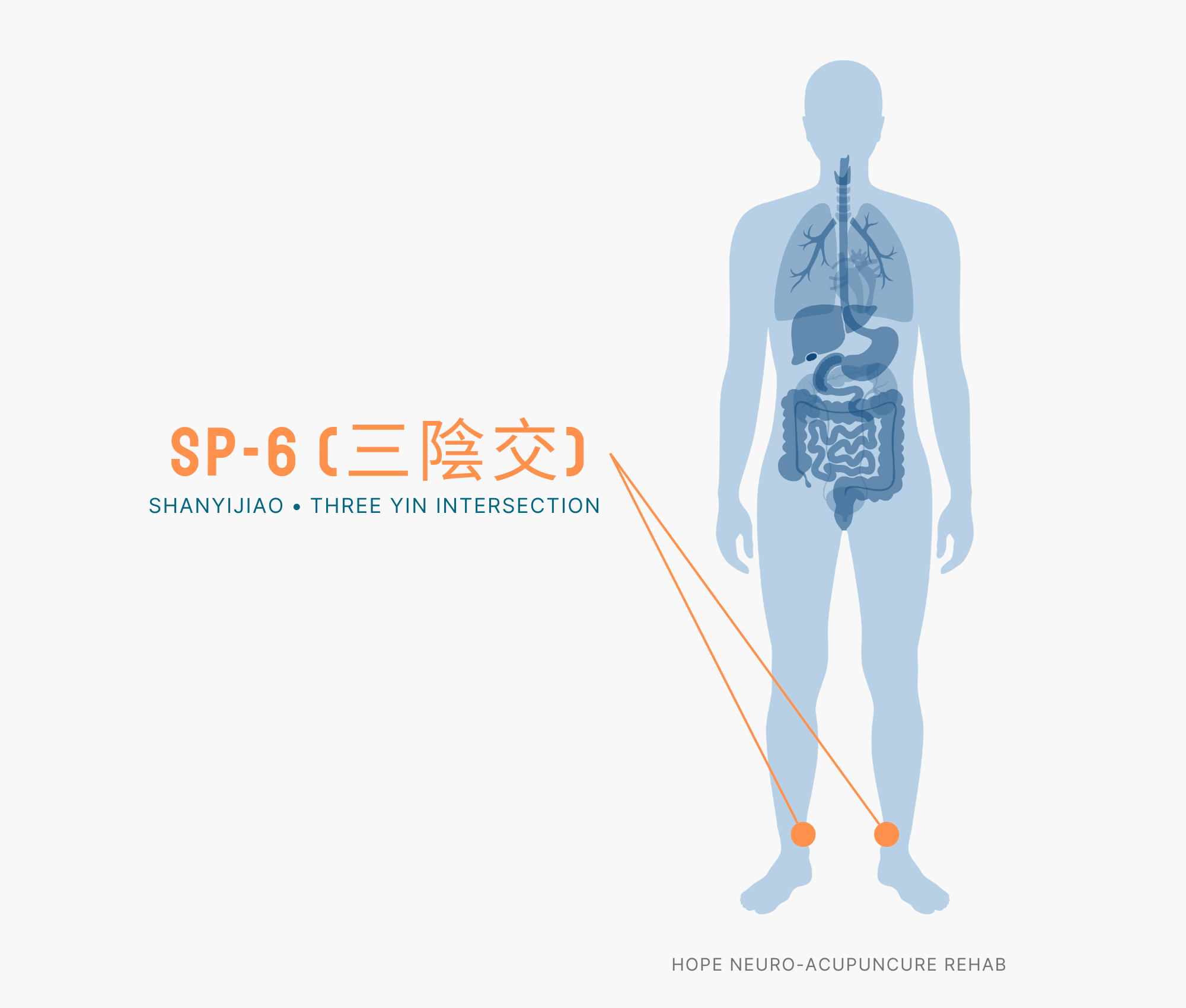
WHO Code: SP6 (Spleen Meridian Point 6)
Location: On the inner surface of the shin, approximately 4cm (three finger-widths) above the inner ankle bone. When pressed with your finger, slight tenderness is felt.
Acupressure technique: Apply pressure to SP6 on both legs simultaneously or alternately. Use your thumb to maintain steady pressure for 1-2 minutes, and ‘breath-synchronized acupressure’—repeating relaxation and contraction while breathing deeply—is particularly effective.
Benefits: SP6 is the meeting point of the Spleen, Kidney, and Liver meridians, and it regulates not only digestive function but also hormonal balance. It alleviates abdominal bloating, diarrhea, and constipation, and by reducing stress hormone levels, it stabilizes the gut-brain axis.
3. ST25 (Tianshu) — The Central Point for Regulating Colon Function

WHO Code: ST25 (Stomach Meridian Point 25)
Location: 2cm (approximately two finger-widths) to the side of the navel. There is one point on each side of the abdomen, and slight tenderness can be felt when pressed with your finger.
Acupressure technique: Press slowly with the thumb of one hand, or overlap both thumbs for stronger stimulation. It is effective to apply circular massage-like pressure for 1-2 minutes. Perform this at least one hour after eating.
Benefits: ST25 directly regulates colon function and normalizes intestinal motility. It simultaneously alleviates diarrhea, constipation, and abdominal cramping caused by irritable bowel syndrome, and by promoting intestinal gas expulsion, it reduces abdominal bloating.
4. CV6 (Qihai) — Energy Center and Digestive Power
WHO Code: CV6 (Conception Vessel Point 6)
Location: An acupoint on the midline, located approximately 1.5cm (about two finger-widths) below the navel. It is in the center of the abdomen, making it easy to locate.
Acupressure technique: It is most effective to perform this while lying down. Press slowly with your thumb, then apply circular pressure for 2-3 minutes. It is important to maintain steady pressure that is not overly strong.
Benefits: CV6 means ‘the sea of energy (qi)’ and strengthens digestive function and immunity. It enhances overall abdominal vitality, improves intestinal motility, and alleviates chronic fatigue and stress, thereby calming nervous system hyperreactivity, which is the root cause of irritable bowel syndrome.
5. LI4 (Hegu) — Pain Relief and Autonomic Nervous System Regulation

WHO Code: LI4 (Large Intestine Meridian Point 4)
Location: Between the muscles where the thumb and index finger meet, right near the bone. A distinct tenderness is felt when pressed with your finger.
Acupressure technique: Press firmly with the thumb of the opposite hand; the point of most effectiveness is when you feel a sensation of discomfort. Apply circular pressure for 1-2 minutes, and repeat on both hands in turn.
Benefits: LI4 is an outstanding acupoint for nerve-related pain and stress symptoms. It alleviates abdominal cramping and promotes parasympathetic nervous system activation to reduce intestinal hyperreactivity caused by the ‘fight-or-flight’ response. By relieving mental tension, it improves stress-induced digestive disorders.
5-Minute Self-Acupressure Routine
You can expect the best results by applying acupressure in the following order at the same time each day. The best times are right after waking in the morning or before bedtime in the evening.
| Order | Acupoint | Duration | Method |
|---|---|---|---|
| 1 | ST36 (Zusanli) | 1 minute | Both legs, apply circular pressure with thumb for 30 seconds each |
| 2 | SP6 (Sanyinjiao) | 1 minute | Both legs, apply pressure for 30 seconds each synchronized with breathing |
| 3 | CV6 (Qihai) | 1 minute | Lying down, apply gentle circular pressure with thumb |
| 4 | ST25 (Tianshu) | 1 minute | Both sides of abdomen, apply massage-like circular pressure for 30 seconds each |
| 5 | LI4 (Hegu) | 1 minute | Both hands, apply firm pressure with thumb for 30 seconds each |
Tips to maximize benefits:
- Perform consistently at the same time each day (for at least 4 weeks)
- Warm hands are more effective, so rub your hands together first or soak them in warm water before beginning
- Focusing on relaxation while breathing deeply enhances the autonomic nervous system regulation effect
- When symptoms of irritable bowel syndrome appear, focus on stimulating ST25 and LI4
Leave a Reply