Introduction
Chronic inflammation is a hidden illness of modern people. Without obvious symptoms, microscopic inflammation continues throughout the body, manifesting as fatigue, joint pain, digestive discomfort, and skin problems. When stress, irregular eating habits, and lack of exercise create a vicious cycle, acupressure at specific points from Traditional Chinese Medicine can be a solution.
Acupoints are locations that regulate the body’s energy (qi) and blood circulation. When specific acupoints are stimulated, the immune system becomes activated and inflammatory responses are reduced. Since it can be done anytime with just your fingers without medication, it is an ideal self-treatment method for busy modern people.
5 Effective Acupoints for Relieving Chronic Inflammation
1. Zusanli (ST36, 足三里)

Location: 10cm below the knee on the outer side of the calf. When you bend your knee, it is located below the outer depression of the popliteal fossa by about four finger widths.
Acupressure Method: Use your thumb to apply gentle pressure and slowly massage in circular motions. Press each point for 1-2 minutes, twice daily (morning and evening). The pressure should feel like a deep soreness rather than sharp pain.
Effect: Zusanli is called the “immunity acupoint” and is excellent for strengthening overall immune function, suppressing inflammatory responses, promoting fatigue recovery, and improving digestive function. Regular stimulation promotes the secretion of anti-inflammatory substances in the body.
2. Hegu (LI4, 合谷)

Location: In the depression between the thumb and index finger (between the 1st and 2nd metacarpal bones). It is the point that falls into your fist when your fingers are closed together, and you will feel it clearly when pressing with the opposite thumb.
Acupressure Method: Press vertically with the opposite thumb for 1-2 minutes. A slight soreness (mild pain sensation) is most effective. Alternate hands and perform 2-3 times daily for best results.
Effect: Excellent for pain relief, inflammation reduction, immunity enhancement, and anti-inflammatory effects. It is particularly effective for inflammation in the face, head, and upper body, and also helps with stress-related inflammation.
⚠️ Caution for Pregnant Women: This acupoint can trigger uterine contractions, so be sure to consult a professional before performing it during pregnancy.
3. Sanyinjiao (SP6, 三陰交)
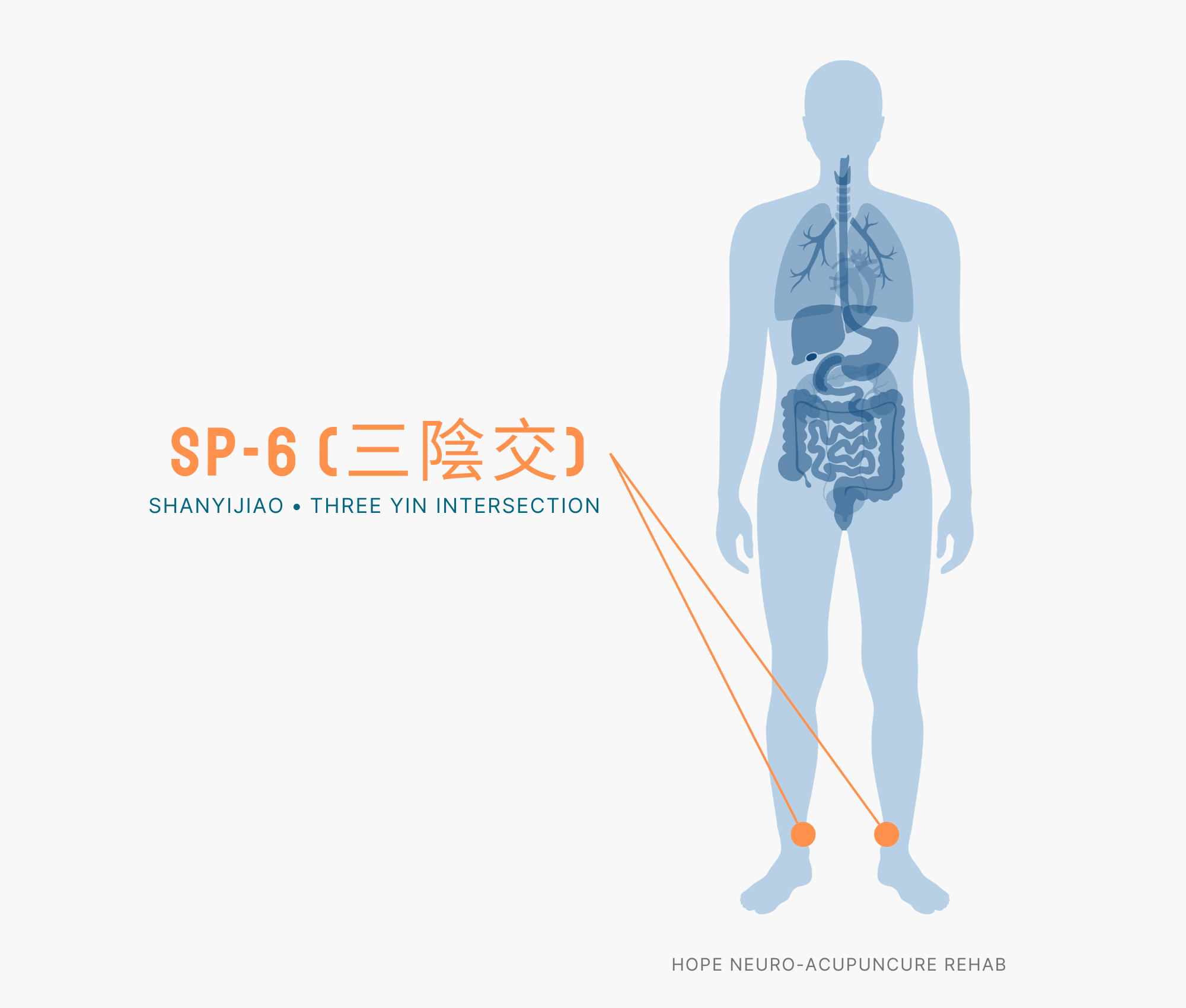
Location: 4 fingers (approximately 10cm) above the inner ankle bone, on the inner edge of the tibia. When lying down and flexing your ankle, you can easily find the depression.
Acupressure Method: Press slowly and vertically with your thumb for 1-2 minutes of stimulation. Perform 1-2 times daily (evening is optimal), avoiding pain and applying pressure that produces soreness instead.
Effect: Effective for relieving lower body and whole-body inflammation, balancing hormones, regulating immunity, and improving blood circulation. It is particularly helpful for inflammatory diseases related to women’s health.
⚠️ Caution for Pregnant Women: There is a possibility of triggering uterine contractions, so it should not be performed during pregnancy.
4. Quchi (LI11, 曲池)

Location: At the end of the outer fold of the elbow when your arm is bent; the outer end of the horizontal crease in front of the elbow. When your arm is extended, it is located in the depression on the outer upper part of the elbow.
Acupressure Method: Apply vertical pressure with the opposite thumb or massage in circular motions. Press each point for 1-2 minutes, alternating arms twice daily. Mild pain and soreness together are normal.
Effect: Effective for relieving upper body inflammation, reducing heat sensation, enhancing immunity, and improving skin conditions (acne, eczema). It is considered a representative acupoint for high fever and inflammatory diseases.
5. Yongquan (KI1, 涌泉)

Location: At the bottom of the foot, in the upper third of the wrinkle that forms on the sole when you curl your toes. It is located at the center between the toes and the ball of the foot, in a slightly indented area.
Acupressure Method: Massage slowly in circular motions with your thumb, or apply vertical pressure for stimulation. Press each foot for 1-2 minutes, 1-2 times daily (evening is best). Start gently with warm hands and gradually increase pressure.
Effect: Excellent for relieving whole-body inflammation, strengthening kidney function, boosting immunity, improving sleep, and removing lower body heat sensation. It helps relieve fatigue and lethargy caused by chronic inflammation.
5-Minute Self-Acupressure Routine
Recommended Time: Right after waking in the morning or one hour before bedtime in the evening
Sequence:
- Yongquan (KI1) — 1 minute 30 seconds per foot, start gently with warm hands
- Sanyinjiao (SP6) — 1 minute 30 seconds per leg, press deeply to feel soreness
- Zusanli (ST36) — 1 minute 30 seconds per leg, stimulate with circular motions
- Quchi (LI11) — 1 minute 30 seconds per arm, start with gentle pressure
- Hegu (LI4) — 1 minute 30 seconds per hand, apply the strongest stimulation at the end (just before pain)
Tips: Perform all movements slowly and with deep breathing. There is no need to rush; it is important to listen to your body’s signals. Performing this in a warm environment will improve blood circulation.
Leave a Reply