One-line summary: Rhinitis can be relieved within 1-2 weeks by pressing five acupoints—Yingxiang, Hegu, Taiyang, Yintang, and Tongqian—2-3 times daily to reduce nasal congestion and sneezing.
Introduction
Rhinitis that gets worse in spring is truly frustrating—nasal congestion makes concentration difficult, and nighttime snoring can be bothersome. Even with medication, there’s no fundamental solution, and repeated sneezing and nasal discharge make daily life inconvenient. In traditional Chinese medicine, rhinitis is viewed as “lung qi deficiency” and “pathogenic wind invasion.” By stimulating specific acupoints, you can strengthen lung function and improve blood circulation around the nose. Scientific research also shows that acupoint pressure helps regulate immune response and reduce nasal inflammation. Now, manage your rhinitis symptoms directly with just your fingertips, without relying on medication.
Five Effective Acupoints for Relieving Rhinitis
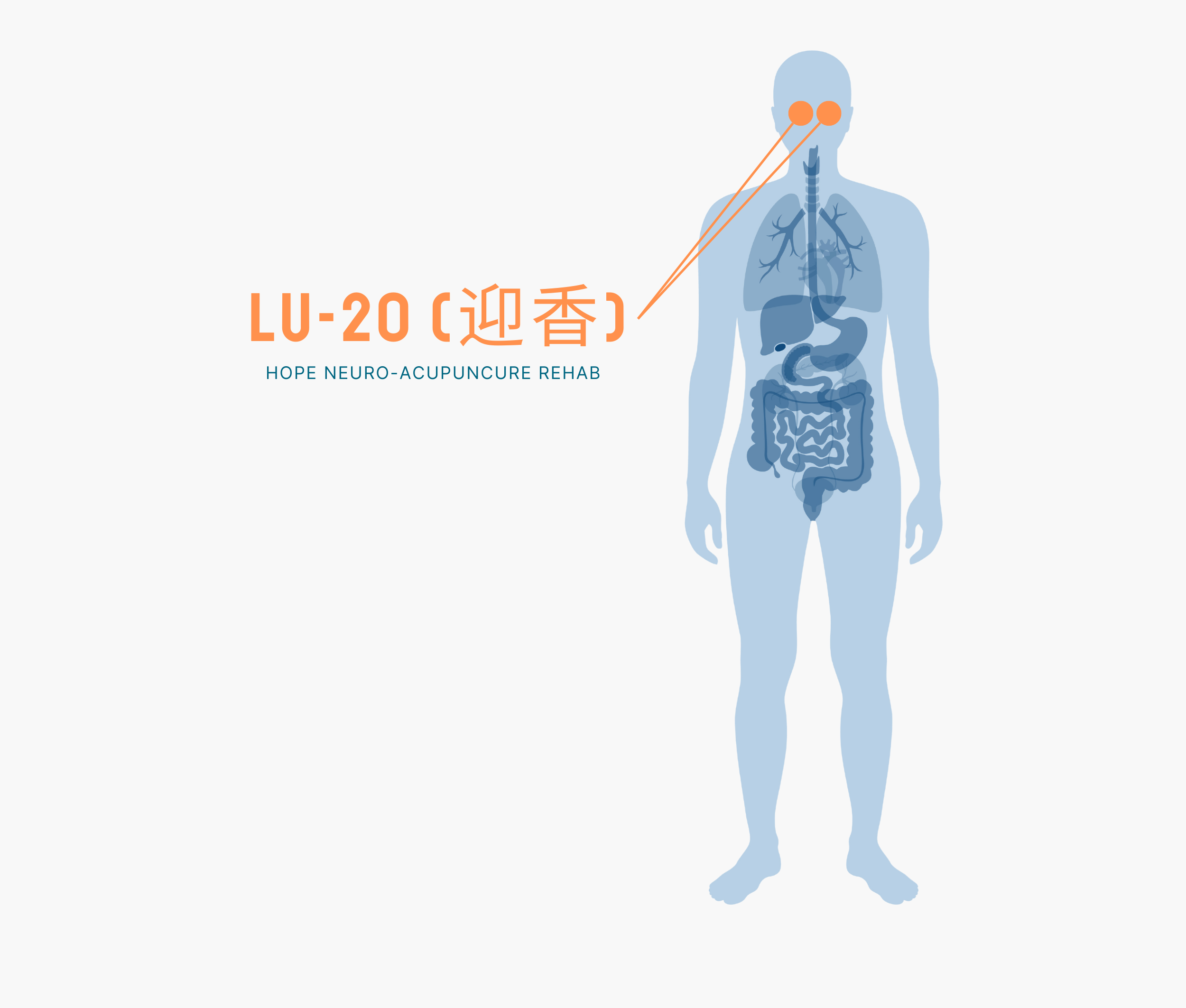
1. Yingxiang (LI20) — Instant Relief for Nasal Congestion
Location: Just outside the nostril, where the wrinkles on the side of the ala of the nose converge
WHO Code: LI20 (Large Intestine 20)
Pressure technique: Using your index or middle finger, gently press both sides of the ala of the nose simultaneously, directing the pressure slightly upward. Press for 1-2 minutes per session, maintaining comfortable breathing. Practice this 3 times daily when you feel nasal congestion.
Benefits: Known as the “nasal acupoint,” Yingxiang most quickly relieves nasal congestion, runny nose, and loss of smell caused by rhinitis. You’ll feel immediate results within 5-10 minutes after pressure, with your nasal passages opening up.
Location: Between the thumb and index finger, at the highest point of the muscle on the back of the hand
WHO Code: LI4 (Large Intestine 4)
Pressure technique: Press vertically with the opposite thumb or massage in circular motions. Apply continuous pressure for about 1-2 minutes until you feel a slight warmth. Stimulate both hands for equal duration.
Benefits: Known as a “universal acupoint,” Hegu strengthens lung function and boosts overall immunity. By addressing the root cause of rhinitis—lung qi deficiency—it reduces nasal allergic reactions long-term. It also relieves headaches and facial pain simultaneously.
Location: The temple, approximately 1.5 cm inward from the outer edge of the eye toward the ear
WHO Code: EX-HN5 (Extra Head 5, Extra point)
Pressure technique: Using both middle fingers, gently massage both temples simultaneously in circular motions. Repeat 3 times for 30 seconds to 1 minute each. Gentle massage is more effective than firm pressure. Pressing too hard may worsen headaches.
Benefits: When nasal congestion blocks the nose, pressure builds at the temples causing headaches. Stimulating Taiyang releases this tension. It also improves migraines and eye fatigue while promoting blood circulation to the brain.
4. Yintang (EX-HN3) — Relieve Nasal Congestion & Stress Together
Location: The glabella, the indented area in the center of the skin and muscle between the two eyebrows
WHO Code: EX-HN3 (Extra Head 3, Extra point)
Pressure technique: Using your thumb or middle finger, slowly press the glabella vertically for about 1-2 minutes. Start with moderate pressure, then gradually deepen it within a comfortable range. It’s important to maintain deep breathing.
Benefits: Yintang promotes blood circulation to the brain and activates the parasympathetic nervous system. It relieves not only nasal congestion but also stress-related headaches, insomnia, and poor concentration while releasing overall forehead tension.
5. Tongqian (BL7) — Restore Lung Function & Prevent Recurrence
Location: On the crown of the head, approximately 1.5 cm in front of Baihui (GV20). You can locate it by following the center line of the head downward from your hair parting.
WHO Code: BL7 (Bladder 7)
Pressure technique: Tongqian can be difficult to locate, so first find Baihui (the center of the crown between the two ears), then press the point about 1-1.5 cm in front. Massage in circular motions with your middle finger for about 1 minute or apply gentle pressure.
Benefits: Tongqian is an important acupoint connected to the Lung meridian that directly strengthens lung function. It’s most effective for improving the lung constitution—the root cause of rhinitis—and consistent stimulation prevents rhinitis recurrence. It also helps improve asthma and cough symptoms.
5-Minute Self-Acupoint Massage Routine — Practice Once Daily in the Morning
Recommended time: After waking in the morning or 1 hour before bedtime
Yingxiang (LI20) — 1 minute Gently press both sides of the ala of the nose simultaneously until you feel nasal fullness.
Yintang (EX-HN3) — 1 minute Slowly press the glabella vertically, then gently lift. Repeat 3 times.
Hegu (LI4) — 1 minute Press both Hegu points simultaneously for about 1 minute until warmth is felt.
Taiyang (EX-HN5) — 1 minute Gently massage both temples in circular motions. 30 seconds × 2 rounds.
Tongqian (BL7) — 1 minute Gently massage the area below the center of the crown in circular motions.
Important notes: The complete routine takes 5-6 minutes. Drinking warm water after massage enhances results. Practice daily for the first 1-2 weeks, then reduce to 3-4 times per week once symptoms improve.
⚠️ Medical Disclaimer: This article is provided for health information purposes and does not replace professional medical diagnosis or treatment. If symptoms persist or are severe, please consult a healthcare professional. Bacterial rhinitis, sinusitis, and allergic rhinitis require comprehensive treatment.
🤰 Pregnancy Warning: Among the acupoints above, Hegu (LI4) may trigger uterine contractions in pregnant women. If you are pregnant or may be pregnant, avoid stimulating Hegu and practice only Yingxiang, Yintang, Taiyang, and Tongqian. If you have concerns, consult a healthcare professional before practicing.
Summary: Rib pain can be effectively relieved through daily acupressure on five acupoints: BL17, LV14, LV13, BL18, and GB34, which help alleviate pain and improve blood circulation.
Introduction
Rib pain that throbs on the sides and makes breathing difficult—this condition that can hamper daily activities is experienced by many people. Rib pain typically develops from a combination of factors including intercostal nerve irritation, muscle tension, poor postural habits, and stress. Fortunately, Traditional Chinese Medicine has long provided effective acupoints that can relieve this pain. In particular, five acupoints that can be easily stimulated at home promote blood circulation and help relax muscles, providing immediate relief. Self-care that you can do with your own hands without medication—let’s begin.
Five Effective Acupoints for Rib Pain
1. BL17 (Diaphragm Shu)
Location: Below the 7th thoracic vertebra, approximately 1.5-2cm to the sides of the spine
How to locate: Feel the lower edge of the rib cage below the epigastrium, then find the area next to the spine at that height.
Acupressure technique: Use both thumbs to simultaneously stimulate both sides of the spine, pressing and releasing for 3-5 seconds repeatedly, or massage in circular motions. Start with gentle pressure and gradually increase the intensity.
Benefits: BL17 is known as “the connecting point of the thorax” and is a primary acupoint for relieving chest pain, cough, and digestive discomfort. It effectively improves breathing difficulties and chest tightness caused by rib pain.
2. LV14 (Cycle Gate)
Location: Below the 6th rib, at the level of the nipple line (directly below the nipple)
How to locate: When your arm is at your side, find the space between the ribs at the height of your nipple.
Acupressure technique: Gently massage in circular motions with four fingers, or repeatedly press with your thumb for 3-5 seconds. Avoid excessive pressure and exhale deeply as you proceed.
Benefits: As an important acupoint on the Liver meridian, it directly alleviates pain in the sides and around the ribs. It also relieves muscle tension caused by stress, providing comprehensive pain improvement.
3. LV13 (Bamboo Gate)
Location: At the end of the 11th rib, on the midaxillary line (the vertical line where the arm meets the body when lowered)
How to locate: When you raise your arm to the side, find the end of the longest rib—this is LV13.
Acupressure technique: Slowly press with your thumb or middle finger, holding the pressure for 3-5 seconds before releasing. It’s most effective to press while exhaling.
Benefits: It strengthens spleen function and relieves the uncomfortable sensation and pain below the sides of the rib cage. It brings immediate relief, especially when lower rib pain is severe.
4. BL18 (Liver Shu)
Location: Below the 9th thoracic vertebra, approximately 1.5-2cm to the sides of the spine
How to locate: Follow the lower edge of the rib cage and feel along the side of the spine to find BL18.
Acupressure technique: Similar to BL17, simultaneously stimulate both sides of the spine with both thumbs, or perform rolling massage with a massage stick.
Benefits: It strengthens liver function and relieves muscle tension caused by stress. It’s particularly effective for alleviating pain on the lateral side of the body and rib pain.
5. GB34 (Yang Mound Spring)
Location: On the outer side below the knee, in the small depression below the head of the fibula (calf bone)
How to locate: Slightly bend your leg and feel the outer side below your knee—the soft area below the bone is GB34.
Acupressure technique: Press with your thumb for 3-5 seconds, or apply deep pressure with a round massage stick. Alternate stimulating both legs.
Benefits: Known as “the meeting point of the Gallbladder,” it regulates qi flow throughout the body. It’s a remote acupoint that comprehensively improves pain around the sides and ribs, as well as fatigue.
5-Minute Self-Acupressure Routine
Setup: Perform this in a comfortable seated or lying position. It helps to apply a thin layer of warm oil to your fingers to reduce friction.
BL17 — 1 minute Simultaneously stimulate both sides of the spine with both thumbs. Press for 3-5 seconds × 8 repetitions
LV14 — 1 minute Gently massage the side of the chest with your thumb. Repeat in circular motions 10 times
LV13 — 1 minute Press deeply, holding for 3-5 seconds × 8 repetitions. Exhale slowly as you proceed
BL18 — 1 minute Alternate stimulating both sides of the spine with both thumbs. Total of 10 repetitions
Precautions: If you feel pain, reduce the pressure, and don’t hold your breath. Daily acupressure at the same time produces better results.
🤰 Pregnancy Warning: Among the acupoints above, LV14 and BL18 may trigger uterine contractions in pregnant women. If you are pregnant or might be pregnant, be sure to consult with a healthcare professional before practicing these techniques.
⚠️ Medical Disclaimer: This article is written for informational purposes and does not replace professional medical diagnosis or treatment. If symptoms persist or worsen, especially if thoracic disease is a possibility, please consult with a healthcare professional.
One-Line Summary: Pressing five key acupoints—Sanyinjiao (SP6), Qihai (CV6), Xuehai (SP10), Zusanli (ST36), and Guanyuan (CV4)—for 5 minutes daily can help speed recovery by promoting postpartum energy restoration, uterine recovery, and improving blood circulation.
Introduction
After childbirth, your body and mind experience extreme fatigue. As the uterus shrinks and hormones change rapidly, you may experience full-body exhaustion, lower abdominal discomfort, and decreased blood circulation. Traditional medicine acupoint therapy is an excellent supportive tool for activating your body’s natural healing power. Pressing five key acupoints daily for 5 minutes to support postpartum recovery can help promote uterine contraction, restore vital energy, and improve blood circulation. This guide is written to help new mothers safely begin self-acupressure.
Five Effective Acupoints for Postpartum Recovery
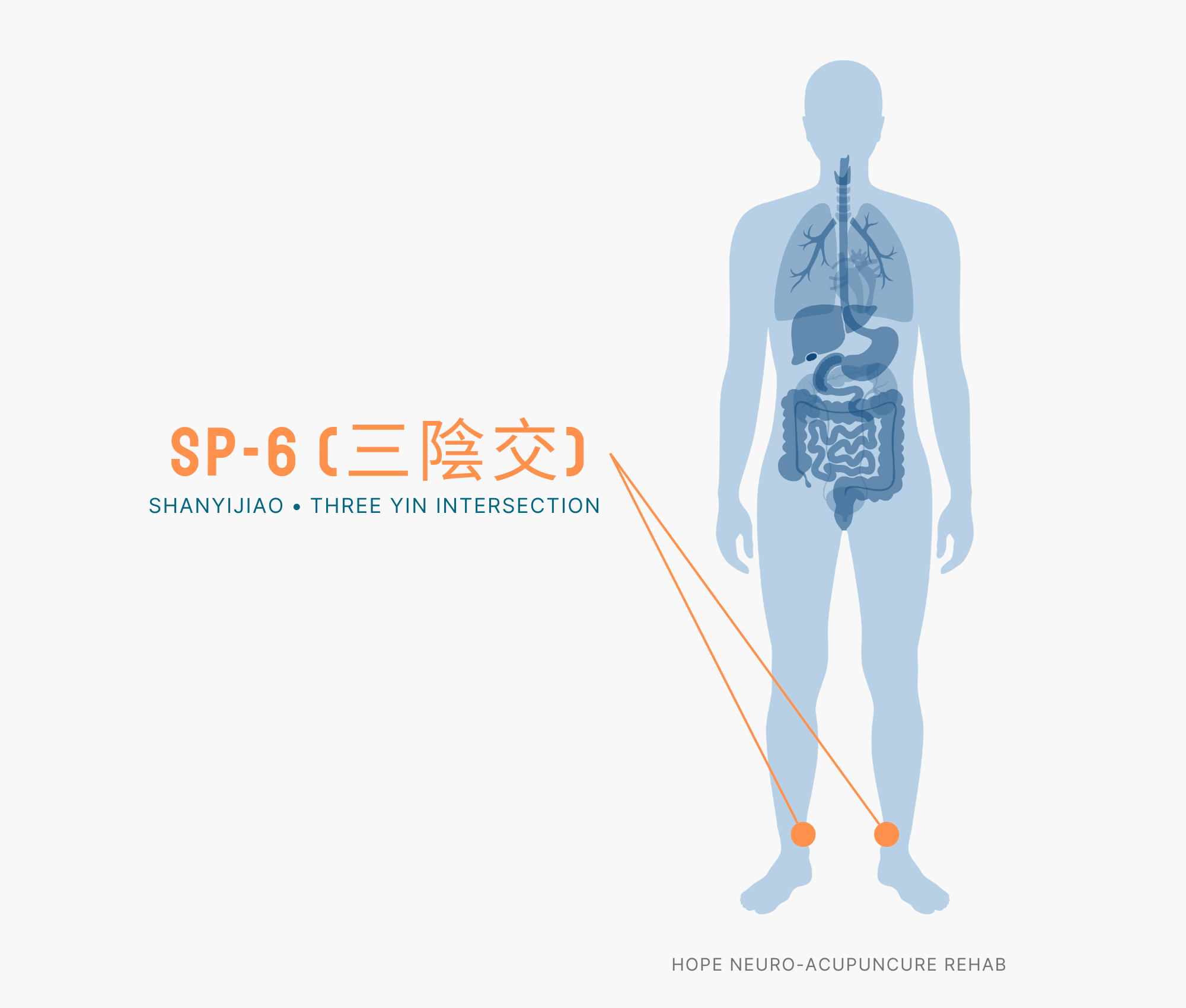
1. Sanyinjiao (SP6) — The Golden Acupoint for Postpartum Recovery
WHO Code: SP6 | Acupoint Name: Sanyinjiao Location: Four finger-widths above the inner ankle bone (medial malleolus), on the inside of the calf, behind the tibia Application: Using your thumb, press for 3 seconds and release for 3 seconds. Apply gentle to moderate pressure (mildly tender) and repeat 10 times. Benefits: Promotes uterine recovery, regulates hormone balance, relieves postpartum cold-damp conditions, and improves blood circulation. Classical Eastern medicine texts recognize this as a key acupoint for postpartum recovery. It is also highly effective for treating irregular menstruation and overcoming fatigue.
2. Qihai (CV6) — Lower Abdominal Recovery and Uterine Health
WHO Code: CV6 | Acupoint Name: Qihai Location: 1.5 inches (approximately 3.8 cm) below the navel, on the midline of the abdomen Application: Stack three fingers and gently massage the point in circular motions. Repeat 10 times in a clockwise direction. Benefits: Supports uterine muscle contractions, restores vital energy, alleviates lower abdominal pain, and removes postpartum blood stasis. As an important point on the Conception Vessel meridian, it helps activate metabolism and enhance immune function.
3. Xuehai (SP10) — Blood Circulation and Skin Recovery
WHO Code: SP10 | Acupoint Name: Xuehai Location: On the medial (inner) aspect of the knee, above the inner knee crease that appears when you bend the knee Application: Press firmly with your thumb for 3 seconds and release for 3 seconds. Repeat 15 times, continuing until you feel warmth in the area. Benefits: Promotes blood circulation, expels postpartum blood stasis, accelerates skin recovery, and improves anemia. As a major point on the Spleen meridian, it governs overall blood circulation throughout the body and is essential for postpartum physical recovery.
4. Zusanli (ST36) — Immune Function and Physical Strength Enhancement
WHO Code: ST36 | Acupoint Name: Zusanli Location: 10 cm below the knee, on the outer side of the tibia (shinbone), in the depression formed when your toes are extended Application: Press vertically with your thumb for 5 seconds and release for 2 seconds. Repeat 15 times for each leg. Benefits: Enhances overall immune function, promotes fatigue recovery, improves digestive function, and restores postpartum physical strength. Known as the “longevity acupoint” in Eastern medicine, it is most effective for replenishing vital qi (protective energy).
5. Guanyuan (CV4) — Uterine Recovery and Hormone Regulation
WHO Code: CV4 | Acupoint Name: Guanyuan Location: 3 inches (approximately 7.6 cm) below the navel, on the midline of the abdomen Application: Stack three fingers and gently massage in circular motions. Slowly repeat 20 times in a clockwise direction. Benefits: Promotes uterine recovery, regulates hormone balance, improves postpartum amenorrhea, and activates metabolism. As a gathering point (mu point) of the Conception Vessel, it controls the function of the lower burner and is the central acupoint for postpartum recovery.
⏱️ Recommended Timing: 8 AM and 8 PM (twice daily) Total Time Required: 5-7 minutes
Qihai + Guanyuan (1 minute) In a lying position, gently massage the area below the navel in circular motions. Continue slowly until you feel warmth spreading.
Sanyinjiao (1 minute 30 seconds) Start with the left ankle. Place your foot in a comfortable position and apply pressure with your thumb.
Xuehai (1 minute) Press firmly on the inner knee. Work on both knees alternately.
Zusanli (1 minute 30 seconds) In a position with your legs extended or slightly bent, apply pressure below the knees. Work on both legs.
Closing (1 minute) Return to a lying position and gently massage Qihai again in circular motions to conclude.
⚠️ Medical Disclaimer: This article is written for informational purposes only and does not replace professional medical diagnosis or treatment. If symptoms persist or are severe, please consult with a healthcare professional. If you experience postpartum bleeding, infection, or severe pain, seek immediate medical attention.
🤰 Pregnancy Caution: Some of the acupoints introduced in this article—Sanyinjiao (SP6), Qihai (CV6), and Guanyuan (CV4)—may trigger uterine contractions during pregnancy. If you are pregnant or may be pregnant, please consult with a licensed acupuncturist or obstetrician before using these techniques. This guide is designed for postpartum recovery and is not recommended for use during pregnancy.
One-line Summary: To relieve chronic pain from rheumatoid arthritis, regularly stimulating 5 acupoints including Hegu (LI4), Sanyinjiao (SP6), Kunlun (BL60), Taichong (LR3), and Zusanli (ST36) helps reduce inflammation and improve blood circulation.
Introduction: Rheumatoid Arthritis and Acupoint Treatment
Rheumatoid arthritis is a condition in which the joints become chronically inflamed and painful due to immune system dysfunction. It often begins with small joints such as the fingers, wrists, and toes, and can spread throughout the body, causing suffering for many people. While medication is the primary treatment, acupoint pressure therapy from traditional East Asian medicine can help promote blood circulation and reduce inflammatory responses.
According to the Donguibogam and Huangdi Neijing classical texts, specific acupoints regulate the body’s qi (氣) and blood circulation to alleviate pain. We introduce 5 scientifically validated acupoints to help relieve symptoms of joint pain, swelling, and restricted movement caused by rheumatoid arthritis.
5 Effective Acupoints for Rheumatoid Relief
1. Hegu (LI4) — The Powerful Pain-Relief Point in Your Hand
WHO Code: LI4 (Large Intestine meridian point 4)
Location: In the webbing between the thumb and index finger, at the point where bones meet near the back of the hand. It’s the spot that feels sore when you press it with the opposite thumb.
Pressure Technique: Using the opposite thumb, gently press for about 5 seconds, then rest for 3 seconds, and repeat this about 10-15 times per hand. Start with light pressure at first.
Rheumatoid Symptom Relief Effect: Hegu is connected to the Large Intestine meridian and is called the “master point” for whole-body pain relief. It is particularly effective at relieving pain in the upper body, inflammatory pain in the wrist and finger joints, and helps with immune regulation through stress relief.
2. Sanyinjiao (SP6) — The Hub for Immune System Strengthening
WHO Code: SP6 (Spleen meridian point 6)
Location: On the inner side of the leg above the ankle, about 4 fingers’ width (approximately 10cm) above the top of the ankle bone, at the inner edge of the tibia. Find the hollow depression just behind the bone.
Pressure Technique: Using your thumb or an acupressure tool, press vertically for 3-5 seconds and release, repeating this 8-10 times. Perform on both legs, and doing this in the evening can even help with sleep.
Rheumatoid Symptom Relief Effect: As one of the Eight Confluence Points of the Spleen meridian, it governs the immune system. It effectively regulates the overactive immune response that is the root cause of rheumatoid arthritis, relieves joint swelling, and improves inflammatory constitution.
3. Kunlun (BL60) — The Solution for Lower Body Pain
WHO Code: BL60 (Bladder meridian point 60)
Location: On the outer side of the foot, at the midpoint between the outer ankle bone (lateral malleolus) and the heel. You’ll feel soreness when you press with your finger.
Pressure Technique: Using your thumb or an acupressure tool, press for 5-10 seconds, and repeat this 8-12 times. Perform on both feet, and you can increase the frequency on days when pain is severe.
Rheumatoid Symptom Relief Effect: The Bladder meridian governs nerves and mental state, and promotes blood circulation throughout the lower body. It is particularly effective at relieving rheumatoid pain in the ankles, knees, and hip joints, eliminating leg swelling, and improving secondary pain caused by neuropathy.
4. Taichong (LR3) — Liver Function and Stress Relief
WHO Code: LR3 (Liver meridian point 3)
Location: On the top of the foot between the big toe and second toe, in the webbing area, slightly higher up. When you press it, you’ll feel some soreness and a sensation that radiates to the epigastrium.
Pressure Technique: Using your thumb, push upward from below for 3-5 seconds of pressure, then rest, and repeat this 10-15 times. Doing this in the morning leaves you feeling energized throughout the day.
Rheumatoid Symptom Relief Effect: As the Spring point of the Liver meridian, it relieves qi stagnation caused by stress and anger. By alleviating stress (a major factor in worsening rheumatoid arthritis), stabilizing the immune system, and improving liver detoxification function, it helps reduce symptoms of autoimmune disease.
5. Zusanli (ST36) — The Whole-Body Immune System Strengthening Point
WHO Code: ST36 (Stomach meridian point 36)
Location: Below the knee on the outer side, approximately 4 fingers’ width (about 10cm) below the depression below the kneecap (Dubi), along the outer edge of the tibia. It’s the spot where you feel the most soreness when pressed.
Pressure Technique: Using your thumb or an acupressure tool, press vertically for 5-7 seconds, rest for 3 seconds, and repeat this 15-20 times. Using moxibustion or rice grain moxibustion is even more effective.
Rheumatoid Symptom Relief Effect: Known as the body’s “second heart,” Zusanli is the representative acupoint for strengthening whole-body immunity. It enhances organ function, promotes whole-body blood circulation, improves the body’s resistance to autoimmune disease, and is very effective at improving chronic inflammatory constitution.
5-Minute Self-Massage Routine for Rheumatoid Relief
Perform the following sequence every morning or evening:
Preparation (30 seconds): Sit in a comfortable position, rub your hands together to warm them up, then take 3 deep breaths
Hegu (LI4) – 1 minute: 30 seconds per hand, 10-15 presses each
Taichong (LR3) – 1 minute: 30 seconds per foot, 10-15 presses each
Zusanli (ST36) – 1 minute 30 seconds: 45 seconds per leg, 15-20 presses each
Kunlun (BL60) – 1 minute: 30 seconds per foot, 8-12 presses each
Sanyinjiao (SP6) – 30 seconds: Add 5-10 presses per hand in spare time
Cool Down (30 seconds): Have a cup of tea and rest
Tips to Maximize Effectiveness: Avoid exposure to cold wind for 30 minutes after acupressure. Soaking your hands and feet in warm water at the end will further promote blood circulation. Performing this at the same time every day will help your body establish a rhythm and make it even more effective.
⚠️ Medical Disclaimer: This article is written for informational purposes and does not replace professional medical diagnosis or treatment. Rheumatoid arthritis is a progressive disease that requires medication (DMARDs, biologics) and management by healthcare professionals. Acupoint pressure therapy should only be used as a supplementary measure to medical treatment. If symptoms persist or worsen, if joints rapidly swell, or if you experience severe pain, be sure to consult a rheumatologist or healthcare professional.
🤰 Pregnancy Warning: Among the above acupoints, Hegu (LI4), Sanyinjiao (SP6), Taichong (LR3), and Kunlun (BL60) can trigger uterine contractions. If you are pregnant or might be pregnant, be sure to consult with an obstetrician and a traditional medicine practitioner before performing these techniques. Extra caution is needed in early and late pregnancy.