Summary: Chronic neck pain that won’t heal for months — learn how to identify the root causes and systematically resolve them.
“Neck pain has become my normal”
Stiff in the morning, tight during the day, aching in the evening. Patches, massages, stretching — they help temporarily but the pain returns. If this has been going on for more than 3 months, it’s “chronic neck pain.” You shouldn’t just tough it out any longer.
Acute vs Chronic: Why the Approach Must Be Different
Acute neck pain comes from specific causes (wrong sleeping position, sudden impact) and heals in days. But chronic pain is different. Multiple causes overlap, creating a vicious cycle of “pain, tension, posture distortion, more pain.” Pressing just one point will never solve it.
3 Hidden Causes of Chronic Neck Pain
Cause 1 — Fascial Adhesion
The thin membrane (fascia) wrapping your muscles sticks together from prolonged tension. There’s a constant stiff, achy feeling, and pressing certain spots sends sharp pain radiating to distant areas. This is called Myofascial Pain Syndrome (MPS).
Cause 2 — Deep Muscle Weakness
When the deep cervical flexor muscles (located deep in the front of the neck) weaken, surface muscles compensate and overwork. These overworked surface muscles become tight — a primary cause of chronic pain. The worse your text neck, the weaker your deep muscles.
Cause 3 — Stress and the Autonomic Nervous System
Chronic stress over-activates the sympathetic nervous system, leading to sustained tension in neck and shoulder muscles. “Pain causes stress, stress causes more pain” — a vicious cycle.
4-Week Systematic Resolution Program
Week 1 — Pain Relief and Blood Flow Improvement
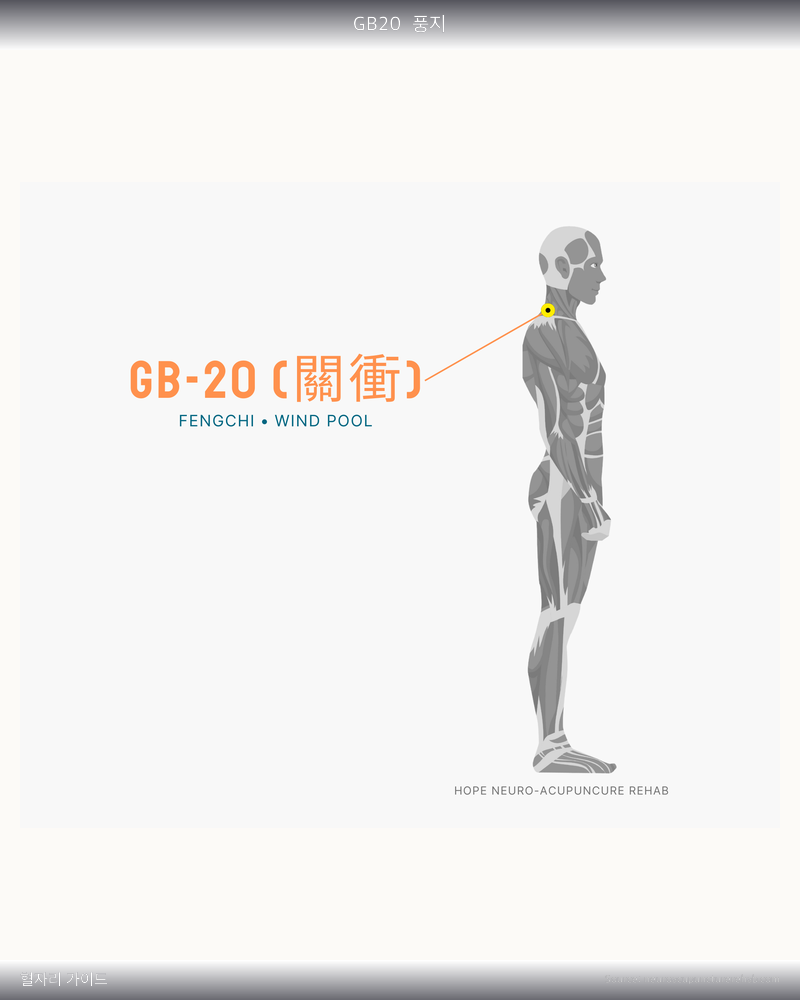
Daily morning and evening Fengchi (GB20) and Tianzhu (BL10) acupressure for 5 minutes + warm compress for 10 minutes. During this period, avoid strong massage or intense exercise. Focus on sending blood flow to the tight fascia.
Week 2 — Fascial Release
Place a tennis ball between the wall and the back of your neck, and use your body weight to slowly roll it over sore points. 30 seconds to 1 minute per point. Focus on the Jianjing (GB21) area and between the shoulder blades. The right intensity is when it feels sore yet satisfying.
Week 3 — Deep Muscle Strengthening
Start Chin Tuck exercises. Stand with your back against a wall and tuck your chin so the back of your head touches the wall. Hold 10 seconds x 10 reps x 3 sets per day. This exercise strengthens the deep cervical flexor muscles and fundamentally corrects text neck.
Week 4 — Lifestyle Pattern Integration
Integrate all the previous routines into your daily schedule to make them habitual. Morning — acupressure + warm compress. Daytime — 1-minute stretch every hour. Evening — tennis ball fascial release + chin tuck exercise.
Danger Signs That Require a Doctor Visit
- Persistent weakness or numbness in arms or hands
- Abnormal balance issues when walking
- Difficulty controlling bladder or bowel (cervical spinal cord issue)
- Neck pain that started after trauma (accident, fall)
Frequently Asked Questions
Do I absolutely need an MRI for chronic neck pain?
If there’s no arm numbness or weakness, it’s not always necessary. But if it hasn’t improved for 3+ months, consult a professional for accurate diagnosis.
Can I do gym workouts during the 4-week program?
Light cardio and lower body exercises are fine. But avoid exercises that strain the neck like shoulder press and bench press until pain has significantly decreased.
Are deep muscle exercises difficult?
Chin tuck exercises can be done easily at home without equipment. Start with 5-second holds and gradually increase.
Is acupuncture effective for chronic neck pain?
Multiple studies report that acupuncture is effective for chronic neck pain relief. Combining it with self-acupressure creates a synergistic effect.
Can stress be a cause of neck pain?
Yes, it’s one of the major causes. Stress activates the sympathetic nervous system, keeping neck and shoulder muscles in constant tension. Meditation and breathing exercises alongside physical therapy are recommended.
Leave a Reply