Summary: Chronic insomnia isn’t just a sleep problem — it’s a whole-body imbalance. Consistent acupressure on Shenmen (HT7), Sanyinjiao (SP6), Baihui (GV20), combined with sleep hygiene changes and cognitive pattern shifts, is the path to lasting improvement.
It’s not just a night or two. I haven’t been able to sleep for years
Night has become something to dread. Other people do “sleeping” so naturally — why is it so hard for me? Tossing and turning for hours before finally falling asleep, only to wake up at dawn wide-eyed. Days like this happen three or four times a week, or almost every night.
During the day, you’re like a zombie. Can’t concentrate, memory failing, emotional control slipping. “It’ll get better if I just rest a bit” — but it’s been years now. You’re starting to think, “Maybe I’m just the type who can’t sleep.”
But chronic insomnia is not a personality type. It’s a bad pattern your brain has learned. And patterns can be changed.
3 Root Causes of Chronic Insomnia
1. Hyperarousal — A Brain That Won’t Switch Off
The brains of chronic insomnia sufferers maintain high arousal levels 24/7. The problem isn’t just at bedtime — there’s a subtle tension state throughout the day. This is called the ‘hyperarousal model.’
2. False Beliefs About Sleep
“I need 8 hours of sleep,” “If I don’t sleep, tomorrow is completely ruined,” “I’m just an insomniac by nature” — these thoughts actually perpetuate insomnia. Excessive fixation on sleep paradoxically drives it away.
3. Vicious Cycle of Compensatory Behaviors
Sleeping in, napping, going to bed early, lying in bed for hours — these attempts to “make up” for lost sleep actually reduce sleep pressure (drowsiness) and create an association between bed and wakefulness.
A 3-Step Approach to Root-Level Change
Step 1: Daily Acupressure for Physical Tension Release (Weeks 2-4)
Press the following acupoints in order every night, 20 minutes before bed.
Baihui (GV20) — Center of the crown. Gently tap with your middle finger for 1 minute. The first step to cooling an overheated brain.
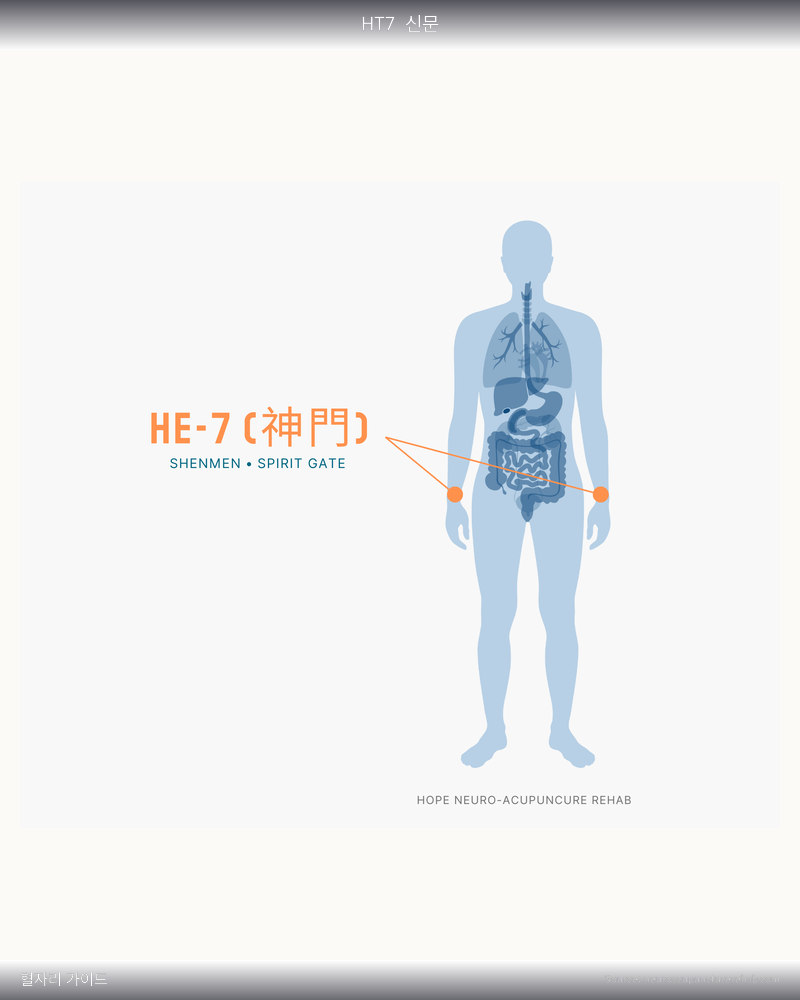
Shenmen (HT7) — Inner wrist crease, next to the tendon on the pinky side. 5 seconds each, 15 times on both sides. Calms the heart and soothes anxiety.
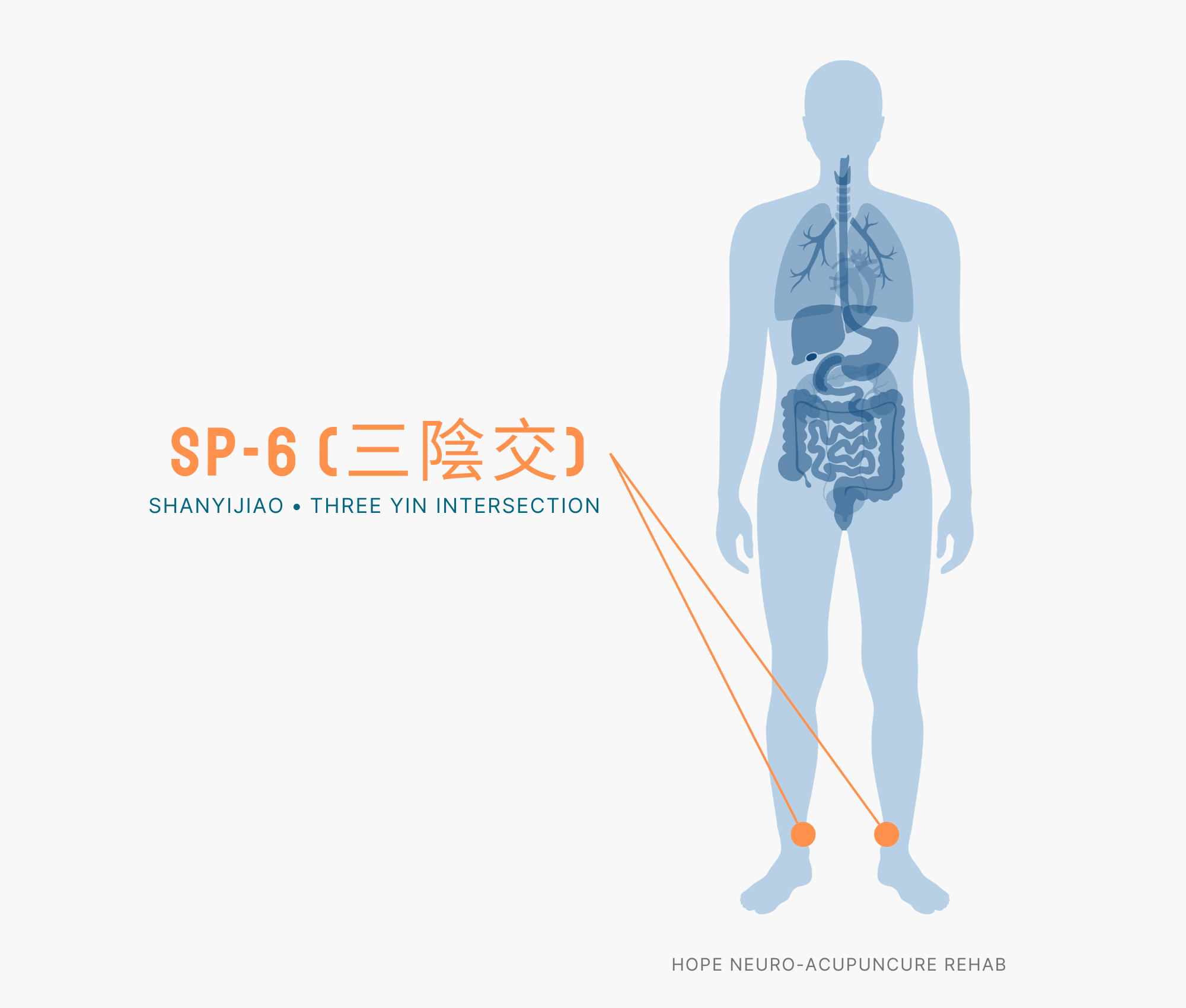
Sanyinjiao (SP6) — Four finger-widths above the inner ankle bone, behind the shin. 5 seconds each, 10 times on both sides. Balances Spleen, Liver, and Kidney to shift the whole body into sleep mode.
Yongquan (KI1) — Front third of the sole. Press firmly 15-20 times on each foot. Draws heat downward to create a “cool head, warm feet” state.
Step 2: Sleep Restriction Therapy (Weeks 4-8)
Paradoxically, spending less time in bed is the key.
- If you actually sleep 5 hours, stay in bed only 5.5 hours
- Fix your wake time (including weekends!)
- Don’t lie in bed unless you’re sleepy
- When sleep efficiency (actual sleep time / time in bed) exceeds 85%, extend bed time by 30 minutes
Step 3: Cognitive Restructuring
Replace “If I can’t sleep, it’ll be a disaster” with “Humans function well enough even after a bad night or two.” The more you let go of your fixation on sleep, paradoxically, the better you sleep.
Chronic Insomnia Recovery Timeline
| Period | Changes | Acupressure Focus |
|---|---|---|
| Weeks 1-2 | Getting used to the routine; bedtime tension decreases slightly | Shenmen + Yongquan focus |
| Weeks 3-4 | Time to fall asleep starts decreasing | Full 4-point routine |
| Weeks 5-8 | Night awakenings decrease; daytime condition improves | Maintain routine + sleep restriction |
| Months 2-3 | Sleep pattern stabilizes; confidence that “I can sleep” grows | Maintenance + as needed |
Chronic insomnia didn’t develop overnight, and it won’t heal overnight either. But if you keep moving in the right direction every day, recovery is absolutely possible. Start tonight with just one press on the Shenmen point.
Frequently Asked Questions
How bad does it have to be to qualify as chronic insomnia?
If sleep problems occur 3 or more times per week for over 3 months, it’s classified as chronic insomnia. Just a few days of poor sleep is acute insomnia.
Can acupressure alone cure chronic insomnia?
Acupressure is an effective supplementary tool, but chronic insomnia is best addressed by combining it with Cognitive Behavioral Therapy for Insomnia (CBT-I) or professional consultation.
I’ve been taking sleeping pills for a long time. Can acupressure help me reduce them?
Reducing sleeping pills must always be done under a doctor’s guidance. Discuss a plan to gradually decrease medication while incorporating acupressure with your doctor.
Sanyinjiao (SP6) should be avoided during pregnancy — can other points substitute?
Yes, pregnant women can safely focus on Shenmen (HT7) and Baihui (GV20) instead of Sanyinjiao. These still effectively support sleep.
Is there a big difference between professional acupuncture and self-acupressure?
Acupuncture provides more precise and deeper stimulation, so the effects are stronger. Self-acupressure has the advantage of being done daily and consistently, so combining both is ideal.
Leave a Reply