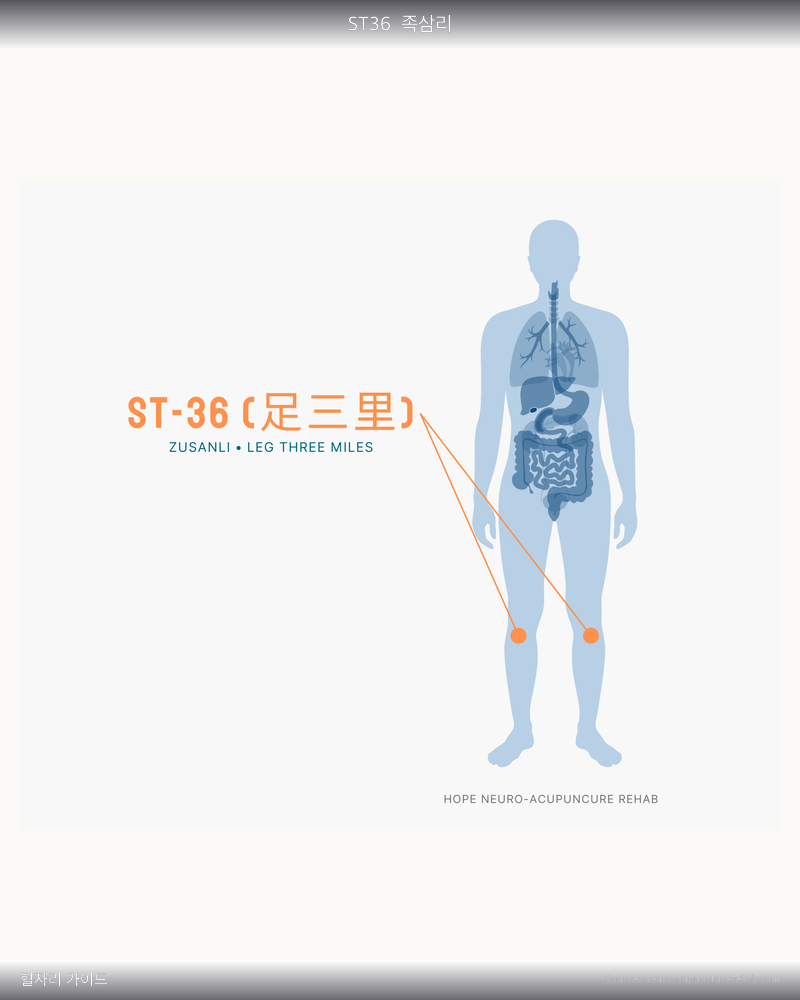
Zusanli (ST36) — Location, Benefits & Acupressure Complete Guide

{
“@context”: “https://schema.org”,
“@graph”: [
{
“@context”: “https://schema.org”,
“@type”: “MedicalWebPage”,
“headline”: “Zusanli (ST36) Location, Benefits & Acupressure Techniques — Complete Guide”,
“description”: “Learn the exact location, 10 benefits, and self-acupressure techniques for Zusanli (ST36).”,
“inLanguage”: “en-US”,
“medicalAudience”: {
“@type”: “MedicalAudience”,
“audienceType”: “Patient”
},
“specialty”: {
“@type”: “MedicalSpecialty”,
“name”: “Acupuncture and Moxibustion”
},
“lastReviewed”: “2026-03-03”,
“datePublished”: “2026-03-03”,
“dateModified”: “2026-03-03”,
“author”: {
“@type”: “Organization”,
“name”: “Acupoint Guide”
},
“publisher”: {
“@type”: “Organization”,
“name”: “Acupoint Guide”
},
“about”: {
“@type”: “AnatomicalStructure”,
“name”: “Zusanli (ST36)”,
“description”: “3 cun below the knee, 1 finger-width lateral to the anterior crest of the tibia”
}
},
{
“@type”: “FAQPage”,
“mainEntity”: [
{
“@type”: “Question”,
“name”: “Where exactly is Zusanli located?”,
“acceptedAnswer”: {
“@type”: “Answer”,
“text”: “It is located 3 cun (4 finger-widths) below the outer hollow just under the kneecap (patella). It sits 1 finger-width (thumb width) lateral to the anterior crest of the tibia (shinbone).”
}
},
{
“@type”: “Question”,
“name”: “Can I press Zusanli every day?”,
“acceptedAnswer”: {
“@type”: “Answer”,
“text”: “Yes, it is safe to do daily. In traditional medicine, there’s a saying that ‘daily moxibustion on Zusanli helps you live to 100’ — that’s how highly recommended regular stimulation is.”
}
},
{
“@type”: “Question”,
“name”: “Should I press Zusanli before or after meals?”,
“acceptedAnswer”: {
“@type”: “Answer”,
“text”: “For digestion, 30 minutes to 1 hour after eating is best. For immune boosting, right after waking up in the morning is ideal. Avoid strong pressure on an empty stomach.”
}
},
{
“@type”: “Question”,
“name”: “What happens when you press Zusanli and Hegu together?”,
“acceptedAnswer”: {
“@type”: “Answer”,
“text”: “Zusanli (ST36) and Hegu (LI4) follow the traditional principle: ‘For face and mouth issues, use Hegu; for abdominal issues, use Zusanli.’ Together, they effectively promote whole-body energy circulation.”
}
},
{
“@type”: “Question”,
“name”: “Do athletes use Zusanli?”,
“acceptedAnswer”: {
“@type”: “Answer”,
“text”: “Yes, Zusanli is used for post-exercise muscle fatigue recovery and knee pain relief. It’s known as the ‘all-purpose acupoint’ among marathon runners.”
}
}
]
}
]
}

{
“@context”: “https://schema.org”,
“@type”: “HowTo”,
“name”: “Zusanli (ST36) Self-Acupressure Technique”,
“step”: [
{
“@type”: “HowToStep”,
“position”: 1,
“name”: “Locate Zusanli”,
“text”: “Bend your knee and find the outer hollow below the kneecap (Dubi point). From there, move 4 finger-widths (3 cun) downward.”
},
{
“@type”: “HowToStep”,
“position”: 2,
“name”: “Confirm the Exact Point”,
“text”: “Press with your thumb at the point 1 finger-width lateral to the tibia (shinbone). The spot where you feel a satisfying deep ache is Zusanli.”
},
{
“@type”: “HowToStep”,
“position”: 3,
“name”: “Begin Thumb Acupressure”,
“text”: “Stack both thumbs and press Zusanli firmly for 3-5 seconds, then slowly release. Repeat 10-15 times with moderate pressure.”
},
{
“@type”: “HowToStep”,
“position”: 4,
“name”: “Circular Massage”,
“text”: “Using your thumb, massage in clockwise circles for 30 seconds. Alternate between both legs.”
}
]
}

Quick Summary: A complete guide to Zusanli (ST36) — how to find it, 10 benefits, and self-acupressure techniques. Effective for digestion, immunity, fatigue, and knee pain.
Zusanli (ST36) is the He-Sea point of the Stomach meridian, located 3 cun below the knee. As the “all-purpose acupoint,” it offers whole-body benefits including improved digestion, stronger immunity, fatigue recovery, and knee pain relief. Recognized by both Donguibogam (Korean medical classic) and the WHO as one of the most important acupoints.

What Is Zusanli (ST36)?

Zusanli (ST36) is the 36th acupoint on the Stomach meridian and a Lower He-Sea point. The name “Sanli” means “3 cun below,” referring to its location 3 cun below the knee. The Donguibogam states that “Zusanli governs the energy of the stomach and supplements weakness throughout the entire body.” Among the WHO’s 361 standard acupoints, Zusanli is considered the most versatile.

How to Find the Exact Location

Here’s a 3-step method to find Zusanli precisely:

  1. Find the reference point: With your knee bent at 90 degrees, locate the outer hollow just below the kneecap (Dubi point, ST35).
  2. Measure 3 cun down: From Dubi, move down 3 cun (4 finger-widths).
  3. Move laterally: From the anterior crest of the tibia (shinbone), move 1 thumb-width outward. The spot that feels deeply achy yet satisfying when pressed is Zusanli.

Benefits and Effects

  1. Improved digestion — Activates stomach motility to relieve indigestion, heartburn, and nausea
  2. Stronger immunity — Promotes white blood cell activity for cold prevention and faster recovery
  3. Fatigue recovery — Improves whole-body energy and blood circulation to combat chronic fatigue
  4. Knee pain relief — Improves blood flow around the knee to ease joint pain
  5. Nausea and motion sickness — Descends stomach energy to calm nausea
  6. Mental calmness — Regulates stress hormones and relieves anxiety

Self-Acupressure Technique

Step 1: Find the Location

Sit in a chair with your knee bent at 90 degrees. From the outer hollow below the kneecap, move 4 finger-widths down, then press with your thumb at 1 finger-width lateral to the shinbone.

Step 2: Basic Acupressure

Stack both thumbs and press Zusanli firmly for 3-5 seconds, then slowly release. Repeat 10-15 times. The ideal pressure is slightly painful yet satisfying.

Step 3: Circular Massage

Using your thumb, massage in clockwise circles for 30 seconds to 1 minute. Alternate between both legs for a total of 2-3 minutes.

Step 4: Tapping

Make a loose fist and tap the Zusanli area for 30 seconds. This further promotes blood circulation.

Synergy Combinations

Combination Acupoints Target Symptoms
Digestive Power Zusanli (ST36) + Zhongwan (CV12) Indigestion, stomach issues
Immune Boost Zusanli (ST36) + Hegu (LI4) Cold prevention, immune enhancement
Fatigue Recovery Zusanli (ST36) + Sanyinjiao (SP6) Chronic fatigue, stamina boost
Knee Care Zusanli (ST36) + Yanglingquan (GB34) Knee pain, joint health

Precautions

  • Avoid strong pressure on an empty stomach (may cause dizziness)
  • When there is acute inflammation in the knee, avoid stimulating the area
  • Pregnant women should consult their doctor before applying pressure

Key Takeaway: Zusanli (ST36) is like a “multivitamin for the body” — consistent daily acupressure can help manage digestion, immunity, fatigue, and pain all at once.

Frequently Asked Questions

Where exactly is Zusanli located?

It is located 3 cun (4 finger-widths) below the outer hollow just under the kneecap (patella). It sits 1 finger-width (thumb width) lateral to the anterior crest of the tibia (shinbone).

Can I press Zusanli every day?

Yes, it is safe to do daily. In traditional medicine, there’s a saying that ‘daily moxibustion on Zusanli helps you live to 100’ — that’s how highly recommended regular stimulation is.

Should I press Zusanli before or after meals?

For digestion, 30 minutes to 1 hour after eating is best. For immune boosting, right after waking up in the morning is ideal. Avoid strong pressure on an empty stomach.

What happens when you press Zusanli and Hegu together?

Zusanli (ST36) and Hegu (LI4) follow the traditional principle: ‘For face and mouth issues, use Hegu; for abdominal issues, use Zusanli.’ Together, they effectively promote whole-body energy circulation.

Do athletes use Zusanli?

Yes, Zusanli is used for post-exercise muscle fatigue recovery and knee pain relief. It’s known as the ‘all-purpose acupoint’ among marathon runners.

Medical Disclaimer: This article is for informational purposes only and does not replace professional medical diagnosis or treatment. If symptoms persist or worsen, please consult a healthcare professional.

Comments

Leave a Reply

Your email address will not be published. Required fields are marked *