Can acupressure really help with high blood pressure?
One in three Koreans suffers from high blood pressure. While medication is important, you can ease the stress and autonomic nervous system imbalance that cause blood pressure spikes with simple acupoint massage you can do at home every day.
In traditional Chinese medicine, we believe that ‘qi’ and blood flow through the meridians (經絡) in our body. High blood pressure is understood as a condition caused by excessive ‘yang qi’ in the liver or insufficient ‘yin’ in the kidneys. Proper stimulation of acupoints helps correct this imbalance and stabilize blood pressure.
5 acupoints excellent for high blood pressure relief
1. Taichong (LR3) — The ‘master key’ to cooling liver heat
Location: On the top of the foot between the big toe and second toe, slightly above where the bones meet (on the center line of the instep)
Massage technique: Using your thumb, press slowly for 3 seconds, then release for 3 seconds. Work both feet for 2-3 minutes each, applying pressure firm enough to feel slight discomfort.
Benefits: Reduces excessive ‘yang qi’ in the liver to suppress blood pressure spikes. Excellent for relieving stress-related blood pressure rises, headaches, and irritability.
2. Sanyinjiao (SP6) — The blood pressure control point where three meridians meet
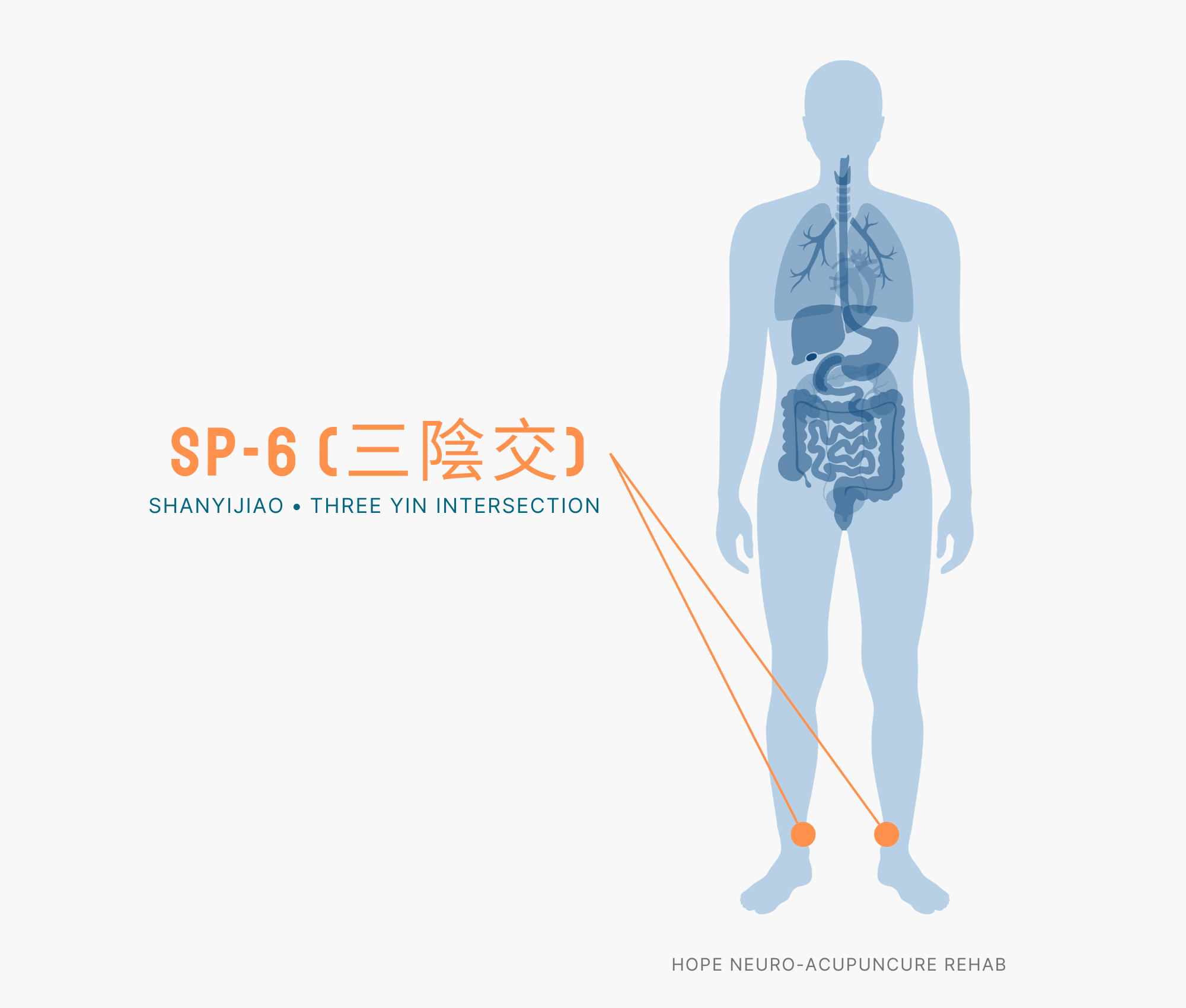
Location: On the inner leg, four finger-widths above the inner ankle bone (medial malleolus), along the inner edge of the shinbone (tibia)
Massage technique: Press vertically deep with your thumb. Work each side for 1-2 minutes, using gentle circular motions rather than hard jabbing.
Benefits: Where the liver, kidney, and spleen meridians meet, this point regulates hormone secretion and supplements insufficient kidney ‘yin’ to help stabilize blood pressure.
3. Kunlun (BL60) — Improves blood circulation comprehensively

Location: In the hollow space between the outer ankle bone (lateral malleolus) and the Achilles tendon
Massage technique: Slowly press with your thumb for 10-15 seconds, repeating 5-10 times in one session. Work each foot for 2 minutes.
Benefits: A major point on the bladder meridian that promotes whole-body circulation and strengthens kidney function. Effective for improving high blood pressure accompanied by dizziness and fatigue.
4. Hegu (LI4) — The universal pain-relief and calming acupoint

Location: In the hollow between the thumb and index finger (where a crease forms when you bring your fingers together)
Massage technique: Using your opposite thumb, press for 3 seconds and release for 3 seconds. Work each hand for 1-2 minutes, applying pressure firm enough to feel slight discomfort.
Benefits: Clears heat from the large intestine meridian and promotes qi and blood circulation throughout the body. Indirectly suppresses blood pressure spikes by relieving stress, reducing headaches, and improving sleep.
5. Fengchi (GB20) — Normalizes brain blood flow by relieving neck tension
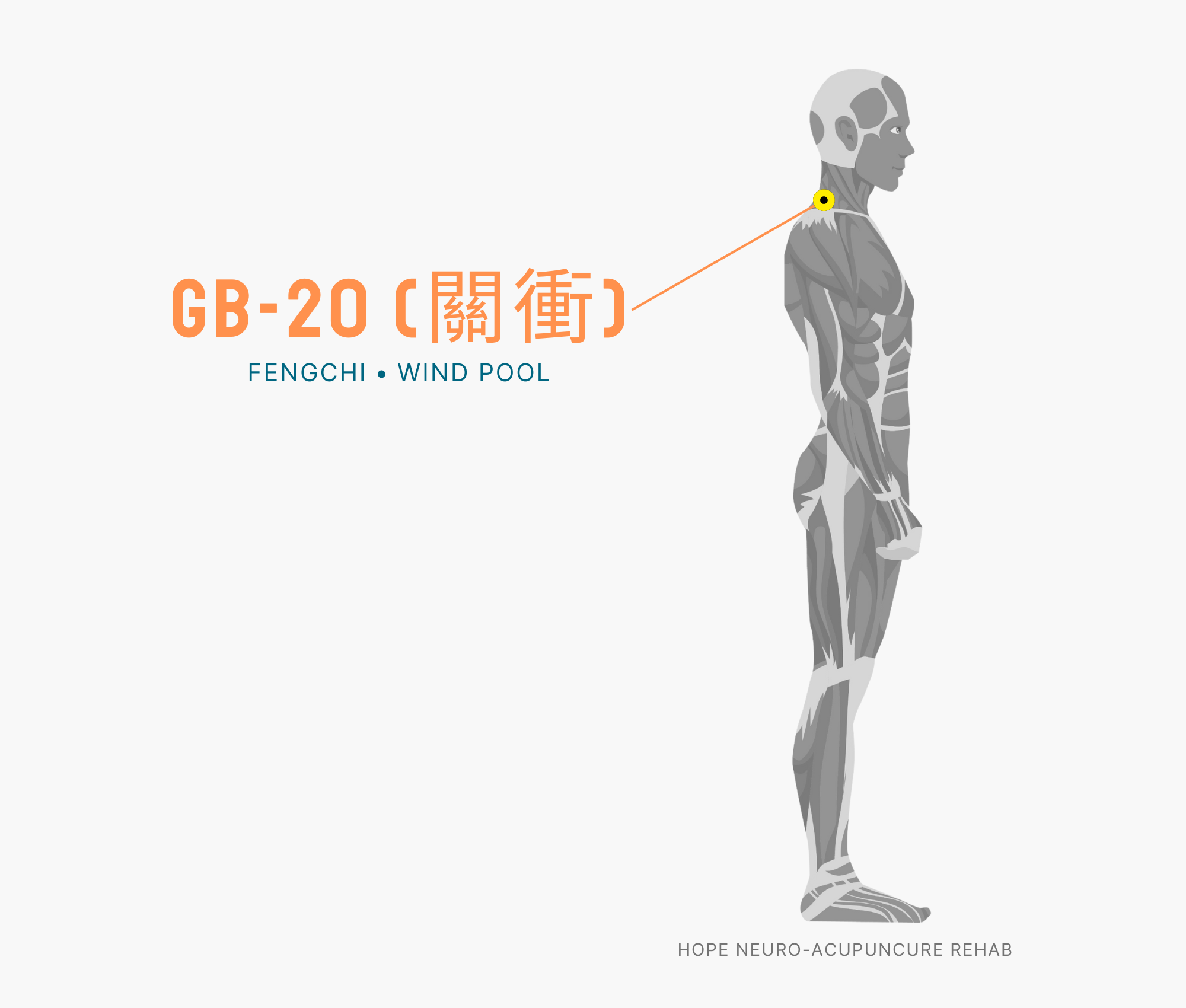
Location: At the base of the skull below the neck, at the hairline. In the hollow space between the two trapezius muscles (the muscles connecting the neck and shoulders)
Massage technique: Place both thumbs in the hollow and press slowly. Repeat 3-5 times for 20-30 seconds each. Work both sides for 2 minutes total.
Benefits: Relieves tension in the neck and shoulders to improve blood flow to the brain, and eases stress-related headaches and back-of-head tension. Particularly effective when neck tension is a major cause of your blood pressure rise.
5-minute self-massage routine
Best times: 7 AM, 12 PM, and 7 PM (30 minutes to 1 hour after meals) | Total time: 5-7 minutes
| Step | Acupoint | Time |
|---|---|---|
| 1 | Taichong (LR3) – Both feet | 2 minutes |
| 2 | Sanyinjiao (SP6) – Both sides | 1.5 minutes |
| 3 | Kunlun (BL60) – Both feet | 1 minute |
| 4 | Hegu (LI4) – Both hands | 1 minute |
| 5 | Fengchi (GB20) – Both sides | 1 minute |
Tip: If you have long nails, you can use a knuckle, a coin, or an acupressure tool instead. Sit in a comfortable position and combine diaphragmatic breathing (inhale for 4 seconds, exhale for 4 seconds) with your massage to double the stress-relief benefits.
Leave a Reply