Introduction
Sweat dripping down even on cool days, excessive sweating so severe that it dampens your clothes and causes odor, making daily life uncomfortable—you’re not alone. Modern people suffer from excessive sweating due to stress, hormonal imbalance, and reduced thermoregulation function. In traditional Chinese medicine, excessive sweat secretion is viewed as a loss of “body fluids” and “qi deficiency.” By stimulating specific acupoints, you can normalize your body’s internal temperature regulation mechanism. Before turning to medication, try starting with simple acupoint acupressure. We’ll show you the exact locations and acupressure techniques for 5 WHO-recognized acupoints.
The 5 Acupoints
1. Sanyinjiao (SP6)
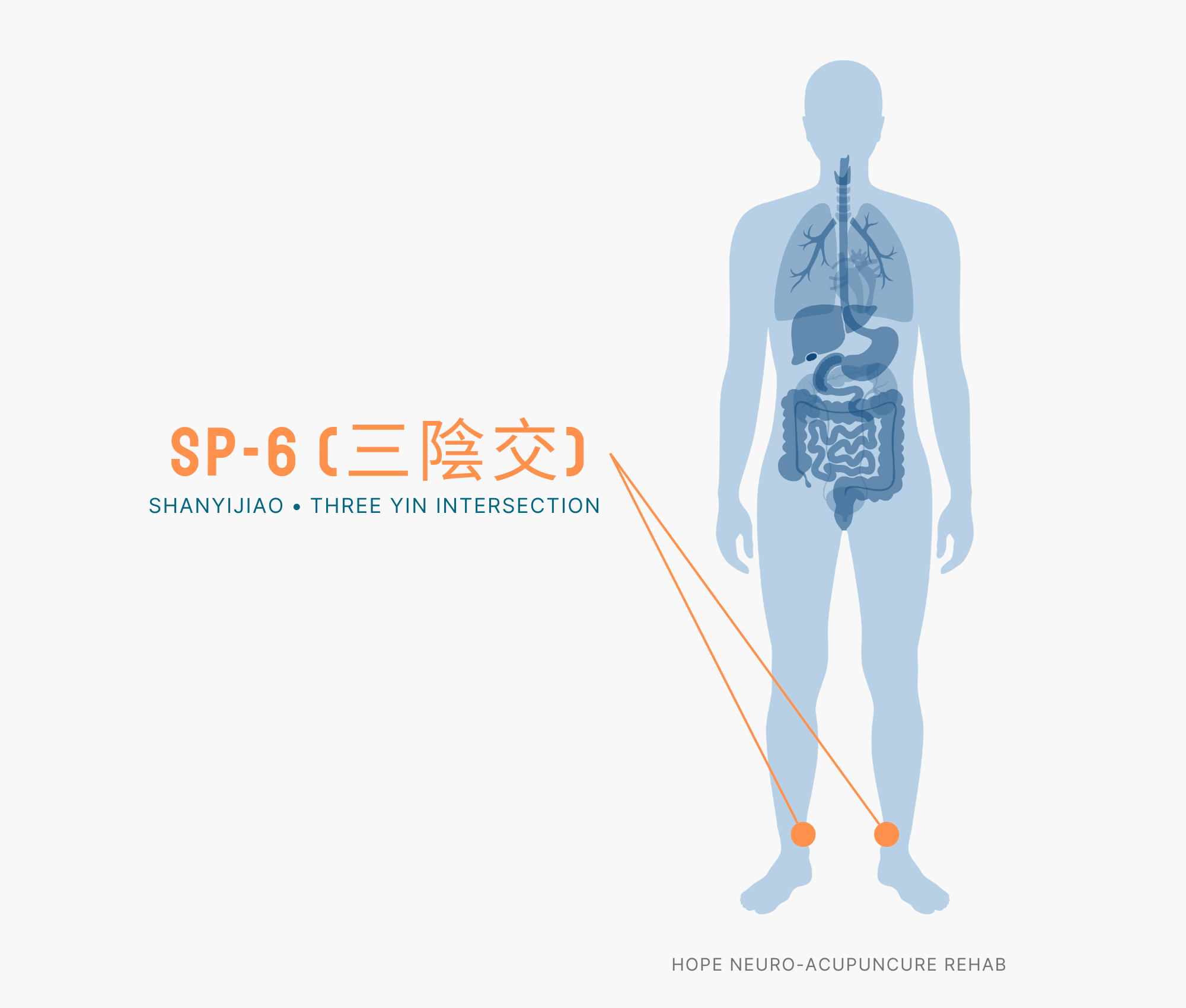
Location: On the inner surface of the tibia (shin bone), approximately 4 finger widths (about 10 cm) above the inner ankle bone. To find the exact location, use the highest point of the prominent bone on the inner ankle as your reference point.
Acupressure Technique: Using your thumb, press for 3-5 seconds and release for 1 second, repeating this cycle. Apply for about 1 minute on each side, totaling about 2 minutes. The ideal pressure intensity is “hurts good”—tender but pleasant.
Benefits: Stimulates the spleen meridian to promote body fluid metabolism and reduce excessive water loss. Particularly effective for heat-related sweating caused by hormonal imbalance and helpful for menstrual-related sweating in women. Also contributes to strengthening immunity.
2. Hegu (LI4)

Location: In the webbing between the thumb and index finger. It’s located slightly elevated on the back of the hand. When you press it with another finger, you’ll feel a slightly tender spot—that’s the right location.
Acupressure Technique: Using the tip of your thumb, gradually increase pressure and maintain at the peak for 10-15 seconds. Alternate between both hands and repeat 3-4 times. Apply for about 2 minutes per side, totaling about 4 minutes for both sides.
Benefits: An important acupoint that regulates qi (vital energy) throughout the body, lowering nervous system excitability and suppressing excessive sweating caused by sympathetic nervous tension. Excellent for enhancing immunity and relieving stress, and also helps improve headaches and fatigue simultaneously.
3. Taichong (LR3)
Location: On the top of the foot, in the depression between the first and second metatarsal bones, slightly above the web between the big toe and second toe. It’s located in the hollow space between the bones, and pressure is applied toward the center of the foot.
Acupressure Technique: Using your thumb, slowly press and release repeatedly. Press for 3-5 seconds, rest for 1 second, and repeat 8-10 times. Apply for about 3 minutes total on both feet.
Benefits: Regulates the liver meridian to reduce sweating caused by stress and emotional instability. Normalizes hormone secretion and balances the autonomic nervous system to improve unstable temperature regulation. Also helps induce deep sleep, making it particularly effective for nighttime sweating.
4. Kunlun (BL60)

Location: In the depression between the lateral ankle bone (fibular malleolus) and the Achilles tendon. It’s located directly behind the most prominent bone on the outer side of the ankle.
Acupressure Technique: Using the tip of your thumb, press vertically for 3-5 seconds and rest for 1 second, repeating this cycle. Apply pressure alternately to both Kunlun points for a total of about 3 minutes, being careful not to press too hard.
Benefits: An important acupoint on the bladder meridian that expels internal heat and cools deeper body heat. Particularly effective at relieving nighttime sweating and also improves lower back pain and leg fatigue. Promotes whole-body blood circulation to normalize temperature regulation function.
5. Lieque (LU7) or Yinlingquan (SP9)
Location of Lieque: On the inner wrist, about 2.5 cm toward the forearm from the wrist crease, in the depression between two bones (the radius and ulna).
Lieque Acupressure Technique: Using your thumb, slowly press and release, repeating 6-8 times. Apply for about 1 minute per side, totaling about 2 minutes for both sides.
Location of Yinlingquan: On the inner side of the knee, in the depression found where the edge of the tibia meets the inner knee as you move upward from the inner knee.
Yinlingquan Acupressure Technique: Using your thumb, press for 3-5 seconds and rest for 1 second, repeating this cycle for about 2 minutes total on both sides.
Benefits: Lieque regulates the lung meridian to normalize respiratory function and control sweat secretion on the skin surface. Yinlingquan is particularly effective at removing damp-heat, making it especially beneficial for damp-heat-type excessive sweating. Both acupoints support digestive function and help reduce swelling.
5-Minute Self-Acupressure Routine
Total Time Required: About 5 minutes (5 minutes per session, 2 sessions daily recommended)
Recommended Times: 5 minutes after waking in the morning, and 5 minutes about 1 hour before bedtime
- Preparation (30 seconds): Sit in a comfortable position and take 3 deep breaths. Warm your hands and feet.
- Sanyinjiao Acupressure (1 minute): Apply pressure to both sides for 30 seconds each. Maintain a moderate pressure intensity.
- Hegu Acupressure (1 minute): Apply pressure to Hegu on both hands alternately. Maintain deep, slow breathing.
- Taichong Acupressure (1 minute): Gently apply pressure to both feet for 30 seconds each. Move your toes to enhance the effect.
- Kunlun Acupressure (1 minute): Apply pressure to both feet for 30 seconds each. Maintaining consistent pressure is important.
- Lieque or Yinlingquan (1 minute): Apply pressure to both sides for 30 seconds each. Finish by gently tapping the area.
Tips to Maximize Effects: Drinking a cup of warm barley tea or water after acupressure helps boost metabolism. Avoid exposure to cold air, and refrain from soaking your hands and feet in cold water for 1 hour after acupressure.
Leave a Reply