Abdominal bloating: Why does it happen, and how can acupoints help?
After eating a meal, your belly feels uncomfortably bloated and tight in your clothes, and digestion seems sluggish. This is abdominal bloating. Western medicine diagnoses it as indigestion, gas retention, or decreased intestinal motility, but in traditional Eastern medicine, it’s viewed as “disrupted qi circulation.” In other words, the qi (vital life energy) in your stomach, small intestine, and large intestine cannot flow smoothly, causing delays in food digestion and elimination.
Acupressure works by stimulating specific meridian points to normalize qi flow through the meridians, promote peristalsis in the digestive organs, and activate the enteric nervous system (the second brain). This allows you to naturally relieve abdominal bloating without medication. It’s especially effective for bloating caused by eating after meals, stress, and irregular eating habits.
Five effective acupoints for abdominal bloating
1. CV12 (Zhongwan) — The center of the stomach, the hub of digestion
Location: Located four finger-widths (approximately 10cm) above the navel, at the midpoint between the lower end of the sternum and the navel. You can think of it as being directly below the epigastrium.
Acupressure technique: Apply slow, steady pressure using your thumb or middle finger while the abdomen is relaxed. Press for 5 seconds while exhaling, then slowly release while inhaling. Repeat for 1-2 minutes.
Effects: Normalizes stomach function, promotes food digestion, and directly alleviates bloating caused by excess stomach acid or indigestion. It also relieves epigastric discomfort, loss of appetite, and belching. This acupoint is recorded in the Donguibogam (Principles and Practice of Eastern Medicine) as a “special acupoint for chronic indigestion.”
2. CV6 (Qihai) — The sea of vital energy
Location: Located one-and-a-half finger-widths (approximately 1.5cm) below the navel, in the small depression directly below the navel.
Acupressure technique: Gently massage in circular motions clockwise using your middle or index finger, or apply slow pressure for 3-5 seconds. Practice 1-2 times daily, 1-2 minutes each time. Avoid pressing too hard, as excessive pressure can increase abdominal discomfort.
Effects: Activates the qi energy of the entire digestive system and promotes intestinal movement to facilitate gas expulsion. It’s particularly effective for those with naturally weak digestive function, and consistent acupressure improves immunity as well. Especially beneficial for bloating accompanied by chronic fatigue and abdominal coldness.
3. ST36 (Zusanli) — A tonic for immunity and digestion

Location: Located four finger-widths (approximately 10cm) below the outer side of the knee, in the center of the outer calf. You can find it by moving downward from the depression below the knee.
Acupressure technique: Apply slow, steady pressure using your thumb or finger knuckles, aiming for a slight, pleasant tenderness. Press for 5 seconds, rest for 5 seconds, and repeat 5-10 times. Alternatively, gently massage the area for 1-2 minutes.
Effects: Strengthens the function of the entire digestive system and promotes enteric nerve activity to normalize peristalsis. It also activates the immune system to reduce digestive inflammation, improving not only abdominal bloating but also chronic diarrhea and constipation. You can stimulate this acupoint anytime during the day.
4. SP6 (Sanyinjiao) — The intersection of digestion, reproduction, and urinary function
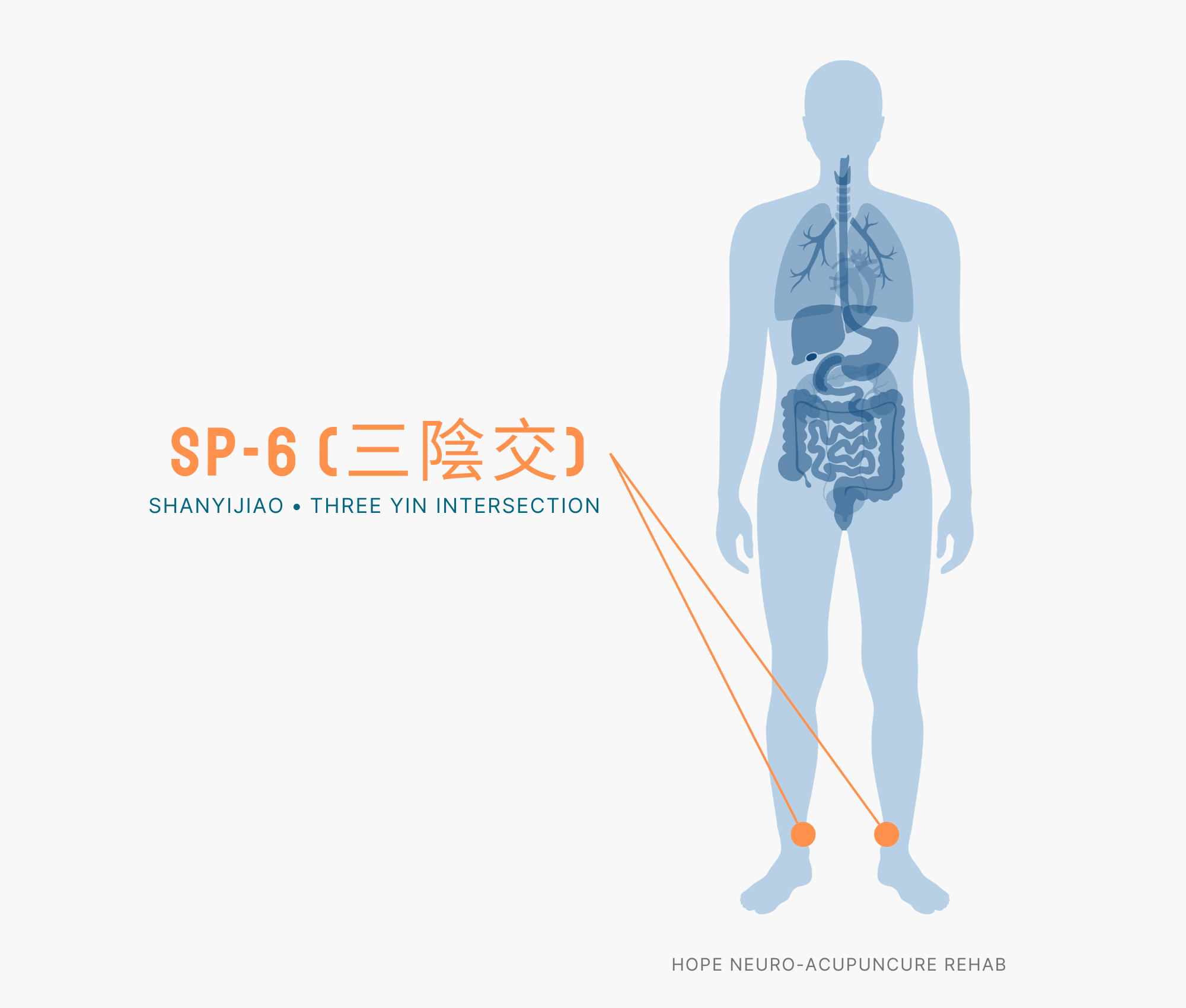
Location: Located four finger-widths (approximately 10cm) above the inner ankle bone, in the center of the inner calf. Find it by following the inner edge of the tibia upward.
Acupressure technique: Slowly press and release with your thumb for 3-5 seconds at a time, or gently massage in circular motions for 1-2 minutes. If you feel a warm sensation or lightness after acupressure, you’re stimulating the point correctly.
Effects: This acupoint comprehensively regulates the digestive, urinary, and reproductive systems. Besides relieving abdominal bloating, it also improves uterine contractions, irregular menstruation, and coldness in the pelvic area. It’s particularly effective for bloating caused by hormonal changes in women, such as premenstrual syndrome.
5. LR3 (Taichong) — The connection between stress and digestion
Location: Located between the first and second toes on the top of the foot, approximately one-and-a-half finger-widths above the foot’s surface. You’ll feel a slight depression and tenderness when you touch it.
Acupressure technique: Slowly press and release with your thumb for 3-5 seconds at a time, or massage in circular motions using your finger knuckles. Apply enough pressure to feel a slight ache, but avoid excessive force. 1-2 minutes is sufficient.
Effects: Promotes qi circulation in the liver and improves intestinal movement impaired by stress. It’s especially effective for abdominal bloating caused by emotional stress and work fatigue, while simultaneously relieving headaches, eye strain, and menstrual cramps. It normalizes nerve regulation of digestive organs and restores balance to the gut-brain axis.
5-minute self-acupressure routine — Actual sequence and time distribution
Preparation (1 minute): Sit or lie down in a comfortable position and allow your abdomen to fully relax. Take 3 deep breaths, inhaling and exhaling slowly to prepare your body and mind.
Acupressure sequence:
- Step 1 (1 minute): CV12 (Zhongwan) — Place your middle fingers, one on top of the other, on CV12 and press for 5 seconds while exhaling, then release for 5 seconds while inhaling. Repeat this cycle.
- Step 2 (1 minute): CV6 (Qihai) — Gently massage CV6 below the navel in clockwise circular motions, or press and release repeatedly for 5 seconds at a time.
- Step 3 (1 minute): ST36 (Zusanli) on both sides — Stimulate the left leg’s ST36 for 30 seconds, then the right leg for 30 seconds. With your knee bent, apply slow pressure using your thumb.
- Step 4 (1 minute): SP6 (Sanyinjiao) and LR3 (Taichong) on both sides — Alternately stimulate the left SP6 for 30 seconds and the right SP6 for 30 seconds. (LR3 can be included or excluded depending on your situation.)
Closing (1 minute): Place your hands on your abdomen and slowly massage in clockwise circular motions to activate blood circulation and digestive function. Drink warm water to enhance the effects.
Frequency: Practice 1-2 times daily, preferably at least 1 hour after eating or before bed. With consistent daily practice, you should notice easier gas expulsion within 1-2 weeks, and significant improvement in chronic bloating after 4 or more weeks of continued practice.
Leave a Reply