Why Sinusitis Worsens and the Benefits of Acupoint Pressure Therapy
Sinusitis is not a simple cold. As inflammation in the paranasal sinuses becomes chronic, pus accumulates, causing nasal congestion, yellow nasal discharge, facial pain, headaches, and other symptoms that interfere with daily life. It is a common condition affecting more than 50% of modern people due to stress, environmental pollution, allergies, and other factors. In traditional Chinese medicine, sinusitis is viewed as a decline in the body’s defensive functions. Stimulating acupoints around the nose and throughout the body promotes the circulation of qi and blood while enhancing immunity. In particular, acupressure, which has fewer side effects than needling, can be performed at home anytime and can significantly speed up recovery when combined with medication.
Five Effective Acupoints for Sinusitis Relief
1. Yingxiang (Welcoming Fragrance) — LI20 (Large Intestine Meridian 20)
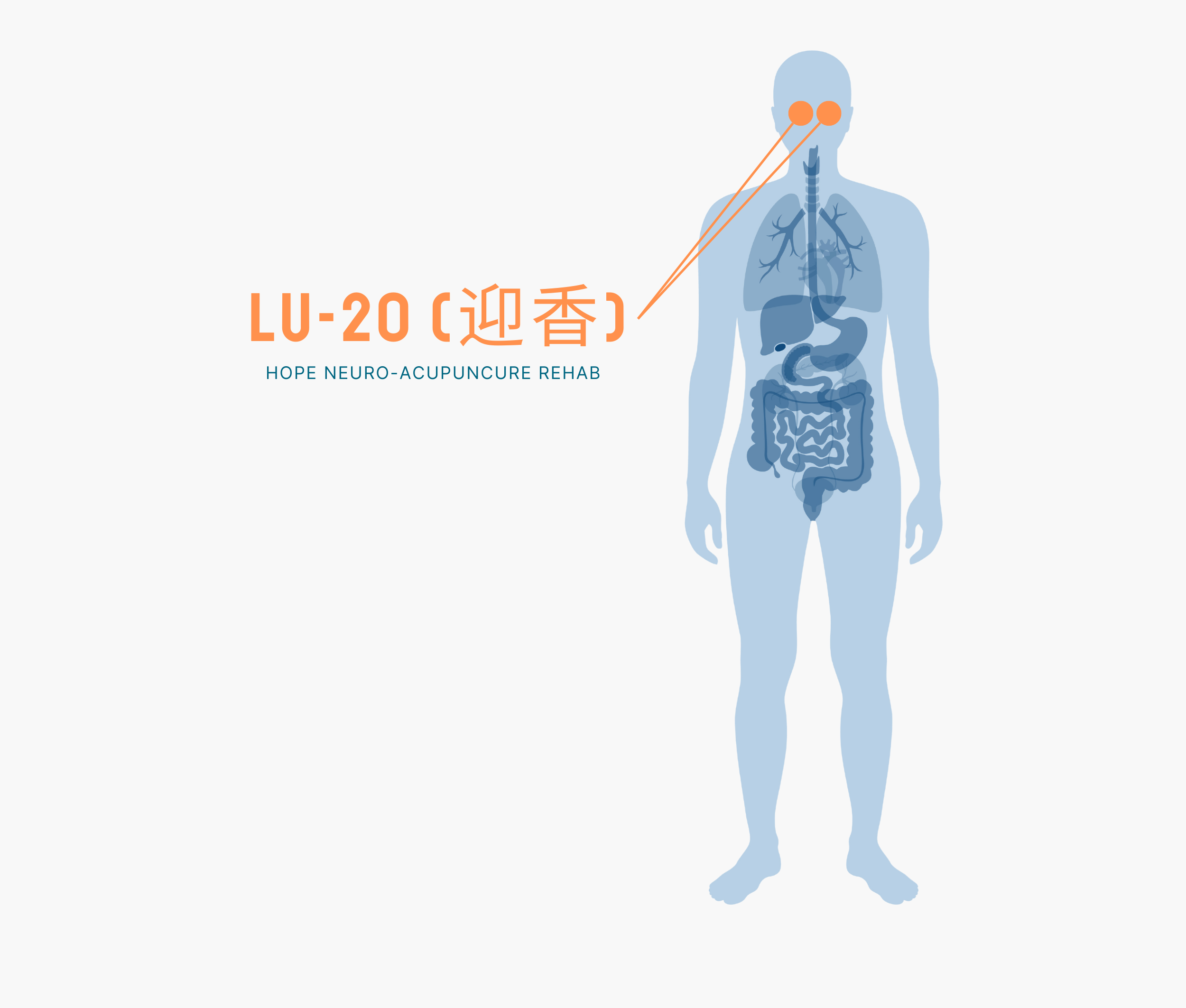
Location: It is located below the point where the nostrils are most prominent and above the nasolabial fold (the crease between the mouth corner and the nose). When you touch the side of your nose with your finger, you’ll feel a slight depression.
Acupressure Method: Using the index fingers of both hands, simultaneously press and release the Yingxiang points on both sides vertically. Apply pressure with enough intensity to feel refreshing without pain, pressing 30 times, then repeating another 30 times, which takes about 1 minute. For better results, repeat 3 times daily.
Effects: This point directly relieves nasal congestion and nasal pain—the most direct symptoms of sinusitis. It promotes the drainage of blocked secretions from the paranasal sinuses and improves blood circulation to the nasal mucosa, reducing inflammation. This acupoint shows the fastest results when there is abundant yellow nasal discharge or severe nasal congestion.
2. Hegu (Union Valley) — LI4 (Large Intestine Meridian 4)

Location: It is located in the crease where the thumb and index finger meet, in the depression on the back of the hand. It is positioned slightly toward the thumb, just below the index finger bone. It is at the midpoint of the ‘V’ shape formed when the hand is open and spread.
Acupressure Method: Slowly press the Hegu point using the thumbprint area of the opposite hand. Press for about 3-5 seconds, release for 3 seconds, and repeat. Perform 20-30 presses on each hand. Alternating pressure on both hands takes about 1 minute.
Effects: It activates the body’s immune function and significantly enhances resistance. It is very effective at relieving headaches and facial pain caused by sinusitis and is widely used for cold prevention and recovery promotion. It is a “universal acupoint” that helps eliminate inflammation in facial areas, including the nasal mucosa.
3. Yintang (Seal Hall) — GV29/DU23 (Governing Vessel 29/Conception Vessel 23)
Location: It is located at the center between the eyebrows, in the glabella region. The exact location is the depression felt when the nose is wrinkled upward. Pressing it with a finger will cause a mild soreness.
Acupressure Method: Using the index or middle finger of both hands, slowly press vertically and release repeatedly. The appropriate intensity is mild soreness, and perform 20-30 presses each time. Avoid excessively strong stimulation.
Effects: It is particularly effective at relieving pain between the eyebrows and headaches caused by sinusitis. It improves blood circulation to the brain and relieves nervous tension. It is excellent not only for nasal conditions but also for improving migraines, eye fatigue, insomnia from stress, and reduced concentration.
4. Taiyang (Great Sun) — EX-HN5 (Extra Point on Head and Neck)
Location: It is located in the depression between the outer corner of the eye and the ear, at the temple. It can be easily found with the fingers of both hands, and pressing it will cause slight soreness.
Acupressure Method: Gently massage the Taiyang point using the middle fingers of both hands in circular motions. Slowly repeat 10 times clockwise, then 10 times counterclockwise. Gentle and sustained circular massage is more effective than strong stimulation. Each session takes about 1 minute.
Effects: It effectively relieves facial swelling and temple pain caused by sinusitis. It promotes qi and blood circulation in the head and face, reducing chronic inflammation around the nose and eyes. It is particularly useful for sinusitis patients who also experience migraines or stress-related headaches.
5. Fengchi (Wind Pool) — GB20 (Gallbladder Meridian 20)
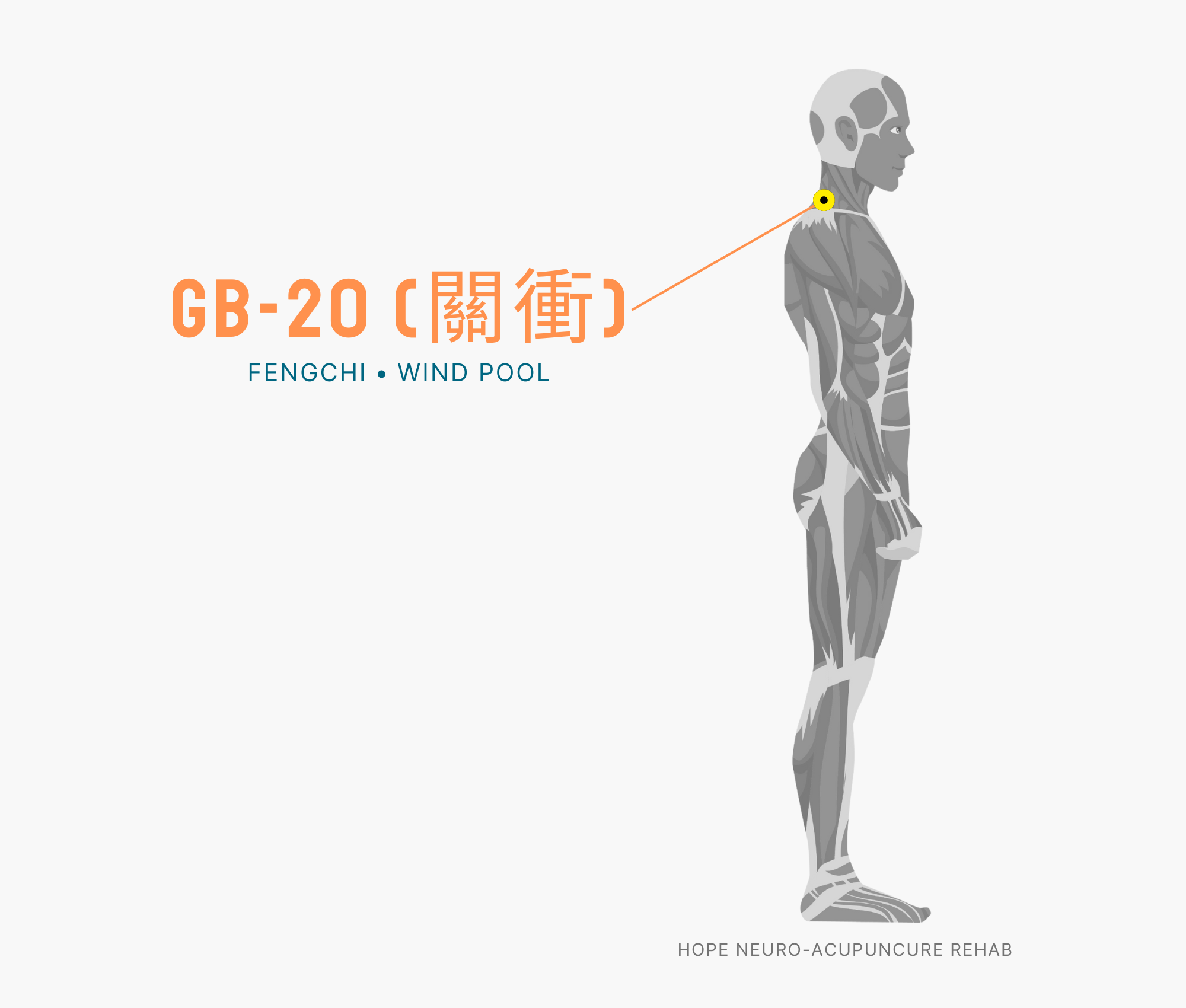
Location: It is located at the base of the skull, where the hairline meets the neck. It is positioned on both sides of the center of the back of the neck, below and behind both ears, with a clear depression.
Acupressure Method: Slowly press the Fengchi point with the thumbs of both hands, directing the pressure inward toward the body. Hold the pressure for about 3-5 seconds, release, and repeat. Perform 20-30 presses per session. Press precisely at the boundary between the neck and head, but be careful not to press too hard.
Effects: It eliminates pathogenic wind (the cause of infectious diseases) and strengthens the body’s immune function. It is excellent at preventing the worsening of sinusitis from colds or allergic rhinitis and relieves tension in the neck and shoulders, improving overall blood circulation. It relieves headaches, neck stiffness, and shoulder tension simultaneously.
5-Minute Self-Acupressure Routine — Recommended 3 Times Daily (Morning, Noon, Evening)
Follow the order below for optimal results. Total time required is 5 minutes.
- Yingxiang (LI20) — 1 minute
Press both Yingxiang points simultaneously with both index fingers 30 times. (30 seconds) → Repeat 30 more times. (30 seconds) → Gently massage in circular motions with both index fingers. (remaining time) - Hegu (LI4) — 1 minute
Press the left Hegu point with your right thumb 30 times. (30 seconds) → Perform the same on the opposite side (right hand). (30 seconds) - Yintang (GV29) — 1 minute
Slowly press and release the Yintang point with both index fingers, repeating 20 times. (30 seconds) → Repeat 10 more times. (30 seconds) - Taiyang (EX-HN5) — 1 minute
Massage the Taiyang point with both middle fingers in clockwise circular motions for 30 seconds. → Then massage in counterclockwise motions for 30 seconds. - Fengchi (GB20) — 1 minute
Press and release each Fengchi point with both thumbs, 30 times each. (Total 60 presses, takes about 1 minute)
💡 Acupressure Tips: Drinking warm water or warm tea after acupressure enhances its effects. Avoid air conditioning drafts or sudden temperature changes immediately after acupressure. Performing acupressure 1 hour before bedtime helps ease symptoms during sleep. Reduce the intensity of pressure when under stress or overworked.
Leave a Reply