“`html
Introduction
Rhinitis that gets worse in spring is truly frustrating—nasal congestion makes concentration difficult, and nighttime snoring can be bothersome. Even with medication, there’s no fundamental solution, and repeated sneezing and nasal discharge make daily life inconvenient. In traditional Chinese medicine, rhinitis is viewed as “lung qi deficiency” and “pathogenic wind invasion.” By stimulating specific acupoints, you can strengthen lung function and improve blood circulation around the nose. Scientific research also shows that acupoint pressure helps regulate immune response and reduce nasal inflammation. Now, manage your rhinitis symptoms directly with just your fingertips, without relying on medication.
Five Effective Acupoints for Relieving Rhinitis
1. Yingxiang (LI20) — Instant Relief for Nasal Congestion
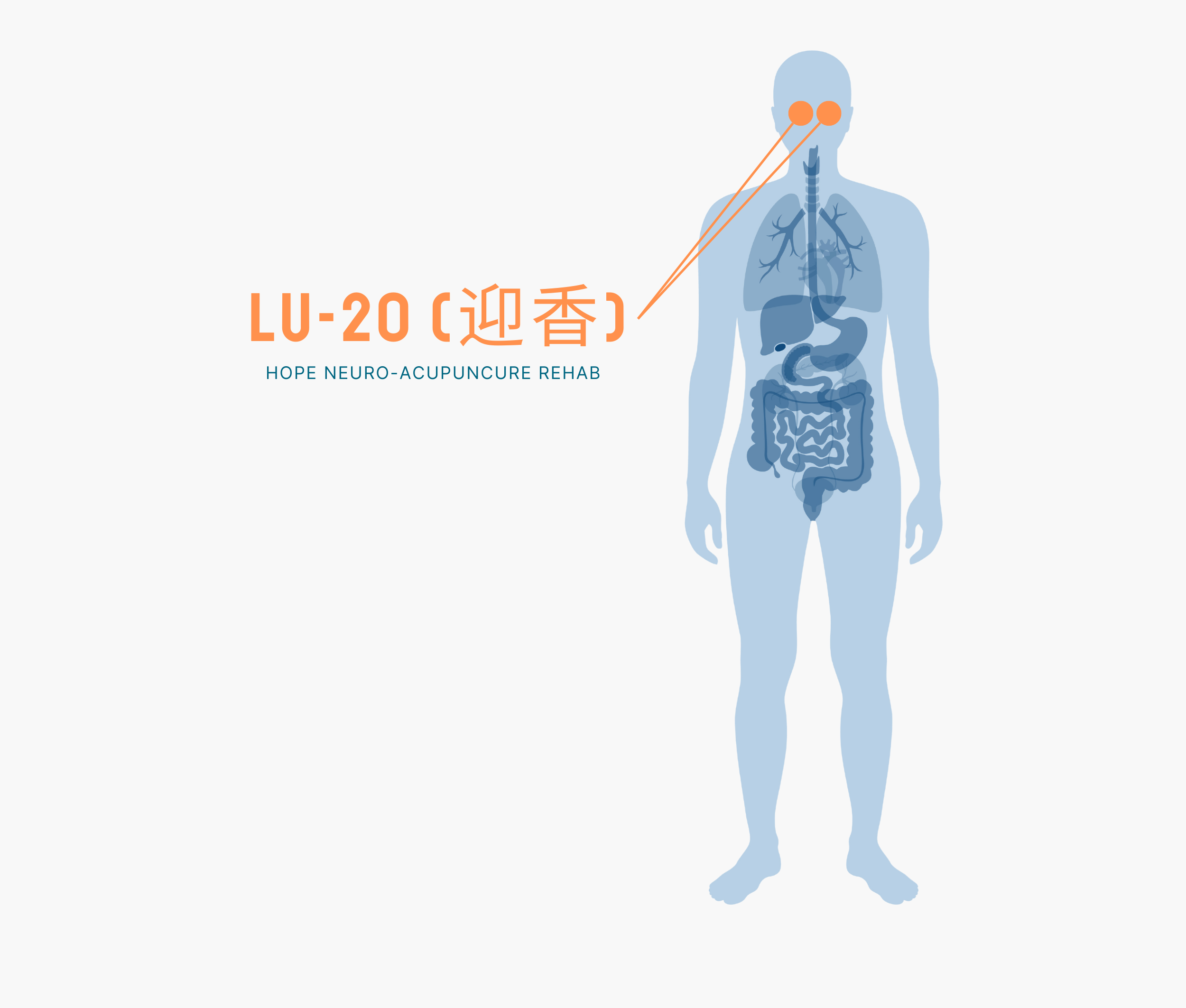
Location: Just outside the nostril, where the wrinkles on the side of the ala of the nose converge
WHO Code: LI20 (Large Intestine 20)
Pressure technique: Using your index or middle finger, gently press both sides of the ala of the nose simultaneously, directing the pressure slightly upward. Press for 1-2 minutes per session, maintaining comfortable breathing. Practice this 3 times daily when you feel nasal congestion.
Benefits: Known as the “nasal acupoint,” Yingxiang most quickly relieves nasal congestion, runny nose, and loss of smell caused by rhinitis. You’ll feel immediate results within 5-10 minutes after pressure, with your nasal passages opening up.
2. Hegu (LI4) — Boost Immunity & Reduce Inflammation

Location: Between the thumb and index finger, at the highest point of the muscle on the back of the hand
WHO Code: LI4 (Large Intestine 4)
Pressure technique: Press vertically with the opposite thumb or massage in circular motions. Apply continuous pressure for about 1-2 minutes until you feel a slight warmth. Stimulate both hands for equal duration.
Benefits: Known as a “universal acupoint,” Hegu strengthens lung function and boosts overall immunity. By addressing the root cause of rhinitis—lung qi deficiency—it reduces nasal allergic reactions long-term. It also relieves headaches and facial pain simultaneously.
3. Taiyang (EX-HN5) — Rhinitis-Related Headaches & Temple Pain
Location: The temple, approximately 1.5 cm inward from the outer edge of the eye toward the ear
WHO Code: EX-HN5 (Extra Head 5, Extra point)
Pressure technique: Using both middle fingers, gently massage both temples simultaneously in circular motions. Repeat 3 times for 30 seconds to 1 minute each. Gentle massage is more effective than firm pressure. Pressing too hard may worsen headaches.
Benefits: When nasal congestion blocks the nose, pressure builds at the temples causing headaches. Stimulating Taiyang releases this tension. It also improves migraines and eye fatigue while promoting blood circulation to the brain.
4. Yintang (EX-HN3) — Relieve Nasal Congestion & Stress Together
Location: The glabella, the indented area in the center of the skin and muscle between the two eyebrows
WHO Code: EX-HN3 (Extra Head 3, Extra point)
Pressure technique: Using your thumb or middle finger, slowly press the glabella vertically for about 1-2 minutes. Start with moderate pressure, then gradually deepen it within a comfortable range. It’s important to maintain deep breathing.
Benefits: Yintang promotes blood circulation to the brain and activates the parasympathetic nervous system. It relieves not only nasal congestion but also stress-related headaches, insomnia, and poor concentration while releasing overall forehead tension.
5. Tongqian (BL7) — Restore Lung Function & Prevent Recurrence

Location: On the crown of the head, approximately 1.5 cm in front of Baihui (GV20). You can locate it by following the center line of the head downward from your hair parting.
WHO Code: BL7 (Bladder 7)
Pressure technique: Tongqian can be difficult to locate, so first find Baihui (the center of the crown between the two ears), then press the point about 1-1.5 cm in front. Massage in circular motions with your middle finger for about 1 minute or apply gentle pressure.
Benefits: Tongqian is an important acupoint connected to the Lung meridian that directly strengthens lung function. It’s most effective for improving the lung constitution—the root cause of rhinitis—and consistent stimulation prevents rhinitis recurrence. It also helps improve asthma and cough symptoms.
5-Minute Self-Acupoint Massage Routine — Practice Once Daily in the Morning
Recommended time: After waking in the morning or 1 hour before bedtime
- Yingxiang (LI20) — 1 minute
Gently press both sides of the ala of the nose simultaneously until you feel nasal fullness. - Yintang (EX-HN3) — 1 minute
Slowly press the glabella vertically, then gently lift. Repeat 3 times. - Hegu (LI4) — 1 minute
Press both Hegu points simultaneously for about 1 minute until warmth is felt. - Taiyang (EX-HN5) — 1 minute
Gently massage both temples in circular motions. 30 seconds × 2 rounds. - Tongqian (BL7) — 1 minute
Gently massage the area below the center of the crown in circular motions.
Important notes: The complete routine takes 5-6 minutes. Drinking warm water after massage enhances results. Practice daily for the first 1-2 weeks, then reduce to 3-4 times per week once symptoms improve.
“`
Leave a Reply