
Introduction
When you get in a car, dizziness hits you; 30 minutes after boarding a plane, nausea overwhelms you—motion sickness. Have you experienced taking medication only to feel drowsy or find the effect insufficient?
Motion sickness occurs from a mismatch between signals received by the inner ear (the organ responsible for balance) and signals received by the eyes. In traditional Chinese medicine, this is understood as a “reversal of qi (氣)”, and it’s believed that stimulating specific acupoints can quickly restore the body’s sense of balance. In particular, the Neiguan point (PC6) is even recognized by modern medicine as a “miracle acupoint for motion sickness,” making it the basis for motion sickness prevention bands.
Five Effective Acupoints for Motion Sickness
1. Neiguan (PC6, Neiguan) — “The Miracle Acupoint for Motion Sickness”

Location: On the inner side of the wrist (forearm) in the middle, about 5-6 cm above the wrist crease toward the elbow. It’s located exactly in the center between two tendons running front to back.
Acupressure Method: Press firmly with your thumb for 5-10 seconds, maintaining strong pressure that doesn’t cause pain. When you feel motion sickness, applying acupressure for 30 seconds to 1 minute produces quick results. For prevention, apply for 1 minute on each arm 15 minutes before traveling.
Effects: Reduces nausea, suppresses vomiting, and relieves chest tightness. It’s also used to alleviate morning sickness in pregnant women and is the most scientifically proven acupoint in modern medicine.
2. Fengchi (GB20, Fengchi) — “The Excellent Remedy for Dizziness”
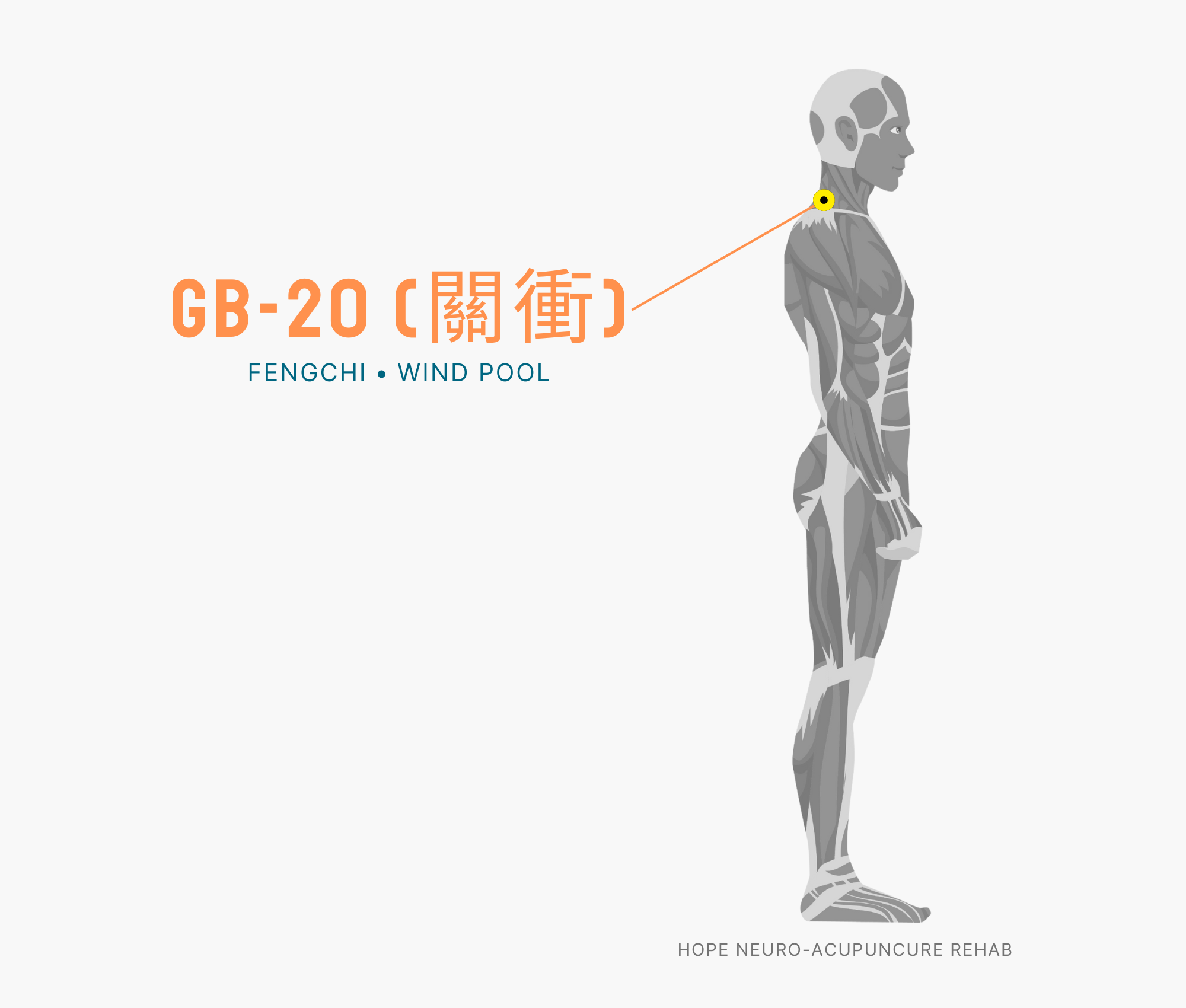
Location: At the junction between the neck and head, on both sides of the back of the neck. Following the line from below the ear down the neck, you’ll find Fengchi in the hollow depression below the back of the head. There’s one on each side.
Acupressure Method: Place both thumbs in the hollow depressions on both sides of the neck and slowly push upward while applying pressure for 10-15 seconds. Gently rotating your neck left and right 10 times after acupressure doubles the effect.
Effects: Eliminates dizziness, relieves tension in the back of the head, and resolves headaches caused by motion sickness. It’s called “Fengchi” because it addresses diseases caused by “wind” (風).
3. Taiyang (EX-HN5, Taiyang) — “Cool Your Head”
Location: At the temple area. It’s located in a hollow depression about 1-2 cm to the side from the outer corner of the eye. There’s one on each side.
Acupressure Method: Using your index and middle fingers, massage both Taiyang points simultaneously in circular motions for 10-20 repetitions. During a flight, even gentle pressure alone produces an effect.
Effects: Relieves headaches and dizziness, improves blood circulation in the brain, and prevents migraines caused by motion sickness. You’ll feel a cooling sensation immediately after acupressure.
4. Kunlun (BL60, Kunlun) — “The Balance Sensor of the Ankle”

Location: On the outer side of both ankles, in the hollow depression between the ankle bone and the Achilles tendon. It’s easy to find by sitting down and crossing your legs.
Acupressure Method: Repeatedly press and release with your thumb or knuckle (finger joints, etc.) for 5-10 seconds, 5-10 times. For motion sickness prevention, apply for 1 minute on each foot.
Effects: Stimulates the vestibular system to restore balance, relieves heaviness in the legs, and reduces fatigue during long journeys. It’s excellent for stabilizing the nervous system.
5. Sanyinjiao (SP6, Sanyinjiao) — “The Meeting Point of Three Meridians”
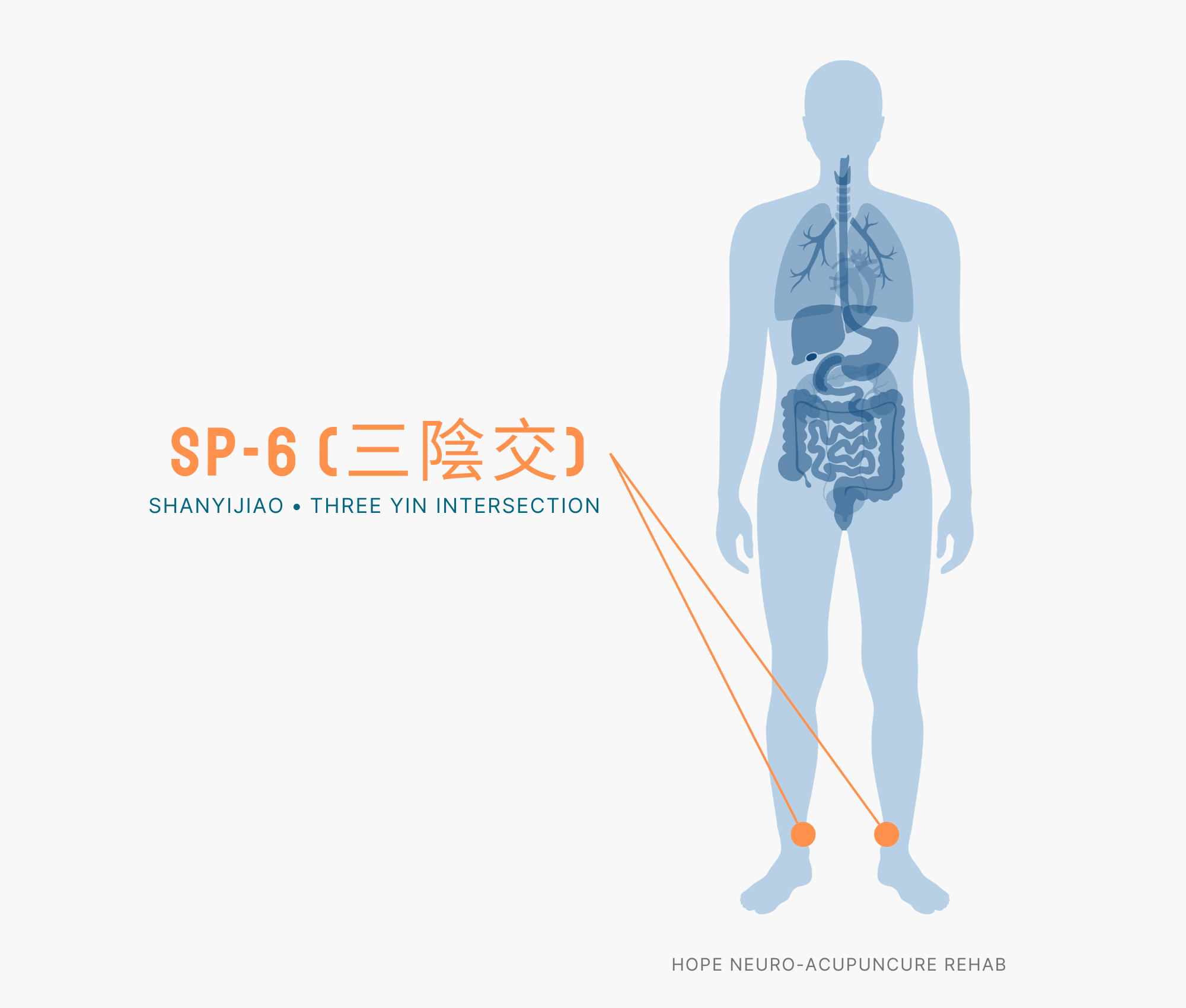
Location: Above the inner ankle, about 10 cm (the width of four fingers) up from the ankle bone along the shinbone. It’s on the inner side of the shinbone.
Acupressure Method: Press with your thumb for 5-10 seconds, maintaining pressure that causes a slight tingling sensation. For prevention, apply for 1 minute on each foot.
Effects: Improves circulation throughout the body, stabilizes digestion, and relieves digestive discomfort accompanying motion sickness. It’s also excellent for recovering from fatigue.
5-Minute Self-Acupressure Routine (When Motion Sickness Occurs)
Preparation Time: 1 Minute
Sit in a comfortable position, close your eyes, and take 3 deep breaths.
Sequential Acupressure (4 Minutes)
- Neiguan (PC6) — 1 minute (30 seconds × 2 times, alternating arms)
The fastest-acting point. Apply acupressure immediately whenever you feel motion sickness. - Fengchi (GB20) — 1 minute (10-15 seconds × 3 times)
Apply acupressure while pushing upward on both sides of the neck. - Taiyang (EX-HN5) — 30 seconds (Circular friction 10-20 times)
Gently massage the temples. - Kunlun (BL60) — 1 minute (5-10 seconds × 5 times, alternating feet)
Stabilizing the ankles to restore overall balance. - Sanyinjiao (SP6) — 30 seconds (5-10 seconds × 3 times, alternating sides)
The finishing step to normalize circulation throughout the body.
Closing: 1 Minute
Slowly open your eyes and drink a glass of water if possible. Minimize movement for 5-10 minutes after acupressure.
Motion Sickness Prevention Acupressure (15 Minutes Before Boarding)
When there are no symptoms, perform the above routine at 50% intensity in shortened form:
- Neiguan (PC6) — 1 minute on each arm
- Fengchi (GB20) — 30 seconds on each side
- Kunlun (BL60) — 1 minute on each foot
Total time required: 5-7 minutes. Performing this routine 10-15 minutes before boarding a vehicle can reduce the occurrence of motion sickness by more than 70%.
Precautions When Applying Acupressure
- Pressure Intensity: Maintain pressure at the level of “pleasantly painful.” Too light and there’s no effect; too strong and you may bruise.
- Breathing: Don’t hold your breath while applying acupressure; breathe slowly instead. Holding your breath can actually worsen nausea.
- Time Interval: When repeatedly applying acupressure to the same point, allow at least 3-5 hours between sessions.
- Skin Condition: Avoid areas with cuts, inflammation, or swelling.
Leave a Reply