The Relationship Between Low Blood Pressure and Acupressure
Dizziness, fatigue, and lethargy caused by low blood pressure are common symptoms among modern people. Especially if you find it difficult to get out of bed in the morning or experience reduced focus in the afternoon, low blood pressure may be worth considering. In Traditional Chinese Medicine, low blood pressure is understood as “deficiency of qi and blood” or “deficiency of original qi.” By stimulating specific acupoints, we can promote the body’s generation of qi and blood and improve blood circulation.
While medication is important, acupressure is a highly effective self-care method for managing your body in daily life. The following five acupoints are meridian points recognized by the WHO (World Health Organization) and are widely used to relieve low blood pressure symptoms.
Five Effective Acupoints for Low Blood Pressure Relief
1. Zusanli (ST36)

Location: Below the knee on the outer side, approximately 1 cun (about 10 cm below the knee) from the outer edge of the tibia
WHO Code: ST36
Effects: Zusanli is known as the “acupoint for preventing all diseases.” It excels at boosting immunity, promoting recovery from fatigue, and replenishing qi and blood. It is highly effective at raising blood pressure in hypotensive patients and increasing overall body energy. Additionally, it improves digestive function, enhancing nutrient absorption and increasing blood volume.
Technique: Press vertically with your thumb for 3-5 minutes. Gradually apply pressure until you feel slight tenderness. Perform once or twice daily for best results.
2. Guanyuan (CV4)
Location: On the midline of the abdomen, approximately 3 cun (about 8 cm) below the navel
WHO Code: CV4
Effects: Guanyuan serves as a reservoir of original qi in the body. It directly replenishes “original qi deficiency,” the root cause of low blood pressure, and is effective for raising blood pressure, promoting fatigue recovery, and strengthening immunity. It is excellent for improving chronic low blood pressure symptoms.
Technique: Lie down and use 2-3 fingers together to gently massage in clockwise circles 3 cun below the navel for 3-5 minutes. Performing this before bed also helps improve sleep quality.
3. Qihai (CV6)
Location: On the midline of the abdomen, approximately 1.5 cun (about 4 cm) below the navel
WHO Code: CV6
Effects: Qihai means “sea of qi” and is the acupoint that gathers and replenishes qi throughout the body. It improves lethargy and fatigue caused by low blood pressure, promotes digestive function, and enhances overall physical strength.
Technique: Gently stimulate the area below the navel in clockwise circles, pressing less deeply than with Guanyuan. Using 2 fingers, press for 5-10 seconds and repeat for 5 minutes.
4. Sanyinjiao (SP6)
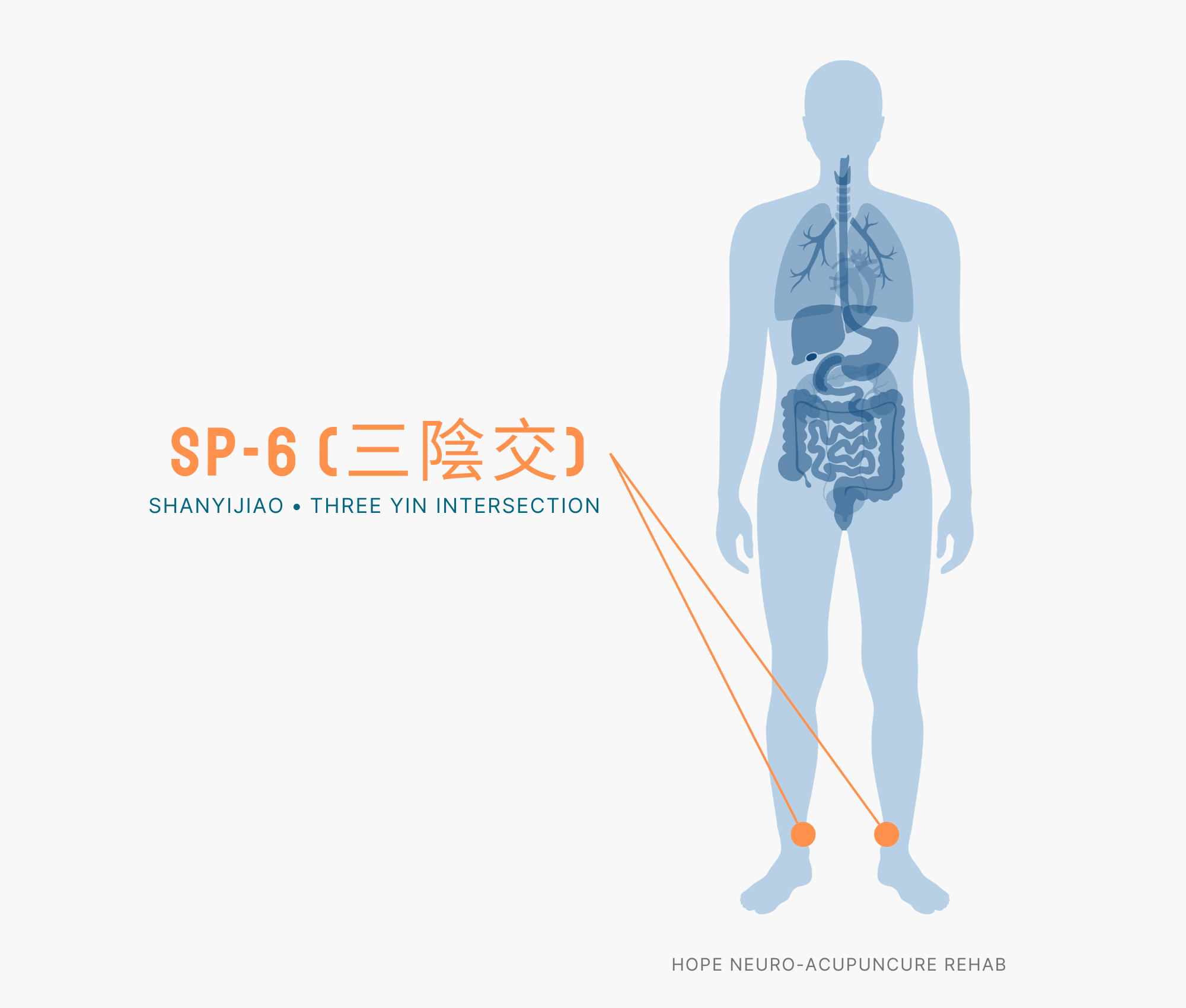
Location: 3 cun (about 8 cm) above the inner ankle, approximately 1 cun from the inner edge of the tibia
WHO Code: SP6
Effects: Sanyinjiao is where the meridians of the liver, kidneys, and spleen converge. It promotes blood generation, improves circulation, and is effective not only for low blood pressure but also for hormone balance and sleep improvement.
Technique: Sit with one leg placed over the opposite knee. Press the hollow area above the inner ankle with your thumb for 3-5 minutes. Perform on both legs.
5. Taichong (LR3)
Location: On top of the foot, in the hollow space between the first and second toes
WHO Code: LR3
Effects: Taichong is the main point of the liver meridian. It promotes the liver’s blood storage function and improves systemic circulation. It alleviates dizziness and headaches caused by low blood pressure and is also effective for stress relief.
Technique: Place your right foot on your left knee and press the hollow space between the first and second toes with your thumb for 3-5 minutes. Start gently and gradually increase pressure.
Five-Minute Self-Acupressure Routine for Low Blood Pressure Improvement
Follow the steps below; the entire routine takes approximately 5 minutes. Perform daily in the morning or when low blood pressure symptoms are acute.
- Zusanli (ST36) Pressure – 1 minute
30 seconds on each leg. Sit comfortably with legs extended and apply pressure. - Qihai (CV6) + Guanyuan (CV4) Massage – 1 minute
Slowly draw circles in a clockwise direction below the navel to stimulate the area. - Sanyinjiao (SP6) Pressure – 1.5 minutes
45 seconds on each leg. Perform while seated. - Taichong (LR3) Pressure – 1 minute
30 seconds on each foot. Rest your feet comfortably while performing. - Closing Deep Breathing – 30 seconds
Inhale slowly over 4 seconds and exhale over 6 seconds. Repeat 5 times to stabilize blood pressure.
Additional Tip: Drinking a cup of warm water after acupressure further promotes blood circulation. It is especially effective when performed after waking in the morning or around 2-3 PM when fatigue is highest.
Leave a Reply