Introduction
Sudden ear pain can significantly disrupt daily life. The ear is a highly sensitive nerve-rich area where pain can occur due to various causes including muscle tension, inflammation, and stress. In particular, modern people are increasingly experiencing ear pain due to “tech neck” from increased smartphone use and stress.
In Eastern medicine, meridians (pathways) are believed to connect the ear and surrounding areas with various parts of the body. Appropriate stimulation of acupoints promotes blood circulation, relieves nerve tension, and activates the body’s natural healing ability. Since it can be practiced at home anytime with just a finger and without medication, many people are managing ear pain through acupoint acupressure.
5 Acupoints Effective for Relieving Ear Pain
1. Auditory Gate (TE17)

WHO Code: TE17 (Triple Burner Meridian)
Location: At the front of the ear, in the depression in front of the ear when the mouth is open. The exact location of Auditory Gate is the hollow area directly in front of the jaw joint.
Massage technique: Using the index and middle fingers of both hands, apply pressure in circular motions for 5-10 seconds, repeating 10 times. Applying pressure while the mouth is slightly open allows for accurate stimulation of the point. Perform this 2-3 times daily.
Benefits: Auditory Gate is the acupoint with the most direct effect on ear pain. It can alleviate ear infections, hearing loss, tinnitus, and even temporomandibular joint pain. It is particularly effective for pain in front of the ear or lingering symptoms of otitis media.
2. Chong Zhu (TE3)
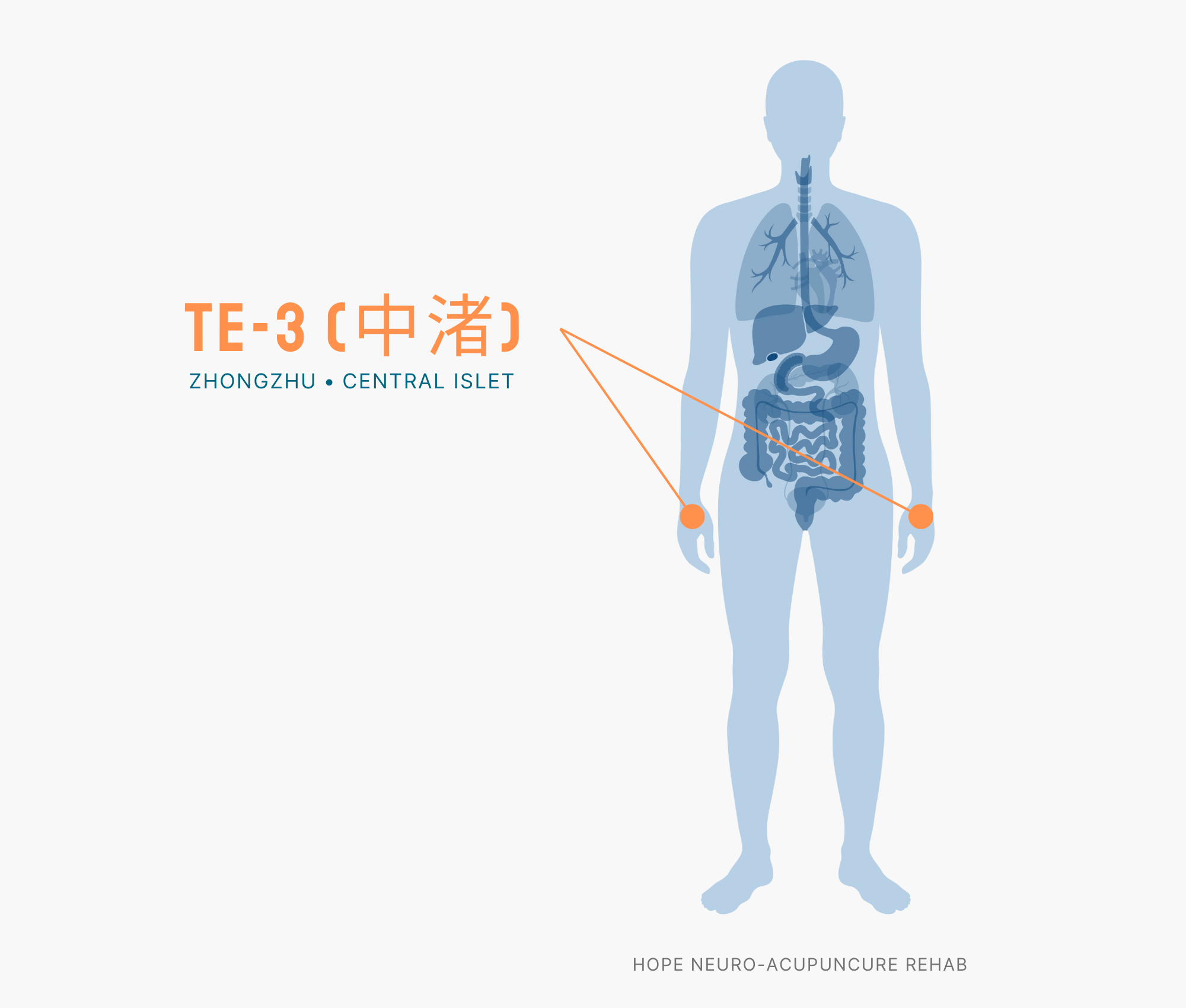
WHO Code: TE3 (Triple Burner Meridian)
Location: Between the ring finger and pinky finger on the hand, in the groove between the finger bones that forms when the fingers are bent. It is located on both hands.
Pressure technique: Using the pad of your thumb, apply steady pressure for 5-10 seconds, then release. Repeat this 10 times on each hand, performing on both hands. You should feel slight tenderness.
Benefits: Chong Zhu is a distal acupoint that alleviates not only ear pain but also migraines, facial neuralgia, and tinnitus. Since the hands can be stimulated anywhere, anytime, you can easily apply acupressure at work or while traveling.
3. Wind Pool (GB20)
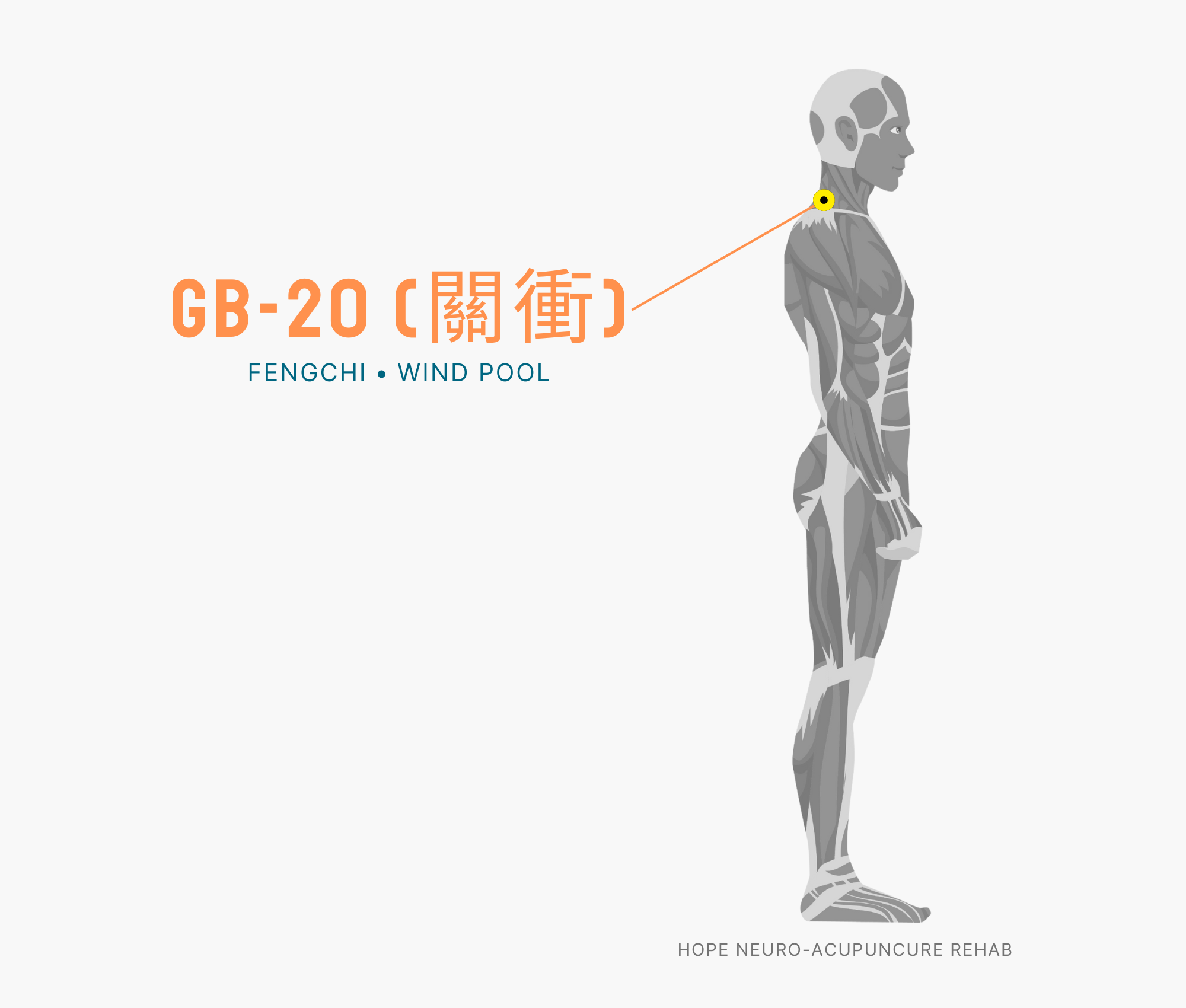
WHO Code: GB20 (Gallbladder Meridian)
Location: At the back of the neck, just above the hairline, in the hollow between the neck muscles and the spine. It is located on both sides at the back of the neck behind each ear.
Massage technique: Using both thumbs, apply moderate pressure upward for 5-10 seconds. If the neck muscles are tight, massage in circular motions. Perform this 2 times daily, 1-2 minutes each morning and evening.
Benefits: Wind Pool simultaneously alleviates ear and temporal pain as well as neck and shoulder stiffness. It is particularly effective for stress-induced tension pain and is excellent when both headache and ear pain are present.
4. Complete Bone (GB12)
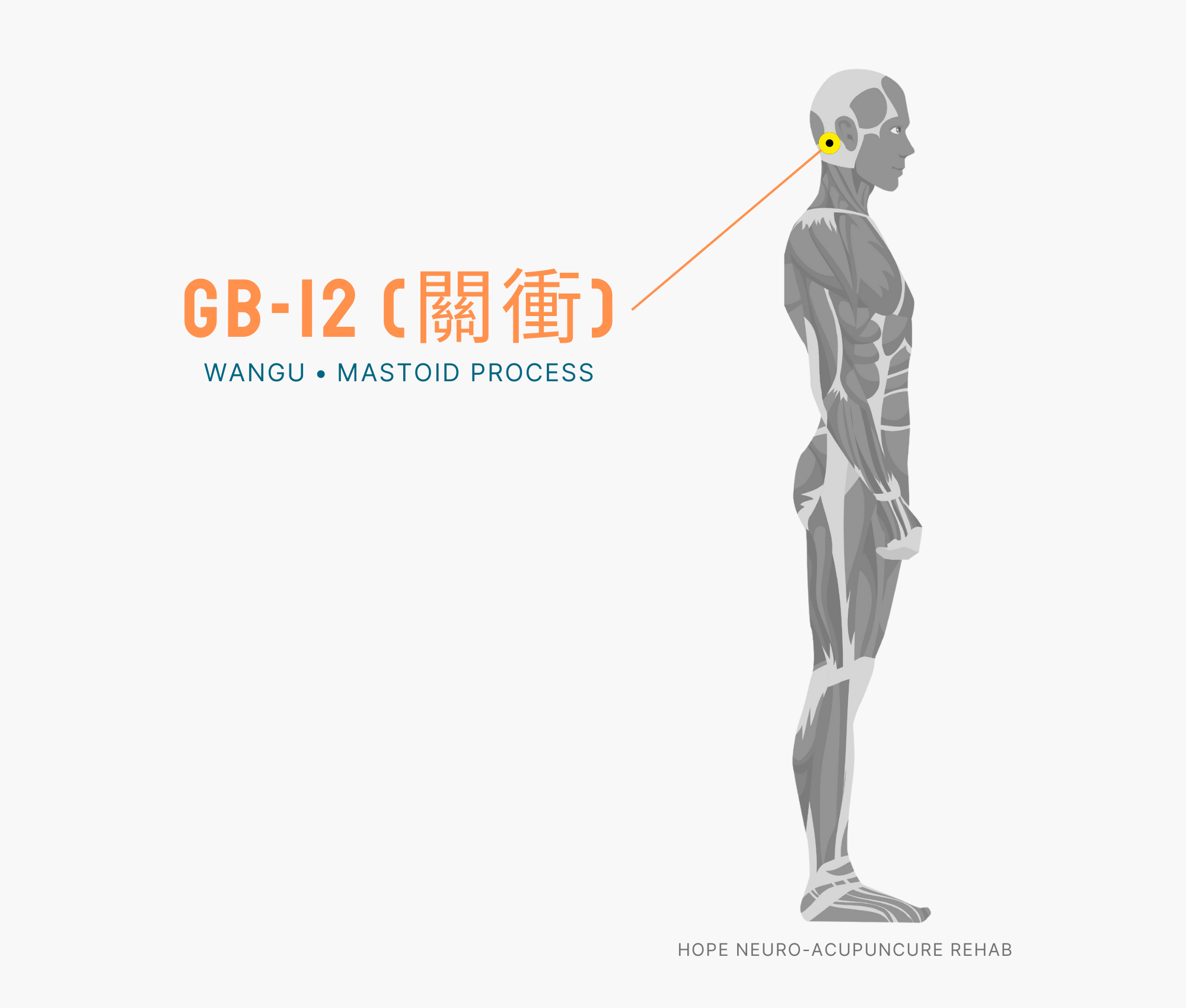
WHO Code: GB12 (Gallbladder Meridian)
Location: Directly in front of the protruding bone behind the ear (mastoid process), at the boundary between the muscle extending from behind the ear downward and the bone.
Pressure technique: Overlap your index and middle fingers and press forward for 5-10 seconds. Repeat 10 times on each side, performing 2 times daily. Do not press too hard; moderate pressure is appropriate.
Benefits: Complete Bone directly addresses pain behind the ear and temporal pain. It shows quick results for nerve pain behind the ear or swollen lymph nodes behind the ear, and also relieves tension in the neck and shoulders.
5. Union Valley (LI4)

WHO Code: LI4 (Large Intestine Meridian)
Location: In the hollow between the thumb and index finger on the hand, in the center between the two fingers when the hand is extended. It is also called the “quiet blood area.”
Pressure technique: Using the thumb of the opposite hand, apply pressure at a level of slight discomfort for 5-10 seconds. You can also massage in circular motions. Perform on both hands. Repeat approximately 10 times, 2-3 times daily.
Benefits: Union Valley is often called the “sovereign of acupoints” due to its wide range of effects. It is effective for ear pain, facial neuralgia, migraines, and general pain relief, and also helps strengthen immunity and relieve stress. It is particularly a fundamental acupoint for managing whole-body pain.
5-Minute Self-Acupressure Routine
The following sequence is recommended to maximize effectiveness:
- Chong Zhu (TE3) pressure — 1 minute
Apply pressure to Chong Zhu on both hands, 30 seconds each, for a total of 1 minute. Since the hands can be stimulated anywhere, it’s good to start this routine in the morning when you wake up. - Union Valley (LI4) pressure — 1 minute
Apply pressure to Union Valley on both hands, 30 seconds each, for a total of 1 minute. Since both Chong Zhu and Union Valley are located on the hands, it’s efficient to perform them together. - Auditory Gate (TE17) pressure — 1 minute
With the mouth slightly open, apply pressure to Auditory Gate on both sides, 30 seconds each, for a total of 1 minute. Accurate point stimulation is important, so find the exact location you feel and proceed slowly. - Wind Pool (GB20) pressure — 1 minute
Apply pressure to Wind Pool on both sides, 30 seconds each, for a total of 1 minute. If the neck muscles are tight, proceed with massage in circular motions. - Complete Bone (GB12) pressure — 1 minute
Apply pressure to Complete Bone on both sides, 30 seconds each, for a total of 1 minute. If pain behind the ear is severe, you may allocate more time to this step.
Practice tips: This routine is most effective when performed 2 times daily—after waking in the morning and before sleep in the evening. Drinking warm water after acupressure helps promote blood circulation. On days with severe pain, you can increase the frequency to 3 times daily.
Leave a Reply