Introduction
Are you troubled by acne that keeps appearing on your face? Acne is not simply a skin surface problem but a signal of internal imbalance. In traditional Chinese medicine, acne is viewed as resulting from excessive internal heat, hormonal imbalance, weakened digestive function, and poor qi and blood circulation caused by stress.
In particular, acne that repeatedly appears on the chin, forehead, and temples is not simply inflammation but is deeply related to hormones and liver function. The five acupoints introduced here have been used for thousands of years in Eastern medicine to improve skin and enhance internal organ function. Without antibiotics or strong chemical substances, just 5 minutes of self-administered acupressure daily can help detoxify your body and balance hormones.
Five Acupoints for Acne Improvement
1. Hegu (LI4) — Large Intestine Meridian

Location: The point slightly inward from where the thumb and index finger meet (the commonly shown location you see online)
Acupressure technique: Using the thumb of the opposite hand, apply gentle circular pressure at a level that feels “good but slightly tender” for about 1 minute
Benefits: It lowers the heat in the large intestine and promotes toxin elimination. The facial skin and large intestine are directly connected through meridians, so stimulating Hegu quickly calms facial inflammation and strengthens immunity. It also improves not only acne but also constipation and skin deterioration caused by poor digestion.
2. Sanyinjiao (SP6) — Spleen Meridian
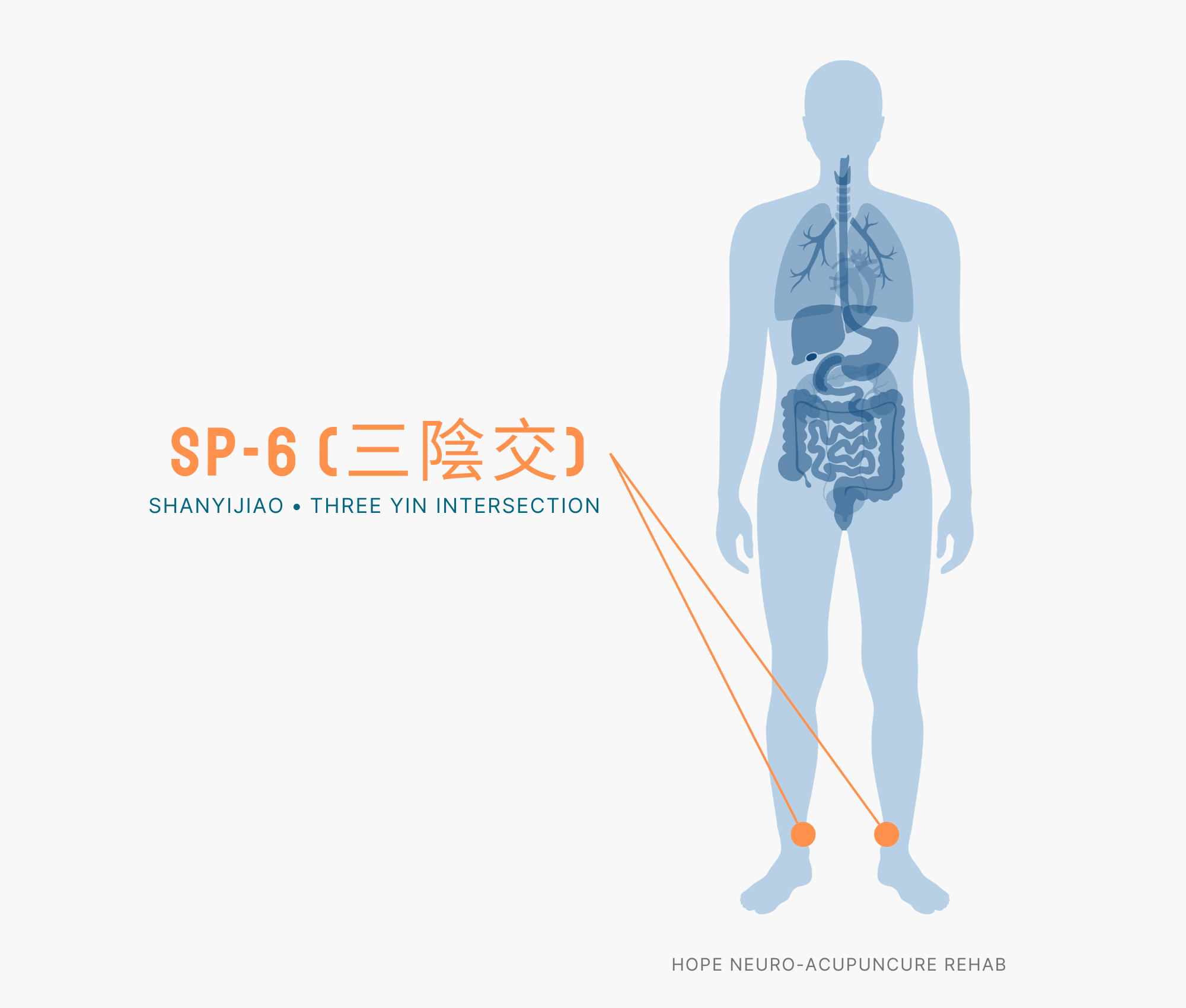
Location: The point 4 finger-widths above the inner ankle bone (on the inner side of the shin bone)
Acupressure technique: Apply slow pressure with your thumb, pressing for 5 seconds and resting for 5 seconds repeatedly. 1-2 minutes on each leg
Benefits: This is an important acupoint that regulates female hormones and reproductive function. It prevents worsening of acne caused by irregular menstrual cycles or hormonal imbalance. It enhances spleen and kidney function, improves digestion and elimination, and normalizes water metabolism in the body.
3. Taichong (LR3) — Liver Meridian
Location: The point in the depression between the big toe and second toe on the top of the foot
Acupressure technique: Apply slow pressure with your thumb, stimulating with a gentle downward-pulling sensation toward the toes. 1 minute on each foot
Benefits: The liver is the central organ for hormone metabolism and emotional regulation. Taichong promotes qi circulation in the liver and improves hormonal imbalance caused by stress. It also improves facial complexion, adds luster to the skin, and addresses the fatigue that accompanies chronic acne.
4. Quchi (LI11) — Large Intestine Meridian

Location: The end of the crease that forms when you bend your elbow (on the outer side of the arm)
Acupressure technique: Apply vertical pressure with the thumb of the opposite hand at a level that feels “good but slightly tender”. 1 minute on each arm
Benefits: This acupoint directly lowers large intestine heat. When excessive internal heat rises to the skin, it creates inflammatory acne, which this point quickly calms. It is especially effective for infected acne or acne with pus, and continuous stimulation improves inflamed skin constitution.
5. Zusanli (ST36) — Stomach Meridian

Location: The point 4 finger-widths below the depression on the outside below the knee (on the front of the shin bone)
Acupressure technique: Apply slow pressure with your thumb, pressing for 3 seconds and resting for 3 seconds repeatedly. 1-2 minutes on each leg
Benefits: This is a “universal acupoint” that strengthens the immune system and promotes digestive function. It improves poor digestion and insufficient nutrient absorption, which are among the causes of acne, and increases overall stamina and body resistance. It also brightens skin tone and improves oozing eczematous acne.
5-Minute Self-Acupressure Routine
Optimal timing: Choose either morning (after waking) or evening (before bed)
Order and time allocation:
- Hegu (LI4) — 1 minute both sides (2 minutes total)
- Quchi (LI11) — 1 minute both sides (2 minutes total)
- Sanyinjiao (SP6) — 1-2 minutes both sides (1 minute total)
- Taichong (LR3) — 1 minute both sides (1 minute total)
- Zusanli (ST36) — 1-2 minutes both sides (1-2 minutes total)
Additional tip: Drinking a glass of warm water after acupressure further activates qi circulation in the body. Doing it at the same time each day allows your body to remember the rhythm, enhancing the effects.
Leave a Reply