Introduction
Have you ever experienced acid reflux at night or a burning sensation in your chest area? Acid reflux is a common digestive issue in modern life, increasing due to stress, irregular eating habits, and consumption of irritating foods. While medication is important, acupoint acupressure in traditional medicine activates the body’s natural healing abilities to fundamentally relieve acid reflux symptoms. Self-acupressure is particularly popular because it can be performed anytime, anywhere, and without cost. This article explains in detail the five most effective acupoints for acid reflux relief and the correct acupressure techniques.
Five Effective Acupoints for Acid Reflux
1. Zhongwan (中脘) — CV12
Location: Approximately 4 cun (about 12 cm or the width of four fingers) directly above the umbilicus. It is located at the midpoint between the end of the sternum and the umbilicus.
Benefit: Zhongwan is the central acupoint for digestive function, normalizing gastric acid secretion and promoting gastric peristalsis. It immediately relieves acid reflux, indigestion, and abdominal bloating, and consistent acupressure improves long-term gastric health.
Technique: Sit or lie in a comfortable position, then place the tip of your thumb vertically on Zhongwan. Slowly press for 5 seconds and release for 5 seconds, repeating about 10-15 times per session. Start gently and gradually increase pressure.
2. Zusanli (足三里) — ST36

Location: About 4 cun (approximately 12 cm) below the outer side of the knee. It is located at the point where the muscle beside the tibia begins when moving downward from the depression below the knee toward the toes.
Benefit: Zusanli is known as the “immunity acupoint” and strengthens overall immune function as well as improves digestive function. It restores digestive function weakened by acid reflux and addresses the root cause of digestive symptoms by enhancing bodily energy.
Technique: Sit comfortably with your legs extended and slowly apply pressure to Zusanli with your thumb. Repeat pressing for 3-5 seconds and releasing 15-20 times, performing on both legs for the same duration.
3. Neiguan (內關) — PC6

Location: On the inner side of the wrist, approximately 3 cun (about 6-7 cm) from the fingers toward the elbow. It is located between the two tendons visible when the wrist is flexed (in the depression between the tendons).
Benefit: Neiguan rapidly relieves nausea and vomiting by stabilizing the nervous system and improving stress-related gastric symptoms. It normalizes digestive function by alleviating discomfort from acid reflux and regulating autonomic nervous system imbalance.
Technique: Extend one arm, locate Neiguan using the thumb of the opposite hand, and press slowly to feel slight tenderness. Repeat pressing for 3-5 seconds 10-15 times and perform on both arms. It is effective to stimulate this point frequently before going to work or when stressed.
4. Sanyinjiao (三陰交) — SP6
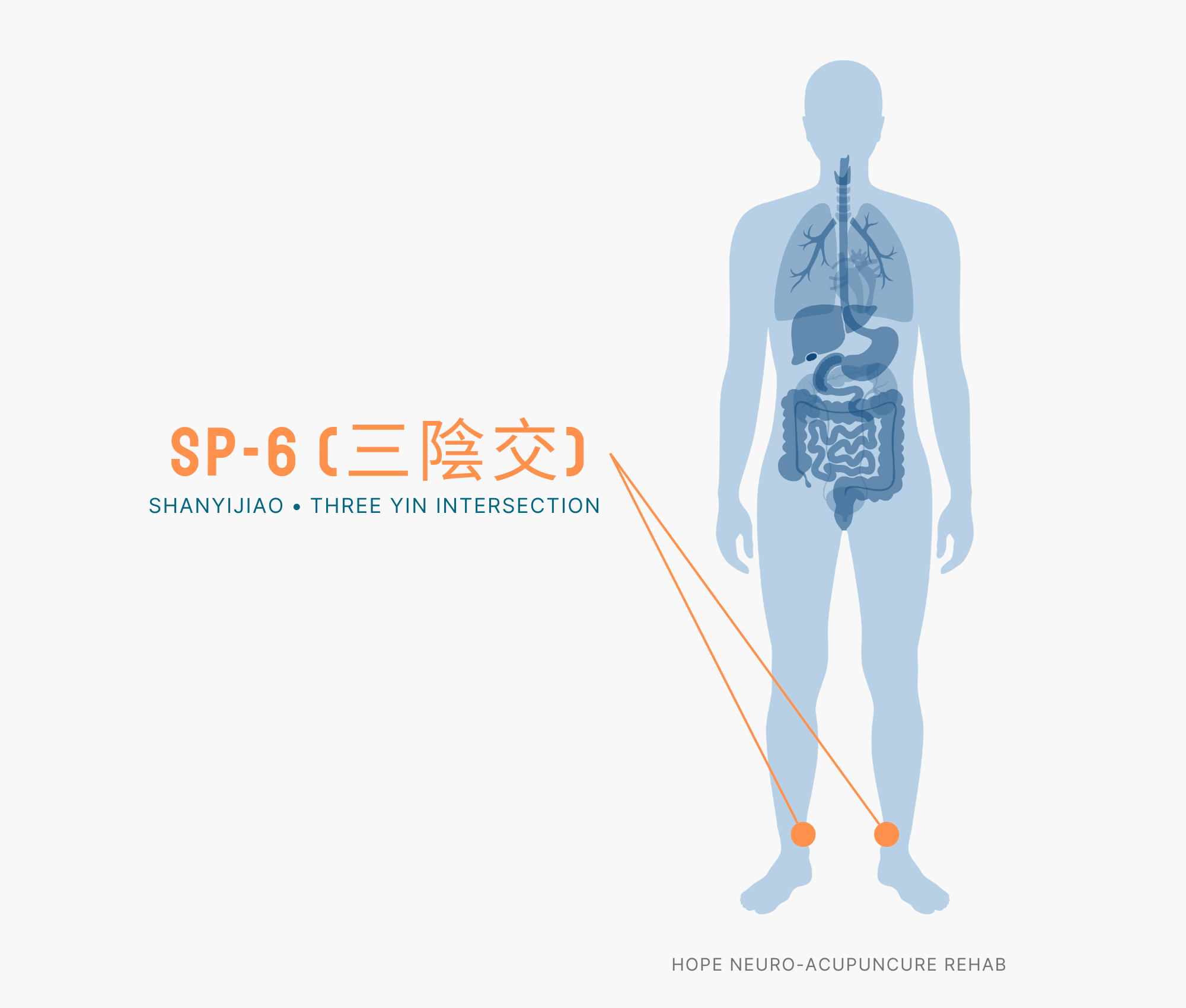
Location: About 4 cun (approximately 12 cm) above the inner ankle bone. It is located at the point where you meet when moving upward along the inner edge of the tibia.
Benefit: Sanyinjiao is an important acupoint that regulates the spleen and digestive function, strengthening gastric function and improving digestive absorption. It shows excellent effects in relieving not only acid reflux but also chronic indigestion and abdominal discomfort.
Technique: From a seated position, bend one leg and place it on the opposite knee, then locate Sanyinjiao with your thumb. Repeat pressing for 5 seconds 15-20 times, performing on both legs with the same pressure.
5. Taichong (太衝) — LR3
Location: Between the big toe and the second toe on the top of the foot, above the joint at the base of the toes. It is located approximately one bone length above where the two bones meet.
Benefit: Taichong regulates the liver’s qi and fundamentally resolves stress-induced acid reflux. It calms digestive symptoms worsened by nervous instability and normalizes gastric function by improving the body’s qi circulation.
Technique: Sit comfortably with one leg placed on the opposite knee, then locate Taichong with your thumb. Repeat pressing deeply for 3-5 seconds 10-15 times, performing on both feet with the same pressure.
5-Minute Self-Acupressure Routine
Here is a 5-minute acid reflux relief acupressure routine that can be easily performed even in a busy schedule.
Total Time Required: About 5 minutes
- Step 1 (1 minute): Zhongwan acupressure — Slowly press 10-15 times with your thumb in a comfortable position
- Step 2 (1 minute): Neiguan acupressure (both arms) — Press 10-15 times for 30 seconds on each arm
- Step 3 (1.5 minutes): Zusanli acupressure (both legs) — Press 15-20 times for 45 seconds on each leg
- Step 4 (1 minute): Taichong acupressure (both feet) — Press 10-15 times for 30 seconds on each foot
- Step 5 (0.5 minutes): Sanyinjiao acupressure (both legs) — Press 5-10 times for 15 seconds on each leg
Recommended Timing: Perform 1-2 times daily in the morning on an empty stomach, before bed, or when acid reflux symptoms appear. You can experience noticeable results with consistent practice for at least 2-4 weeks.
Leave a Reply