“`html
Introduction
Does stomach pain that comes suddenly feel frustrating and uncomfortable? In our stressful daily lives, many people lose stomach health as their digestive function declines. Stomach pain can be a simple signal—a sign that our body needs better care.
In traditional Korean medicine, stomach health is viewed as ‘middle burner function.’ By stimulating specific acupoints, it’s believed that we can promote qi and blood circulation, improve digestive function, and relieve stomach pain. The five acupoints I’m introducing today are methods verified over thousands of years, and anyone can easily apply pressure to them at home. Learn health management that requires nothing but your hands, starting now.
Five Acupoints Effective for Stomach Pain Relief
1. Taichong (LR3) — The Center of Liver Function and Digestion
Location: On the top of the foot, approximately two thumb joints above the point where the big toe and second toe meet
WHO Code: LR3 (Liver 3)
Pressure technique: Sit with your foot stretched forward and find the Taichong acupoint with your thumb, pressing slowly. Start gently at first and gradually increase pressure. Apply once for 1-2 minutes, twice a day for best results.
Expected benefits: Taichong promotes the flow of liver qi and relieves stomach cramps caused by stress. It’s particularly effective for stomach pain caused by emotional stress, improves digestive efficiency, and reduces abdominal bloating. With regular pressure application, you can see improvements in overall digestive function.
2. Sanyinjiao (SP6) — The Key to Digestive Health
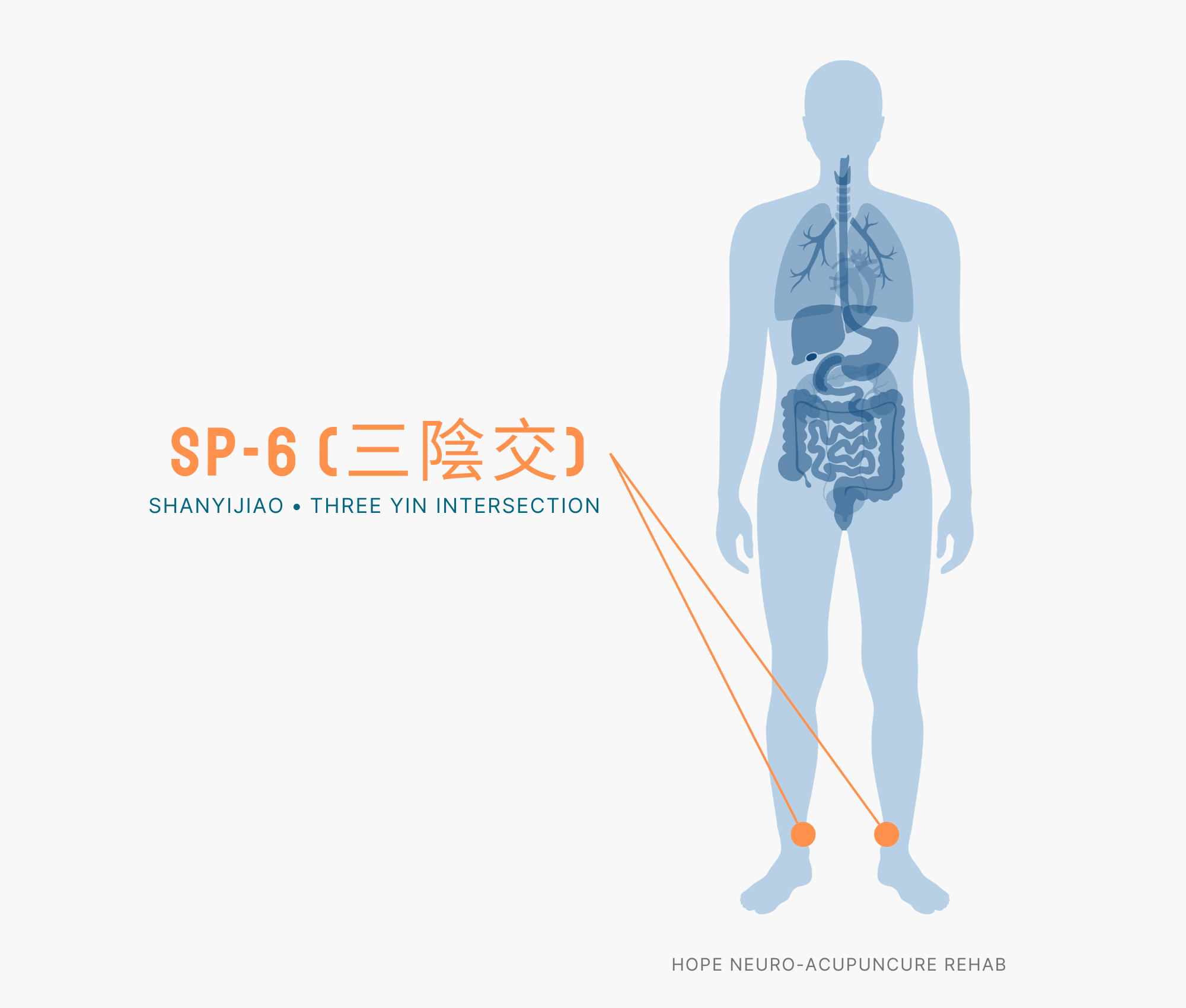
Location: On the inner calf, approximately four fingers (about 10cm) above the inner ankle bone
WHO Code: SP6 (Spleen 6)
Pressure technique: With your leg comfortably extended or bent, slowly press the inner calf with your thumb. Aim precisely at the inner muscle rather than the bone. The ideal pressure should cause slight soreness without pain.
Expected benefits: Sanyinjiao is an important acupoint that regulates spleen and stomach function, promoting digestive absorption. It’s particularly effective for chronic indigestion, diarrhea, and abdominal bloating relief, and also enhances overall immunity. Regular stimulation helps prevent digestive diseases.
3. Hegu (LI4) — The Master Point for Pain Relief

Location: Where the thumb and index finger meet, at the highest point on the back of the hand
WHO Code: LI4 (Large Intestine 4)
Pressure technique: Use the thumb of one hand to press and release the Hegu acupoint of the other hand vertically. Start with light pressure and gradually increase, being careful not to cause unbearable pain. Rubbing in a circular motion is also effective.
Expected benefits: Hegu is so effective for various conditions that it’s called one of the ‘Four Master Points.’ It particularly relieves abdominal pain and relaxes tense abdominal muscles, promotes large intestine function to improve digestion, and enhances overall immune resistance.
4. Zhongwan (CV12) — The Direct Regulator of Stomach Function
Location: Midpoint between the navel and the solar plexus (below the chest), on the abdominal midline
WHO Code: CV12 (Conception Vessel 12, Ren Mai 12)
Pressure technique: Lie in a comfortable position and relax your abdomen. Use three fingers together to slowly press the Zhongwan acupoint, though circular clockwise rubbing is more effective. Apply once for 1-2 minutes, once or twice daily. It’s best to do this 30 minutes after eating.
Expected benefits: Zhongwan is the acupoint that directly governs the stomach and digestive organs, serving as the center of all digestive functions. It effectively relieves pain from gastritis and ulcers, improves indigestion, abdominal bloating, nausea, and more. Regular long-term stimulation strengthens stomach resistance and prevents recurrence.
5. Zusanli (ST36) — The Comprehensive Tonic for Digestion and Immunity

Location: On the outer side below the knee, approximately three finger widths (about 5-6cm) from the outer edge of the tibia
WHO Code: ST36 (Stomach 36)
Pressure technique: Sit or lie comfortably and find Zusanli with your thumb, pressing slowly. When applying pressure, slight soreness is felt, but maintain pressure that is tolerable. Apply for 1-2 minutes per session, once or twice daily.
Expected benefits: Zusanli is such an important acupoint that there’s a saying ‘Zusanli is a master physician.’ It has broad-ranging effects from strengthening stomach function to improving overall digestion, enhancing immunity, and aiding recovery from fatigue. It’s particularly excellent for improving constitution in those suffering from chronic indigestion and weak stomach. Regular stimulation helps maintain overall health.
5-Minute Self-Massage Routine — Effective Order and Time Distribution
Even in a busy schedule, five minutes is enough. Following the order below will give you optimal results.
Step 1 (1 minute): Preparation — Sit or lie in a comfortable position and relax your abdomen.
Step 2 (1 minute): Zhongwan + Hegu — Rub Zhongwan in a circular clockwise motion (about 30 seconds), alternate pressing Hegu on both hands (about 30 seconds)
Step 3 (1 minute): Taichong + Sanyinjiao — Alternate pressing Taichong on both feet (about 30 seconds), alternate pressing Sanyinjiao on both sides (about 30 seconds)
Step 4 (1.5 minutes): Zusanli — Press Zusanli on both sides thoroughly in turn. Since this is the most important acupoint, allocate sufficient time (about 1.5 minutes).
Step 5 (0.5 minutes): Closing — Breathe slowly and notice the changes in your body.
Best time to practice: After waking up in the morning or before going to bed at night. Avoid doing this immediately after eating; wait at least 30 minutes.
“`
Leave a Reply