Introduction
Runny nose is a common symptom that everyone experiences due to colds, allergies, rhinitis, and other conditions. Continuously flowing nasal discharge makes daily life inconvenient, irritates the skin around the nose turning it red, and disturbs sleep. More people are seeking ways to enhance their body’s natural healing power rather than relying solely on medication.
Acupoint acupressure in traditional medicine is an effective natural therapy that regulates the body’s qi (energy) flow and enhances immunity. In particular, stimulating specific acupoints located around the nose, face, arms, and back of the neck promotes blood circulation in the nose, alleviates inflammation, and reduces nasal discharge. The advantage is that it can be performed with just one finger in just 5 minutes without worrying about side effects from medication.
5 Effective Acupoints for Relieving Runny Nose
1. Yingxiang (LI20, Yingxiang) — Premier Acupoint for Runny Nose Symptoms
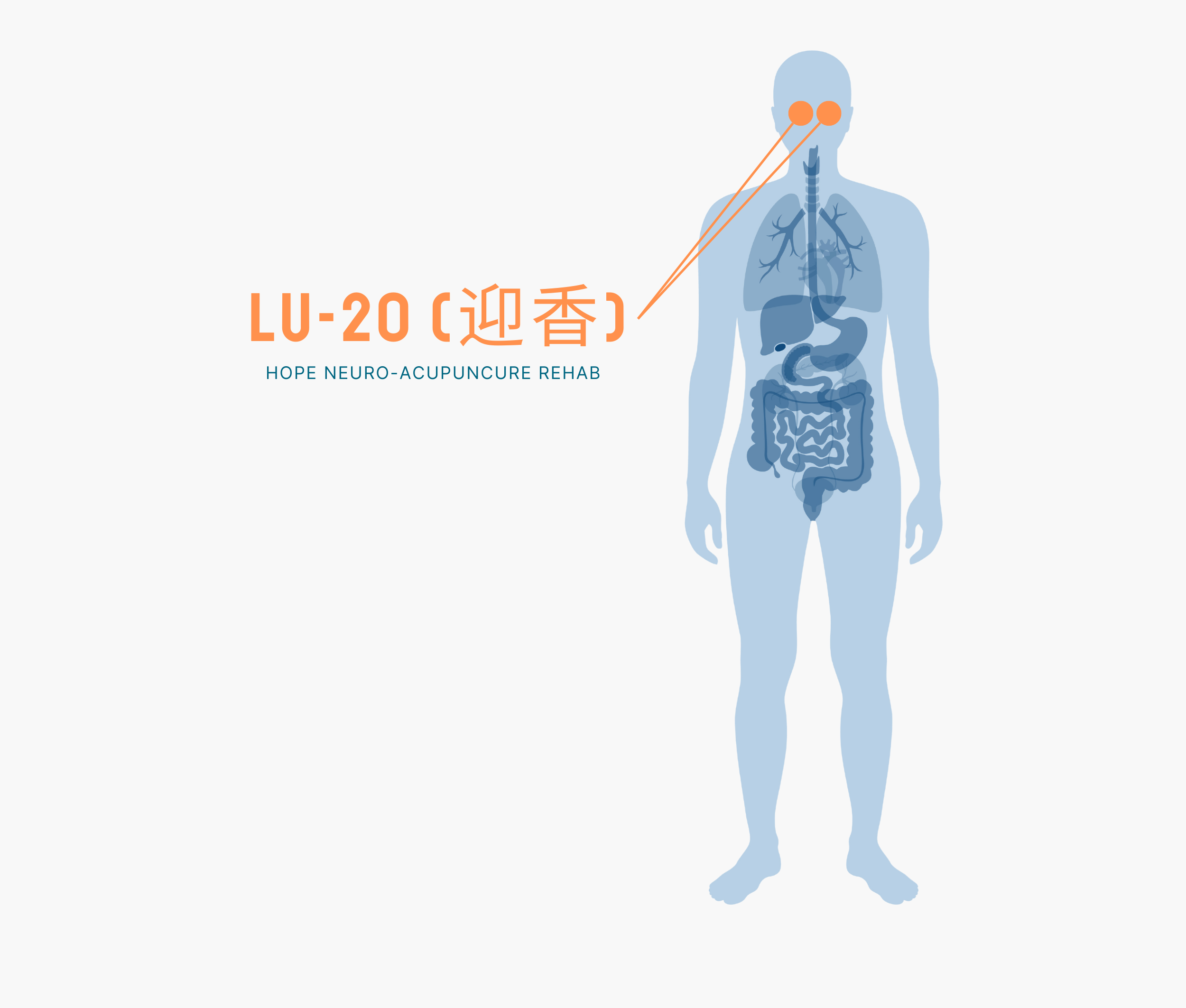
Location: On the side of the nostril, at the point where the nasolabial fold meets the base of the nostril
Acupressure Method: Position the index fingers of both hands on either side of the nose, then slowly stimulate by making small circular motions up and down for 3-5 seconds each, repeating 20-30 times. Each session should last about 1-2 minutes. Apply moderate pressure to avoid pain in the nasal bone.
Benefits: Yingxiang stimulates the trigeminal nerve responsible for local nasal sensation, directly controlling mucus production. It is highly effective for early-stage cold runny nose, allergic rhinitis, and sinusitis-related nasal discharge. This is the acupoint that provides the fastest results.
2. Hegu (LI4, Hegu) — Representative Acupoint for Enhancing Immunity

Location: In the depression between the thumb and index finger, between the first and second metacarpal bones
Acupressure Method: Place the opposite thumb on Hegu and press firmly at a 45-degree angle toward the bone for about 3-5 seconds. Repeat this 20-30 times, alternating between both hands. A slight soreness or fullness sensation is normal.
Benefits: Hegu is an acupoint on the Large Intestine meridian that regulates the entire immune system. It can simultaneously alleviate runny nose, general cold symptoms, headaches, fever, and nasal congestion. Regular stimulation also provides cold prevention benefits.
3. Yintang (GV27 or EX-HN3, Yintang) — Key Acupoint for Nasal and Head Symptoms
Location: In the center between the two eyebrows, commonly called the glabella
Acupressure Method: Overlap the thumbs of both hands on Yintang and apply pressure by moving slightly up and down or in circular motions. Each session should last 1-2 minutes, performed 3 times daily. Since this is in the center of the face, avoid pressing too hard.
Benefits: Yintang is close to the pituitary gland, the immune regulation center of the brain. When stimulated, it rapidly decreases nasal mucus secretion. It also alleviates forehead pain, eye fatigue, and heaviness in the head that accompany runny nose.
4. Fengchi (GB20, Fengchi) — Cold-Relief Acupoint at the Back of the Neck
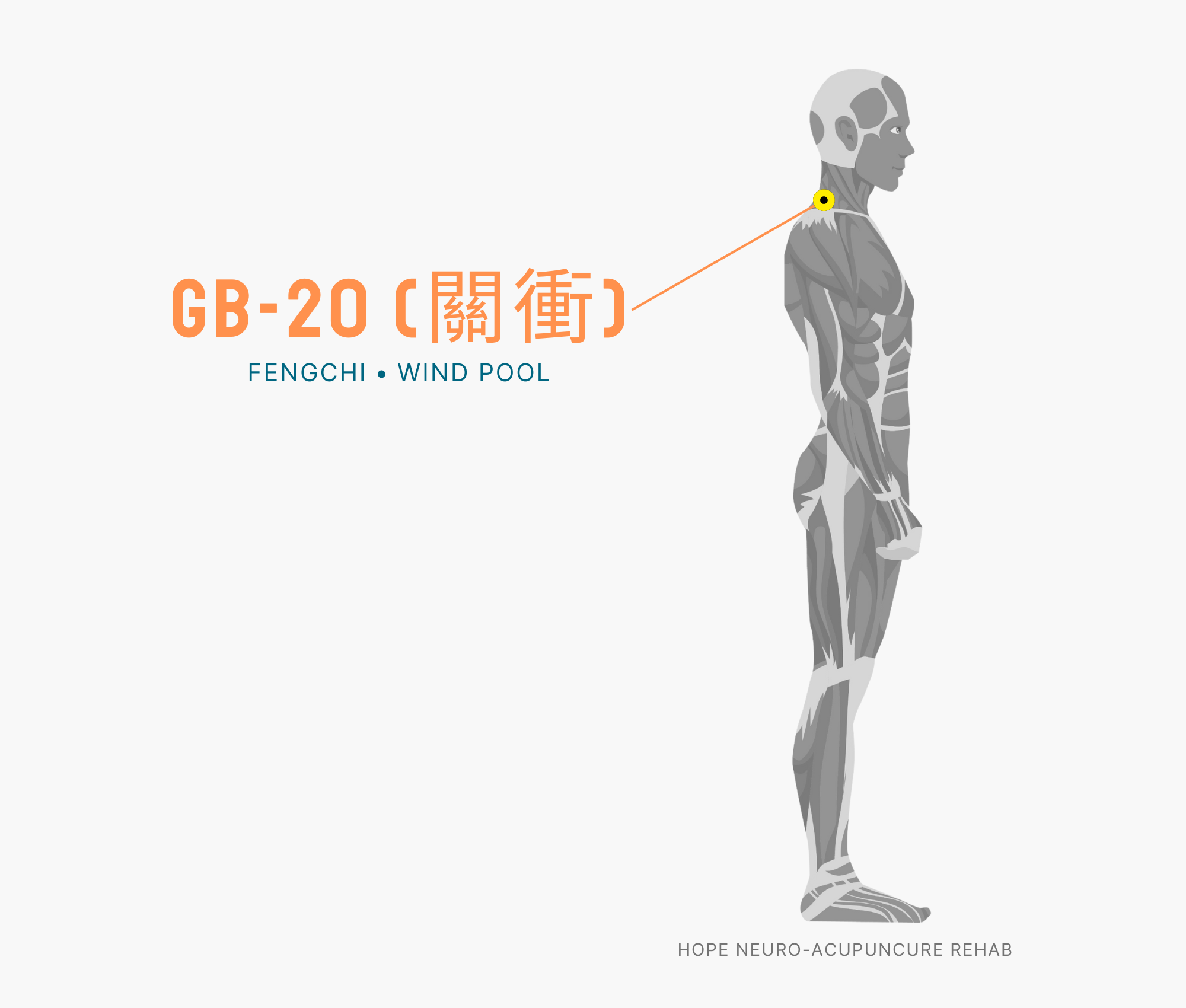
Location: At the back of the neck, in the two depressions below the occipital bone at the boundary between the neck and head
Acupressure Method: Place both thumbs on either side of the back of the neck, then press firmly upward for 5 seconds each. Repeat 20-30 times for about 1-2 minutes per session. It is helpful to lower your head slightly during the procedure to prevent neck stiffness.
Benefits: Fengchi is an acupoint on the Gallbladder meridian that blocks external pathogens (Wind Evil) from invading the body. It simultaneously improves early-stage cold sore throat, runny nose, nasal congestion, and laryngitis. It is particularly effective at eliminating the ‘wind’ symptoms of a cold.
5. Tongzhu (BL7, Tongzhu) — Acupoint Responsible for Nasal Ventilation

Location: On the outer side of the bridge of the nose, approximately 1 cm above the inner end of the eyebrow, next to the first and second cervical vertebrae
Acupressure Method: Place the index fingers of both hands above the inner ends of the eyebrows, then press at a 45-degree angle toward the bridge of the nose for 3-5 seconds before releasing. Alternate between both sides, repeating 20-30 times for about 1-2 minutes per session.
Benefits: Tongzhu is on the Bladder meridian and promotes blood circulation in the nose to regulate nasal discharge. It is particularly effective at alleviating nasal congestion and stuffiness, early-stage sinusitis symptoms, and allergic rhinitis.
5-Minute Self-Massage Acupressure Routine
※ Optimal results are achieved by performing this routine three times daily (morning, lunch, and evening).
| Step | Acupoint | Time Required |
|---|---|---|
| Step 1 | Yingxiang (LI20) | 1 minute |
| Step 2 | Hegu (LI4) – Both Hands | 1 minute |
| Step 3 | Yintang (GV27) | 1 minute |
| Step 4 | Fengchi (GB20) | 1 minute |
| Step 5 | Tongzhu (BL7) | 1 minute |
| Total Time Required | 5 minutes | |
Implementation Tips:
- Sit in a comfortable position and proceed slowly while breathing calmly, as rushing through the procedure reduces its effectiveness.
- Warming your fingers before acupressure makes it more effective.
- For severe symptoms, additional stimulation at 2-hour intervals is possible, with one additional treatment before bed particularly recommended.
- Avoid exposure to cold air for 20-30 minutes after acupressure.
Leave a Reply