Introduction
Muscle pain from repetitive work, post-exercise fatigue, and poor posture is a common complaint among modern people. When pain occurs, people often rely on medication or rest, but our bodies already have natural therapeutic points to relieve muscle pain—acupoints. Acupoints are specific locations along meridians that, when properly pressed, stimulate nearby muscles and the nervous system to promote blood circulation and release muscle tension. This article introduces the 5 most effective acupoints for muscle pain relief and how to apply acupressure to them.
Five Acupoints: Location, Acupressure Method, and Benefits
1. Kunlun (BL60) — Outer Side of the Ankle

Location: The outer side of the ankle, in the depression between the lateral malleolus and the Achilles tendon. The WHO standard code is BL60 (Bladder 60).
Acupressure method: Locate Kunlun with your thumb or middle finger, then press for 5-10 seconds while slowly exhaling. Repeat 10 times, 3-5 times daily.
Benefits: Particularly effective for muscle pain in the legs and lower back, and lower body fatigue. It promotes blood circulation to relieve muscle stiffness and helps alleviate nerve pain.
2. Ashi (EX-B2) — Tender Points on Shoulders and Back
Location: Acupoints distributed across the shoulders and entire back. Rather than a specific precise location, it’s important to find the tender point (the spot that hurts when pressed) in the area where you feel muscle pain. The WHO code is EX-B2 (Intervertebral Acupoint).
Acupressure method: Find the painful area with your fingers or thumb, then massage slowly in circular motions. Continue for at least 5 minutes at a pressure level where you feel mild discomfort.
Benefits: Provides immediate relief for tension-related muscle pain in the neck and shoulders, and back pain from office work syndrome. It also alleviates radiating pain caused by nerve stimulation.
3. Fengchi (GB20) — Depression at the Back of the Neck
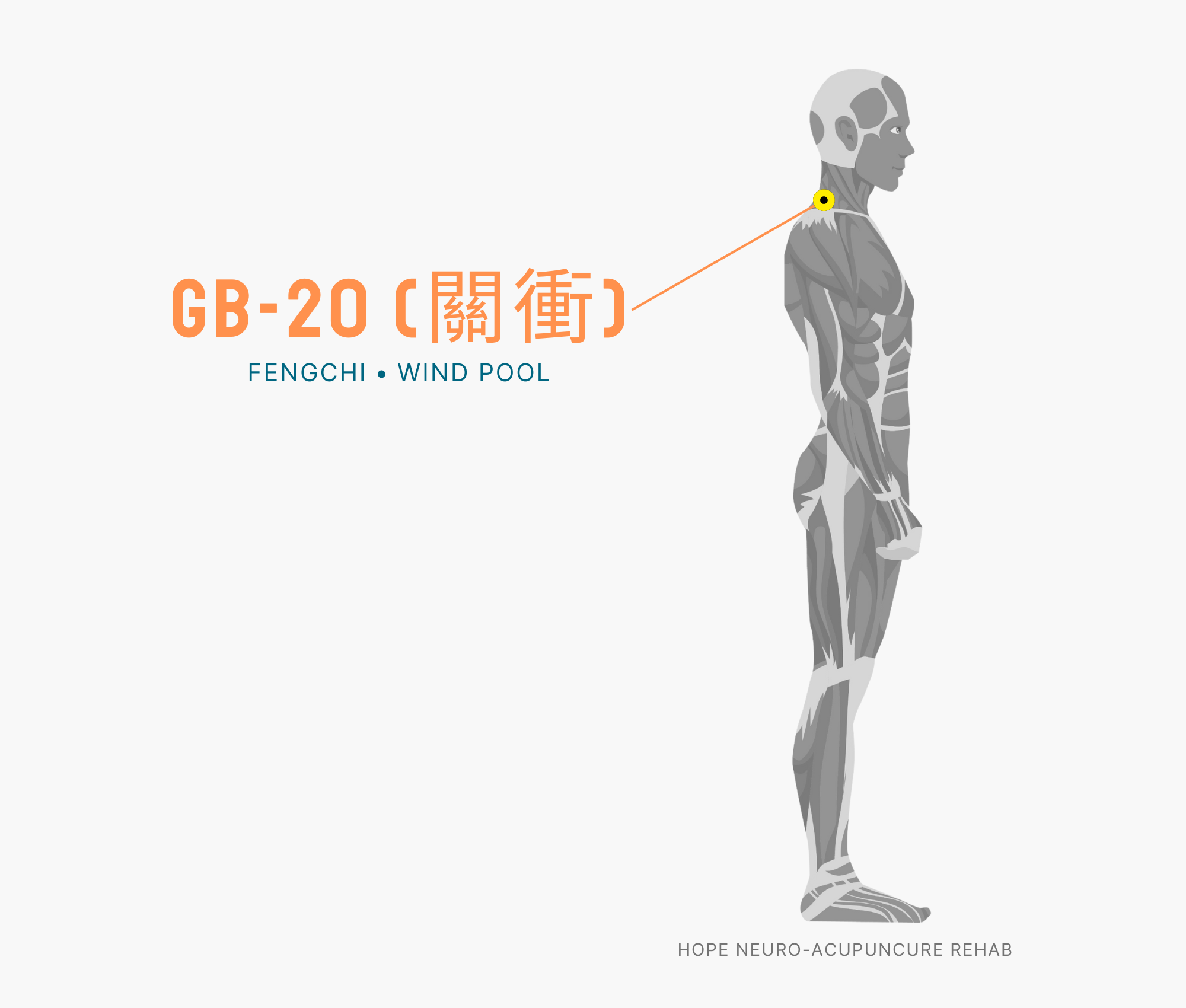
Location: The back of the neck, in the depression where the skull meets the cervical spine. It’s the point located below both ears and at the back of the neck where you feel a deep indentation when touching. The WHO code is GB20.
Acupressure method: Place both thumbs on Fengchi and press for 10-20 seconds while slowly exhaling. Repeat 5-10 times, 3-4 times daily.
Benefits: Relieves both neck muscle pain and tension headaches. Promotes blood circulation in the posterior cervical region to release nervous system tension.
4. Hegu (LI4) — Between Thumb and Index Finger

Location: The area where the thumb and index finger meet on the hand, where the muscle bulges most prominently. The precise location is where you feel tenderness when pressing with the opposite thumb. The WHO code is LI4.
Acupressure method: Locate Hegu with the opposite thumb and massage slowly in circular motions. Apply moderate pressure (slightly tender sensation) for 3-5 minutes, 2-3 times daily.
Benefits: Effective for relieving whole-body muscle pain and particularly helpful for releasing upper body muscle tension. It also helps strengthen immune function and reduce stress.
5. Sanyinjiao (SP6) — Above the Inner Ankle
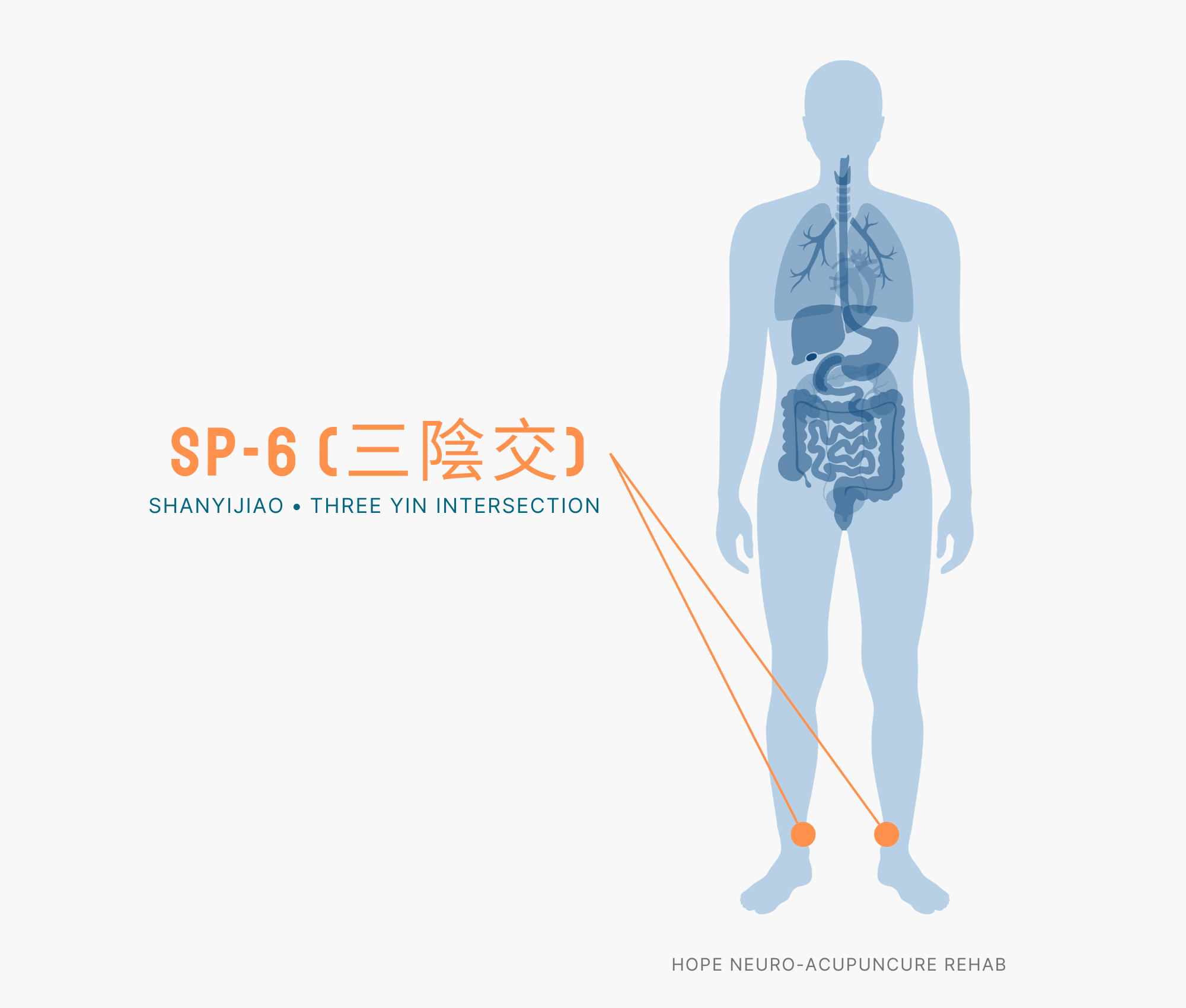
Location: A point approximately four finger widths (about 10 cm) above the inner ankle bone (medial malleolus), following the inner edge of the tibia. The WHO code is SP6.
Acupressure method: Locate Sanyinjiao with your thumb and press slowly for 5-10 seconds. Repeat 10 times, twice daily (morning and evening).
Benefits: Alleviates lower body muscle pain, leg fatigue, and numbness. It also promotes whole-body blood circulation to support muscle recovery.
5-Minute Self-Acupressure Routine
A 5-minute routine to effectively manage muscle pain even during a busy day.
- Step 1 (1 minute): Press Fengchi on both sides—relieves neck and shoulder tension
- Step 2 (1 minute): Press Hegu on both sides—promotes whole-body qi and blood circulation
- Step 3 (1.5 minutes): Massage Ashi points (shoulders and back)—focused treatment of localized pain areas
- Step 4 (1 minute): Press Kunlun on both sides—improves lower body circulation
- Step 5 (0.5 minutes): Press Sanyinjiao on both sides—finish
Tip: For better results, perform this routine twice daily—once in the morning and once in the evening. If done after a warm bath, muscles will be more relaxed and the acupressure effect will be enhanced.
Leave a Reply