Introduction
Many people experience facial puffiness when they wake up in the morning or as evening approaches. Facial edema goes beyond a cosmetic issue—it can be a signal that your body’s fluid metabolism is not functioning properly. In traditional Chinese medicine, facial edema is viewed as a result of weakened fluid metabolism function of the spleen. When you stimulate the appropriate acupoints, you can promote lymphatic circulation and enhance your body’s metabolic function, making it effective for relieving edema. The five acupoints we introduce today are the most commonly used acupoints in clinical practice for edema relief, and they can be conveniently stimulated at home with self-acupressure.
Five Acupoints Explained
1. Hegu (LI4) — The Representative Acupoint of the Large Intestine Meridian

Location: In the highest point of the wrinkle between your thumb and index finger. You’ll feel slight pain when you press this point with your finger.
Effects: It promotes facial blood circulation, boosts immunity, and is very effective for relieving edema. It can improve skin elasticity and reduce facial flushing.
Acupressure Technique: Using the opposite thumb, press Hegu for 3 seconds and release for 3 seconds, repeating this 20 times. Apply pressure until you feel slight pain, but avoid excessive stimulation.
2. Yingxiang (TE17) — Key Acupoint for Facial Edema Relief

Location: About 1 cm above the upper edge of the ear, in the depression between the Taiyang acupoint and the top of the ear.
Effects: It stimulates the nerves and blood vessels of the face, directly relieving edema. It is also effective for tinnitus and migraine relief.
Acupressure Technique: Using the ring fingers of both hands, gently massage Yingxiang in circular motions 20 times. Since the area around the ear is sensitive, avoid strong pressure and maintain comfortable stimulation.
3. Taiyang (EX-HN5) — Extra-meridian Acupoint That Directly Acts on Edema
Location: About 1 cm below the midpoint between the glabella and the end of the ear, in the depression on the inside of the temple.
Effects: It quickly relieves facial edema and improves eye fatigue caused by tiredness. It promotes blood circulation to the head and face.
Acupressure Technique: Using the index and middle fingers of both hands together, gently massage Taiyang in circular motions. Each session should last 20-30 seconds, about 3 times a day.
4. Fengchi (BL12) — Relieves Edema Throughout the Entire Body

Location: At the back of the neck, about 1 cm below where the hairline begins, in the depression about 1.5 cm lateral to both sides of the spine.
Effects: As the first acupoint of the Bladder meridian, it improves fluid metabolism throughout the entire body. It is effective not only for facial edema but also for whole-body edema and cold prevention.
Acupressure Technique: Using the thumbs of both hands, simultaneously press the Fengchi points on both sides of the back of the neck. Repeat the motion of pressing for 3 seconds and releasing for 3 seconds 15 times. Since this is in the neck area, avoid excessive stimulation.
5. Sanyinjiao (SP6) — Important Acupoint for Fluid Metabolism
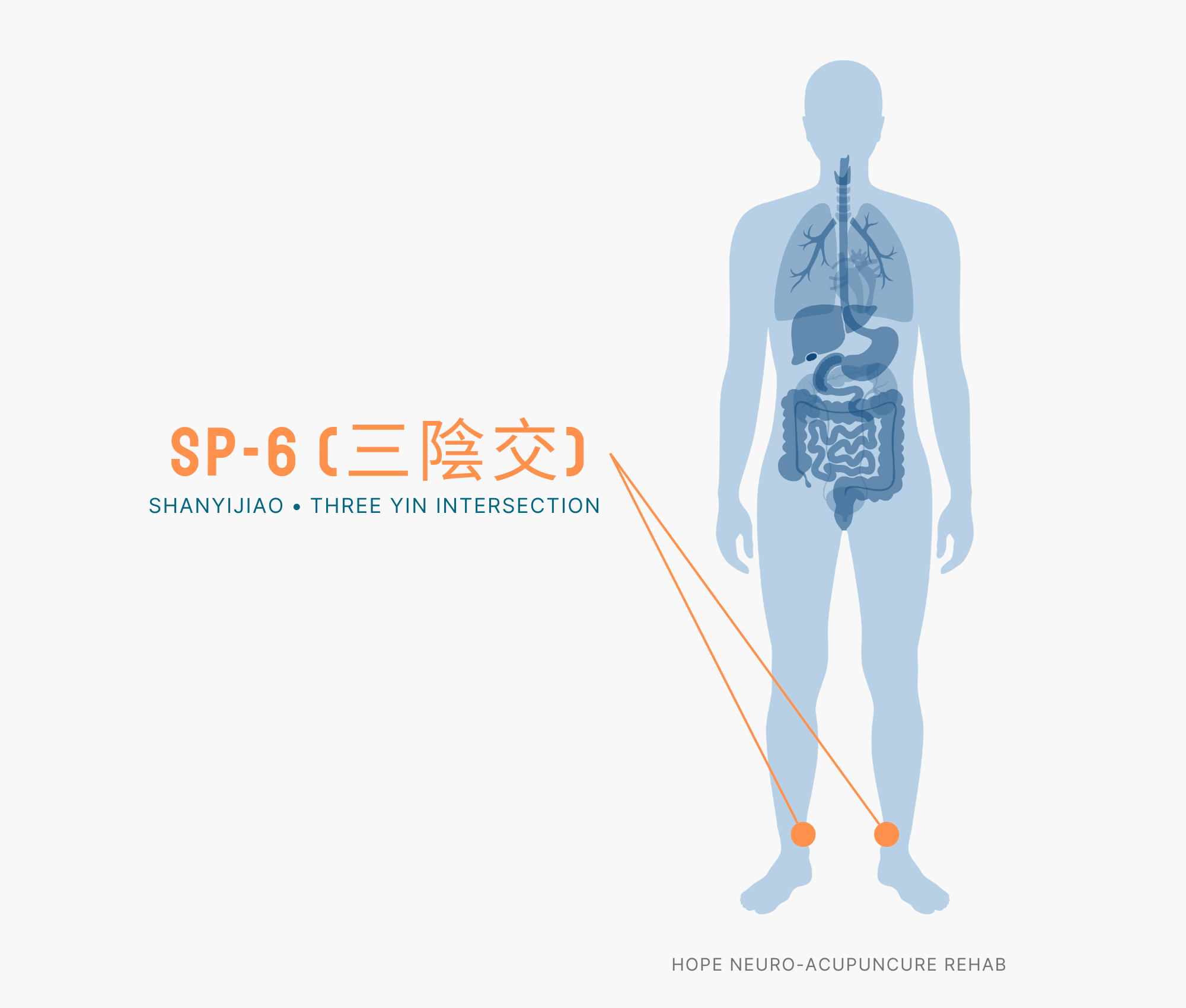
Location: About 3 cm above the most prominent point of the inner ankle, in the depression directly behind the bone on the inside of the calf.
Effects: It strengthens the spleen’s fluid metabolism function, addressing the root cause of edema. It also helps with menstrual irregularities and digestive issues.
Acupressure Technique: Press Sanyinjiao on both feet simultaneously, using your thumbs to press firmly for 3 seconds and release for 3 seconds, repeating 20 times. The effect on reducing morning edema is especially noticeable when done in the evening.
5-Minute Self-Acupressure Routine
Recommended Time: Right after waking up in the morning or 1 hour before bedtime
Step 1 (1 minute): Hegu Acupressure — Press Hegu on both hands alternately 20 times
Step 2 (1 minute): Taiyang Massage — Massage Taiyang on both sides simultaneously in circular motions 20 times
Step 3 (1 minute): Yingxiang Massage — Massage Yingxiang on both sides simultaneously in circular motions 20 times
Step 4 (1 minute): Sanyinjiao Acupressure — Press Sanyinjiao on both feet simultaneously 20 times
Step 5 (1 minute): Fengchi Acupressure — Press Fengchi on both sides simultaneously 15 times
By following the above sequence, you can efficiently stimulate all the acupoints necessary for relieving facial edema within 5 minutes. If you consistently perform this routine for 2-3 weeks, you will notice a significant reduction in edema.
Leave a Reply