Introduction
If you spend all day looking at screens while working, you’ve probably experienced one eye twitching repeatedly. This symptom is very common, but when it repeats, it causes inconvenience in daily life and acts as a source of stress. In traditional Chinese medicine, eye twitching is viewed as insufficient qi and blood in the spleen, insufficient blood in the liver, and insufficient yin fluids in the kidneys. From a modern medical perspective, causes include hyperexcitability of the facial nerve, stress, lack of sleep, and excessive caffeine intake. Fortunately, stimulating the meridians to promote smooth flow of qi and blood can have significant effects on symptom relief. Since it can be done with fingers alone without any special equipment, self-treatment is possible anytime, anywhere.
Five Effective Acupoints for Eye Twitching
1. Taiyang (EX-HN5) — The Most Direct Acupoint Around the Eyes
Location: On the temple area, approximately 1cm away from the outer corner of the eye. You can find it by placing your finger at the end of the eye and pushing it outward.
Acupressure method: Using the middle or ring finger of both hands, perform circular massage movements for 30 seconds. Adjust the intensity so it feels slightly warm. Repeat 5-10 times per session.
Benefits: Promotes blood circulation in the meridians around the eyes and relieves tension in the facial nerve. In addition to eye twitching, it shows immediate effects on migraines and eye fatigue.
2. Fengchi (GB20) — Promotes Blood Supply to the Brain and Eyes
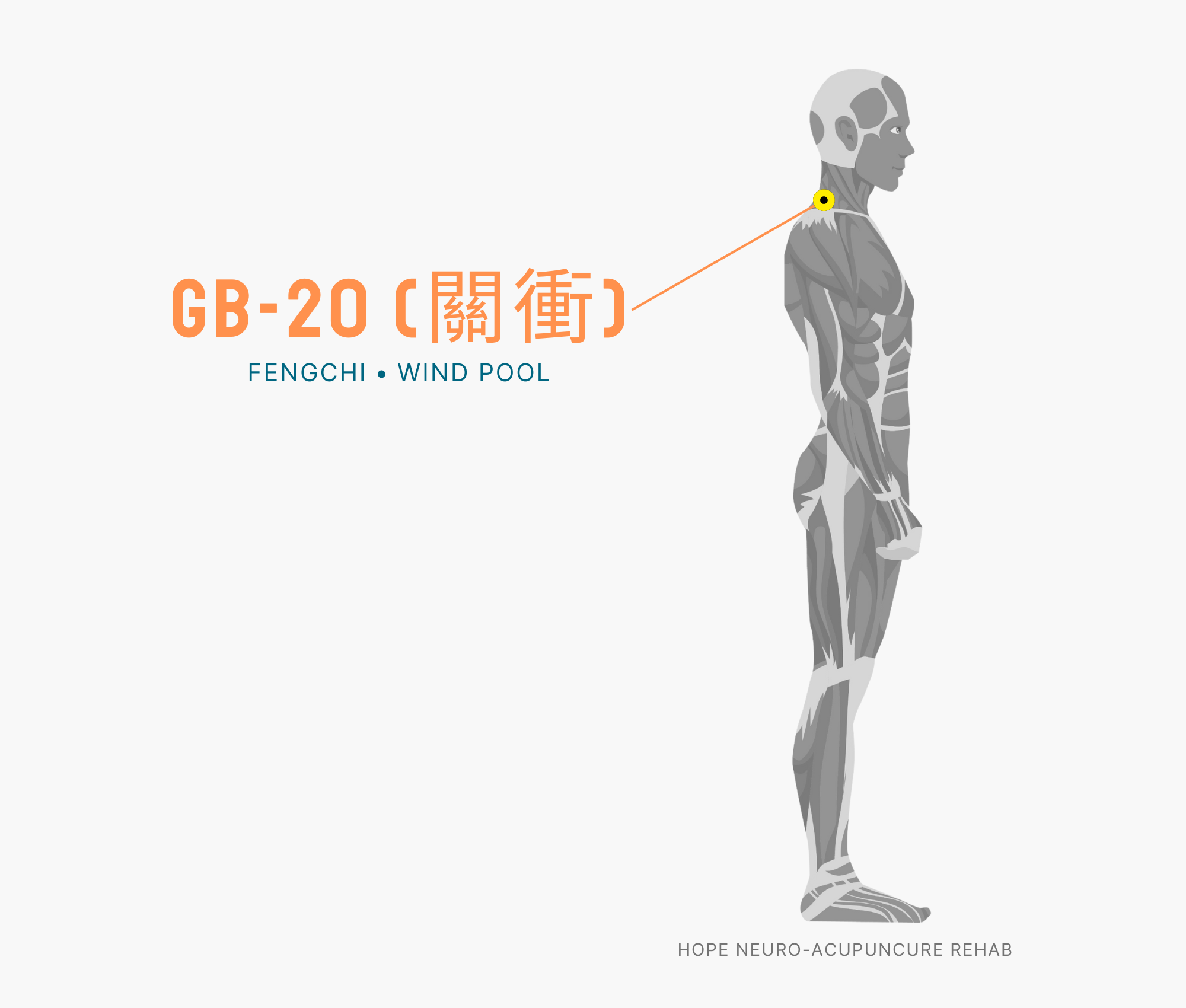
Location: Located at the base of the back of the neck, specifically in the hollow area about 2cm inside where the neck meets the hairline. It’s the hollow area you’ll find when following the back of the neck down from below the ear.
Acupressure method: Using both thumbs, apply pressure in an upward pushing motion. Hold the pressure for 10-15 seconds and release, repeating this 5-10 times. You can also press deeply for about 3-5 seconds at a time.
Benefits: Promotes blood circulation to the brain and eyes and relieves tension in the nervous system. Very effective for relieving eye twitching, neck stiffness, and headaches.
3. Xiaohai (SI3) — Nerve Stabilization and Qi-Blood Circulation

Location: On the side of the finger, specifically in the crease at the base of the little finger (mainly below the finger joint). It’s the point where the crease on the bottom of the little finger and the outer line meet when your hand is open.
Acupressure method: Press with the opposite thumb for 3-5 seconds and repeat 10 times. It’s best to stimulate both hands. Don’t stimulate with the fingernail; press with the flesh beside the nail.
Benefits: Directly plays a role in nerve stabilization by stimulating the Small Intestine meridian. Calms nerve hyperexcitability in the eyes and face and promotes qi-blood circulation.
4. Hegu (LI4) — The Central Hub of Whole-Body Qi-Blood Communication

Location: At the point where the thumb and index finger meet, slightly angled toward the index finger side. It’s the midpoint of the angle formed by the thumb and index finger bones when your hand is open.
Acupressure method: Apply pressure with the opposite thumb, pressing downward for 5-10 seconds. Repeat 10-15 times and perform on both hands. Press slowly while taking deep breaths.
Benefits: As an important acupoint of the Large Intestine meridian, it promotes smooth flow of whole-body qi and blood. Very effective for stress relief, enhanced immunity, and eye twitching relief.
5. Sanyinjiao (SP6) — Fundamental Solution by Strengthening Spleen Function
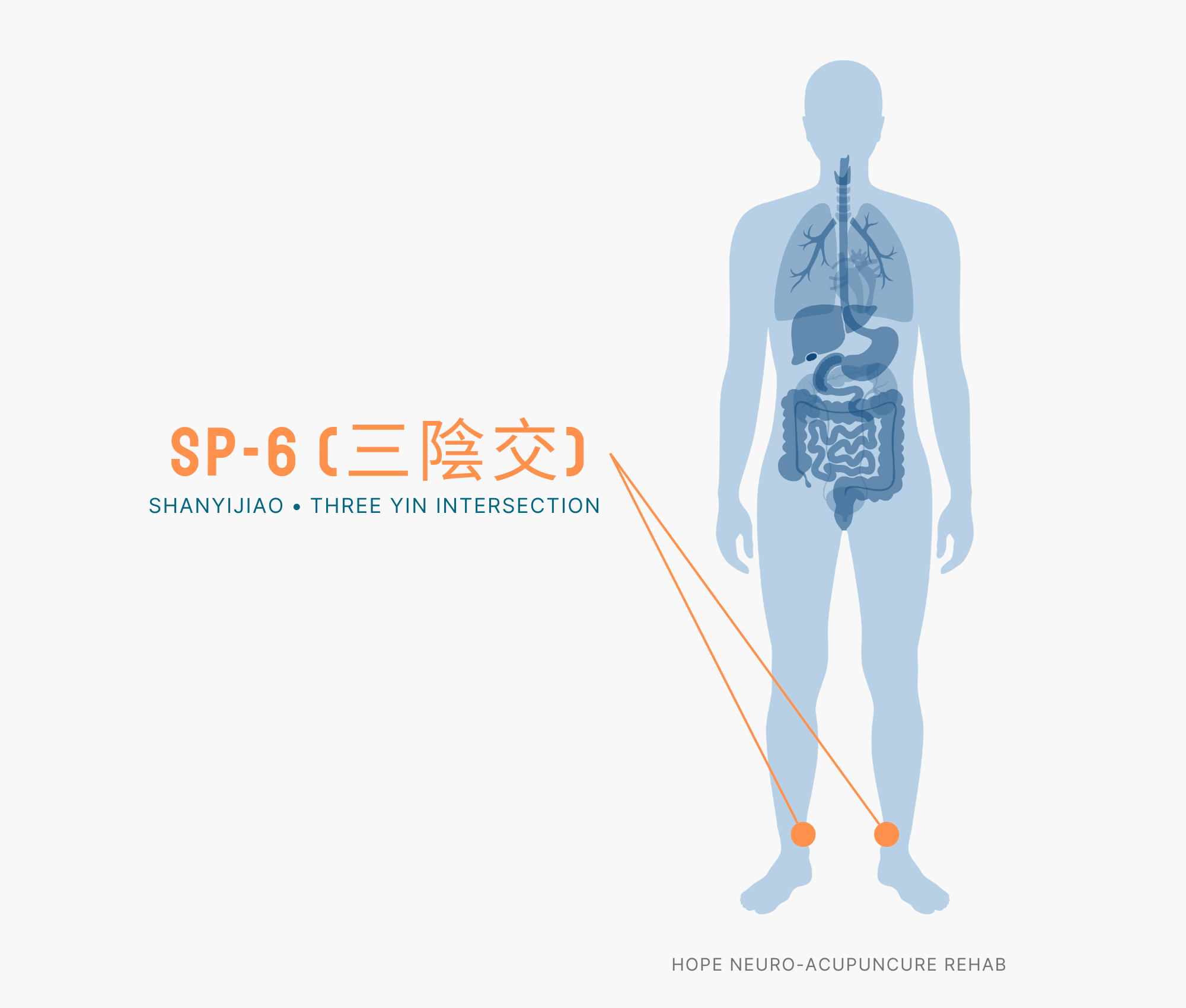
Location: About 10cm above the inner ankle (the width of four thumbs), specifically in the hollow area on the back of the tibia on the inner side of the calf.
Acupressure method: In a seated position, apply pressure with your thumb in an upward pushing motion for 3-5 seconds. Repeat 10-15 times and stimulate both feet. A slightly painful intensity is appropriate.
Benefits: Strengthens spleen qi and blood to address the root cause of eye twitching. Also effective for improving sleep, recovering from fatigue, and stabilizing the nervous system. In the long term, it plays a major role in preventing eye twitching recurrence.
5-Minute Self-Acupressure Routine
Morning routine (3 minutes):
- Taiyang (1 minute): Massage both temples in circular motions. Repeat about 10 times.
- Fengchi (1 minute): Apply acupressure to both sides of the back of the neck in an upward pushing motion, 10 times.
- Xiaohai (1 minute): Press below the little finger on both hands, 10 times each.
Evening routine (5 minutes, recommended before bed):
- Hegu (2 minutes): Apply acupressure between the thumb and index finger of both hands, 15 times each.
- Sanyinjiao (2 minutes): Press deeply on the inner side of both feet, 15 times each.
- Taiyang (1 minute): Finish with circular massage of both temples.
Tip for maximizing effects: Perform with warm hands and proceed while doing deep abdominal breathing. Applying acupressure immediately whenever you feel stressed or eye twitching begins is even more effective.
Leave a Reply