Introduction: Cold Sensitivity – Why Does Your Body Keep Sending These Signals?
If your hands and feet feel cold even when it’s not winter, or if you feel chilled all over despite wearing warm clothes, you may be experiencing cold sensitivity. This condition, which occurs frequently in women, goes beyond mere discomfort—it’s a warning sign that can trigger fatigue, insomnia, digestive problems, and menstrual pain.
In traditional Chinese medicine, cold sensitivity is diagnosed as “deficiency of qi and blood” or “poor blood circulation.” It occurs when the body lacks warming energy (yang qi) or when the flow through the meridians is blocked, preventing warmth from reaching the extremities. Acupoint acupressure works by unblocking these congested meridians, normalizing the flow of qi and blood, and awakening the body’s natural healing ability. It’s the simplest and most proven method you can start with just one finger, without any medication—acupoint acupressure.
Five Core Acupoints for Improving Cold Sensitivity
1. Hegu (LI4) – The Miracle Point on Your Hand for Pain Relief

Location: The depression between the thumb and index finger. This is where you’ll feel slight tenderness when pressed with your index finger.
WHO Code: LI4 (Large Intestine 4)
Acupressure Technique: Using the thumb of the opposite hand, press slowly for 10-15 seconds. Apply pressure firm enough to produce a slight pricking sensation. Perform on both hands for 1 minute each.
Benefits for Cold Sensitivity: Hegu is the master point of the Large Intestine meridian and promotes the flow of qi and blood throughout the body. It directly improves blood circulation to the hands and feet, restores the body’s immunity and autonomic nervous system balance, making it excellent for relieving cold sensitivity. Additional benefits include headache relief and stress reduction.
⚡ Tip: When your hands feel cold during work, stimulate Hegu point by point—you’ll feel warmth spreading to your fingertips almost immediately.
2. Sanyinjiao (SP6) – The “Women’s Tonic” at the Ankle’s Three-Meridian Crossing
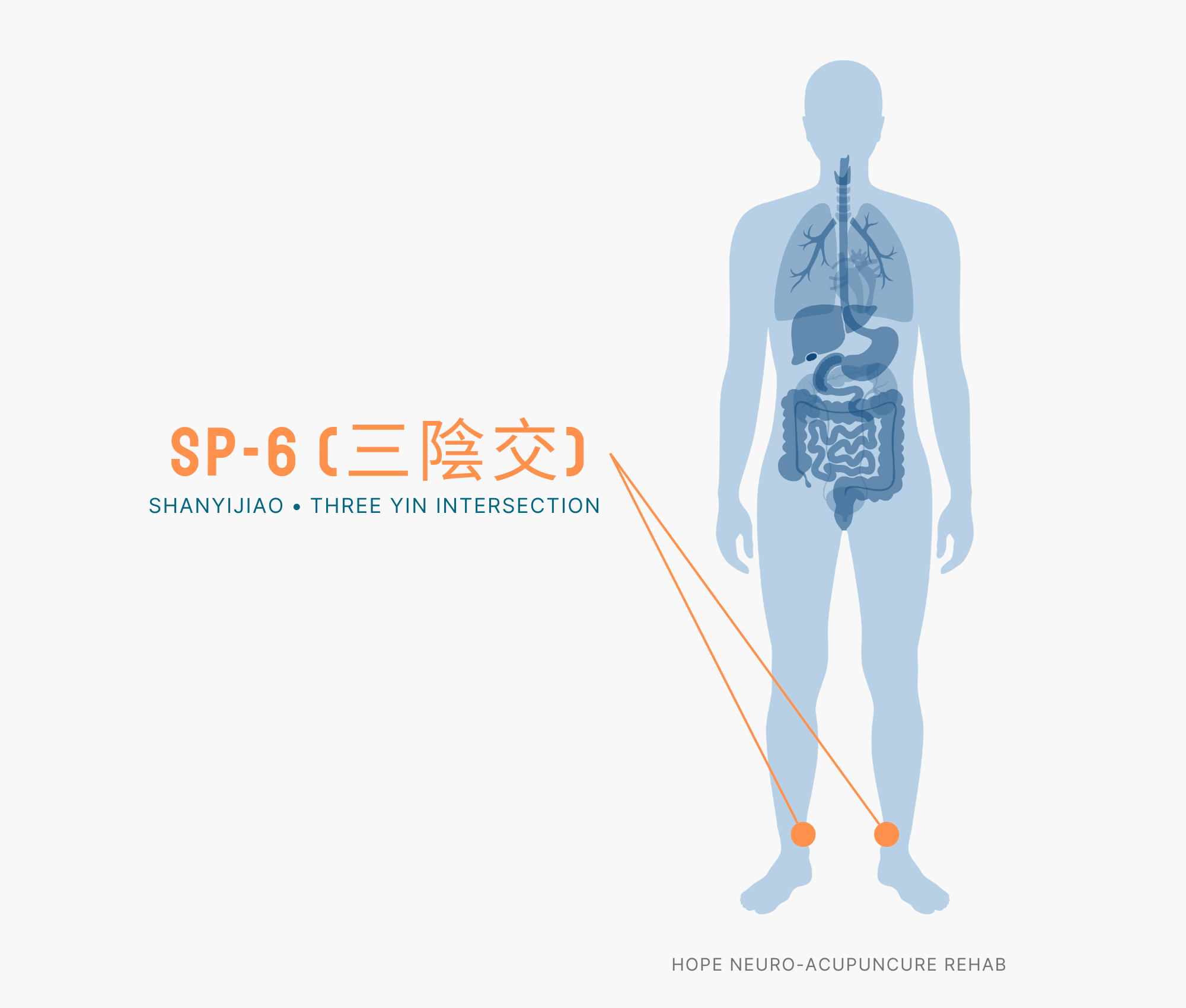
Location: Four finger-widths above the inner ankle bone, on the inside of the tibia (shinbone).
WHO Code: SP6 (Spleen 6)
Acupressure Technique: Cross your legs so your ankle is in a comfortable position, then press firmly with your thumb for 30 seconds to 1 minute while exhaling. Medium pressure that produces noticeable sensation is most effective.
Benefits for Cold Sensitivity: Sanyinjiao is where three meridians meet—the Spleen meridian (digestion), Liver meridian (detoxification and blood storage), and Kidney meridian (growth and reproductive function). Stimulating this point promotes blood circulation to the uterus and digestive organs, balances hormones, and improves not just cold sensitivity but also menstrual pain and irregular periods. It’s the key point for raising women’s basal body temperature.
⚡ Tip: Acupressure on this point in the evening (7:00 PM–9:00 PM) improves sleep quality that night and helps you feel more warmth throughout your body the next morning.
3. Zusanli (ST36) – The “Acupoint for Health and Longevity” – The Energy Reservoir of the Leg

Location: Below the outer side of the knee, three finger-widths below the kneecap, on the outer ridge of the tibia.
WHO Code: ST36 (Stomach 36)
Acupressure Technique: Sit with your knee extended and press with your thumb or index finger for 30 seconds to 1 minute. Alternatively, press and release repeatedly (about 5 times) for an equally effective approach.
Benefits for Cold Sensitivity: Zusanli is the most powerful qi-tonifying point on the Stomach meridian. It restores overall vitality and dramatically improves leg blood circulation. It relieves fatigue caused by cold sensitivity and strengthens digestion to enhance nutrient absorption. In Chinese medicine, there’s a saying: “Press Zusanli and stay healthy until 100″—it’s the most trusted acupoint.
⚡ Tip: Zusanli is safe to stimulate year-round. Acupressure on this point 30 minutes after meals is particularly effective for promoting digestion and improving cold sensitivity simultaneously.
4. Taichong (LR3) – The Key to Liver Function Recovery – The Harmony Point on the Foot
Location: Between the bones of the first and second toes on the top of the foot, in the depression.
WHO Code: LR3 (Liver 3)
Acupressure Technique: With the top of the foot extended, press firmly with your thumb for 30 seconds to 1 minute, then release. Perform on both feet.
Benefits for Cold Sensitivity: The Liver meridian governs blood storage and qi circulation. Stimulating Taichong restores the liver’s stress-relief function, reducing blood vessel constriction caused by tension. It’s especially effective for cold sensitivity triggered by stress and also improves sleep quality and alleviates premenstrual syndrome. Enhanced liver detoxification normalizes energy metabolism throughout the body.
⚡ Tip: When you feel angry or frustrated, pressing Taichong calms your emotions while simultaneously restoring warmth to your hands and feet.
5. Kunlun (BL60) – The “Source of Body Heat” – The Energy Tunnel on the Outer Ankle

Location: In the depression at the center between the outer ankle bone and the heel.
WHO Code: BL60 (Bladder 60)
Acupressure Technique: Sitting or lying down, press with your thumb for 30 seconds to 1 minute. You may feel some initial discomfort, so gradually increase pressure.
Benefits for Cold Sensitivity: Kunlun is an important point on the Bladder meridian and is known as the “source of body heat.” It activates the Kidney’s yang qi, raising basal body temperature throughout the body. It’s particularly effective for lower body cold sensitivity and simultaneously improves lower back pain and leg numbness. By restoring the body’s foundational energy, it provides long-term relief from fatigue and lethargy caused by cold sensitivity.
⚡ Tip: Evening time (5:00 PM–7:00 PM) is when the Bladder meridian’s energy is most active. Stimulating Kunlun during this window yields enhanced results.
5-Minute Self-Acupressure Routine – Make It a Daily Morning and Evening Habit
Stimulating all acupoints together multiplies the benefits. Practice this routine both when you wake up in the morning and before bed at night.
| Order | Acupoint | Time Allocation | Method |
| 1 | Hegu (LI4) | 1 minute (30 seconds each side) | Press slowly with thumb |
| 2 | Sanyinjiao (SP6) | 1 minute (30 seconds each side) | Acupressure with ankle in comfortable position |
| 3 | Zusanli (ST36) | 1 minute (30 seconds each side) | Press with knee extended or press and release repeatedly |
| 4 | Taichong (LR3) | 1 minute (30 seconds each side) | Press with foot extended using thumb |
| 5 | Kunlun (BL60) | 1 minute (30 seconds each side) | Press outer ankle |
⏱️ Total time required: About 5 minutes. When performed in the morning (within 5 minutes of waking) and evening (1 hour before sleep), you’ll notice noticeable improvement in warmth to your hands and feet after 2 weeks.
Leave a Reply