Author: Acu Master

  • 5 Acupoints for Pregnancy Nausea — Complete Self-Acupressure Guide

    5 Acupoints for Pregnancy Nausea — Complete Self-Acupressure Guide

    One-Line Summary: You can safely relieve pregnancy nausea through acupressure on 5 acupoints including Pericardium 6 (PC6), Stomach 36 (ST36), and Spleen 4 (SP4). Stimulate each point 3-5 times daily for 1-2 minutes each, and you may experience relief within 3-7 days.

    Introduction

    Morning sickness in early pregnancy is a common symptom experienced by over 70% of pregnant women. It can make daily life difficult with nausea, retching, and food aversions. For expectant mothers who need to be cautious about medications, acupressure on traditional medicine acupoints can be an excellent alternative. Stimulation of specific acupoints helps balance the nervous and digestive systems, naturally easing nausea. This article explores 5 safe acupoints for pregnant women and provides detailed acupressure techniques.

    5 Acupoints — Location and Technique

    1. Pericardium 6 (內關, PC6)

    PC6 acupuncture point

    Location: On the inner forearm, approximately 5cm (two finger-widths) above the wrist crease. It sits in the center between two tendons.

    Benefits: Relieves nausea, reduces anxiety, improves digestive function. Known as the safest and most effective acupoint for pregnant women. Provides immediate relief when nausea symptoms occur.

    Technique: Use your thumb to locate the acupoint precisely, then slowly increase pressure until you feel a pulling sensation and stimulate with circular massage motions for 1 minute. Apply to both arms for 1-2 minutes each.

    2. Stomach 36 (足三里, ST36)

    ST36 acupuncture point

    Location: Below the outer depression of the knee cap, approximately 10cm (four finger-widths) down, at the center of the outer border of the tibia.

    Benefits: Enhances digestive function, boosts immunity, aids fatigue recovery. A powerful health-promoting acupoint documented in classical texts as preventing illness with regular stimulation. Safe for pregnant women to press.

    Technique: Use your thumb or middle finger to slowly press and release repeatedly with gentle pressure. Stimulate for 1-2 minutes per session, about twice daily for relief from nausea and fatigue.

    3. Spleen 4 (公孫, SP4)

    SP4 acupuncture point

    Location: On the inner edge of the foot, approximately 1cm below the base of the big toe in a small depression.

    Benefits: Improves digestion, relieves abdominal discomfort, promotes metabolism. An important point on the spleen meridian that specifically addresses digestive problems caused by morning sickness.

    Technique: Gently press with the tip of your thumb, maintain pressure for 3-5 seconds, then slowly release. Repeat 20-30 times on both feet. The technique is even more effective after soaking your feet in warm water.

    4. Large Intestine 11 (曲池, LI11)

    LI11 acupuncture point

    Location: At the outer end of the elbow crease when the arm is bent. It’s the depression that appears when you press with your finger.

    Benefits: Strengthens immunity, reduces heat, promotes digestion. Effective in relieving fatigue and general weakness caused by pregnancy nausea.

    Technique: Locate the acupoint with your thumb and massage in circular motions with comfortable, painless pressure. Apply to each arm for 1-2 minutes, working both arms. You can stimulate this point throughout the day when you’re awake.

    5. Kidney 3 (太溪, KI3)
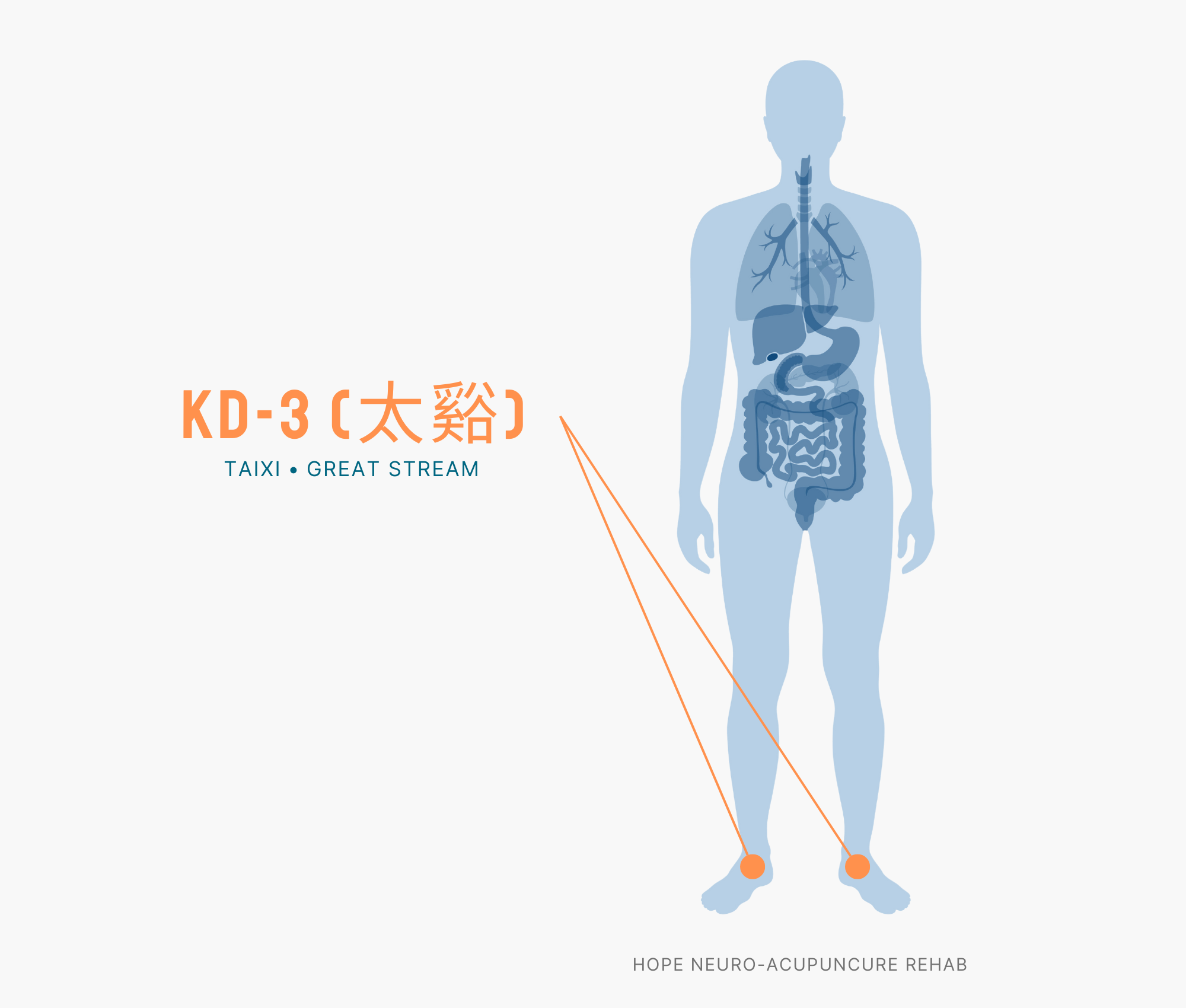
    KI3 acupuncture point

    Location: On the inner ankle, in the depression between the heel and the inner ankle bone.

    Benefits: Replenishes vital body energy, reduces anxiety, improves sleep. Stabilizes the kidney meridian to fundamentally ease anxiety and nausea caused by morning sickness.

    Technique: Simultaneously press and release with your thumbs on both ankles using slow, gentle motions for 1-2 minutes. Stimulating this point in the evening can provide additional sleep improvement benefits.

    5-Minute Self-Acupressure Routine

    Recommended timing: Before meals in the morning, afternoon, and evening (additional sessions possible when symptoms are severe)

    Supplies needed: Clean hands, warm towel (optional)

    Routine sequence:

    1. Pericardium 6 (1 minute) — 30 seconds on each arm. Prioritize this when experiencing nausea
    2. Large Intestine 11 (1 minute) — 30 seconds on each arm. Relieves overall fatigue
    3. Stomach 36 (1 minute) — 30 seconds on each leg. Enhances digestive function
    4. Spleen 4 (1 minute) — 30 seconds on each foot. Resolves abdominal discomfort
    5. Kidney 3 (1 minute) — 30 seconds on each ankle. Finalization and stabilization

    Tip: Drinking warm water slowly after acupressure enhances the effects. If your fingers become fatigued, you can use an acupressure tool instead.
    ⚠️ Medical Disclaimer: This article is provided for informational purposes and does not replace professional medical diagnosis or treatment. If symptoms persist or worsen, consult a healthcare professional. All pregnancy-related treatments should be discussed with your obstetrician before proceeding.
    🤰 Precaution for Pregnant Women: While the acupoints introduced in this article (Pericardium 6, Stomach 36, Spleen 4, Large Intestine 11, and Kidney 3) are relatively safe, pregnant women should avoid acupoints that may trigger uterine contractions, such as Large Intestine 4 (LI4), Spleen 6 (SP6), Liver 3 (LR3), and Bladder 60 (BL60). Before beginning acupressure for nausea symptoms, obtain approval from your practitioner or obstetrician.
  • 5 Acupoints for Heartburn — Your Complete Self-Acupressure Guide

    5 Acupoints for Heartburn — Your Complete Self-Acupressure Guide

    Summary: To relieve heartburn, press 5 acupoints—CV12, PC6, ST36, SP3, and LR3—2-3 times daily for effective results.

    Relieve Heartburn with Acupoint Pressure

    Heartburn is a common symptom among modern people. It occurs when stomach acid flows backward due to stress, spicy foods, and irregular eating habits. Rather than relying solely on medication, you can take an approach rooted in Eastern medicine to fundamentally improve your constitution. In traditional Chinese medicine, by stimulating specific acupoints responsible for stomach function, it is possible to strengthen digestive function and relieve heartburn. By consistently pressing the 5 acupoints introduced in this article, you can naturally improve heartburn symptoms.

    Relieve Heartburn—Focus on These 5 Acupoints

    1. CV12—Center of Stomach Function

    Location: Located on the midline of the upper abdomen, approximately 8 cun (12cm) above the center of the navel. It is at the exact midpoint between the solar plexus and the navel.

    Benefits: Normalizes stomach function and promotes digestion. Excellent for relieving heartburn, abdominal bloating, indigestion, and stomach pain. Known in traditional medicine as the “center of the stomach” and is the most important acupoint.

    Massage Technique: Lie on your back, cross your thumbs over the CV12 acupoint, and slowly press for 3-5 seconds. Repeat 10 times.

    2. PC6—Digestion and Emotional Calm

    PC6 acupuncture point

    Location: Located on the inner midline of the forearm, about 3 cun (5-6cm) from the wrist crease toward the elbow, between two tendons.

    Benefits: Relieves nausea and queasiness while improving digestion. Also calms the mind and body, effectively relieving stress-related heartburn. Eases chest tightness.

    Massage Technique: Place your opposite thumb on the PC6 acupoint and gently massage in circular motions. Continue for 1 minute.

    3. ST36—Enhance Whole-Body Digestive Power

    ST36 acupuncture point

    Location: Located on the outer side of the shinbone below the knee, about 4 cun (6-8cm) below the knee. When the leg is extended, it is slightly outward from the hollow spot directly below the knee.

    Benefits: Strengthens stomach function and promotes digestion. Boosts immune function and enhances overall physical vitality. With consistent long-term stimulation, it improves the underlying cause of heartburn—poor stomach function.

    Massage Technique: Sit and slowly press with your thumb, applying pressure for 3 seconds. Repeat 15 times on each leg.

    4. SP3—Strengthen Spleen Digestive Function

    SP3 acupuncture point

    Location: Located on the inner edge of the foot, about 1 cun from the joint crease beneath the big toe toward the heel.

    Benefits: Strengthens the spleen’s digestive function and eliminates dampness. Frequently used in traditional medicine to improve indigestion and abdominal bloating. Promotes metabolism to relieve heartburn symptoms.

    Massage Technique: Sit with your foot resting on your knee and press firmly with your thumb. Repeat 10 times on each foot.

    5. LR3—Liver Function and Stress Relief

    Location: Located on the top of the foot in the valley between the big toe and second toe, about 2-3 cun (3-5cm) toward the ankle.

    Benefits: Normalizes liver function and relieves stress. Effective for stress-related heartburn and digestive problems caused by anxiety. Promotes emotional stability and aids food digestion.

    Massage Technique: Sit and press firmly with your thumb, massaging in circular motions. Continue for 1 minute on each foot.

    5-Minute Self-Massage Routine—Recommended 3 Times Daily

    🔔 Recommended Times: Morning (after waking), Lunch (1 hour after eating), Evening (before bed)

    1. CV12 — Lying position, 1 minute (gently press with two fingers)
    2. PC6 — Sitting position, 1 minute (massage in circular motions)
    3. ST36 — Sitting position, 1 minute (30 seconds on each leg)
    4. SP3 — Sitting position, 1 minute (30 seconds on each foot)
    5. LR3 — Sitting position, 1 minute (30 seconds on each foot)

    💡 Tip: It is most effective to warm your fingers before massaging. Do not press too hard; gentle stimulation without pain is important.

    ⚠️ Medical Disclaimer: This article is provided for informational purposes only and does not replace professional medical diagnosis or treatment. If symptoms persist or are severe, please consult a healthcare professional.
    🤰 Pregnancy Warning: LR3 may trigger uterine contractions in pregnant women. If you are pregnant or may be pregnant, please consult a professional before performing this technique.
  • 5 Acupoints for Golf Elbow — Complete Self-Acupressure Guide

    5 Acupoints for Golf Elbow — Complete Self-Acupressure Guide

    One-line summary: Golfer’s elbow pain on the inner elbow can be relieved through acupressure on the LI11, LI10, TE5, TE3, and LI4 acupoints to promote blood circulation and ease muscle stiffness.

    Introduction

    Have you ever experienced throbbing pain on the inside of your elbow when performing repetitive gripping motions in golf or daily life? This is golfer’s elbow (medial epicondylitis). It’s a condition where inflammation develops due to overuse of the inner arm muscles, and is especially common among workers in professions requiring frequent wrist flexion and athletes.

    In traditional Chinese medicine, this pain is viewed as an imbalance in meridians and poor circulation of qi and blood. Stimulating specific acupoints around the elbow helps promote local blood circulation, release muscle tension, and ease inflammatory responses. In this article, I’ll introduce in detail the 5 most effective acupoints for relieving golfer’s elbow and self-massage techniques.

    5 Acupoints Explained

    1. Quchi (Curved Pond) — LI11

    LI11 acupuncture point

    Location: At the outer end of the elbow crease when the elbow is bent at 90 degrees.

    Massage technique: Press slowly with your thumb, maintaining pressure for 3-5 seconds at a pressure level that produces a slight ache, then release. Repeat this sequence.

    Benefits: An important acupoint on the Large Intestine meridian that relieves arm muscle fatigue and reduces heat sensations. This is the acupoint that most directly alleviates the inflammation of golfer’s elbow.

    2. Shousanli (Arm Three Miles) — LI10

    LI10 acupuncture point

    Location: About 3 cun (approximately 9cm) below the elbow crease in the direction of the wrist, near the outer bone of the forearm when the elbow is extended.

    Massage technique: Press with your thumb for 3 seconds at a time and release. Repeat this 10-15 times. The technique is effective when a warm sensation spreads.

    Benefits: Releases forearm muscle stiffness and improves blood circulation. Promotes recovery from muscle fatigue caused by prolonged gripping motions.

    3. Waiguan (Outer Gate) — TE5

    TE5 acupuncture point

    Location: On the back of the forearm, approximately 2 cun (about 6cm) above the wrist crease in the direction of the elbow, in the hollow space between the two bones.

    Massage technique: Pinch and rub the area with your thumb and index finger from front and back for 2-3 minutes. The warmth should spread to your fingertips.

    Benefits: Opens the flow of qi and blood in the Triple Burner meridian, reducing forearm swelling and calming nerve pain. Improves wrist instability caused by golfer’s elbow.

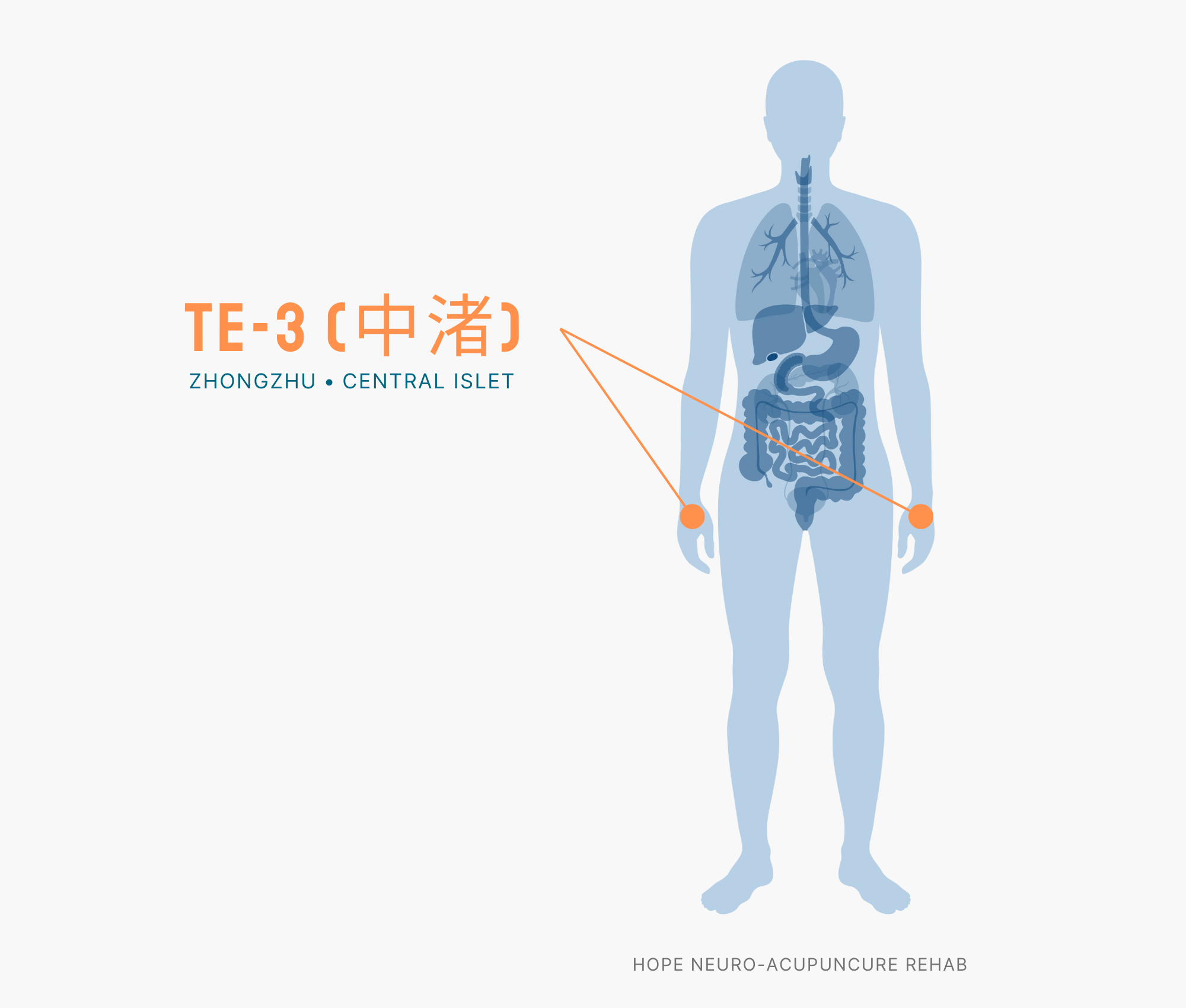
    4. Zhongzhu (Middle Islet) — TE3

    TE3 acupuncture point

    Location: On the back of the hand, between the fourth and fifth metacarpal bones, approximately 1 cun (about 3cm) toward the wrist from the ends of the finger bones.

    Massage technique: Press deeply with your thumb for about 5 seconds, then slowly release the pressure. Repeat 10-15 times.

    Benefits: A distal acupoint on the Triple Burner meridian that promotes the flow of qi and blood throughout the entire arm. Simultaneously improves finger numbness and arm heaviness.

    5. Hegu (Union Valley) — LI4

    LI4 acupuncture point

    Location: On the back of the hand between the thumb and index finger, slightly toward the wrist from where the finger bones meet.

    Massage technique: Press slowly with the opposite hand’s thumb, adjusting the pressure until you feel a slight aching sensation. Maintain for 3-5 seconds, then release. Repeat 10-20 times.

    Benefits: The most excellent acupoint for pain relief throughout the body. Quickly calms elbow pain and releases muscle tension caused by stress.

    🤰 Caution for Pregnant Women: Hegu (LI4) may induce uterine contractions in pregnant women. Those who are pregnant or may be pregnant should consult with a healthcare professional before using this point.

    5-Minute Self-Massage Routine

    Recommended timing: After waking in the morning or in the evening after work, twice daily

    1. Quchi (LI11) — 1 minute: 10 repetitions of slow thumb pressure
    2. Shousanli (LI10) — 1 minute: 10-15 thumb presses until warmth spreads
    3. Waiguan (TE5) — 1 minute: Rub from front and back, maintaining warmth sensation
    4. Zhongzhu (TE3) — 1 minute: Deep pressure 10-15 times, holding for 5 seconds
    5. Hegu (LI4) — 1 minute: 20 repetitions with adjusted pressure (exclude pregnant women)

    Tip: It’s more effective when performed after washing your hands with warm water. Combining with adequate stretching (elbow extension/flexion) after the massage creates a synergistic effect.

    ⚠️ Medical Disclaimer: This article is provided for informational purposes only and does not substitute for professional medical diagnosis or treatment. If symptoms persist or are severe, please consult a healthcare professional.
  • 5 Best Acupoints for Gum Pain — Complete Self-Acupressure Guide

    5 Best Acupoints for Gum Pain — Complete Self-Acupressure Guide

    One-Line Summary: In traditional medicine, gum pain is viewed as heat in the Stomach meridian and insufficient qi and blood circulation in the Large Intestine meridian. Applying acupressure to the Hegu, Yingxiang, Xiaguan, Jiache, and Neiting points 2-3 times a day helps reduce inflammation and improve pain.

    Introduction

    When your gums are swollen or painful, eating becomes difficult and your daily focus suffers. When brushing your teeth, pain prevents you from cleaning properly, and in severe cases, you may lose sleep. While dental treatment is important, many people look for ways to relieve symptoms in the meantime.

    In traditional Chinese medicine, gum pain is understood as heat in the Stomach meridian and insufficient qi and blood circulation in the Large Intestine meridian. By stimulating acupoints distributed along these meridians, you can reduce local inflammation and enhance the body’s natural healing ability. Here are 5 acupoints you can practice at home using just your fingers, without any special tools.

    5 Effective Acupoints for Gum Pain

    1. Hegu (LI4) — A Natural Remedy for Pain

    LI4 acupuncture point

    Location: In the center of the hollow area where the thumb and index finger meet on the back of your hand, approximately at the middle of the bone below the index finger.

    Acupressure Method: Press with the thumb of the opposite hand for 5-10 seconds, then release. Gradually increase pressure to a level that doesn’t cause pain. Circular rubbing motions are also effective.

    Effects: As a primary acupoint on the Large Intestine meridian, it relieves pain throughout the face and head. Beyond gum pain, it’s widely used for headaches, facial pain, and tooth pain. According to meridian theory, it promotes the circulation of qi in the facial region, reducing inflammation.

    2. Yingxiang (LI20) — Local Inflammation Relief

    LI20 acupuncture point

    Location: On the outer side of the nostrils, at the end of the crease beside the nose, on both sides where a vertical line from the center of the upper lip intersects.

    Acupressure Method: Stimulate by tapping upward with your index or middle finger. You can also place one finger on the point and vibrate it up and down.

    Effects: As a point where meridians converge around the nose and mouth, it promotes local blood circulation. It’s particularly effective for reducing gum swelling and facial swelling, and also improves rhinitis symptoms.

    3. Xiaguan (ST7) — Relief from Jaw-Related Pain

    ST7 acupuncture point

    Location: Below the cheekbone, in the hollow area just above the jaw joint. It’s easier to locate when your mouth is open.

    Acupressure Method: Using your middle and index fingers together, stimulate by gently pushing upward. Massage gently in circular motions for 1-2 minutes.

    Effects: As a primary acupoint on the Stomach meridian, it stimulates the muscles and blood vessels around the jaw joint. It can simultaneously relieve pain from masticatory muscle tension, jaw clicking, and gum pain.

    4. Jiache (ST6) — Relaxation of the Masticatory Muscles

    ST6 acupuncture point

    Location: About two finger widths above the lower jaw edge, directly over the muscle that moves when chewing (the masseter muscle).

    Acupressure Method: With your mouth slightly open, massage in circular motions using your index and middle fingers, pressing inward. Start gently and gradually increase pressure.

    Effects: It releases tension in the masticatory muscles and improves local blood circulation. Beyond pain from gum disease, it relieves gum pain caused by teeth grinding and jaw muscle fatigue.

    5. Neiting (ST44) — Clearing Stomach Heat

    ST44 acupuncture point

    Location: On the top of the foot, in the webbing between the second and third toes. The hollow area becomes visible when you spread the toes.

    Acupressure Method: Press vertically with your thumb, applying light pressure for the first 5 seconds, then medium pressure for the next 10 seconds. Repeat 2-3 times a day.

    Effects: It alleviates inflammatory gum diseases viewed as “Stomach heat” in traditional medicine. It’s effective for improving mouth ulcers, gum swelling, and bad breath caused by digestive heat rising to the mouth.

    5-Minute Self-Acupressure Routine

    Recommended Order and Time Allocation:

    1. Hegu — 1 minute (30 seconds each hand)
    2. Yingxiang — 1 minute (30 seconds on each side)
    3. Xiaguan — 1 minute (30 seconds on each side)
    4. Jiache — 1 minute (30 seconds on each side)
    5. Neiting — 1 minute (30 seconds on each foot)

    Implementation Tips:

    • Practice twice a day: after brushing in the morning and after brushing in the evening.
    • The appropriate sensation is a sore and heavy feeling (de qi sensation) at each acupoint.
    • If you’re short on time, focusing on Hegu and Neiting alone is also effective.
    • It’s more effective to use warm fingers, so in winter, rub your hands together to warm them before starting.
    ⚠️ Medical Disclaimer: This article is written for informational purposes and does not replace professional medical diagnosis or treatment. If symptoms persist or are severe, please consult with a healthcare professional. Acupoint acupressure is a complementary health management method, and if gum disease (periodontitis, periodontal abscess, etc.) is suspected, professional dental examination is essential.
    🤰 Pregnancy Warning: Among the acupoints above, Hegu (LI4) and Neiting (ST44) can trigger uterine contractions in pregnant women. If you are pregnant or might be pregnant, consult with a healthcare professional before practice. Safe acupoints include Yingxiang (LI20), Xiaguan (ST7), and Jiache (ST6).
  • 5 Acupoints for Hair Loss — Your Complete Self-Acupressure Guide

    5 Acupoints for Hair Loss — Your Complete Self-Acupressure Guide

    One-Line Summary: Hair loss occurs due to insufficient blood circulation and decreased scalp metabolism. Regular acupressure on five acupoints—Baihui, Fengchi, Hegu, Zusanli, and Sanyinjiao—can improve hair health.

    Hair Loss and Acupoint Acupressure

    Losing 100-200 strands of hair daily is normal, but excessive hair loss is a signal from your body. Modern hair loss results from multiple factors working together: stress, lack of sleep, excessive dieting, and hormonal changes.

    In traditional Chinese medicine, hair loss is viewed as a result of “insufficient blood circulation” and “decreased scalp metabolism.” When blood flow to the scalp decreases, hair follicles don’t receive enough nutrients and oxygen, causing hair to become thin and fall out. Acupoint acupressure works by stimulating meridian points to promote blood circulation and normalize the flow of qi (vital energy) and blood to the scalp. With consistent self-massage, you can not only prevent hair loss but also promote the growth of new hair.

    Five Effective Acupoints for Hair Loss Improvement

    1. Baihui (GV20) – The Acupoint That Gathers Qi at the Crown of the Head

    Location: Located at the very center of the crown of the head, at the intersection point where the midline running from the nose meets the horizontal line connecting the two ears.

    Effects: Baihui is so important it’s called “the place where all yang qi gathers.” It directly improves scalp blood circulation and strengthens the energy flowing to the head, fundamentally improving hair loss. It also relieves symptoms of heaviness and dizziness in the head.

    Acupressure Method: Find the Baihui acupoint using your middle fingers from both hands, then press vertically with a pressure that feels “pleasant but slightly tender.” Press for 5 seconds, rest for 3 seconds, and repeat 10 times.

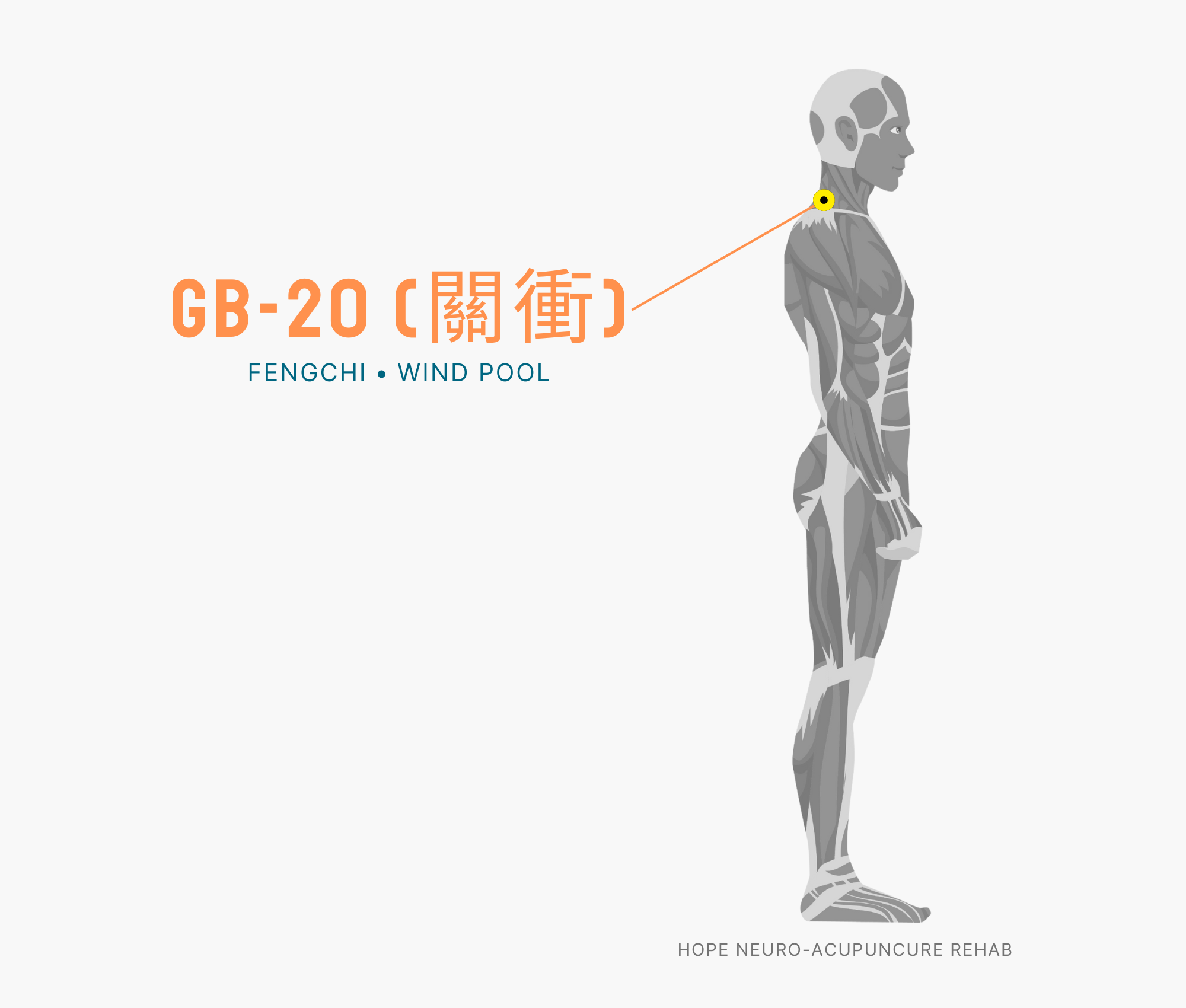
    2. Fengchi (GB20) – The Gateway for Brain Blood Circulation

    GB20 acupuncture point

    Location: Located at the boundary where the back of the head meets the neck muscles, in the hollow area where the neck meets the head on both sides. It’s positioned approximately 2.5cm to the left and right of the center line at the back of the neck.

    Effects: Fengchi controls the passageway for blood flowing to the brain. Stimulating this acupoint increases blood flow to the scalp and releases tension in the neck and shoulder muscles, promoting blood circulation. Besides hair loss, it’s also effective for migraines, neck stiffness, and brain fatigue.

    Acupressure Method: Place your thumbs at the back of your neck and locate the Fengchi acupoint. Tilt your head back slightly and apply circular pressure with both thumbs simultaneously. Maintain this for about 1 minute, and you’ll feel a warm sensation spreading to your head.

    3. Hegu (LI4) – A Key Acupoint That Facilitates Qi Flow Throughout the Body

    LI4 acupuncture point

    Location: Located at the point where the thumb and index finger meet, in the hollow area on the back of the hand below the index finger bone.

    Effects: Hegu is a representative acupoint that regulates qi and blood flow throughout the entire body. Stimulating this point activates metabolism throughout your body and ensures smooth supply of qi and blood to the scalp. It’s particularly effective for stress-related hair loss and helps strengthen immunity.

    Acupressure Method: Place your thumb from the opposite hand on Hegu and press with a “pleasant but slightly tender” pressure while making small circular motions. Apply acupressure for about 1 minute per hand, repeating 3-5 times daily.

    4. Zusanli (ST36) – The Acupoint That Strengthens Immunity and Digestive Function

    ST36 acupuncture point

    Location: Located 4cm below the knee, specifically about four finger widths down from the outer lower part of the kneecap.

    Effects: Zusanli is called the “longevity acupoint” and strengthens digestive function while boosting overall body immunity. In traditional Chinese medicine, it’s said that “the luster of hair is related to the stomach.” By stimulating Zusanli to improve digestive function, nutrient absorption increases, making hair thicker and healthier.

    Acupressure Method: Sit down, bend your knee, and locate the point 4cm below the kneecap. Using your thumb, make circular motions while pressing for 5 seconds and resting for 3 seconds. Repeat for about 1 minute on each leg, 1-2 times daily.

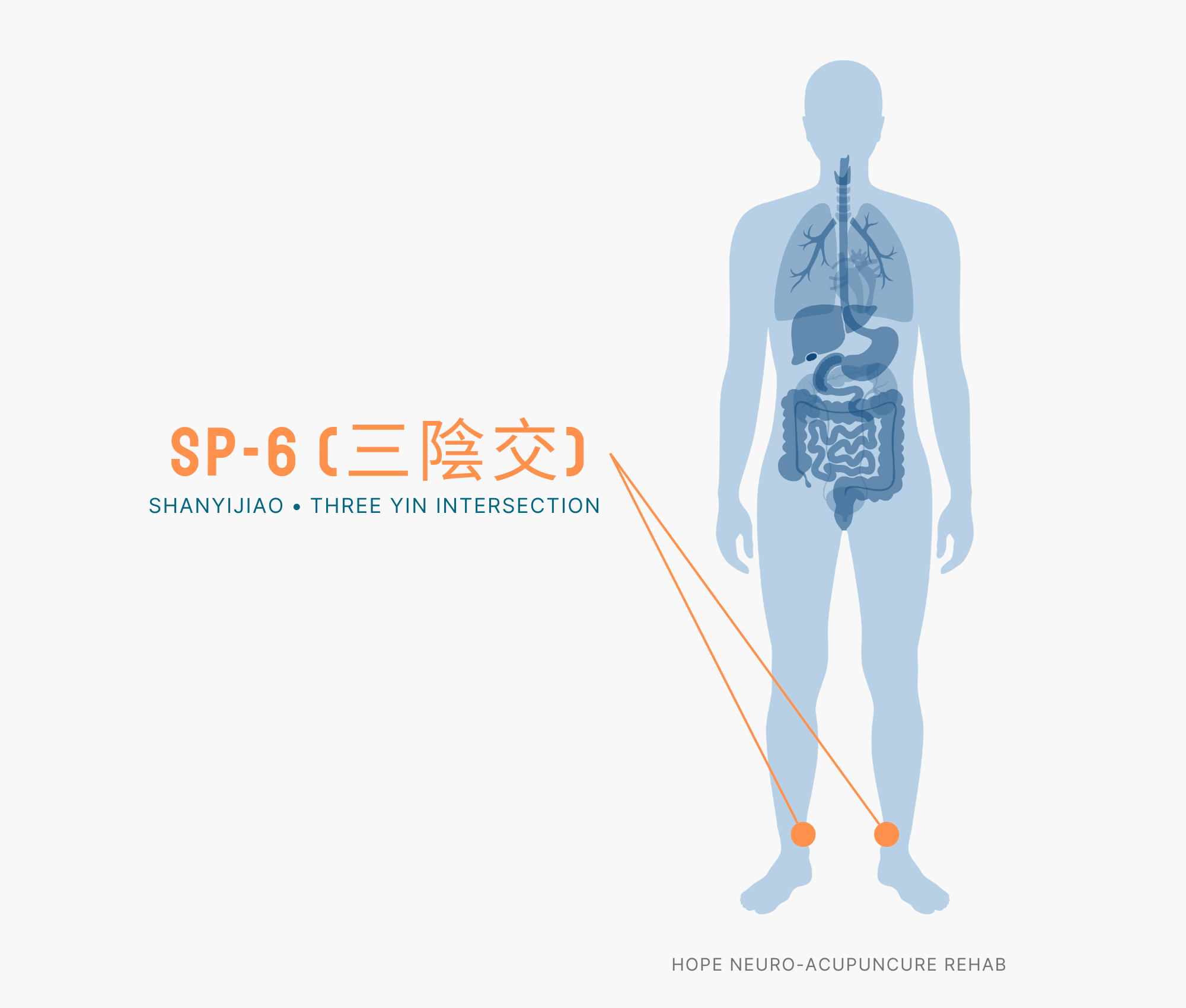
    5. Sanyinjiao (SP6) – Effective for Hair Loss Caused by Female Hormonal Imbalance

    SP6 acupuncture point

    Location: Located four finger widths above the inner ankle bone on the inside of the ankle, on the inner edge of the tibia (shinbone).

    Effects: Sanyinjiao is the intersection point of the spleen, kidney, and liver meridians and is particularly effective for improving hair loss caused by hormonal imbalance in women. If you’re experiencing hair loss due to menopause or irregular menstruation, this is an essential acupoint. It also strengthens kidney function to help maintain healthy hair color.

    Acupressure Method: Place your thumb from the opposite leg on Sanyinjiao and press for 10 seconds while gradually increasing the pressure intensity. Repeat 10 times on each leg, and it’s most effective when done in the evening.

    5-Minute Self-Massage Complete Routine

    Follow this routine twice daily—morning and evening. Consistent practice is key to improving hair loss.

    Step Acupoint Duration Method
    Step 1 Baihui (GV20) 1 minute Vertical acupressure with middle fingers from both hands
    Step 2 Fengchi (GB20) 1 minute Circular acupressure with thumbs from both hands
    Step 3 Hegu (LI4) 1 minute Circular acupressure with thumb from opposite hand (30 seconds each side)
    Step 4 Zusanli (ST36) 1 minute Thumb pressing acupressure (30 seconds each leg)
    Step 5 Sanyinjiao (SP6) 1 minute Thumb pressing acupressure (30 seconds each leg)

    Acupressure Tips:

    • Maintain pressure that feels “pleasant but slightly tender.” Too light pressure won’t be effective, and too strong pressure can damage the skin.
    • In the morning, use slightly firmer pressure to awaken qi; in the evening, use gentler pressure for relaxation.
    • Drinking warm water after acupressure further promotes blood circulation.
    • You need to practice consistently for at least 3 months to see improvement in hair loss.
    ⚠️ Medical Disclaimer: This article is provided for informational purposes only and does not substitute for professional medical diagnosis or treatment. If symptoms persist or worsen, please consult a healthcare professional.
    🤰 Pregnancy Warning: Among the acupoints above, Hegu (LI4) and Sanyinjiao (SP6) can trigger uterine contractions in pregnant women. If you are pregnant or may be pregnant, please consult a specialist before performing acupressure.
  • 5 Best Acupoints for Hangovers — Complete Self-Acupressure Guide

    5 Best Acupoints for Hangovers — Complete Self-Acupressure Guide

    Quick Summary: Pressing the LI4, SP6, ST36, LR3, and BL60 acupoints in sequence can quickly relieve hangover-related headaches, nausea, and fatigue.

    Introduction

    We’ve all experienced waking up the morning after drinking with a ruined start to the day. Headaches, nausea, overall fatigue… the suffering of a hangover is truly difficult to endure. These symptoms occur during the liver’s detoxification process, and Traditional Eastern medicine believes that stimulating specific acupoints can accelerate this process and alleviate symptoms. Before heading to the pharmacy or hospital, try overcoming your hangover with self-acupressure using acupoints on your hands and feet. You only need a single finger—no complicated tools required.

    5 Effective Acupoints for Hangover Relief

    1. LI4 — Promoting Alcohol Breakdown and Relieving Nausea

    LI4 acupuncture point

    Location: The point where the bones of the thumb and index finger meet on the back of the hand (center of the webbing between the fingers).
    How to locate it: Open your hand and look between your thumb and index finger—you’ll find a natural depression.
    Acupressure technique: Using your opposite thumb, press in circular motions for 10 seconds, repeat 3 times. Apply to both hands.
    Benefits: LI4 has excellent pain-relieving effects and quickly alleviates nausea and headaches caused by alcohol. It also improves digestive function, reducing the liver’s detoxification burden.

    2. SP6 — Improving Digestion and Recovering from Fatigue

    SP6 acupuncture point

    Location: Four finger widths above the inner ankle bone (toward the calf).
    How to locate it: From the inner ankle bone, place four fingers upward (approximately 10cm). It’s near the inner side of the bone.
    Acupressure technique: Using your thumb, slowly press for 10 seconds, release, and repeat 5 times. Stimulate both sides.
    Benefits: It activates digestive and liver function, promoting alcohol metabolism. It quickly relieves fatigue and lethargy caused by hangovers.

    3. ST36 — Restoring Energy and Boosting Immunity

    ST36 acupuncture point

    Location: Below the knee on the outer side, in the depression on the outer side of the tibia (anterior shin bone).
    How to locate it: From below the outside of the knee, move down four finger widths (approximately 10cm). It’s where your finger naturally sinks in.
    Acupressure technique: Using your thumb, press firmly for 10 seconds at a pressure level that causes mild discomfort, repeat 3-5 times.
    Benefits: It’s a powerful acupoint that raises your whole-body energy (qi). It rapidly recovers from severe hangover fatigue and boosts immunity to improve your condition the next day.

    4. LR3 — Improving Liver Function and Relieving Stress

    Location: On the top of the foot, above where the first and second toes meet.
    How to locate it: Trace upward between the big toe and second toe on the top of the foot—you’ll feel a natural depression.
    Acupressure technique: Using your thumb, press for 10 seconds and stimulate in circular motions slowly. Repeat 3-5 times on both feet.
    Benefits: It’s an acupoint that directly promotes the liver’s detoxification function. It alleviates liver stress from alcohol and relieves mental stress simultaneously, accelerating hangover recovery.

    5. BL60 — Promoting Blood Circulation and Relieving Overall Body Pain

    BL60 acupuncture point

    Location: In the depression midway between the outer ankle bone and the heel.
    How to locate it: Between the outer ankle bone and the heel, you’ll find a hollow depression.
    Acupressure technique: Using your thumb, press with slightly firm pressure for 10 seconds. Repeat 3-5 times on each foot.
    Benefits: It promotes whole-body blood circulation, accelerating toxin elimination from alcohol. It relieves headaches and overall body pain while activating metabolism.

    5-Minute Self-Acupressure Routine

    Recommended order and time allocation:

    1. LI4 (1 minute) — 30 seconds per hand, starting your quick recovery
    2. SP6 (1 minute) — 30 seconds per foot, activating digestive function
    3. ST36 (1 minute) — 30 seconds per foot, restoring energy
    4. LR3 (1 minute) — 30 seconds per foot, improving liver function
    5. BL60 (1 minute) — 30 seconds per foot, promoting blood circulation

    Application tips: It’s most effective to apply 3 times a day: right after waking in the morning, around lunchtime, and in the evening. It’s important to maintain a pressure level that is ‘slightly tender but pleasantly so’ at each acupoint. Avoid excessive stimulation and practice this along with adequate hydration.

    ⚠️ Medical Disclaimer: This article is written for informational purposes and does not replace professional medical diagnosis or treatment. If symptoms persist or are severe, be sure to consult with a healthcare professional.
    🤰 Pregnancy Warning: The acupoints LI4, SP6, LR3, and BL60 above may trigger uterine contractions in pregnant women. If you are pregnant or may be pregnant, be sure to consult with a professional before practicing this.
  • 5 Acupoints for Eye Twitching — Complete Self-Acupressure Guide

    5 Acupoints for Eye Twitching — Complete Self-Acupressure Guide

    One-line summary: Eye twitching is caused by meridian imbalance due to stress and fatigue, and symptoms can be relieved through acupressure on five acupoints—Taiyang, Fengchi, Xiaohai, Hegu, and Sanyinjiao.

    Introduction

    If you spend all day looking at screens while working, you’ve probably experienced one eye twitching repeatedly. This symptom is very common, but when it repeats, it causes inconvenience in daily life and acts as a source of stress. In traditional Chinese medicine, eye twitching is viewed as insufficient qi and blood in the spleen, insufficient blood in the liver, and insufficient yin fluids in the kidneys. From a modern medical perspective, causes include hyperexcitability of the facial nerve, stress, lack of sleep, and excessive caffeine intake. Fortunately, stimulating the meridians to promote smooth flow of qi and blood can have significant effects on symptom relief. Since it can be done with fingers alone without any special equipment, self-treatment is possible anytime, anywhere.

    Five Effective Acupoints for Eye Twitching

    1. Taiyang (EX-HN5) — The Most Direct Acupoint Around the Eyes

    Location: On the temple area, approximately 1cm away from the outer corner of the eye. You can find it by placing your finger at the end of the eye and pushing it outward.

    Acupressure method: Using the middle or ring finger of both hands, perform circular massage movements for 30 seconds. Adjust the intensity so it feels slightly warm. Repeat 5-10 times per session.

    Benefits: Promotes blood circulation in the meridians around the eyes and relieves tension in the facial nerve. In addition to eye twitching, it shows immediate effects on migraines and eye fatigue.

    2. Fengchi (GB20) — Promotes Blood Supply to the Brain and Eyes

    GB20 acupuncture point

    Location: Located at the base of the back of the neck, specifically in the hollow area about 2cm inside where the neck meets the hairline. It’s the hollow area you’ll find when following the back of the neck down from below the ear.

    Acupressure method: Using both thumbs, apply pressure in an upward pushing motion. Hold the pressure for 10-15 seconds and release, repeating this 5-10 times. You can also press deeply for about 3-5 seconds at a time.

    Benefits: Promotes blood circulation to the brain and eyes and relieves tension in the nervous system. Very effective for relieving eye twitching, neck stiffness, and headaches.

    3. Xiaohai (SI3) — Nerve Stabilization and Qi-Blood Circulation

    SI3 acupuncture point

    Location: On the side of the finger, specifically in the crease at the base of the little finger (mainly below the finger joint). It’s the point where the crease on the bottom of the little finger and the outer line meet when your hand is open.

    Acupressure method: Press with the opposite thumb for 3-5 seconds and repeat 10 times. It’s best to stimulate both hands. Don’t stimulate with the fingernail; press with the flesh beside the nail.

    Benefits: Directly plays a role in nerve stabilization by stimulating the Small Intestine meridian. Calms nerve hyperexcitability in the eyes and face and promotes qi-blood circulation.

    4. Hegu (LI4) — The Central Hub of Whole-Body Qi-Blood Communication

    LI4 acupuncture point

    Location: At the point where the thumb and index finger meet, slightly angled toward the index finger side. It’s the midpoint of the angle formed by the thumb and index finger bones when your hand is open.

    Acupressure method: Apply pressure with the opposite thumb, pressing downward for 5-10 seconds. Repeat 10-15 times and perform on both hands. Press slowly while taking deep breaths.

    Benefits: As an important acupoint of the Large Intestine meridian, it promotes smooth flow of whole-body qi and blood. Very effective for stress relief, enhanced immunity, and eye twitching relief.

    5. Sanyinjiao (SP6) — Fundamental Solution by Strengthening Spleen Function

    SP6 acupuncture point

    Location: About 10cm above the inner ankle (the width of four thumbs), specifically in the hollow area on the back of the tibia on the inner side of the calf.

    Acupressure method: In a seated position, apply pressure with your thumb in an upward pushing motion for 3-5 seconds. Repeat 10-15 times and stimulate both feet. A slightly painful intensity is appropriate.

    Benefits: Strengthens spleen qi and blood to address the root cause of eye twitching. Also effective for improving sleep, recovering from fatigue, and stabilizing the nervous system. In the long term, it plays a major role in preventing eye twitching recurrence.

    5-Minute Self-Acupressure Routine

    Morning routine (3 minutes):

    1. Taiyang (1 minute): Massage both temples in circular motions. Repeat about 10 times.
    2. Fengchi (1 minute): Apply acupressure to both sides of the back of the neck in an upward pushing motion, 10 times.
    3. Xiaohai (1 minute): Press below the little finger on both hands, 10 times each.

    Evening routine (5 minutes, recommended before bed):

    1. Hegu (2 minutes): Apply acupressure between the thumb and index finger of both hands, 15 times each.
    2. Sanyinjiao (2 minutes): Press deeply on the inner side of both feet, 15 times each.
    3. Taiyang (1 minute): Finish with circular massage of both temples.

    Tip for maximizing effects: Perform with warm hands and proceed while doing deep abdominal breathing. Applying acupressure immediately whenever you feel stressed or eye twitching begins is even more effective.

    🤰 Pregnancy precaution: Among the acupoints above, Hegu (LI4) and Sanyinjiao (SP6) can trigger uterine contractions in pregnant women. If you are pregnant or possibly pregnant, be sure to consult with a professional acupuncturist before proceeding. For pregnant women, stimulation of Taiyang, Fengchi, and Xiaohai only is safe.
    ⚠️ Medical disclaimer: This article is written for informational purposes and does not replace professional medical diagnosis or treatment. If eye twitching persists for more than 2 weeks, occurs in both eyes, or is accompanied by other neurological symptoms (dizziness, headaches), be sure to consult with a healthcare professional (doctor or acupuncturist). Early diagnosis is important as it may be a sign of a neurological disorder.
  • 5 Acupoints for Facial Swelling — Complete Self-Acupressure Guide

    5 Acupoints for Facial Swelling — Complete Self-Acupressure Guide

    One-line Summary: Facial edema can be effectively reduced by pressing five acupoints—Hegu (LI4), Yingxiang (TE17), Taiyang (EX-HN5), Fengchi (BL12), and Sanyinjiao (SP6)—for 5 minutes daily, which promotes lymphatic circulation and reduces swelling.

    Introduction

    Many people experience facial puffiness when they wake up in the morning or as evening approaches. Facial edema goes beyond a cosmetic issue—it can be a signal that your body’s fluid metabolism is not functioning properly. In traditional Chinese medicine, facial edema is viewed as a result of weakened fluid metabolism function of the spleen. When you stimulate the appropriate acupoints, you can promote lymphatic circulation and enhance your body’s metabolic function, making it effective for relieving edema. The five acupoints we introduce today are the most commonly used acupoints in clinical practice for edema relief, and they can be conveniently stimulated at home with self-acupressure.

    Five Acupoints Explained

    1. Hegu (LI4) — The Representative Acupoint of the Large Intestine Meridian

    LI4 acupuncture point

    Location: In the highest point of the wrinkle between your thumb and index finger. You’ll feel slight pain when you press this point with your finger.
    Effects: It promotes facial blood circulation, boosts immunity, and is very effective for relieving edema. It can improve skin elasticity and reduce facial flushing.
    Acupressure Technique: Using the opposite thumb, press Hegu for 3 seconds and release for 3 seconds, repeating this 20 times. Apply pressure until you feel slight pain, but avoid excessive stimulation.

    2. Yingxiang (TE17) — Key Acupoint for Facial Edema Relief

    TE17 acupuncture point

    Location: About 1 cm above the upper edge of the ear, in the depression between the Taiyang acupoint and the top of the ear.
    Effects: It stimulates the nerves and blood vessels of the face, directly relieving edema. It is also effective for tinnitus and migraine relief.
    Acupressure Technique: Using the ring fingers of both hands, gently massage Yingxiang in circular motions 20 times. Since the area around the ear is sensitive, avoid strong pressure and maintain comfortable stimulation.

    3. Taiyang (EX-HN5) — Extra-meridian Acupoint That Directly Acts on Edema

    Location: About 1 cm below the midpoint between the glabella and the end of the ear, in the depression on the inside of the temple.
    Effects: It quickly relieves facial edema and improves eye fatigue caused by tiredness. It promotes blood circulation to the head and face.
    Acupressure Technique: Using the index and middle fingers of both hands together, gently massage Taiyang in circular motions. Each session should last 20-30 seconds, about 3 times a day.

    4. Fengchi (BL12) — Relieves Edema Throughout the Entire Body

    BL12 acupuncture point

    Location: At the back of the neck, about 1 cm below where the hairline begins, in the depression about 1.5 cm lateral to both sides of the spine.
    Effects: As the first acupoint of the Bladder meridian, it improves fluid metabolism throughout the entire body. It is effective not only for facial edema but also for whole-body edema and cold prevention.
    Acupressure Technique: Using the thumbs of both hands, simultaneously press the Fengchi points on both sides of the back of the neck. Repeat the motion of pressing for 3 seconds and releasing for 3 seconds 15 times. Since this is in the neck area, avoid excessive stimulation.

    5. Sanyinjiao (SP6) — Important Acupoint for Fluid Metabolism

    SP6 acupuncture point

    Location: About 3 cm above the most prominent point of the inner ankle, in the depression directly behind the bone on the inside of the calf.
    Effects: It strengthens the spleen’s fluid metabolism function, addressing the root cause of edema. It also helps with menstrual irregularities and digestive issues.
    Acupressure Technique: Press Sanyinjiao on both feet simultaneously, using your thumbs to press firmly for 3 seconds and release for 3 seconds, repeating 20 times. The effect on reducing morning edema is especially noticeable when done in the evening.

    5-Minute Self-Acupressure Routine

    Recommended Time: Right after waking up in the morning or 1 hour before bedtime

    Step 1 (1 minute): Hegu Acupressure — Press Hegu on both hands alternately 20 times
    Step 2 (1 minute): Taiyang Massage — Massage Taiyang on both sides simultaneously in circular motions 20 times
    Step 3 (1 minute): Yingxiang Massage — Massage Yingxiang on both sides simultaneously in circular motions 20 times
    Step 4 (1 minute): Sanyinjiao Acupressure — Press Sanyinjiao on both feet simultaneously 20 times
    Step 5 (1 minute): Fengchi Acupressure — Press Fengchi on both sides simultaneously 15 times

    By following the above sequence, you can efficiently stimulate all the acupoints necessary for relieving facial edema within 5 minutes. If you consistently perform this routine for 2-3 weeks, you will notice a significant reduction in edema.

    ⚠️ Medical Disclaimer: This article is provided for informational purposes and does not replace professional medical diagnosis or treatment. If facial edema persists or is severe, there may be underlying conditions such as kidney disease, thyroid disease, or heart failure—consult a healthcare professional immediately. Particularly if sudden edema, difficulty breathing, or chest pain occurs, seek emergency care right away.
    🤰 Pregnancy Warning: Among the above acupoints, Hegu (LI4) and Sanyinjiao (SP6) may trigger uterine contractions in pregnant women. If you are pregnant or might be pregnant, consult with a healthcare professional (herbalist, obstetrician) before stimulating any acupoints to ensure safety.
  • 5 Acupoints Good for Frozen Shoulder — Complete Self-Acupressure Guide

    5 Acupoints Good for Frozen Shoulder — Complete Self-Acupressure Guide

    One-Line Summary: Pressing 5 acupoints—Jianjing (GB21), Quchi (LI11), Jianyu (LI15), Tianzong (SI10), and Pianli (LI6)—for 5 minutes daily to relieve frozen shoulder pain and stiffness can improve joint flexibility and reduce nighttime pain within 2-4 weeks.

    Introduction

    Frozen shoulder (adhesive capsulitis) is a shoulder condition commonly seen in people in their 40s-60s, causing severe pain and limited movement due to inflammation and adhesion of the joint capsule. Nighttime pain is particularly severe, disrupting sleep, and even daily activities (putting on clothes, combing hair, etc.) become difficult. While modern medicine may recommend steroid injections or surgery, the acupoint stimulation approach in traditional Chinese medicine is a non-invasive method that activates the body’s own healing abilities. Specific acupoints promote blood circulation around the shoulder, facilitate the elimination of inflammatory substances, and relieve muscle tension. Daily acupressure on the 5 acupoints introduced in this guide can accelerate pain relief and functional recovery as a complementary therapy to medical treatment.

    5 Major Acupoints Effective for Frozen Shoulder

    1. Jianjing (Shoulder Well, GB21) — The ‘Golden Acupoint’ for Shoulder Pain

    Location: From the center point above the clavicle below the neck, moving toward the end of the shoulder, at the highest point of the shoulder (slightly outward from the hollow space between the neck and shoulder)

    WHO Code: GB21

    Acupressure Method: Press vertically with your thumb, applying gentle pressure for the first 5 seconds, then firm pressure (intensity 7-8) for the next 5 seconds, and slowly release over 5 seconds. Repeat this 10 times. Gently rotating your neck after acupressure doubles the effect.

    Effects: GB21 is the most important acupoint for addressing overall shoulder pain and stiffness. Stimulating this point immediately improves local blood circulation and relieves tension in the trapezius muscle, which acts as a trigger point. It is particularly effective in the early stages of frozen shoulder, and you can notice reduced nighttime pain within 3-5 days of consistent stimulation.

    2. Quchi (Pool at the Bend, LI11) — The ‘Bridge Acupoint’ Connecting Arm and Shoulder

    LI11 acupuncture point

    Location: When your elbow is bent, the point at the end of the elbow crease (toward the fingers). When your arm is extended, it’s located approximately 1cm above the outer side of the elbow.

    WHO Code: LI11

    Acupressure Method: Using the thumb of the opposite hand, massage in circular motions for 30 seconds. Apply pressure at an intensity (5-6) where you feel mild discomfort. Alternate between both arms.

    Effects: LI11 is a key acupoint of the Large Intestine Meridian, activating qi and blood flow throughout the arm and upper shoulder. Stimulating this point promotes recovery of the shoulder joint’s range of motion and is excellent for relieving heaviness and numbness in the arm. It is particularly effective in improving arm dysfunction caused by frozen shoulder (lifting, extension).

    3. Jianyu (Shoulder Bone, LI15) — A ‘Pain Relief Point’ Deep in the Deltoid Muscle

    LI15 acupuncture point

    Location: On the front of the shoulder, at the upper outer arm. The hollow point beneath the deltoid muscle when the arm is lifted forward (outer side of the upper arm).

    WHO Code: LI15

    Acupressure Method: Using 3 fingers (index, middle, and ring finger) together, press vertically while performing circular massage for 20 seconds. The intensity should be around 6-7, where you feel pain but can tolerate it. Repeat 3 times on each arm.

    Effects: LI15 is an acupoint that directly accesses the deep muscles and tendons (rotator cuff) around the shoulder joint. It restores flexibility to the stiffened shoulder tissue caused by frozen shoulder and particularly effectively relieves pain when lifting the arm to the side. After 2-3 weeks of consistent stimulation, the range of abduction movement (lifting the arm sideways) noticeably improves.

    4. Tianzong (Heavenly Ancestor, SI10) — A ‘Deep Healing Point’ in the Posterior Rotator Cuff

    SI10 acupuncture point

    Location: On the back of the shoulder, slightly below the center of the scapula (shoulder blade). When crossing your arm across your chest, near the hollow center of the scapula.

    WHO Code: SI10

    Acupressure Method: Gather 3 fingers of the opposite hand and press vertically, holding for 10 seconds. The intensity should be around 7 (mildly painful). Slowly rotating the arm forward and backward while pressing is more effective. Repeat 3-5 times on each side.

    Effects: SI10 directly affects the rotator cuff muscles (infraspinatus and teres minor) and is excellent for resolving muscle adhesion and inflammation, which are the root causes of frozen shoulder. Continuous stimulation of this point is especially essential when shoulder extension (external rotation) is difficult. It is also highly effective for relieving nighttime pain.

    5. Pianli (LI6) — The ‘Upper-Lower Connecting Meridian Point’ of the Arm

    LI6 acupuncture point

    Location: On the inner side of the wrist (thumb side) upper forearm, approximately 10cm above the wrist toward the elbow when the arm is pronated, in the upper third of the forearm center.

    WHO Code: LI6 (or alternative acupoint LI5)

    Acupressure Method: Press vertically with your thumb and perform circular massage for 30 seconds. Use an intensity of 5-6 so that a warm sensation spreads throughout the arm. Repeat 2-3 times on each arm.

    Effects: LI6 is an important point on the meridian running from the shoulder down to the arm, promoting qi and blood circulation throughout the upper limb. Stimulating this acupoint relieves stiffness and numbness in the arm and improves blood circulation to the hand, preventing secondary symptoms caused by shoulder pain. It is particularly recommended for frozen shoulder patients experiencing arm numbness at night.

    5-Minute Self-Acupressure Routine

    Time Allocation and Order:

    1. Preparation (1 minute): Gently wash your shoulder and arm with warm water and relax your muscles by rotating your shoulder.
    2. Jianjing (GB21) – 1 minute: Focus on pressing both Jianjing points, 30 seconds each side. Gradually increase intensity, applying strong pressure for the last 10 seconds.
    3. Quchi (LI11) – 1 minute: Perform circular massage on both Quchi points, 30 seconds each side. Maintain consistent stimulation at an intensity where you feel discomfort.
    4. Jianyu (LI15) and Tianzong (SI10) – 1.5 minutes: Alternate stimulating Jianyu and Tianzong on both sides, 45 seconds each. Maintain intensity of 6-7, perceiving pain but at a tolerable level.
    5. Pianli (LI6) – 0.5 minutes: Finish with 30 seconds of circular massage on both Pianli points. Feel the warm sensation spreading to your arm.

    Recommended Time: After waking in the morning or before bed at night (1-2 times daily). It is more effective when performed at least 1 hour after meals.

    ⚠️ Medical Disclaimer: This article is written for informational purposes only and does not replace professional medical diagnosis or treatment. If symptoms persist or are severe, consult a healthcare professional. The appropriate intensity of acupressure may vary depending on the stage of frozen shoulder progression (freezing, stiffening, thawing phase), so it is recommended to perform acupressure under the guidance of a physician or acupuncturist.
  • 5 Best Acupoints for Swelling — Complete Self-Acupressure Guide

    5 Best Acupoints for Swelling — Complete Self-Acupressure Guide

    One-line summary: To relieve swelling, stimulate five acupoints daily—Sanyinjiao, Yinlingquan, Weizhong, Kunlun, and Taichong—which activate spleen function and promote blood circulation to improve puffiness within 3-5 days.

    Introduction

    Waking up with a puffy face in the morning and swollen legs by evening—most of us experience this at some point. Swelling is more than just a cosmetic concern; it causes discomfort and anxiety. Chronic swelling in particular signals that blood circulation is declining.

    Modern traditional Chinese medicine attributes the root cause of swelling to weakened water-metabolism function of the spleen. The spleen absorbs and eliminates water from the body, and when this function weakens, fluid accumulates in tissues, causing swelling. Fortunately, stimulating specific acupoints can activate spleen function and promote blood circulation. This article introduces the five most effective acupoints for swelling relief and their acupressure techniques.

    Five Acupoints Effective for Swelling Relief

    1. Sanyinjiao (SP6, 三陰交)

    SP6 acupuncture point

    Location: On the inner side of the ankle, approximately 10cm above the medial malleolus, following the inner edge of the tibia upward.

    Benefits: This is the “convergence point of three yin channels” where the spleen, liver, and kidney meridians meet—the key acupoint for systemic water metabolism. By strengthening spleen function, it directly relieves swelling and improves digestion and lower limb circulation.

    Acupressure technique: Using your thumb, apply slow, steady pressure for 5 seconds, then rest for 2 seconds, and repeat. Use enough pressure to feel mild discomfort but not excessive force. Treat each leg for 5 minutes for best results.

    2. Yinlingquan (SP9, 陰陵泉)

    Location: On the inner side of the knee, in the depression at the medial edge of the tibia below the knee. Feel for it in the hollow below the bone when you bend your knee.

    Benefits: As the “sea point” of the spleen meridian, it’s the key acupoint for water metabolism regulation. Beyond swelling, it addresses poor digestion, diarrhea, and gynecological issues, earning it the nickname “water’s acupoint.” It effectively reduces swelling in the legs, abdomen, and face.

    Acupressure technique: With your knee bent, press slowly with your thumb, hold for 5 seconds, then release and repeat. Apply to each leg for 3-5 minutes, and you may notice swelling noticeably decrease right after the massage.

    3. Weizhong (BL40, 委中)

    BL40 acupuncture point

    Location: At the center of the back of the knee, in the middle of the crease that forms when you bend your knee. It’s located where the hamstring muscles end.

    Benefits: As the “sea point” of the bladder meridian, it’s the central point for lower limb water metabolism and blood circulation. It’s especially effective for calf and ankle swelling, leg cramps and pain, and is ideal for people with sedentary jobs.

    Acupressure technique: With your knee slightly bent, press vertically using your thumb or middle finger at an intensity that produces mild pain. Hold for 5 seconds and release, repeating several times. Treat each leg for 3-5 minutes.

    4. Kunlun (BL60, 崑崙)

    BL60 acupuncture point

    Location: On the outer side of the ankle, in the hollow behind the lateral malleolus. Find the depression between bone and tendon on the back of the ankle.

    Benefits: A major acupoint on the bladder meridian, it’s highly effective for both systemic and lower limb swelling. It promotes blood circulation and strengthens kidney function to increase urination, so focus on this point when water elimination is needed.

    Acupressure technique: Position your foot comfortably and slowly press and release repeatedly with your thumb. Consistent, gentle pressure is more important than aggressive force. Treat each side for 3 minutes.

    5. Taichong (LR3, 太衝)

    Location: On the top of the foot, approximately 1.5cm above the point where the bones of the big toe and second toe meet. It’s in the depression you’ll feel on the top of your foot.

    Benefits: As the “spring point” of the liver meridian, it promotes qi circulation in the liver to improve systemic swelling. It’s especially effective for stress-related swelling, facial swelling, and swelling from hormonal changes, and can also improve sleep quality.

    Acupressure technique: Place your foot at a comfortable height and gradually press with your thumb while massaging in circular motions. Treat each side for 2-3 minutes for best results.

    5-Minute Self-Acupressure Routine

    Manage swelling daily with just 10 minutes of investment—morning and evening. Follow this sequence:

    1. Warm-up (1 minute): Sit comfortably with your feet elevated on a table or in a relaxed position. Repeat 3-5 deep breaths to relax your body.
    2. Sanyinjiao (2 minutes): 1 minute on each leg, pressing slowly.
    3. Yinlingquan (2 minutes): 1 minute on each leg.
    4. Weizhong (1 minute): 30 seconds on each leg.
    5. Kunlun (1 minute): 30 seconds on each leg.
    6. Taichong (1 minute): 30 seconds on each leg.
    7. Cool-down: Drink plenty of water after acupressure to increase urination and speed up results.

    Tip: On the go, focusing on just Sanyinjiao, Yinlingquan, and Taichong can still be effective. You’ll notice clear improvement after practicing consistently for at least 3 weeks.

    ⚠️ Medical Disclaimer: This article is for informational purposes only and does not replace professional medical diagnosis or treatment. If symptoms persist or are severe, consult a healthcare professional. Medical evaluation is essential, especially for deep vein thrombosis, lymphedema, or swelling caused by heart disease.
    🤰 Pregnancy Warning: The acupoints listed above—Sanyinjiao (SP6), Taichong (LR3), and Kunlun (BL60)—may trigger uterine contractions in pregnant women. If you are pregnant or possibly pregnant, consult a traditional Chinese medicine practitioner or healthcare professional before use. For pregnant women, stimulating only Yinlingquan (SP9) and Weizhong (BL40) is safer.