Author: Acu Master

  • 5 Acupoints for Irritable Bowel Syndrome — Complete Self-Acupressure Guide

    5 Acupoints for Irritable Bowel Syndrome — Complete Self-Acupressure Guide

    One-line summary: To relieve abdominal discomfort, diarrhea, and constipation caused by irritable bowel syndrome, apply acupressure to five points—ST36, SP6, ST25, CV6, and LI4—for 1-3 minutes daily. It is effective for regulating digestive function and improving stress.

    Introduction

    Sudden abdominal cramps, unpredictable cycles of diarrhea and constipation, stress from having an always sensitive bowel… Irritable bowel syndrome (IBS) is a common digestive disorder experienced by 70-80% of modern people. It appears frequently in stressed office workers and students in particular, and because it’s difficult to identify a clear cause, it can be especially frustrating.

    Traditional Korean medicine understands these intestinal dysfunction issues from the perspective of ‘spleen and stomach deficiency’ or ‘liver-spleen disharmony,’ and believes that by stimulating acupoints on the abdomen and limbs, we can regulate digestive function and stabilize the nervous system. Five acupoints that can be stimulated with your fingers without any special tools are a natural way to reduce the discomfort caused by irritable bowel syndrome. In this article, we introduce effective acupressure techniques along with WHO-standard acupoints in detail.

    Each of the Five Acupoints

    1. ST36 (Zusanli) — A Premier Point for Enhancing Immunity

    WHO Code: ST36 (Stomach Meridian Point 36)

    Location: On the outer side below the knee, approximately 3cm outward from the anterior border of the shinbone. It is located four finger-widths below the depression under the knee. There is one point on each leg.

    Acupressure technique: Press slowly with your thumb, maintaining a pressure level where you can feel slight tenderness. Apply circular pressure for 30 seconds to 1 minute, then repeat on the other leg in the same way.

    Benefits: ST36 is so renowned as a ‘miracle cure for all ailments’ that it strengthens digestive function and enhances immunity. In particular, it promotes intestinal motility, making it possible to improve both constipation and diarrhea simultaneously, and it alleviates digestive distress caused by stress.

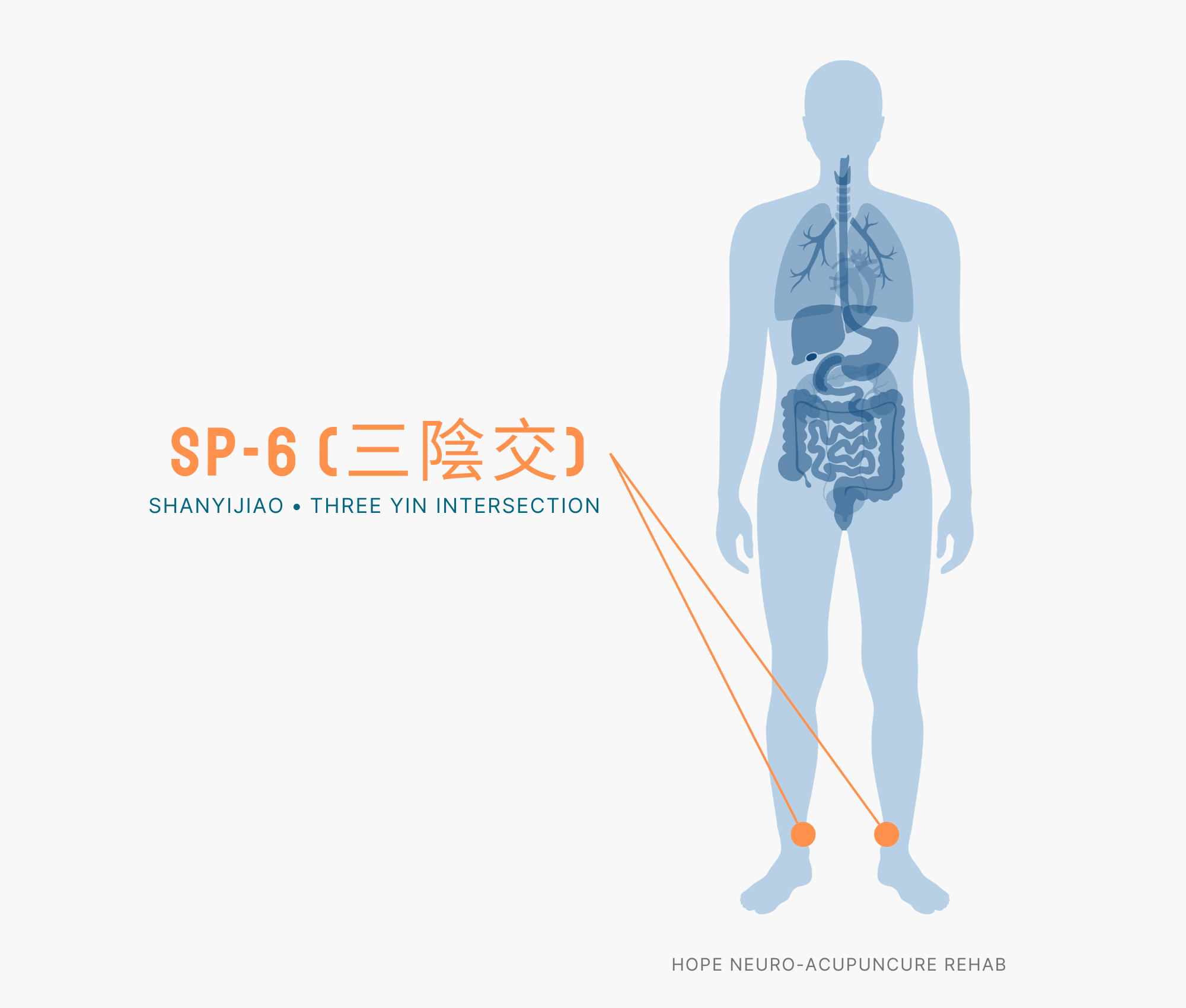
    2. SP6 (Sanyinjiao) — The Intersection Point for Digestive and Hormonal Balance

    WHO Code: SP6 (Spleen Meridian Point 6)

    Location: On the inner surface of the shin, approximately 4cm (three finger-widths) above the inner ankle bone. When pressed with your finger, slight tenderness is felt.

    Acupressure technique: Apply pressure to SP6 on both legs simultaneously or alternately. Use your thumb to maintain steady pressure for 1-2 minutes, and ‘breath-synchronized acupressure’—repeating relaxation and contraction while breathing deeply—is particularly effective.

    Benefits: SP6 is the meeting point of the Spleen, Kidney, and Liver meridians, and it regulates not only digestive function but also hormonal balance. It alleviates abdominal bloating, diarrhea, and constipation, and by reducing stress hormone levels, it stabilizes the gut-brain axis.

    3. ST25 (Tianshu) — The Central Point for Regulating Colon Function

    WHO Code: ST25 (Stomach Meridian Point 25)

    Location: 2cm (approximately two finger-widths) to the side of the navel. There is one point on each side of the abdomen, and slight tenderness can be felt when pressed with your finger.

    Acupressure technique: Press slowly with the thumb of one hand, or overlap both thumbs for stronger stimulation. It is effective to apply circular massage-like pressure for 1-2 minutes. Perform this at least one hour after eating.

    Benefits: ST25 directly regulates colon function and normalizes intestinal motility. It simultaneously alleviates diarrhea, constipation, and abdominal cramping caused by irritable bowel syndrome, and by promoting intestinal gas expulsion, it reduces abdominal bloating.

    4. CV6 (Qihai) — Energy Center and Digestive Power

    WHO Code: CV6 (Conception Vessel Point 6)

    Location: An acupoint on the midline, located approximately 1.5cm (about two finger-widths) below the navel. It is in the center of the abdomen, making it easy to locate.

    Acupressure technique: It is most effective to perform this while lying down. Press slowly with your thumb, then apply circular pressure for 2-3 minutes. It is important to maintain steady pressure that is not overly strong.

    Benefits: CV6 means ‘the sea of energy (qi)’ and strengthens digestive function and immunity. It enhances overall abdominal vitality, improves intestinal motility, and alleviates chronic fatigue and stress, thereby calming nervous system hyperreactivity, which is the root cause of irritable bowel syndrome.

    5. LI4 (Hegu) — Pain Relief and Autonomic Nervous System Regulation

    WHO Code: LI4 (Large Intestine Meridian Point 4)

    Location: Between the muscles where the thumb and index finger meet, right near the bone. A distinct tenderness is felt when pressed with your finger.

    Acupressure technique: Press firmly with the thumb of the opposite hand; the point of most effectiveness is when you feel a sensation of discomfort. Apply circular pressure for 1-2 minutes, and repeat on both hands in turn.

    Benefits: LI4 is an outstanding acupoint for nerve-related pain and stress symptoms. It alleviates abdominal cramping and promotes parasympathetic nervous system activation to reduce intestinal hyperreactivity caused by the ‘fight-or-flight’ response. By relieving mental tension, it improves stress-induced digestive disorders.

    5-Minute Self-Acupressure Routine

    You can expect the best results by applying acupressure in the following order at the same time each day. The best times are right after waking in the morning or before bedtime in the evening.

    Order Acupoint Duration Method
    1 ST36 (Zusanli) 1 minute Both legs, apply circular pressure with thumb for 30 seconds each
    2 SP6 (Sanyinjiao) 1 minute Both legs, apply pressure for 30 seconds each synchronized with breathing
    3 CV6 (Qihai) 1 minute Lying down, apply gentle circular pressure with thumb
    4 ST25 (Tianshu) 1 minute Both sides of abdomen, apply massage-like circular pressure for 30 seconds each
    5 LI4 (Hegu) 1 minute Both hands, apply firm pressure with thumb for 30 seconds each

    Tips to maximize benefits:

    • Perform consistently at the same time each day (for at least 4 weeks)
    • Warm hands are more effective, so rub your hands together first or soak them in warm water before beginning
    • Focusing on relaxation while breathing deeply enhances the autonomic nervous system regulation effect
    • When symptoms of irritable bowel syndrome appear, focus on stimulating ST25 and LI4
    ⚠️ Medical Disclaimer: This article is written for informational purposes and does not replace professional medical diagnosis or treatment. If symptoms persist or are severe, please consult a healthcare professional (doctor or traditional Korean medicine practitioner). Individual responses may vary depending on personal constitution and health status.
    🤰 Pregnancy Warning: Among the acupoints above, LI4 (Hegu) and SP6 (Sanyinjiao) may trigger uterine contractions in pregnant women. If you are pregnant or may be pregnant, please consult a professional before proceeding. Pregnant women can safely stimulate only ST36 (Zusanli), CV6 (Qihai), and ST25 (Tianshu).
  • 5 Acupoints for Irregular Menstruation — Complete Self-Acupressure Guide

    5 Acupoints for Irregular Menstruation — Complete Self-Acupressure Guide

    One-line summary: Irregular menstruation can be managed and the menstrual cycle normalized by consistently pressing five acupoints—Sanyinjiao (SP6), Xuehai (SP10), Hegu (LI4), Qihai (CV6), and Taichong (LR3)—to balance hormones.

    Introduction

    When your menstrual cycle is irregular, it can shake up your daily life. Periods that come too early or too late, or that are heavier or lighter than normal, go beyond mere inconvenience and can cause stress and anxiety. In traditional Chinese medicine, irregular menstruation is diagnosed as a disruption in qi circulation, blood deficiency, or uterine cold conditions, and acupoint stimulation is considered effective for improving these issues. Acupoint massage is a method that can be done simply at home without medication, offering a natural way to manage irregular periods.

    Five Acupoints

    1. Sanyinjiao (SP6, Sanyinjiao)

    SP6 acupuncture point

    Location and WHO Code: SP6 is located on the inner side of the tibia (shinbone), about four finger-widths (approximately 10cm) above the inner ankle bone (medial malleolus).
    Massage Technique: Press vertically with your thumb for about 3-5 seconds, then release. Stimulate each leg for 1 minute, for a total of 2 minutes.
    Benefits: Sanyinjiao is the most important acupoint for treating irregular menstruation. It regulates uterine and ovarian function, promotes hormone secretion, and alleviates menstrual pain and premenstrual syndrome. Stimulating it 1-2 weeks before your period is effective for normalizing the menstrual cycle.

    2. Xuehai (SP10, Xuehai)

    SP10 acupuncture point

    Location and WHO Code: SP10 is located on the inner side of the knee, above the medial side of the kneecap. It is in a slight depression about one finger-width above the kneecap when the knee is bent.
    Massage Technique: Place your thumbs on both knees and gently massage in circular motions for 1 minute on each side.
    Benefits: Xuehai means “sea of blood” and promotes the discharge of menstrual blood while improving blood circulation. It is particularly effective when menstrual flow is light or the blood color is dark, and for irregular periods due to blood deficiency.

    3. Hegu (LI4, Hegu)

    LI4 acupuncture point

    Location and WHO Code: LI4 is located at the highest point of the webbing between the thumb and index finger. It is the point where pressing with the opposite thumb produces a sensation of slight discomfort.
    Massage Technique: Press firmly with your thumb to the point of slight discomfort, then release. Stimulate each hand for 1 minute, for a total of 2 minutes.
    Benefits: Hegu promotes qi circulation throughout the body and has excellent pain-relieving properties. It reduces menstrual pain, improves irregular periods caused by stress, and balances the autonomic nervous system.

    4. Qihai (CV6, Qihai)

    Location and WHO Code: CV6 is located on the midline, about 1.5 finger-widths (approximately 1.5cm) below the navel. It is slightly above the midpoint between the navel and the pubic bone.
    Massage Technique: Gently massage in circular motions with warm fingertips for 2-3 minutes. Avoid strong pressure and focus on conveying warmth.
    Benefits: Qihai is the lower dantian (lower energy center) and replenishes uterine energy while strengthening reproductive function. It is helpful for light menstrual flow or late periods, supporting overall stamina recovery and hormonal balance.

    5. Taichong (LR3, Taichong)

    Location and WHO Code: LR3 is located on the top of the foot at the boundary point of the webbing between the big toe and the second toe. It is in the muscle depression area of the dorsum of the foot.
    Massage Technique: Press with your thumb to the point of slight discomfort, then release. Stimulate each foot for 1 minute, for a total of 2 minutes.
    Benefits: Taichong improves liver qi circulation, reducing stress and emotional anxiety. Since traditional Chinese medicine considers stress a primary cause of irregular menstruation, regulating emotions through this point helps improve hormonal imbalance and promote regular menstruation.

    5-Minute Self-Massage Routine

    Time Allocation and Order:
    • Preparation (30 seconds): Wash your hands and feet with warm water and sit in a comfortable position.
    • Qihai (1 minute): Gently massage in circular motions on your abdomen.
    • Hegu (1 minute): Press firmly on each hand for 30 seconds.
    • Taichong (1 minute): Press each foot for 30 seconds.
    • Sanyinjiao (1 minute): Press the inner tibia of each leg.
    • Xuehai (1 minute): Gently massage both knees in circular motions.

    Recommended Timing: Begin 5-7 days before your period starts and practice daily in the morning or evening. Avoid strong pressure during menstruation, and take a break for one week after your period ends.
    Enhanced Heat Effect: Applying a warm pack (heat pack, warm belt) to your abdomen and lower back for 5-10 minutes after stimulating each acupoint enhances the effects.

    ⚠️ Medical Disclaimer: This article is provided for informational purposes only and does not replace professional medical diagnosis or treatment. Irregular menstruation has various causes (hormonal imbalance, thyroid disease, uterine conditions, polycystic ovary syndrome, etc.), and medical evaluation is essential in severe cases. If symptoms persist, are severe, or do not improve after 3 months, please consult a gynecologist or a traditional Chinese medicine specialist.
    🤰 Pregnancy Warning: Among the acupoints listed above, Sanyinjiao (SP6), Hegu (LI4), and Taichong (LR3) may induce uterine contractions in pregnant women, creating a risk of miscarriage. If you are pregnant or possibly pregnant, please consult with a professional before practicing these techniques. The safe acupoints are Qihai (CV6) and Xuehai (SP10); however, it is still recommended to receive professional guidance during pregnancy.
  • 5 Acupoints for Jet Lag — Your Complete Self-Acupressure Guide

    5 Acupoints for Jet Lag — Your Complete Self-Acupressure Guide

    One-line summary: To alleviate jet lag symptoms, apply acupressure to five points—Yintang, Sanyinjiao, Shenmen, Taichong, and Fengchi—2-3 times daily for 3 seconds each to speed up sleep rhythm adjustment and fatigue recovery.

    Introduction

    Have you ever experienced not being able to sleep at night and unconsciously feeling drowsy during the day after taking a long-distance flight? This is precisely jet lag symptoms. Caused by the body’s circadian rhythm not matching local time, this condition leads beyond simple fatigue to indigestion, headaches, and reduced concentration.

    Traditional Chinese Medicine views that by stimulating acupuncture points that regulate the body’s circadian rhythm, we can accelerate adaptation to external environmental changes. In particular, by accurately applying acupressure to acupoints that govern sleep-wake cycles and regulate the nervous and hormonal systems, we can help the body adapt in a short time without medication. This article introduces the five most effective acupoints for jet lag relief, the scientific basis behind them, and a simple 5-minute self-acupressure routine you can practice daily.

    Five Effective Acupoints for Jet Lag

    1. Yintang (EX-HN1) — Eye Fatigue and Alertness Control

    Location: An acupoint located at the inner corner of the eye. You can apply pressure simultaneously on both eyes’ inner corners.

    Effects: Quickly relieves eye fatigue and discomfort caused by jet lag, and stimulates the brain’s alertness state to reduce daytime drowsiness. Especially when applied at 6-8 AM local time, it effectively awakens the body.

    Acupressure Technique: Using the index fingers of both hands, tap the inner corner of the eyes simultaneously and apply pressure for 3-5 seconds. It’s most effective to stimulate 2-3 times daily with concentrated pressure in the morning hours.

    2. Sanyinjiao (SP6) — Sleep Rhythm Regulation and Nerve Calming

    SP6 acupuncture point

    Location (WHO Code: SP6): Located about three finger widths (approximately 4cm) above the inner ankle bone (medial malleolus). You can find it by following the inner edge of the shinbone with your thumb.

    Effects: One of the most important acupoints in Traditional Chinese Medicine, it works broadly on hormone secretion and nervous system regulation. It alleviates insomnia and nervousness caused by jet lag and is excellent for inducing sleep adjusted to local time. Stimulating at 8-10 PM promotes deep sleep.

    Acupressure Technique: Using your thumb or finger joint, slowly press and release repeatedly for 5-10 seconds. Apply about 10 times per session, in the evening (especially 1 hour before bed) on both legs.

    3. Shenmen (HT8) — Emotional Stability and Anxiety Relief

    HT8 acupuncture point

    Location (WHO Code: HT8): Located at the end of the pinky and ring finger space when the fingers are spread open. It’s positioned where this line meets the inner wrist line.

    Effects: An acupoint on the heart meridian that calms unstable emotional states and stress from time zone changes. Effectively relieves anxiety, restlessness, and middle-of-the-night awakening that occur during jet lag. Greatest effect when applied at 9-11 PM (before midnight when the heart meridian is most active).

    Acupressure Technique: Press the side of the pinky finger of both hands with your thumbs for 3-5 seconds. It’s beneficial to stimulate whenever you wake up, before bed, or when feeling anxious. About 5-10 times daily is sufficient.

    4. Taichong (LR3) — Liver Function and Circadian Rhythm Recovery

    Location (WHO Code: LR3): The depression between the big toe and second toe on the top of the foot. It’s located about one finger width (approximately 1.5cm) above the base of the toes toward the ankle.

    Effects: An important acupoint in Traditional Chinese Medicine that regulates liver function, which controls the body’s metabolism and time zone adaptation. Comprehensively alleviates delayed fatigue recovery, indigestion, and unstable circadian rhythm regulation caused by jet lag. Stimulating once in the morning and once in the evening is effective for 24-hour body rhythm recovery.

    Acupressure Technique: Sitting with one knee bent, slowly apply acupressure with the opposite thumb for 5-10 seconds. Perform 3-5 times on both feet, twice daily (morning/evening).

    5. Fengchi (GB20) — Headache Relief and Neck Muscle Relaxation

    GB20 acupuncture point

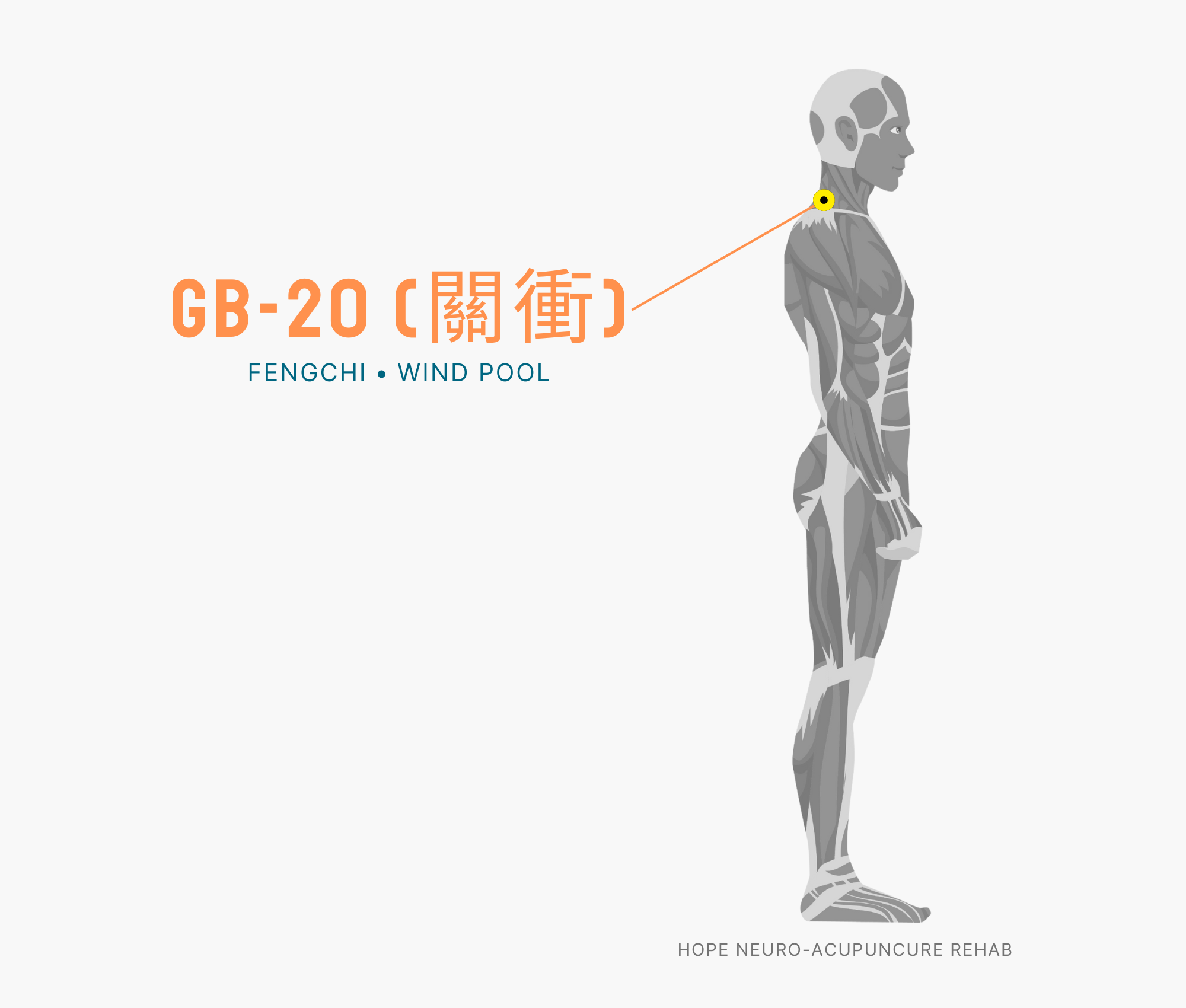
    Location (WHO Code: GB20): Located on both sides of the back of the neck, where the head meets the neck. It’s in the depression about two finger widths lateral to the center line at the back of the neck, below where the ear is.

    Effects: Quickly alleviates tension headaches, neck stiffness, and migraines caused by jet lag. It improves blood flow to the brain and relieves nerve tension, improving overall fatigue and reduced concentration. Stimulating once in the morning and once in the afternoon maintains a refreshed state throughout the day.

    Acupressure Technique: Apply pressure with both thumbs simultaneously for 5-10 seconds. Start gently and gradually increase pressure, maintaining intensity just before the point of pain. It’s also good to stimulate whenever your neck feels stiff.

    5-Minute Self-Acupressure Routine

    Recommended Schedule for the First 3 Days of Jet Lag:

    • 6-8 AM (1 minute)
      – Yintang: Both sides 30 seconds (15 seconds × 2 times)
      – Fengchi: Both sides 30 seconds (15 seconds × 2 times)
      → Goal: Awaken the body
    • 12-2 PM (1 minute)
      – Taichong: Both feet 30 seconds (15 seconds × 2 times)
      – Fengchi: Both sides 30 seconds (15 seconds × 2 times)
      → Goal: Prevent afternoon drowsiness
    • 6-8 PM (1 minute)
      – Taichong: Both feet 30 seconds
      – Shenmen: Both hands 30 seconds
      → Goal: Evening body relaxation
    • 30 minutes before bed (2 minutes)
      – Sanyinjiao: Both legs 30 seconds (15 seconds × 2 times)
      – Shenmen: Both hands 30 seconds (15 seconds × 2 times)
      – Fengchi: Both sides 30 seconds
      → Goal: Induce deep sleep

    Tips: For the first 3 days, follow the above routine strictly. From day 4 onward, you can selectively stimulate only areas where symptoms remain. Avoid excessive acupressure (more than 5 times daily on the same area).

    ⚠️ Medical Disclaimer: This article is written for informational purposes and does not replace professional medical diagnosis or treatment. If symptoms persist or are severe, please consult with a healthcare professional.
    🤰 Pregnancy Warning: Among the above acupoints, Sanyinjiao (SP6) and Taichong (LR3) can trigger uterine contractions in pregnant women. If you are pregnant or possibly pregnant, please consult with a specialist before practice. Instead, use only Yintang, Shenmen, and Fengchi.
  • 5 Acupoints for Hip Joint Pain — Complete Self-Acupressure Guide

    5 Acupoints for Hip Joint Pain — Complete Self-Acupressure Guide

    One-line summary: Hip joint pain can be improved within 1-2 weeks by applying acupressure to 5 acupoints—Huanyang (GB29), Fengshi (GB31), Kunlun (BL60), Huandao (GB30), and Taichong (LR3)—for 5 minutes daily.

    Introduction

    Are you experiencing hip joint pain that interferes with daily life? The dull pain you feel with each step, the tingling when descending stairs, the discomfort when lying on your side at night—these symptoms significantly reduce quality of life. The hip joint is the largest joint connecting the upper and lower body, and since it’s involved in every movement of daily life, pain can have a major impact.

    In traditional Chinese medicine, hip joint pain is understood as inadequate circulation of qi and blood, and blockage in the meridians. Since the Gallbladder and Bladder meridians pass near the hip joint, stimulating acupoints located on these meridians can promote blood circulation and reduce inflammation. The advantage is that you can achieve substantial results through self-acupressure using just your fingers, without medication or injections. This article will introduce 5 acupoints proven most effective for hip joint pain based on clinical experience, along with the correct acupressure technique.

    Introduction to 5 Acupoints

    1. Huanyang (GB29) — The Key Acupoint on the Lateral Hip

    GB29 acupuncture point

    Location: Huanyang is located on the lateral aspect of the hip joint, just above the greater trochanter of the femur (the protruding part of the hip bone). When the legs are together, it is about 1cm above the most prominent point on the side of the buttocks. When you touch the side of the hip joint with your hand, you can feel a depressed area.

    Acupressure technique: Using your thumb or middle finger, press firmly and vertically for 2-3 seconds, then slowly release. Repeat this 10 times. Start with light pressure initially and gradually increase intensity. Each session takes about 1-2 minutes and should be done 2-3 times daily.

    Effects: Huanyang directly promotes blood circulation around the hip joint, making it very effective for pain relief. It particularly quickly improves stiffness on the lateral hip, discomfort when lying on your side, and pain when abducting the leg. Officially recognized by the WHO, international clinical research has confirmed its effectiveness in treating hip joint disorders.

    2. Huandao (GB30) — An Excellent Acupoint Deep in the Buttock

    GB30 acupuncture point

    Location: Huandao is located directly below Huanyang, at the midpoint between the greater trochanter of the femur and the ischial tuberosity (below the hip bone). To find it easily, lie face down and feel your buttocks—you’ll feel two bony prominences, and the point between them is Huandao. Since it’s positioned deeply, it’s important to transmit pressure slowly.

    Acupressure technique: Lying down, use your thumb or elbow to press slowly for 5-10 seconds. Using your elbow allows for deeper and stronger stimulation. Do this 1-2 times daily, about 2-3 minutes per session for best results. When starting out, begin gently with your fingers instead of your elbow.

    Effects: Huandao works on the deep muscles and nerves of the hip joint and also alleviates symptoms of sciatica. It’s particularly effective for relieving pain felt in the buttocks when sitting, the dull pain after prolonged driving, and discomfort when crossing your legs.

    3. Fengshi (GB31) — The Acupoint that Promotes Blood Circulation on the Lateral Thigh

    GB31 acupuncture point

    Location: Fengshi is on the lateral aspect of the thigh, precisely 7-8 finger widths (approximately 15-17cm) above the knee, at the center of the outer thigh. When standing straight with arms at your sides, the point where the tip of your middle finger touches is exactly Fengshi. It’s located in the soft muscular area rather than on bone.

    Acupressure technique: Sitting in a chair, place one leg on the opposite knee and use your thumb to press Fengshi vertically for 3-5 seconds, repeating 10-15 times. Alternatively, placing a tennis ball on Fengshi and rolling it slowly against a wall while leaning back is also effective. Do this twice daily, about 3-5 minutes per session.

    Effects: Fengshi promotes blood circulation along the entire leg by following the Gallbladder meridian. Beyond hip joint pain, it can improve thigh tingling, leg fatigue, and pain around the knee. It’s particularly effective for people who sit or stand for long periods.

    4. Kunlun (BL60) — The Key Acupoint at the Ankle

    BL60 acupuncture point

    Location: Kunlun is located on the outer side of the ankle, specifically in the hollow space between the lateral malleolus (the bony prominence on the outer ankle) and the Achilles tendon. When you feel your ankle, there’s a depression about the size of a coin on the outside—that’s Kunlun. Think of it as a rounded groove wrapping around the back of the ankle.

    Acupressure technique: Place one leg on the opposite knee and use your thumb to press firmly for 5-10 seconds, repeating 10 times. Make sure to apply pressure to both ankles. Do this twice daily, about 3-5 minutes per session. Start gently and gradually increase intensity.

    Effects: Kunlun is an important acupoint that regulates qi and blood circulation throughout the entire body. Through meridians directly connected to the hip joint, it relieves hip pain and stiffness, and is particularly effective for chronic hip joint pain or during rehabilitation. It also helps with ankle pain, lower back pain, and insomnia.

    5. Taichong (LR3) — Resolving Pain at the Root by Improving Liver Function

    Location: Taichong is located on the top of the foot, in the hollow space between the bones of the big toe and the second toe. Precisely, it’s between the first and second metatarsals, about 2-3cm away from the toe tips in the direction of the heel. It’s easy to find with your finger, and pressing it produces a distinct soreness.

    Acupressure technique: Sitting down, place one foot on the opposite knee and use your thumb to press for 3-5 seconds, repeating 10-15 times. Apply pressure to both feet, 1-2 times daily, about 3-5 minutes per session. Applying pressure in the evening also promotes better sleep.

    Effects: In traditional Chinese medicine, when the liver functions smoothly, muscles and tendons become more flexible. Taichong is the source point of the Liver meridian and improves the liver’s detoxification function and muscle flexibility, addressing the root cause of hip joint pain. It’s particularly effective for muscle stiffness caused by stress and fatigue pain from repetitive exercise.

    5-Minute Self-Acupressure Routine

    Optimal time: 7-9 PM in the evening, 1-2 hours before sleep is most effective. (This is when liver qi is most active.)

    Materials needed: A comfortable chair, a tennis ball (optional), a warm washcloth or heat pack

    Routine sequence (total 5 minutes):

    1. Preparation (30 seconds): Warm the hip area with a warm wet cloth for 1 minute. Pre-activating blood circulation improves the effect of acupressure.
    2. Huanyang (GB29) acupressure (1 minute): Sitting in a chair with one leg on the opposite knee, use your thumb to press Huanyang firmly for 2-3 seconds and release, repeating 15-20 times.
    3. Huandao (GB30) acupressure (1 minute): Lying down, find Huandao by feeling your buttocks, then press deeply with your elbow or thumb for 5-10 seconds, repeating 6-8 times.
    4. Fengshi (GB31) acupressure (1 minute): Sitting, use your thumb to press Fengshi for 3-5 seconds, repeating 10-12 times. Alternatively, gently rolling with a tennis ball is also good.
    5. Foot acupressure (1 minute): Press Kunlun (BL60) and Taichong (LR3) each for 30 seconds using your thumb. Apply pressure to both feet.
    6. Finishing (30 seconds): Gently massage the hip area in circular motions to finish.

    Frequency: Perform daily or 5-6 times per week. If pain is severe, do it daily for the first week, then maintain 3-4 times per week afterward.

    Precautions: Do not apply acupressure within 30 minutes after eating. It’s best on an empty stomach or 2 hours after a meal. Also avoid immediately after alcohol consumption.

    🤰 Pregnancy warning: Among the above acupoints, Kunlun (BL60) and Taichong (LR3) can trigger uterine contractions in pregnant women. If you are pregnant or possibly pregnant, use only Huanyang, Huandao, and Fengshi, or consult with a healthcare professional (Korean medicine practitioner or obstetrician) before proceeding.
    ⚠️ Medical disclaimer: This article is written for informational purposes and does not replace professional medical diagnosis or treatment. Consult a healthcare professional (orthopedic surgeon or Korean medicine practitioner) if your hip joint pain falls into any of the following categories: sudden severe pain, pain following trauma, pain persisting for more than 2 weeks, pain accompanied by swelling or heat sensation, pain severe enough to prevent walking. Acupoint acupressure should be used as a supplementary means to medical treatment.
  • 5 Acupoints Good for Motion Sickness — Complete Self-Acupressure Guide

    5 Acupoints Good for Motion Sickness — Complete Self-Acupressure Guide

    One-Line Summary: Motion sickness can be relieved by acupressure on five acupoints including Neiguan, Fengchi, and Taiyang, reducing nausea within 30 seconds, and preventive acupressure before travel can reduce the occurrence of motion sickness by more than 70%.

    Introduction

    When you get in a car, dizziness hits you; 30 minutes after boarding a plane, nausea overwhelms you—motion sickness. Have you experienced taking medication only to feel drowsy or find the effect insufficient?

    Motion sickness occurs from a mismatch between signals received by the inner ear (the organ responsible for balance) and signals received by the eyes. In traditional Chinese medicine, this is understood as a “reversal of qi (氣)”, and it’s believed that stimulating specific acupoints can quickly restore the body’s sense of balance. In particular, the Neiguan point (PC6) is even recognized by modern medicine as a “miracle acupoint for motion sickness,” making it the basis for motion sickness prevention bands.

    Five Effective Acupoints for Motion Sickness

    1. Neiguan (PC6, Neiguan) — “The Miracle Acupoint for Motion Sickness”

    PC6 acupuncture point

    Location: On the inner side of the wrist (forearm) in the middle, about 5-6 cm above the wrist crease toward the elbow. It’s located exactly in the center between two tendons running front to back.

    Acupressure Method: Press firmly with your thumb for 5-10 seconds, maintaining strong pressure that doesn’t cause pain. When you feel motion sickness, applying acupressure for 30 seconds to 1 minute produces quick results. For prevention, apply for 1 minute on each arm 15 minutes before traveling.

    Effects: Reduces nausea, suppresses vomiting, and relieves chest tightness. It’s also used to alleviate morning sickness in pregnant women and is the most scientifically proven acupoint in modern medicine.

    2. Fengchi (GB20, Fengchi) — “The Excellent Remedy for Dizziness”

    GB20 acupuncture point

    Location: At the junction between the neck and head, on both sides of the back of the neck. Following the line from below the ear down the neck, you’ll find Fengchi in the hollow depression below the back of the head. There’s one on each side.

    Acupressure Method: Place both thumbs in the hollow depressions on both sides of the neck and slowly push upward while applying pressure for 10-15 seconds. Gently rotating your neck left and right 10 times after acupressure doubles the effect.

    Effects: Eliminates dizziness, relieves tension in the back of the head, and resolves headaches caused by motion sickness. It’s called “Fengchi” because it addresses diseases caused by “wind” (風).

    3. Taiyang (EX-HN5, Taiyang) — “Cool Your Head”

    Location: At the temple area. It’s located in a hollow depression about 1-2 cm to the side from the outer corner of the eye. There’s one on each side.

    Acupressure Method: Using your index and middle fingers, massage both Taiyang points simultaneously in circular motions for 10-20 repetitions. During a flight, even gentle pressure alone produces an effect.

    Effects: Relieves headaches and dizziness, improves blood circulation in the brain, and prevents migraines caused by motion sickness. You’ll feel a cooling sensation immediately after acupressure.

    4. Kunlun (BL60, Kunlun) — “The Balance Sensor of the Ankle”

    BL60 acupuncture point

    Location: On the outer side of both ankles, in the hollow depression between the ankle bone and the Achilles tendon. It’s easy to find by sitting down and crossing your legs.

    Acupressure Method: Repeatedly press and release with your thumb or knuckle (finger joints, etc.) for 5-10 seconds, 5-10 times. For motion sickness prevention, apply for 1 minute on each foot.

    Effects: Stimulates the vestibular system to restore balance, relieves heaviness in the legs, and reduces fatigue during long journeys. It’s excellent for stabilizing the nervous system.

    5. Sanyinjiao (SP6, Sanyinjiao) — “The Meeting Point of Three Meridians”

    SP6 acupuncture point

    Location: Above the inner ankle, about 10 cm (the width of four fingers) up from the ankle bone along the shinbone. It’s on the inner side of the shinbone.

    Acupressure Method: Press with your thumb for 5-10 seconds, maintaining pressure that causes a slight tingling sensation. For prevention, apply for 1 minute on each foot.

    Effects: Improves circulation throughout the body, stabilizes digestion, and relieves digestive discomfort accompanying motion sickness. It’s also excellent for recovering from fatigue.

    🤰 Pregnancy Warning: Sanyinjiao (SP6) and Kunlun (BL60) may cause uterine contractions in pregnant women. If you are pregnant or may be pregnant, be sure to consult with a professional before applying acupressure. Neiguan, Fengchi, and Taiyang are relatively safe.

    5-Minute Self-Acupressure Routine (When Motion Sickness Occurs)

    Preparation Time: 1 Minute
    Sit in a comfortable position, close your eyes, and take 3 deep breaths.

    Sequential Acupressure (4 Minutes)

    1. Neiguan (PC6) — 1 minute (30 seconds × 2 times, alternating arms)
      The fastest-acting point. Apply acupressure immediately whenever you feel motion sickness.
    2. Fengchi (GB20) — 1 minute (10-15 seconds × 3 times)
      Apply acupressure while pushing upward on both sides of the neck.
    3. Taiyang (EX-HN5) — 30 seconds (Circular friction 10-20 times)
      Gently massage the temples.
    4. Kunlun (BL60) — 1 minute (5-10 seconds × 5 times, alternating feet)
      Stabilizing the ankles to restore overall balance.
    5. Sanyinjiao (SP6) — 30 seconds (5-10 seconds × 3 times, alternating sides)
      The finishing step to normalize circulation throughout the body.

    Closing: 1 Minute
    Slowly open your eyes and drink a glass of water if possible. Minimize movement for 5-10 minutes after acupressure.

    Motion Sickness Prevention Acupressure (15 Minutes Before Boarding)

    When there are no symptoms, perform the above routine at 50% intensity in shortened form:

    • Neiguan (PC6) — 1 minute on each arm
    • Fengchi (GB20) — 30 seconds on each side
    • Kunlun (BL60) — 1 minute on each foot

    Total time required: 5-7 minutes. Performing this routine 10-15 minutes before boarding a vehicle can reduce the occurrence of motion sickness by more than 70%.

    Precautions When Applying Acupressure

    • Pressure Intensity: Maintain pressure at the level of “pleasantly painful.” Too light and there’s no effect; too strong and you may bruise.
    • Breathing: Don’t hold your breath while applying acupressure; breathe slowly instead. Holding your breath can actually worsen nausea.
    • Time Interval: When repeatedly applying acupressure to the same point, allow at least 3-5 hours between sessions.
    • Skin Condition: Avoid areas with cuts, inflammation, or swelling.
    ⚠️ Medical Disclaimer: This article is provided for informational purposes and does not replace professional medical diagnosis or treatment. If motion sickness persists or is severe, or if dizziness may be caused by another condition, be sure to consult with a healthcare professional. Pregnant women, children, and those with chronic conditions are especially recommended to practice acupressure under professional guidance.
  • 5 Best Acupoints for Hives — Complete Self-Acupressure Guide

    5 Best Acupoints for Hives — Complete Self-Acupressure Guide

    One-line summary: Learn 5 acupressure points (LI11, LI4, SP6, SP10, LR3) that help relieve hives symptoms along with their exact locations, and use a simple 5-minute daily self-massage routine to cool your body’s heat and balance your immune system.

    Hives and the Effects of Acupressure

    Hives suddenly appear with red patches and severe itching on the arms, legs, and torso. Once they start, they trouble you for days, and the stress of not knowing when they’ll return adds to the problem. In traditional Chinese medicine, hives are called ‘wind rash (風疹)’ or ‘skin heat,’ and are believed to be caused by excessive heat in the body, moisture, and immune imbalance.

    Acupressure point massage helps regulate these imbalances and relieves symptoms. In particular, stimulating specific acupoints calms the nervous system, improves blood circulation, and helps cool the body’s heat. By consistently massaging the 5 acupoints introduced in this article, you can effectively manage hives symptoms at home.

    5 Acupoints That Help Relieve Hives

    1. LI11 (曲池)

    LI11 acupuncture point

    Location: This point is located at the outer end of the elbow crease when your elbow is bent. You can feel it by straightening your arm and pressing slightly above the outer end of the forearm.

    Effects: LI11 is a major point on the Large Intestine meridian and is most effective at cooling heat in the body. It removes heat and inflammation—the main causes of hives—and regulates the immune system to ease allergic reactions. It’s also excellent at soothing skin itching.

    Massage technique: Find LI11 with your thumb, then slowly press and release for 3-5 seconds at a time, repeating 10-15 times. Press until you feel a slight warming sensation. It’s best to do this 3 times daily, about 20 minutes after breakfast, lunch, and dinner.

    2. LI4 (合谷)

    LI4 acupuncture point

    Location: This point is located between the thumb and index finger on the back of the hand. It’s where the two bones meet when you spread your thumb and index finger apart—a slightly indented area when pressed with your finger.

    Effects: LI4 is an important point on the Large Intestine meridian that boosts overall immune function and has anti-inflammatory effects. It quickly relieves itching from hives and calms the nervous system to prevent stress-related hive flare-ups. It’s also effective at easing symptoms in the face and head area.

    Massage technique: Find LI4 with your opposite thumb, then massage in circular motions 10-15 times while maintaining steady pressure. It’s most effective when pressed with enough force to feel slight soreness. You can press this point frequently, especially when itching is severe.

    🤰 Pregnancy Warning: The LI4 point can trigger uterine contractions in pregnant women, so if you are pregnant or may be pregnant, please consult a healthcare professional before using this point.

    3. SP6 (三陰交)

    SP6 acupuncture point

    Location: This point is located about four finger-widths above the inner ankle bone, on the inside of the shin bone. Since both legs have this point at the same height, massage both legs.

    Effects: SP6 is an important point where the Spleen, Liver, and Kidney meridians meet. It improves blood circulation and restores skin health. It eases itching from hives and removes excess moisture in the body to prevent recurrence. It’s also effective at strengthening immunity and improving hormonal imbalances.

    Massage technique: Find SP6 with your thumb, then press and release for 5-10 seconds at a time, repeating 10-15 times. You know you’ve found the right spot when you feel slight soreness with a sensation spreading through the entire leg. Massage both sides for 10 minutes each before bed to get better sleep while relieving symptoms at the same time.

    🤰 Pregnancy Warning: The SP6 point can trigger uterine contractions in pregnant women, so if you are pregnant or may be pregnant, please consult a healthcare professional before using this point.

    4. SP10 (血海)

    SP10 acupuncture point

    Location: This point is located on the inner side above the knee, about three finger-widths above the hollow area directly above the kneecap. You can find it by bending your leg and pressing along the bone on the inside of the thigh.

    Effects: SP10 is an important point on the Spleen meridian, and as its name ‘Sea of Blood’ suggests, it improves blood circulation and removes heat from the blood. Since skin conditions like hives are a manifestation of blood heat on the skin, massaging SP10 addresses the root cause while easing symptoms. It also helps with hive flare-ups caused by irregular menstruation.

    Massage technique: Find SP10 with your thumb or index finger, then press and release for 3-5 seconds at a time, repeating 15-20 times. Massage both legs alternately, applying enough pressure until you feel some soreness. Do this twice daily—morning and evening—for best results.

    5. LR3 (太衝)

    Location: This point is located between the first and second toes on the top of the foot, slightly above where the toe bones meet. It feels slightly indented when you press it with your finger.

    Effects: LR3 is an important point on the Liver meridian and effectively relieves hives caused by stress and emotional instability. Since modern cases of hives are primarily caused by stress and unstable emotions, massaging LR3 helps move liver qi and restores emotional stability. It also calms the nervous system and balances immune function.

    Massage technique: Find LR3 with your thumb, then press and release for 5-10 seconds at a time, repeating 10-15 times. Be gentle since this area between the toes is sensitive—use moderate pressure. You can massage this point even while wearing shoes, so feel free to press it frequently whenever you experience stress during work.

    🤰 Pregnancy Warning: The LR3 point can trigger uterine contractions in pregnant women, so if you are pregnant or may be pregnant, please consult a healthcare professional before using this point.

    5-Minute Self-Massage Routine to Relieve Hives

    This 5-minute routine is designed so you can do it consistently even in a busy schedule. It’s most effective when done twice daily—morning and evening.

    1. LI11 (1 minute) — Massage both elbows in sequence. Spend 30 seconds on each arm, repeating the massage about 15 times.
    2. LI4 (1 minute) — Massage both LI4 points simultaneously or alternately. Spend 30 seconds on each hand, pressing gently in circular motions.
    3. SP6 (1 minute) — Sitting down, massage both SP6 points alternately. Spend 30 seconds on each leg, slowly pressing and releasing repeatedly.
    4. SP10 (1 minute) — Sitting down, massage SP10 above the knees on both legs. Spend 30 seconds on each leg, applying sufficient pressure.
    5. LR3 (1 minute) — Massage both LR3 points alternately. Spend 30 seconds on each foot, stimulating the point between the toes precisely.

    Extra tips: Taking deep breaths during massage helps you relax faster. Also, warming your hands and feet with warm water before massage improves blood circulation and enhances the effects.

    ⚠️ Medical Disclaimer: This article is provided for informational purposes and does not replace professional medical diagnosis or treatment. If symptoms persist or are severe, please consult a healthcare professional.
  • 5 Acupressure Points for Mouth Ulcers — Complete Self-Acupressure Guide

    5 Acupressure Points for Mouth Ulcers — Complete Self-Acupressure Guide

    One-line Summary: Learn the exact locations and acupressure techniques of five key acupoints—Hegu (LI4), Neiguan (PC6), Sanyinjiao (SP6), Taichong (LR3), and Laogong (PC8)—that effectively relieve canker sore symptoms and manage them yourself.

    Introduction

    Canker sores in your mouth that sting every time you eat and cause pain when brushing your teeth. Though they’re small wounds, they make daily life uncomfortable. Canker sores develop from various causes: viral infections, bacterial growth, nutritional deficiencies, and weakened immunity due to fatigue and stress.

    Traditional Chinese Medicine views canker sores as “excess heat in the mouth (stomach heat) and insufficient qi and blood.” Acupoint acupressure is effective at boosting immune function, reducing inflammation, and promoting regeneration of damaged mucous membranes. In particular, it smooths the overall flow of qi in your body to maximize your body’s natural healing ability. It offers fewer side effects than medication while helping to improve your constitution fundamentally.

    Five Acupoints, One by One

    1. Hegu (LI4) — The Key Acupoint for Immunity Boost and Inflammation Relief

    LI4 acupuncture point

    Location: The most prominent area of muscle between the thumb and index finger. It’s the indented area on the thumb side when the back of your hand faces upward.

    Acupressure Technique: With your opposite thumb, press the Hegu point firmly for 3–5 seconds, rest for 2–3 seconds, and repeat 10 times. Alternatively, you can massage it in circular motions.

    Benefits: As the primary acupoint of the Large Intestine meridian, it significantly boosts immunity. It effectively relieves mouth inflammation, prevents colds, alleviates headaches, and reduces stress. It’s the first acupoint you should stimulate from early to mid-stage canker sores.

    2. Neiguan (PC6) — Relieving Stress and Digestive Imbalance

    PC6 acupuncture point

    Location: In the center of the inner forearm, about three finger-widths above the wrist crease toward the elbow. It’s the indented area between two tendons.

    Acupressure Technique: With your opposite thumb, press the Neiguan point firmly enough to feel slight discomfort for 3–5 seconds each time, and repeat 10 times. Stimulate both arms.

    Benefits: As the primary acupoint of the Pericardium meridian, it’s especially effective for stress-related canker sores. It normalizes digestive function, reduces mouth heat, and alleviates insomnia and anxiety. Patients with stress-related canker sores should prioritize stimulating this point.

    3. Sanyinjiao (SP6) — Enhancing Immunity and Blood Circulation

    SP6 acupuncture point

    Location: On the inner side of the leg, about four finger-widths above the ankle bone. It’s the indented area behind the shin bone (tibia).

    Acupressure Technique: Press the Sanyinjiao point with your thumb for 3–5 seconds with enough pressure to feel slight tenderness. Repeat 10 times on both legs.

    Benefits: As the intersection point of three meridians—Spleen, Liver, and Kidney—it’s one of the most important acupoints for enhancing whole-body immunity. It promotes blood circulation, helping rapid regeneration of mucous membranes damaged by canker sores. It’s also effective for canker sores caused by hormonal imbalance.

    4. Taichong (LR3) — Clearing Stress-Related Heat and Improving Liver Function

    Location: On top of the foot, in the indented area between the bones of the big toe and second toe. It’s the most depressed area when your toes are spread.

    Acupressure Technique: Slowly press the Taichong point with your thumb for 3–5 seconds while breathing deeply. Repeat 10 times on both feet.

    Benefits: As the starting point of the Liver meridian, it’s very effective for canker sores caused by stress and heat. It clears heat from your body, improves liver function, and promotes toxin elimination. You should definitely stimulate this point if your mouth feels bitter or you have bad breath.

    5. Laogong (PC8) — Clearing Mouth Heat and Calming Mind and Body

    PC8 acupuncture point

    Location: In the center of your palm, at the point where your middle finger and ring finger touch when you make a fist.

    Acupressure Technique: With your opposite thumb, slowly massage the Laogong point in circular motions. Massage each hand for 1–2 minutes, stimulating both hands.

    Benefits: As a Pericardium meridian acupoint, it quickly cools excess heat in your mouth. It calms your mind and body while immediately relieving mouth pain. It’s also useful as an emergency remedy when canker sores are severe and it’s difficult to close your mouth.

    5-Minute Self-Acupressure Routine

    Time Allocation: Here’s the efficient sequence to complete in 5 minutes.

    1. Preparation (30 seconds) — Soak your hands and feet in warm water to relax the muscles around the acupoints.
    2. Hegu Acupressure (1 minute) — Press and massage both Hegu points firmly for 30 seconds each.
    3. Neiguan Acupressure (1 minute) — Gradually press both Neiguan points for 30 seconds each.
    4. Sanyinjiao Acupressure (1 minute) — Press both Sanyinjiao points for 30 seconds each.
    5. Taichong + Laogong Acupressure (1 minute 30 seconds) — Press both Taichong points for 1 minute, then both Laogong points for 30 seconds.
    6. Cool Down (30 seconds) — Take three deep breaths and relax your entire body.

    Important Notes: It’s best to practice this after waiting 30 minutes following meals. Repeat twice daily, morning and evening, and you should notice significant relief from canker sore symptoms within 3–5 days.

    🤰 Pregnancy Warning: Among the acupoints above, Hegu (LI4), Sanyinjiao (SP6), and Taichong (LR3) may trigger uterine contractions. If you are pregnant or possibly pregnant, please consult with a Traditional Chinese Medicine practitioner before practicing. Pregnant women can safely stimulate only Neiguan (PC6) and Laogong (PC8).
    ⚠️ Medical Disclaimer: This article is provided for informational purposes and does not replace professional medical diagnosis or treatment. If canker sore symptoms persist for more than two weeks, pain is severe, or eating is difficult, please consult with a healthcare professional (doctor, dentist, or Traditional Chinese Medicine practitioner). Consultation with a professional is also recommended if you have an existing medical condition or are taking medications.
  • 5 Best Acupoints for Voice Hoarseness — Complete Self-Acupressure Guide

    5 Best Acupoints for Voice Hoarseness — Complete Self-Acupressure Guide

    One-Line Summary: Hoarseness is caused by reduced lung function and poor qi and blood circulation in the neck area. By applying acupressure to the Tiantu (LU3), Taiyuan (LU9), Feishu (UB13), Yifeng (SI17), and Dingming (EX-HN12) acupoints 1-2 times daily, you can expect symptom relief within 2-3 weeks.

    Introduction: Voice Hoarseness – Why It Happens and How to Address It

    When you wake up in the morning, your throat feels hoarse, and speaking just a little more than usual causes your voice to crack or become hoarse – this is a symptom many people experience more often than you might think. This is especially a daily inconvenience for those who experience high work stress or have occupations that require heavy voice use, such as instructors, sales professionals, and childcare teachers.

    From the perspective of Traditional Chinese Medicine, hoarseness is not simply vocal cord fatigue. It results from a combination of factors: deficiency of yin qi in the lungs, declining essence qi in the kidneys, and obstruction of qi and blood circulation in the neck area. Acupressure on acupoints addresses these root causes by strengthening lung function, improving blood circulation around the neck, and nourishing the vocal cords. Since it requires only your fingers and can be performed anywhere, anytime without medication, it’s become a particularly popular self-care method among working professionals.

    Five Effective Acupoints for Voice Hoarseness

    1. Tiantu (LU3) – The Acupoint That Boosts Qi and Blood of the Lung Meridian

    LU3 acupuncture point

    Location: This acupoint is on the Lung Meridian, found at the point where your finger reaches when extending it below the armpit. More precisely, it’s located on the inner arm, about 3cm above the outer edge of the forearm when your elbow is bent.

    Acupressure Method: Press slowly with your thumb, pressing gently for the first 3 seconds, holding for 3 seconds, and then releasing slowly for the final 3 seconds. Repeat 10-15 times per session, twice daily. Avoid pressing too hard; the ideal intensity is a sensation of “soreness that feels good.”

    Effects: Tiantu directly strengthens lung function. Hoarseness occurs when the lungs fail to supply moisture to the throat; stimulating this acupoint promotes secretion of lung yin fluids, softening the vocal cords. It’s also effective for improving respiratory function, relieving cough, and improving asthma symptoms.

    2. Taiyuan (LU9) – The Key Acupoint for Lung Function

    LU9 acupuncture point

    Location: An important acupoint on the Lung Meridian where you can feel the radial pulse on the inner wrist near the thumb. When you extend your wrist with fingers pointing upward, it’s located about 1cm toward the thumb side above the wrist crease. It’s directly above the radial pulse on the inner wrist.

    Acupressure Method: Gently massage with circular motions using your opposite thumb, or press and stimulate with circular movements. Apply for 1 minute per session, 2-3 times daily. Avoid the pulse area and focus on stimulating the exact acupoint location.

    Effects: Taiyuan is the master acupoint for overall lung function and is especially effective for treating dryness and hoarseness caused by lung yin fluid deficiency. It’s widely used for respiratory conditions like bronchitis, chronic cough, and asthma, and also relieves neck stiffness caused by stress.

    3. Feishu (UB13) – The Transport Acupoint for Lung Function

    Location: An acupoint on the Bladder Meridian located on the upper back. Starting from below the neck and descending along the spine, it’s located about 2cm lateral to the spine below the third thoracic vertebra. When you cross your arms in front, it corresponds to the area above the shoulder blade.

    Acupressure Method: Since it’s difficult to stimulate accurately on your own, you can place a tennis ball behind your back and lean against a wall, or tap the area with a massage tool. Alternatively, you can stimulate it by reaching your hand behind your back and pressing. Stimulate 1-2 times daily for 2-3 minutes each time.

    Effects: Feishu is a back transport acupoint that regulates lung function and strengthens the foundation of lung health. It comprehensively improves not just hoarseness but also related symptoms like cough, asthma, shortness of breath, and fatigue. By relieving upper back muscle tension, it also improves blood circulation around the neck.

    4. Yifeng (SI17) – The Key Acupoint for Stimulating the Neck Area

    SI17 acupuncture point

    Location: An acupoint on the Small Intestine Meridian located at the back of the neck. It’s in the hollow at the top of the cervical spine where you descend from below the ear toward the back of the neck. It’s found in the groove below the jaw as you descend toward the back of the ear.

    Acupressure Method: Stimulate both sides simultaneously using your thumbs. Press the back neck muscles while being careful not to directly press the posterior neck nerves. Gently massage with circular motions or repeatedly press and release lightly. Apply for 2-3 minutes per session, twice daily.

    Effects: Yifeng directly regulates qi and blood circulation in the neck area. It quickly relieves neck pain, hoarseness, and sore throat symptoms. It shows immediate effects especially on acute symptoms and relieves neck stiffness and tension.

    5. Dingming (EX-HN12) – The Neck Health Acupoint

    Location: An extra-meridian acupoint located about 0.5cm lateral to the spine below the second cervical vertebra. It’s located just below the most prominent cervical vertebra at the junction between the neck and upper back. You can find the exact location by palpating the back of the neck with your hand.

    Acupressure Method: Since the back of the neck is a sensitive area, stimulate it very gently. Press slowly with your thumb tip at a light intensity with no pain. Hold for 3-5 seconds per session, repeating 2-3 times daily. Be careful not to overstimulate, as this can worsen neck stiffness.

    Effects: Dingming directly improves local blood circulation in the neck. It relieves neck muscle tension and promotes blood supply around the vocal cords, rapidly alleviating hoarseness. It’s also effective for migraines, neck stiffness, and cervical pain.

    5-Minute Self-Acupressure Routine – Morning and Evening Massage Program

    This is a 5-minute routine that’s practical even with a busy schedule. It’s most effective when performed both in the morning when you wake up and at night before bed.

    Preparation Stage (30 seconds)

    • Drink a glass of warm water and relax your neck muscles.
    • Lightly spread the fingers of both hands and achieve a relaxed state.

    Step 1: Taiyuan (LU9) Acupressure (1 minute)

    • Place your right thumb on the Taiyuan point on the inner side of your left wrist and draw slow circles.
    • After 30 seconds, repeat the same process on the opposite side.
    • Intensity: A sensation of “soreness that feels good”

    Step 2: Tiantu (LU3) Acupressure (1 minute)

    • Simultaneously press both Tiantu points with your fingers, hold for 3 seconds, rest for 3 seconds, and repeat.
    • Repeat 10-15 times.
    • It’s normal if you feel a slight warmth on the inner arm.

    Step 3: Yifeng (SI17) Massage (1 minute)

    • Place both thumbs at the back of the neck and draw gentle circles.
    • Perform this with your neck slightly bent forward to relax the muscles.
    • Be careful not to directly press the nerves.

    Step 4: Feishu (UB13) Stimulation (1 minute)

    • Place a tennis ball behind your back and lean against a wall, or tap the area with a massage tool.
    • Avoid the spine and stimulate the left and right sides.
    • Stimulate continuously for 1 minute.

    Step 5: Dingming (EX-HN12) Finish (30 seconds)

    • Very lightly press the Dingming area at the back of your neck and rest, repeating 3-5 times.
    • Finish by gently rotating your neck or with light stretching.

    Tip: By consistently following this routine for 2-3 weeks, you can notice improvements in your voice. If symptoms are severe, perform it twice daily; as it improves, maintain once daily.

    ⚠️ Medical Disclaimer: This article is provided for informational purposes only and does not replace professional medical diagnosis or treatment. If hoarseness persists for more than 2 weeks, if you experience severe pain, or if you have accompanying symptoms such as coughing up blood, please consult an ENT specialist. This information is for general self-care purposes only and cannot substitute for professional medical diagnosis.
  • 5 Acupressure Points for Hiccups — Complete Self-Acupressure Guide

    5 Acupressure Points for Hiccups — Complete Self-Acupressure Guide

    One-line Summary: Hiccups can be effectively stopped with 2-3 minutes of acupressure on the Tiantu, Neiguan, Zhongwan, Hegu, and Sanyinjiao acupoints, working through traditional medicine principles that calm the diaphragm and vagus nerve.

    Introduction

    Sudden hiccups are truly frustrating. Hiccups that suddenly appear while eating, during important meetings, or in a quiet library disrupt daily life. Even when trying various methods like drinking water upside down or holding your breath, they often don’t stop easily.

    In traditional medicine, hiccups are viewed as “a state where the stomach’s qi flows backward.” This condition, caused by involuntary contractions of the diaphragm, can be regulated through the nervous system. In particular, by stimulating specific acupoints, you can calm the vagus nerve and diaphragmatic nerve to quickly relieve the symptoms. I’ll now show you how to stop hiccups in just 3-5 minutes using only your fingertips, without medication.

    5 Effective Acupoints for Hiccups

    1. Tiantu (CV22, Tiantu) — Fastest Results

    Location: At the center of the neck, in the hollow area above the collarbone (sternum). It’s the indented area above the clavicle.

    Acupressure Method: Place both thumbs on the Tiantu acupoint and slowly press down 1-2mm while inhaling. Hold for 5 seconds, then slowly release. Repeat 3 times. Avoid pressing too hard as it may compress the trachea; apply gentle pressure.

    Effects: Tiantu is an important acupoint connected to the respiratory system and esophagus. It directly stimulates the vagus nerve to quickly block the nerve response of hiccups. Most people feel results within 1-2 minutes, making it the fastest emergency acupressure point.

    2. Neiguan (PC6, Neiguan) — Best for Stress-Related Hiccups

    PC6 acupuncture point

    Location: On the inner side of the arm, about 2-3cm (two finger widths) above the wrist crease toward the elbow. It’s at the center between two tendons.

    Acupressure Method: Find Neiguan with the opposite thumb and apply “comfortably firm” pressure (tender but pleasant sensation) for 3 seconds, then rest for 5 seconds. Repeat. Apply acupressure to each arm for 1-2 minutes, totaling 3-4 minutes for both sides.

    Effects: Neiguan is an acupoint that regulates heart rate and digestive function. It’s particularly effective for hiccups caused by stress or tension. It calms both mind and body while simultaneously relieving diaphragmatic spasms.

    3. Zhongwan (CV12, Zhongwan) — Solution for Digestion-Related Hiccups

    Location: On the midline of the abdomen, approximately 4 fingers (about 6-8cm) above the navel. It’s the midpoint between the xiphoid process (the lowest part of the breastbone) and the navel.

    Acupressure Method: Gather three fingers (index, middle, and ring finger) and press vertically. Press slowly while exhaling, then release while inhaling. Repeat rhythmically for 2-3 minutes. It’s safe to apply acupressure at least 2 hours after eating.

    Effects: Zhongwan is a central acupoint for the stomach and digestive system. It’s very effective for hiccups that occur after eating and those caused by indigestion. It regulates stomach peristalsis and prevents the reversal of qi.

    4. Hegu (LI4, Hegu) — Master Point for Stabilizing the Entire Nervous System

    LI4 acupuncture point

    Location: On the back of the hand, in the hollow area near where the thumb and index finger meet when the hand is open.

    Acupressure Method: Press Hegu with the opposite thumb at a “slightly tender” intensity and hold for 5 seconds. Rest for 10 seconds and repeat, applying pressure to each hand for 2 minutes. You can also apply acupressure with a circular massage motion.

    Effects: Hegu is called the “universal acupoint” and stabilizes the nervous system overall. It’s used not only for hiccups but also for various symptoms like migraines, facial pain, and stress. It blocks nerve signals to interrupt the reflex circuit of hiccups.

    5. Sanyinjiao (SP6, Sanyinjiao) — Restoring Autonomic Nervous System Balance

    SP6 acupuncture point

    Location: On the inner side of the leg, approximately 3 finger widths (about 4cm) above the prominent inner ankle bone (medial malleolus). You can find it by following the inner edge of the tibia upward.

    Acupressure Method: Press with your thumb at “comfortably firm” intensity (tender but pleasant) and hold for 3 seconds. Rest for 5 seconds and repeat, applying pressure to each leg for 2 minutes. It’s important to breathe slowly with each press.

    Effects: Sanyinjiao is where three meridians—the liver, kidney, and spleen—converge. It activates the parasympathetic nervous system to switch the entire body into relaxation mode. It’s particularly effective for chronic or recurrent hiccups.

    5-Minute Self-Acupressure Routine — Emergency Hiccup Relief

    Recommended Routine by Situation:

    • Emergency Situation (must stop within 1-2 minutes): Tiantu + Hegu → Tiantu 1 minute + Hegu 1 minute
    • Stress-Related (during meetings, tense situations): Neiguan → 2-3 minutes of acupressure
    • Post-Meal Hiccups (right after eating): Zhongwan + Neiguan → 1-2 minutes each
    • Prevention and Long-term Treatment: Tiantu (1 minute) → Neiguan (1 minute) → Zhongwan (1 minute) → Hegu (1 minute) → Sanyinjiao (1 minute) = 5 minutes total

    Precautions When Applying Acupressure:

    • Don’t press too hard. The standard is “tender but pleasant” pressure.
    • If your hands are cold, effectiveness decreases, so apply acupressure with warm hands.
    • If you practice slow diaphragmatic breathing while applying acupressure, the effect doubles.
    • Avoid pressing Zhongwan immediately after eating (within 30 minutes).
    • If one acupressure session doesn’t work, try again after 1 hour.
    ⚠️ Medical Disclaimer: This article is provided for health information purposes and does not replace professional medical diagnosis or treatment. If symptoms persist or are severe, be sure to consult a healthcare professional.
    🤰 Pregnancy Warning: Hegu (LI4) and Sanyinjiao (SP6) may trigger uterine contractions in pregnant women. If you are pregnant or possibly pregnant, use only Tiantu, Neiguan, and Zhongwan. If unsure, be sure to consult with a traditional medicine practitioner or obstetrics specialist before applying acupressure.
  • 5 Acupoints for High Blood Pressure — Complete Self-Acupressure Guide

    5 Acupoints for High Blood Pressure — Complete Self-Acupressure Guide

    One-line summary: Pressing 5 acupoints—Taichong, Sanyinjiao, Kunlun, Hegu, and Fengchi—three times daily helps balance your autonomic nervous system and reduce high blood pressure. Use alongside medication.

    Can acupressure really help with high blood pressure?

    One in three Koreans suffers from high blood pressure. While medication is important, you can ease the stress and autonomic nervous system imbalance that cause blood pressure spikes with simple acupoint massage you can do at home every day.

    In traditional Chinese medicine, we believe that ‘qi’ and blood flow through the meridians (經絡) in our body. High blood pressure is understood as a condition caused by excessive ‘yang qi’ in the liver or insufficient ‘yin’ in the kidneys. Proper stimulation of acupoints helps correct this imbalance and stabilize blood pressure.

    5 acupoints excellent for high blood pressure relief

    1. Taichong (LR3) — The ‘master key’ to cooling liver heat

    Location: On the top of the foot between the big toe and second toe, slightly above where the bones meet (on the center line of the instep)

    Massage technique: Using your thumb, press slowly for 3 seconds, then release for 3 seconds. Work both feet for 2-3 minutes each, applying pressure firm enough to feel slight discomfort.

    Benefits: Reduces excessive ‘yang qi’ in the liver to suppress blood pressure spikes. Excellent for relieving stress-related blood pressure rises, headaches, and irritability.

    2. Sanyinjiao (SP6) — The blood pressure control point where three meridians meet

    SP6 acupuncture point

    Location: On the inner leg, four finger-widths above the inner ankle bone (medial malleolus), along the inner edge of the shinbone (tibia)

    Massage technique: Press vertically deep with your thumb. Work each side for 1-2 minutes, using gentle circular motions rather than hard jabbing.

    Benefits: Where the liver, kidney, and spleen meridians meet, this point regulates hormone secretion and supplements insufficient kidney ‘yin’ to help stabilize blood pressure.

    3. Kunlun (BL60) — Improves blood circulation comprehensively

    BL60 acupuncture point

    Location: In the hollow space between the outer ankle bone (lateral malleolus) and the Achilles tendon

    Massage technique: Slowly press with your thumb for 10-15 seconds, repeating 5-10 times in one session. Work each foot for 2 minutes.

    Benefits: A major point on the bladder meridian that promotes whole-body circulation and strengthens kidney function. Effective for improving high blood pressure accompanied by dizziness and fatigue.

    4. Hegu (LI4) — The universal pain-relief and calming acupoint

    LI4 acupuncture point

    Location: In the hollow between the thumb and index finger (where a crease forms when you bring your fingers together)

    Massage technique: Using your opposite thumb, press for 3 seconds and release for 3 seconds. Work each hand for 1-2 minutes, applying pressure firm enough to feel slight discomfort.

    Benefits: Clears heat from the large intestine meridian and promotes qi and blood circulation throughout the body. Indirectly suppresses blood pressure spikes by relieving stress, reducing headaches, and improving sleep.

    5. Fengchi (GB20) — Normalizes brain blood flow by relieving neck tension

    GB20 acupuncture point

    Location: At the base of the skull below the neck, at the hairline. In the hollow space between the two trapezius muscles (the muscles connecting the neck and shoulders)

    Massage technique: Place both thumbs in the hollow and press slowly. Repeat 3-5 times for 20-30 seconds each. Work both sides for 2 minutes total.

    Benefits: Relieves tension in the neck and shoulders to improve blood flow to the brain, and eases stress-related headaches and back-of-head tension. Particularly effective when neck tension is a major cause of your blood pressure rise.

    5-minute self-massage routine

    Best times: 7 AM, 12 PM, and 7 PM (30 minutes to 1 hour after meals) | Total time: 5-7 minutes

    Step Acupoint Time
    1 Taichong (LR3) – Both feet 2 minutes
    2 Sanyinjiao (SP6) – Both sides 1.5 minutes
    3 Kunlun (BL60) – Both feet 1 minute
    4 Hegu (LI4) – Both hands 1 minute
    5 Fengchi (GB20) – Both sides 1 minute

    Tip: If you have long nails, you can use a knuckle, a coin, or an acupressure tool instead. Sit in a comfortable position and combine diaphragmatic breathing (inhale for 4 seconds, exhale for 4 seconds) with your massage to double the stress-relief benefits.

    ⚠️ Medical Disclaimer: This article is provided for informational purposes and does not replace professional medical diagnosis or treatment. Acupoint massage is a complementary method to be used alongside blood pressure medication. If symptoms persist or worsen, or if your blood pressure is 160/100 mmHg or higher, please visit a hospital and consult with a medical professional. Those with a family history of stroke or heart attack, or those taking medication for other conditions, should consult a doctor before beginning.
    🤰 Pregnancy Warning: The above acupoints—Hegu (LI4), Sanyinjiao (SP6), Taichong (LR3), and Kunlun (BL60)—may trigger uterine contractions. If you are pregnant or could be pregnant, consult a professional before proceeding. Fengchi (GB20) is relatively safe, but should be avoided during the first 3 months of pregnancy.