Author: Acu Master

  • 5 نقاط ضغط فعّالة لآلام الثدي — دليل الضغط الذاتي الشامل

    5 نقاط ضغط فعّالة لآلام الثدي — دليل الضغط الذاتي الشامل

    ملخص في سطر واحد: يمكن تخفيف آلام الثدي بشكل فعال بتحسين وظائف الكبد من خلال تحفيز نقاط الضغط في الصدر مثل (REN17) و (ST16) و (ST18) ونقطة (LR3). ابدأ بجلسة تدليك ذاتي مدتها 5 دقائق يومياً.

    المقدمة

    آلام الثدي من الأعراض الشائعة جداً التي تعاني منها امرأة من كل ثلاث نساء. تحدث نتيجة التفاعل المعقد لعوامل متعددة مثل التغيرات الهرمونية المتعلقة بالدورة الشهرية والإجهاد والملابس غير المريحة والوضعية السيئة. يؤثر الألم المتكرر بشكل كبير على جودة الحياة اليومية.

    في الطب الصيني التقليدي، تُعرّف آلام الثدي باسم “انسداد الطاقة في الثدي”، وتحدث عندما تتوقف الطاقة في المسارات الرئيسية التي تمر عبر الصدر أو عندما تنخفض وظائف الكبد. لحسن الحظ، يمكن تحسين تدفق الطاقة وتخفيف الألم بتحفيز نقاط الضغط الرئيسية في منطقة الصدر. أصبح التدليك الذاتي على هذه النقاط خياراً شائعاً للكثيرين لأنه يمكن إجراؤه بسهولة في أي وقت وأي مكان بدون الحاجة لتناول الأدوية.

    5 نقاط ضغط لتخفيف آلام الثدي

    1. (REN17) — “نقطة الضغط الرئيسية” التي تنظم المشاعر والطاقة

    الموقع: نقطة في المركز بين الحلمتين، على خط الوسط في وسط الصدر تماماً. يمكنك العثور عليها بالنزول على طول خط الوسط في الصدر من أسفل عظمة الترقوة.

    طريقة الضغط: ضع إبهاميك فوق بعضهما البعض واضغط بحزم عمودياً على نقطة (REN17)، ثم حرر الضغط بشكل متكرر. اضغط لمدة 3-5 ثوان ثم حرر ببطء. تجنب الضغط بقوة حتى تشعر بألم.

    الفائدة: تُعرف نقطة (REN17) بـ “نقطة التوازن السماوي”، وهي متخصصة في موازنة المشاعر والطاقة. يمكنها حل الإجهاد والانسداد في تدفق الطاقة اللذين يسببان آلام الثدي في نفس الوقت. كما أنها فعالة جداً في تخفيف القلق واستقرار النفس والجسد.

    2. (ST16) — نقطة العلاج المباشر لآلام الثدي

    ST16 acupuncture point

    الموقع: أعلى كل ثدي، عند نقطة تقاطع عظمة الترقوة والمسافة بين الأضلاع الأولى. توجد نقطة واحدة على كل جانب.

    طريقة الضغط: استخدم إصبع الوسط والبنصر معاً لرسم دوائر ناعمة على نقطة (ST16). قم بتحفيز كل نقطة ضغط ببطء لمدة 2-3 دقائق. تجنب الضغط القوي الذي قد يسبب عدم الراحة، والحفاظ على الضغط المناسب مهم جداً.

    الفائدة: هذه نقطة متخصصة في تحسين تدفق الطاقة والدم مباشرة في منطقة الثدي، مما يوفر أسرع نتيجة فعالة في تخفيف آلام الثدي والعقد الصلبة. مع تحسن الدورة الدموية، يتناقص الألم وعدم الراحة بسرعة.

    3. (ST18) — نقطة تخفيف آلام أسفل الثدي
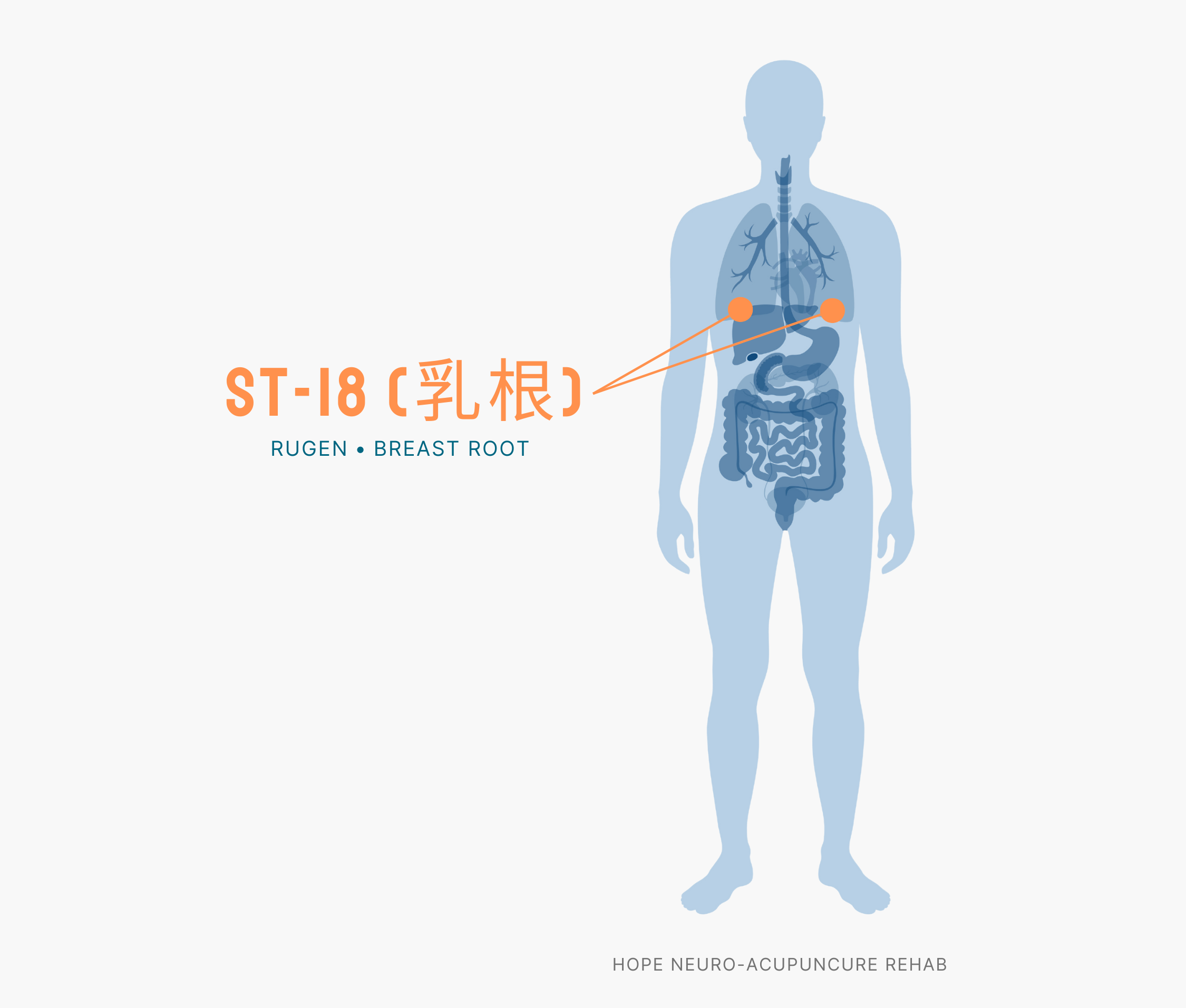
    ST18 acupuncture point

    الموقع: مباشرة أسفل الثدي، في المسافة بين الأضلاع الخامسة والسادسة. توجد أسفل الحد السفلي للثدي مباشرة.

    طريقة الضغط: ضع إبهاميك على كلا الجانبين على نقطة (ST18) واضغط ببطء، مع ممارسة الضغط من خلال التنفس: شهيق وزيادة الضغط، ثم زفير وإرخاء الضغط. كرر 10 مرات، 3-5 ثوانٍ في كل مرة.

    الفائدة: تخفف بشكل فعال الألم في أسفل الثدي أو الألم الممتد إلى جانب الضلع. خاصة مفيدة إذا كان هناك ألم عصبي في الفراغات بين الأضلاع.

    4. (GB22) — نقطة متخصصة في آلام الثدي الناجمة عن الإجهاد

    GB22 acupuncture point

    الموقع: أسفل الإبط، عندما ترفع ذراعك، ستجدها مباشرة أسفل مركز الإبط في المسافة بين الضلع الثالث. توجد نقطة واحدة على كل جانب بين الذراعين.

    طريقة الضغط: أرخِ ذراعك على صدرك واستخدم إصبع الوسط من اليد المقابلة للعثور على نقطة (GB22) ورسم دوائر عليها. يمكنك استخدام إصبع الوسط من كلا اليدين لتحفيز كلا الجانبين في نفس الوقت. اضغط على كل نقطة ضغط لمدة 3-5 دقائق.

    الفائدة: كنقطة رئيسية في مسار المرارة، تتفوق في تخفيف آلام الثدي الناجمة عن الإجهاد والتوتر. خاصة فعالة للألم الناجم عن التوتر العصبي وآلام الثدي الشديدة قبل الدورة الشهرية.

    5. (LR3) — تحسين وظائف الكبد لحل السبب الجذري

    الموقع: على ظهر القدم، بقليل فوق النقطة حيث تلتقي عظام الإصبع الكبير والإصبع الثاني. يمكنك العثور عليها بالصعود على طول المنطقة البارزة من القدم.

    طريقة الضغط: اجلس وضع إحدى قدميك على الساق الأخرى، ثم اضغط ببطء على نقطة (LR3) بإبهامك وقم بتدليكها. مارس الضغط لمدة 5 ثوانٍ مع الشهيق، ثم استرخِ لمدة 5 ثوانٍ مع الزفير، واستمر لمدة 2-3 دقائق على كل قدم. مارس على كلا القدمين.

    الفائدة: كنقطة أساسية في تنظيم وظائف الكبد، تحسن السبب الجذري لآلام الثدي الناجمة عن عدم توازن الهرمونات والإجهاد. بالإضافة إلى ذلك، غالباً ما يتحسن عدم انتظام الدورة الشهرية والتقلبات العاطفية والإرهاق المزمن.

    روتين ضغط ذاتي مدته 5 دقائق

    فيما يلي روتين مدته 5 دقائق يمكنك ممارسته في حياتك المشغولة. مارس في الصباح أو المساء، 1-2 مرة يومياً.

    1. التحضير (30 ثانية): اجلس أو استلقِ بشكل مريح وخذ 3-4 نفس عميق لإرخاء جسمك وعقلك.
    2. ضغط (REN17) (دقيقة واحدة): ضع إبهاميك فوق بعضهما البعض واضغط 30 مرة بحزم على نقطة (REN17).
    3. ضغط (ST16) و (ST18) (دقيقتان): ارسم دوائر على نقطة (ST16) على كلا الجانبين لمدة دقيقة واحدة على كل جانب (إجمالي دقيقة واحدة). ثم اضغط على (ST18) على كلا الجانبين لمدة 30 ثانية على كل جانب (إجمالي دقيقة واحدة).
    4. ضغط (GB22) (دقيقة واحدة): ارسم دوائر على نقطة (GB22) على كلا الجانبين في نفس الوقت لمدة دقيقة واحدة.
    5. ضغط (LR3) (30 ثانية): لإنهاء الروتين، اضغط بسرعة على نقطة (LR3) على كلا القدمين لمدة 15 ثانية على كل قدم.
    6. الإنهاء (30 ثانية): خذ 3-4 نفس عميق وتخيل أن الطاقة تنتشر في جسمك بالكامل للاسترخاء.

    💡 نصيحة: الاستمرارية هي الأهم. يمكنك الشعور بالنتائج بعد 3 أسابيع أو أكثر من الممارسة المستمرة. بدلاً من ممارستها فقط عند الشعور بالألم، مارسها بشكل منتظم كإجراء وقائي.
    ⚠️ إخلاء المسؤولية الطبية: تم كتابة هذا المقال لأغراض المعلومات الصحية فقط، وهو لا يحل محل التشخيص أو العلاج الطبي المتخصص. إذا استمرت الأعراض أو كانت شديدة، يرجى استشارة متخصص طبي.
    🤰 تحذير للحوامل: نقطة (LR3) من بين النقاط المذكورة أعلاه قد تسبب انقباضات في الرحم لدى الحوامل. إذا كنتِ حاملاً أو قد تكونين حاملاً، يرجى استشارة متخصص قبل ممارسة الضغط. بينما تعتبر نقاط (REN17) و (ST16) و (ST18) و (GB22) آمنة بشكل عام، ننصح باستشارة طبيبك قبل محاولة أي إجراء جديد أثناء الحمل.
  • 5 نقاط ضغط فعّالة لالتهاب المفاصل — دليل شامل للضغط العلاجي الذاتي

    5 نقاط ضغط فعّالة لالتهاب المفاصل — دليل شامل للضغط العلاجي الذاتي

    ملخص سريع: الضغط على 5 نقاط وخز (LI11 و LI4 و BL40 و SP6 و SP9) لمدة 5 دقائق يومياً يمكن أن يخفف من آلام التهاب المفاصل والتصلب.

    العلاقة بين التهاب المفاصل والعلاج بالضغط على نقاط الوخز

    التهاب المفاصل مشكلة مزمنة يعاني منها الكثير من الأشخاص في منتصف العمر وما بعده. الألم والتصلب الذي يحدث في مفاصل مختلفة مثل الركبة والمعصم والكاحل والكتف يحد بشكل كبير من الأنشطة اليومية. تنظر الطب الصيني التقليدي إلى التهاب المفاصل على أنه “نقص في تدفق طاقة الجسم والدم” و”انسداد المسارات”. عند تحفيز نقاط وخز معينة، يمكن فتح المسارات المسدودة والسماح بتدفق الطاقة والدم بسلاسة، مما يؤدي إلى تقليل الالتهاب والألم. بشكل خاص، للعلاج بالضغط الذاتي ميزة أنه يمكن إجراؤه في المنزل في أي وقت دون الحاجة لزيارة المستشفى.

    5 نقاط وخز فعالة لتخفيف التهاب المفاصل

    1. نقطة LI11 — نقطة وخز متعددة الفوائد للمرفق

    LI11 acupuncture point

    رمز منظمة الصحة العالمية: LI11 (قناة الأمعاء الغليظة – النقطة 11) | الموقع: نهاية طية المرفق من الداخل عند ثني الذراع

    نقطة LI11 ممتازة لتخفيف الألم والتصلب في الذراع بأكملها. فعالة جداً خاصة لآلام المرفق والكتف الناجمة عن التهاب المفاصل. طريقة الضغط: اضغط بإبهامك لمدة 3-5 ثوانٍ ثم أرخِ، وكرر هذا، أو قم بتحفيز النقطة بحركة دائرية في اتجاه عقارب الساعة 20-30 مرة. الشدة المثالية هي مستوى “ألم لكن لطيف” (الإحساس بالألم الضاغط). مع الاستمرار في التحفيز، ستلاحظ تدريجياً تقليل التصلب وزيادة في نطاق الحركة.

    2. نقطة LI4 — قناة الوخز لتخفيف الألم في جميع أنحاء الجسم

    LI4 acupuncture point

    رمز منظمة الصحة العالمية: LI4 (قناة الأمعاء الغليظة – النقطة 4) | الموقع: الجزء المجوف بين الإبهام والسبابة

    هناك قول مأثور في الطب الصيني التقليدي: “إذا كنت تعرف فقط LI4، لا تحتاج إلى الخوف من مئة مرض”. نقطة LI4 معروفة جداً. تعزز تدفق طاقة الجسم والدم في جميع أنحاء الجسم وتقلل الألم بشكل كبير جداً. تساعد على التهاب المفاصل في الأصابع والمعصم، وكذلك الألم الالتهابي في جميع أنحاء الجسم. اضغط بقوة على النقطة بإبهامك من اليد الأخرى، وتحفيز كلا اليدين بالتبادل يكون أكثر فعالية. يُنصح بتحفيز النقطة 3 مرات يومياً، لمدة 2-3 دقائق في كل مرة.

    🤰 تحذير للحوامل: نقطة LI4 يمكن أن تسبب تقلصات الرحم لدى الحوامل، لذا يجب تجنب تحفيزها أثناء الحمل.

    3. نقطة BL40 — علاج خاص لالتهاب مفاصل الساق

    BL40 acupuncture point

    رمز منظمة الصحة العالمية: BL40 (قناة المثانة – النقطة 40) | الموقع: الجزء الأوسط من طية الركبة من الخلف

    إذا كان لديك التهاب مفاصل في الركبة، فهذه أول نقطة يجب عليك الضغط عليها. نقطة BL40 تحسن الدورة الدموية في الساق بأكملها وتخفف بسرعة الالتهاب والألم في الركبة. كما أنها فعالة عندما تصبح الساقان متيبسة من الجلوس لفترة طويلة. اضغط على BL40 على كلا جانبي الركبة بإبهامك لمدة 3-5 دقائق بشكل متواصل. تكون التأثيرات أقوى إذا كررت حركات ثني وفرد الركبة ببطء 5-10 مرات بعد الضغط. إذا كانت الركبة غير مريحة بسبب التهاب المفاصل، يُنصح بالضغط على هذه النقطة يومياً.

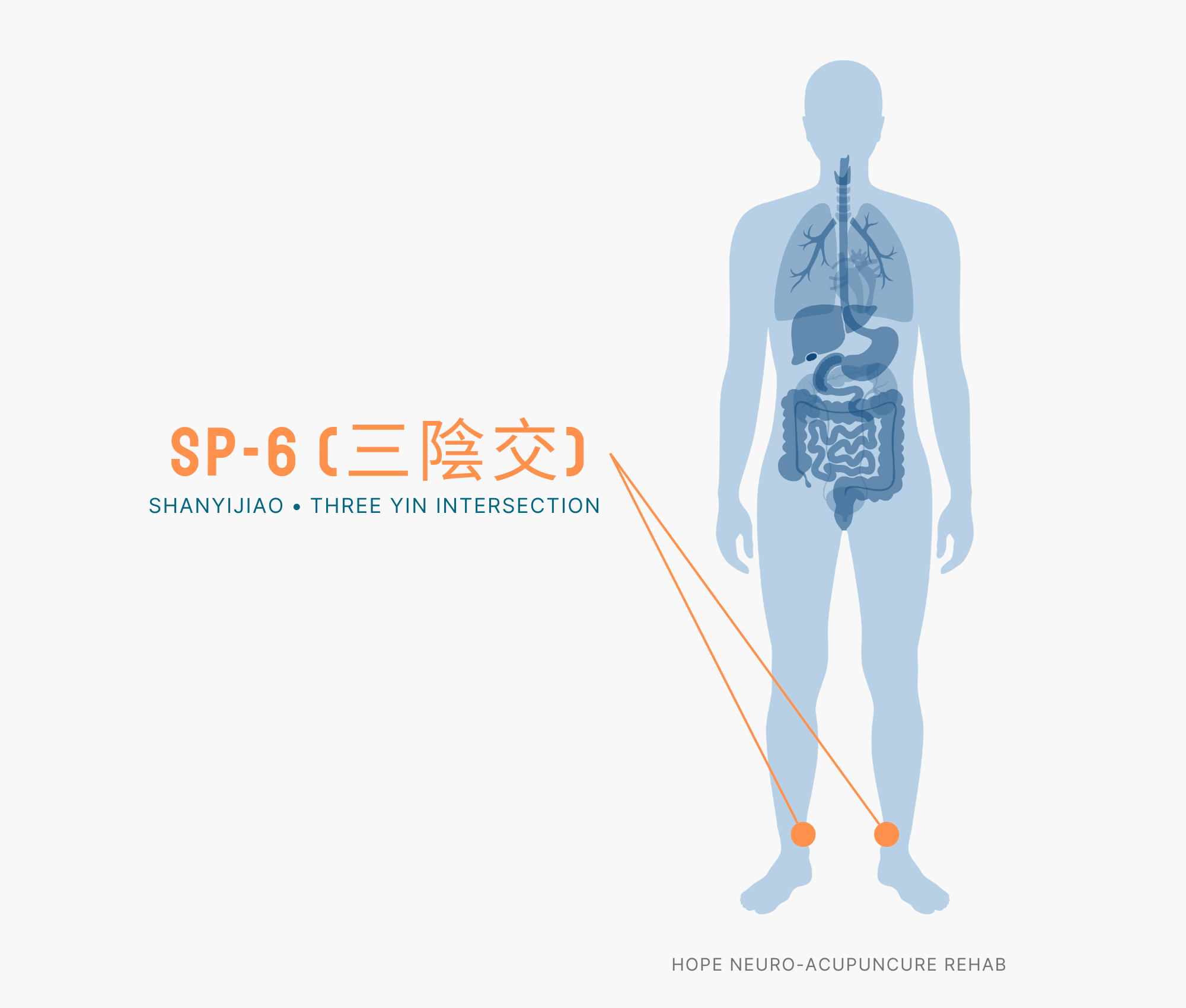
    4. نقطة SP6 — نقطة تقاطع تدفق طاقة الجسم والدم في جميع أنحاء الجسم

    SP6 acupuncture point

    رمز منظمة الصحة العالمية: SP6 (قناة الطحال – النقطة 6) | الموقع: أعلى بـ 4 أصابع من عظم الكاحل الداخلي (على الجانب الداخلي من عظم الساق)

    نقطة SP6 هي حيث تتقاطع قنوات الكبد والطحال والكلى، وهي نقطة وخز مهمة تعزز تدفق طاقة الجسم والدم في جميع أنحاء الجسم. فعالة خاصة في تخفيف آلام التهاب مفاصل الساق والكاحل، وفي نفس الوقت تساعد على تقوية مناعة الجسم. اضغط بقوة بإبهامك، وقم بتحفيز النقطة برسم دوائر لمدة 30 ثانية إلى دقيقة واحدة. يُنصح بتحفيز كلا الساقين بالتبادل مرتين يومياً. التحفيز المستمر يساهم في تقليل استجابات الالتهاب في جميع أنحاء الجسم.

    🤰 تحذير للحوامل: نقطة SP6 يمكن أن تسبب تقلصات الرحم، لذا يجب تجنب استخدامها أثناء الحمل.

    5. نقطة SP9 — نقطة وخز متخصصة لمفصل الركبة

    رمز منظمة الصحة العالمية: SP9 (قناة الطحال – النقطة 9) | الموقع: الجزء المجوف على الجانب الداخلي من عظم الساق تحت الركبة

    نقطة وخز تظهر فعالية رائعة خاصة في التهاب مفاصل الركبة والألم على الجانب الداخلي من الركبة. نقطة SP9 هي نقطة تجميع قناة الطحال وتتفوق في إزالة الرطوبة والالتهاب حول المفصل. إذا كان لديك تورم وتصلب في الركبة بسبب التهاب المفاصل، فإن الضغط على هذه النقطة سيساعد. اضغط بإبهامك حتى تشعر بألم، وحافظ على الضغط لمدة 5-10 ثوانٍ، ثم أرخِ ببطء. كرر هذا 10 مرات. مع تحفيز كل نقطة 5 دقائق، مرتين يومياً، يمكنك الشعور بالتغيير في 1-2 أسبوع.

    روتين ضغط ذاتي لمدة 5 دقائق

    للحصول على أفضل النتائج، قم بالضغط في نفس الوقت كل يوم بالترتيب التالي.

    1. التحضير (30 ثانية): اجلس في وضعية مريحة وخذ 3 نفسات عميقة.
    2. ضغط LI4 (دقيقة واحدة): حفز LI4 على كلا اليدين بالتبادل لمدة دقيقة واحدة. (إجمالي دقيقة واحدة)
    3. ضغط LI11 (دقيقة واحدة): حفز LI11 على كلا الذراعين بالتسلسل لمدة 30 ثانية لكل واحدة. (إجمالي دقيقة واحدة)
    4. ضغط BL40 (دقيقة واحدة): حفز BL40 على كلا جانبي الركبة لمدة 30 ثانية لكل واحد. (إجمالي دقيقة واحدة)
    5. ضغط SP9 (45 ثانية): حفز SP9 تحت الركبة على كلا الجانبين لمدة 20 ثانية لكل واحد.
    6. ضغط SP6 (45 ثانية): حفز SP6 على الجانب الداخلي من الكاحل على كلا الجانبين لمدة 20 ثانية لكل واحد.
    7. الإنهاء (15 ثانية): خذ نفسين عميقين ببطء ثم انتهِ.

    نصيحة: تكون النتائج أفضل إذا قمت بهذا الروتين مرتين: بعد الاستيقاظ مباشرة وقبل النوم. شرب ماء دافئ مباشرة بعد الضغط يعزز بشكل أكبر تدفق طاقة الجسم والدم.

    ⚠️ إخلاء مسؤولية طبية: تم كتابة هذه المقالة لأغراض توفير المعلومات الصحية ولا تحل محل التشخيص الطبي المهني أو العلاج. إذا استمرت أعراض التهاب المفاصل أو كانت شديدة، أو إذا تفاقمت الأعراض بعد العلاج بالضغط الذاتي، يجب عليك استشارة أخصائي طبي (طبيب أو ممارس الطب التقليدي).
  • 5 نقاط ضغط فعالة لعلاج الصداع — دليل كامل للعلاج بالضغط الذاتي

    5 نقاط ضغط فعالة لعلاج الصداع — دليل كامل للعلاج بالضغط الذاتي

    ملخص بسطر واحد: يمكن تخفيف الصداع من خلال الضغط اليومي على 5 نقاط ضغط (LI4·GV20·GB20·LR3·TE17) لمدة 5 دقائق، مما يخفف الأعراض حسب السبب. يعتبر LI4 بشكل خاص الأكثر فعالية لجميع أنواع الصداع.
    LI4 혈자리 위치 그림

    إدارة الصداع من خلال نقاط الضغط

    الصداع هو أحد أكثر الأعراض شيوعاً التي يعاني منها الناس اليوم. ينشأ من أسباب متعددة مثل الإجهاد والتيبس العنقي ونقص النوم وتغيرات الطقس، وهو لا يعكس فقط مشكلة في منطقة الرأس، بل هو إشارة لإرهاق جسدي وعدم توازن في الجسم. في الطب التقليدي، يُفهم الصداع على أنه “اضطراب في دوران الطاقة والدم”، حيث يتم تحسين هذا عدم التوازن من خلال تحفيز نقاط ضغط معينة. يوفر الضغط على نقاط الضغط إدارة ذاتية في أي وقت وأي مكان بدون آثار جانبية للأدوية، كما يعمل على تحفيز الأعصاب والعضلات، مما يعزز الدورة الدموية ويخفف التوتر العضلي.

    5 نقاط ضغط لتخفيف الصداع

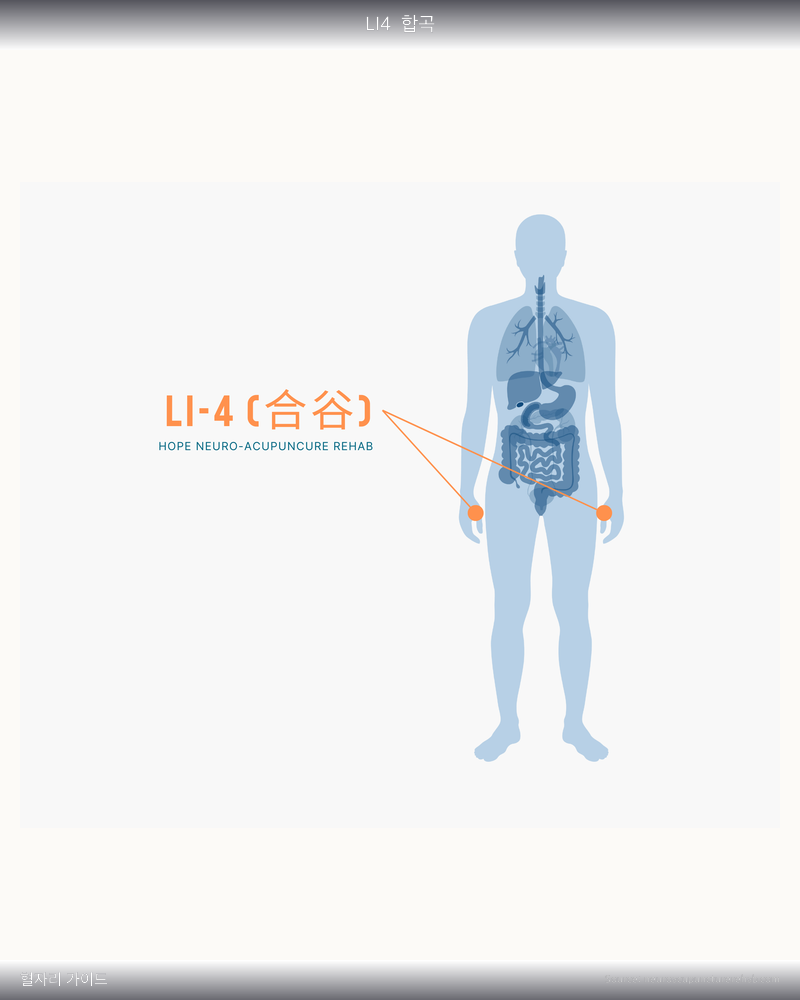
    1️⃣ اللمسة الكبيرة (LI4)

    LI4 acupuncture point

    الموقع: الجزء المقعر الذي يلتقي فيه الإبهام والسبابة (ظهر اليد)

    خط الطاقة: قناة الأمعاء الغليظة

    آلية العمل: تُعرف نقطة LI4 بأنها “العلاج الأمثل لجميع أنواع الصداع”. تقع على قناة الأمعاء الغليظة التي تنقل الإشارات العصبية وتنظم التحفيز العصبي الموجه للدماغ. فعالة في تخفيف جميع أنواع الصداع تقريباً بما في ذلك الصداع النصفي والصداع التوتري والصداع الناتج عن الزكام.

    طريقة الضغط: استخدم إبهام اليد الأخرى للضغط ببطء على النقطة، مع الحفاظ على ضغط معتدل الألم لمدة 5-10 ثوانٍ وتكرار 3 مرات. يمكن أيضاً تدليك المعصم بحركات دائرية عكس اتجاه عقارب الساعة.

    التأثير: تخفيف فوري للصداع وتخفيف الإجهاد وتعزيز المناعة

    2️⃣ قمة الرأس (GV20)

    الموقع: أعلى الرأس (النقطة التي يلتقي فيها الخط الذي يربط الأذنين مع الخط المرفوع من جسر الأنف)

    خط الطاقة: القناة الحاكمة

    آلية العمل: تُعتبر أقرب نقطة ضغط للمركز الدماغي، حيث تخفف التوتر في قمة الرأس بشكل مباشر. فعالة جداً في تخفيف الألم في منطقة الرأس والصداع الناتج عن إرهاق الدماغ، كما تساعد في تحسين التركيز وتقليل القلق.

    طريقة الضغط: ضع إصبعي الوسطى والبنصر متداخلين على نقطة GV20 واضغط بشكل عمودي لمدة 5 ثوانٍ. كرر 20 مرة بحركة تدليك لطيفة على الرأس كله.

    التأثير: تخفيف ألم قمة الرأس وتخفيف إرهاق الدماغ وتحفيز النوم العميق

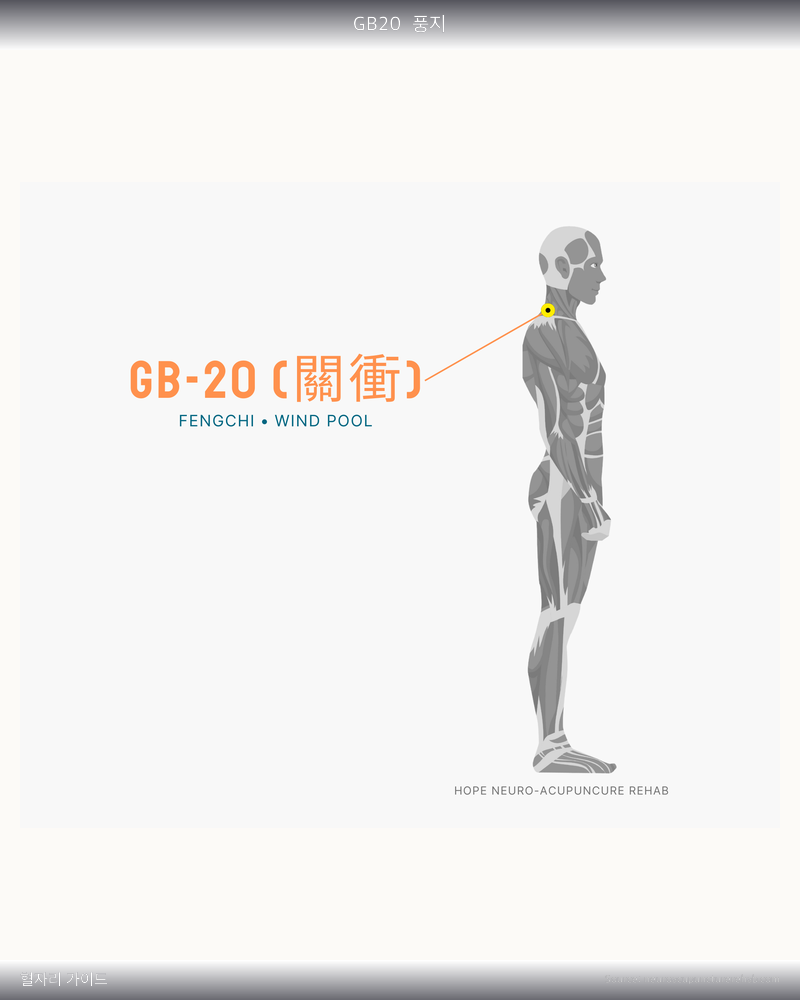
    3️⃣ بوابة الريح (GB20)

    GB20 acupuncture point

    الموقع: الجزء المقعر على جانبي الفقرات العنقية أسفل قاعدة الجمجمة (النقرة خلف العنق)

    خط الطاقة: قناة المرارة

    آلية العمل: تقع عند النقطة التي يلتقي فيها العظم والعضلة في منطقة العنق، وتكون الأكثر فعالية في تخفيف الصداع الناجم عن تيبس العنق والتوتر في منطقة الرأس الخلفية. تمنع تطور صداع ناتج عن رقبة محنية وإدمان الهاتف الذكي.

    طريقة الضغط: استخدم إبهام كلتا يديك للضغط على نقطة GB20 ببطء مع إمالة الرأس قليلاً للخلف لزيادة التحفيز. كرر الضغط لمدة 5 ثوانٍ خمس مرات، مع التركيز على جانب واحد أولاً.

    التأثير: تخفيف تيبس العنق والصداع المرتبط بالفقرات العنقية وتخفيف صداع الإجهاد وتحسين حركة العنق

    4️⃣ التدفق الكبير (LR3)

    الموقع: على ظهر القدم بين الإصبع الأول والثاني (النقرة حيث تلتقي العظام)

    خط الطاقة: قناة الكبد

    آلية العمل: نقطة ضغط تتحكم في وظائف الكبد والاستقرار العاطفي، فعالة في تخفيف الصداع والصداع النصفي الناجم عن الإجهاد والغضب. تعزز وظيفة الكبد في إزالة السموم وتساعد الجسم على التخلص من الفضلات، مما يحسن الصداع المزمن بشكل جذري.

    طريقة الضغط: ضع القدم على الركبة أو على الأرض، ثم ابحث عن نقطة LR3 واضغط عليها ببطء بإبهامك لمدة 3 ثوانٍ. يمكن أيضاً تدليك المنطقة بين الأصابع بحركات دائرية، كرر 3 مرات يومياً.

    التأثير: تخفيف صداع الإجهاد والصداع النصفي وتقوية وظائف الكبد والاستقرار العاطفي

    5️⃣ نقطة الترجمان (TE17)

    TE17 acupuncture point

    الموقع: الجزء المقعر خلف الأذن أسفل الفص الأذني

    خط الطاقة: قناة التسخين الثلاثي

    آلية العمل: تتركز الأعصاب والأوعية الدموية حول الأذن في هذه المنطقة، متخصصة في تخفيف صداع جانب الرأس ومنطقة الصدغ. تتحكم قناة التسخين الثلاثي في التمثيل الغذائي والدورة الدموية في الجسم، لذا فإن تحفيز نقطة TE17 يزيد من تدفق الدم إلى الدماغ مما يحل المشكلة الأساسية للصداع.

    طريقة الضغط: ابحث عن النقرة خلف الأذن باستخدام السبابة والوسطى وقم بتدليكها برفق بحركات دائرية. تجنب الضغط القوي جداً، واستمر برفق لمدة 1-2 دقيقة.

    التأثير: تخفيف الصداع النصفي والألم على جانب الرأس وتخفيف التوتر حول الأذن وتحسين تدفق الدم إلى الدماغ

    روتين الضغط الذاتي لمدة 5 دقائق

    الأوقات المثلى: بعد الاستيقاظ مباشرة ووقت الغداء وقبل النوم (3 مرات يومياً)

    1. [دقيقة واحدة] الضغط على LI4 في كلتا اليدين: 30 ثانية لكل جانب مع الضغط البطيء
    2. [دقيقة واحدة] الضغط على GV20: الضغط العمودي بإصبعي الوسطى، كرر 20 مرة
    3. [دقيقة واحدة] الضغط على GB20 في كلا الجانبين: 30 ثانية لكل جانب مع إمالة الرأس للخلف
    4. [دقيقة واحدة] الضغط على LR3 في كلتا القدمين: 30 ثانية لكل قدم مع التدليك الدائري
    5. [دقيقة واحدة] الضغط على TE17 في كلا الجانبين: 30 ثانية لكل جانب مع التدليك الدائري اللطيف

    نصائح إضافية: غسل اليدين والقدمين بماء دافئ قبل الضغط يسهل الوصول إلى نقاط الضغط. كما من المهم شرب كمية كافية من الماء بعد الضغط.

    ⚠️ تحذير طبي: هذا المقال مكتوب لأغراض المعلومات الصحية فقط ولا يحل محل التشخيص الطبي المتخصص أو العلاج. إذا استمر الصداع أو كان شديداً، أو إذا ظهر صداع شديد مفاجئ، أو إذا كان مصحوباً بأعراض أخرى مثل الحمى أو تيبس الرقبة، يجب استشارة متخصص طبي بالتأكيد. قد تختلف فعالية الضغط على نقاط الضغط حسب الحالة الصحية الفردية.
    🤰 تحذير للحوامل: نقاط الضغط LI4 و LR3 قد تسبب تقلصات الرحم لدى الحوامل. إذا كنتِ حاملاً أو قد تكونين حاملاً، يجب استشارة متخصص قبل تطبيق هذه النقاط. النقاط الآمنة هي GV20 و GB20 و TE17.
  • 5 نقاط ضغط مفيدة لإرهاق العينين — دليل شامل للعلاج الذاتي بالضغط

    5 نقاط ضغط مفيدة لإرهاق العينين — دليل شامل للعلاج الذاتي بالضغط

    ملخص سريع: يمكن تخفيف إرهاق العين بسرعة من خلال الضغط على 5 نقاط ضغط هي: جينجمينج (BL1)، وتشانزو (BL2)، وسيزوجونج (TE23)، وتايانج (Ex-HN5)، وهيجو (LI4)، مما يحسّن تدفق الدم ويرخي عضلات العين.

    المقدمة

    عندما تحدق في شاشات الهاتف الذكي والكمبيوتر والجهاز اللوحي طوال اليوم، تشعر بثقل في العين، وعدم وضوح الرؤية، وألم خلف العينين. هذا هو ما يسمى بـ “إرهاق العين”. في الطب الصيني التقليدي، تنتمي العينان إلى الكبد، ويعتقد أن إرهاق العين يحدث عندما يكون هناك نقص في دم الكبد أو عندما يكون تدفق طاقة تشي (القوة الحيوية) مسدوداً. من خلال تحفيز نقاط ضغط معينة موزعة حول العينين والذراعين والساقين، يمكن تحسين الدورة الدموية وتخفيف توتر عضلات العين، مما يخفف إرهاق العين بسرعة. خمس دقائق فقط باستخدام أصابعك كافية بدون أي أدوية.

    5 نقاط ضغط لتخفيف إرهاق العين

    1. جينجمينج (BL1) — أكثر نقطة ضغط فعالية لإرهاق العين

    BL1 acupuncture point

    الموقع: الزاوية الداخلية للعين (بجانب الأنف) في الحفرة العلوية من زاوية العين. يقع أعلى قليلاً من خط الحدود بين الأنف والعين.

    طريقة الضغط: استخدم السبابة أو الإبهام من كلا اليدين واضغط ببطء نحو الأعلى حتى تشعر بدفء، واحتفظ بالضغط لمدة 3-5 ثوانٍ. كرر 10 مرات في مجموعة واحدة، وكرر هذا 3 مرات يومياً.

    الفوائد: جينجمينج هي نقطة الضغط الأساسية لإرهاق العين واحمرار العين والغشاوة البصرية وقصر النظر والعين الجافة. تخفف توتر عضلات حول العين مباشرة وتعزز تدفق الدم حول العينين، مما يسرع بشكل كبير من تعافي إرهاق العين. إذا ضغطت عليها كل ثلاث ساعات، يمكنك تقليل إرهاق العين بشكل كبير بعد العمل لفترة طويلة.

    2. تشانزو (BL2) — نقطة الضغط المخففة للإرهاق داخل الحاجب

    BL2 acupuncture point

    الموقع: الحفرة الموجودة في الطرف الداخلي للحاجب (فوق الأنف). ابحث عن الزاوية الداخلية الأكثر عمقاً من كلا الحاجبين.

    طريقة الضغط: استخدم إبهام كلا يديك واضغط برفق نحو الأعلى، مع الحفاظ على الضغط لمدة حوالي 5 ثوانٍ إلى أن تشعر بإحساس “الحموضة والتورم”. كرر 8-10 مرات في كل جلسة، 3-4 مرات يومياً.

    الفوائد: تخفف تشانزو إرهاق العين والعين الجافة والألم بالقرب من الحاجب. وهي فعالة جداً بشكل خاص في تخفيف توتر منطقة الجبين والصداع في مقدمة الرأس المصاحب لإرهاق العين. كما تساعد في تحسين التجاعيد في الجبين الناجمة عن الإجهاد.

    3. سيزوجونج (TE23) — نقطة الضغط المتخصصة في إرهاق الجانب الخارجي للعين

    TE23 acupuncture point

    الموقع: التجاعيد في الجزء الخارجي من العين (نحو المعابد)، والمنطقة المنخفضة عندما تغمض عينيك.

    طريقة الضغط: استخدم إصبع البنصر أو الإصبع الأوسط من كلا اليدين واضغط برفق نحو الأعلى أثناء رسم دوائر بلطف لمدة 5 ثوانٍ. كرر 10 مرات، 2-3 مرات يومياً.

    الفوائد: تخفف سيزوجونج إرهاق الجزء الخارجي من العينين والثقل. وهي مفيدة بشكل خاص لإرهاق العين المصحوب بالصداع النصفي أو ألم المعابس. كما تعزز تدفق اللمف حول العينين، مما يحسّن تورم الجفن أيضاً.

    4. تايانج (Ex-HN5) — نقطة الضغط متعددة الأغراض على المعابس

    الموقع: المعابس، في المنتصف تقريباً بين العين والأذن. المنطقة التي تنخفض عند الضغط عليها بإصبعك.

    طريقة الضغط: اقترب برفق من المعابس باستخدام إصبع الأوسط أو البنصر من كلا اليدين، ثم اضغط برفق نحو الخلف أثناء رسم دوائر بقوة خفيفة لمدة 10 ثوانٍ. كرر 15 مرة، 3 مرات يومياً.

    الفوائد: تخفف تايانج إرهاق العين والصداع النصفي وألم العينين والثقل حول العينين والمعابس في نفس الوقت. وهي فعالة في تحسين تدفق الدم حول العينين وتخفيف التوتر العصبي، وتُنصح بشكل خاص لإرهاق العين الناجم عن الإجهاد لدى الأشخاص المعاصرين.

    5. هيجو (LI4) — نقطة الضغط الشاملة للألم الشامل والعين المرهقة

    LI4 acupuncture point

    الموقع: المركز بين الإبهام والسبابة، أعلى نقطة عند إغلاق يديك.

    طريقة الضغط: استخدم إبهام اليد الأخرى واضغط نحو الأسفل (نحو المعصم) ببطء مع تحفيز ثابت. اضغط لمدة دقيقة واحدة أو أكثر، 2-3 مرات يومياً. من الأفضل تحفيز كلا الجانبين بالقيام بكل جانب على حدة.

    الفوائد: هيجو هي “نقطة الضغط الشاملة” التي تسيطر على إرهاق العين واحمرار العينين وجميع أنواع الألم على الوجه (الصداع وألم الأسنان والألم الوجهي). وهي فعالة جداً بشكل خاص عندما يكون هناك صداع أو ألم في العينين ناجم عن إرهاق العين. كما تحفز الجهاز العصبي اللاإرادي في اليد، مما يخفف توتر العينين والدماغ في نفس الوقت.

    روتين الضغط الذاتي لمدة 5 دقائق

    روتين لتخفيف إرهاق العين يستغرق 5 دقائق فقط في الصباح المشغول أو الغداء أو المساء.

    1. جينجمينج (دقيقة واحدة): اضغط على جينجمينج من كلا الجانبين بالتناوب 10 مرات × مجموعة واحدة، حوالي دقيقة واحدة
    2. تشانزو (دقيقة واحدة): اضغط على تشانزو من كلا الجانبين برفق 8 مرات × مجموعة واحدة، حوالي دقيقة واحدة
    3. سيزوجونج (دقيقة واحدة): ارسم دوائر على سيزوجونج من كلا الجانبين 10 مرات × مجموعة واحدة، حوالي دقيقة واحدة
    4. تايانج (دقيقة واحدة): ارسم دوائر على تايانج من كلا الجانبين في نفس الوقت 15 مرة، حوالي دقيقة واحدة
    5. هيجو (دقيقة واحدة): اضغط على هيجو من كلا الجانبين لمدة 30 ثانية لكل جانب، حوالي دقيقة واحدة

    نصيحة: إذا كررت هذا الروتين 3 مرات يومياً – في الصباح بعد الاستيقاظ مباشرة، وبعد الغداء بساعة واحدة، وبعد مغادرة العمل مساءً – يمكنك منع تراكم إرهاق العين. يمكنك أيضاً تغيير ترتيب النقاط حسب راحتك الشخصية.

    ⚠️ إخلاء مسؤولية طبية: تم كتابة هذا المقال لأغراض تقديم معلومات صحية فقط، وليس بديلاً عن التشخيص أو العلاج الطبي المتخصص. إذا استمر إرهاق العين لمدة 3 أسابيع أو أكثر، أو إذا كان لديك انخفاض في الرؤية أو ألم في العينين أو إحساس بجسم غريب أو ارتفاع في ضغط العين، يجب عليك بالتأكيد استشارة أخصائي في طب العيون أو الطب الصيني التقليدي. خاصة إذا كان لديك حالات أساسية مثل الجلوكوما أو تنكس الشبكية أو جفاف العين، احصل على موافقة متخصص طبي قبل الضغط على هذه النقاط.
    🤰 تحذير للنساء الحوامل: قد تسبب نقطة هيجو (LI4) تقلصات الرحم أثناء الحمل. إذا كنتِ حاملاً أو قد تكونين حاملاً، تجنبي الضغط على هيجو وحفزي فقط جينجمينج وتشانزو وسيزوجونج وتايانج برفق. إذا كنتِ غير متأكدة، تأكدي من استشارة أخصائي التوليد أو الطب الصيني التقليدي قبل القيام بذلك.
  • 5 Acupressure Points for Nausea — Complete Self-Acupressure Guide

    5 Acupressure Points for Nausea — Complete Self-Acupressure Guide

    One-line summary: Vomiting can be relieved by acupoint pressing of acupoints such as Neiguan, Hegu, and Zusanli to regulate gastrointestinal function and alleviate nausea.

    Introduction

    Sudden vomiting, dizziness, and nausea from digestive discomfort are uncomfortable symptoms that interfere with daily life. Especially when it’s difficult to take medicine or quick relief is needed, wouldn’t it be great to have a method you can do without moving from your seat?

    Traditional Chinese medicine views vomiting as an imbalance in the digestive system and believes that stimulating specific acupoints can calm the gastric nerves and normalize gastric peristalsis. Scientific research has also published results showing that stimulation of specific acupoints (particularly the Neiguan acupoint) alleviates chemotherapy-induced nausea. In this article, we’ll introduce the 5 most effective acupoints for relieving vomiting and self-massage techniques.

    5 Acupoints for Relieving Vomiting

    1. Neiguan (PC6, Neiguan) — The Strongest Barrier Against Nausea

    PC6 acupuncture point

    Location: On the inner wrist, located between the two tendons at the center of the forearm, about two finger-widths above the wrist crease. (About 5cm up from the inner wrist crease in the direction of the elbow)

    Benefits: Neiguan is the most well-researched acupoint for improving nausea and digestive discomfort. It directly regulates gastric nerves to suppress the gag reflex and is also effective for dizziness and nausea. It is widely used to relieve morning sickness during pregnancy.

    Technique: Using your thumb, apply pressure at a level where you feel slight discomfort and press for 3-5 seconds, then slowly release. Repeat this process for 1-2 minutes on each hand, doing both hands. Even when there is no discomfort, you can apply pressure every 5 minutes for prevention.

    2. Hegu (LI4, Hegu) — Normalizing Overall Digestive Function

    LI4 acupuncture point

    Location: Between the thumb and index finger, at the highest point of the hand (bone intersection). It’s the indented area between the thumb and index finger when your hand is open.

    Benefits: An important acupoint of the Large Intestine meridian, it regulates overall digestive function. It improves not only vomiting but also various digestive symptoms such as constipation and diarrhea, and also has pain-relieving effects. It’s a multipurpose acupoint that enhances overall bodily function.

    Technique: Apply pressure using the thumb of the opposite hand. Press for 10-15 seconds at a level where you feel slight discomfort, and repeat with 2-3 second rest periods. It’s effective to practice for 2 minutes on each hand.

    ⚠️ Caution: Pregnant women should consult with a traditional Chinese medicine doctor before practicing this, as there is a risk of uterine contractions.

    3. Zusanli (ST36, Zusanli) — Fundamentally Strengthening Digestive Power

    ST36 acupuncture point

    Location: About 4 cun (approximately 10cm) below the knee, on the outer side of the shinbone. It’s located about 10cm down from the outer indented area of the knee toward the ankle.

    Benefits: The most important acupoint for the gastrointestinal system, it fundamentally strengthens digestive function. It improves chronic vomiting, poor digestion, and fatigue, and regular acupressure increases digestive system resilience. It also has excellent preventative effects for vomiting.

    Technique: Sit comfortably and extend one leg. Apply pressure with your thumb or finger joint for 30 seconds to 1 minute at a level where you feel slight discomfort. Practice on each leg for 2-3 minutes. Heat therapy (moxibustion) is also effective.

    4. Zhongwan (CV12, Zhongwan) — Regulating the Gastric Center

    Location: Above the navel, located about 4 cun (10cm) above the xiphoid process (the border between the chest and abdomen). More precisely, it’s at the midpoint between the navel and the xiphoid process.

    Benefits: A central gastric acupoint on the Conception Vessel meridian, it directly regulates stomach function. It quickly alleviates poor digestion, abdominal bloating, and vomiting, and normalizes gastric acid secretion. It’s particularly effective for vomiting from food poisoning or overeating.

    Technique: Lie down comfortably and relax your abdomen. Gather three fingers and gently massage the Zhongwan area in circular motions. Massage slowly 50-100 times in a clockwise direction, or directly apply pressure with your thumb for 30 seconds to 1 minute.

    5. Taichong (LR3, Taichong) — Relieving Stress-Related Vomiting

    Location: On the top of the foot, in the indented area between the big toe and the second toe. It’s about 2 cun (5cm) up from between the toe bases on the top of the foot.

    Benefits: An important acupoint on the Liver meridian, it effectively alleviates vomiting caused by stress and tension. It improves digestive function along with emotional stability and also helps with nausea from headaches or fatigue. It’s particularly recommended for nervous digestive discomfort.

    Technique: Sit and place one foot on your knee. Using your thumb, press for 10-15 seconds at a level where you feel slight discomfort, and repeat with rest periods. By practicing on each foot for 2-3 minutes, you can feel emotional stability along with vomiting relief effects.

    ⚠️ Caution: Pregnant women should consult with a traditional Chinese medicine doctor before practicing this, as there is a risk of uterine contractions.

    5-Minute Self-Massage Routine

    Emergency vomiting situation — Order to relieve in 5 minutes:

    1. Neiguan (1 minute) — 30 seconds on each hand, highest priority for suppressing nausea
    2. Hegu (1 minute) — 30 seconds on each hand, overall digestive regulation
    3. Zhongwan (1.5 minutes) — Circular massage 50-100 times with three fingers, direct stimulation of the gastric center
    4. Zusanli (1.5 minutes) — 45 seconds on each leg, fundamental strengthening of digestive power

    Daily prevention routine — 5 minutes every morning:

    By proceeding in the order of Neiguan 1 minute → Hegu 1 minute → Zhongwan 1.5 minutes → Zusanli 1.5 minutes, you can prevent vomiting recurrence in advance. It’s especially recommended to practice daily for those with weak digestion or frequent dizziness.

    ⚠️ Medical Disclaimer: This article is written for informational purposes and does not substitute for professional medical diagnosis or treatment. If vomiting persists or is severe, is accompanied by abdominal pain, or includes blood, please consult with a healthcare professional (doctor or traditional Chinese medicine doctor). Especially children, elderly individuals, and those with chronic conditions should practice under professional guidance.
    🤰 Pregnancy Caution: Among the acupoints above, Hegu (LI4) and Taichong (LR3) can cause uterine contractions in pregnant women. If you are pregnant or could be pregnant, avoid these two acupoints and practice only Neiguan, Zusanli, and Zhongwan, or consult with a traditional Chinese medicine doctor before practicing. If the goal is to relieve morning sickness, Neiguan acupressure alone is sufficiently effective.
  • 5 Acupoints for Text Neck Pain — Complete Self-Acupressure Guide

    5 Acupoints for Text Neck Pain — Complete Self-Acupressure Guide

    “`html

    One-line summary: Stimulating five acupoints—GB20, BL10, GB21, LI4, and LR3—for 5 minutes daily can effectively relieve neck and shoulder pain caused by text neck.

    What is Text Neck Pain?

    With the increased use of smartphones and computers, the number of people suffering from text neck has significantly increased. Text neck is a condition where the neck is bent forward more than in a normal posture, placing continuous tension on the neck and shoulder muscles. This causes stiffness in the muscles around the cervical spine and nerve compression, resulting in various symptoms such as neck pain, shoulder tightness, headaches, and tingling in the arms. Traditional Chinese medicine believes that such neck pain can be alleviated through acupoint stimulation. Acupressure stimulates meridians to promote the circulation of qi and blood, relieve muscle tension, and is effective for pain relief and prevention.

    5 Effective Acupoints for Text Neck Pain

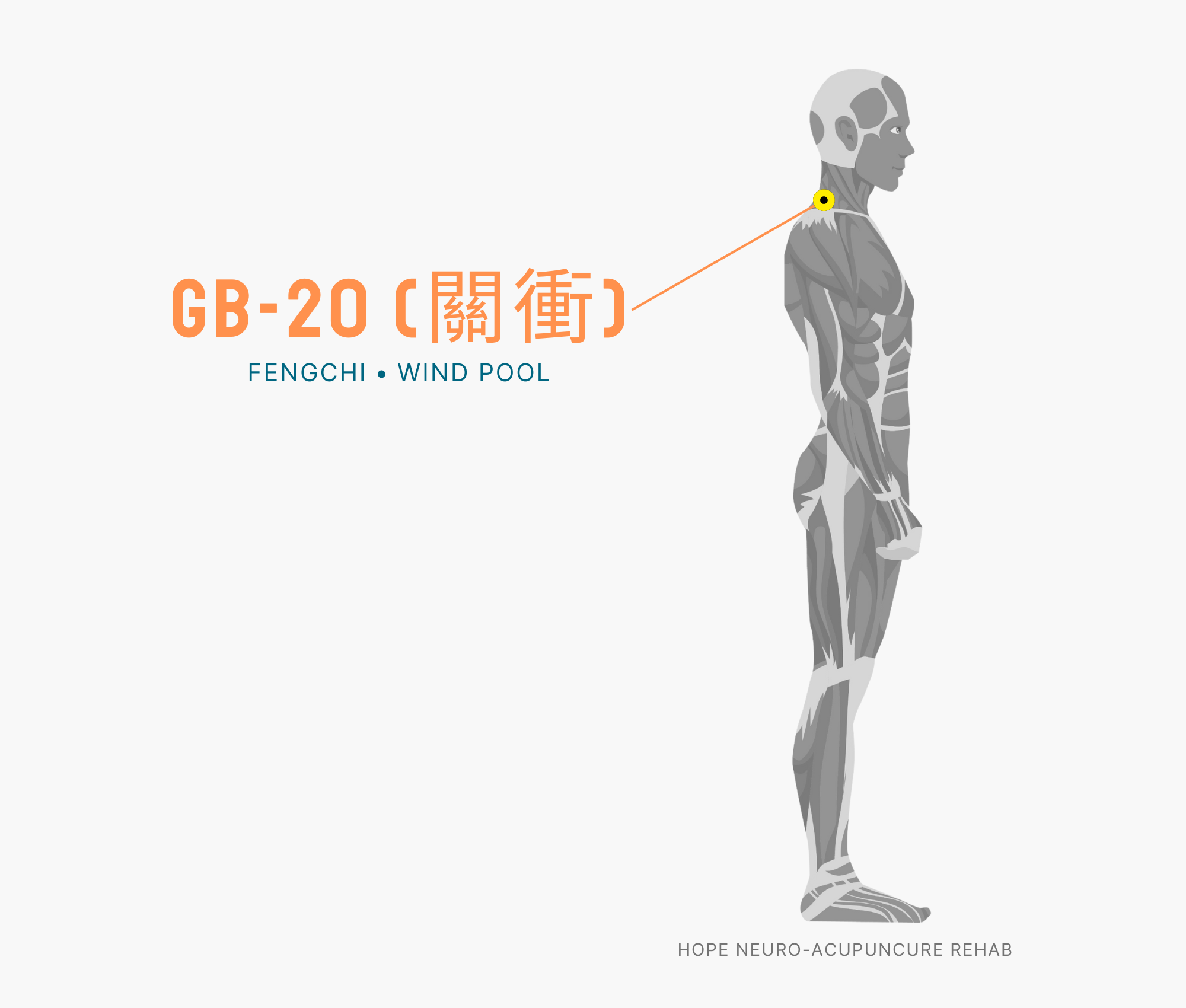
    1. GB20 (Fengchi) — The ‘Pain-Blocking Acupoint’ at the Back of the Neck

    GB20 acupuncture point

    Location: At the back of the neck, in the hollow area below the skull (on both sides of the boundary between the neck and head) | WHO Code: GB20

    Technique: Fix both thumbs on the GB20 acupoint and apply pressure upward for 2-3 seconds, then release. Repeat 10-15 times. It’s easier to locate the acupoint if you bend your neck slightly forward.

    Benefits: GB20 is an important meridian connecting the neck and head. Stimulating it promotes blood circulation around the neck and relieves muscle tension, simultaneously improving back-of-neck pain, headaches, and eye fatigue caused by text neck. It’s beneficial to stimulate this point frequently when your neck feels stiff in the afternoon.

    2. BL10 (Tianzhu) — The ‘Troublemaker Acupoint’ for Neck Pain

    BL10 acupuncture point

    Location: At the back of the neck, slightly below GB20, approximately 1.3 cm to the side of the center line at the back of the neck | WHO Code: BL10

    Technique: Place both thumbs on BL10 and slowly massage in circular motions 10-15 times. Alternatively, pressing with the thumbs for 2-3 seconds is also effective. Use a natural pressure level that creates a sensation of soreness.

    Benefits: BL10 directly alleviates stiffness in muscles around the cervical spine. It rapidly improves back-of-neck pain, stiff neck, and cervicogenic headaches, providing immediate relief for tension pain in the shoulders and neck caused by text neck.

    3. GB21 (Jianjing) — The ‘Emergency Acupoint’ for Shoulder-Neck Tension

    Location: At the midpoint where the neck and shoulder meet, at the highest point of the shoulder | WHO Code: GB21

    Technique: Pinch GB21 with the thumb and fingers of the opposite hand and apply pressure for 3-5 seconds. Repeat 10-15 times. Alternatively, pressing downward with the thumb is also effective.

    Benefits: The shoulder-neck boundary is the most tense area caused by text neck. Stimulating GB21 relieves widespread tension from the neck to the shoulders, improves blood circulation, and simultaneously resolves shoulder tightness, neck pain, and tingling sensations in the arms.

    4. LI4 (Hegu) — The ‘Universal Acupoint’ for Whole-Body Pain

    LI4 acupuncture point

    Location: In the center of the webbing between the thumb and index finger on the dorsum of the hand, in the hollow area | WHO Code: LI4

    Technique: Press LI4 firmly with the opposite thumb for 2-3 seconds, then release. Repeat 10-15 times. Pressure that creates slight discomfort is most effective. Stimulate both hands.

    Benefits: LI4 is the ‘king of pain relief’ that stimulates the nervous and immune systems. It comprehensively alleviates pain in the neck, shoulders, and arms, and also relieves muscle tension caused by stress. It also improves headaches and fatigue accompanying text neck pain.

    5. LR3 (Taichong) — The ‘Stress-Relief Acupoint’ for Whole-Body Relaxation

    Location: On the dorsum of the foot, in the center of the webbing between the big toe and second toe | WHO Code: LR3

    Technique: Apply pressure to LR3 with your thumb or a blunt object for 2-3 seconds, then release. Repeat 10-15 times. It’s important to stimulate both feet with equal pressure.

    Benefits: LR3 promotes relaxation throughout the entire body through the liver meridian. It alleviates muscle stiffness caused by stress and improves blood circulation, fundamentally resolving tension in the neck and shoulders. It’s particularly effective for text neck pain worsened by stress.

    5-Minute Self-Massage Routine

    Choose according to your situation:

    Quick Relief Mode (3 minutes):

    1. GB20 × 10 times (30 seconds)
    2. BL10 × 10 times (30 seconds)
    3. GB21 × 10 times (30 seconds)
    4. LI4 × 10 times (both hands, 1 minute)

    Complete Care Mode (5 minutes):

    1. GB20 × 15 times (1 minute)
    2. BL10 × 15 times (1 minute)
    3. GB21 × 15 times (1 minute)
    4. LI4 × 10 times (both hands, 1 minute)
    5. LR3 × 10 times (both feet, 1 minute)

    Recommended timing: After waking in the morning, around 3 PM after lunch, and after work in the evening, for a total of 1-2 times daily. With consistent daily practice, you can notice significant improvement within 1-2 weeks.

    ⚠️ Medical Disclaimer: This article is provided for informational purposes only and does not substitute for professional medical diagnosis or treatment. If symptoms persist or are severe, please consult with a healthcare professional.
    🤰 Pregnancy Warning: Of the acupoints mentioned above, LI4 and LR3 may trigger uterine contractions in pregnant women. If you are pregnant or may be pregnant, please consult with a healthcare professional before proceeding, and selectively use only GB20, BL10, and GB21.

    “`

  • 5 Acupoints for Jaw Pain — Complete Self-Acupressure Guide

    5 Acupoints for Jaw Pain — Complete Self-Acupressure Guide

    “`html

    One-line summary: By applying acupressure to the Lower Jaw (ST7), Jaw Muscle (ST6), Temple (EX-HN5), Wind Pool (GB20), and Three Intervals (LI3) acupoints 2-3 times daily, you can relieve jaw muscle tension and alleviate temporomandibular joint pain.

    Introduction

    Does your jaw make a clicking sound when you chew, or do you feel pain when opening your mouth? Modern people frequently experience temporomandibular joint pain due to stress, poor posture, and teeth grinding. These symptoms can progress beyond simple discomfort and develop into chronic pain. Acupressure on meridian points in traditional medicine effectively relieves temporomandibular joint pain by relaxing tense muscles around the jaw joint and improving blood circulation. Here are 5 acupoints you can easily stimulate at home without medication.

    5 Acupoints for Temporomandibular Joint Pain Relief

    1. Lower Jaw (ST7, Xiaguan) — Key acupoint above the temporomandibular joint

    ST7 acupuncture point

    Location: The hollow depression below the cheekbone, on the upper part of the jawbone. This is the easiest acupoint to locate when your mouth is closed.
    WHO Code: ST7 (Stomach Meridian of Foot-Yangming)
    Acupressure technique: Repeatedly press slowly upward with your thumb for 3-5 seconds, then release. Be careful not to press too hard, as this can increase pain.
    Effects: Relieves tension around the temporomandibular joint and directly reduces pain with jaw movement. It is also related to facial neuralgia and headaches, making it effective for comprehensive pain relief in the facial area.

    2. Jaw Muscle (ST6, Jiache) — Relaxation point for lower jaw muscles

    ST6 acupuncture point

    Location: The edge of the lower jaw, at the muscle that bulges when clenching the teeth. It is approximately 2cm above the tip of the lower jaw.
    WHO Code: ST6 (Stomach Meridian of Foot-Yangming)
    Acupressure technique: Press simultaneously upward and inward using your index and middle fingers. Massage 3-5 times daily, 30 seconds per session for best results.
    Effects: Directly relieves excessive tension in the masticatory muscles, making it particularly effective for temporomandibular joint pain caused by teeth grinding or jaw clenching.

    3. Temple (EX-HN5, Taiyang) — Universal acupoint at the temple

    Location: Both temples, in the hollow depression approximately 1.5cm laterally from the end of the eyebrow.
    WHO Code: EX-HN5 (Extra-meridian acupoint)
    Acupressure technique: Simultaneously massage both sides with your thumbs in circular motions. Repeat 10 times clockwise and 10 times counterclockwise. Perform this in the morning upon waking and again in the evening for best results.
    Effects: Effective for headache and facial tension relief, while relaxing the temporal muscles connected to the temporomandibular joint. Particularly helpful for temporomandibular joint pain caused by stress.

    4. Wind Pool (GB20, Fengchi) — Connection point between the cervical spine and jaw

    GB20 acupuncture point

    Location: The back of the head, in the bilateral hollow depressions at the base of the neck. These are the two indented areas that become palpable when you bend your head forward.
    WHO Code: GB20 (Gallbladder Meridian of Foot-Shaoyang)
    Acupressure technique: Slowly press downward with your thumbs on both sides for 1-2 minutes. Maintain pressure until you feel the neck muscles relax.
    Effects: Relieves neck and shoulder tension, reducing stress transmitted to the temporomandibular joint. Effective for temporomandibular joint pain caused by cervical spondylosis or forward head posture.

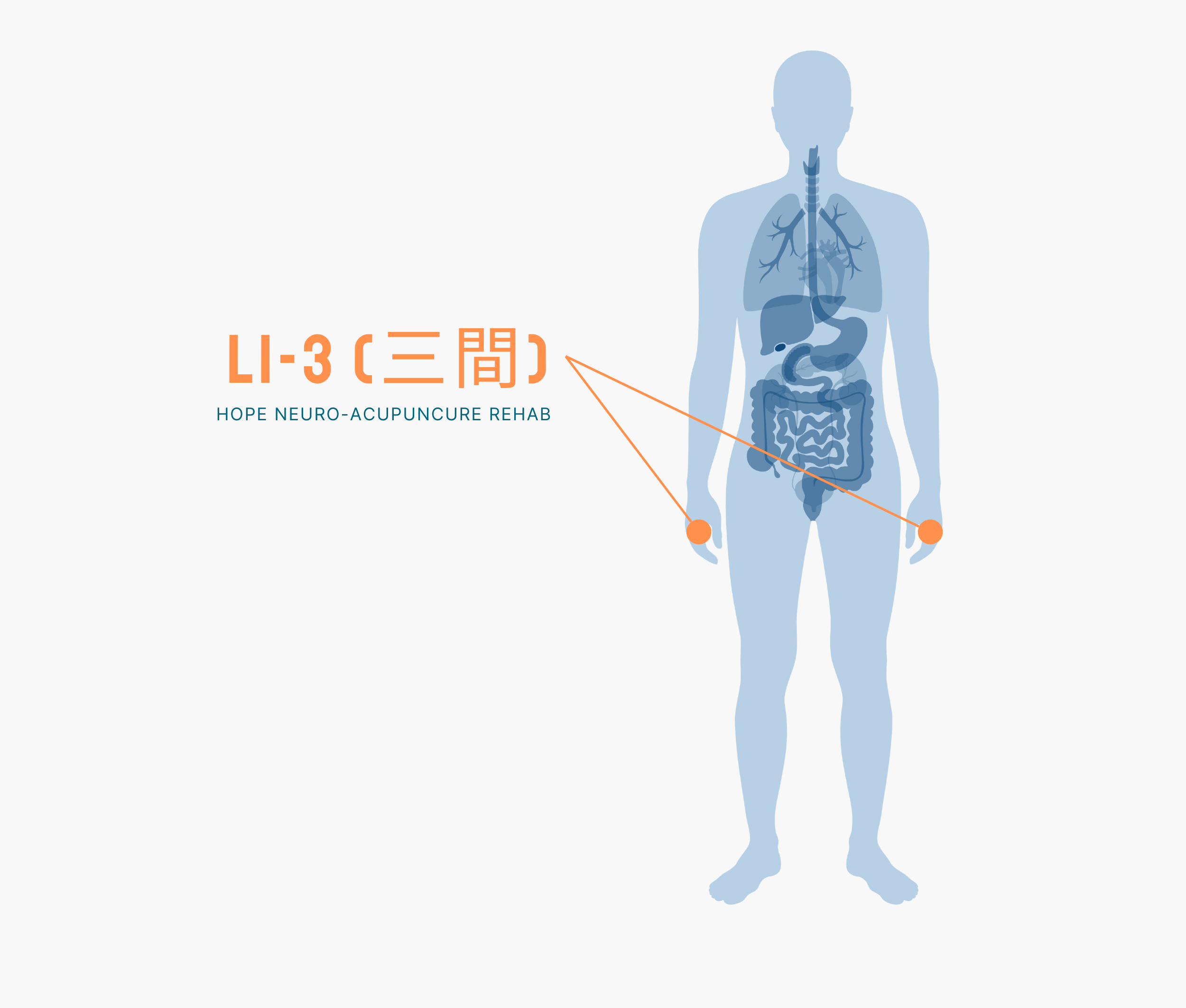
    5. Three Intervals (LI3, Sangjian) — Remote treatment point on the hand

    LI3 acupuncture point

    Location: The webbing between the thumb and index finger on the hand, at the midpoint where the bones meet.
    WHO Code: LI3 (Large Intestine Meridian of Hand-Yangming)
    Acupressure technique: Press or massage in circular motions using the thumb of the opposite hand for 1-2 minutes. Treat both hands.
    Effects: Stimulates the Large Intestine meridian, which regulates digestive and facial-related nerves, alleviating systemic tension associated with temporomandibular joint pain. As a remote treatment point, you can stimulate it anytime, anywhere.

    5-Minute Self-Acupressure Routine

    Perform the following sequence daily, either morning or evening:

    1. Preparation (30 seconds): Sit comfortably and take 3 deep breaths
    2. Wind Pool (GB20) — 1 minute: Slow pressing with thumbs × 3 times
    3. Temple (EX-HN5) — 1 minute: Circular massage with both thumbs × 2 sets
    4. Lower Jaw (ST7) — 1 minute: Press upward with thumb and release × 5 times
    5. Jaw Muscle (ST6) — 1 minute: Massage upward with index and middle fingers × 30 seconds
    6. Three Intervals (LI3) — 1 minute: Press firmly with both thumbs × 30 seconds each
    7. Closing (30 seconds): Gently move your jaw 10 times, then take deep breaths

    ⏰ Total duration: Approximately 5-6 minutes
    💡 Tip: Warm compress therapy or applying a warm towel to the face before acupressure enhances the muscle-relaxing effects.

    🤰 Pregnancy Caution: The acupoints mentioned in this article (Lower Jaw, Jaw Muscle, Temple, Wind Pool) are generally safe; however, if you are pregnant or possibly pregnant, avoid strong stimulation and consult with a traditional medicine practitioner or obstetric specialist before proceeding.
    ⚠️ Medical Disclaimer: This article is provided for informational purposes and does not replace professional medical diagnosis or treatment. If temporomandibular joint pain persists for more than 3 weeks, you have difficulty opening your mouth, or your jaw frequently dislocates, please consult a dentist or orthopedic specialist. In particular, if pain develops after trauma, seek immediate medical attention.

    “`

  • 5 Acupoints Good for Sore Throat — Complete Self-Acupressure Guide

    5 Acupoints Good for Sore Throat — Complete Self-Acupressure Guide

    “`html

    One-Minute Summary: Sore throat can be relieved by acupressing 5 acupoints: Hegu (LI4), Chize (LU5), Fengchi (GB20), Kunlun (BL60), and Tianfu (LU3). Press each point for 1-2 minutes, 2-3 times daily for best results.

    Why Does Acupressure Help With Sore Throat?

    Throat pain is a very common symptom in daily life. Sore throats from colds, dry throat, or vocal strain can be relieved with simple stimulation before taking medication. In traditional Chinese medicine, sore throat is viewed as ‘weakened lung function’ and ‘insufficient qi and blood circulation.’ Stimulating specific acupoints strengthens lung function and promotes qi and blood circulation around the throat, rapidly reducing inflammation. Plus, you only need your fingers, making it the best value-for-money self-care method you can do anywhere, anytime.

    5 Acupoints for Relieving Sore Throat

    1. Hegu (LI4) — The Key to Immunity and Inflammation Relief

    LI4 acupuncture point

    Location: The point where the thumb and index finger meet, at the most prominent part of the muscle

    Pressure Technique: Using the opposite thumb, apply vertical pressure to a point that feels slightly tender but good, hold for 5 seconds, then slowly release. Repeat for 1-2 minutes on each hand.

    Effects: As the representative acupoint of the Large Intestine meridian, it boosts overall immunity and rapidly reduces inflammation. Beyond sore throat, it’s excellent for headaches, general pain, and stress relief. In traditional Chinese medicine, it’s a ‘key point’ (yao xue) prescribed even for chronic diseases.

    2. Chize (LU5) — Lung Function Enhancement Specialist

    LU5 acupuncture point

    Location: On the inner side of the elbow, at the center of the elbow crease on the outer side (toward the thumb) when the elbow is bent

    Pressure Technique: Using the opposite thumb, gently press the inner elbow crease. When coughing or severe sore throat occurs, you can apply slightly stronger pressure.

    Effects: As a key acupoint of the Lung meridian, it directly strengthens lung function and rapidly relieves cough, pharyngitis, and sore throat. Regular stimulation of Chize also improves respiratory immunity and helps prevent colds.

    3. Fengchi (GB20) — The Nerve Center for Neck Stiffness and Inflammation

    GB20 acupuncture point

    Location: At the back of the neck, in the hollow where the base of the skull meets the neck (one on each side)

    Pressure Technique: Using the middle and ring fingers of both hands, simultaneously press the sides at the back of the neck and gently massage in circular motions. Repeat for about 1 minute.

    Effects: As the representative acupoint of the Gallbladder meridian, it relieves muscle tension around the neck and improves blood circulation. It effectively relieves neck stiffness from sore throat, headaches, and even laryngitis—a ‘multi-functional’ acupoint.

    4. Kunlun (BL60) — Auxiliary Center for Whole-Body Immunity

    BL60 acupuncture point

    Location: On the outer side of the ankle, in the hollow between the ankle bone and the heel

    Pressure Technique: Use the thumb to apply vertical pressure to the outer ankle, hold for 5 seconds, then slowly release. Perform on each foot for 1-2 minutes.

    Effects: As an important acupoint of the Bladder meridian, it boosts whole-body immunity and is excellent for pain relief. Particularly effective when sore throat is accompanied by general fatigue, and regular stimulation helps prevent recurrent colds.

    5. Tianfu (LU3) — The Strongest Airway Inflammation Soother

    LU3 acupuncture point

    Location: On the inner side of the arm, descending from the armpit toward the elbow, at the center crease of the inner arm (slightly toward the upper part)

    Pressure Technique: Using the opposite thumb, gently press the inner arm and hold for 5 seconds. When experiencing cough or phlegm, you can apply slightly stronger pressure.

    Effects: An acupoint on the Lung meridian pathway, it directly soothes throat inflammation and relieves cough and sore throat. When stimulated together with Chize, it creates a synergistic effect, with particularly rapid results especially in early stages of throat colds.

    5-Minute Self-Acupressure Routine

    Sequence and Time Distribution (5 minutes total):

    1. Hegu (LI4) — 1 minute (30 seconds per hand)
    2. Chize (LU5) — 1 minute (30 seconds per arm)
    3. Tianfu (LU3) — 1 minute (30 seconds per arm)
    4. Fengchi (GB20) — 1 minute (30 seconds per side)
    5. Kunlun (BL60) — 1 minute (30 seconds per foot)

    Best Time: Recommended twice daily—after waking in the morning and before bed at night. During acute sore throat, you can add an additional session during lunch time.

    Tip: Performing this after drinking warm water promotes better blood circulation and increases effectiveness. After acupressure, avoid exposure to cold air for at least 30 minutes.

    ⚠️ Medical Disclaimer: This article is provided for informational health purposes and does not replace professional medical diagnosis or treatment. If sore throat persists for more than 3 weeks or is accompanied by serious symptoms such as high fever, severe pain, or difficulty swallowing, you must consult a healthcare professional (ENT specialist or licensed acupuncturist). Patients with immune disorders or those undergoing cancer treatment must consult a specialist before acupressure.
    🤰 Pregnancy Warning: Some of the above acupoints (particularly Hegu LI4 and Kunlun BL60) may trigger uterine contractions. If you are pregnant or possibly pregnant, you must consult an acupuncturist or obstetrician before performing this routine. It is important to select and press only safe acupoints during pregnancy.

    “`

  • 5 Acupoints Good for Stomach Pain — Complete Self Acupressure Guide

    5 Acupoints Good for Stomach Pain — Complete Self Acupressure Guide

    “`html

    One-line summary: Stomach pain is a common symptom caused by decreased digestive function and stress. Pressing five key acupoints—Taichong, Sanyinjiao, Hegu, Zhongwan, and Zusanli—helps improve abdominal blood circulation and normalize digestive function.

    Introduction

    Does stomach pain that comes suddenly feel frustrating and uncomfortable? In our stressful daily lives, many people lose stomach health as their digestive function declines. Stomach pain can be a simple signal—a sign that our body needs better care.

    In traditional Korean medicine, stomach health is viewed as ‘middle burner function.’ By stimulating specific acupoints, it’s believed that we can promote qi and blood circulation, improve digestive function, and relieve stomach pain. The five acupoints I’m introducing today are methods verified over thousands of years, and anyone can easily apply pressure to them at home. Learn health management that requires nothing but your hands, starting now.

    Five Acupoints Effective for Stomach Pain Relief

    1. Taichong (LR3) — The Center of Liver Function and Digestion

    Location: On the top of the foot, approximately two thumb joints above the point where the big toe and second toe meet

    WHO Code: LR3 (Liver 3)

    Pressure technique: Sit with your foot stretched forward and find the Taichong acupoint with your thumb, pressing slowly. Start gently at first and gradually increase pressure. Apply once for 1-2 minutes, twice a day for best results.

    Expected benefits: Taichong promotes the flow of liver qi and relieves stomach cramps caused by stress. It’s particularly effective for stomach pain caused by emotional stress, improves digestive efficiency, and reduces abdominal bloating. With regular pressure application, you can see improvements in overall digestive function.

    2. Sanyinjiao (SP6) — The Key to Digestive Health

    SP6 acupuncture point

    Location: On the inner calf, approximately four fingers (about 10cm) above the inner ankle bone

    WHO Code: SP6 (Spleen 6)

    Pressure technique: With your leg comfortably extended or bent, slowly press the inner calf with your thumb. Aim precisely at the inner muscle rather than the bone. The ideal pressure should cause slight soreness without pain.

    Expected benefits: Sanyinjiao is an important acupoint that regulates spleen and stomach function, promoting digestive absorption. It’s particularly effective for chronic indigestion, diarrhea, and abdominal bloating relief, and also enhances overall immunity. Regular stimulation helps prevent digestive diseases.

    3. Hegu (LI4) — The Master Point for Pain Relief

    LI4 acupuncture point

    Location: Where the thumb and index finger meet, at the highest point on the back of the hand

    WHO Code: LI4 (Large Intestine 4)

    Pressure technique: Use the thumb of one hand to press and release the Hegu acupoint of the other hand vertically. Start with light pressure and gradually increase, being careful not to cause unbearable pain. Rubbing in a circular motion is also effective.

    Expected benefits: Hegu is so effective for various conditions that it’s called one of the ‘Four Master Points.’ It particularly relieves abdominal pain and relaxes tense abdominal muscles, promotes large intestine function to improve digestion, and enhances overall immune resistance.

    4. Zhongwan (CV12) — The Direct Regulator of Stomach Function

    Location: Midpoint between the navel and the solar plexus (below the chest), on the abdominal midline

    WHO Code: CV12 (Conception Vessel 12, Ren Mai 12)

    Pressure technique: Lie in a comfortable position and relax your abdomen. Use three fingers together to slowly press the Zhongwan acupoint, though circular clockwise rubbing is more effective. Apply once for 1-2 minutes, once or twice daily. It’s best to do this 30 minutes after eating.

    Expected benefits: Zhongwan is the acupoint that directly governs the stomach and digestive organs, serving as the center of all digestive functions. It effectively relieves pain from gastritis and ulcers, improves indigestion, abdominal bloating, nausea, and more. Regular long-term stimulation strengthens stomach resistance and prevents recurrence.

    5. Zusanli (ST36) — The Comprehensive Tonic for Digestion and Immunity

    ST36 acupuncture point

    Location: On the outer side below the knee, approximately three finger widths (about 5-6cm) from the outer edge of the tibia

    WHO Code: ST36 (Stomach 36)

    Pressure technique: Sit or lie comfortably and find Zusanli with your thumb, pressing slowly. When applying pressure, slight soreness is felt, but maintain pressure that is tolerable. Apply for 1-2 minutes per session, once or twice daily.

    Expected benefits: Zusanli is such an important acupoint that there’s a saying ‘Zusanli is a master physician.’ It has broad-ranging effects from strengthening stomach function to improving overall digestion, enhancing immunity, and aiding recovery from fatigue. It’s particularly excellent for improving constitution in those suffering from chronic indigestion and weak stomach. Regular stimulation helps maintain overall health.

    5-Minute Self-Massage Routine — Effective Order and Time Distribution

    Even in a busy schedule, five minutes is enough. Following the order below will give you optimal results.

    Step 1 (1 minute): Preparation — Sit or lie in a comfortable position and relax your abdomen.

    Step 2 (1 minute): Zhongwan + Hegu — Rub Zhongwan in a circular clockwise motion (about 30 seconds), alternate pressing Hegu on both hands (about 30 seconds)

    Step 3 (1 minute): Taichong + Sanyinjiao — Alternate pressing Taichong on both feet (about 30 seconds), alternate pressing Sanyinjiao on both sides (about 30 seconds)

    Step 4 (1.5 minutes): Zusanli — Press Zusanli on both sides thoroughly in turn. Since this is the most important acupoint, allocate sufficient time (about 1.5 minutes).

    Step 5 (0.5 minutes): Closing — Breathe slowly and notice the changes in your body.

    Best time to practice: After waking up in the morning or before going to bed at night. Avoid doing this immediately after eating; wait at least 30 minutes.

    ⚠️ Medical Disclaimer: This article is written for informational purposes and does not replace professional medical diagnosis or treatment. If stomach pain persists or is severe, or if accompanied by other symptoms, please consult a healthcare professional (doctor or Korean medicine practitioner). In particular, seek immediate medical attention if you experience acute abdominal pain, vomiting blood, or black stools.
    🤰 Pregnancy Warning: Among the acupoints introduced above, Hegu (LI4), Sanyinjiao (SP6), and Taichong (LR3) may trigger uterine contractions in pregnant women. If you are pregnant or may be pregnant, avoid pressing these acupoints, use only Zhongwan and Zusanli, or consult a professional before proceeding.

    “`

  • 5 Acupoints for Tennis Elbow — Complete Self-Acupressure Guide

    5 Acupoints for Tennis Elbow — Complete Self-Acupressure Guide

    One-Line Summary: To relieve tennis elbow pain, apply acupressure daily for 3–5 minutes to five acupoints—Quchi (LI11), Waiguan (TE5), Hegu (LI4), Jiquan (LI10), and Tianjing (BL38). This promotes blood circulation and calms elbow inflammation.

    Introduction

    Tennis elbow causes pain on the outer side of the elbow from racket sports or repetitive arm movements. The pain is intense enough that it interferes with daily activities—doesn’t it? If you feel sharp pain every time you lift your wrist or grasp an object, acupoint stimulation may help. In traditional Chinese medicine, outer elbow pain is viewed as insufficient qi and blood circulation in the Large Intestine meridian. Stimulating acupoints along this pathway can promote blood circulation to the inflamed area and relieve muscle tension. Try managing your symptoms through self-acupressure at home, alongside professional medical care.

    Five Acupoints Explained

    1. Quchi (LI11) — The Most Direct Acupoint for Elbow Inflammation

    LI11 acupuncture point

    WHO Code: LI11 (Large Intestine 11)
    Location: When you bend your elbow, this acupoint is located at the outer end of the elbow crease. Using your thumb and index finger, follow the elbow fold outward to find a slight depression—that’s Quchi.
    Application Method: Using the tip of your thumb, gently apply circular pressure for 1 minute. Start with light pressure and gradually increase the intensity, aiming for about 70–80% of your pain tolerance. Repeat on the opposite arm.
    Benefits: Quchi is an important acupoint on the Large Intestine meridian that directly relieves elbow inflammation and promotes blood circulation in the upper arm. It should be your first choice when addressing tennis elbow symptoms.

    2. Waiguan (TE5) — Relieves Tension in the Forearm Muscles

    TE5 acupuncture point

    WHO Code: TE5 (Triple Burner 5)
    Location: On the back of the wrist (opposite side of the palm), moving upward toward the elbow, between the radius and ulna, approximately three finger-widths above the wrist crease. When your arm is extended on a flat surface, it’s on the centerline of the back of the wrist.
    Application Method: Using your thumb, slowly press and hold for 30 seconds, then release. Repeat this 2 times. Follow with circular friction for 1 minute. You may feel discomfort, so adjust the pressure to a comfortable level.
    Benefits: This acupoint relieves muscle tension in the forearm, reducing stress transmitted to the elbow. Improved blood circulation in the area between the wrist and elbow helps ease tennis elbow pain.

    3. Hegu (LI4) — Regulates Whole-Body Pain and Strengthens Immunity

    LI4 acupuncture point

    WHO Code: LI4 (Large Intestine 4)
    Location: In the webbing between your thumb and index finger, at the center of the area where the two fingers meet. It’s located above the visible crease when your fingers are together, at the outer boundary of the index finger bone.
    Application Method: Using the thumb of the opposite hand, locate Hegu and slowly press downward toward the base of the finger. Perform circular friction for 1 minute, then repeat strong pressure for 10 seconds, 3 times. Some initial tenderness or a fresh sensation is normal.
    Benefits: Hegu is a vital acupoint that regulates qi and blood circulation throughout the body, easing not just elbow inflammation but overall inflammatory responses. It strengthens immunity and blocks pain signals, accelerating tennis elbow recovery.
    ⚠️ Pregnancy Caution: Hegu can trigger uterine contractions in pregnant women. If you are pregnant or may be pregnant, consult a specialist before using this acupoint.

    4. Jiquan (LI10) — Restores Upper Arm Strength and Relieves Arm Fatigue

    LI10 acupuncture point

    WHO Code: LI10 (Large Intestine 10)
    Location: With your arm extended, it’s located at the midpoint between your elbow and shoulder, along the centerline of the outer upper arm. Find the midpoint between your shoulder and elbow with your arm at rest—it’s a tender point within the muscle.
    Application Method: Using your thumb, slowly press and hold for 30 seconds, then release. Repeat 3 times. Follow with circular friction for 1 minute. If the muscle feels knotted, you can increase pressure and massage more vigorously.
    Benefits: This acupoint relieves upper arm muscle fatigue and improves blood circulation, supporting overall arm strength recovery. It’s effective for restoring arm function weakened by tennis elbow and preventing recurrence.

    5. Tianjing (BL38) — Enhances Meridian Circulation Around the Elbow

    BL38 acupuncture point

    WHO Code: BL38 (Bladder 38)
    Location: Slightly above the back of the elbow (on the extension side), approximately one finger-width above the elbow crease. With your arm extended, it’s at the top outer edge of the elbow.
    Application Method: Using your thumb, slowly press vertically and hold for 20 seconds. Repeat 3 times. Follow with circular friction around the surrounding area (entire elbow region) for 1 minute. Comprehensive stimulation of the area around the elbow pain is most effective.
    Benefits: The Bladder meridian is a major meridian on the back of the body. Stimulating Tianjing relaxes the tightened fascia around the elbow and significantly improves local blood circulation.

    5-Minute Self-Acupressure Routine

    Total Time: 5 minutes (both arms)
    Best Timing: After waking in the morning, before bed, or when your arms feel fatigued

    1. Preparation (30 seconds) — Sit comfortably and extend both arms. Gently stretch your arm muscles to warm them up.
    2. Quchi Stimulation (60 seconds) — Apply circular pressure to Quchi on both arms for 30 seconds each using your thumb. Start gently and gradually increase intensity.
    3. Waiguan Stimulation (60 seconds) — Stimulate Waiguan on both arms for 30 seconds each. Alternate between pressing and circular friction.
    4. Hegu Stimulation (60 seconds) — Stimulate Hegu on both hands for 30 seconds each. Include 3 sets of 10-second strong pressure.
    5. Jiquan Stimulation (60 seconds) — Stimulate Jiquan on both arms for 30 seconds each. Apply stronger massage to areas with knotted muscles.
    6. Tianjing Stimulation (60 seconds) — Stimulate Tianjing and the surrounding elbow area on both sides for 30 seconds each. Provide comprehensive massage to the entire elbow region.
    7. Cool-Down (30 seconds) — Bring your arms to your chest and gently tap them. Perform stretches by lifting both arms overhead and lowering them, 2 times.

    Precautions: If pain is severe, reduce the intensity and repeat more frequently, but do not exceed 3–5 minutes per session. If you work outdoors or exercise, wait 30 minutes for your arms to cool before stimulating the acupoints.

    ⚠️ Medical Disclaimer: This article is provided for health information purposes and does not replace professional medical diagnosis or treatment. If tennis elbow symptoms persist for more than 2 weeks, are severe, or are accompanied by swelling, fever, or finger numbness, consult an orthopedic specialist or traditional Chinese medicine practitioner. Acupoint stimulation may be inappropriate depending on your individual health condition, so proceed only after professional evaluation.
    🤰 Pregnancy Caution: Among the acupoints above, Hegu (LI4) can trigger uterine contractions in pregnant women. If you are pregnant or may be pregnant, consult a traditional Chinese medicine practitioner or obstetrician before using this acupoint. Quchi, Waiguan, Jiquan, and Tianjing are generally safe, but contraindications may exist depending on your individual pregnancy status. It is recommended to proceed under professional guidance.