Summary: Chronic shoulder pain that has lasted months won’t be solved by simple massage alone. You need to identify the root cause and combine acupressure + strengthening exercises + posture correction for lasting improvement.
My Shoulders Ache Every Day — I’m Exhausted
You wake up with stiff shoulders, and by afternoon they feel like rocks. Massage feels amazing in the moment, but by the next day you’re right back where you started. “Am I going to live with this shoulder pain forever?” — that thought has crossed your mind, hasn’t it?
When shoulder pain has persisted not just for a week or a month but for several months, it’s not simply a matter of tight muscles. Muscle weakness, postural imbalances, lifestyle habits, and even stress — multiple factors are intertwined.
Today, I’ll break down the root causes of chronic shoulder pain that won’t go away with a single massage, and show you how to improve it for the long term.
The 4 Root Causes of Chronic Shoulder Pain
1. Rounded Shoulders
Smartphone and computer use causes your shoulders to roll forward. When this posture becomes fixed, chest muscles shorten and back muscles stretch out, placing chronic strain on your shoulders.
2. Trapezius Overactivation + Deep Muscle Weakness
The superficial trapezius muscles are excessively tense while the deep stabilizing muscles (rotator cuff) are weak. The surface is knotted but the core has no strength — this imbalance creates pain.
3. Thoracic Spine (Mid-Back) Mobility Restriction
When the mid-back stiffens, the shoulders compensate for the lost movement, becoming overloaded. Loosening just the shoulders isn’t enough — you need to restore flexibility in the back as well.
4. Chronic Stress
When stressed, you unconsciously shrug your shoulders upward. This tension accumulates daily into chronic knots.
The 4-Step Root Solution Program
Step 1: Release Knots with Acupressure (10 min daily)
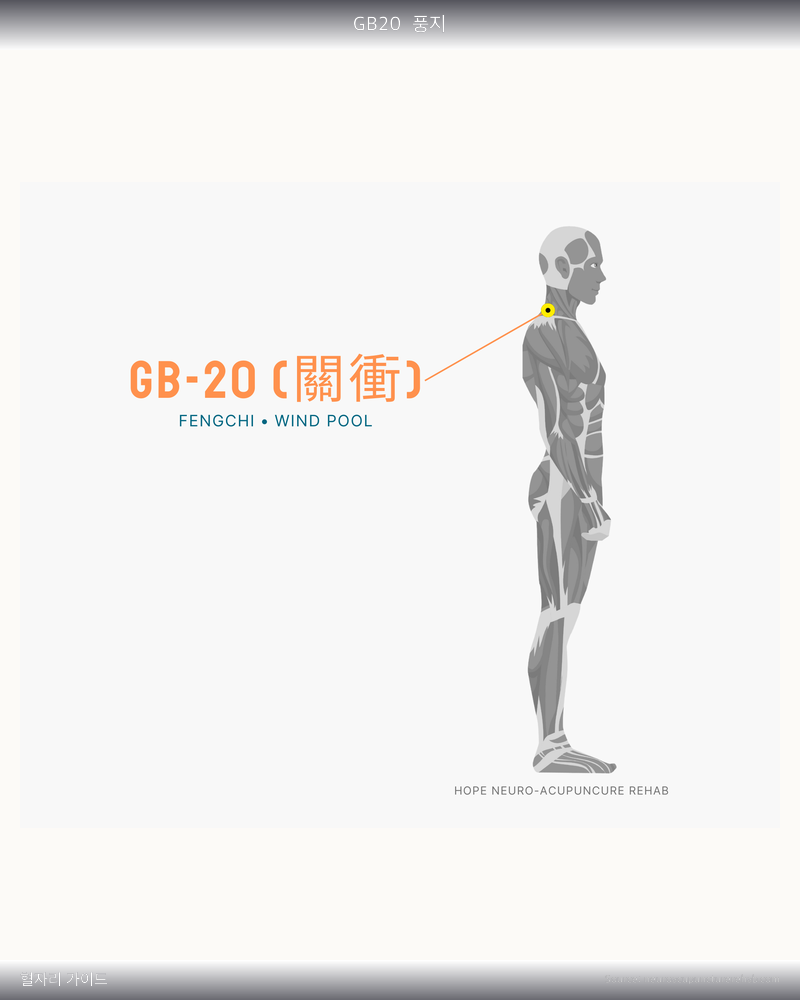
Press Jianjing (GB21), Fengchi (GB20), and Tianzong (SI11) every morning and evening. This serves as “first aid” for loosening muscles.
- Jianjing (GB21): Center of the shoulder top — press 3 seconds, 10 times
- Fengchi (GB20): Both sides below the base of the skull — press 5 seconds, 8 times
- Tianzong (SI11): Center of the shoulder blade — roll with a tennis ball for 1 minute
Step 2: Strengthen Weakened Muscles (3-4 times/week)
Just releasing knots leads to recurrence. You need to build the weakened muscles.
- Band pull-aparts: Hold a resistance band at chest height and spread it apart. Feel your shoulder blades squeezing together. 15 reps x 3 sets.
- Wall slides: Stand with your back against the wall, raise your arms to 90 degrees, then slide them up and down along the wall. 10 reps x 3 sets.
- External rotation: Keep your elbows pinned to your sides and pull the band outward. This strengthens the rotator cuff. 15 reps x 3 sets.
Step 3: Posture Correction (In Daily Life)
- Align the top of your monitor with eye level
- Stand up every hour and open your chest 3 times
- Hold your smartphone at eye level
- Adjust your pillow height so your neck maintains its natural curve while sleeping
Step 4: Stress Management
Shoulder tension is a barometer for stress. Even just 5 minutes a day of deep breathing while consciously dropping your shoulders makes a difference. The “4-7-8 breathing method” — inhale 4 seconds, hold 7 seconds, exhale 8 seconds — is highly effective.
Improvement Timeline
| Period | Expected Results |
|---|---|
| Weeks 1-2 | Immediate relief from knots after acupressure |
| Weeks 3-4 | Reduced afternoon pain frequency, improved shoulder range of motion |
| Months 2-3 | Significant decrease in chronic knots, less need for massage |
| Months 3-6 | Posture improvement leads to greatly reduced pain recurrence |
Frequently Asked Questions
Can chronic shoulder pain be completely cured?
Yes, most muscular chronic shoulder pain greatly improves with proper exercise and posture correction. However, consistency is key. Invest at least 3 months.
Massage feels great at the time but the pain comes right back. Why?
Because you’re only treating symptoms without addressing the causes (weak muscles, poor posture). Massage + strength training + posture correction together prevent recurrence.
Can shoulder strengthening exercises make it worse?
You may have slight muscle soreness for the first 1-2 weeks. Start with light intensity and gradually increase. Stop and consult a professional if you feel sharp pain.
How can I tell if my thoracic spine is stiff?
Sit in a chair and try rotating just your upper body left and right. If the range is less than 45 degrees or you feel a stiff catch in the middle of your back, your thoracic mobility is restricted.
My shoulder has been hurting for months. Do I really need to see a doctor?
If self-care hasn’t helped after 3+ months, nighttime pain is severe, or you’re losing arm strength, definitely get a professional evaluation. MRI or ultrasound may be needed.
Leave a Reply