Summary: A self-acupressure guide for those who toss and turn every night. Use Shenmen (HT7) and Yongquan (KI1) acupressure to lower brain arousal and induce natural sleep.
Right side… left side… on your back… right side again
Toss and turn. Pull the covers up, kick them off. Adjust the pillow higher, then lower. The clock ticks away but your eyes stay wide open. “What’s wrong with me?” — yet your mind keeps replaying today’s events and tomorrow’s tasks on an endless loop.
When this pattern repeats every night, it’s truly exhausting. During the day, your head feels heavy, you can’t concentrate, and you can’t function without coffee. Then night comes and the pressure of “I really need to sleep tonight…” makes it even harder — a vicious cycle.
The truth is, tossing and turning is a signal that your brain hasn’t switched from “daytime mode” to “nighttime mode” yet. Your sympathetic nervous system is still active. There’s a way to hit this transition switch.
The Real Cause of Tossing and Turning: Brain Hyperarousal
Being tired but unable to sleep sounds paradoxical, but when stress hormone cortisol is high, your body may be exhausted while your brain simply cannot fall asleep. This is called a “hyperarousal” state.
Acupressure helps shift this hyperarousal state to parasympathetic dominance. You only need your fingers — no special tools — so you can start right in bed.
Acupoints to Press Right When You Start Tossing
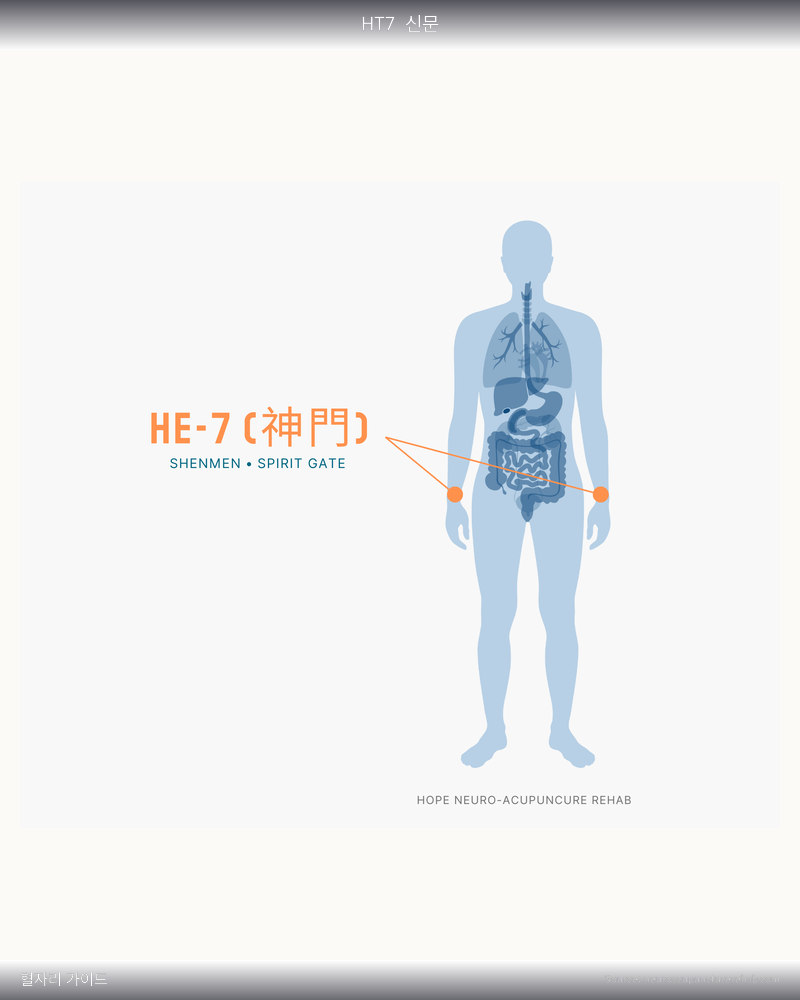
Shenmen (HT7) — Stop the racing thoughts

The depression next to the tendon on the pinky side of the inner wrist crease. Press gently with the opposite thumb for 5 seconds, 15 times per side. Imagine “closing the door of the mind.” You’ll feel the spinning thoughts gradually slow down.
Yongquan (KI1) — Draw heat from your head to your feet

The depression at the front third of the sole, where it dips when you curl your toes. Press firmly with your thumb, 15-20 repetitions. Your head cools down and eyes get heavy. Under the covers, press one foot at a time alternately.
Baihui (GV20) — Tap the crown to switch off the brain
Gently tap the center of your crown with your fingertip. Just 30 seconds of tapping will make your head feel drowsy and sleepiness will creep in. Especially effective when your mind is too busy to sleep.
Habits to Reduce Tossing and Turning
- Room temperature: 64-68°F (18-20°C) is optimal. Too warm makes you toss.
- Bedtime routine: Lying down at the same time and doing acupressure in the same order every night teaches your brain “ah, it’s time to sleep.”
- 4-7-8 breathing: Inhale 4 seconds, hold 7 seconds, exhale 8 seconds. Combined with acupressure, the synergy is powerful.
- Blue light block: Put away your phone and computer at least 1 hour before bed.
Tonight, when you start tossing and turning, just press the Shenmen point first. Instead of getting anxious thinking “I can’t sleep again,” shift your mindset to “I’m about to press my sleep switch.”
Frequently Asked Questions
Is tossing and turning every night considered insomnia?
If difficulty falling asleep or frequent waking occurs 3+ times per week for over 3 months, it’s classified as chronic insomnia. Occasional tossing is normal.
Will acupressure help me fall asleep immediately?
You may not feel immediate effects at first. With 1-2 weeks of consistent practice, you’ll notice the time it takes to fall asleep gradually shortening.
When tossing, is it better to get up and do something?
If you can’t sleep for 20+ minutes, get out of bed and do a quiet activity, then return when sleepy. Tossing in bed teaches the brain that ‘bed = wakefulness.’
Does sleep position affect tossing and turning?
Yes, if your pillow height is wrong or your mattress is uncomfortable, you’ll unconsciously shift positions. Finding a comfortable position for your neck and back is important.
What foods should I avoid before bed?
Avoid caffeine (coffee, green tea, chocolate) after 2 PM, and alcohol disrupts deep sleep. Foods containing tryptophan like bananas, milk, and cherries can help.
Leave a Reply