Introduction
Many people experience cold and tingling symptoms in their hands and feet not just in winter, but year-round. This is known as cold hands and feet syndrome. For those who feel discomfort with cold fingertips and toes no matter how much clothing they wear, Traditional Chinese Medicine recommends acupressure at points that improve qi and blood circulation. Cold hands and feet syndrome fundamentally occurs due to insufficient peripheral blood circulation and reduced qi (氣) circulation. Acupressure is effective in stimulating acupoints to promote qi and blood flow and normalize body temperature. This article explains in detail five acupoints that directly help improve cold hands and feet syndrome and their acupressure techniques.
The Five Acupoints in Detail
1. Sanyinjiao (SP6, Sanyinjiao)
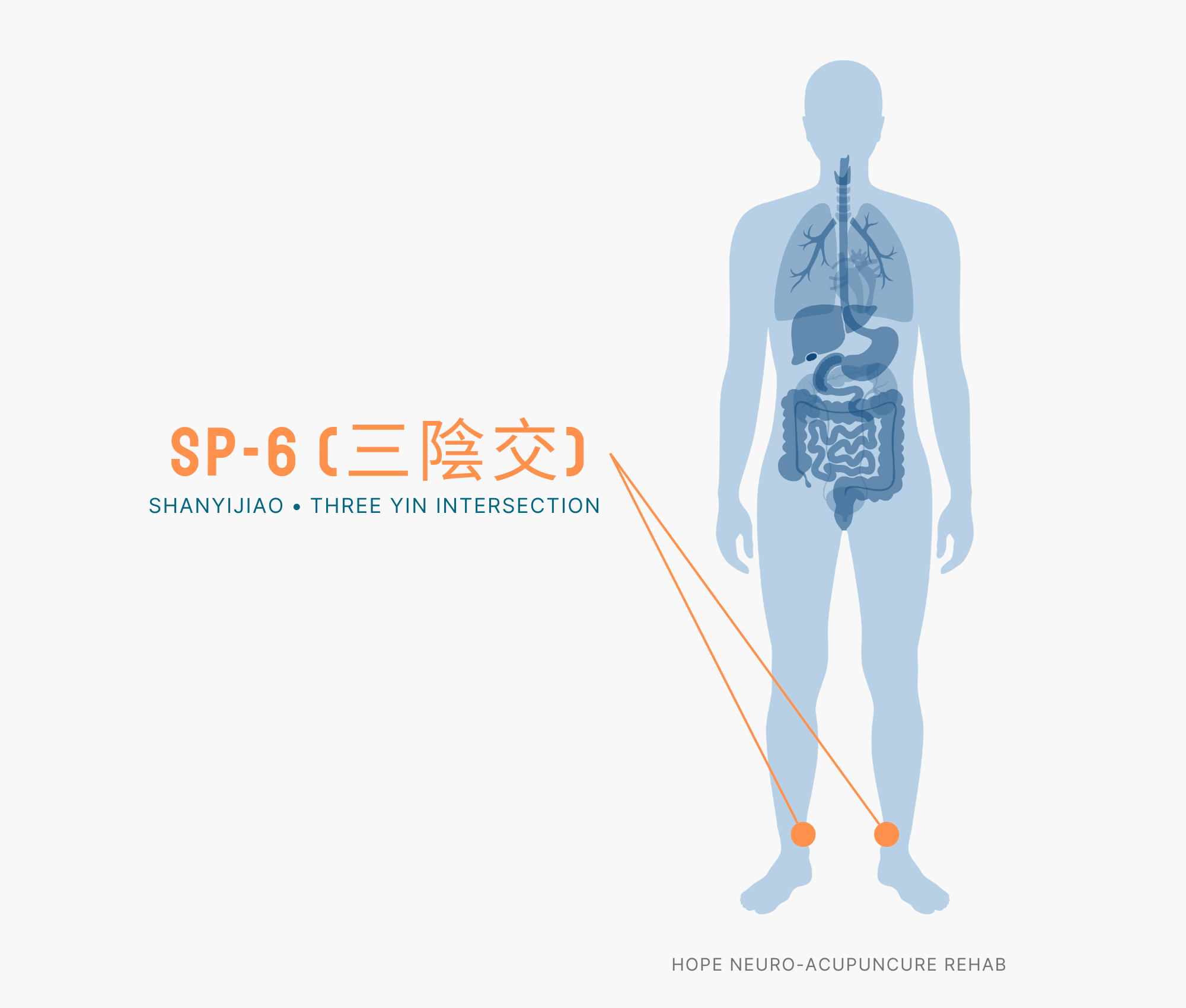
Location: On the inner side of the lower leg, approximately 10cm (four finger widths) above the inner ankle bone, at the inner edge of the tibia
WHO Code: SP6
Acupressure Technique: Use your thumb to repeatedly press and release slowly. Apply pressure for 30 seconds until you feel a mild soreness, then rest for 10 seconds and repeat. Perform on both legs.
Benefits: Sanyinjiao is where the spleen, liver, and kidney meridians meet, making it the most effective point for promoting qi and blood circulation. It excels not only at treating cold hands and feet but also at promoting fatigue recovery and enhancing immunity. Regular acupressure can improve chronic cold symptoms.
2. Taichong (LR3, Taichong)
Location: Between the bones of the big toe and second toe on the top of the foot, approximately 3cm above the ankle
WHO Code: LR3
Acupressure Technique: Press firmly using the fingertip of your thumb. The most effective pressure is when you feel a mild soreness (痛快感). Apply pressure 10 times for 1 minute on each side, and perform on both feet.
Benefits: Taichong promotes the flow of liver qi (肝氣), directly improving blood circulation. It effectively treats not only cold sensations in the hands and feet but also poor blood circulation caused by stress. It is one of the acupoints where cold hands and feet syndrome patients feel the quickest improvement.
3. Hegu (LI4, Hegu)

Location: Between the bones of the thumb and index finger, at the highest point of the muscle visible on the back of the hand
WHO Code: LI4
Acupressure Technique: Use the thumb of your other hand to slowly press in circular motions. Apply pressure for 30 seconds until you feel a mild soreness, then rest for 10 seconds and repeat. Perform on both hands.
Benefits: Hegu is an important acupoint of the large intestine meridian, known as “the cure-all point.” It promotes qi and blood circulation throughout the body, and excels particularly at improving blood circulation in the upper body and hands. It simultaneously alleviates not only cold hands and feet but also various other symptoms such as headaches and facial flushing.
4. Guanyuan (CV4, Guanyuan)
Location: Approximately 10cm below the navel, on the midline of the body
WHO Code: CV4
Acupressure Technique: In a lying position, gently massage in circular motions using 3-4 fingers. Do not press hard; massage for 2-3 minutes until you feel warmth.
Benefits: Guanyuan is an important acupoint called the “lower dantian,” which tonifies kidney yang and strengthens foundational energy throughout the body. Chronic cold hands and feet syndrome often occurs due to kidney yang deficiency, and stimulating Guanyuan fundamentally improves this condition.
5. Zusanli (ST36, Zusanli)

Location: Approximately 10cm (four finger widths) below the outer side of the knee, on the front of the shin
WHO Code: ST36
Acupressure Technique: Use your thumb to repeatedly press and release slowly. Apply pressure for 30 seconds until you feel a mild soreness, then rest for 10 seconds and repeat 3-4 times. Perform on both legs.
Benefits: Zusanli is a well-known acupoint for enhancing immunity and improving overall circulation. It promotes stomach function to improve digestion and absorption, thereby promoting qi and blood production. Regular stimulation simultaneously improves chronic cold symptoms and fatigue.
5-Minute Self-Acupressure Routine
Optimal time allocation for best results:
- Preparation (30 seconds): Wash your hands and feet with warm water and take a comfortable position (sitting or lying down).
- Hegu (LI4) acupressure (50 seconds): 25 seconds on each hand, pressing gently in circular motions
- Sanyinjiao (SP6) acupressure (60 seconds): 30 seconds on each leg, pressing and releasing slowly
- Taichong (LR3) acupressure (60 seconds): 30 seconds on each foot, applying pressure until you feel slight soreness
- Zusanli (ST36) acupressure (60 seconds): 30 seconds on each leg, until you feel soreness
- Guanyuan (CV4) massage (50 seconds): In a lying position, massage gently in circular motions
- Cool down (20 seconds): Drink warm water or put on warm clothing to maintain body temperature.
Recommended timing: Perform this routine 1-2 times daily, either in the morning after waking or in the evening before bed. You will notice significant improvement if you consistently perform this routine for at least 3 weeks.
Leave a Reply